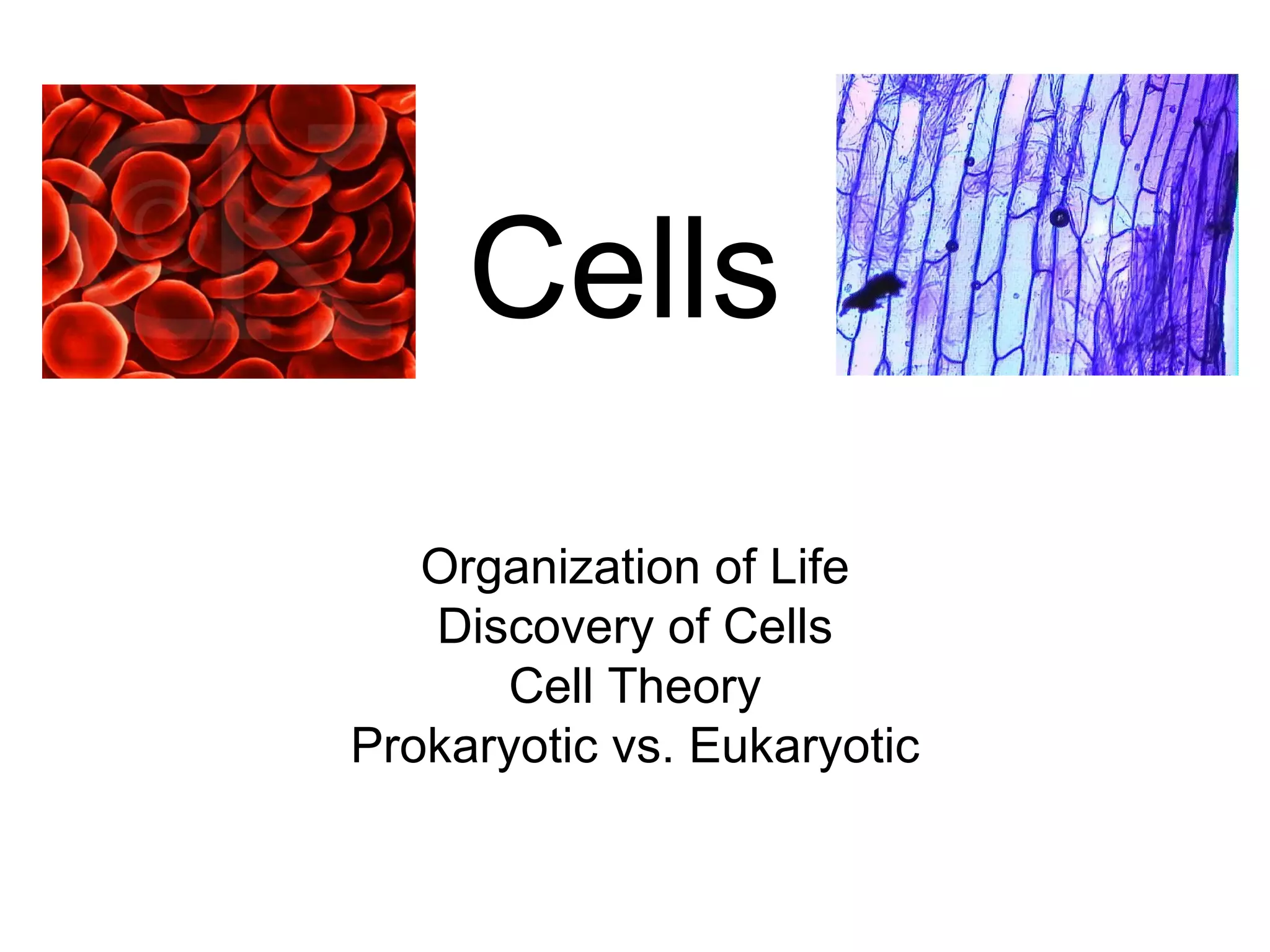
Cells Organization of Life Discovery of Cells Cell Theory Prokaryotic vs. Eukaryotic
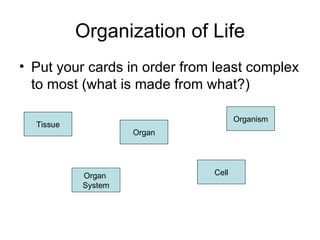
Organization of Life Put your cards in order from least complex to most (what is made from what?) Cell Tissue Organ Organ  System Organism
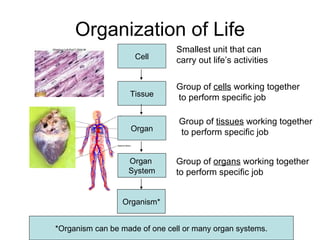
Organization of Life Cell Tissue Organ Organ  System *Organism can be made of one cell or many organ systems. Smallest unit that can  carry out life’s activities Group of  cells  working together to perform specific job Group of  tissues  working together to perform specific job Group of  organs  working together  to perform specific job Organism*
Discovery of Cells Most cells cannot be seen with naked eye So how were they first discovered?  What was needed for their discovery?
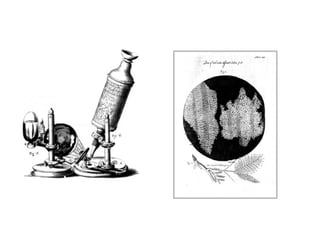
Cells Discovered 1665 - Robert Hook discovered cells by accident Hook built a basic microscope to look at small things Looked at cork from a tree
 
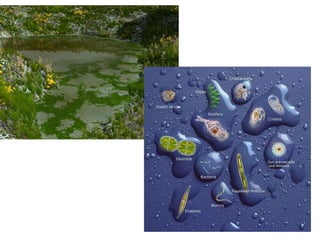
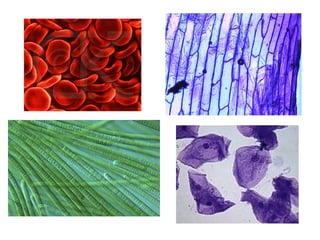
Discovery of Cells 1673 - Anton van Leeuwenhoek looked at pond scum and saw small creatures Leeuwenhoek also saw that blood cells differed between animals, saw bacteria, and realized that yeast was alive 1838 – Schleiden concluded that all plant parts are made of cells 1839 – Schwann stated all animal tissues are made of cells
 
 
Cell Theory 1839 - Schwann developed beginning of CELL THEORY All organisms are composed of one or more cells. The cell is the basic unit of life in all living things. 1858 – Virchow added to CELL THEORY All cells come from existing cells Make a timeline of Cell Discovery
All Cell’s Have… Cell membrane  – barrier between inside and outside of cell; controls passage of things in and out of cell Hereditary material  – all cells contain DNA and pass a copy to new cells Organelles  – all cells have chemicals and structures that let the cell live, grow and reproduce Cytoplasm  - a fluid surrounding their structures
 
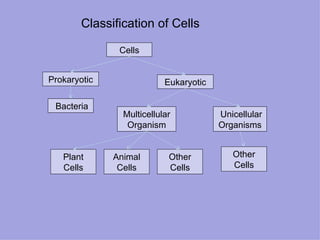
Classification of Cells Cells Animal Cells Plant Cells Bacteria Eukaryotic Prokaryotic Other Cells Unicellular Organisms Multicellular Organism Other Cells
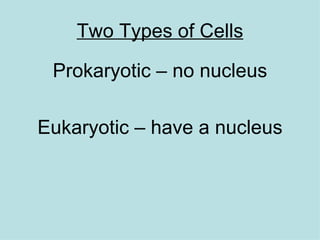
Two Types of Cells Prokaryotic – no nucleus Eukaryotic – have a nucleus
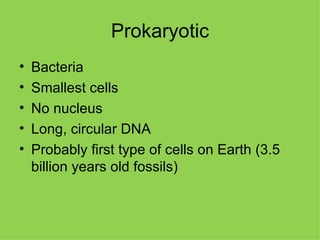
Prokaryotic Bacteria Smallest cells No nucleus Long, circular DNA Probably first type of cells on Earth (3.5 billion years old fossils)
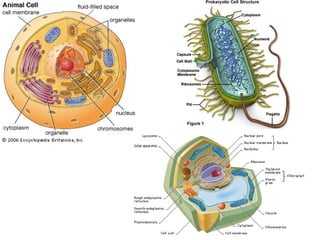
Eukaryotic More complex All living things (except bacteria) are made of one or more eukaryotic cells Have nucleus  and many membrane-covered organelles Nucleus stores linear DNA All have cell membrane, some have cell wall also

Cell Theory Discussion

  • 1.
    Cells Organization ofLife Discovery of Cells Cell Theory Prokaryotic vs. Eukaryotic
  • 2.
    Organization of LifePut your cards in order from least complex to most (what is made from what?) Cell Tissue Organ Organ System Organism
  • 3.
    Organization of LifeCell Tissue Organ Organ System *Organism can be made of one cell or many organ systems. Smallest unit that can carry out life’s activities Group of cells working together to perform specific job Group of tissues working together to perform specific job Group of organs working together to perform specific job Organism*
  • 4.
    Discovery of CellsMost cells cannot be seen with naked eye So how were they first discovered? What was needed for their discovery?
  • 5.
    Cells Discovered 1665- Robert Hook discovered cells by accident Hook built a basic microscope to look at small things Looked at cork from a tree
  • 6.
  • 7.
    Discovery of Cells1673 - Anton van Leeuwenhoek looked at pond scum and saw small creatures Leeuwenhoek also saw that blood cells differed between animals, saw bacteria, and realized that yeast was alive 1838 – Schleiden concluded that all plant parts are made of cells 1839 – Schwann stated all animal tissues are made of cells
  • 8.
  • 9.
  • 10.
    Cell Theory 1839- Schwann developed beginning of CELL THEORY All organisms are composed of one or more cells. The cell is the basic unit of life in all living things. 1858 – Virchow added to CELL THEORY All cells come from existing cells Make a timeline of Cell Discovery
  • 11.
    All Cell’s Have…Cell membrane – barrier between inside and outside of cell; controls passage of things in and out of cell Hereditary material – all cells contain DNA and pass a copy to new cells Organelles – all cells have chemicals and structures that let the cell live, grow and reproduce Cytoplasm - a fluid surrounding their structures
  • 12.
  • 13.
    Classification of CellsCells Animal Cells Plant Cells Bacteria Eukaryotic Prokaryotic Other Cells Unicellular Organisms Multicellular Organism Other Cells
  • 14.
    Two Types ofCells Prokaryotic – no nucleus Eukaryotic – have a nucleus
  • 15.
    Prokaryotic Bacteria Smallestcells No nucleus Long, circular DNA Probably first type of cells on Earth (3.5 billion years old fossils)
  • 16.
    Eukaryotic More complexAll living things (except bacteria) are made of one or more eukaryotic cells Have nucleus and many membrane-covered organelles Nucleus stores linear DNA All have cell membrane, some have cell wall also