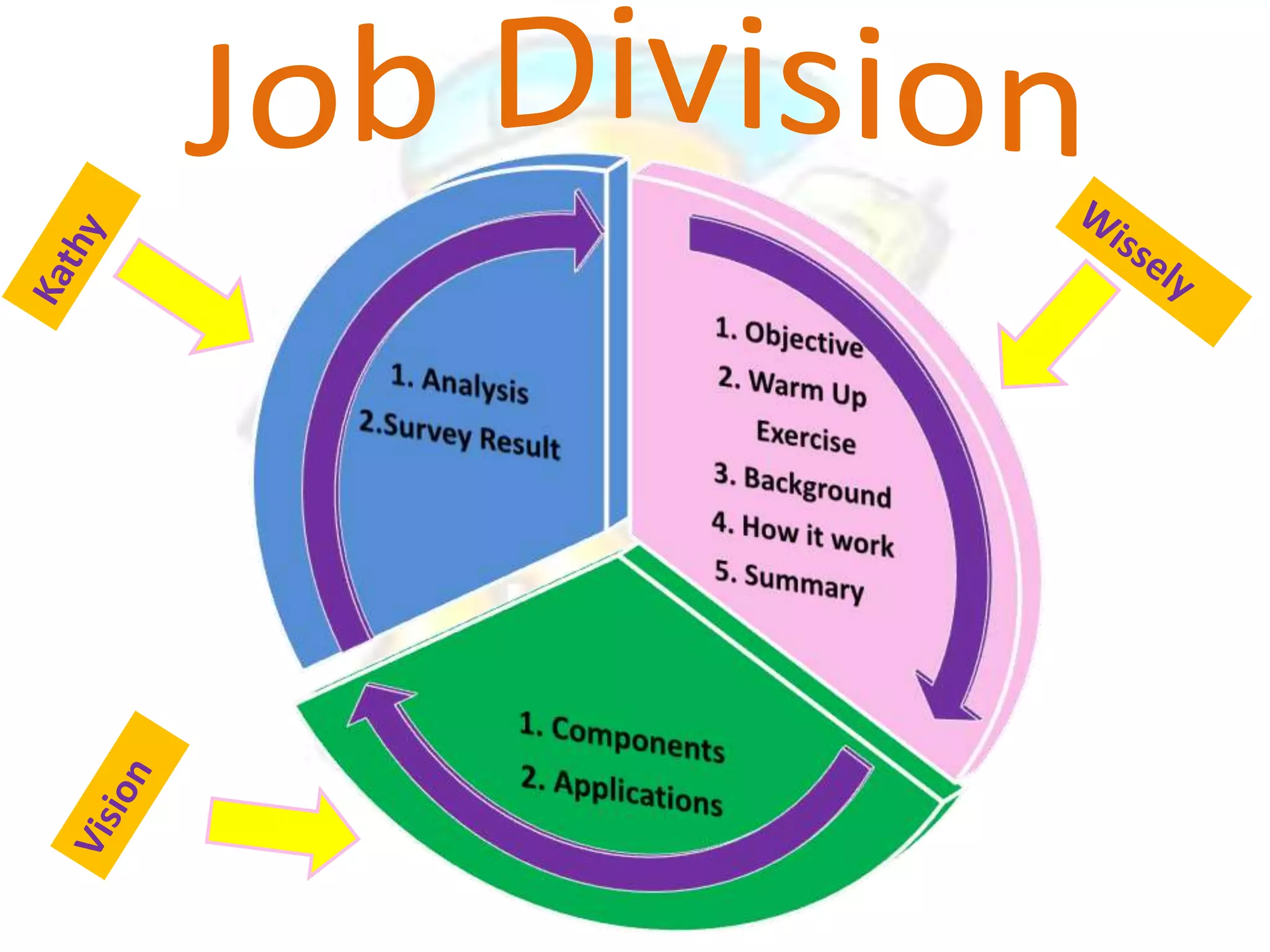
Cheung Ki Yan (Wissely) 13214993
Cheung Chi Ki (Kathy)
13212907
Cheung Pak Yeung (Vision) 13205404
24 October 2013
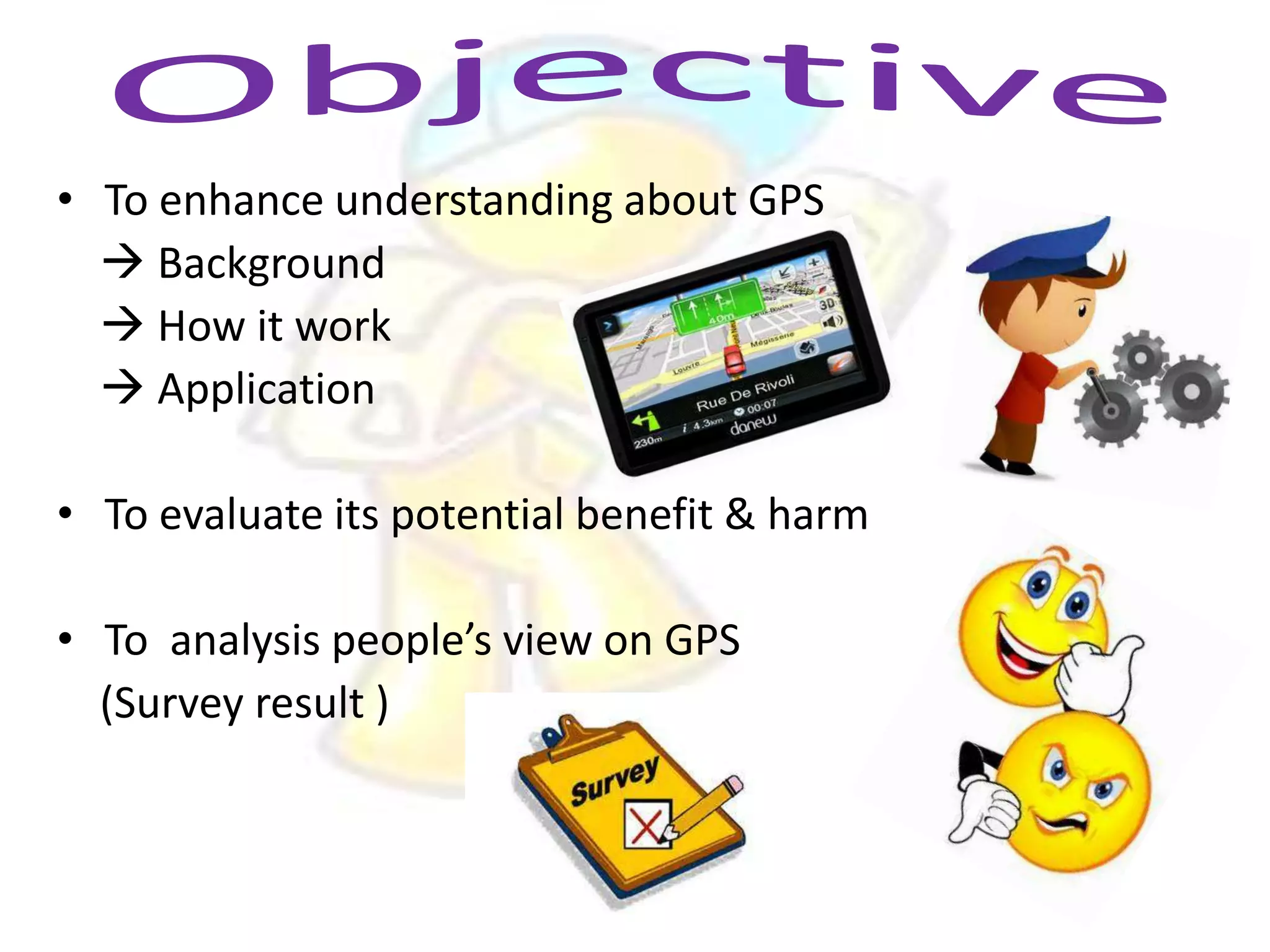
• To enhance understanding about GPS
 Background
 How it work
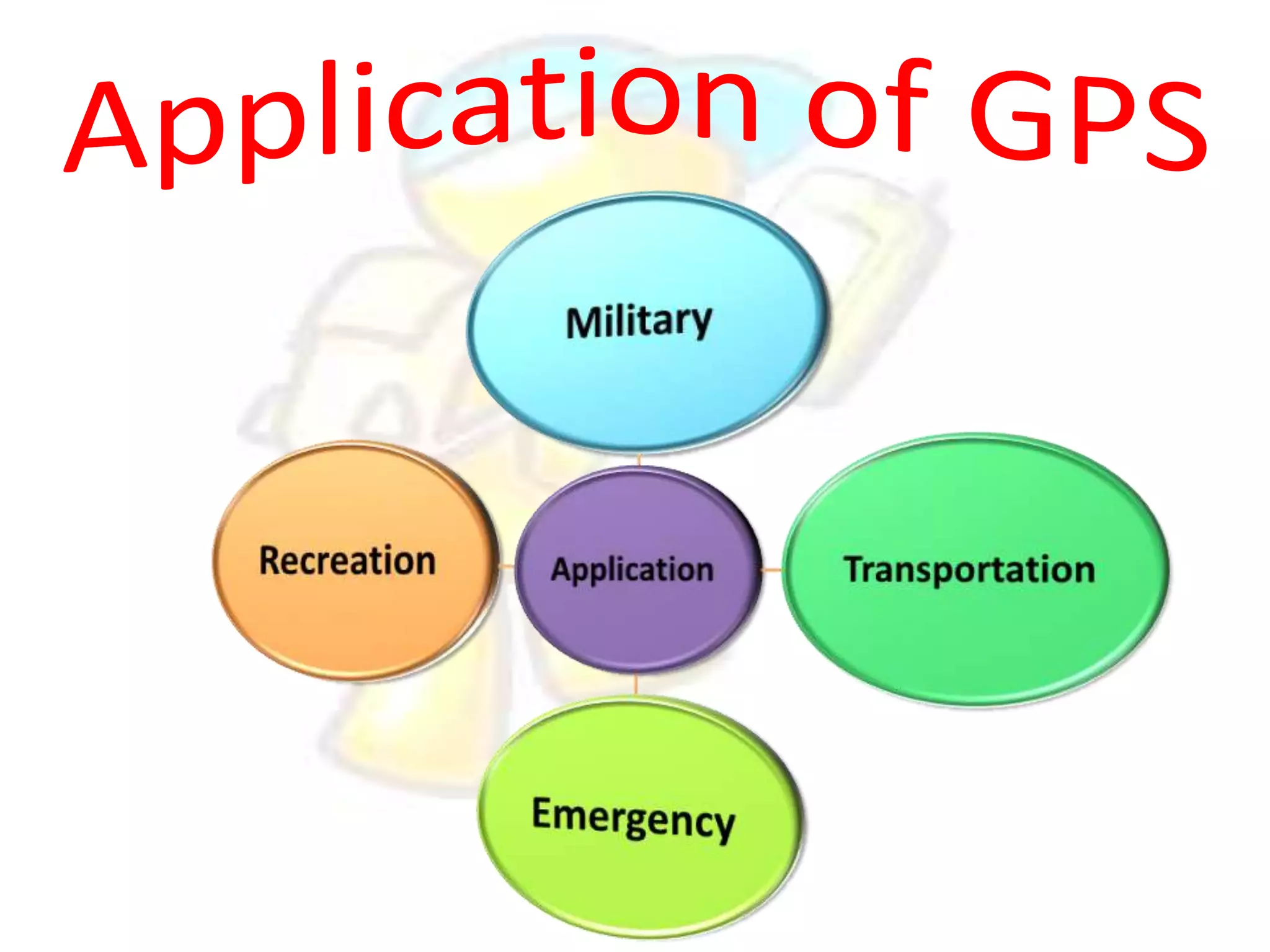
 Application
• To evaluate its potential benefit & harm
• To analysis people’s view on GPS
(Survey result )
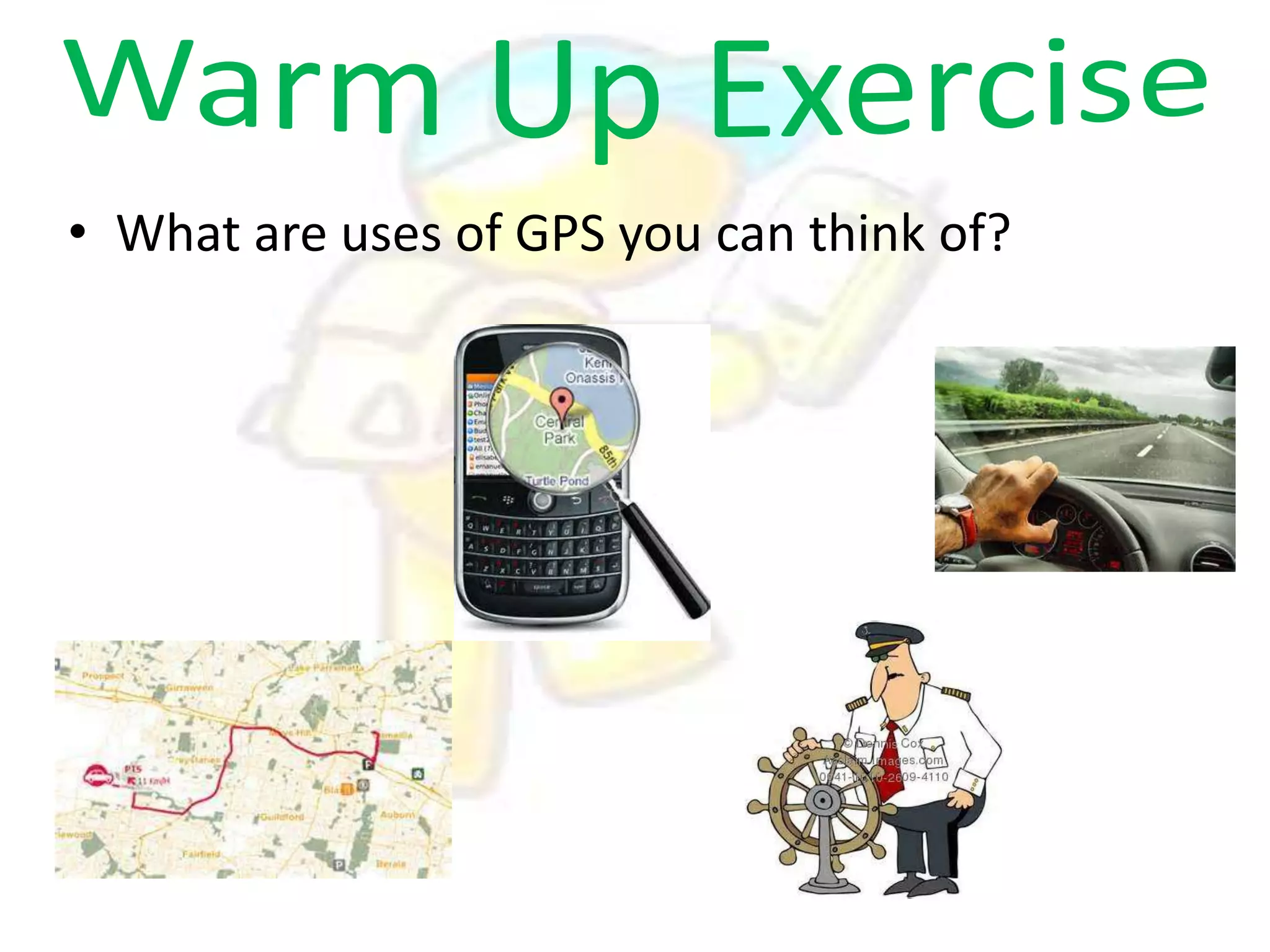
• What are uses of GPS you can think of?
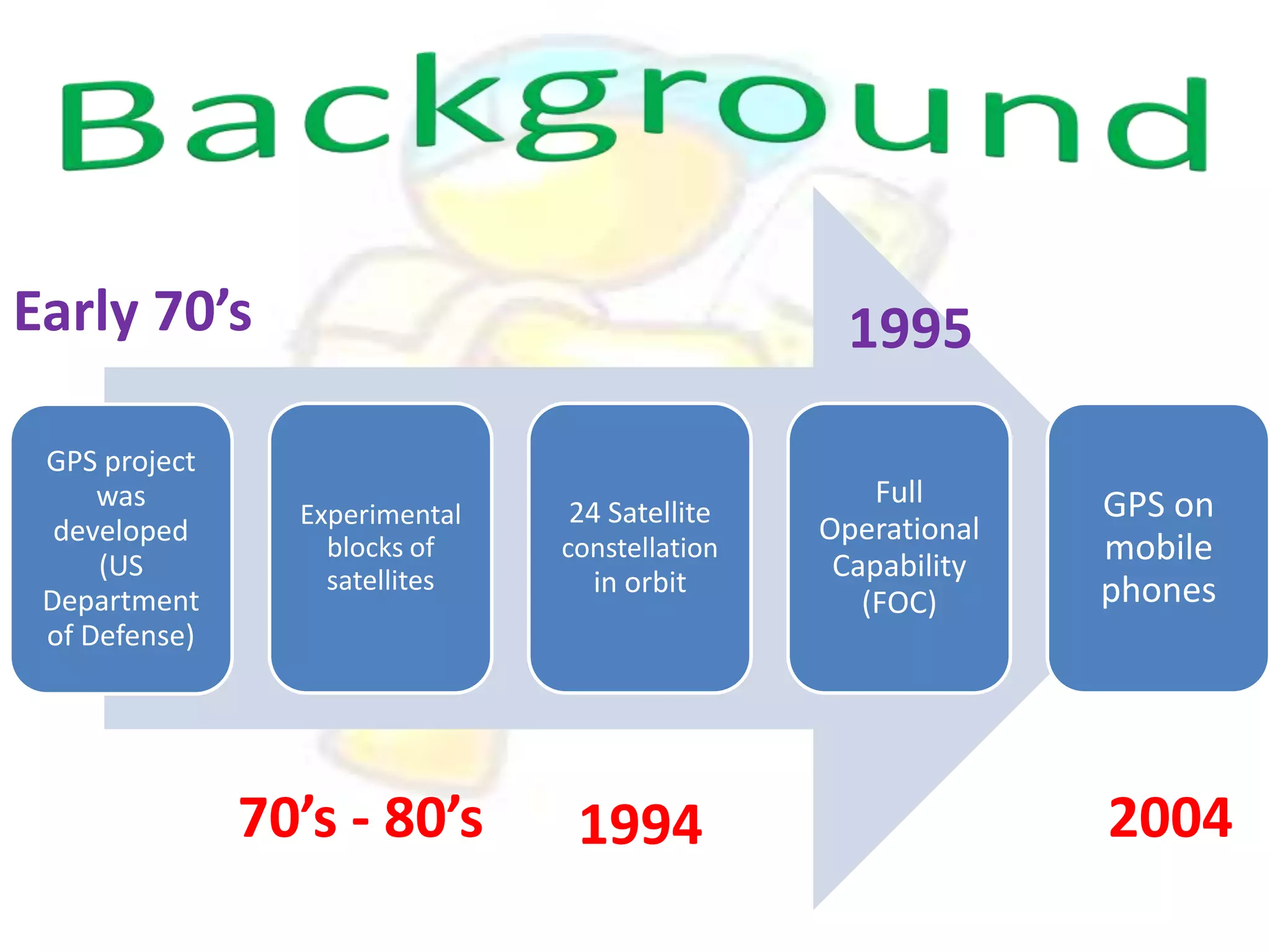
Early 70’s
GPS project
was
developed
(US
Department
of Defense)

1995
Experimental
blocks of
satellites

70’s - 80’s

24 Satellite
constellation

in orbit

1994

Full
Operational
Capability
(FOC)

GPS on
mobile
phones

2004
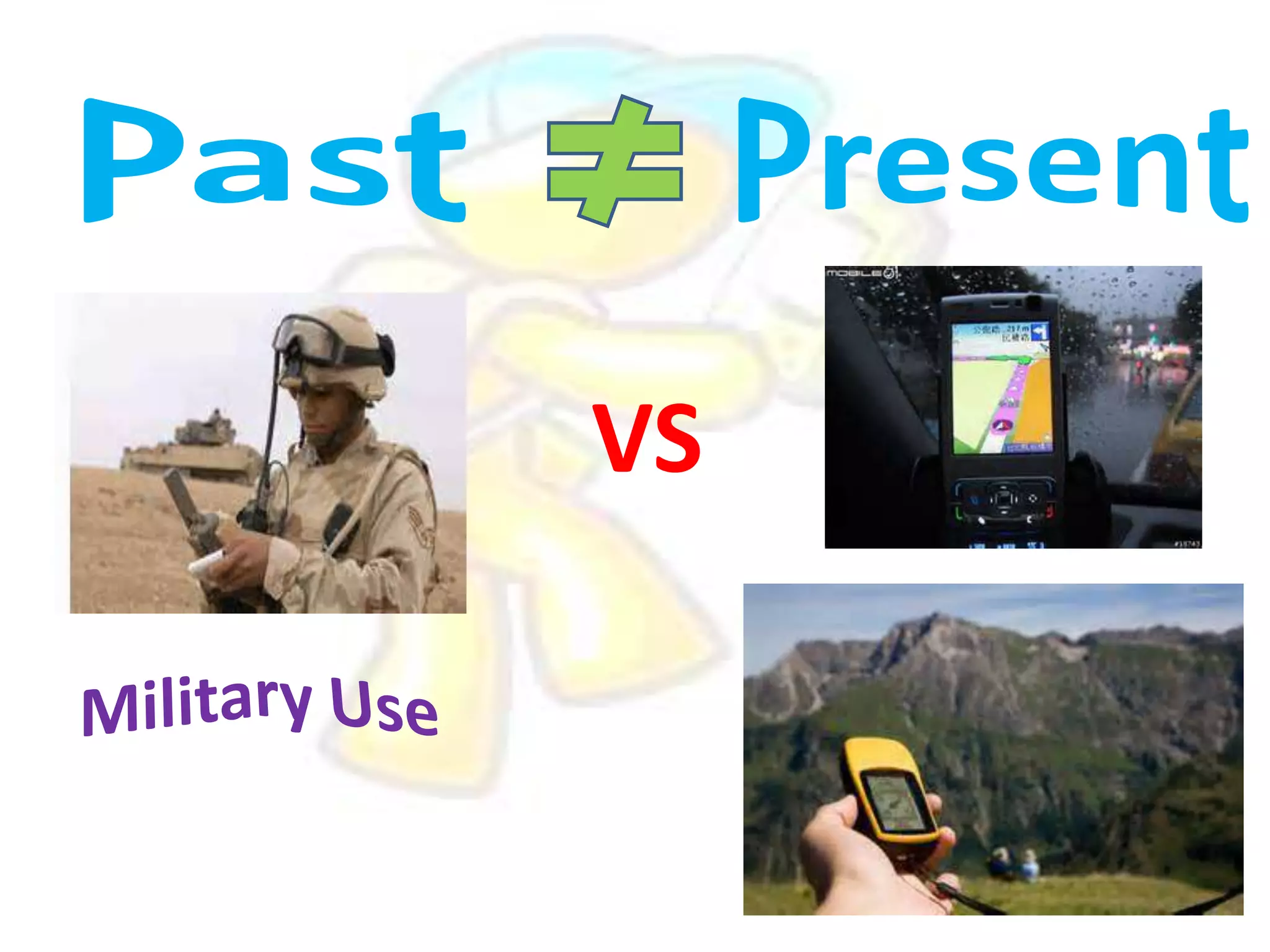
VS
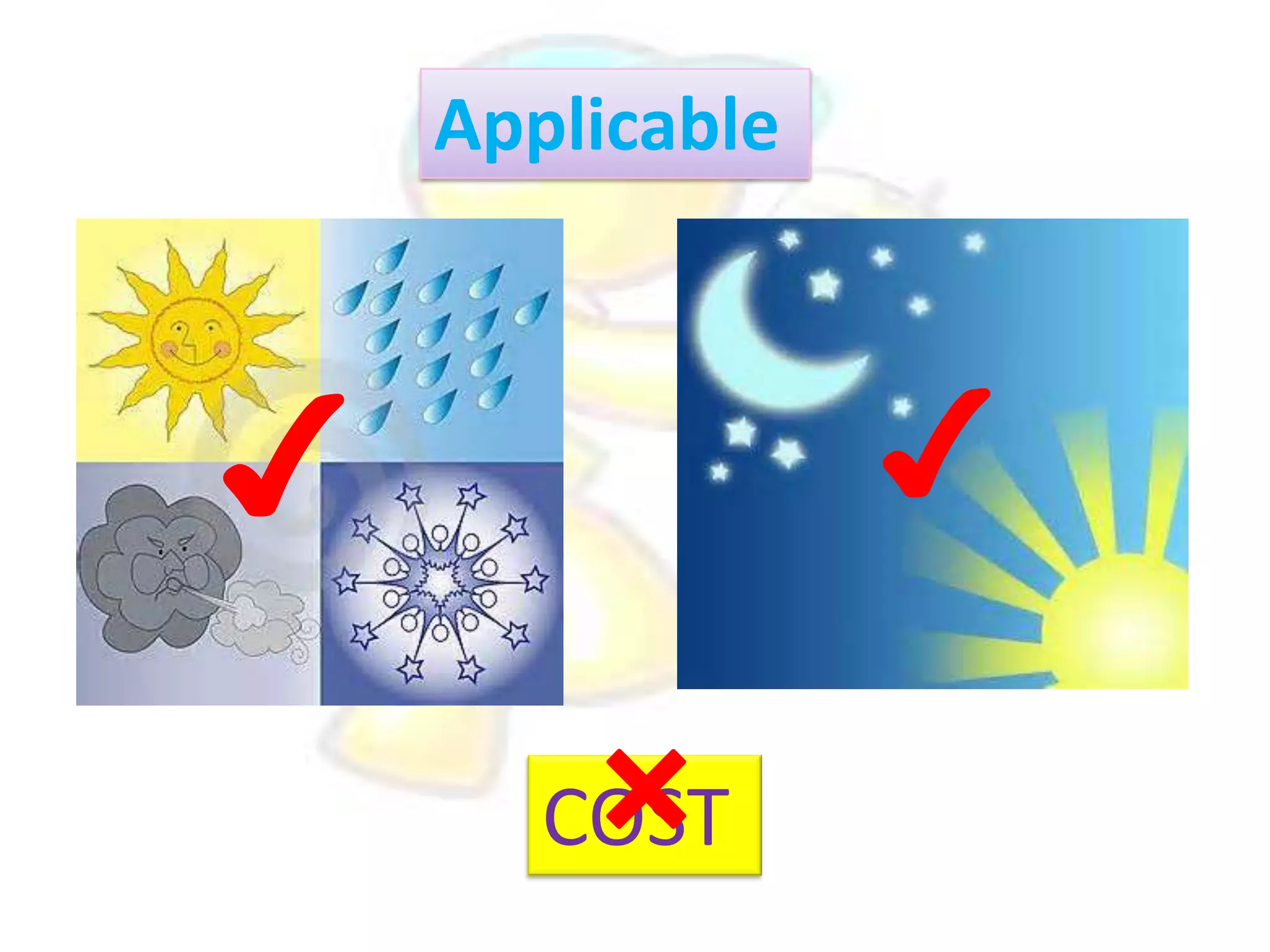
Applicable

✔

✔

×

COST
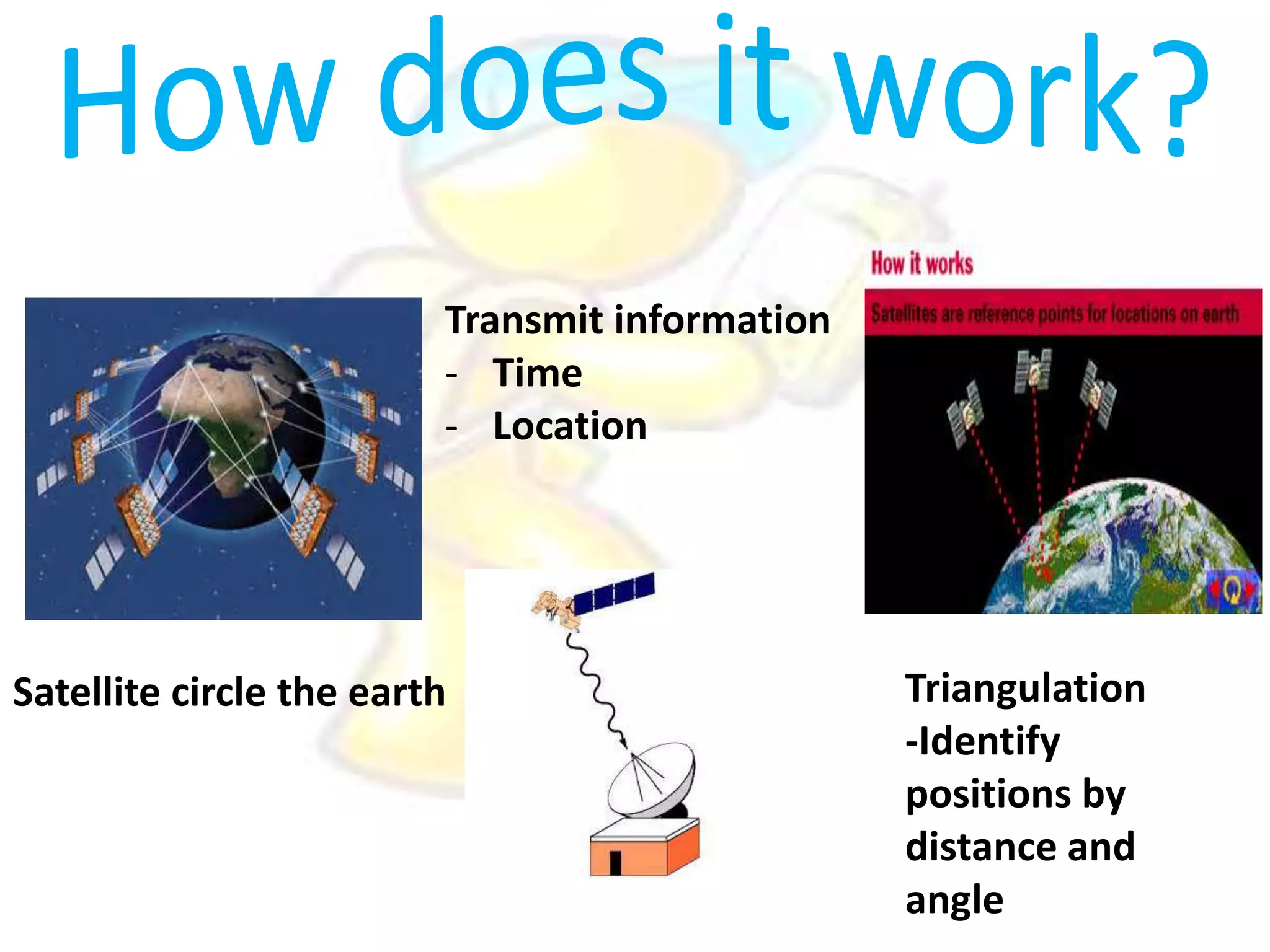
Transmit information
- Time
- Location

Satellite circle the earth

Triangulation
Receivers use -Identify
triangulation to positions by
calculate the user's
distance and
exact location. angle


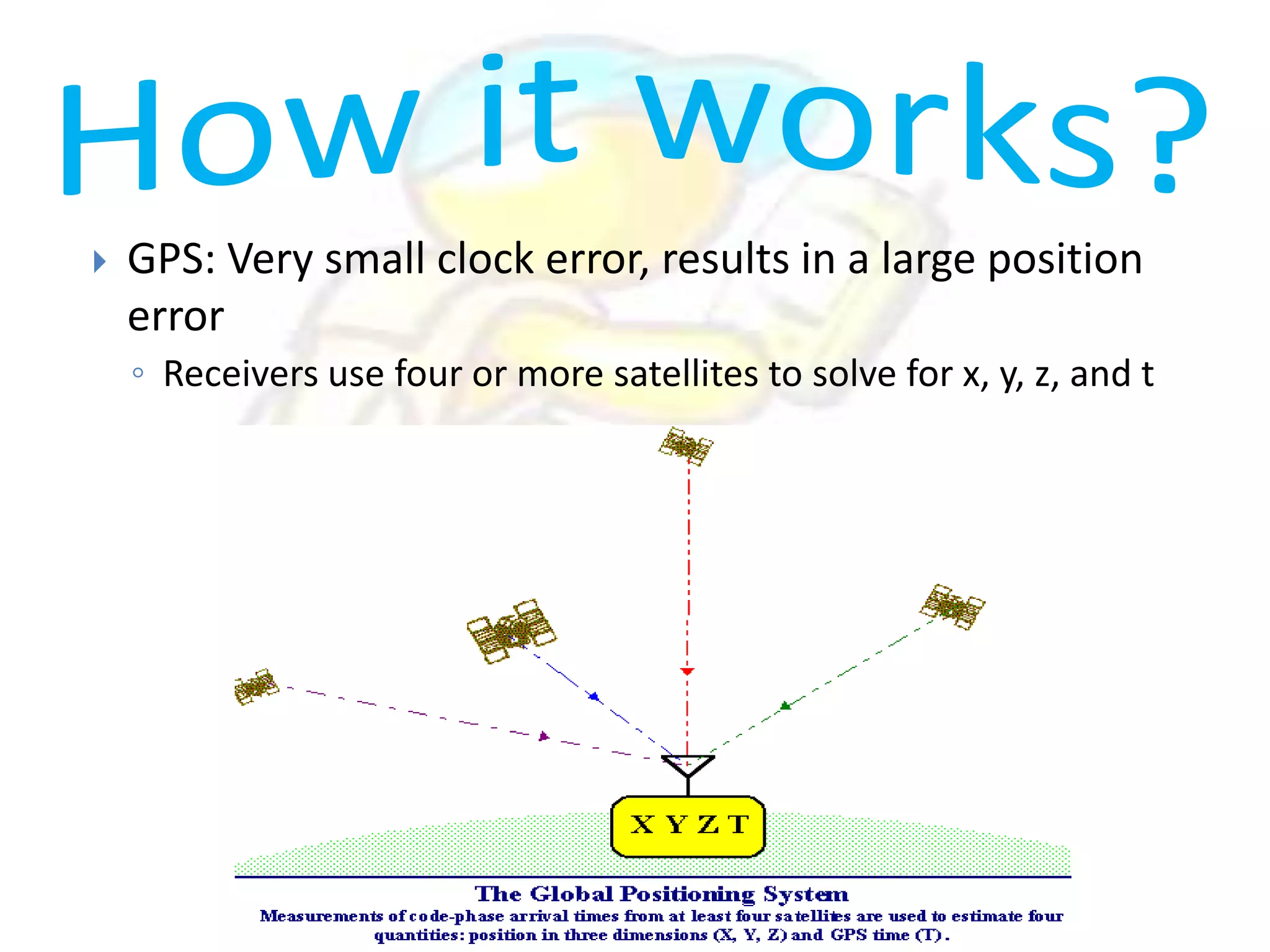
GPS: Very small clock error, results in a large position
error
◦ Receivers use four or more satellites to solve for x, y, z, and t
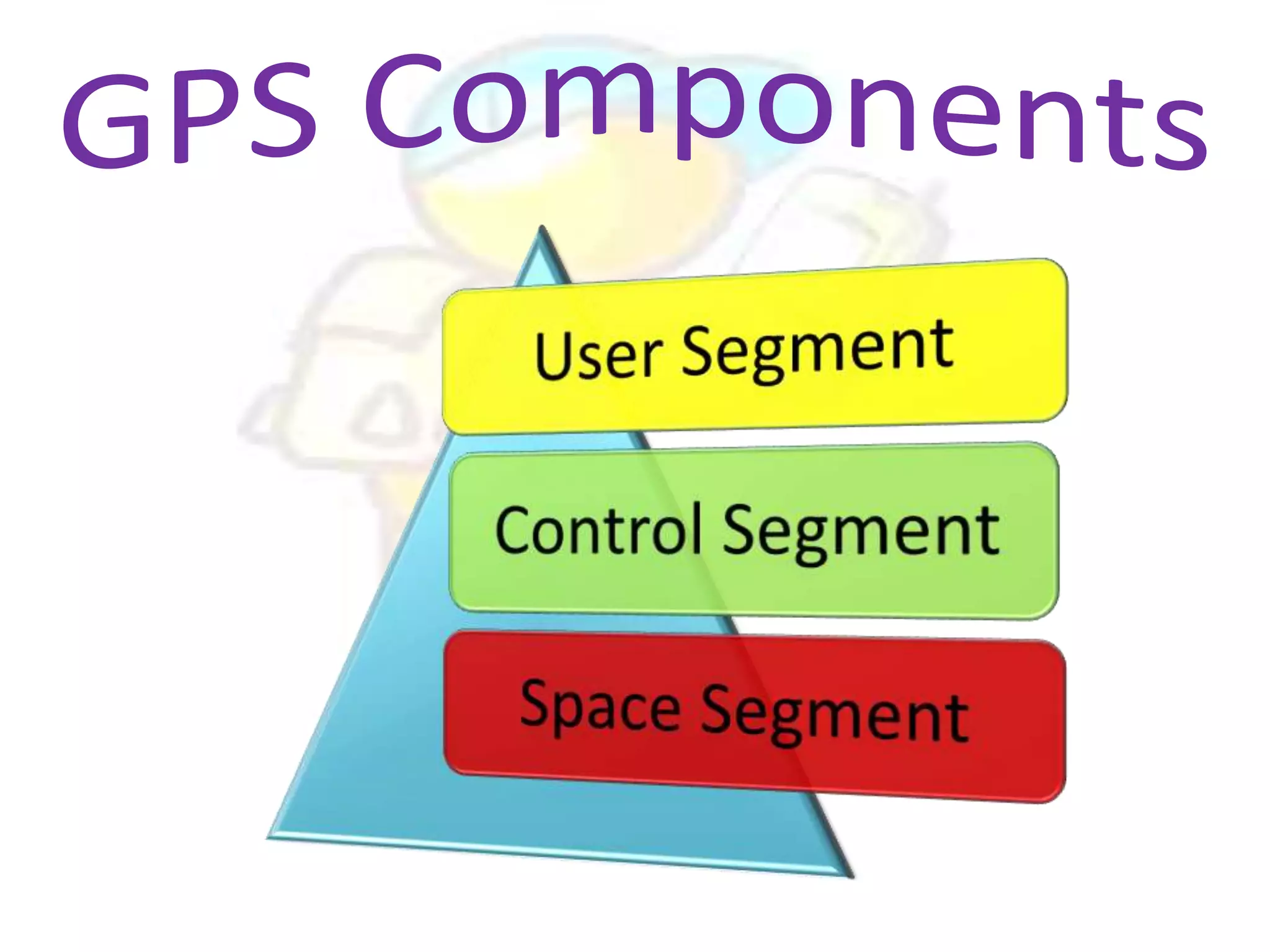
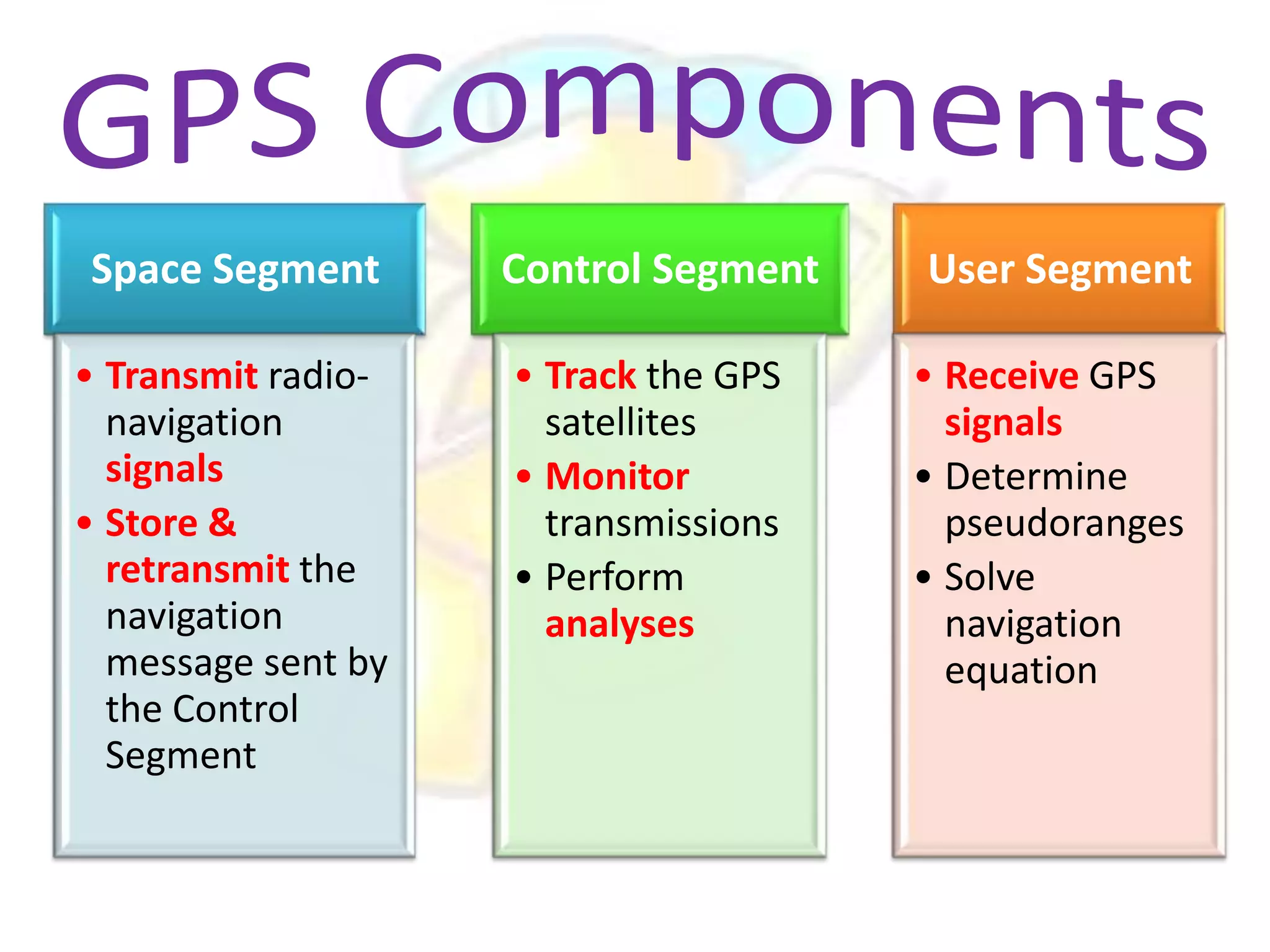
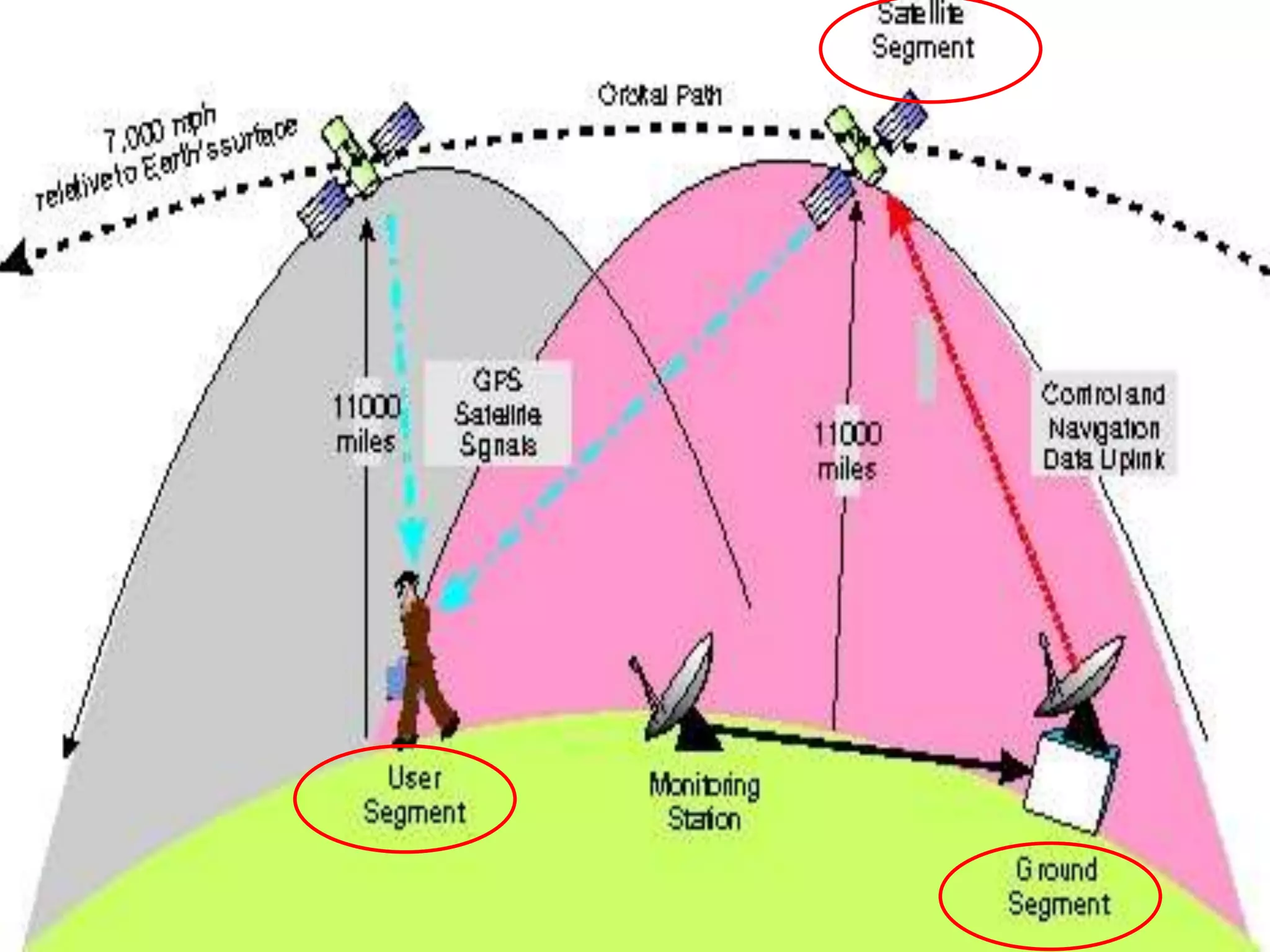
Space Segment
• Transmit radionavigation
signals
• Store &
retransmit the
navigation
message sent by
the Control
Segment

Control Segment
• Track the GPS
satellites
• Monitor
transmissions
• Perform
analyses

User Segment
• Receive GPS
signals
• Determine
pseudoranges
• Solve
navigation
equation
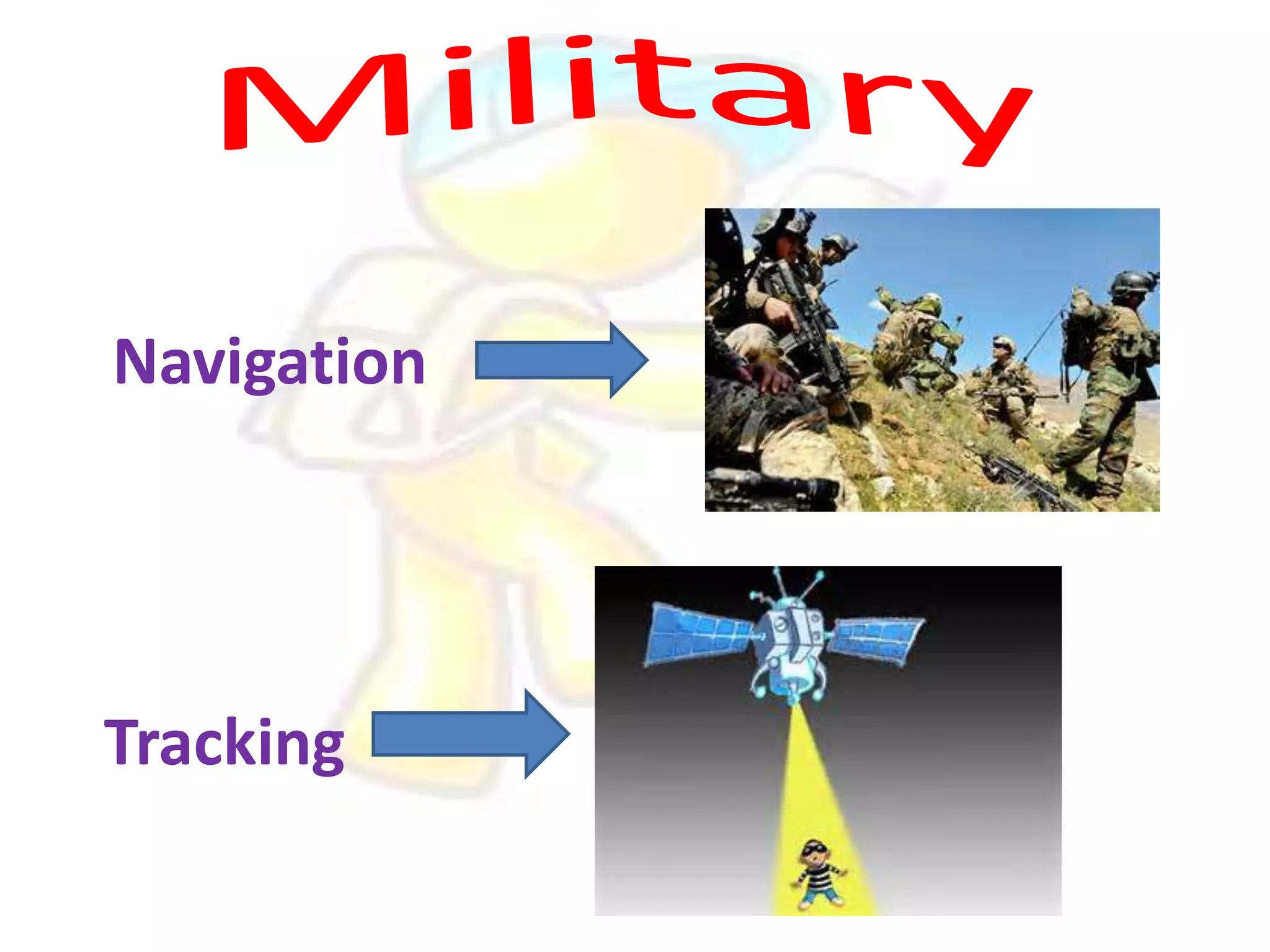
Navigation

Tracking
•
•
•
•

Location
Direction
Speed
Arriving Time

Monitor &Provide
Warning about
potential dangerous
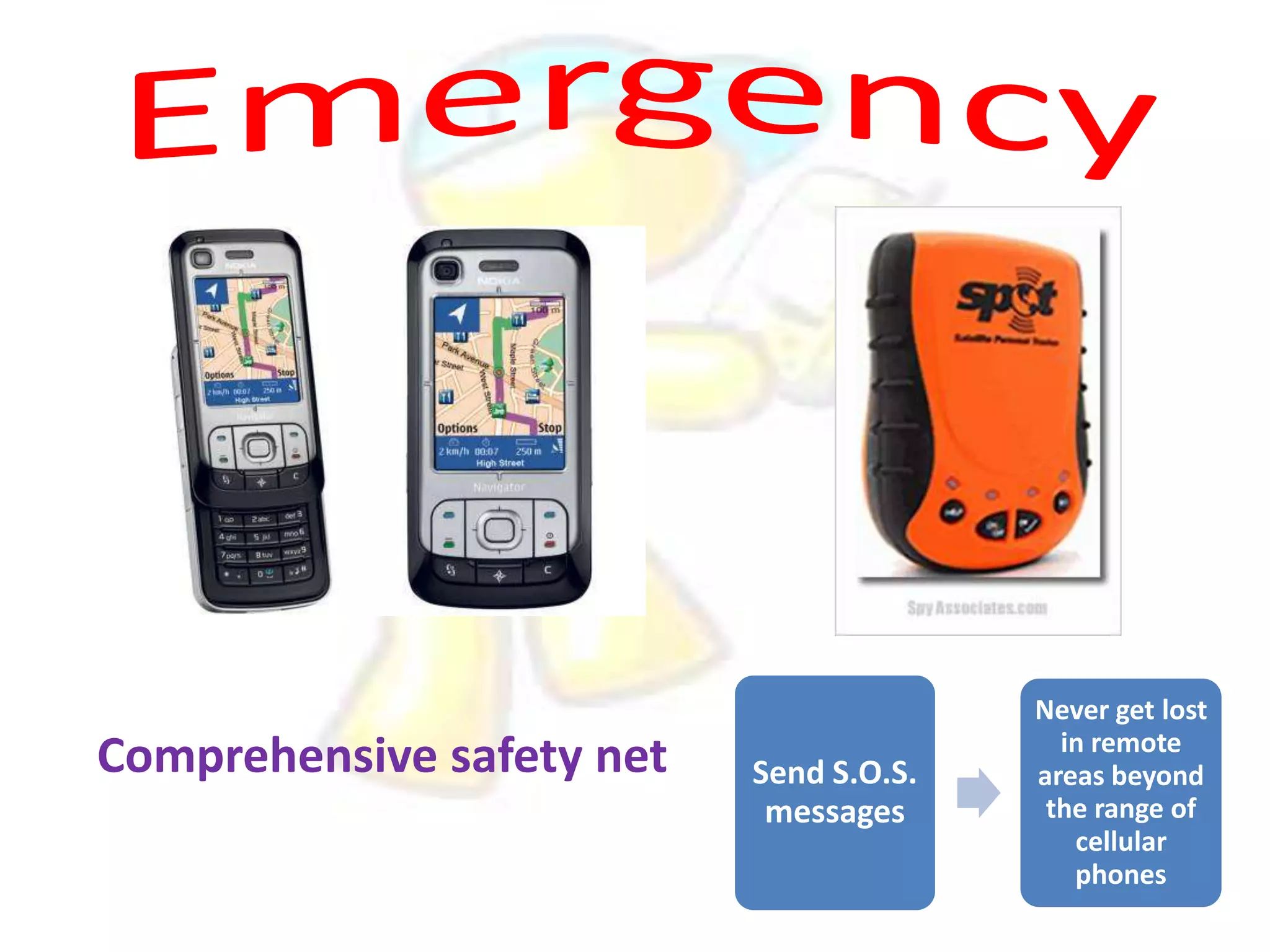
Comprehensive safety net

Send S.O.S.
messages

Never get lost
in remote
areas beyond
the range of
cellular
phones
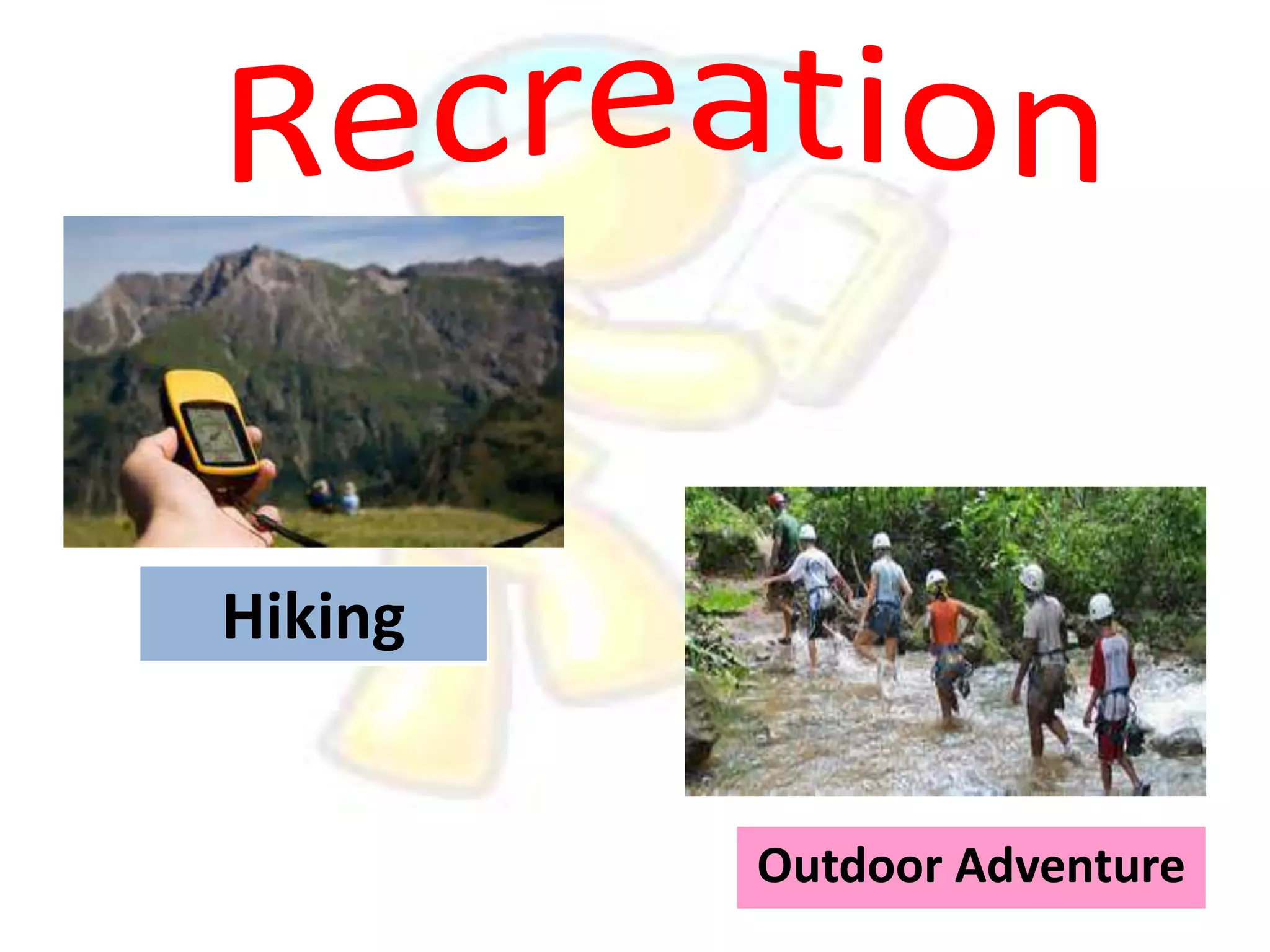
Hiking

Outdoor Adventure
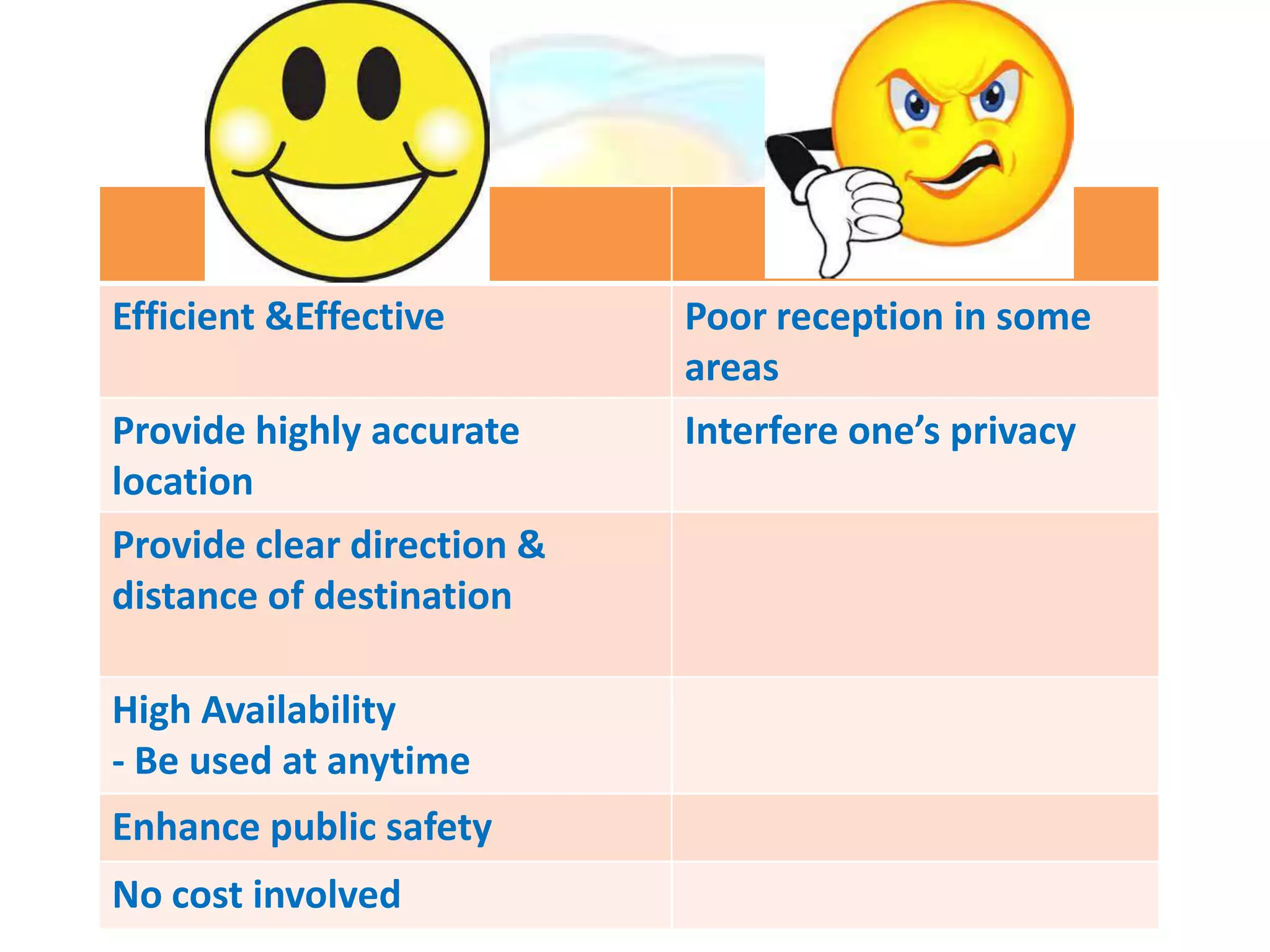
Efficient &Effective
Provide highly accurate
location
Provide clear direction &
distance of destination
High Availability
- Be used at anytime
Enhance public safety
No cost involved

Poor reception in some
areas
Interfere one’s privacy
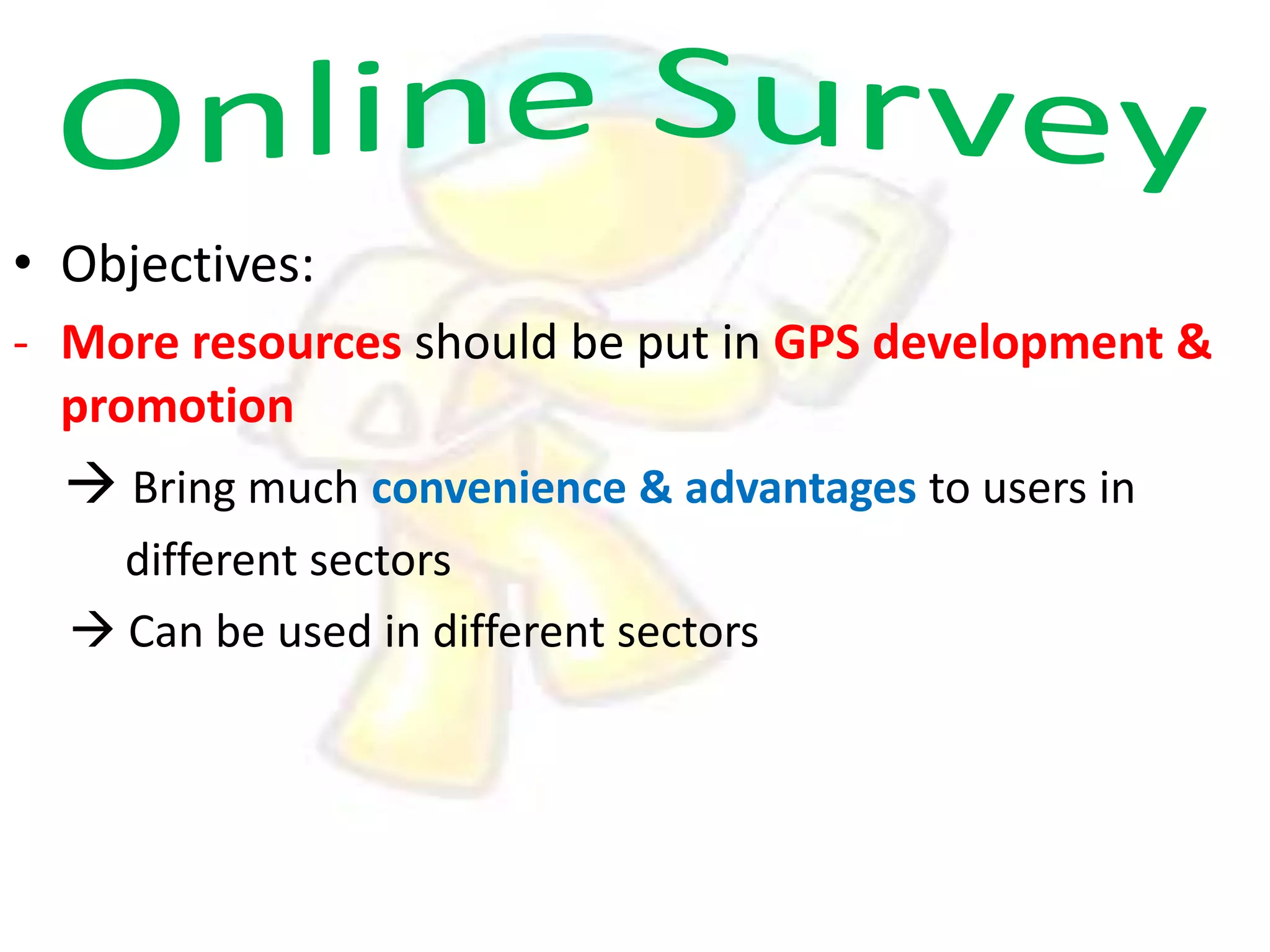
• Objectives:
- More resources should be put in GPS development &
promotion

 Bring much convenience & advantages to users in
different sectors
 Can be used in different sectors
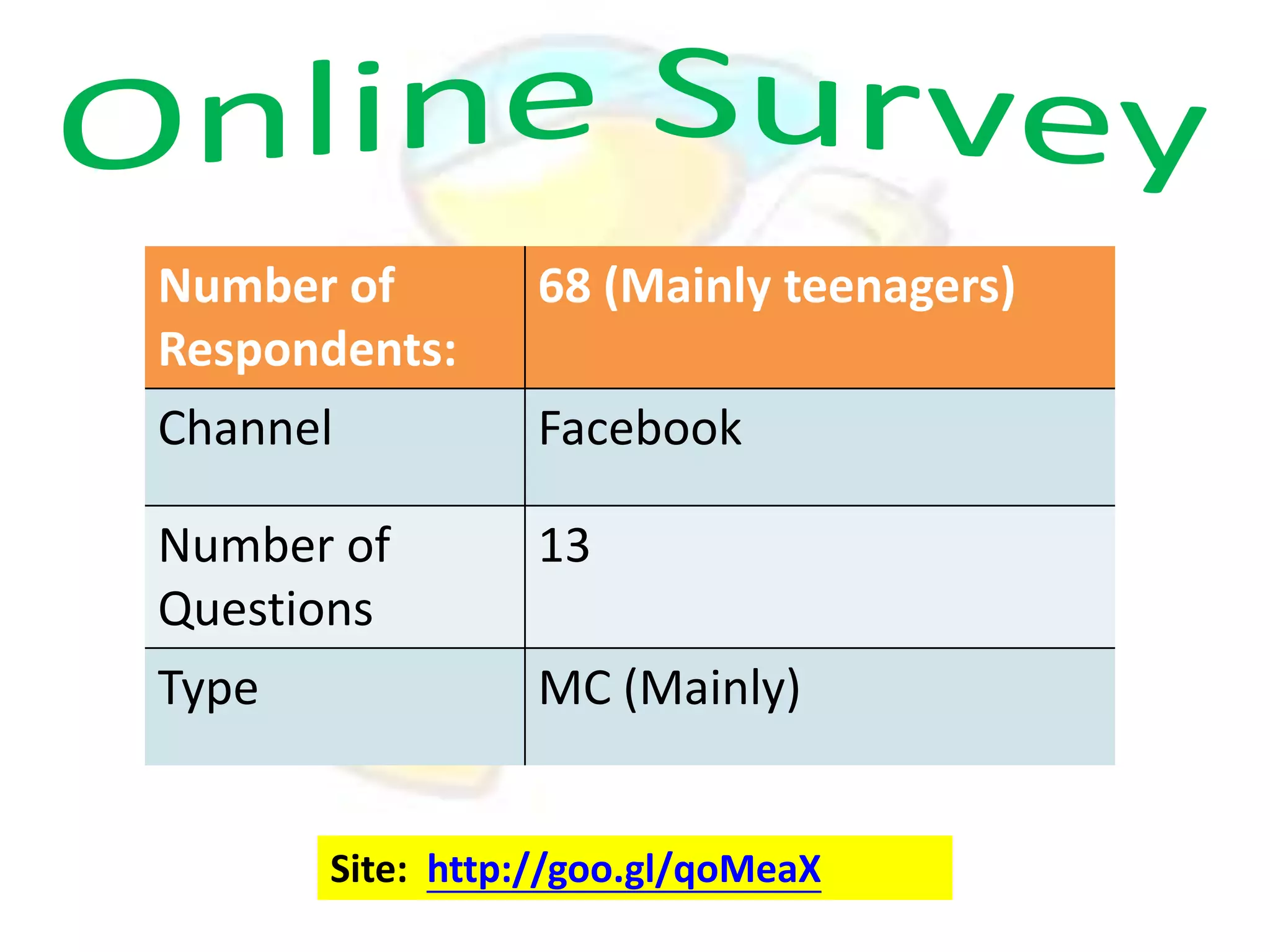
Number of
Respondents:
Channel

68 (Mainly teenagers)

Number of
Questions
Type

13

Facebook

MC (Mainly)

Site: http://goo.gl/qoMeaX
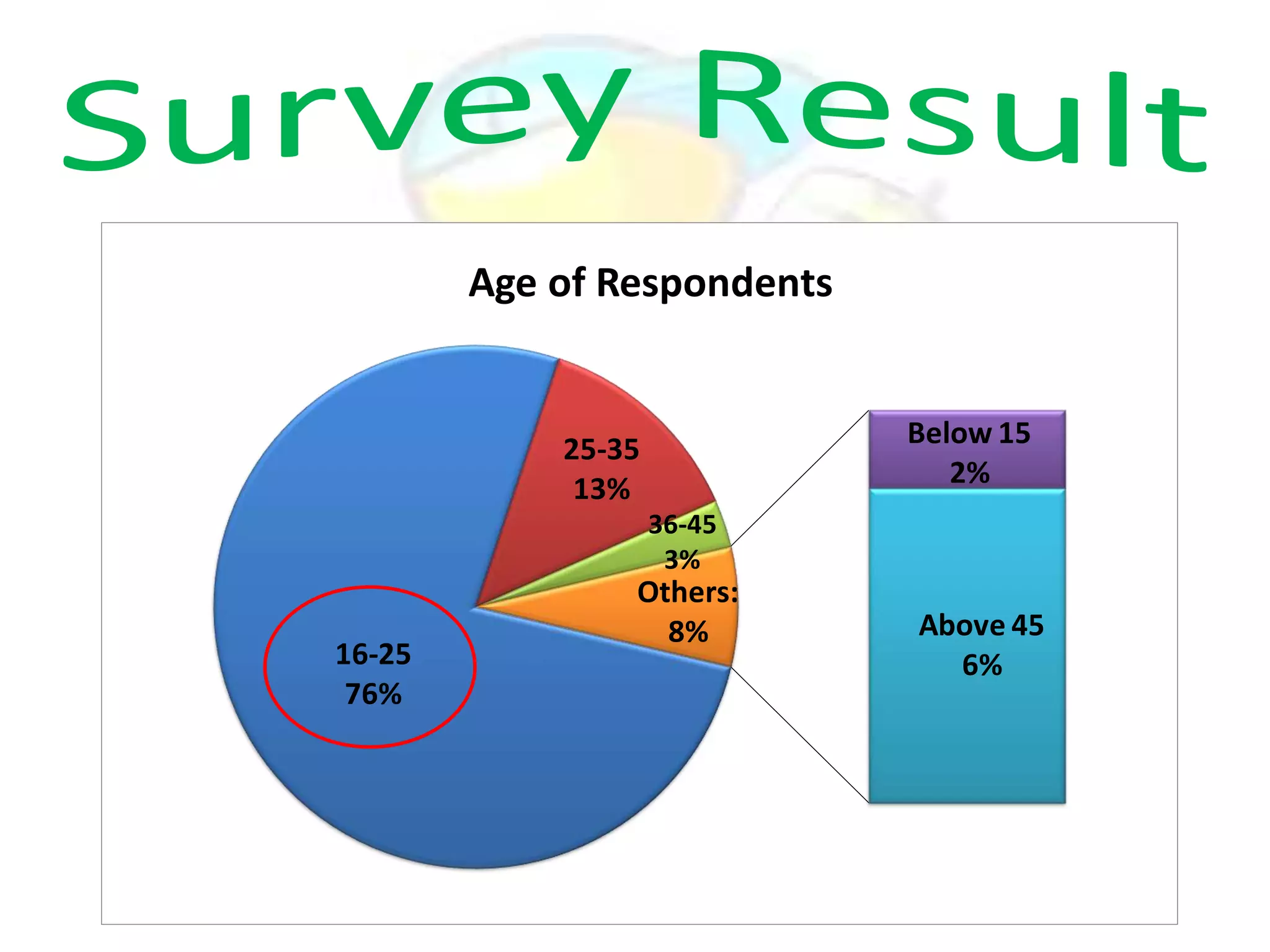
Age of Respondents

Below 15
2%

25-35
13%
36-45
3%

16-25
76%

Others:
8%

Above 45
6%
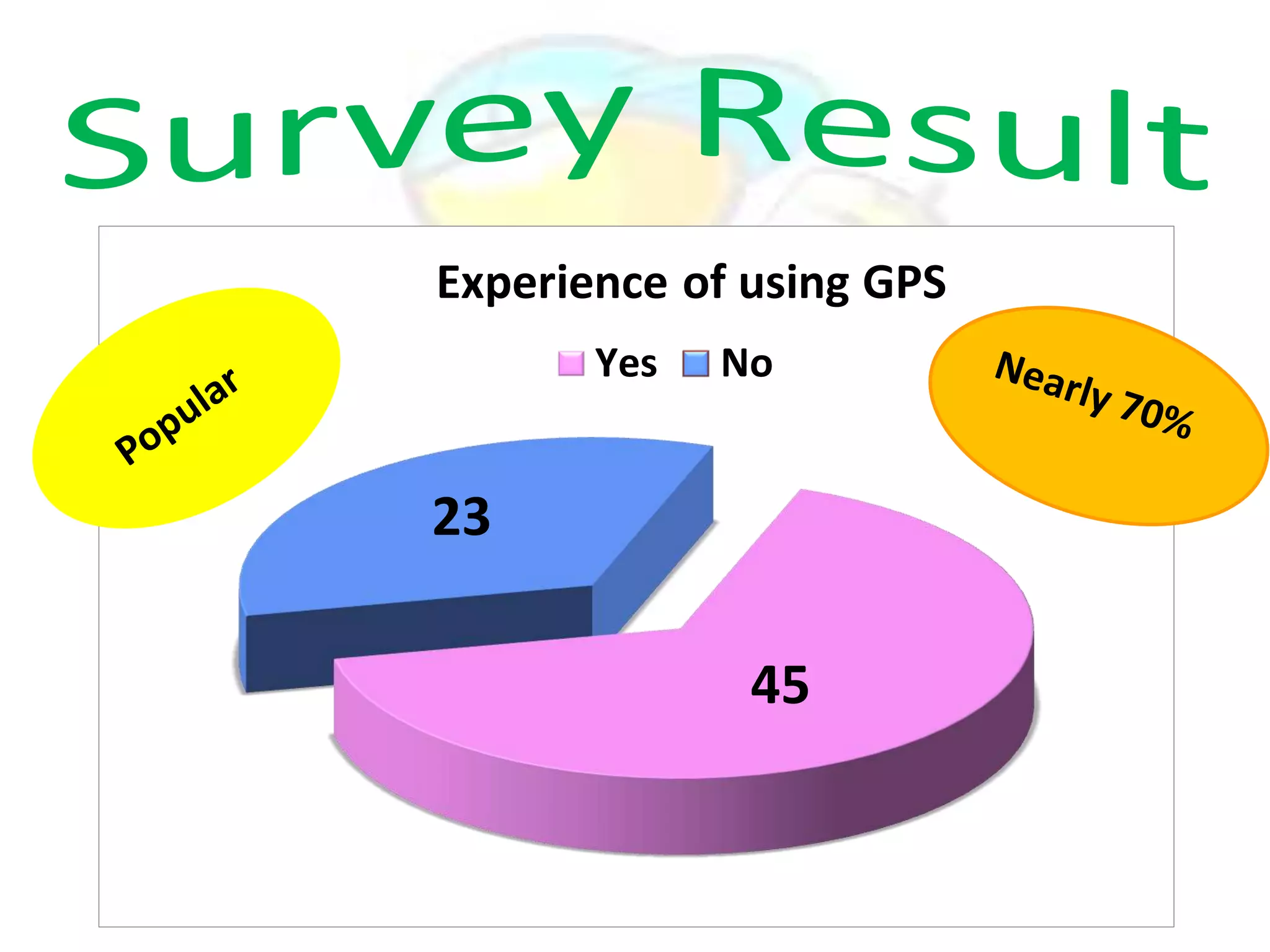
Experience of using GPS
Yes

No

23

45
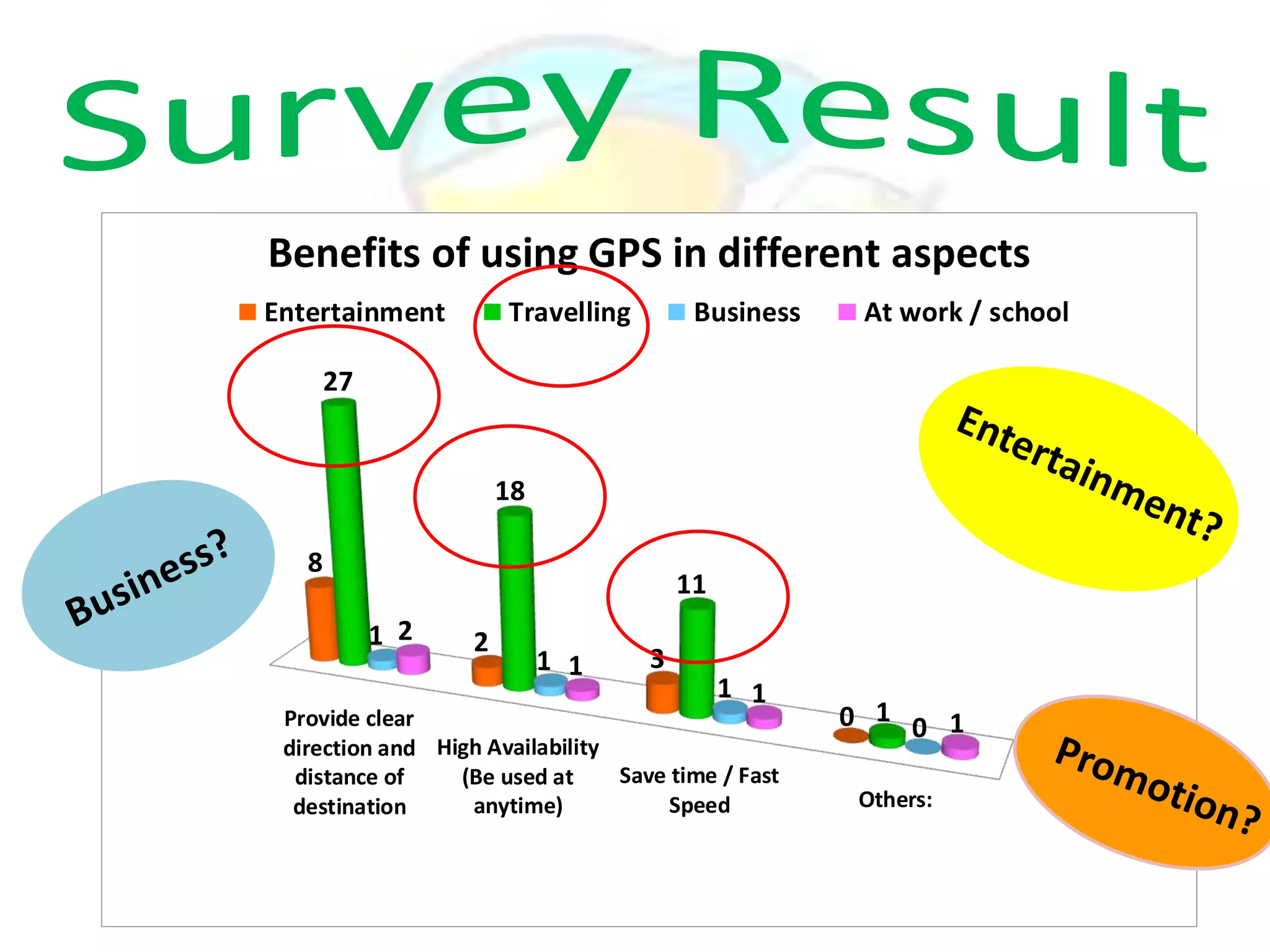
Benefits of using GPS in different aspects
Entertainment

Travelling

Business

At work / school

27

18
8

11
1 2

2

1 1

3

1 1

Provide clear
direction and High Availability
Save time / Fast
(Be used at
distance of
Speed
anytime)
destination

0 1 0 1
Others:
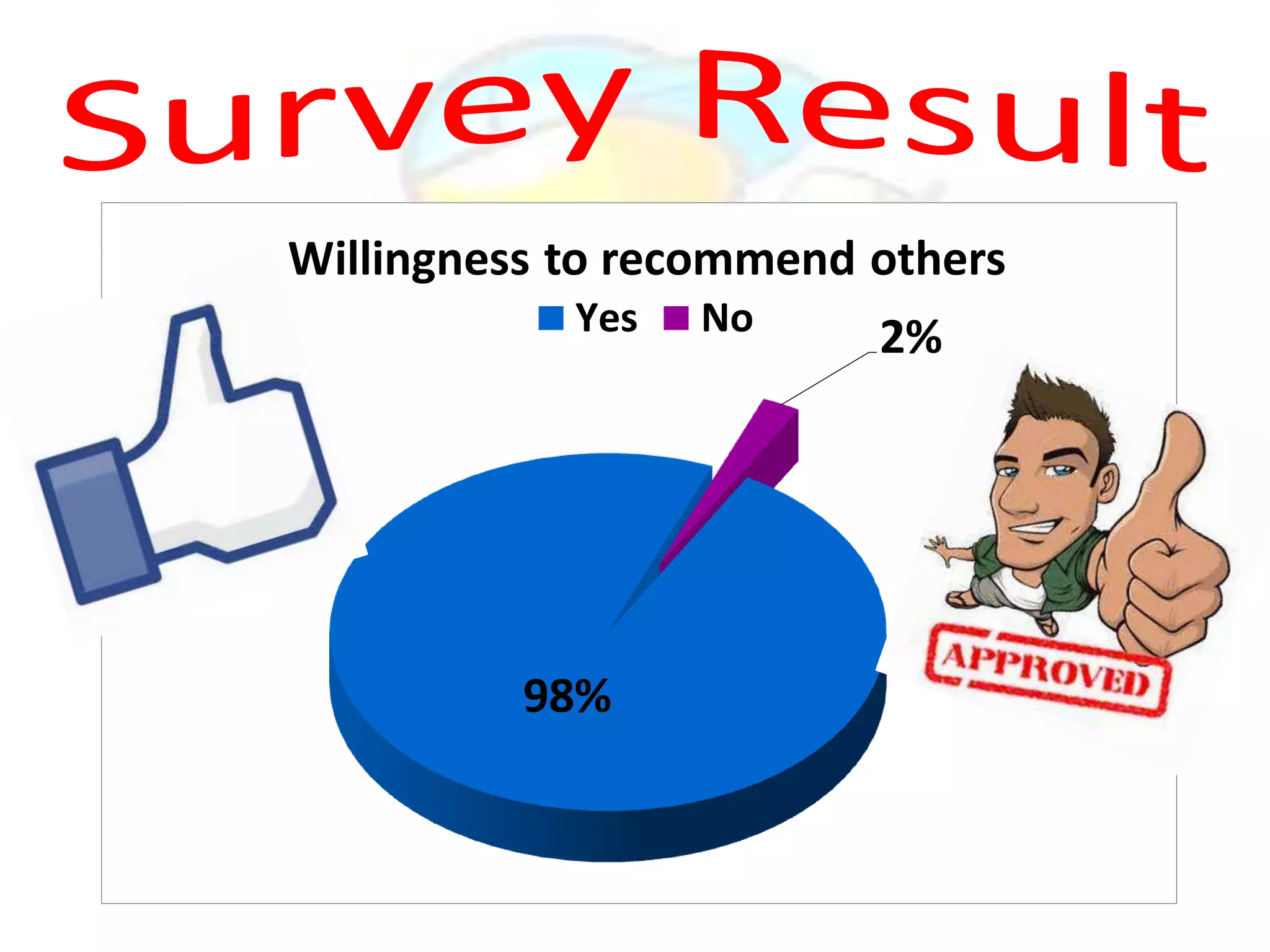
Willingness to recommend others
Yes

98%

No

2%
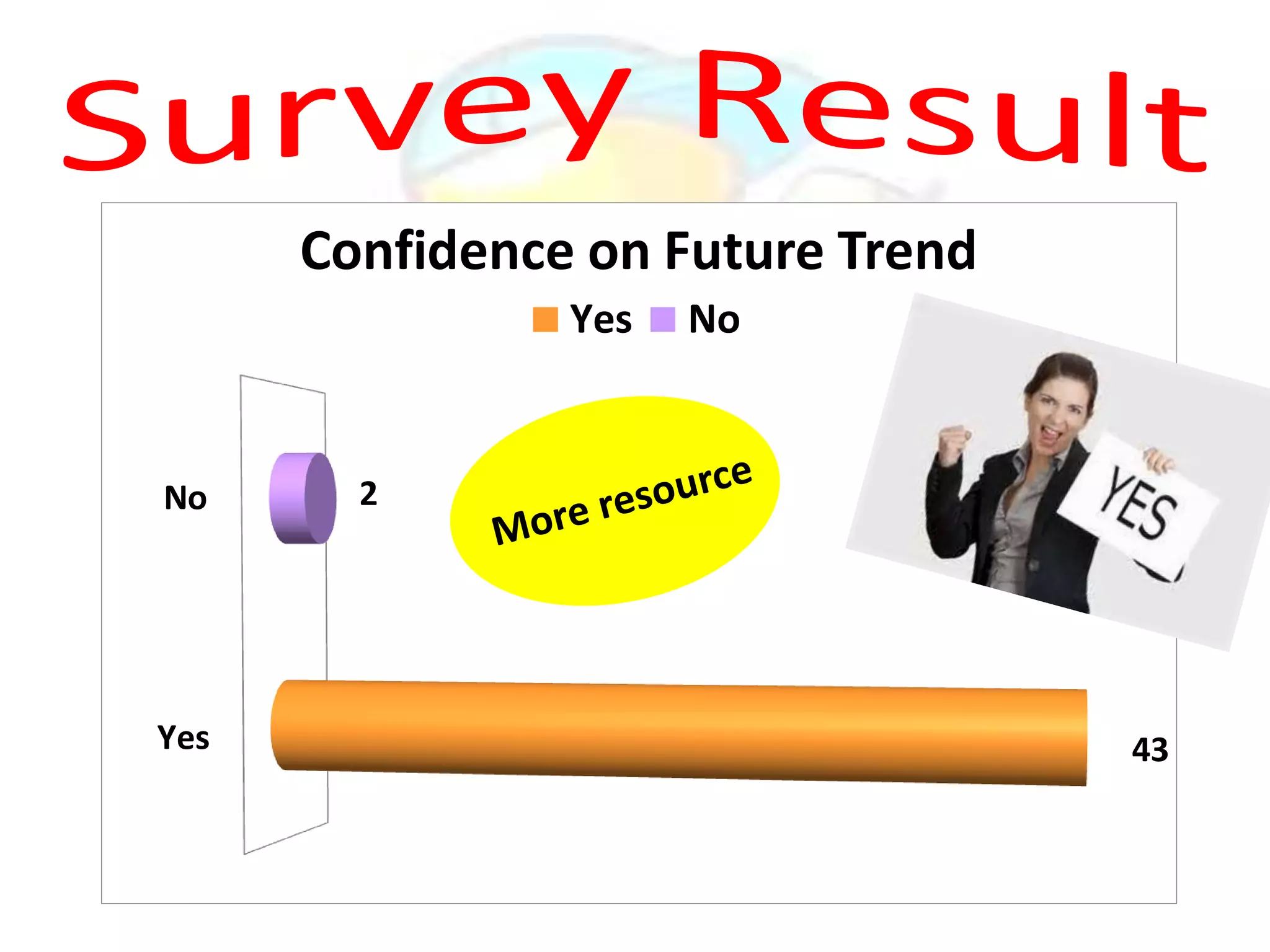
Confidence on Future Trend
Yes

No

Yes

No

2

43
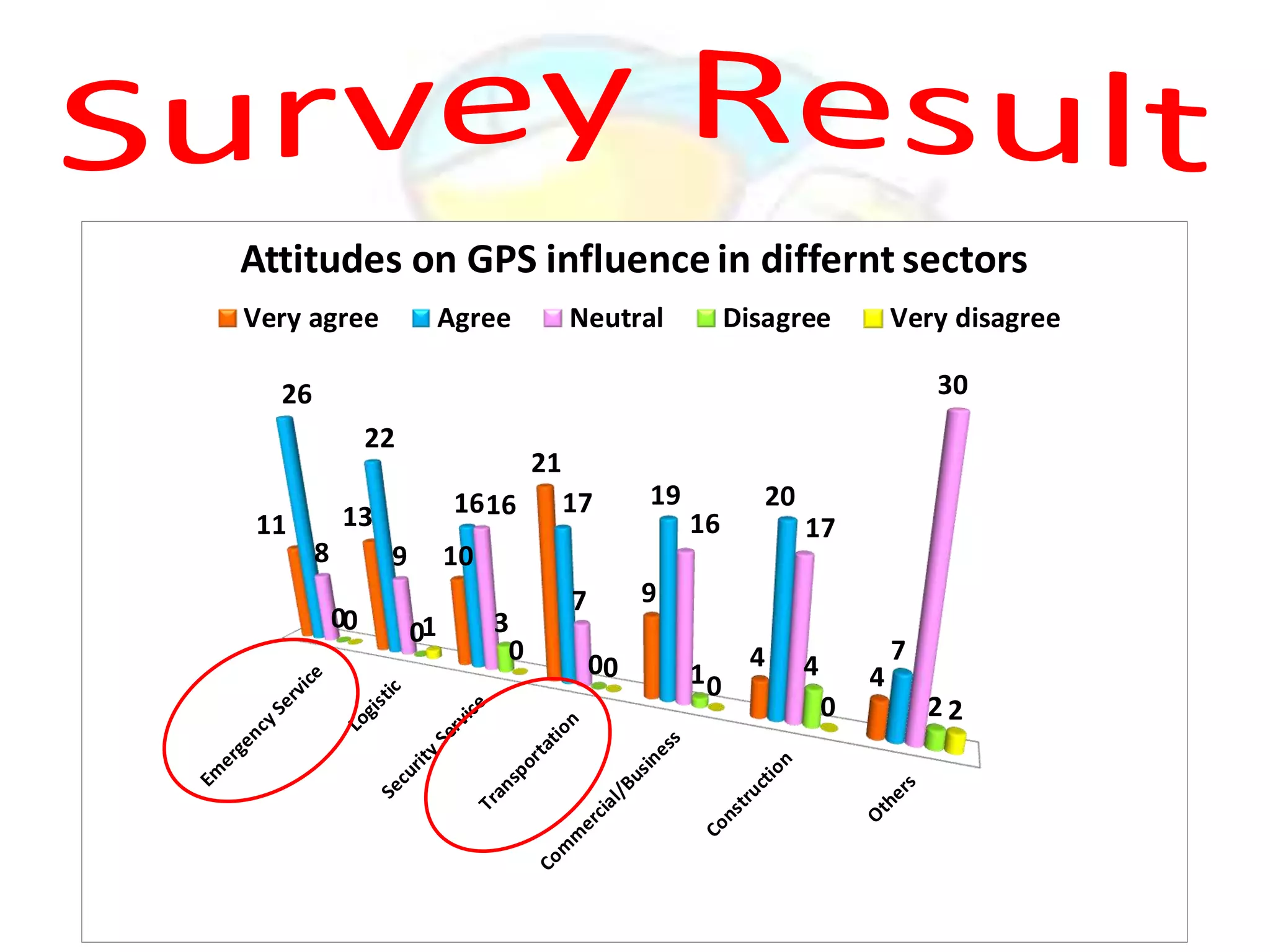
Attitudes on GPS influence in differnt sectors
Very agree

Agree

Neutral

Disagree

Very disagree
30

26
22
11

21

16 16

13
8

19

16

20
17

10

9
00

17

01

3
0

9

7
00

10

4

4
0

4

7
22
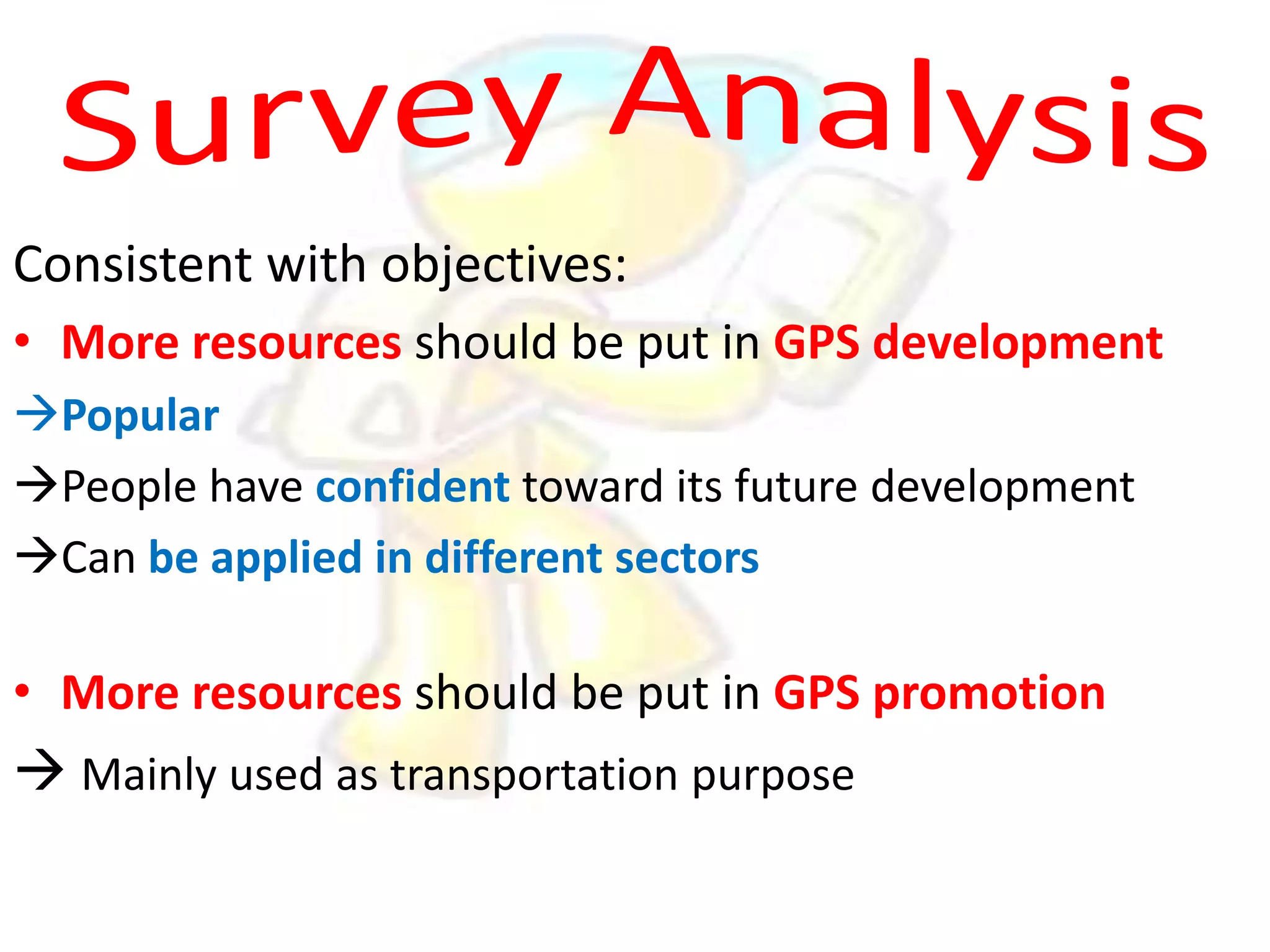
Consistent with objectives:
• More resources should be put in GPS development
Popular
People have confident toward its future development
Can be applied in different sectors

• More resources should be put in GPS promotion

 Mainly used as transportation purpose
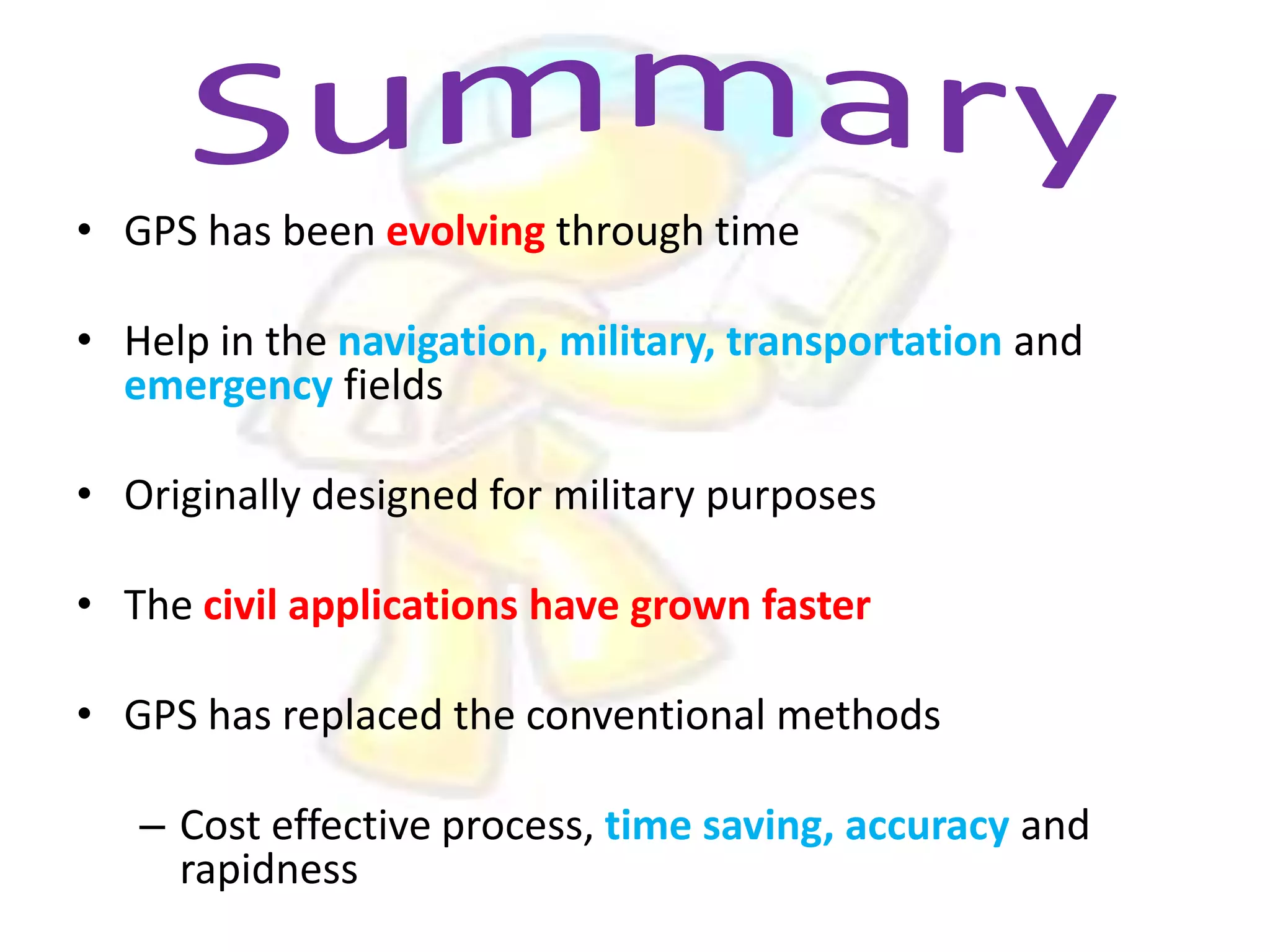
• GPS has been evolving through time

• Help in the navigation, military, transportation and
emergency fields
• Originally designed for military purposes
• The civil applications have grown faster
• GPS has replaced the conventional methods
– Cost effective process, time saving, accuracy and
rapidness
 Kaplan, E. D., & Hegarty, C. (2006). Understanding GPS: Principles and
applications. Boston: Artech House.
 Xu, G., 1953, SpringerLink (Online service), & Springer-Verlag. (2007). GPS:
Theory, algorithms, and applications. Berlin, Heidelberg: Springer-Verlag
Berlin Heidelberg.
 El-Rabbany, A. (2002). Introduction to GPS: The global positioning system.
Boston, MA: Artech House.
 Leick, A., & Lambert, S. (1990). GPS satellite surveying. New York: Wiley.
 Gps application raises privacy flag. (2001, ). Global Positioning & Navigation
News, pp. 1.
 Vehicle navigation dominates the GPS application market. (2012, ). M2
Presswire
 James, R. (2009). A brief history of: GPS. New York: Time Incorporated.
 Charles Plueddeman. (1999). GPS mapping. New York: Bonnier Corporation.
GPS Application
GPS Application

GPS Application

  • 1.
    Cheung Ki Yan(Wissely) 13214993 Cheung Chi Ki (Kathy) 13212907 Cheung Pak Yeung (Vision) 13205404 24 October 2013
  • 2.
    • To enhanceunderstanding about GPS  Background  How it work  Application • To evaluate its potential benefit & harm • To analysis people’s view on GPS (Survey result )
  • 4.
    • What areuses of GPS you can think of?
  • 5.
    Early 70’s GPS project was developed (US Department ofDefense) 1995 Experimental blocks of satellites 70’s - 80’s 24 Satellite constellation in orbit 1994 Full Operational Capability (FOC) GPS on mobile phones 2004
  • 6.
  • 7.
  • 9.
    Transmit information - Time -Location Satellite circle the earth Triangulation Receivers use -Identify triangulation to positions by calculate the user's distance and exact location. angle
  • 10.
     GPS: Very smallclock error, results in a large position error ◦ Receivers use four or more satellites to solve for x, y, z, and t
  • 12.
    Space Segment • Transmitradionavigation signals • Store & retransmit the navigation message sent by the Control Segment Control Segment • Track the GPS satellites • Monitor transmissions • Perform analyses User Segment • Receive GPS signals • Determine pseudoranges • Solve navigation equation
  • 15.
  • 16.
  • 17.
    Comprehensive safety net SendS.O.S. messages Never get lost in remote areas beyond the range of cellular phones
  • 18.
  • 20.
    Efficient &Effective Provide highlyaccurate location Provide clear direction & distance of destination High Availability - Be used at anytime Enhance public safety No cost involved Poor reception in some areas Interfere one’s privacy
  • 21.
    • Objectives: - Moreresources should be put in GPS development & promotion  Bring much convenience & advantages to users in different sectors  Can be used in different sectors
  • 22.
    Number of Respondents: Channel 68 (Mainlyteenagers) Number of Questions Type 13 Facebook MC (Mainly) Site: http://goo.gl/qoMeaX
  • 23.
    Age of Respondents Below15 2% 25-35 13% 36-45 3% 16-25 76% Others: 8% Above 45 6%
  • 24.
    Experience of usingGPS Yes No 23 45
  • 25.
    Benefits of usingGPS in different aspects Entertainment Travelling Business At work / school 27 18 8 11 1 2 2 1 1 3 1 1 Provide clear direction and High Availability Save time / Fast (Be used at distance of Speed anytime) destination 0 1 0 1 Others:
  • 26.
    Willingness to recommendothers Yes 98% No 2%
  • 27.
    Confidence on FutureTrend Yes No Yes No 2 43
  • 28.
    Attitudes on GPSinfluence in differnt sectors Very agree Agree Neutral Disagree Very disagree 30 26 22 11 21 16 16 13 8 19 16 20 17 10 9 00 17 01 3 0 9 7 00 10 4 4 0 4 7 22
  • 29.
    Consistent with objectives: •More resources should be put in GPS development Popular People have confident toward its future development Can be applied in different sectors • More resources should be put in GPS promotion  Mainly used as transportation purpose
  • 31.
    • GPS hasbeen evolving through time • Help in the navigation, military, transportation and emergency fields • Originally designed for military purposes • The civil applications have grown faster • GPS has replaced the conventional methods – Cost effective process, time saving, accuracy and rapidness
  • 33.
     Kaplan, E.D., & Hegarty, C. (2006). Understanding GPS: Principles and applications. Boston: Artech House.  Xu, G., 1953, SpringerLink (Online service), & Springer-Verlag. (2007). GPS: Theory, algorithms, and applications. Berlin, Heidelberg: Springer-Verlag Berlin Heidelberg.  El-Rabbany, A. (2002). Introduction to GPS: The global positioning system. Boston, MA: Artech House.  Leick, A., & Lambert, S. (1990). GPS satellite surveying. New York: Wiley.  Gps application raises privacy flag. (2001, ). Global Positioning & Navigation News, pp. 1.  Vehicle navigation dominates the GPS application market. (2012, ). M2 Presswire  James, R. (2009). A brief history of: GPS. New York: Time Incorporated.  Charles Plueddeman. (1999). GPS mapping. New York: Bonnier Corporation.