Golden rules for diagnosing
   intestinal malrotation
     Dr/Ahmed Bahnassy
    Consultant Radiologist
    Riyadh Military Hospital
Malrotation..the ticking bomb
ANOMALIES of bowel rotation and
fixation, or malrotation, are a
common predisposing cause of volvulus
and obstruction in infancy and
Childhood.
Accurate diagnosis is vital to avoid the
catastrophic consequences of midgut
volvulus
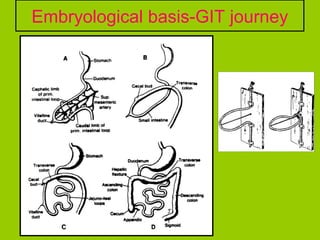
Embryological basis-GIT journey
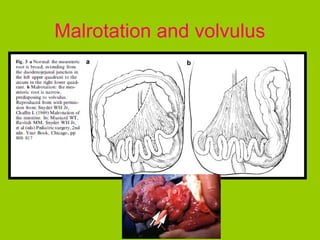
Malrotation and volvulus
Be alert
First, the initial passage of barium through
the duodenum should be observed
directly with fluoroscopy to confirm the
course of the duodenum and the position
of the duodenojejunal junction.
The duodenum often is obscured as the
more distal loops of the small bowel fill
with barium,
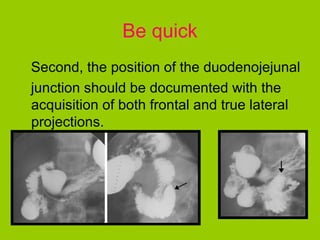
Be quick
Second, the position of the duodenojejunal
junction should be documented with the
acquisition of both frontal and true lateral
projections.
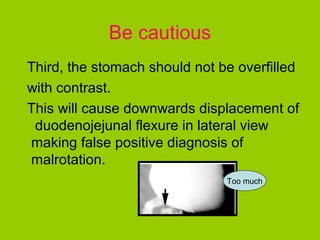
Be cautious
Third, the stomach should not be overfilled
with contrast.
This will cause downwards displacement of
 duodenojejunal flexure in lateral view
making false positive diagnosis of
malrotation.
                               Too much
Be active


• Fourth, manual palpation may be used
  during the upper GI study to determine the
  mobility of the duodenum
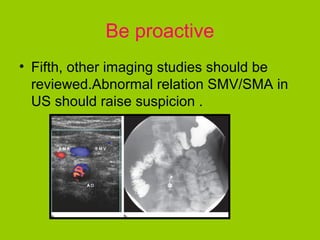
Be proactive
• Fifth, other imaging studies should be
  reviewed.Abnormal relation SMV/SMA in
  US should raise suspicion .
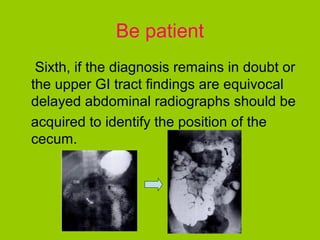
Be patient
 Sixth, if the diagnosis remains in doubt or
the upper GI tract findings are equivocal
delayed abdominal radiographs should be
acquired to identify the position of the
cecum.
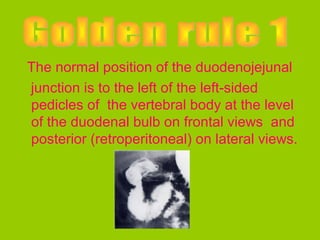
The normal position of the duodenojejunal
junction is to the left of the left-sided
pedicles of the vertebral body at the level
of the duodenal bulb on frontal views and
posterior (retroperitoneal) on lateral views.
Katz criteria..historical article very
    valuable in difficult cases
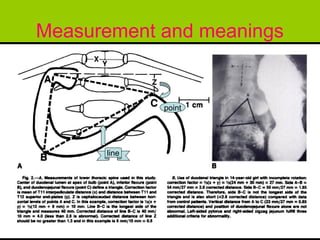
Measurement and meanings


             point


      line
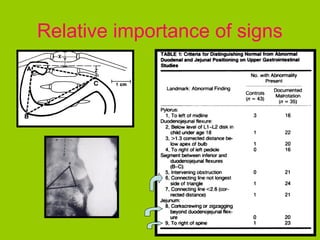
Relative importance of signs
9 points Scoring
(a) location of the pylorus to the left of the
    spine,
(b) Location of the DJJ lower than the
    superior end plate of L-2,

(c) DJJ to the right of the left pedicle .
(d) cephalocaudal distance from the level of
  the apex of the duodenal bulb to the DJJ
  greater than 1.3 cm (adjusted for patient
  size by dividing the actual measurement
  by a correction factor: the sum of the
  interpediculate distance at T-1 I and
  distance between T-11 and T-12 superior
  end plates divided by 2),
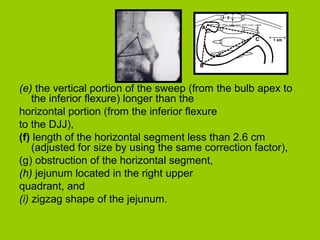
(e) the vertical portion of the sweep (from the bulb apex to
    the inferior flexure) longer than the
horizontal portion (from the inferior flexure
to the DJJ),
(f) length of the horizontal segment less than 2.6 cm
    (adjusted for size by using the same correction factor),
(g) obstruction of the horizontal segment,
(h) jejunum located in the right upper
quadrant, and
(i) zigzag shape of the jejunum.
Survival guide in controversial
               cases
With this system, a single positive
finding is consistent with a normal variant
(score 0 or 1), the presence of two positive
findings is indeterminate (score 2), and the
presence of three is indicative of malrotation
(score 3).
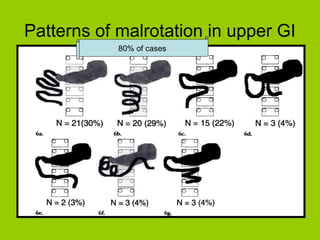
Patterns of malrotation in upper GI
            80% of cases
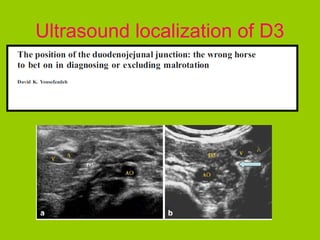
• The third part of duodeum is
  retroperitoneal structure.
• This location excludes malrotation 100%
  as it is the ultimate proof of completion of
  embryonic journey of fetal GIT .
• Useful sign while doing upper GI ..in
  either way + or -.
Ultrasound localization of D3
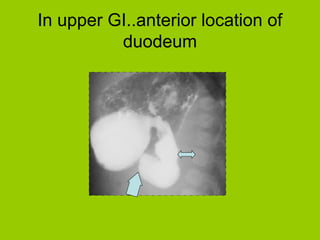
In upper GI..anterior location of
          duodeum
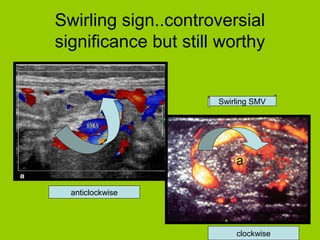
Swirling sign..controversial
significance but still worthy


                      Swirling SMV


  anticlockwise


                          clockwise
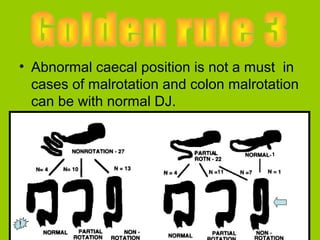
• Abnormal caecal position is not a must in
  cases of malrotation and colon malrotation
  can be with normal DJ.


!
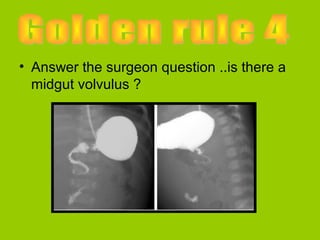
• Answer the surgeon question ..is there a
  midgut volvulus ?
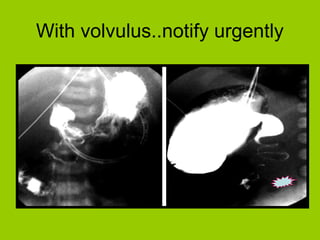
With volvulus..notify urgently
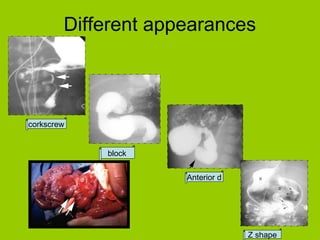
Different appearances


corkscrew


            block


                     Anterior d


                                  Z shape
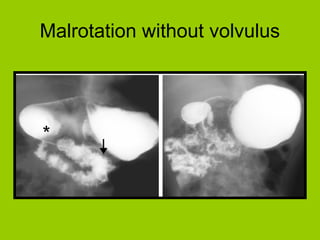
Malrotation without volvulus
• Beware of pitfalls and normal
  variants.
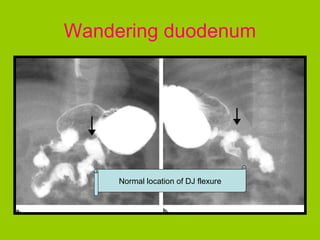
Wandering duodenum


     Normal location of DJ flexure
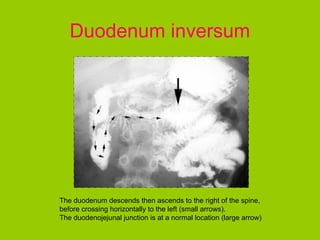
Duodenum inversum


The duodenum descends then ascends to the right of the spine,
before crossing horizontally to the left (small arrows).
The duodenojejunal junction is at a normal location (large arrow)
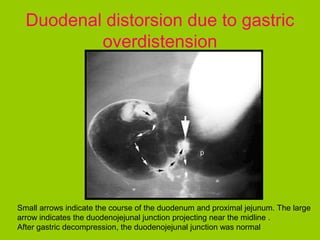
Duodenal distorsion due to gastric
          overdistension


Small arrows indicate the course of the duodenum and proximal jejunum. The large
arrow indicates the duodenojejunal junction projecting near the midline .
After gastric decompression, the duodenojejunal junction was normal
Golden rules for diagnosing intestinal malrotation

Golden rules for diagnosing intestinal malrotation

  • 1.
    Golden rules fordiagnosing intestinal malrotation Dr/Ahmed Bahnassy Consultant Radiologist Riyadh Military Hospital
  • 2.
    Malrotation..the ticking bomb ANOMALIESof bowel rotation and fixation, or malrotation, are a common predisposing cause of volvulus and obstruction in infancy and Childhood. Accurate diagnosis is vital to avoid the catastrophic consequences of midgut volvulus
  • 3.
  • 4.
  • 6.
    Be alert First, theinitial passage of barium through the duodenum should be observed directly with fluoroscopy to confirm the course of the duodenum and the position of the duodenojejunal junction. The duodenum often is obscured as the more distal loops of the small bowel fill with barium,
  • 7.
    Be quick Second, theposition of the duodenojejunal junction should be documented with the acquisition of both frontal and true lateral projections.
  • 8.
    Be cautious Third, thestomach should not be overfilled with contrast. This will cause downwards displacement of duodenojejunal flexure in lateral view making false positive diagnosis of malrotation. Too much
  • 9.
    Be active • Fourth,manual palpation may be used during the upper GI study to determine the mobility of the duodenum
  • 10.
    Be proactive • Fifth,other imaging studies should be reviewed.Abnormal relation SMV/SMA in US should raise suspicion .
  • 11.
    Be patient Sixth,if the diagnosis remains in doubt or the upper GI tract findings are equivocal delayed abdominal radiographs should be acquired to identify the position of the cecum.
  • 13.
    The normal positionof the duodenojejunal junction is to the left of the left-sided pedicles of the vertebral body at the level of the duodenal bulb on frontal views and posterior (retroperitoneal) on lateral views.
  • 14.
    Katz criteria..historical articlevery valuable in difficult cases
  • 15.
  • 16.
  • 17.
    9 points Scoring (a)location of the pylorus to the left of the spine, (b) Location of the DJJ lower than the superior end plate of L-2, (c) DJJ to the right of the left pedicle .
  • 18.
    (d) cephalocaudal distancefrom the level of the apex of the duodenal bulb to the DJJ greater than 1.3 cm (adjusted for patient size by dividing the actual measurement by a correction factor: the sum of the interpediculate distance at T-1 I and distance between T-11 and T-12 superior end plates divided by 2),
  • 19.
    (e) the verticalportion of the sweep (from the bulb apex to the inferior flexure) longer than the horizontal portion (from the inferior flexure to the DJJ), (f) length of the horizontal segment less than 2.6 cm (adjusted for size by using the same correction factor), (g) obstruction of the horizontal segment, (h) jejunum located in the right upper quadrant, and (i) zigzag shape of the jejunum.
  • 20.
    Survival guide incontroversial cases With this system, a single positive finding is consistent with a normal variant (score 0 or 1), the presence of two positive findings is indeterminate (score 2), and the presence of three is indicative of malrotation (score 3).
  • 21.
    Patterns of malrotationin upper GI 80% of cases
  • 22.
    • The thirdpart of duodeum is retroperitoneal structure. • This location excludes malrotation 100% as it is the ultimate proof of completion of embryonic journey of fetal GIT . • Useful sign while doing upper GI ..in either way + or -.
  • 23.
  • 24.
    In upper GI..anteriorlocation of duodeum
  • 25.
    Swirling sign..controversial significance butstill worthy Swirling SMV anticlockwise clockwise
  • 26.
    • Abnormal caecalposition is not a must in cases of malrotation and colon malrotation can be with normal DJ. !
  • 27.
    • Answer thesurgeon question ..is there a midgut volvulus ?
  • 28.
  • 29.
    Different appearances corkscrew block Anterior d Z shape
  • 30.
  • 31.
    • Beware ofpitfalls and normal variants.
  • 32.
    Wandering duodenum Normal location of DJ flexure
  • 33.
    Duodenum inversum The duodenumdescends then ascends to the right of the spine, before crossing horizontally to the left (small arrows). The duodenojejunal junction is at a normal location (large arrow)
  • 34.
    Duodenal distorsion dueto gastric overdistension Small arrows indicate the course of the duodenum and proximal jejunum. The large arrow indicates the duodenojejunal junction projecting near the midline . After gastric decompression, the duodenojejunal junction was normal