Emergency CT: Update	

Rathachai Kaewlai, MD	

Division of Emergency Radiology	

Department of Radiology, Ramathibodi Hospital, Bangkok,Thailand	

31st Annual Scientific Meeting “Update and Future Challenges in Health Care” 	

Faculty of Medicine, Khon Kaen University, 7 October 2015
Ramathibodi 	

Emergency Radiology
Outline	

Trauma pan-scan CT	

CTA for active bleeding (ICH, hemoptysis, GI bleed)	

Stroke multiphase CTA
PAN-SCAN
Trauma CT	

Selective or “Pan scan”	

Pan scan = scanning
from head to pelvis in
one shot	


Pre-contrast head CT	


Post-contrast neck, chest,
abdomen and pelvis
Trauma Pan-Scan: Indications	

One of these:	


RR >30 or <10	


PR >120	


sBP <100	


EBL >500 mL	


GCS <13	


Abnormal pupil
react	

Clinically suspicious	

•  Fractures >2 long bones	

•  Flail chest, open chest or
multiple rib fractures	

•  Severe abdominal injury	

•  Pelvic fracture	

•  Unstable vertebral
fractures/spinal cord
compression	

Injury mechanism	

•  Fall from height (>3m)	

•  Ejection from vehicle	

•  Death occupant in same
vehicle	

•  Severely injured patient
in same vehicle	

•  Wedged of trapped
chest/abdomen	

http://www.react2.nl/?id=16&p=14&lng=EN
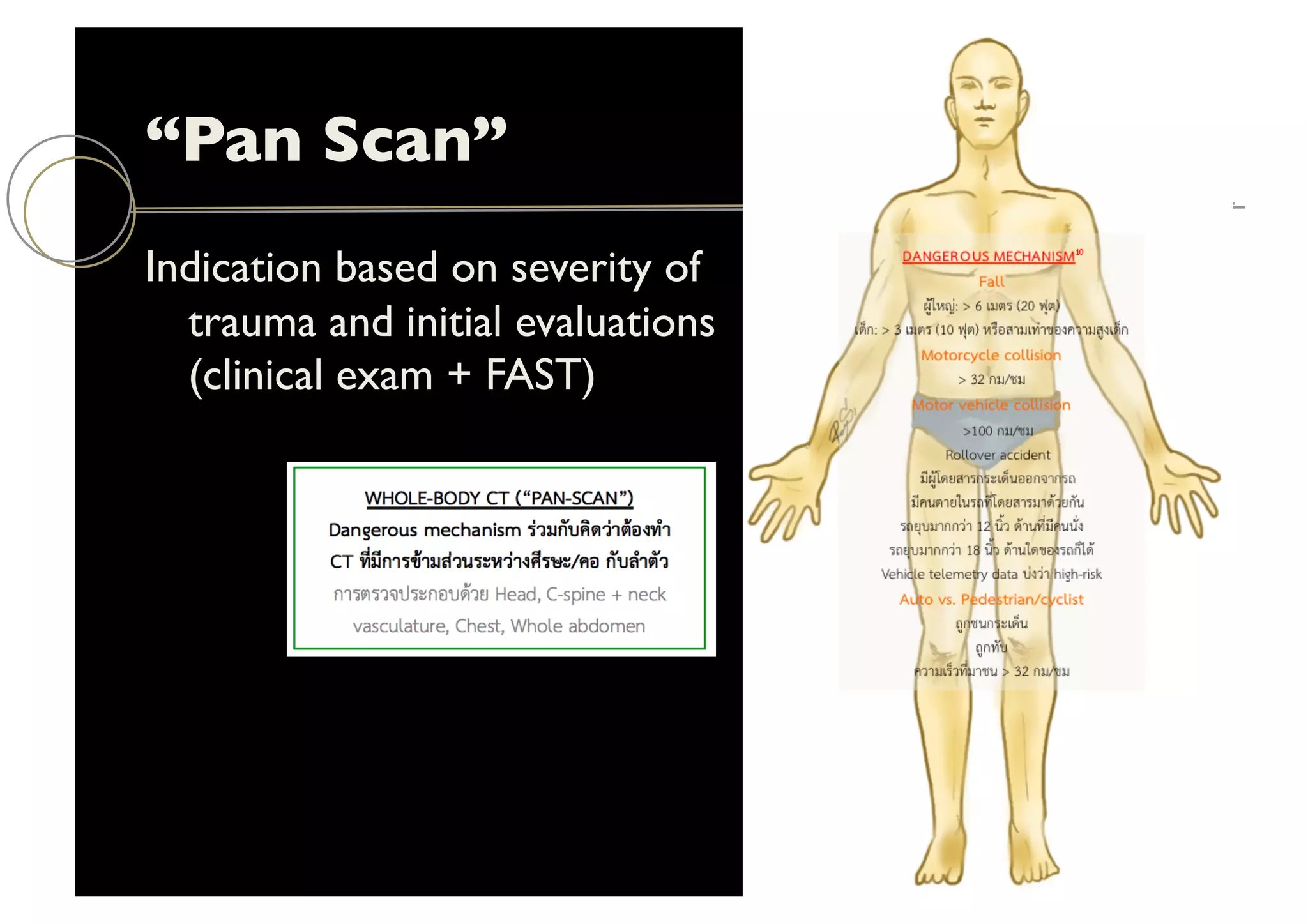
“Pan Scan”	

Indication based on severity of
trauma and initial evaluations
(clinical exam + FAST)
20-year-old woman, motorcycle vs. car	

SDH, SAH, midline shift, tonsillar herniation	

Vitreous hemorrhages, skull base fracture	

Pulmonary contusions, pneumothorax	

Gluteal hematoma with active extravasation	

Hypoperfusion complex
40-year-old man, motorcycle vs. car	

SDH	

Thoracic aortic injury	

Complex acetabular fracture
“Pan Scan”	

Should it replace other imaging in the primary survey
(CXR, PXR, FAST and selective CT)?	

CXR	

PXR	

FAST	

Selective CT	

Pan scan 	

CT	

 V
“Pan Scan”	

Caputo ND, et al. JTrauma Acute Care Surg 2014
REACT-2 Trial: Results 
(Presented at ASER2015)	

RCT comparing standard imaging (x-rays, FAST,
selective CT) and pan-scan CT in 5 European centers	

1078 patients (539 per group) included 	

“Bad” trauma or mechanism of injury (65% ISS16)
REACT-2 Trial: Results 
(Presented at ASER2015)	

Similar ISS,TRISS, other background info	

In-hospital mortality: 2.4% lower for polytrauma patients
in pan-scan, not different overall	

Shorter time for imaging	

(similar direct costs, no difference in radiation exposure)
CTA FOR ACTIVE BLEEDING:
ICH, HEMOPTYSIS, GI BLEED
Active Bleeding	

Timely localization of active
hemorrhage of internal organs
possible because of faster CT	

Especially true in trauma patients	

Guiding initial Rx of trauma	

Use in non-trauma acute bleeds still limited but
gaining attention	

“Bleed” Scott Reinwand,YouTube.com
Primary Intracerebral
Hemorrhage	

Hemorrhagic stroke = deadliest stroke	

Strongest predictor of mortality = initial hematoma vol	


Not modifiable	

“Hematoma expansion” 	


Potentially modifiable predictor	


30% or 6 mL growth of hematoma	


~40% of ICH	


Correlated with poor functional outcome and death	


Attractive target of Rx trials
Primary Intracerebral
Hemorrhage	

“Hematoma expansion” 	

30% or 6 mL growth of hematoma	

~40% of ICH	

Correlated with poor functional outcome and death	

Attractive target of Rx trials
Can We Predict Hematoma
Expansion?	

“CTA spot sign”	

Intrahematoma contrast following CTA	

Represents site of active extravasation in early ICH	

Spot sign growth = 	


[spot vol (delayed) – spot vol (initial)]	


 elapsed time	

Dowlatshahi D, et al. Stroke 2014;45:277	

Image credit: smh.com.au
51yo F, known valvular heart disease S/P valve replacement, on warfarin	

1 day	

 2 days	

CTA	

 Post
78yo M, HTN, CKD with AOC for 8 hrs “Multiple spot signs”	

CTA	

 Post	

CTV	

CTA	

 Post	

CTV
CTA Spot Sign	

Prevalence of spot sign in primary ICH 	


13-32%	

Predicting hematoma expansion (%)	


Sensitivity 	


38-93	


Specificity 	


50-93	


PPV 	


22-77	


NPV	


78-98	


Accuracy 	


56-90	


PLR 	


1.86-10.99	


NLR	


0.30-0.73	

Giudice AD, et al. Cerebrovasc Dis 2014;37: 268	

75%
CTA Spot Sign: Imaging Marker	

Hematoma expansion	

Active bleeding during surgery	

Postoperative rebleeding	

In-hospital death 	

90-day mortality	

May help selecting patients with pICH for specific
therapy (medical, surgical hemostasis)	

Brouwers HB, et al. Neurology 2014;83: 883	

Brouwers HB, et al. Stroke 2015;46: 2498
Severe Hemoptysis	

Life-threatening	

Without bleeding control – mortality 50%	

Indications for intervention (bronchial embolization)	


Volume 200 mL/24-48h	


Acute respiratory failure	


Erosion of pulmonary artery
Clinical Bedside Evaluation vs.
CTA	

Clinical	

 CTA	

Lateralization	

 93.1	

 87.4	

Lobar location	

 82.7	

 85.0	

Etiology	

 70.1	

 86.2	

Rx change	

- Medical	

- Embo	

- Pulm a. occlusion	

21.8	

Comparing bedside eval
vs. CTA in 87 patients
with severe hemoptysis	

Those needing emergent
FOB excluded	

67% bronchiectasis	

92% bronchial systemic
bleeds	

Chalumeau-Lemoine L, et al. Eur J Radiol 2013
CTA in Severe Hemoptysis	

Bleeding site	

Bleeding vessels (PA involved or not)	

Bronchial artery network (normotopic, atypical,
ectopic, non-bronchial systemic arteries)	

Etiology
CTA: Site of The Bleed 	

Bleeding side and precise localization of hemoptysis
essential for Rx (airway protection, embo, surgery)	

Parenchymal bleed	


Consolidation	


GGO	

PA pseudoaneurysm
CTA: Bleeding Vessels	

90% systemic arteries (BA, and non-bronchial systemic)	

10% pulmonary arteries	

Direct signs of bleeding from pulmonary artery	


Pulmonary artery aneurysms	


Lung consolidation with necrosis and irregular PA
Bronchial Artery Network	

By excluding PA as a source, hemoptysis likely from
systemic artery	

CTA more accurate than angiography for identifying BA
and NBSA	

Anatomical variants	

Catheterization difficulties a/w age atherosclerosis	

Except: middle anterior spinal artery of high T-cord
76yo F hemoptysis during PA pressure measurement	

Bleeding site: RML	

Bleeding vessel: Pulmonary artery	

BA network: N/A	

Etiology:Traumatic pseudoaneurysm of PA branch
69yo M	

Bleeding site: RUL	

Bleeding vessel: Pulmonary artery	

BA network: N/A	

Etiology:TB Rasmussen pseudoaneurysm
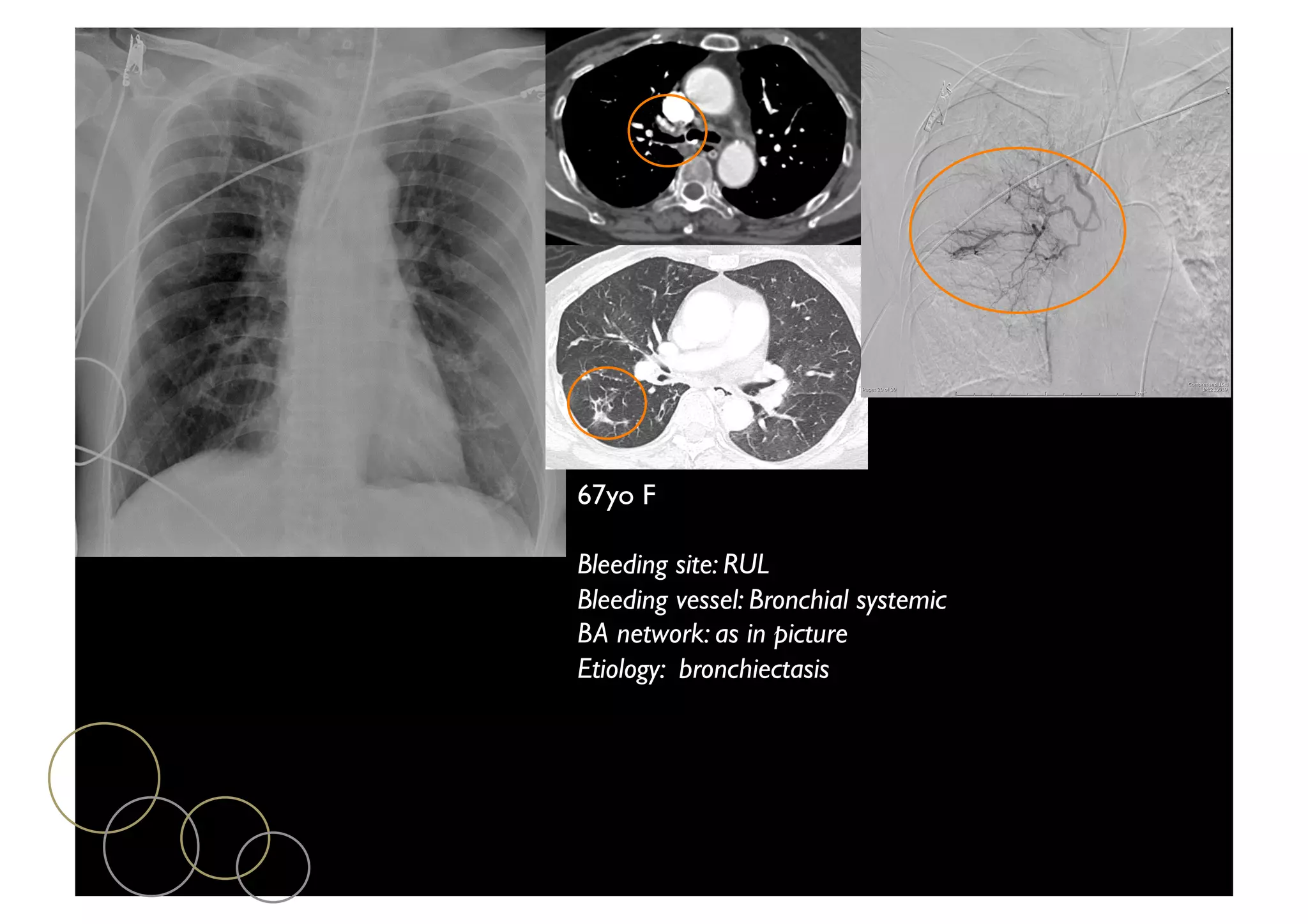
67yo F	

Bleeding site: RUL	

Bleeding vessel: Bronchial systemic	

BA network: as in picture	

Etiology: bronchiectasis
54yo M, 	

Bleeding site: RUL	

Bleeding vessel: Bronchial systemic	

BA network: as in picture	

Etiology:TB
CTA Algorithm for Severe
Hemoptysis	

Bleeding
Site	

Bronchoscopy	

No	

 Yes	

BA
Network	

BA 	

- Normotopic	

- Atypical	

- Ectopic	

NBSA	

Bleeding
Vessels	

PA involvement?	

PA
emboli
zation	

Systemic
artery
embolizat
ion	

No	

Yes	

Khalil A, et al. Diagn Interv Imaging 2015;96: 775	

Etiology	

Cancer	

Bronchiectasis	

TB	

Mycetoma	

Others	

Cryptogenic
Overt Lower GI Bleeding	

GI bleeding visible: melena, hematochezia	


UGIB more common but prevalence is changing	

Mortality 2-20% (40% if hemodynamically unstable)	

Colonoscopy often not helpful 	


Identify source of bleed in only 13-40% of cases	


Limited therapeutic advantage over endovascular Rx
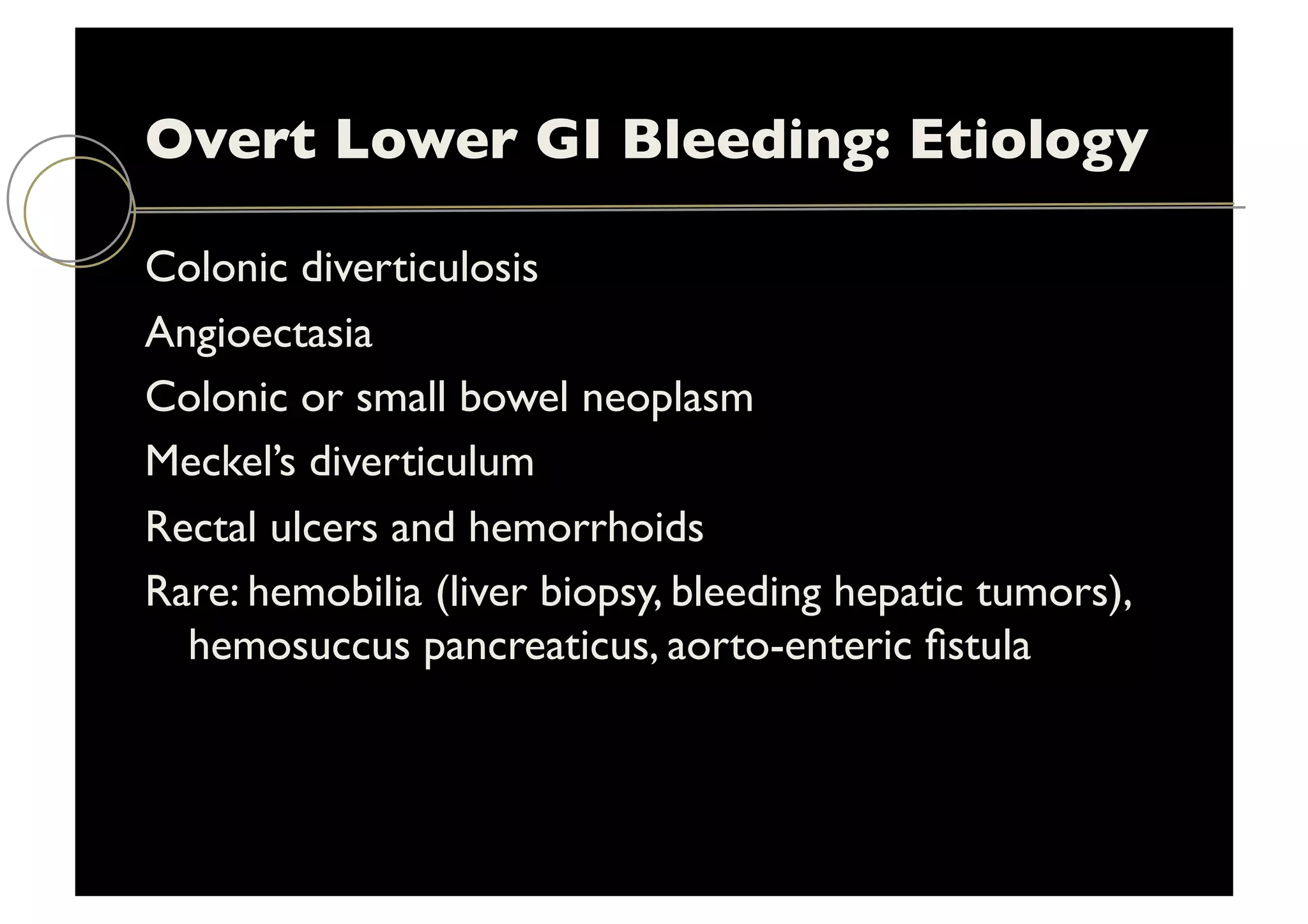
Overt Lower GI Bleeding: Etiology	

Colonic diverticulosis	

Angioectasia	

Colonic or small bowel neoplasm	

Meckel’s diverticulum	

Rectal ulcers and hemorrhoids	

Rare: hemobilia (liver biopsy, bleeding hepatic tumors),
hemosuccus pancreaticus, aorto-enteric fistula
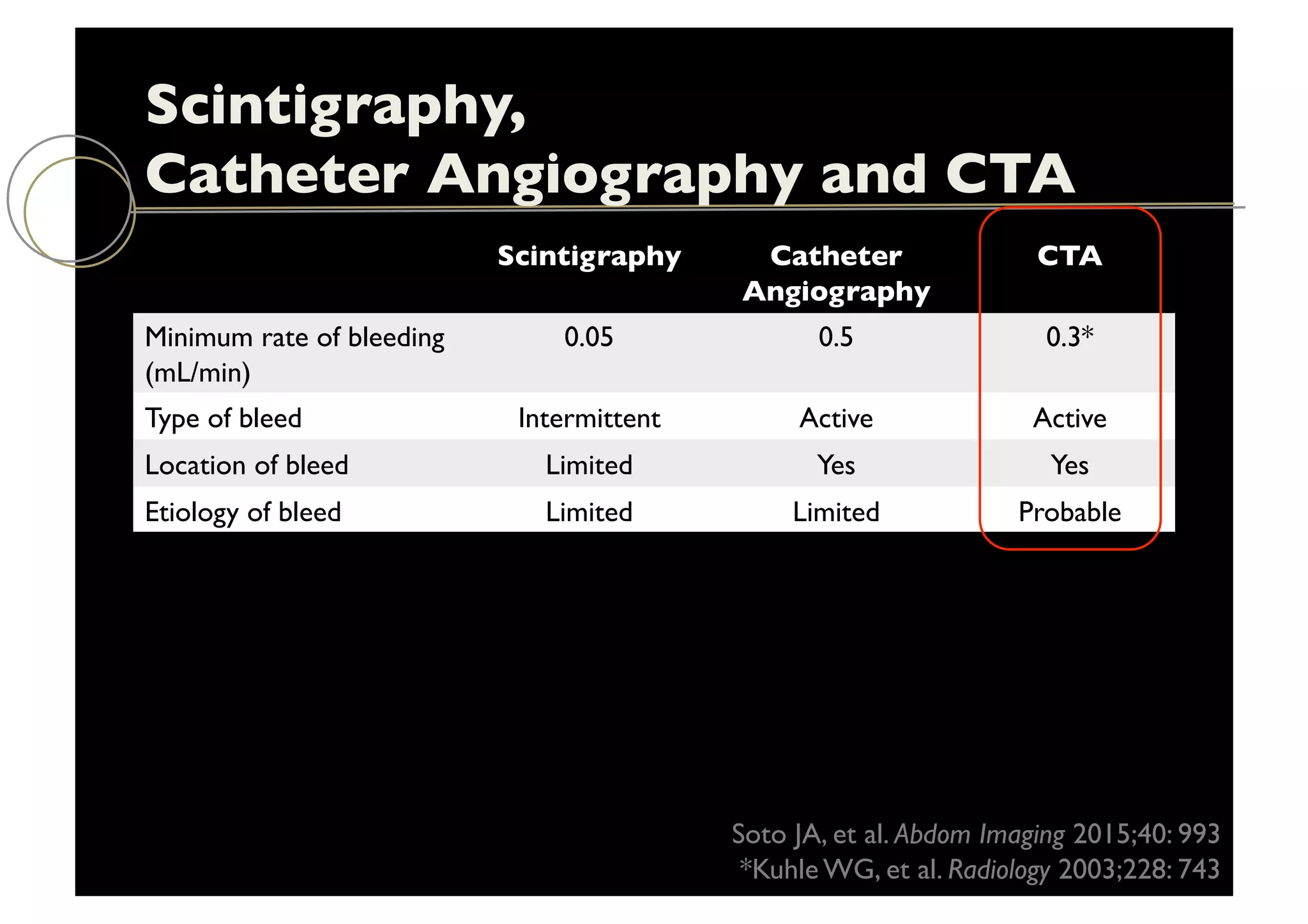
Scintigraphy, 
Catheter Angiography and CTA	

Scintigraphy	

 Catheter
Angiography	

CTA	

Minimum rate of bleeding
(mL/min)	

0.05	

 0.5	

 0.3*	

Type of bleed	

 Intermittent	

 Active	

 Active	

Location of bleed	

 Limited	

 Yes	

 Yes	

Etiology of bleed	

 Limited	

 Limited	

 Probable	

Soto JA, et al. Abdom Imaging 2015;40: 993	

*Kuhle WG, et al. Radiology 2003;228: 743
CTA: Overt LGIB 	

90% source in colon and rectum	

Accuracy for identifying source of bleed 80-90%	

Non-contrast, CTA, venous phase. No enteric contrast
CTA: Findings of Overt LGIB	

Hyperattenuating focus (blush) of variable size in
arterial phase (jet may be present if arterial source)	

Change morphology and location on venous phase	


Move distally and larger
78yo M with abdominal distension, SMA branch active contrast extravasation	

CTA	

 Venous
43yo M, HIV with lymphoma, dropped Hct	

Venous	

Plain	

 Delayed
CTA: Diagnostic Performance	

Systematic review and meta-analysis, 672 patients in 22
studies with reference standards of endoscopy,
angiography and surgery	

494 positive cases (prevalence 74%)	

Sensitivity 	


85.2 %	

Specificity 	


92.1%	

Accuracy 	


93.5%	

PLR 	


10.8%	

NLR 	


0.16% 	

Garcia-BlazquezV, et al. Eur Radiol 2013;23: 1181
STROKE “MULTIPHASE” CTA:
A NEW TOOL FOR ACUTE STROKE
Acute Ischemic Stroke	

Newer mechanical devices – rapid/successful
recanalization possible and now standard	

Clinical outcome depends on 	


Salvageable brain at presentation	


Early recanalization	

Ideal imaging selection tool should enable one to detect
salvageable brain quickly, reliably, and widely available
Factors Determining Potential Rx	

Brain parenchyma – infarct core (size)	

Large vessel – occlusion (presence)	

Collateral circulation (grading)	

MRI-DWI	

CTA	

Multiphase CTA	

NCCT, CTA-SI
CTA: Cerebral Vasculature	

Sensitivity 97-100% and
specificity 98-100% to detect
proximal intracranial
occlusions and stenosis	

Proximal occlusion results in
large infarcts, which have high
likelihood of hemorrhagic
transformation but greatest
benefit from IA Rx
Evaluation of Collateral
Circulation	

Good leptomeningeal/pial collaterals beneficial in stroke	

Repeated acquisitions after routine CTA = multiphase	


“Multiphase CTA”	

Degree and extent of pial arterial filling of whole brain
in a time-resolved manner	

Assess collaterals better than one phase	

Avoid pitfalls of false occlusion on CTA
Multiphase CTA - Interpretation	

Score	

 Delayed
Filling	

Prominence	

 Extent	

Good	

 5	

 No	

 Normal or increased	

 Symmetric	

4	

 1 phase	

 Normal	

 Symmetric	

Intermediate	

 3	

 2 phases	

 Normal	

 Normal	

1 phase	

 Decreased	

 Decreased	

2	

 2 phases	

 Decreased	

 Decreased	

1 phase	

 No vessels in some
areas	

No vessels in some
areas	

Poor	

 1	

 3 phases	

 A few vessels visible	

 A few vessels visible	

0	

 3 phases	

 No vessels visible	

 No vessels visible	

Menon BK, et al. Radiology 2015;275: 510	

For MCA territory occlusion	

Comparing with contralateral asymptomatic side
Multiphase CTA 	

147 patients	

Interrater reliability	

n=30, k=0.81, 	

P.001	

Menon BK, et al. Radiology 2015;275: 510
Multiphase CTA	

Predicting clinical outcome at 24 hours	


Best = baseline infarct volume (80 vs. 80 mL)	


2nd best = multiphase CTA (score 3 vs. 3)	

Predicting clinical outcome at 90 days	


Best = multiphase CTA (score 3 vs. 3)	


2nd best = single-phase CTA (score 2 vs. 2)	

Better than CTP mismatch ratio	

Menon BK, et al. Radiology 2015;275: 510
47yo F, NIHSS 20, 	

Rt hemispheric symptoms 2 hrs	

ASPECTS score = 7	

mCTA:	

Rt M1 occlusion	

Delayed collaterals filling 2 phases
with decreased prominence/extent	

Collaterals score = 2 (Intermediate)	

IA Rx not recommended 	

Images from Menon BK, et al. Radiology 2015;275: 510	

CTP:	

Blue = infarct core = 100 mL	

IA Rx not recommended	

Congruent mCTA and CTP	

No IA Rx
87yo F, NIHSS 15, 	

Lt hemispheric symptoms 2 hrs	

ASPECTS score = 6	

mCTA:	

Lt M1 occlusion	

Delayed collaterals 1 phase at worst	

Collaterals score = 4 (Good)	

IA Rx recommended 	

CTP:	

Blue = infarct core = 0 mL (no blue)	

IA Rx recommended	

Congruent mCTA and CTP	

IA Rx performed by not successful	

Images from Menon BK, et al. Radiology 2015;275: 510
Images from Menon BK, et al. Radiology 2015;275: 510	

78yo F, NIHSS 18, 	

Rt hemispheric symptoms 1.5 hrs	

ASPECTS score = 8	

mCTA:	

Rt M1 occlusion	

Delayed collaterals 1 phase	

Collaterals score = 4 (Good)	

IA Rx recommended 	

CTP:	

Blue = infarct core = 113 mL	

IA Rx not recommended	

Incongruent mCTA and
CTP	

IA Rx performed with success
ASPECTS score = 8	

mCTA:	

Left M1 occlusion	

Delayed collaterals 1 phase	

Decreased prominence 	

Collaterals score = 3
(intermediate)	

5 days	

IA Rx not recommended
and was not performed
1 day	

49yo M	

ASPECTS score = 8 	

mCTA:	

Partial right M1 occlusion	

Delayed collateral 1 phase	

Normal prominence/extent	

Collaterals score = 4
(Good)	

IA Rx recommended but
not performed
Summary: Pan-scan CT 	

Good to go esp. high-severity trauma	

Not inferior to standard of care (CXR, PXR, FAST +
selective CT)	

Trauma Centers: please set up protocols and indications
Summary: CTA for active bleeding	

Primary intracerebral hemorrhage	


CTA spot sign	


Predictive of hematoma expansion and outcome	

Severe hemoptysis evaluation	


Bleeding site, vessels, BA network, etiology	

LGIB	


Useful for pre-embolization
Summary: Multiphase CTA in
acute stroke evaluation	

NCCT-mCTA is a new paradigm for acute stroke
imaging	

Collaterals evaluation valuable for IA Rx decision,
probably better than CTP	

Stroke onset, NIHSS, ASPECTS, Collaterals score 	


(+/- DWI)
THANK YOU VERY MUCH
FOR YOUR ATTENTION	

Rathachai Kaewlai, MD

Emergency CT: Updates

  • 1.
    Emergency CT: Update RathachaiKaewlai, MD Division of Emergency Radiology Department of Radiology, Ramathibodi Hospital, Bangkok,Thailand 31st Annual Scientific Meeting “Update and Future Challenges in Health Care” Faculty of Medicine, Khon Kaen University, 7 October 2015
  • 2.
  • 3.
    Outline Trauma pan-scan CT CTAfor active bleeding (ICH, hemoptysis, GI bleed) Stroke multiphase CTA
  • 4.
  • 5.
    Trauma CT Selective or“Pan scan” Pan scan = scanning from head to pelvis in one shot Pre-contrast head CT Post-contrast neck, chest, abdomen and pelvis
  • 6.
    Trauma Pan-Scan: Indications Oneof these: RR >30 or <10 PR >120 sBP <100 EBL >500 mL GCS <13 Abnormal pupil react Clinically suspicious •  Fractures >2 long bones •  Flail chest, open chest or multiple rib fractures •  Severe abdominal injury •  Pelvic fracture •  Unstable vertebral fractures/spinal cord compression Injury mechanism •  Fall from height (>3m) •  Ejection from vehicle •  Death occupant in same vehicle •  Severely injured patient in same vehicle •  Wedged of trapped chest/abdomen http://www.react2.nl/?id=16&p=14&lng=EN
  • 7.
    “Pan Scan” Indication basedon severity of trauma and initial evaluations (clinical exam + FAST)
  • 8.
    20-year-old woman, motorcyclevs. car SDH, SAH, midline shift, tonsillar herniation Vitreous hemorrhages, skull base fracture Pulmonary contusions, pneumothorax Gluteal hematoma with active extravasation Hypoperfusion complex
  • 9.
    40-year-old man, motorcyclevs. car SDH Thoracic aortic injury Complex acetabular fracture
  • 10.
    “Pan Scan” Should itreplace other imaging in the primary survey (CXR, PXR, FAST and selective CT)? CXR PXR FAST Selective CT Pan scan CT V
  • 11.
    “Pan Scan” Caputo ND,et al. JTrauma Acute Care Surg 2014
  • 12.
    REACT-2 Trial: Results (Presented at ASER2015) RCT comparing standard imaging (x-rays, FAST, selective CT) and pan-scan CT in 5 European centers 1078 patients (539 per group) included “Bad” trauma or mechanism of injury (65% ISS16)
  • 13.
    REACT-2 Trial: Results (Presented at ASER2015) Similar ISS,TRISS, other background info In-hospital mortality: 2.4% lower for polytrauma patients in pan-scan, not different overall Shorter time for imaging (similar direct costs, no difference in radiation exposure)
  • 14.
    CTA FOR ACTIVEBLEEDING: ICH, HEMOPTYSIS, GI BLEED
  • 15.
    Active Bleeding Timely localizationof active hemorrhage of internal organs possible because of faster CT Especially true in trauma patients Guiding initial Rx of trauma Use in non-trauma acute bleeds still limited but gaining attention “Bleed” Scott Reinwand,YouTube.com
  • 16.
    Primary Intracerebral Hemorrhage Hemorrhagic stroke= deadliest stroke Strongest predictor of mortality = initial hematoma vol Not modifiable “Hematoma expansion” Potentially modifiable predictor 30% or 6 mL growth of hematoma ~40% of ICH Correlated with poor functional outcome and death Attractive target of Rx trials
  • 17.
    Primary Intracerebral Hemorrhage “Hematoma expansion” 30% or 6 mL growth of hematoma ~40% of ICH Correlated with poor functional outcome and death Attractive target of Rx trials
  • 18.
    Can We PredictHematoma Expansion? “CTA spot sign” Intrahematoma contrast following CTA Represents site of active extravasation in early ICH Spot sign growth = [spot vol (delayed) – spot vol (initial)] elapsed time Dowlatshahi D, et al. Stroke 2014;45:277 Image credit: smh.com.au
  • 19.
    51yo F, knownvalvular heart disease S/P valve replacement, on warfarin 1 day 2 days CTA Post
  • 20.
    78yo M, HTN,CKD with AOC for 8 hrs “Multiple spot signs” CTA Post CTV CTA Post CTV
  • 21.
    CTA Spot Sign Prevalenceof spot sign in primary ICH 13-32% Predicting hematoma expansion (%) Sensitivity 38-93 Specificity 50-93 PPV 22-77 NPV 78-98 Accuracy 56-90 PLR 1.86-10.99 NLR 0.30-0.73 Giudice AD, et al. Cerebrovasc Dis 2014;37: 268 75%
  • 22.
    CTA Spot Sign:Imaging Marker Hematoma expansion Active bleeding during surgery Postoperative rebleeding In-hospital death 90-day mortality May help selecting patients with pICH for specific therapy (medical, surgical hemostasis) Brouwers HB, et al. Neurology 2014;83: 883 Brouwers HB, et al. Stroke 2015;46: 2498
  • 23.
    Severe Hemoptysis Life-threatening Without bleedingcontrol – mortality 50% Indications for intervention (bronchial embolization) Volume 200 mL/24-48h Acute respiratory failure Erosion of pulmonary artery
  • 24.
    Clinical Bedside Evaluationvs. CTA Clinical CTA Lateralization 93.1 87.4 Lobar location 82.7 85.0 Etiology 70.1 86.2 Rx change - Medical - Embo - Pulm a. occlusion 21.8 Comparing bedside eval vs. CTA in 87 patients with severe hemoptysis Those needing emergent FOB excluded 67% bronchiectasis 92% bronchial systemic bleeds Chalumeau-Lemoine L, et al. Eur J Radiol 2013
  • 25.
    CTA in SevereHemoptysis Bleeding site Bleeding vessels (PA involved or not) Bronchial artery network (normotopic, atypical, ectopic, non-bronchial systemic arteries) Etiology
  • 26.
    CTA: Site ofThe Bleed Bleeding side and precise localization of hemoptysis essential for Rx (airway protection, embo, surgery) Parenchymal bleed Consolidation GGO PA pseudoaneurysm
  • 27.
    CTA: Bleeding Vessels 90%systemic arteries (BA, and non-bronchial systemic) 10% pulmonary arteries Direct signs of bleeding from pulmonary artery Pulmonary artery aneurysms Lung consolidation with necrosis and irregular PA
  • 28.
    Bronchial Artery Network Byexcluding PA as a source, hemoptysis likely from systemic artery CTA more accurate than angiography for identifying BA and NBSA Anatomical variants Catheterization difficulties a/w age atherosclerosis Except: middle anterior spinal artery of high T-cord
  • 29.
    76yo F hemoptysisduring PA pressure measurement Bleeding site: RML Bleeding vessel: Pulmonary artery BA network: N/A Etiology:Traumatic pseudoaneurysm of PA branch
  • 30.
    69yo M Bleeding site:RUL Bleeding vessel: Pulmonary artery BA network: N/A Etiology:TB Rasmussen pseudoaneurysm
  • 31.
    67yo F Bleeding site:RUL Bleeding vessel: Bronchial systemic BA network: as in picture Etiology: bronchiectasis
  • 32.
    54yo M, Bleedingsite: RUL Bleeding vessel: Bronchial systemic BA network: as in picture Etiology:TB
  • 33.
    CTA Algorithm forSevere Hemoptysis Bleeding Site Bronchoscopy No Yes BA Network BA - Normotopic - Atypical - Ectopic NBSA Bleeding Vessels PA involvement? PA emboli zation Systemic artery embolizat ion No Yes Khalil A, et al. Diagn Interv Imaging 2015;96: 775 Etiology Cancer Bronchiectasis TB Mycetoma Others Cryptogenic
  • 34.
    Overt Lower GIBleeding GI bleeding visible: melena, hematochezia UGIB more common but prevalence is changing Mortality 2-20% (40% if hemodynamically unstable) Colonoscopy often not helpful Identify source of bleed in only 13-40% of cases Limited therapeutic advantage over endovascular Rx
  • 35.
    Overt Lower GIBleeding: Etiology Colonic diverticulosis Angioectasia Colonic or small bowel neoplasm Meckel’s diverticulum Rectal ulcers and hemorrhoids Rare: hemobilia (liver biopsy, bleeding hepatic tumors), hemosuccus pancreaticus, aorto-enteric fistula
  • 36.
    Scintigraphy, Catheter Angiographyand CTA Scintigraphy Catheter Angiography CTA Minimum rate of bleeding (mL/min) 0.05 0.5 0.3* Type of bleed Intermittent Active Active Location of bleed Limited Yes Yes Etiology of bleed Limited Limited Probable Soto JA, et al. Abdom Imaging 2015;40: 993 *Kuhle WG, et al. Radiology 2003;228: 743
  • 37.
    CTA: Overt LGIB 90% source in colon and rectum Accuracy for identifying source of bleed 80-90% Non-contrast, CTA, venous phase. No enteric contrast
  • 38.
    CTA: Findings ofOvert LGIB Hyperattenuating focus (blush) of variable size in arterial phase (jet may be present if arterial source) Change morphology and location on venous phase Move distally and larger
  • 39.
    78yo M withabdominal distension, SMA branch active contrast extravasation CTA Venous
  • 40.
    43yo M, HIVwith lymphoma, dropped Hct Venous Plain Delayed
  • 41.
    CTA: Diagnostic Performance Systematicreview and meta-analysis, 672 patients in 22 studies with reference standards of endoscopy, angiography and surgery 494 positive cases (prevalence 74%) Sensitivity 85.2 % Specificity 92.1% Accuracy 93.5% PLR 10.8% NLR 0.16% Garcia-BlazquezV, et al. Eur Radiol 2013;23: 1181
  • 42.
    STROKE “MULTIPHASE” CTA: ANEW TOOL FOR ACUTE STROKE
  • 43.
    Acute Ischemic Stroke Newermechanical devices – rapid/successful recanalization possible and now standard Clinical outcome depends on Salvageable brain at presentation Early recanalization Ideal imaging selection tool should enable one to detect salvageable brain quickly, reliably, and widely available
  • 44.
    Factors Determining PotentialRx Brain parenchyma – infarct core (size) Large vessel – occlusion (presence) Collateral circulation (grading) MRI-DWI CTA Multiphase CTA NCCT, CTA-SI
  • 45.
    CTA: Cerebral Vasculature Sensitivity97-100% and specificity 98-100% to detect proximal intracranial occlusions and stenosis Proximal occlusion results in large infarcts, which have high likelihood of hemorrhagic transformation but greatest benefit from IA Rx
  • 46.
    Evaluation of Collateral Circulation Goodleptomeningeal/pial collaterals beneficial in stroke Repeated acquisitions after routine CTA = multiphase “Multiphase CTA” Degree and extent of pial arterial filling of whole brain in a time-resolved manner Assess collaterals better than one phase Avoid pitfalls of false occlusion on CTA
  • 47.
    Multiphase CTA -Interpretation Score Delayed Filling Prominence Extent Good 5 No Normal or increased Symmetric 4 1 phase Normal Symmetric Intermediate 3 2 phases Normal Normal 1 phase Decreased Decreased 2 2 phases Decreased Decreased 1 phase No vessels in some areas No vessels in some areas Poor 1 3 phases A few vessels visible A few vessels visible 0 3 phases No vessels visible No vessels visible Menon BK, et al. Radiology 2015;275: 510 For MCA territory occlusion Comparing with contralateral asymptomatic side
  • 48.
    Multiphase CTA 147patients Interrater reliability n=30, k=0.81, P.001 Menon BK, et al. Radiology 2015;275: 510
  • 49.
    Multiphase CTA Predicting clinicaloutcome at 24 hours Best = baseline infarct volume (80 vs. 80 mL) 2nd best = multiphase CTA (score 3 vs. 3) Predicting clinical outcome at 90 days Best = multiphase CTA (score 3 vs. 3) 2nd best = single-phase CTA (score 2 vs. 2) Better than CTP mismatch ratio Menon BK, et al. Radiology 2015;275: 510
  • 50.
    47yo F, NIHSS20, Rt hemispheric symptoms 2 hrs ASPECTS score = 7 mCTA: Rt M1 occlusion Delayed collaterals filling 2 phases with decreased prominence/extent Collaterals score = 2 (Intermediate) IA Rx not recommended Images from Menon BK, et al. Radiology 2015;275: 510 CTP: Blue = infarct core = 100 mL IA Rx not recommended Congruent mCTA and CTP No IA Rx
  • 51.
    87yo F, NIHSS15, Lt hemispheric symptoms 2 hrs ASPECTS score = 6 mCTA: Lt M1 occlusion Delayed collaterals 1 phase at worst Collaterals score = 4 (Good) IA Rx recommended CTP: Blue = infarct core = 0 mL (no blue) IA Rx recommended Congruent mCTA and CTP IA Rx performed by not successful Images from Menon BK, et al. Radiology 2015;275: 510
  • 52.
    Images from MenonBK, et al. Radiology 2015;275: 510 78yo F, NIHSS 18, Rt hemispheric symptoms 1.5 hrs ASPECTS score = 8 mCTA: Rt M1 occlusion Delayed collaterals 1 phase Collaterals score = 4 (Good) IA Rx recommended CTP: Blue = infarct core = 113 mL IA Rx not recommended Incongruent mCTA and CTP IA Rx performed with success
  • 53.
    ASPECTS score =8 mCTA: Left M1 occlusion Delayed collaterals 1 phase Decreased prominence Collaterals score = 3 (intermediate) 5 days IA Rx not recommended and was not performed
  • 54.
    1 day 49yo M ASPECTSscore = 8 mCTA: Partial right M1 occlusion Delayed collateral 1 phase Normal prominence/extent Collaterals score = 4 (Good) IA Rx recommended but not performed
  • 55.
    Summary: Pan-scan CT Good to go esp. high-severity trauma Not inferior to standard of care (CXR, PXR, FAST + selective CT) Trauma Centers: please set up protocols and indications
  • 56.
    Summary: CTA foractive bleeding Primary intracerebral hemorrhage CTA spot sign Predictive of hematoma expansion and outcome Severe hemoptysis evaluation Bleeding site, vessels, BA network, etiology LGIB Useful for pre-embolization
  • 57.
    Summary: Multiphase CTAin acute stroke evaluation NCCT-mCTA is a new paradigm for acute stroke imaging Collaterals evaluation valuable for IA Rx decision, probably better than CTP Stroke onset, NIHSS, ASPECTS, Collaterals score (+/- DWI)
  • 58.
    THANK YOU VERYMUCH FOR YOUR ATTENTION Rathachai Kaewlai, MD