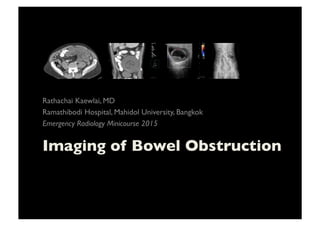
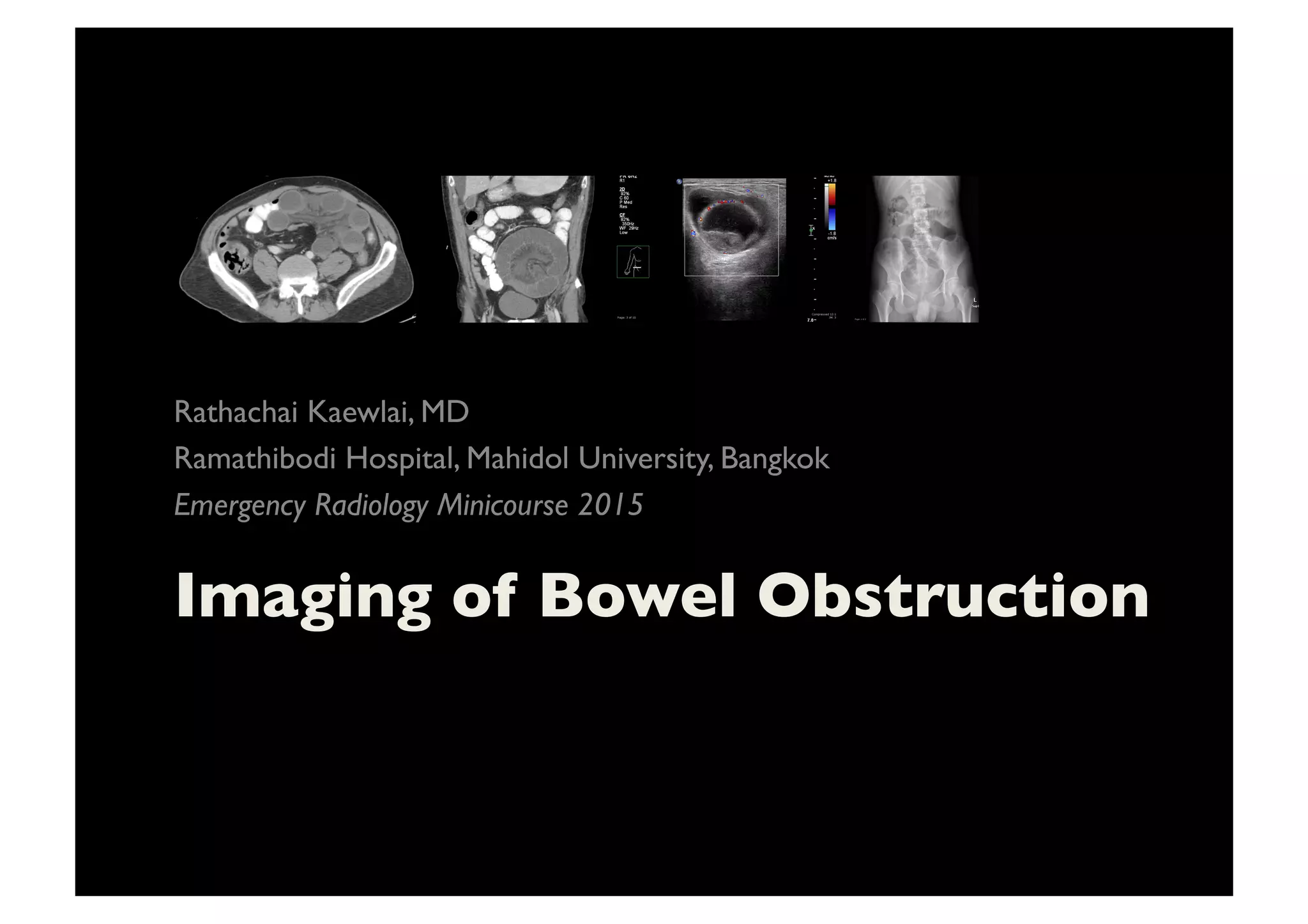
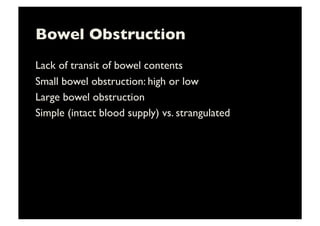
Imaging of Bowel Obstruction	

Rathachai Kaewlai, MD	

Ramathibodi Hospital, Mahidol University, Bangkok	

Emergency Radiology Minicourse 2015
What to Cover…	

Imaging techniques	
Gastric obstruction	

Small bowel obstruction	

Large bowel obstruction
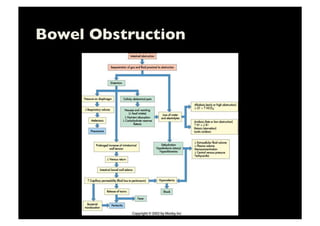
Bowel Obstruction	

Lack of transit of bowel contents	
Small bowel obstruction: high or low	

Large bowel obstruction	

Simple (intact blood supply) vs. strangulated
Bowel Obstruction
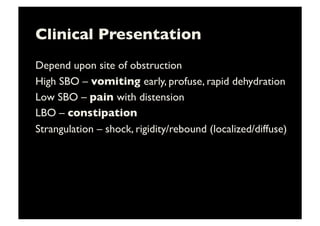
Clinical Presentation	

Depend upon site of obstruction	

High SBO – vomiting early, profuse, rapid dehydration	

Low SBO – pain with distension	

LBO – constipation 	

Strangulation – shock, rigidity/rebound (localized/diffuse)
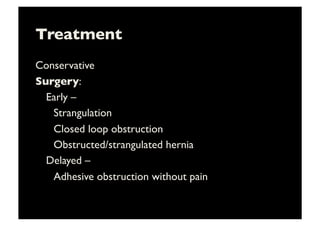
Treatment	

Conservative	

Surgery: 	


Early – 	


Strangulation	


Closed loop obstruction	


Obstructed/strangulated hernia	


Delayed – 	


Adhesive obstruction without pain
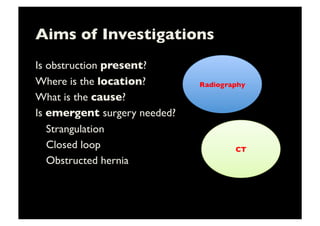
Aims of Investigations	

Is obstruction present?	

Where is the location?	

What is the cause?	

Is emergent surgery needed?	


Strangulation	


Closed loop	


Obstructed hernia	

Radiography	

CT
CT Techniques	

Helical scan, thinnest collimation	

Coronal reformats	

IV contrast, single venous phase	

No need for oral contrast. May be neutral
contrast	

No rectal contrast needed	


May be helpful if LBO, neutral contrast preferred
Gastric Outlet Obstruction (GOO):
Etiology	

Malignancy  benign (PUD)	

Extrinsic: pancreatitis with pseudocyst, hematoma	

Intrinsic: malignancy, PUD with stricture	

Intraluminal: bezoars, FB, GS	

Acute incarceration or strangulation:
obstructed paraesophageal hernia, gastric volvulus
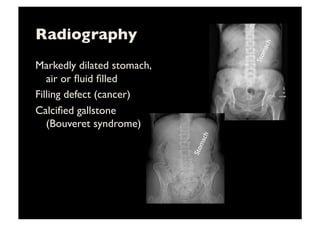
Radiography	

Markedly dilated stomach,
air or fluid filled	

Filling defect (cancer)	

Calcified gallstone
(Bouveret syndrome)
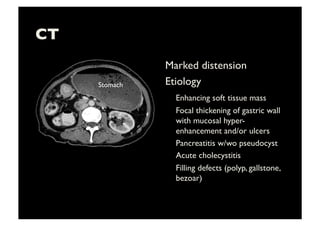
CT	

Marked distension	

Etiology	


Enhancing soft tissue mass	


Focal thickening of gastric wall
with mucosal hyper-
enhancement and/or ulcers	


Pancreatitis w/wo pseudocyst	


Acute cholecystitis	


Filling defects (polyp, gallstone,
bezoar)	

Stomach
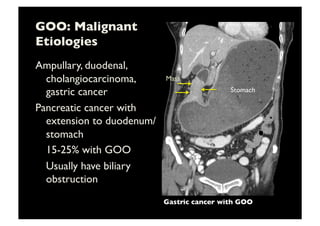
GOO: Malignant 
Etiologies	

Ampullary, duodenal,
cholangiocarcinoma,
gastric cancer	

Pancreatic cancer with
extension to duodenum/
stomach	


15-25% with GOO	


Usually have biliary
obstruction	

Stomach	

Mass	

Gastric cancer with GOO
GOO: Benign Etiologies	

PUD (acute vs scarring/fibrosis)	

Polyps, caustic ingestion, web, GS, pancreatic
pseudocyst, bezoar
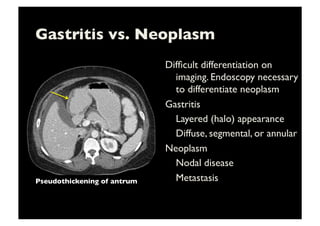
Gastritis vs. Neoplasm	

Difficult differentiation on
imaging. Endoscopy necessary
to differentiate neoplasm	

Gastritis	


Layered (halo) appearance	


Diffuse, segmental, or annular 	

Neoplasm	


Nodal disease	


Metastasis	

Pseudothickening of antrum
Diagnostic Approach	

Dilated stomach may contain up to 5L of fluid	

Functional disturbance	


Postoperative, severe trauma, immobilization,
inflammatory disease of abdomen, neurogenic,
diabetes	

Mechanical obstruction (stomach, duodenal, high SB)	


Differentiate benign from malignant processes
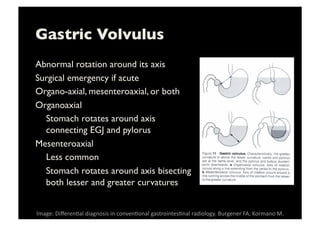
Gastric Volvulus	

Abnormal rotation around its axis	

Surgical emergency if acute	

Organo-axial, mesenteroaxial, or both	

Organoaxial	


Stomach rotates around axis
connecting EGJ and pylorus	

Mesenteroaxial	


Less common	


Stomach rotates around axis bisecting
both lesser and greater curvatures	

Image:	
  Differen-al	
  diagnosis	
  in	
  conven-onal	
  gastrointes-nal	
  radiology.	
  Burgener	
  FA,	
  Kormano	
  M.	
  
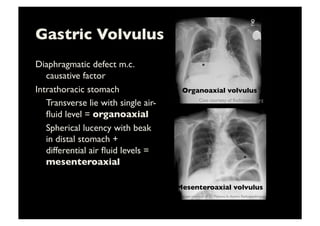
Gastric Volvulus	

Diaphragmatic defect m.c.
causative factor	

Intrathoracic stomach	


Transverse lie with single air-
fluid level = organoaxial	


Spherical lucency with beak
in distal stomach +
differential air fluid levels =
mesenteroaxial	

Case courtesy of Radiopaedia.org	

Case courtesy of Dr Maxime St-Amant, Radiopaedia.org	

Organoaxial volvulus	

Mesenteroaxial volvulus	

*	
  
*	
  
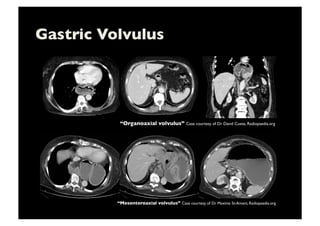
Gastric Volvulus	

“Organoaxial volvulus” Case courtesy of Dr David Cuete, Radiopaedia.org	

“Mesenteroaxial volvulus” Case courtesy of Dr Maxime St-Amant, Radiopaedia.org
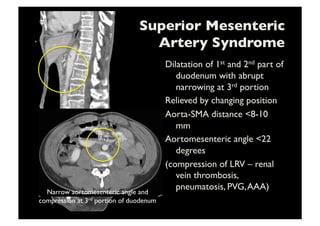
Superior Mesenteric 
Artery Syndrome	

Dilatation of 1st and 2nd part of
duodenum with abrupt
narrowing at 3rd portion	

Relieved by changing position	

Aorta-SMA distance 8-10
mm 	

Aortomesenteric angle 22
degrees	

(compression of LRV – renal
vein thrombosis,
pneumatosis, PVG,AAA)	

Narrow aortomesenteric angle and
compression at 3rd portion of duodenum
Small Bowel Obstruction (SBO)	

Dilated small bowel proximal to the site of obstruction
with distal decompression
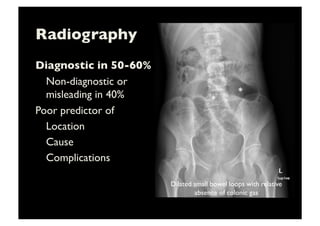
Radiography	

Diagnostic in 50-60% 	


Non-diagnostic or
misleading in 40%	

Poor predictor of	


Location 	


Cause 	


Complications	

*	
  
*	
  
Dilated small bowel loops with relative
absence of colonic gas
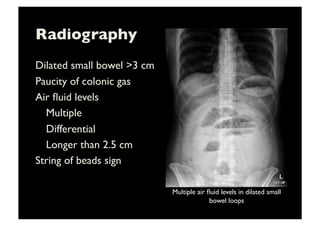
Radiography	

Dilated small bowel 3 cm	

Paucity of colonic gas	

Air fluid levels	


Multiple	


Differential	


Longer than 2.5 cm	

String of beads sign	

Multiple air fluid levels in dilated small
bowel loops
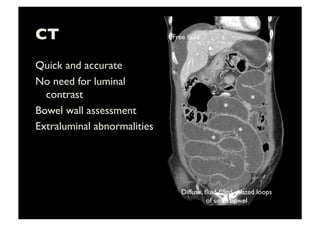
CT	

Quick and accurate	

No need for luminal
contrast	

Bowel wall assessment	

Extraluminal abnormalities	

*	
  
*	
  
*	
  
*	
  
Diffuse, fluid-filled, dilated loops 	

of small bowel	

Free fluid
CT: Indications	

Non-diagnostic radiography but clinical suspicion	

Virgin abdomen	

History of abdominal malignancy	

Suspected complications
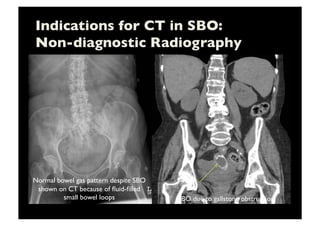
Indications for CT in SBO:
Non-diagnostic Radiography	

SBO due to gallstone obstruction	

Normal bowel gas pattern despite SBO
shown on CT because of fluid-filled
small bowel loops
Indications for CT in SBO:
Virgin Abdomen	

Known diseases	


Metastasis (54%)	


Crohn disease (46%)	

No known diseases	


Adhesions (75%)	


Metastasis (10%)	


Rare: sclerosing encapsulating peritonitis, Meckel
diverticulum, gallstone ileus	

Beardsley	
  C,	
  et	
  al.	
  Am	
  J	
  Surg	
  2014	
  	
  
Indications for CT in SBO:
History of Abdominal Malignancy	

Spread/extent of tumor around bowel	

Pre-operative planning for bypass/debulking procedures
Transition Point	

Dilated loops change in caliber to decompressed loops	

Trace rectum ! colon ! small bowel	

Small bowel feces	

Scroll images on workstation	

(difficult on hardcopy films) 	

Multiplanar reformats
Transition Point	

Adhesions inferred when no cause identified 	


Abrupt tapering	


Beak	

External hernias	

Tumors, esp. metastasis to bowel/peritoneum	

Inflammation/infection, gallstones	

CT accuracy 63-95% for identifying transition point
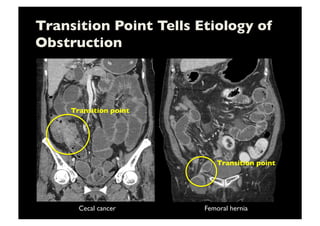
Transition Point Tells Etiology of
Obstruction	

Cecal cancer	

 Femoral hernia	

Transition point	

Transition point
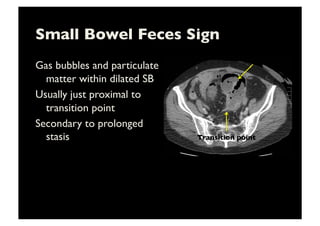
Small Bowel Feces Sign	

Gas bubbles and particulate
matter within dilated SB	

Usually just proximal to
transition point	

Secondary to prolonged
stasis	

 Transition point
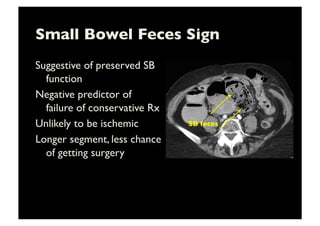
Small Bowel Feces Sign	

Suggestive of preserved SB
function	

Negative predictor of
failure of conservative Rx	

Unlikely to be ischemic	

Longer segment, less chance
of getting surgery	

SB feces
Etiology of SBO	

Adhesions 	


50-75%	

Hernias 	


8-15%	

Malignancies 	


10-15% 	

Others: Crohn, intussusception, volvulus, trauma,
iatrogenic conditions
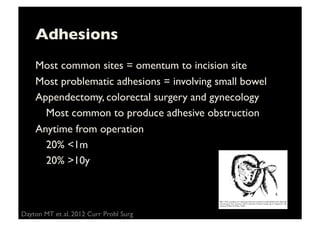
Adhesions	

Most common sites = omentum to incision site	

Most problematic adhesions = involving small bowel	

Appendectomy, colorectal surgery and gynecology	


Most common to produce adhesive obstruction	

Anytime from operation	


20% 1m 	


20% 10y	

Dayton MT et al. 2012 Curr Probl Surg
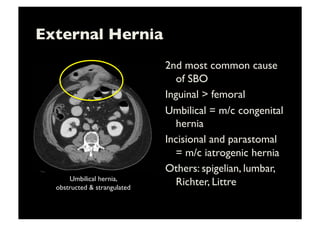
External Hernia	

2nd most common cause
of SBO	

Inguinal  femoral	

Umbilical = m/c congenital
hernia	

Incisional and parastomal
= m/c iatrogenic hernia	

Others: spigelian, lumbar,
Richter, Littre	

Umbilical hernia, 	

obstructed  strangulated
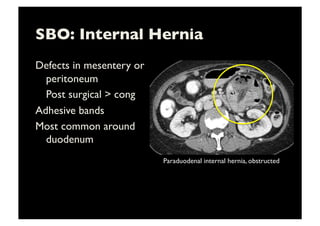
SBO: Internal Hernia	

Defects in mesentery or
peritoneum	


Post surgical  cong	

Adhesive bands	

Most common around
duodenum	

Paraduodenal internal hernia, obstructed
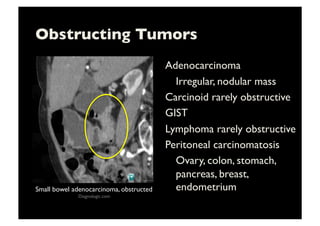
Obstructing Tumors	

Adenocarcinoma	


Irregular, nodular mass	

Carcinoid rarely obstructive	

GIST	

Lymphoma rarely obstructive	

Peritoneal carcinomatosis	


Ovary, colon, stomach,
pancreas, breast,
endometrium	

Small bowel adenocarcinoma, obstructed	

Diagnologic.com
Others	

Intussusception	

Inflammatory bowel	


TB very common inflammatory cause of SBO,
ileocecal, local nodes with hypodense center	


Acute Crohn	


Chronic Crohn	


Pancreatitis, diverticulitis and appendicitis	

Radiation enteropathy	

Stone and bezoar
Is Emergent Surgery Needed?	

YES IF:	

Strangulation = SBO + Ischemia	

Closed loop obstruction
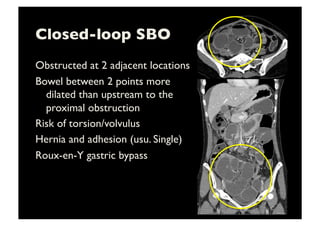
Closed-loop SBO	

Obstructed at 2 adjacent locations 	

Bowel between 2 points more
dilated than upstream to the
proximal obstruction	

Risk of torsion/volvulus	

Hernia and adhesion (usu. Single)	

Roux-en-Y gastric bypass
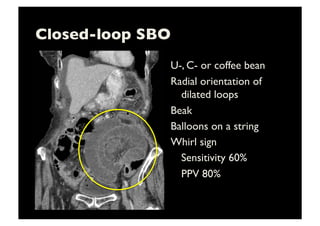
Closed-loop SBO	

U-, C- or coffee bean	

Radial orientation of
dilated loops	

Beak	

Balloons on a string	

Whirl sign	


Sensitivity 60%	


PPV 80%
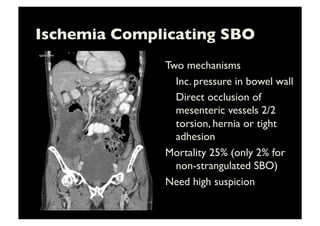
Ischemia Complicating SBO	

Two mechanisms	


Inc. pressure in bowel wall	


Direct occlusion of
mesenteric vessels 2/2
torsion, hernia or tight
adhesion	

Mortality 25% (only 2% for
non-strangulated SBO)	

Need high suspicion
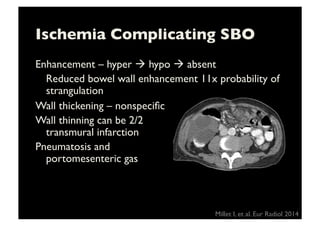
Ischemia Complicating SBO	

Enhancement – hyper ! hypo ! absent	


Reduced bowel wall enhancement 11x probability of
strangulation	

Wall thickening – nonspecific	

Wall thinning can be 2/2
transmural infarction 	

Pneumatosis and
portomesenteric gas 	

Millet I, et al. Eur Radiol 2014
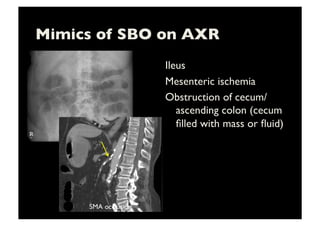
Mimics of SBO on AXR	

Ileus	

Mesenteric ischemia	

Obstruction of cecum/
ascending colon (cecum
filled with mass or fluid)	

SMA occlusion
Large Bowel Obstruction (LBO):
Etiology	

More in elderly	

Malignancy 	


60%	

Volvulus 	


15%	

Diverticulitis 	

10%	

Others: incarcerated hernia, fecal impaction, adhesion	

15-20% of colorectal malignancy present with LBO
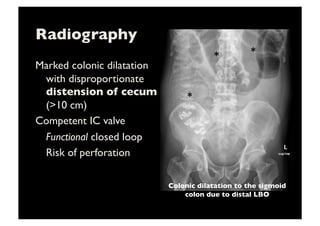
Radiography	

Marked colonic dilatation
with disproportionate
distension of cecum
(10 cm)	

Competent IC valve	


Functional closed loop	


Risk of perforation	

*	
   *	
  
*	
  
Colonic dilatation to the sigmoid
colon due to distal LBO
Radiography	

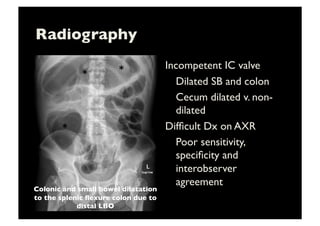
Incompetent IC valve	


Dilated SB and colon	


Cecum dilated v. non-
dilated	

Difficult Dx on AXR	


Poor sensitivity,
specificity and
interobserver
agreement	

*	
   *	
  
Colonic and small bowel dilatation
to the splenic flexure colon due to
distal LBO	

*	
  
Colon Cancer	

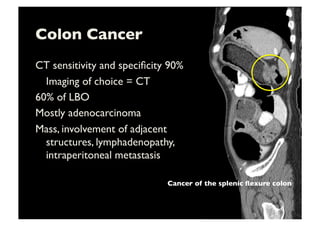
CT sensitivity and specificity 90%	


Imaging of choice = CT	

60% of LBO	

Mostly adenocarcinoma	

Mass, involvement of adjacent
structures, lymphadenopathy,
intraperitoneal metastasis	

Cancer of the splenic flexure colon
Extrinsic Neoplasm	

Direct invasion	

Intraperitoneal seeding	

Hematogenous metastasis	

Lymphatic extension
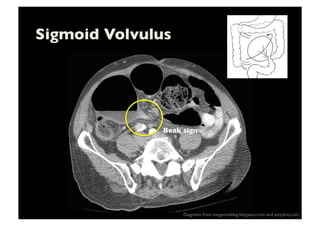
Sigmoid Volvulus	

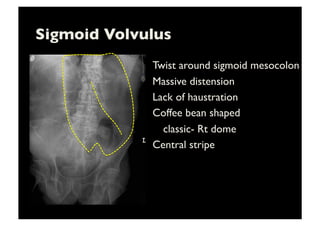
Twist around sigmoid mesocolon	

Massive distension	

Lack of haustration	

Coffee bean shaped	


classic- Rt dome	

Central stripe
Sigmoid Volvulus	

Diagrams from surgeonsblog.blogspot.com and pmj.bmj.com	

Beak sign
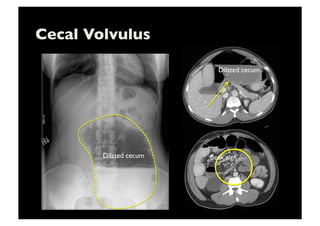
Cecal Volvulus	

Dilated cecum	

Dilated cecum	

Beak sign
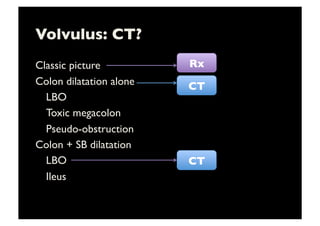
Volvulus: CT?	

Classic picture	

Colon dilatation alone	


LBO	


Toxic megacolon	


Pseudo-obstruction	

Colon + SB dilatation	


LBO	


Ileus 	

CT	

Rx	

CT
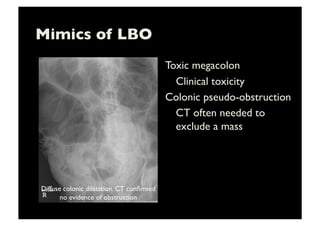
Mimics of LBO	

Toxic megacolon	


Clinical toxicity	

Colonic pseudo-obstruction	


CT often needed to
exclude a mass	

Diffuse colonic dilatation. CT confirmed
no evidence of obstruction
Summary	

Investigative questions: 	


Obstruction present? Where? Cause? Surgery?	

Radiography still has a limited role in bowel obstruction	

CT is the mainstay imaging: 	


Quick and safe	


No luminal contrast	


Confirm obstruction, site, etiology, surgical need	


Extraluminal abnormalities

Imaging of Bowel Obstruction

  • 1.
    Imaging of BowelObstruction Rathachai Kaewlai, MD Ramathibodi Hospital, Mahidol University, Bangkok Emergency Radiology Minicourse 2015
  • 2.
    What to Cover… Imagingtechniques Gastric obstruction Small bowel obstruction Large bowel obstruction
  • 3.
    Bowel Obstruction Lack oftransit of bowel contents Small bowel obstruction: high or low Large bowel obstruction Simple (intact blood supply) vs. strangulated
  • 4.
  • 5.
    Clinical Presentation Depend uponsite of obstruction High SBO – vomiting early, profuse, rapid dehydration Low SBO – pain with distension LBO – constipation Strangulation – shock, rigidity/rebound (localized/diffuse)
  • 6.
    Treatment Conservative Surgery: Early – Strangulation Closed loop obstruction Obstructed/strangulated hernia Delayed – Adhesive obstruction without pain
  • 7.
    Aims of Investigations Isobstruction present? Where is the location? What is the cause? Is emergent surgery needed? Strangulation Closed loop Obstructed hernia Radiography CT
  • 8.
    CT Techniques Helical scan,thinnest collimation Coronal reformats IV contrast, single venous phase No need for oral contrast. May be neutral contrast No rectal contrast needed May be helpful if LBO, neutral contrast preferred
  • 9.
    Gastric Outlet Obstruction(GOO): Etiology Malignancy benign (PUD) Extrinsic: pancreatitis with pseudocyst, hematoma Intrinsic: malignancy, PUD with stricture Intraluminal: bezoars, FB, GS Acute incarceration or strangulation: obstructed paraesophageal hernia, gastric volvulus
  • 10.
    Radiography Markedly dilated stomach, airor fluid filled Filling defect (cancer) Calcified gallstone (Bouveret syndrome)
  • 11.
    CT Marked distension Etiology Enhancing softtissue mass Focal thickening of gastric wall with mucosal hyper- enhancement and/or ulcers Pancreatitis w/wo pseudocyst Acute cholecystitis Filling defects (polyp, gallstone, bezoar) Stomach
  • 12.
    GOO: Malignant Etiologies Ampullary,duodenal, cholangiocarcinoma, gastric cancer Pancreatic cancer with extension to duodenum/ stomach 15-25% with GOO Usually have biliary obstruction Stomach Mass Gastric cancer with GOO
  • 13.
    GOO: Benign Etiologies PUD(acute vs scarring/fibrosis) Polyps, caustic ingestion, web, GS, pancreatic pseudocyst, bezoar
  • 14.
    Gastritis vs. Neoplasm Difficultdifferentiation on imaging. Endoscopy necessary to differentiate neoplasm Gastritis Layered (halo) appearance Diffuse, segmental, or annular Neoplasm Nodal disease Metastasis Pseudothickening of antrum
  • 15.
    Diagnostic Approach Dilated stomachmay contain up to 5L of fluid Functional disturbance Postoperative, severe trauma, immobilization, inflammatory disease of abdomen, neurogenic, diabetes Mechanical obstruction (stomach, duodenal, high SB) Differentiate benign from malignant processes
  • 16.
    Gastric Volvulus Abnormal rotationaround its axis Surgical emergency if acute Organo-axial, mesenteroaxial, or both Organoaxial Stomach rotates around axis connecting EGJ and pylorus Mesenteroaxial Less common Stomach rotates around axis bisecting both lesser and greater curvatures Image:  Differen-al  diagnosis  in  conven-onal  gastrointes-nal  radiology.  Burgener  FA,  Kormano  M.  
  • 17.
    Gastric Volvulus Diaphragmatic defectm.c. causative factor Intrathoracic stomach Transverse lie with single air- fluid level = organoaxial Spherical lucency with beak in distal stomach + differential air fluid levels = mesenteroaxial Case courtesy of Radiopaedia.org Case courtesy of Dr Maxime St-Amant, Radiopaedia.org Organoaxial volvulus Mesenteroaxial volvulus *   *  
  • 18.
    Gastric Volvulus “Organoaxial volvulus”Case courtesy of Dr David Cuete, Radiopaedia.org “Mesenteroaxial volvulus” Case courtesy of Dr Maxime St-Amant, Radiopaedia.org
  • 19.
    Superior Mesenteric ArterySyndrome Dilatation of 1st and 2nd part of duodenum with abrupt narrowing at 3rd portion Relieved by changing position Aorta-SMA distance 8-10 mm Aortomesenteric angle 22 degrees (compression of LRV – renal vein thrombosis, pneumatosis, PVG,AAA) Narrow aortomesenteric angle and compression at 3rd portion of duodenum
  • 20.
    Small Bowel Obstruction(SBO) Dilated small bowel proximal to the site of obstruction with distal decompression
  • 21.
    Radiography Diagnostic in 50-60% Non-diagnostic or misleading in 40% Poor predictor of Location Cause Complications *   *   Dilated small bowel loops with relative absence of colonic gas
  • 22.
    Radiography Dilated small bowel3 cm Paucity of colonic gas Air fluid levels Multiple Differential Longer than 2.5 cm String of beads sign Multiple air fluid levels in dilated small bowel loops
  • 23.
    CT Quick and accurate Noneed for luminal contrast Bowel wall assessment Extraluminal abnormalities *   *   *   *   Diffuse, fluid-filled, dilated loops of small bowel Free fluid
  • 24.
    CT: Indications Non-diagnostic radiographybut clinical suspicion Virgin abdomen History of abdominal malignancy Suspected complications
  • 25.
    Indications for CTin SBO: Non-diagnostic Radiography SBO due to gallstone obstruction Normal bowel gas pattern despite SBO shown on CT because of fluid-filled small bowel loops
  • 26.
    Indications for CTin SBO: Virgin Abdomen Known diseases Metastasis (54%) Crohn disease (46%) No known diseases Adhesions (75%) Metastasis (10%) Rare: sclerosing encapsulating peritonitis, Meckel diverticulum, gallstone ileus Beardsley  C,  et  al.  Am  J  Surg  2014    
  • 27.
    Indications for CTin SBO: History of Abdominal Malignancy Spread/extent of tumor around bowel Pre-operative planning for bypass/debulking procedures
  • 28.
    Transition Point Dilated loopschange in caliber to decompressed loops Trace rectum ! colon ! small bowel Small bowel feces Scroll images on workstation (difficult on hardcopy films) Multiplanar reformats
  • 29.
    Transition Point Adhesions inferredwhen no cause identified Abrupt tapering Beak External hernias Tumors, esp. metastasis to bowel/peritoneum Inflammation/infection, gallstones CT accuracy 63-95% for identifying transition point
  • 30.
    Transition Point TellsEtiology of Obstruction Cecal cancer Femoral hernia Transition point Transition point
  • 31.
    Small Bowel FecesSign Gas bubbles and particulate matter within dilated SB Usually just proximal to transition point Secondary to prolonged stasis Transition point
  • 32.
    Small Bowel FecesSign Suggestive of preserved SB function Negative predictor of failure of conservative Rx Unlikely to be ischemic Longer segment, less chance of getting surgery SB feces
  • 33.
    Etiology of SBO Adhesions 50-75% Hernias 8-15% Malignancies 10-15% Others: Crohn, intussusception, volvulus, trauma, iatrogenic conditions
  • 34.
    Adhesions Most common sites= omentum to incision site Most problematic adhesions = involving small bowel Appendectomy, colorectal surgery and gynecology Most common to produce adhesive obstruction Anytime from operation 20% 1m 20% 10y Dayton MT et al. 2012 Curr Probl Surg
  • 35.
    External Hernia 2nd mostcommon cause of SBO Inguinal femoral Umbilical = m/c congenital hernia Incisional and parastomal = m/c iatrogenic hernia Others: spigelian, lumbar, Richter, Littre Umbilical hernia, obstructed strangulated
  • 36.
    SBO: Internal Hernia Defectsin mesentery or peritoneum Post surgical cong Adhesive bands Most common around duodenum Paraduodenal internal hernia, obstructed
  • 37.
    Obstructing Tumors Adenocarcinoma Irregular, nodularmass Carcinoid rarely obstructive GIST Lymphoma rarely obstructive Peritoneal carcinomatosis Ovary, colon, stomach, pancreas, breast, endometrium Small bowel adenocarcinoma, obstructed Diagnologic.com
  • 38.
    Others Intussusception Inflammatory bowel TB verycommon inflammatory cause of SBO, ileocecal, local nodes with hypodense center Acute Crohn Chronic Crohn Pancreatitis, diverticulitis and appendicitis Radiation enteropathy Stone and bezoar
  • 39.
    Is Emergent SurgeryNeeded? YES IF: Strangulation = SBO + Ischemia Closed loop obstruction
  • 40.
    Closed-loop SBO Obstructed at2 adjacent locations Bowel between 2 points more dilated than upstream to the proximal obstruction Risk of torsion/volvulus Hernia and adhesion (usu. Single) Roux-en-Y gastric bypass
  • 41.
    Closed-loop SBO U-, C-or coffee bean Radial orientation of dilated loops Beak Balloons on a string Whirl sign Sensitivity 60% PPV 80%
  • 42.
    Ischemia Complicating SBO Twomechanisms Inc. pressure in bowel wall Direct occlusion of mesenteric vessels 2/2 torsion, hernia or tight adhesion Mortality 25% (only 2% for non-strangulated SBO) Need high suspicion
  • 43.
    Ischemia Complicating SBO Enhancement– hyper ! hypo ! absent Reduced bowel wall enhancement 11x probability of strangulation Wall thickening – nonspecific Wall thinning can be 2/2 transmural infarction Pneumatosis and portomesenteric gas Millet I, et al. Eur Radiol 2014
  • 44.
    Mimics of SBOon AXR Ileus Mesenteric ischemia Obstruction of cecum/ ascending colon (cecum filled with mass or fluid) SMA occlusion
  • 45.
    Large Bowel Obstruction(LBO): Etiology More in elderly Malignancy 60% Volvulus 15% Diverticulitis 10% Others: incarcerated hernia, fecal impaction, adhesion 15-20% of colorectal malignancy present with LBO
  • 46.
    Radiography Marked colonic dilatation withdisproportionate distension of cecum (10 cm) Competent IC valve Functional closed loop Risk of perforation *   *   *   Colonic dilatation to the sigmoid colon due to distal LBO
  • 47.
    Radiography Incompetent IC valve DilatedSB and colon Cecum dilated v. non- dilated Difficult Dx on AXR Poor sensitivity, specificity and interobserver agreement *   *   Colonic and small bowel dilatation to the splenic flexure colon due to distal LBO *  
  • 48.
    Colon Cancer CT sensitivityand specificity 90% Imaging of choice = CT 60% of LBO Mostly adenocarcinoma Mass, involvement of adjacent structures, lymphadenopathy, intraperitoneal metastasis Cancer of the splenic flexure colon
  • 49.
    Extrinsic Neoplasm Direct invasion Intraperitonealseeding Hematogenous metastasis Lymphatic extension
  • 50.
    Sigmoid Volvulus Twist aroundsigmoid mesocolon Massive distension Lack of haustration Coffee bean shaped classic- Rt dome Central stripe
  • 51.
    Sigmoid Volvulus Diagrams fromsurgeonsblog.blogspot.com and pmj.bmj.com Beak sign
  • 52.
  • 53.
    Volvulus: CT? Classic picture Colondilatation alone LBO Toxic megacolon Pseudo-obstruction Colon + SB dilatation LBO Ileus CT Rx CT
  • 54.
    Mimics of LBO Toxicmegacolon Clinical toxicity Colonic pseudo-obstruction CT often needed to exclude a mass Diffuse colonic dilatation. CT confirmed no evidence of obstruction
  • 55.
    Summary Investigative questions: Obstructionpresent? Where? Cause? Surgery? Radiography still has a limited role in bowel obstruction CT is the mainstay imaging: Quick and safe No luminal contrast Confirm obstruction, site, etiology, surgical need Extraluminal abnormalities