GIS in National Security

      Wojtek Gawecki
           Esri
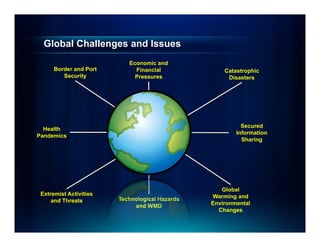
Global Challenges and Issues
                           Economic and
      Border and Port        Financial              Catastrophic
         Security            Pressures               Disasters


                                                          Secured
  Health
                                                        Information
Pandemics
                                                          Sharing


                                                   Global
 Extremist Activities                           Warming and
     and Threats        Technological Hazards
                             and WMD            Environmental
                                                  Changes
The National Security Mission Challenges


•   Collect and manage data
•   Track and manage resources
•   Model, analyze and assess vulnerabilities
•   Develop integrated security, protection and mitigation plans
•   Collect field mobile data and provide updates and changes
•   Support prevention, response, interdiction and incident
    management
•   Establish and maintain shared situational awareness
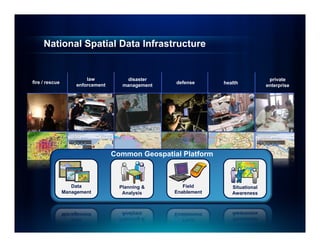
National Spatial Data Infrastructure


                         law           disaster                                   private
fire / rescue                                      defense      health
                     enforcement      management                                 enterprise


                                   Common Geospatial Platform


                   Data              Planning &       Field        Situational
                Management            Analysis     Enablement      Awareness
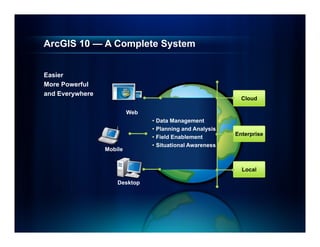
ArcGIS 10 — A Complete System


Easier
More Powerful
and Everywhere
                                                              Cloud

                          Web
                                •   Data Management
                                •   Planning and Analysis
                                                            Enterprise
                                •   Field Enablement
                                •   Situational Awareness
                 Mobile


                                                              Local

                     Desktop
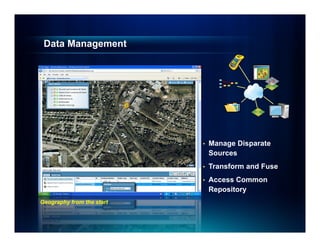
Data Management


                           •   Manage Disparate
                               Sources
                           •   Transform and Fuse
                           •   Access Common
                               Repository
Geography from the start
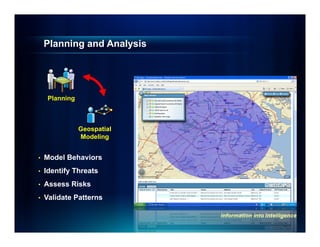
Planning and Analysis


     Planning


                Geospatial
                Modeling


•   Model Behaviors
•   Identify Threats
•   Assess Risks
•   Validate Patterns

                             Information into Intelligence
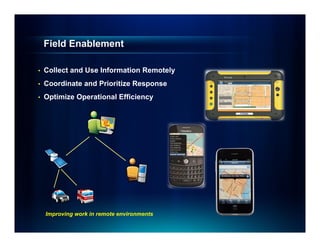
Field Enablement

•   Collect and Use Information Remotely
•   Coordinate and Prioritize Response
•   Optimize Operational Efficiency


    Improving work in remote environments
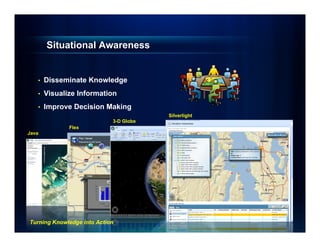
Situational Awareness


   •   Disseminate Knowledge
   •   Visualize Information
   •   Improve Decision Making
                                        Silverlight
                            3-D Globe
              Flex
Java


Turning Knowledge into Action
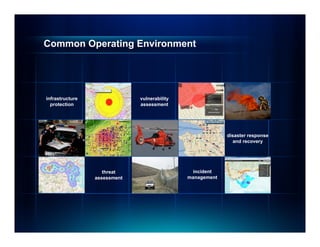
Common Operating Environment


infrastructure                vulnerability
  protection                  assessment


                                                           disaster response
                                                             and recovery


                    threat                     incident
                 assessment                   management
Building a Common Operating Environment


     Geospatial
     Modeling                                     Situational
                                                  Awareness


                                  Knowledge
                  Intelligence


Data Collection                                         Collaboration


                                              Mobile Operations
    Planning
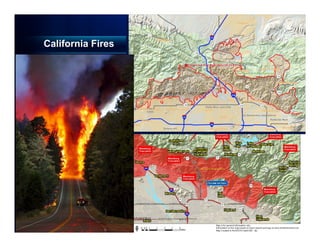
California Fires
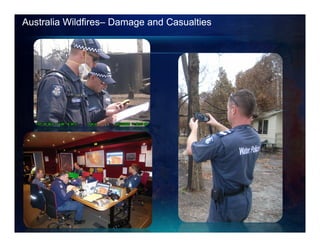
Australia Wildfires– Damage and Casualties
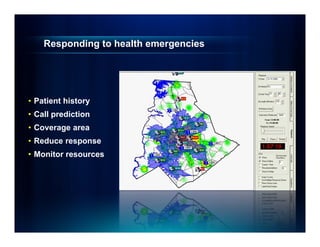
Responding to health emergencies


• Patient history
• Call prediction
• Coverage area
• Reduce response
• Monitor resources
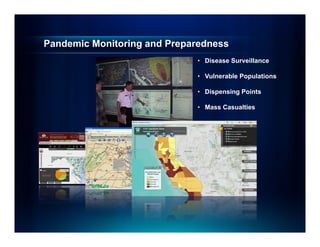
Pandemic Monitoring and Preparedness
                             • Disease Surveillance

                             • Vulnerable Populations

                             • Dispensing Points

                             • Mass Casualties
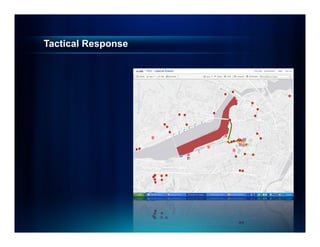
Tactical Response
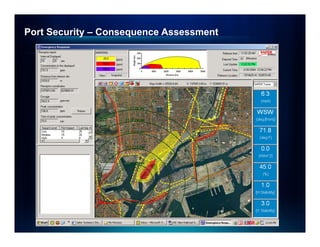
Port Security – Consequence Assessment
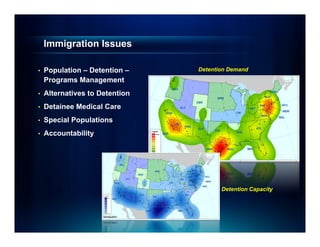
Immigration Issues

•   Population – Detention –    Detention Demand
    Programs Management
•   Alternatives to Detention
•   Detainee Medical Care
•   Special Populations
•   Accountability


                                       Detention Capacity
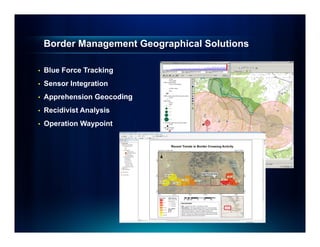
Border Management Geographical Solutions

•   Blue Force Tracking
•   Sensor Integration
•   Apprehension Geocoding
•   Recidivist Analysis
•   Operation Waypoint
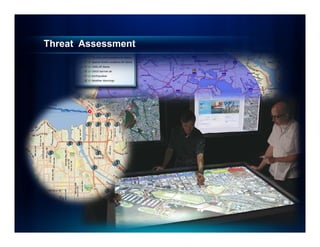
Threat Assessment
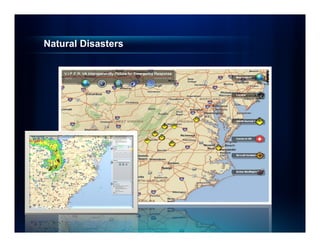
Natural Disasters
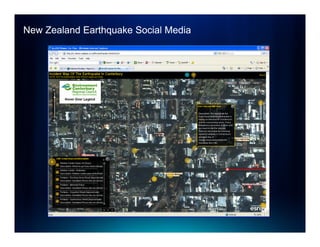
New Zealand Earthquake Social Media
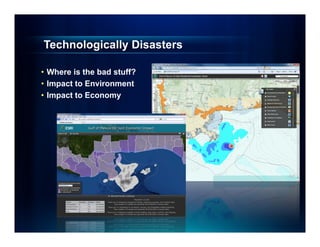
Technologically Disasters

• Where is the bad stuff?
• Impact to Environment
• Impact to Economy
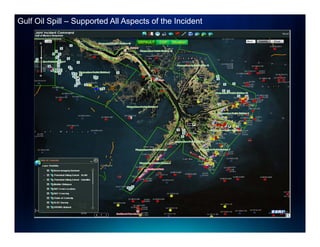
Gulf Oil Spill – Supported All Aspects of the Incident
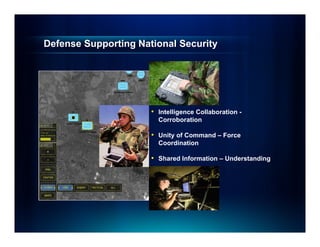
Defense Supporting National Security


                      • Intelligence Collaboration -
                        Corroboration

                      • Unity of Command – Force
                        Coordination

                      • Shared Information – Understanding
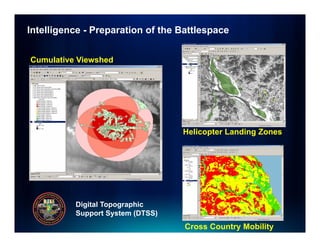
Intelligence - Preparation of the Battlespace


Cumulative Viewshed


                                  Helicopter Landing Zones


          Digital Topographic
          Support System (DTSS)
                                   Cross Country Mobility
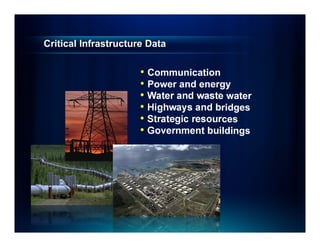
Critical Infrastructure Data

                      • Communication
                      • Power and energy
                      • Water and waste water
                      • Highways and bridges
                      • Strategic resources
                      • Government buildings
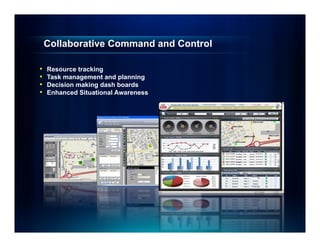
Collaborative Command and Control

•   Resource tracking
•   Task management and planning
•   Decision making dash boards
•   Enhanced Situational Awareness
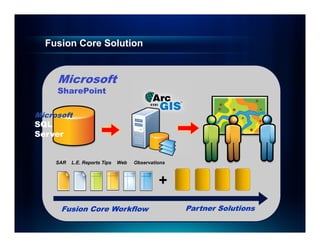
Fusion Core Solution


     Microsoft
     SharePoint

Microsoft
SQL
Server


     SAR   L.E. Reports Tips   Web   Observations


                                              +
      Fusion Core Workflow                          Partner Solutions
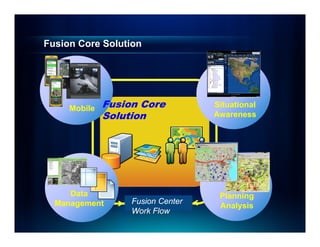
Fusion Core Solution


     Mobile   Fusion Core          Situational
              Solution             Awareness


     Data                           Planning
  Management       Fusion Center
                                    Analysis
                   Work Flow
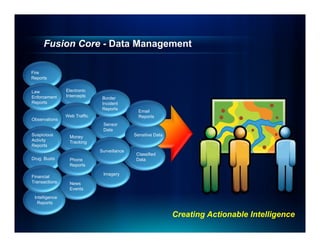
Fusion Core - Data Management

Fire
Reports


Law             Electronic
Enforcement     Intercepts
                               Border
Reports                        Incident
                               Reports
                                               Email
                Web Traffic                    Reports
Observations
                               Sensor
                               Data
Suspicious        Money                      Sensitive Data
Activity          Tracking
Reports
                              Surveillance
                                              Classified
Drug Busts        Phone                       Data
                  Reports

                               Imagery
Financial
Transactions      News
                  Events
 Intelligence
  Reports

                                                              Creating Actionable Intelligence
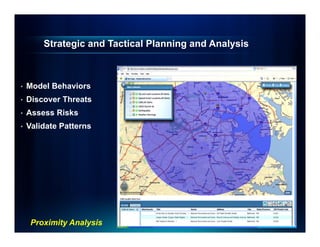
Strategic and Tactical Planning and Analysis


•   Model Behaviors
•   Discover Threats
•   Assess Risks
•   Validate Patterns


     Proximity Analysis
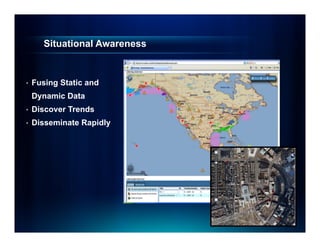
Situational Awareness


•   Fusing Static and
    Dynamic Data
•   Discover Trends
•   Disseminate Rapidly
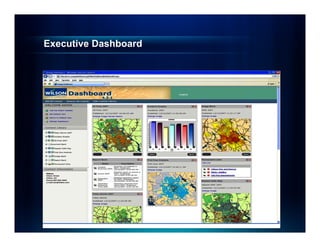
Executive Dashboard
Summary

• Four basic architecture components: Data Management, Planning
  and Analysis, Field Mobility, and Situational Awareness

• Cooperation and information sharing can be borderless through
  the use of common operating environment

• GIS helps create understanding by approaching problems
  geographically

• Social Media should be leveraged by public safety agencies
GIS in National Security

GIS in National Security

  • 1.
    GIS in NationalSecurity Wojtek Gawecki Esri
  • 2.
    Global Challenges andIssues Economic and Border and Port Financial Catastrophic Security Pressures Disasters Secured Health Information Pandemics Sharing Global Extremist Activities Warming and and Threats Technological Hazards and WMD Environmental Changes
  • 3.
    The National SecurityMission Challenges • Collect and manage data • Track and manage resources • Model, analyze and assess vulnerabilities • Develop integrated security, protection and mitigation plans • Collect field mobile data and provide updates and changes • Support prevention, response, interdiction and incident management • Establish and maintain shared situational awareness
  • 4.
    National Spatial DataInfrastructure law disaster private fire / rescue defense health enforcement management enterprise Common Geospatial Platform Data Planning & Field Situational Management Analysis Enablement Awareness
  • 5.
    ArcGIS 10 —A Complete System Easier More Powerful and Everywhere Cloud Web • Data Management • Planning and Analysis Enterprise • Field Enablement • Situational Awareness Mobile Local Desktop
  • 6.
    Data Management • Manage Disparate Sources • Transform and Fuse • Access Common Repository Geography from the start
  • 7.
    Planning and Analysis Planning Geospatial Modeling • Model Behaviors • Identify Threats • Assess Risks • Validate Patterns Information into Intelligence
  • 8.
    Field Enablement • Collect and Use Information Remotely • Coordinate and Prioritize Response • Optimize Operational Efficiency Improving work in remote environments
  • 9.
    Situational Awareness • Disseminate Knowledge • Visualize Information • Improve Decision Making Silverlight 3-D Globe Flex Java Turning Knowledge into Action
  • 10.
    Common Operating Environment infrastructure vulnerability protection assessment disaster response and recovery threat incident assessment management
  • 11.
    Building a CommonOperating Environment Geospatial Modeling Situational Awareness Knowledge Intelligence Data Collection Collaboration Mobile Operations Planning
  • 12.
  • 13.
  • 14.
    Responding to healthemergencies • Patient history • Call prediction • Coverage area • Reduce response • Monitor resources
  • 15.
    Pandemic Monitoring andPreparedness • Disease Surveillance • Vulnerable Populations • Dispensing Points • Mass Casualties
  • 16.
  • 17.
    Port Security –Consequence Assessment
  • 18.
    Immigration Issues • Population – Detention – Detention Demand Programs Management • Alternatives to Detention • Detainee Medical Care • Special Populations • Accountability Detention Capacity
  • 19.
    Border Management GeographicalSolutions • Blue Force Tracking • Sensor Integration • Apprehension Geocoding • Recidivist Analysis • Operation Waypoint
  • 20.
  • 21.
  • 22.
  • 23.
    Technologically Disasters • Whereis the bad stuff? • Impact to Environment • Impact to Economy
  • 24.
    Gulf Oil Spill– Supported All Aspects of the Incident
  • 25.
    Defense Supporting NationalSecurity • Intelligence Collaboration - Corroboration • Unity of Command – Force Coordination • Shared Information – Understanding
  • 26.
    Intelligence - Preparationof the Battlespace Cumulative Viewshed Helicopter Landing Zones Digital Topographic Support System (DTSS) Cross Country Mobility
  • 27.
    Critical Infrastructure Data • Communication • Power and energy • Water and waste water • Highways and bridges • Strategic resources • Government buildings
  • 28.
    Collaborative Command andControl • Resource tracking • Task management and planning • Decision making dash boards • Enhanced Situational Awareness
  • 29.
    Fusion Core Solution Microsoft SharePoint Microsoft SQL Server SAR L.E. Reports Tips Web Observations + Fusion Core Workflow Partner Solutions
  • 30.
    Fusion Core Solution Mobile Fusion Core Situational Solution Awareness Data Planning Management Fusion Center Analysis Work Flow
  • 31.
    Fusion Core -Data Management Fire Reports Law Electronic Enforcement Intercepts Border Reports Incident Reports Email Web Traffic Reports Observations Sensor Data Suspicious Money Sensitive Data Activity Tracking Reports Surveillance Classified Drug Busts Phone Data Reports Imagery Financial Transactions News Events Intelligence Reports Creating Actionable Intelligence
  • 32.
    Strategic and TacticalPlanning and Analysis • Model Behaviors • Discover Threats • Assess Risks • Validate Patterns Proximity Analysis
  • 33.
    Situational Awareness • Fusing Static and Dynamic Data • Discover Trends • Disseminate Rapidly
  • 34.
  • 35.
    Summary • Four basicarchitecture components: Data Management, Planning and Analysis, Field Mobility, and Situational Awareness • Cooperation and information sharing can be borderless through the use of common operating environment • GIS helps create understanding by approaching problems geographically • Social Media should be leveraged by public safety agencies