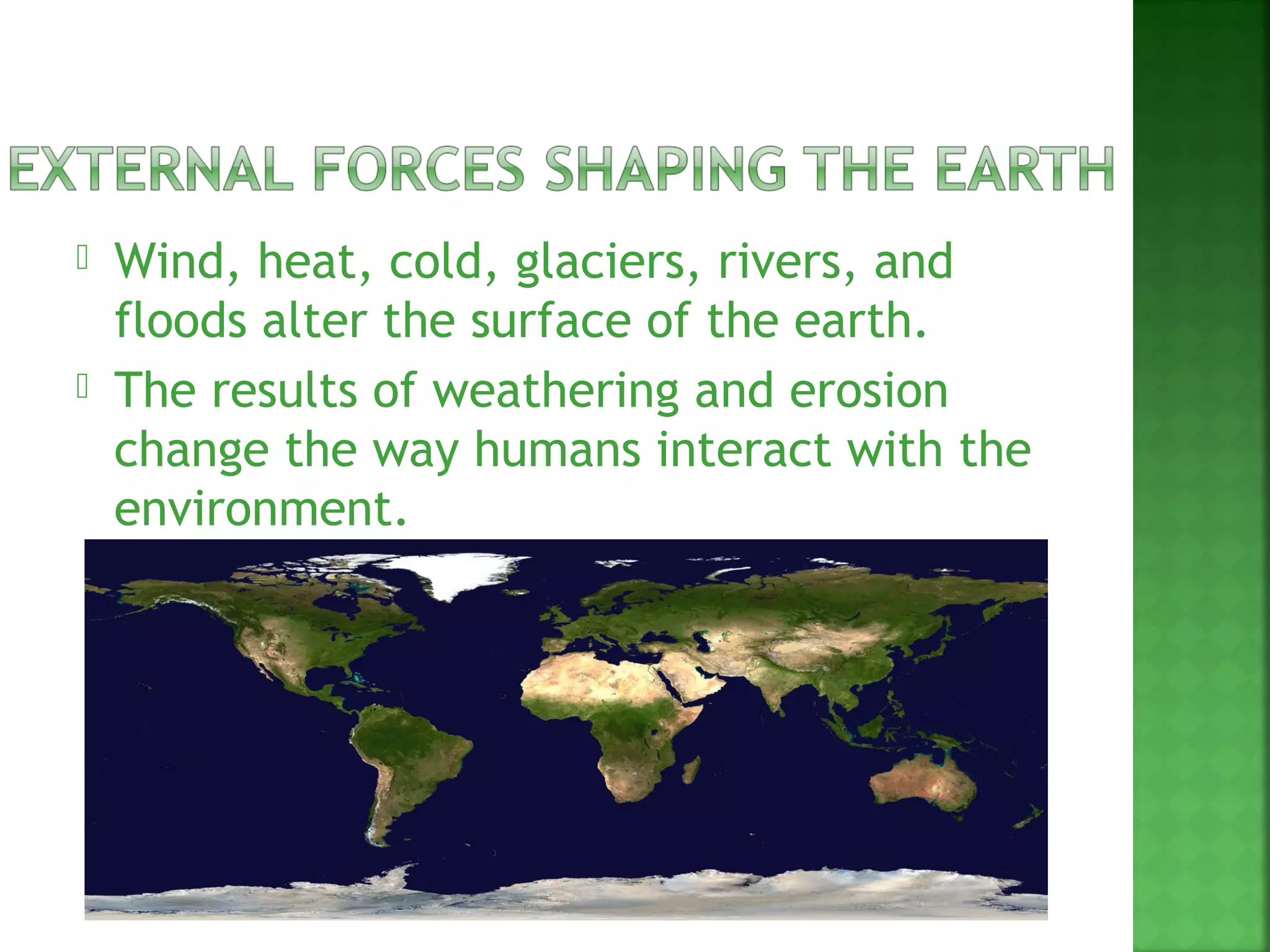
   Wind, heat, cold, glaciers, rivers, and
    floods alter the surface of the earth.
   The results of weathering and erosion
    change the way humans interact with the
    environment.
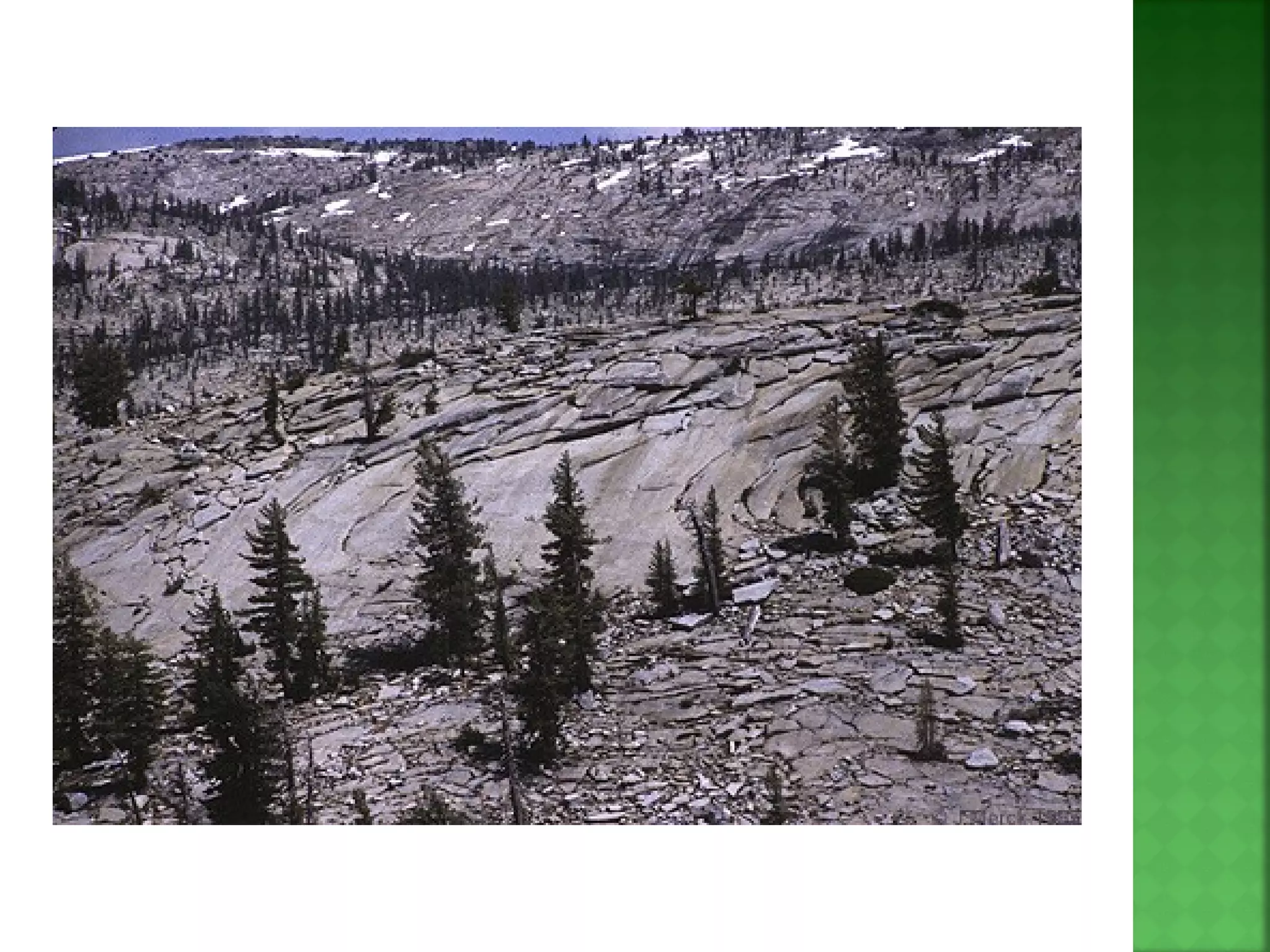
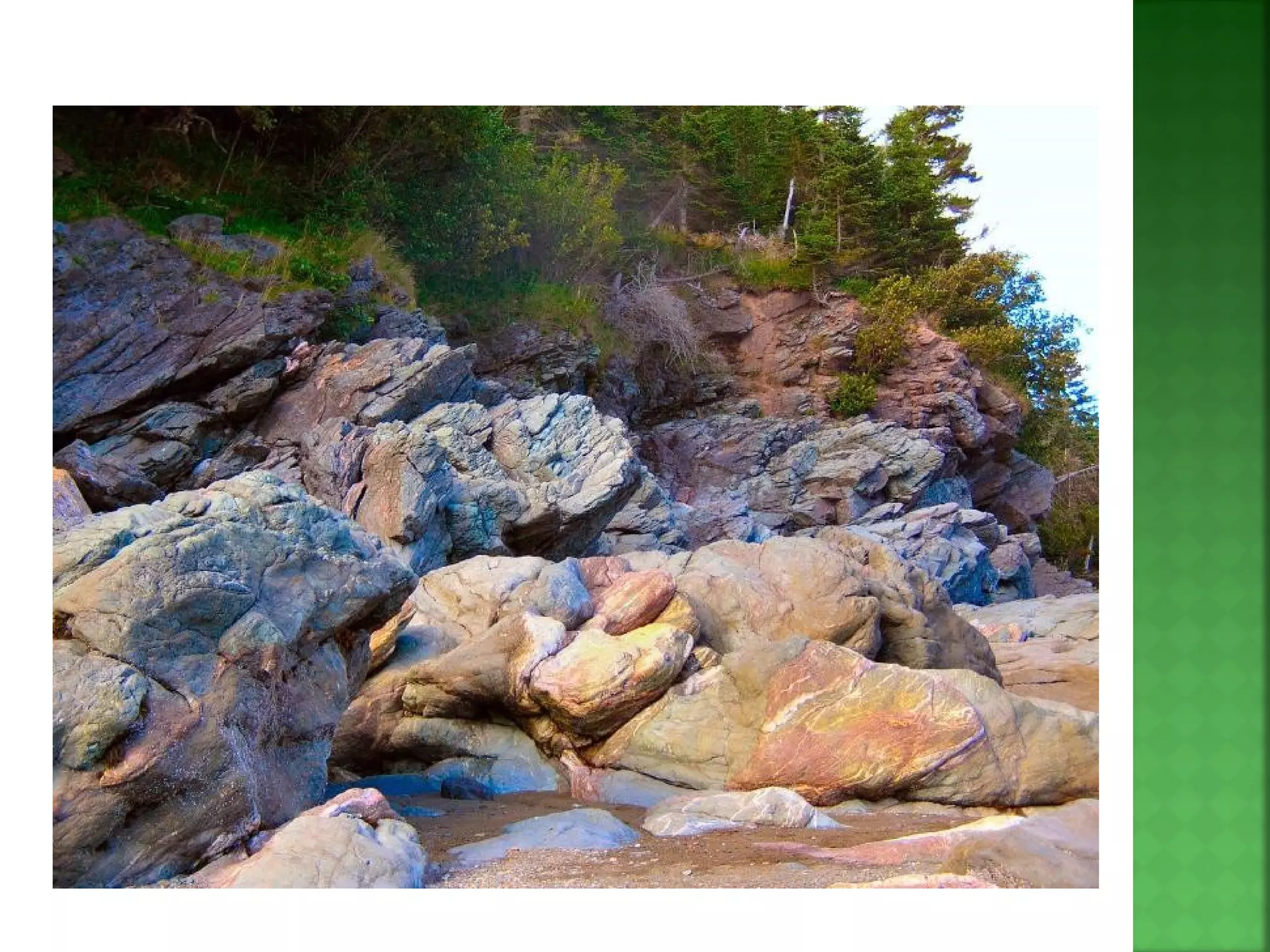
   Weathering is the physical and chemical
    processes that change the characteristics of
    rock on or near the earth’s surface
   Can change landscapes over time and create
    soil for plant life
    -   Occurs slowly over MANY years, even centuries
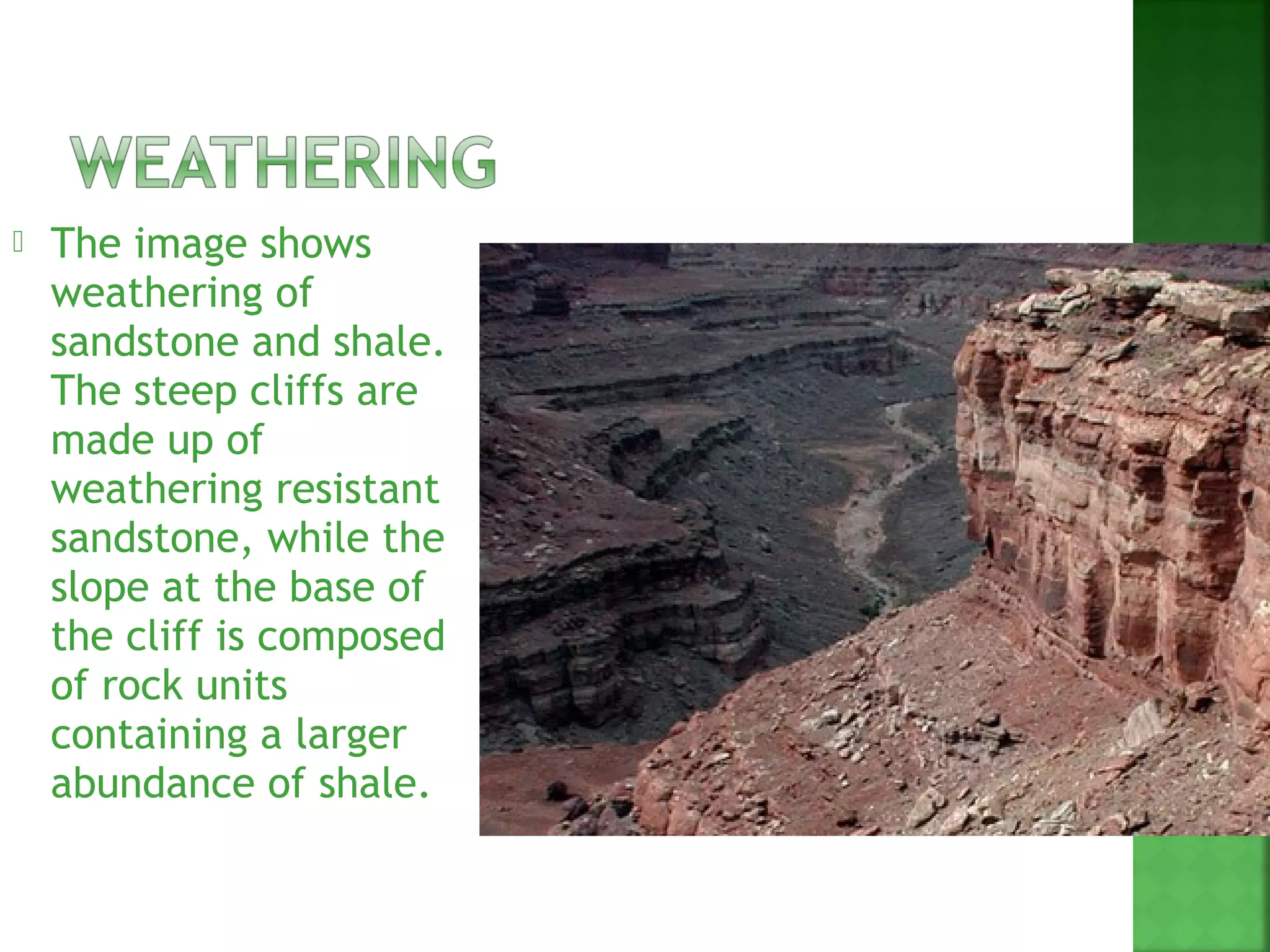
   The image shows
    weathering of
    sandstone and shale.
    The steep cliffs are
    made up of
    weathering resistant
    sandstone, while the
    slope at the base of
    the cliff is composed
    of rock units
    containing a larger
    abundance of shale.
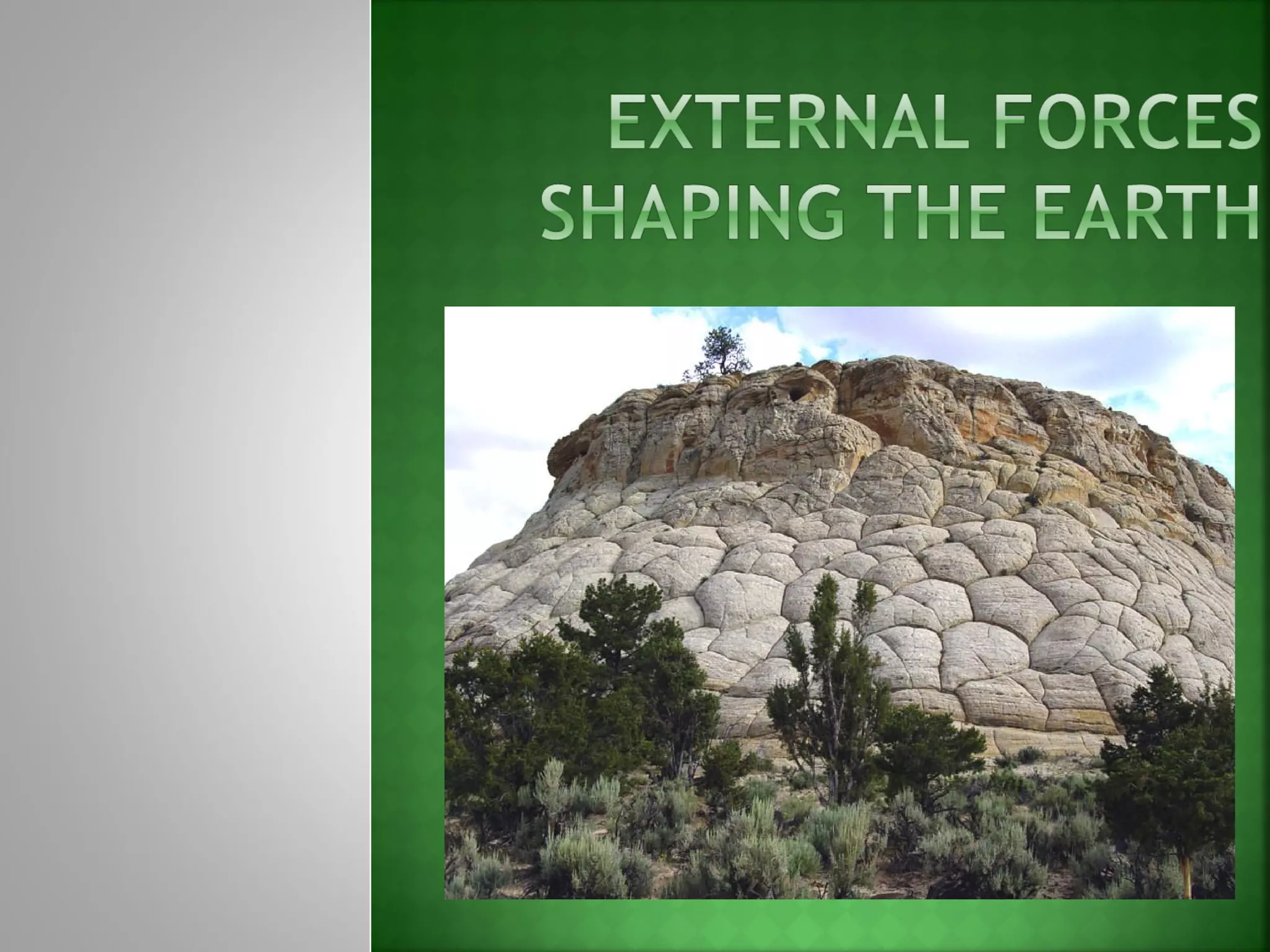
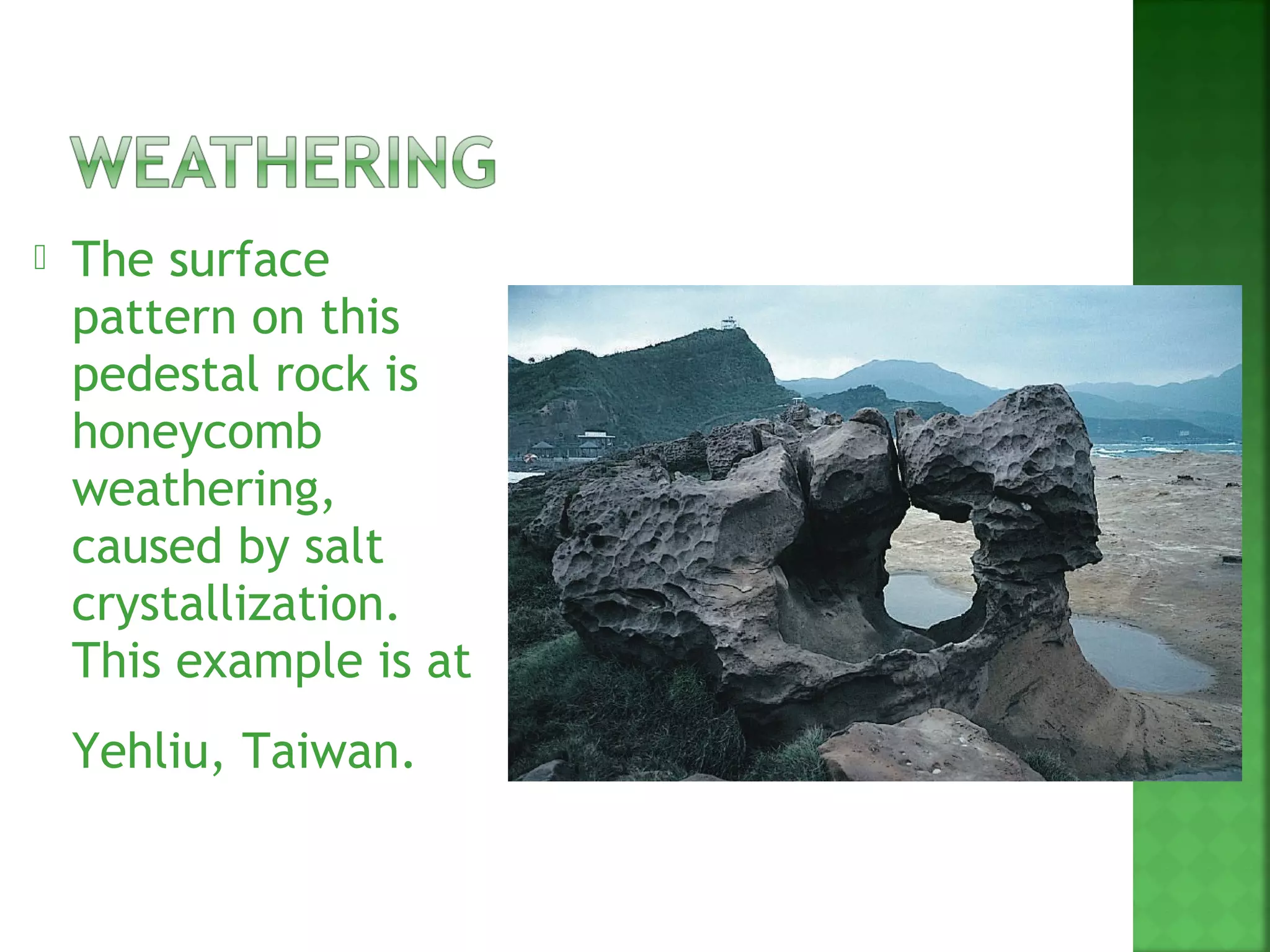
   The surface
    pattern on this
    pedestal rock is
    honeycomb
    weathering,
    caused by salt
    crystallization.
    This example is at
    Yehliu, Taiwan.
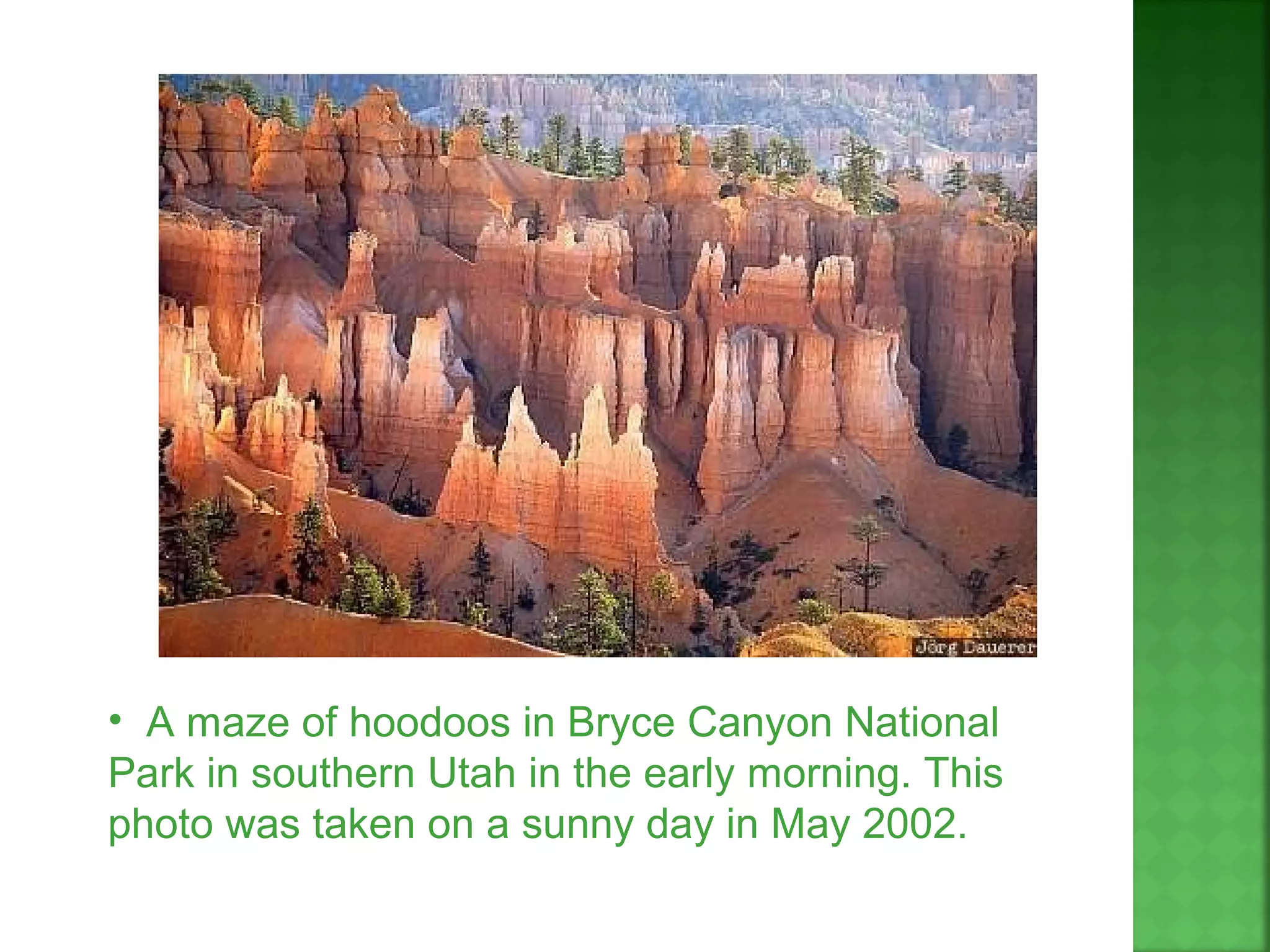
• A maze of hoodoos in Bryce Canyon National
Park in southern Utah in the early morning. This
photo was taken on a sunny day in May 2002.
   Weathering creates smaller and smaller
    pieces of rock called sediment.

       -Sediment can be identified as fine particles of rock
        such as mud, sand, silt, etc.
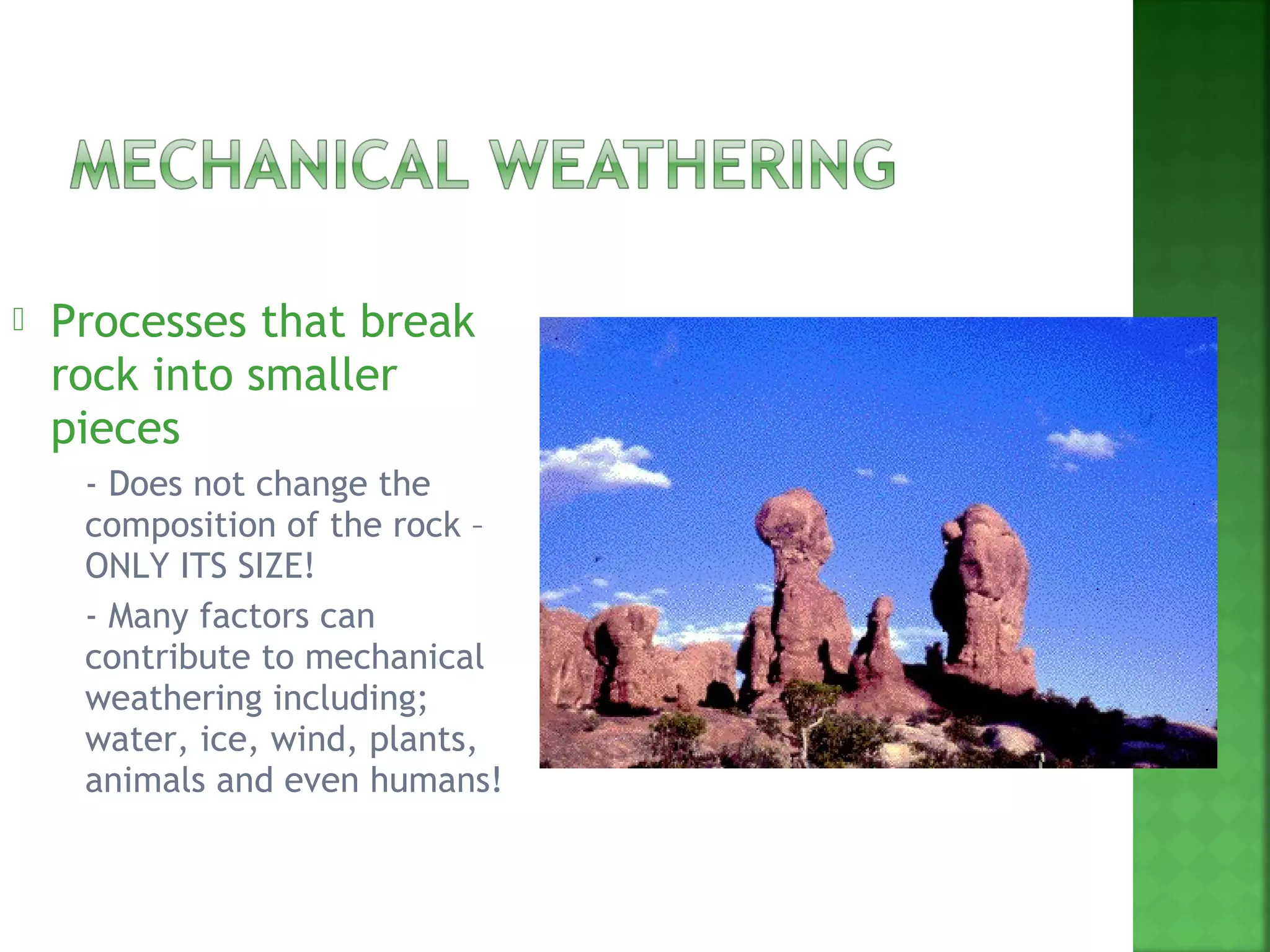
   Processes that break
    rock into smaller
    pieces
     - Does not change the
      composition of the rock –
      ONLY ITS SIZE!
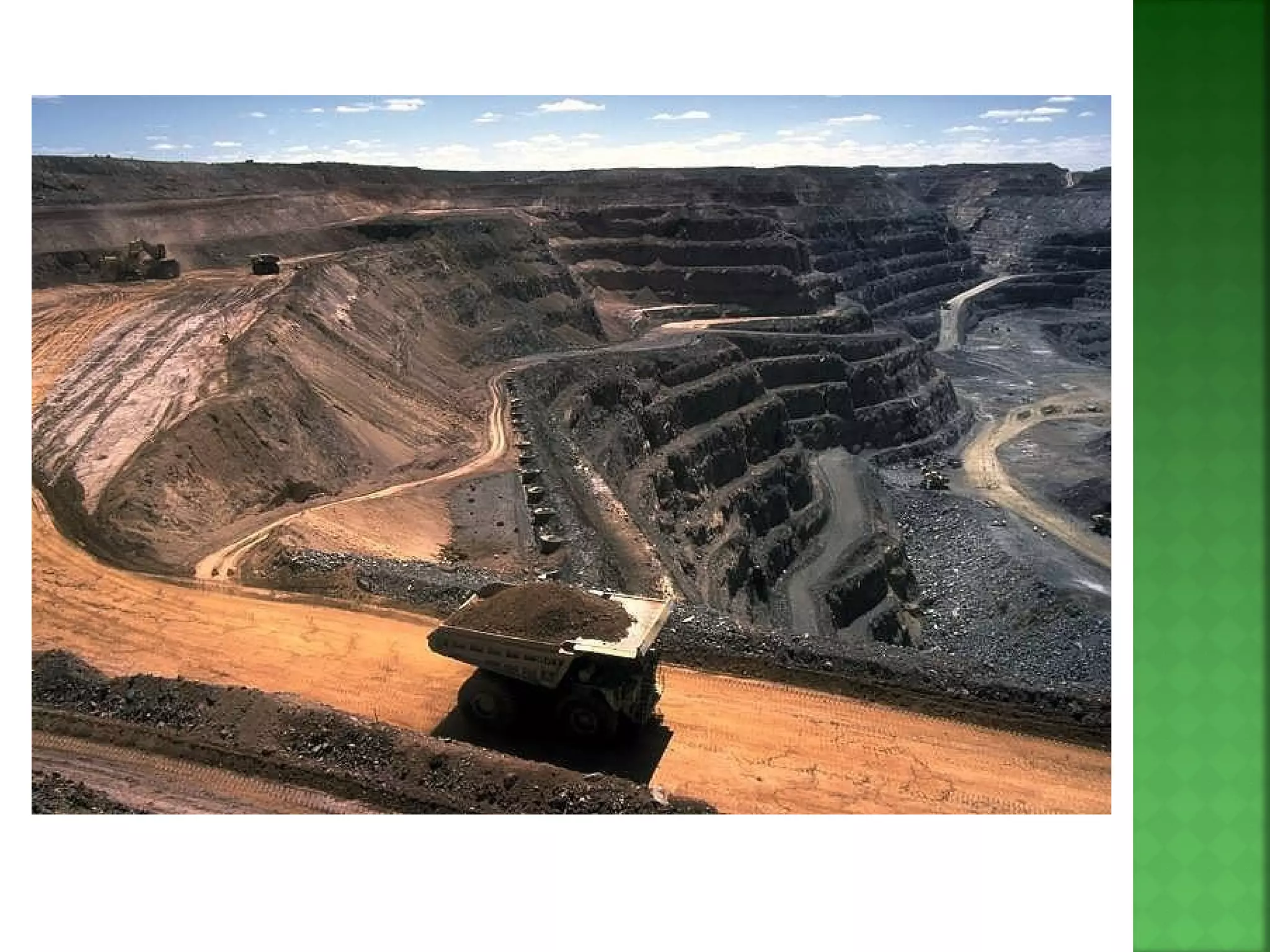
     - Many factors can
      contribute to mechanical
      weathering including;
      water, ice, wind, plants,
      animals and even humans!
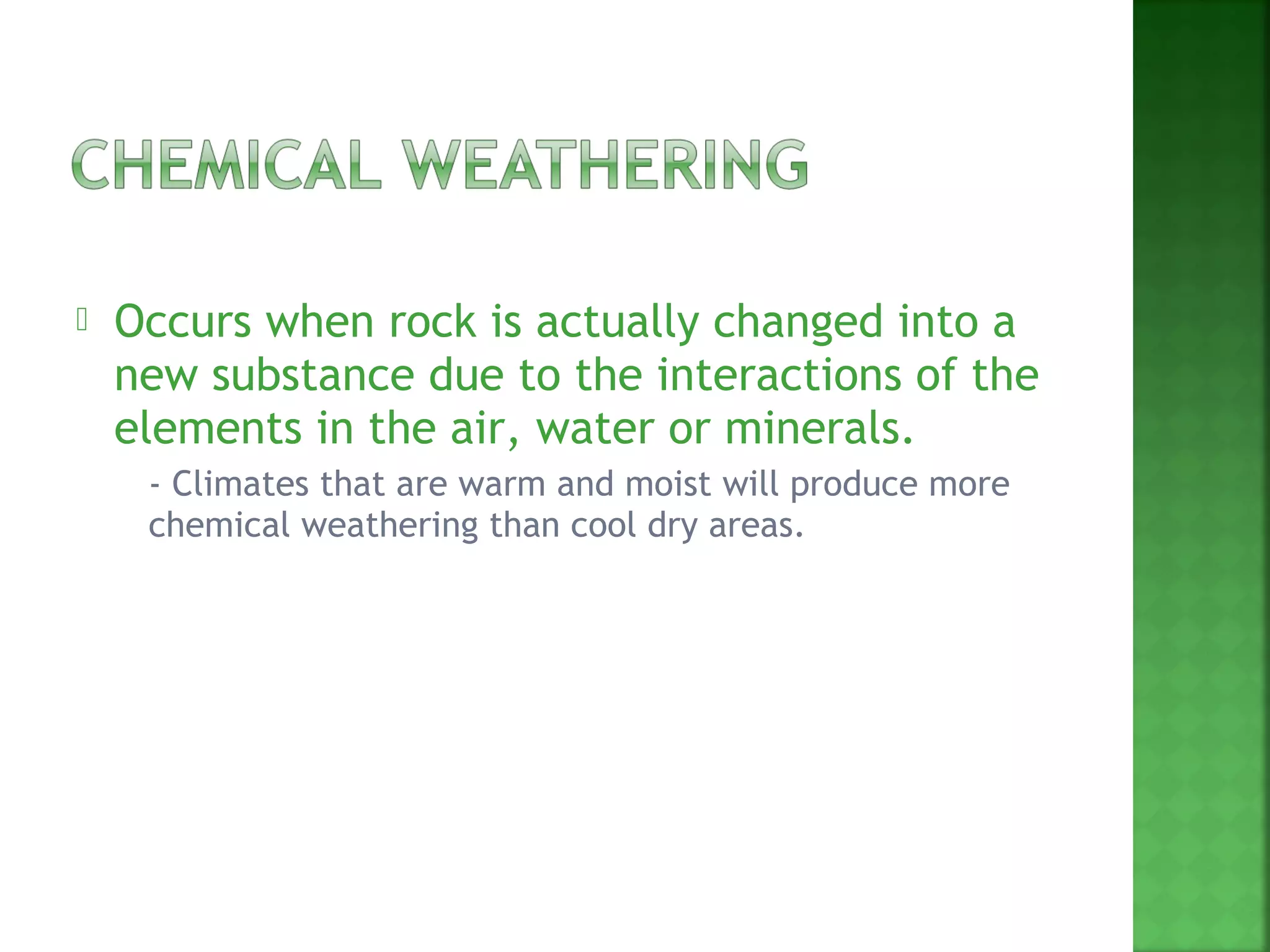
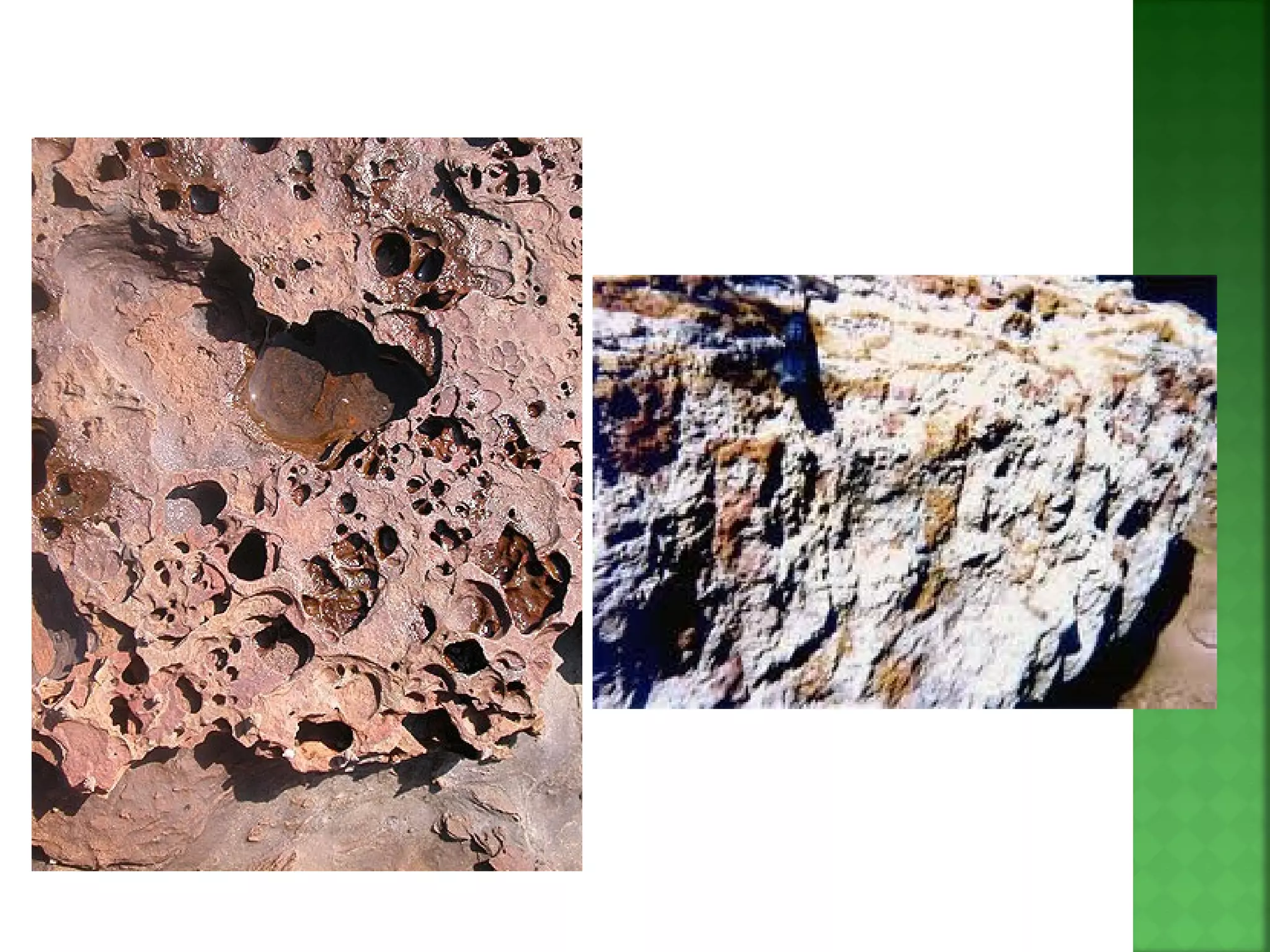
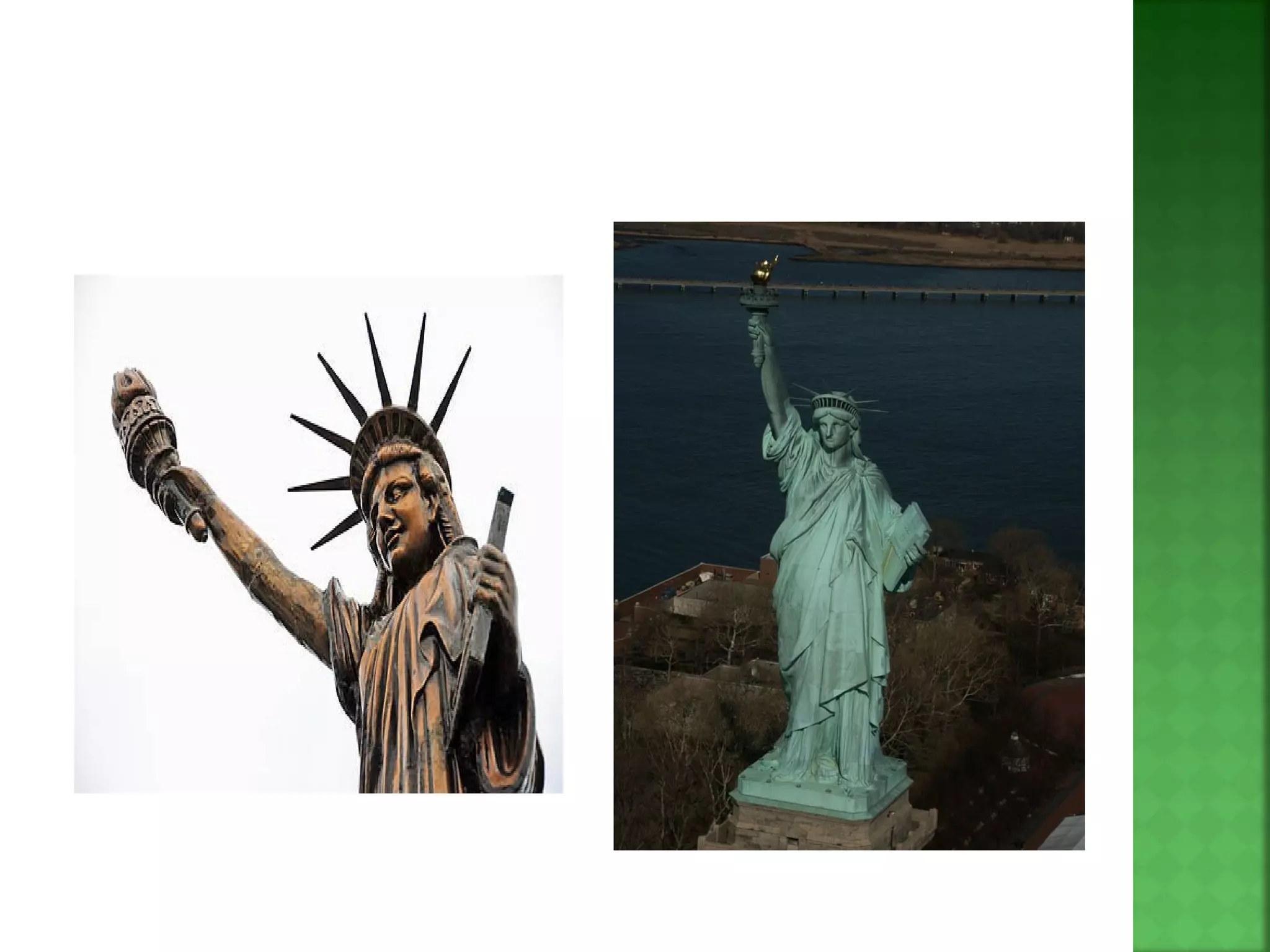
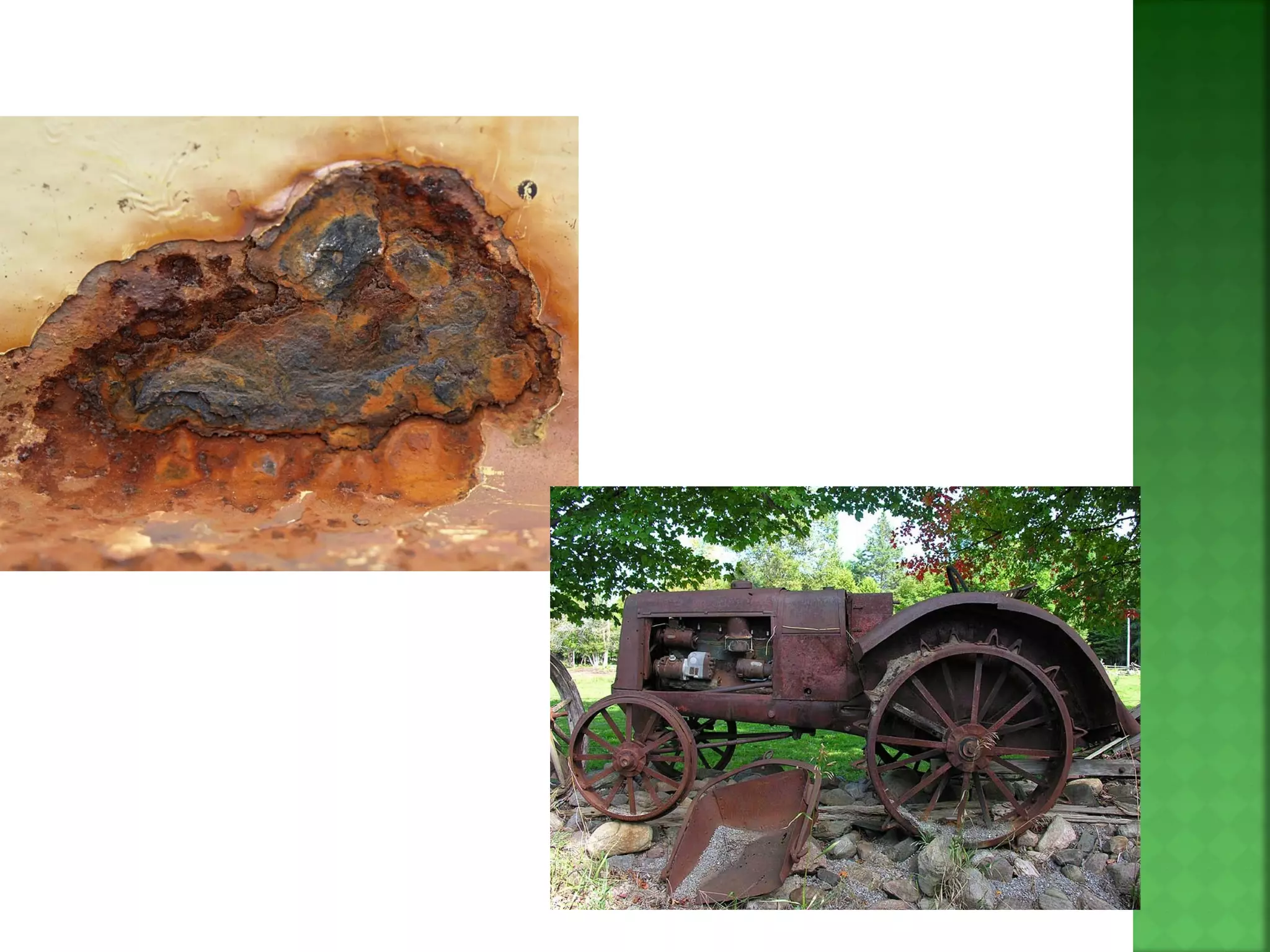
   Occurs when rock is actually changed into a
    new substance due to the interactions of the
    elements in the air, water or minerals.
       - Climates that are warm and moist will produce more
        chemical weathering than cool dry areas.
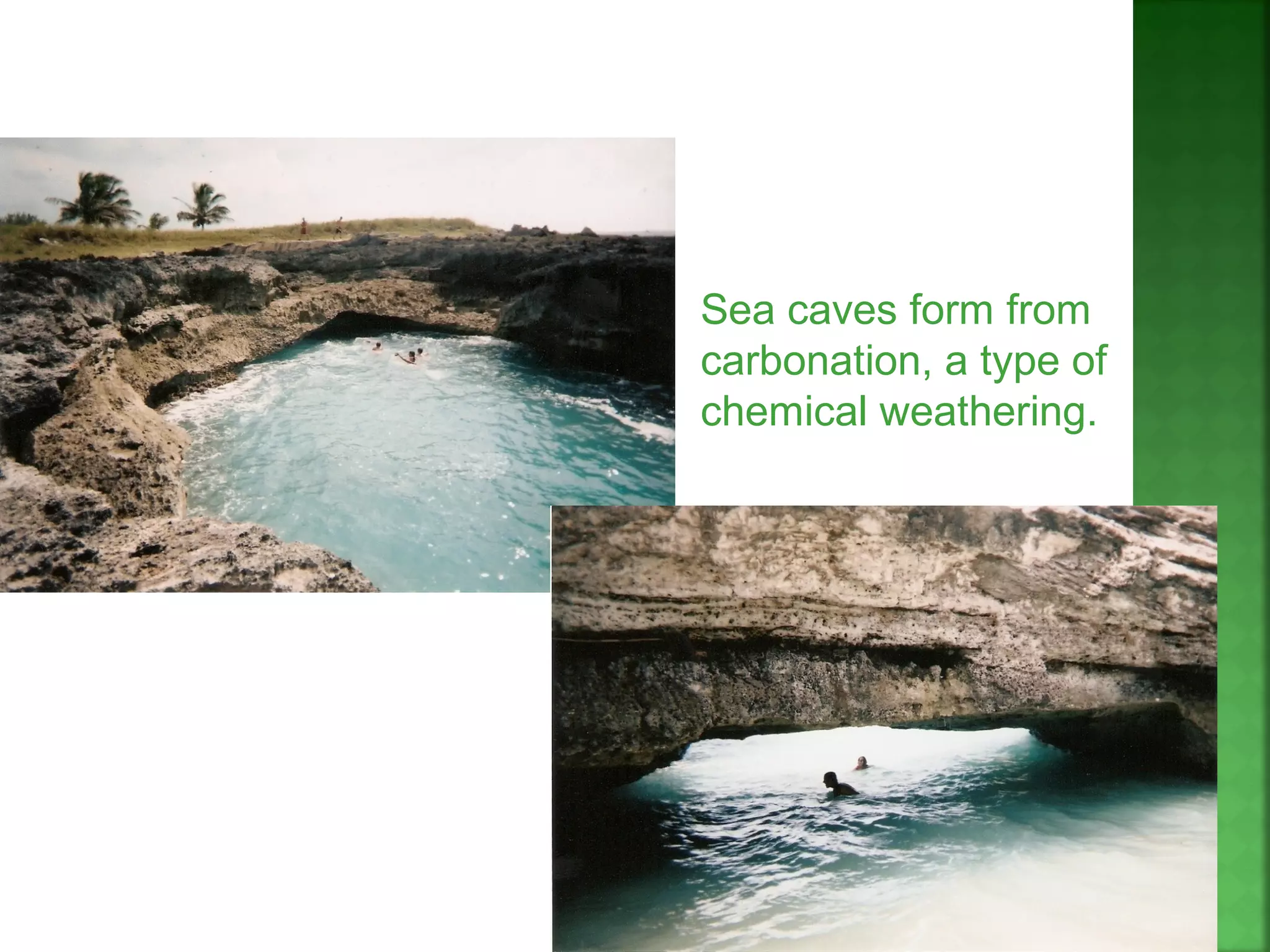
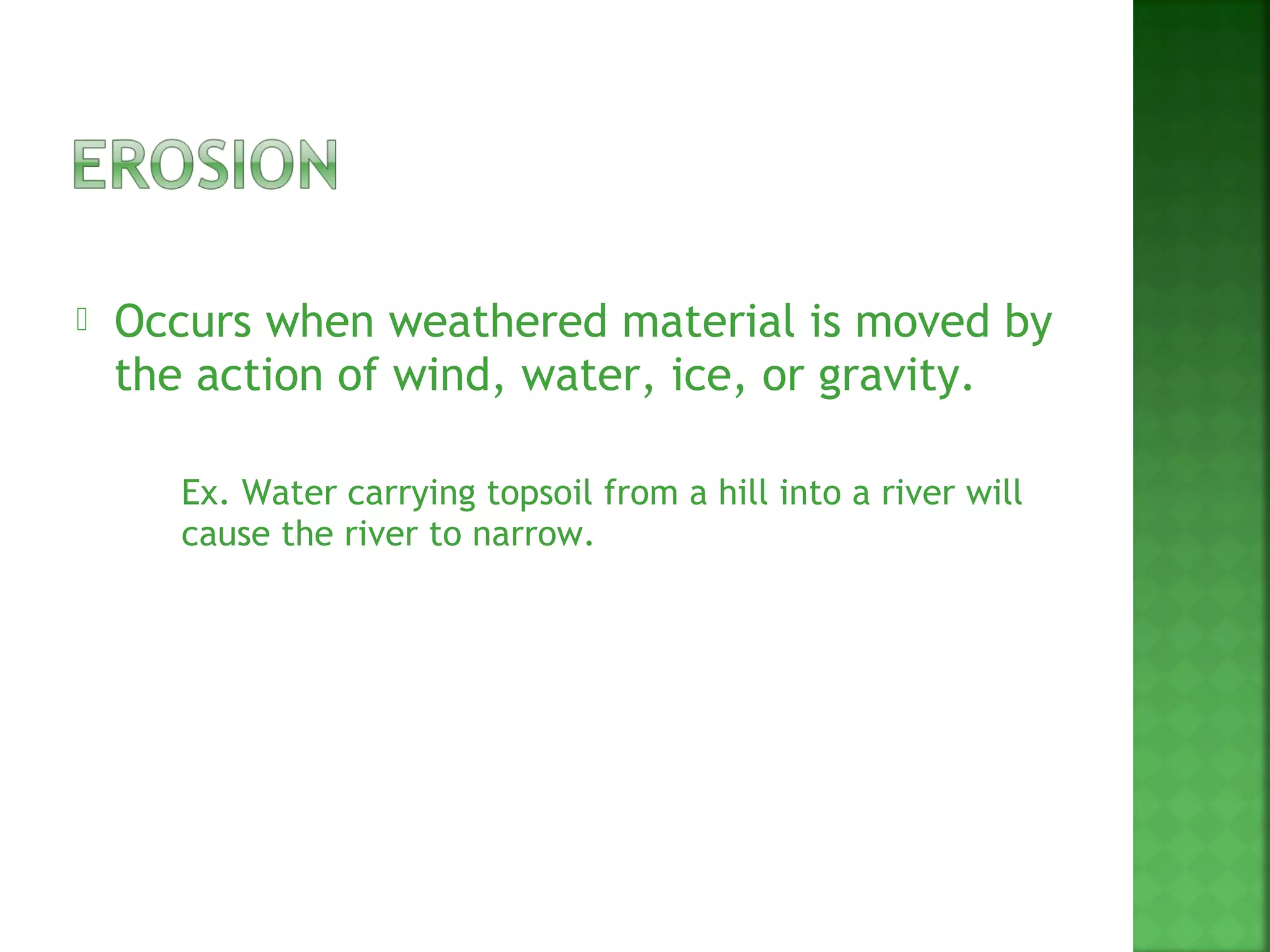
Sea caves form from
carbonation, a type of
chemical weathering.
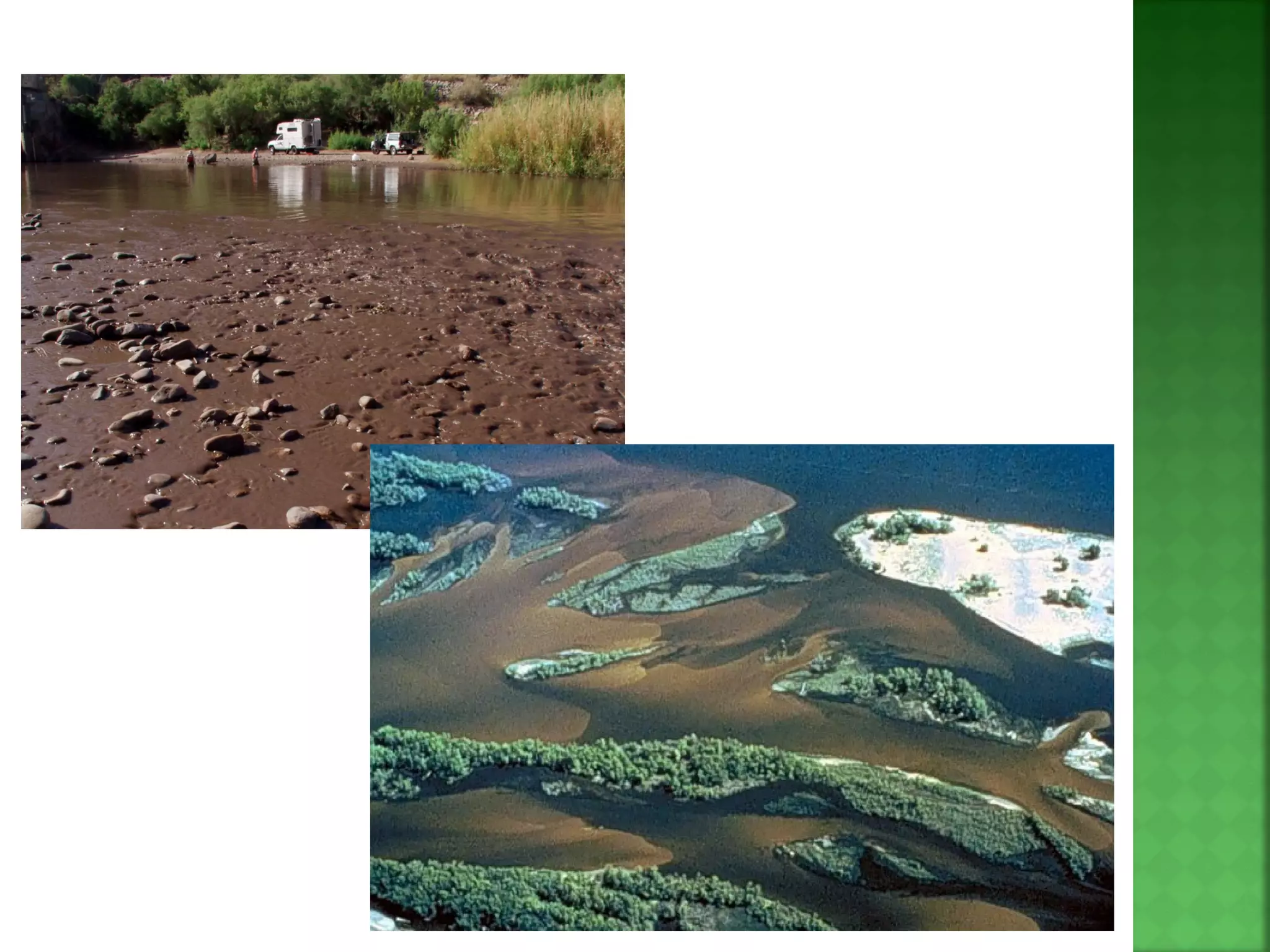
   Occurs when weathered material is moved by
    the action of wind, water, ice, or gravity.

        Ex. Water carrying topsoil from a hill into a river will
         cause the river to narrow.
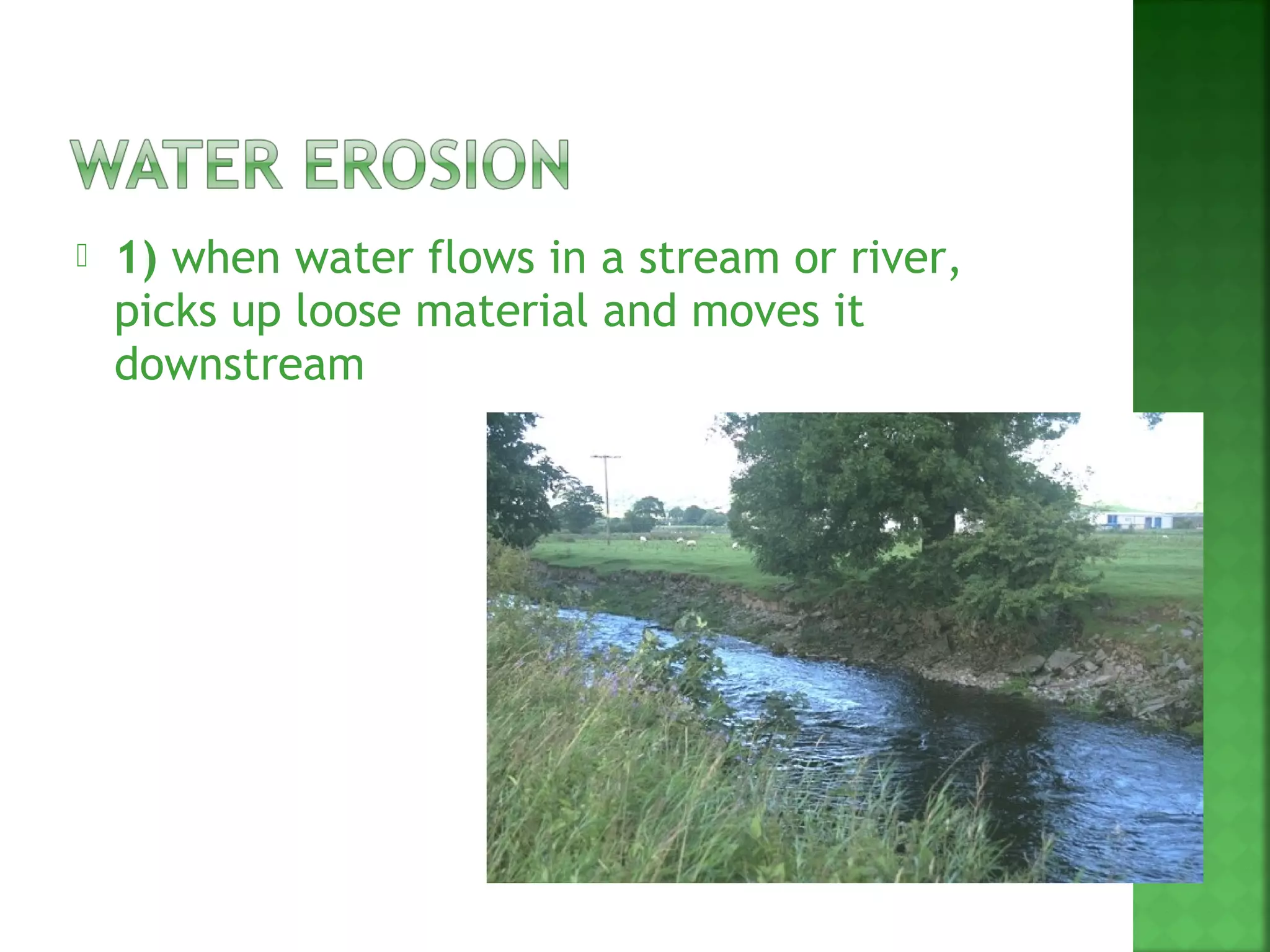
   1) when water flows in a stream or river,
    picks up loose material and moves it
    downstream
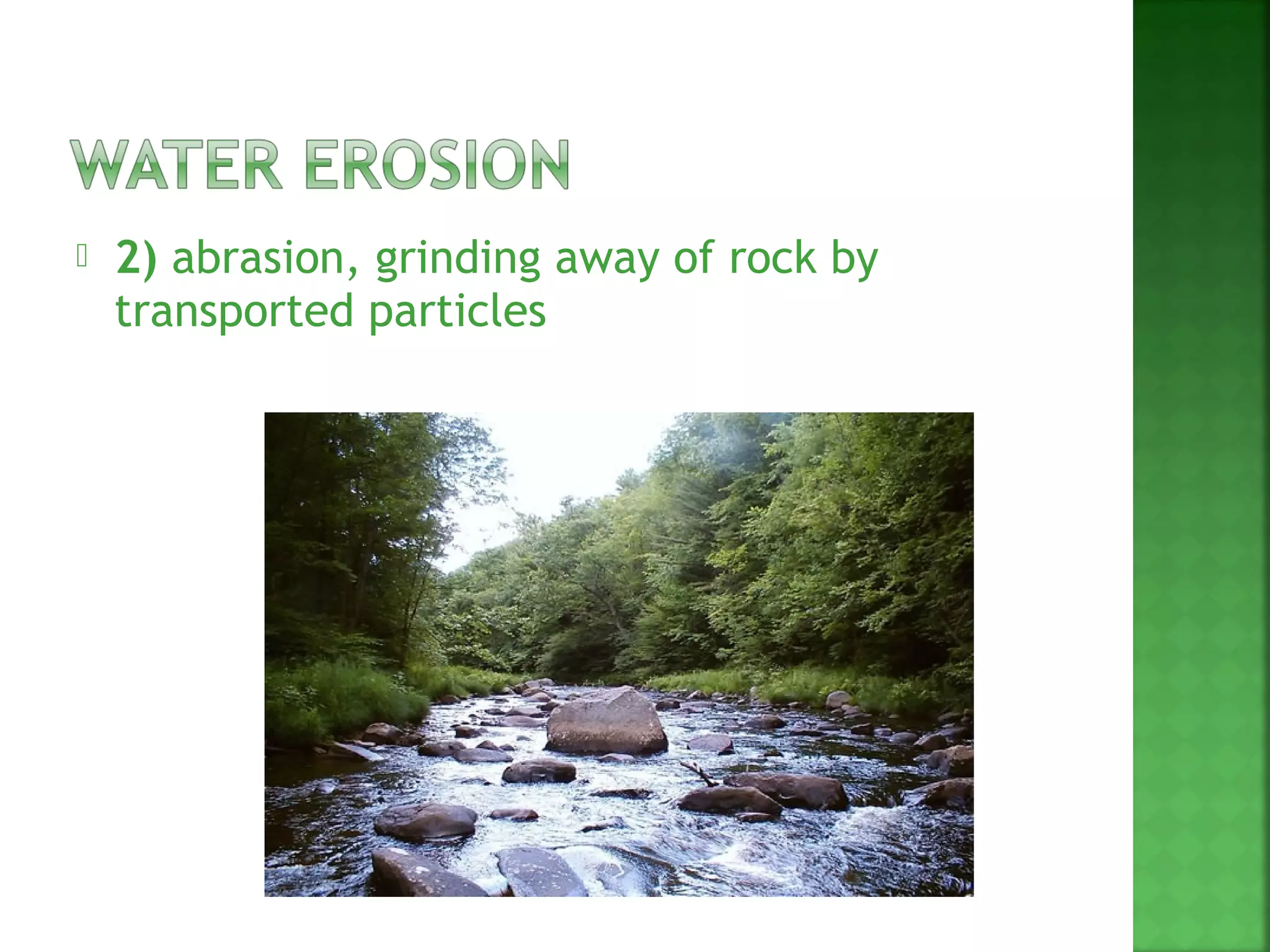
   2) abrasion, grinding away of rock by
    transported particles
   3) water dissolves chemical elements in the
    rock (changes composition of rock)
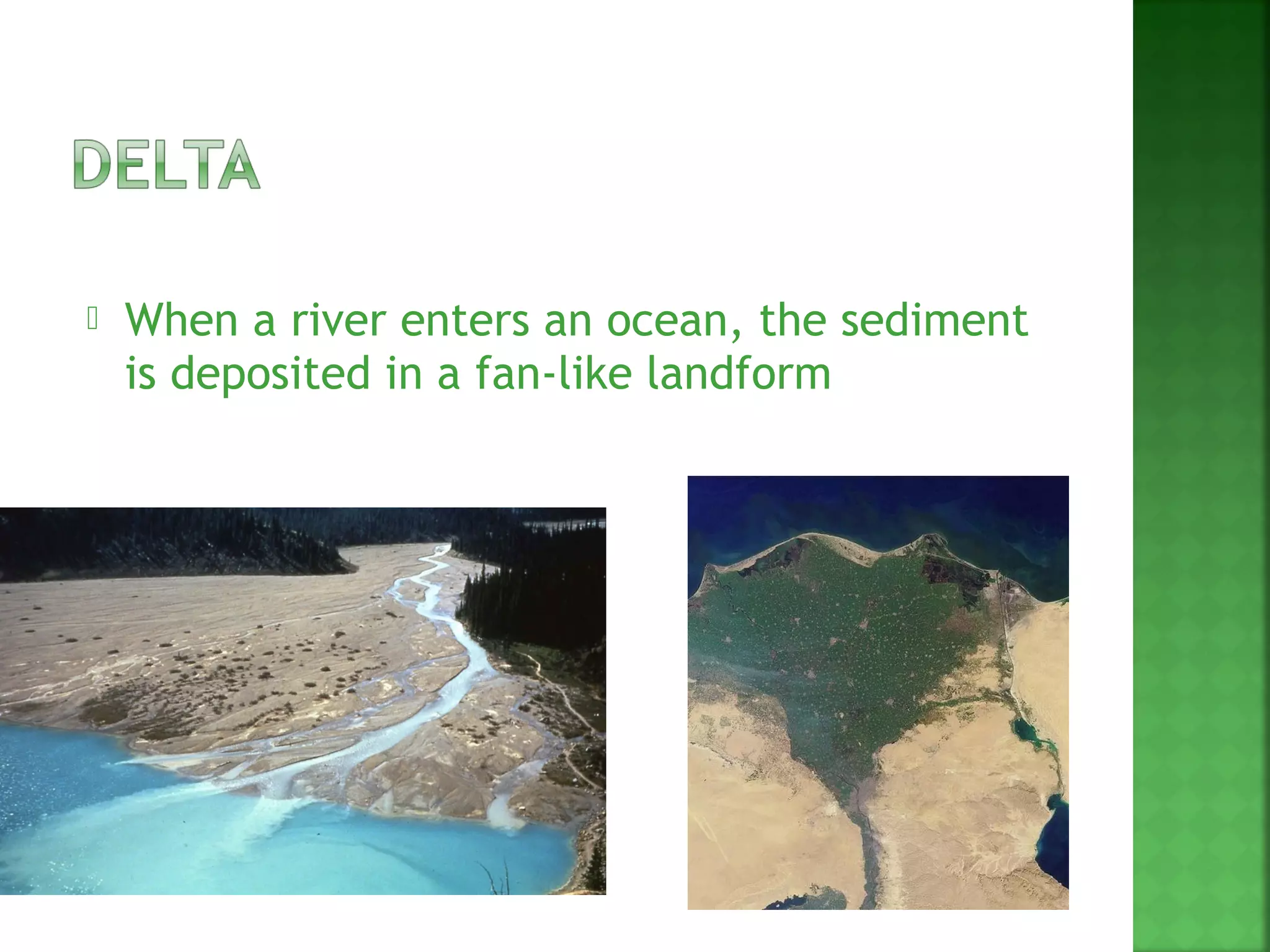
   When a river enters an ocean, the sediment
    is deposited in a fan-like landform
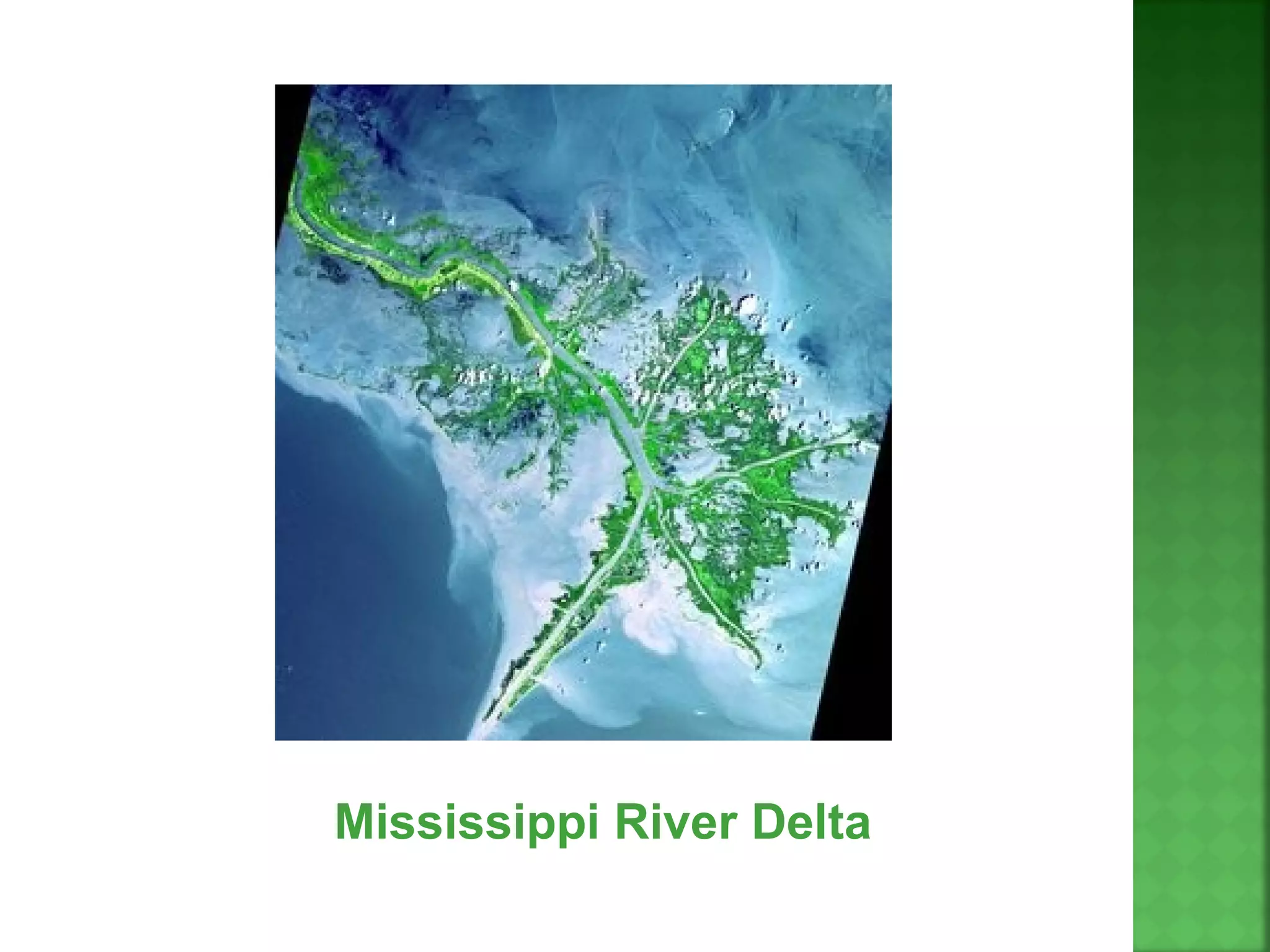
Mississippi River Delta
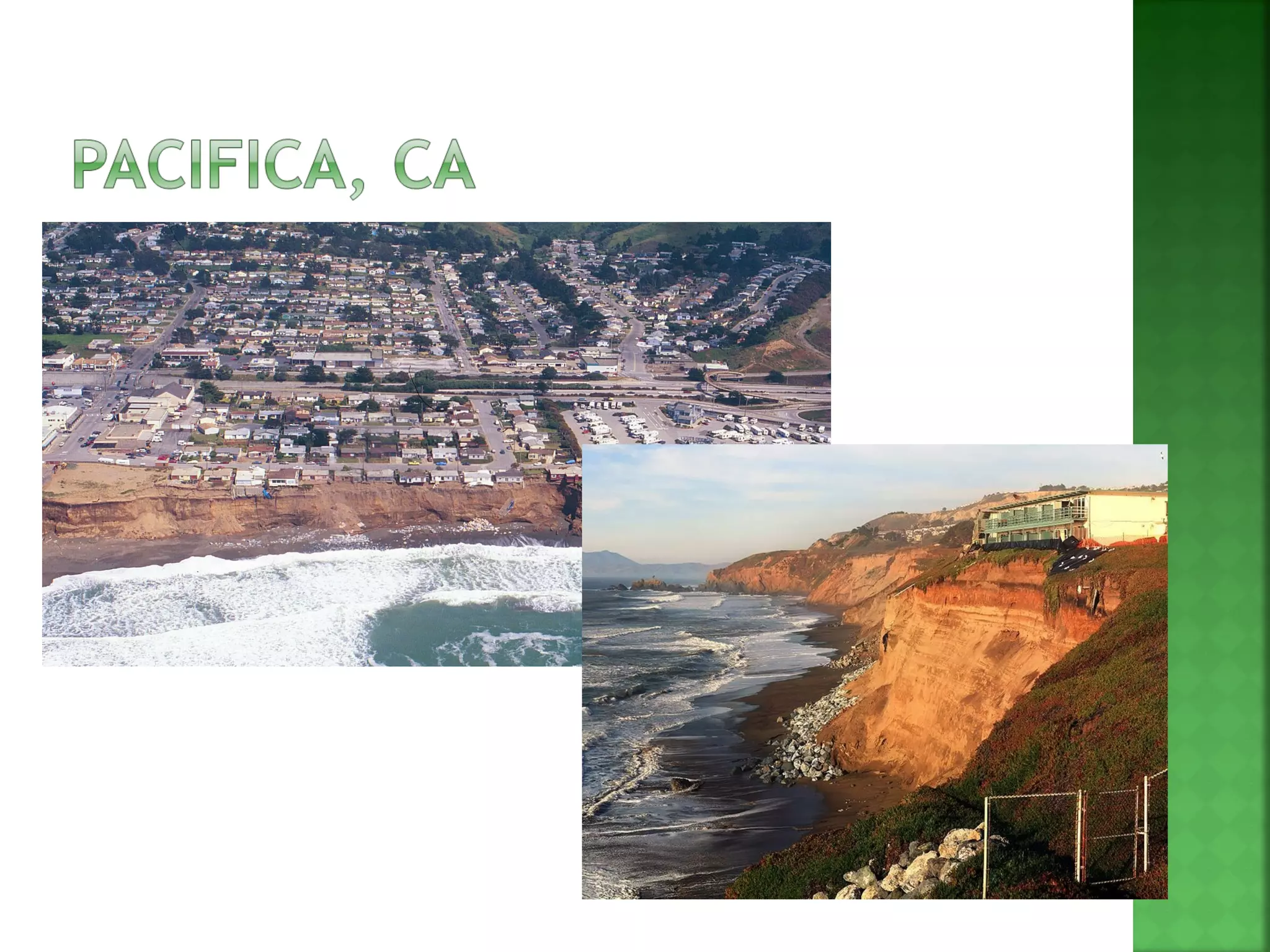
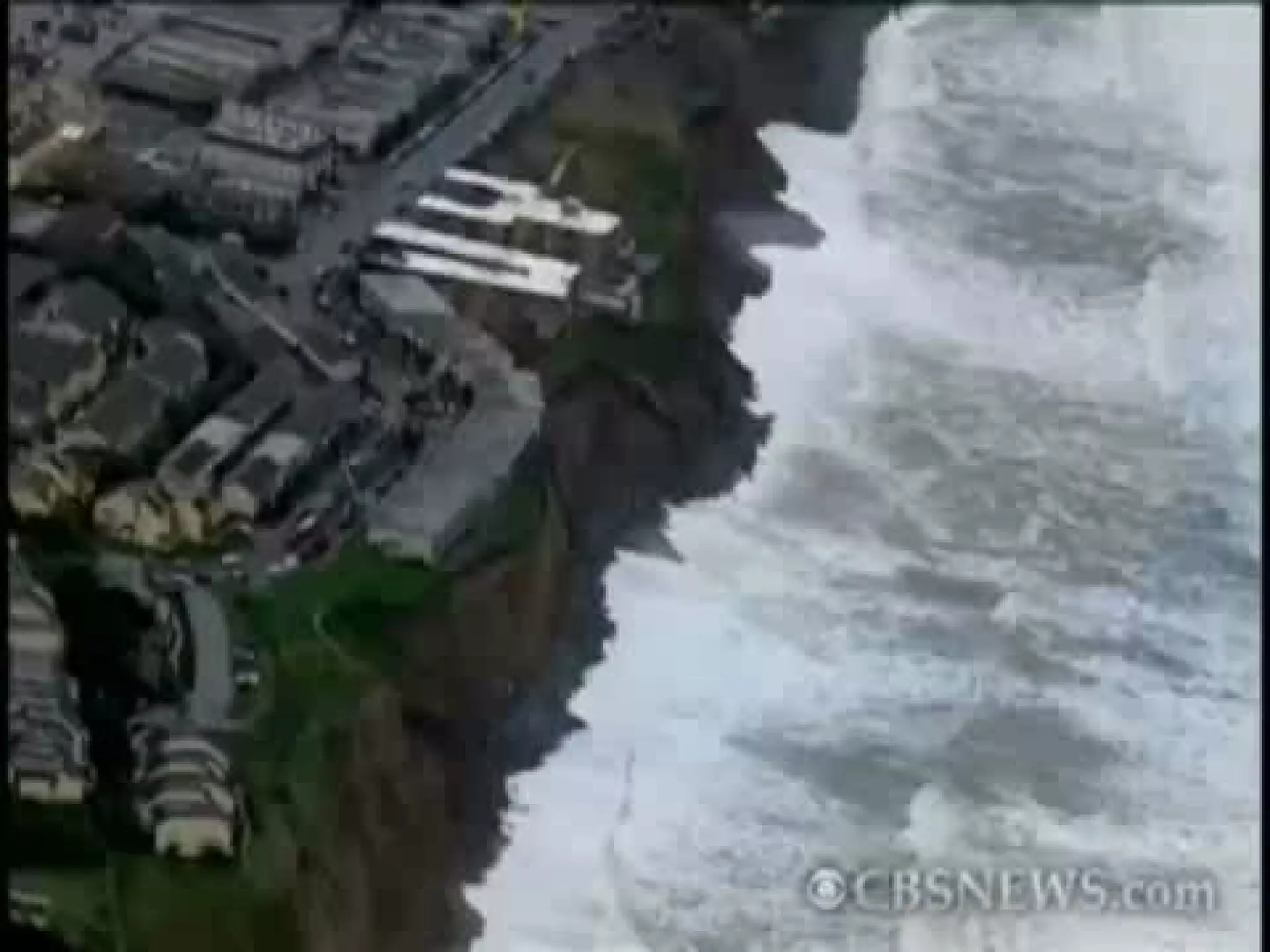
   Waves on a coastline may also change the
    land

   Waves can reduce or increase beaches

   Sediment from waves may build up sand bars
    or islands
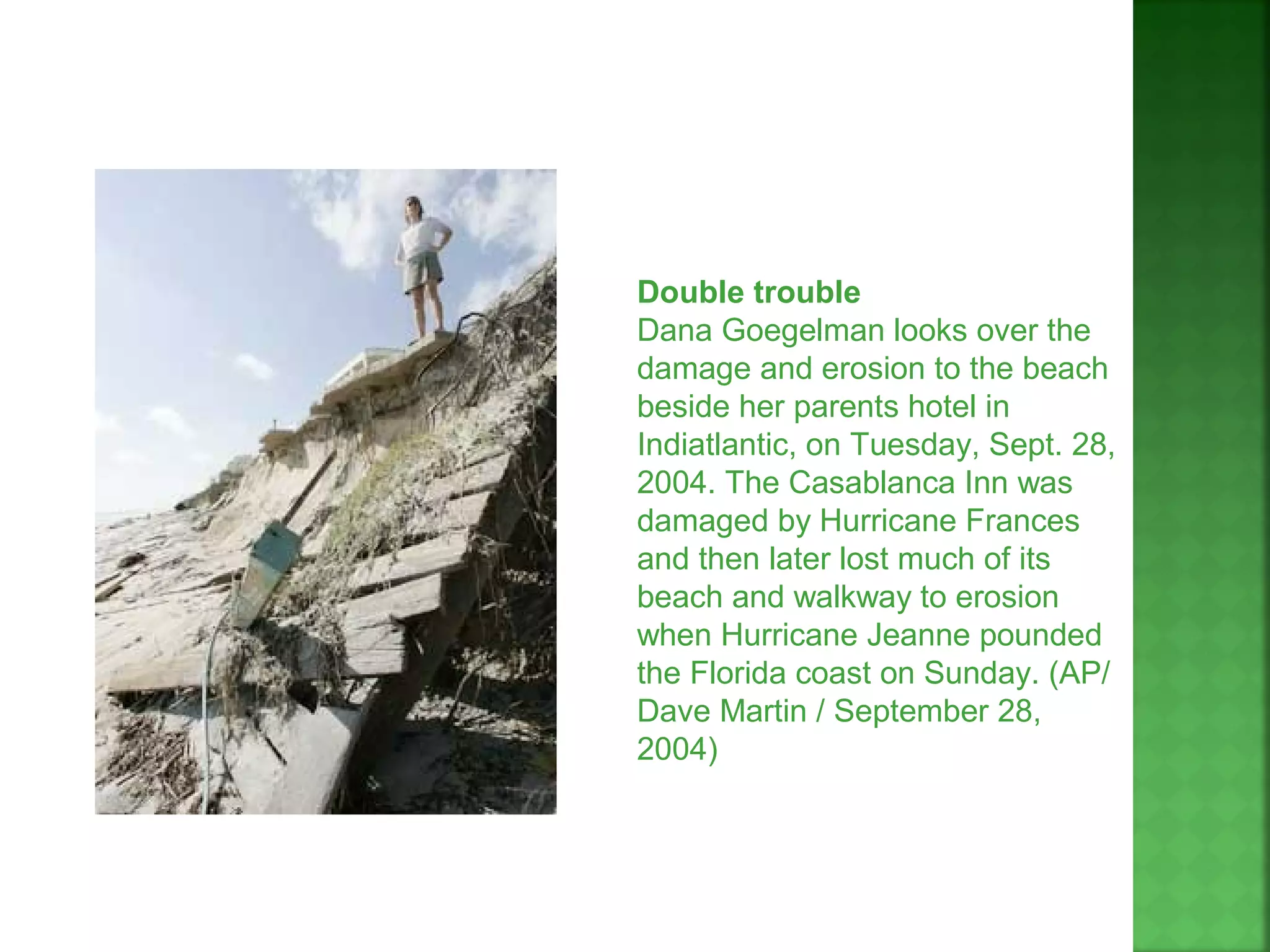
Double trouble
Dana Goegelman looks over the
damage and erosion to the beach
beside her parents hotel in
Indiatlantic, on Tuesday, Sept. 28,
2004. The Casablanca Inn was
damaged by Hurricane Frances
and then later lost much of its
beach and walkway to erosion
when Hurricane Jeanne pounded
the Florida coast on Sunday. (AP/
Dave Martin / September 28,
2004)
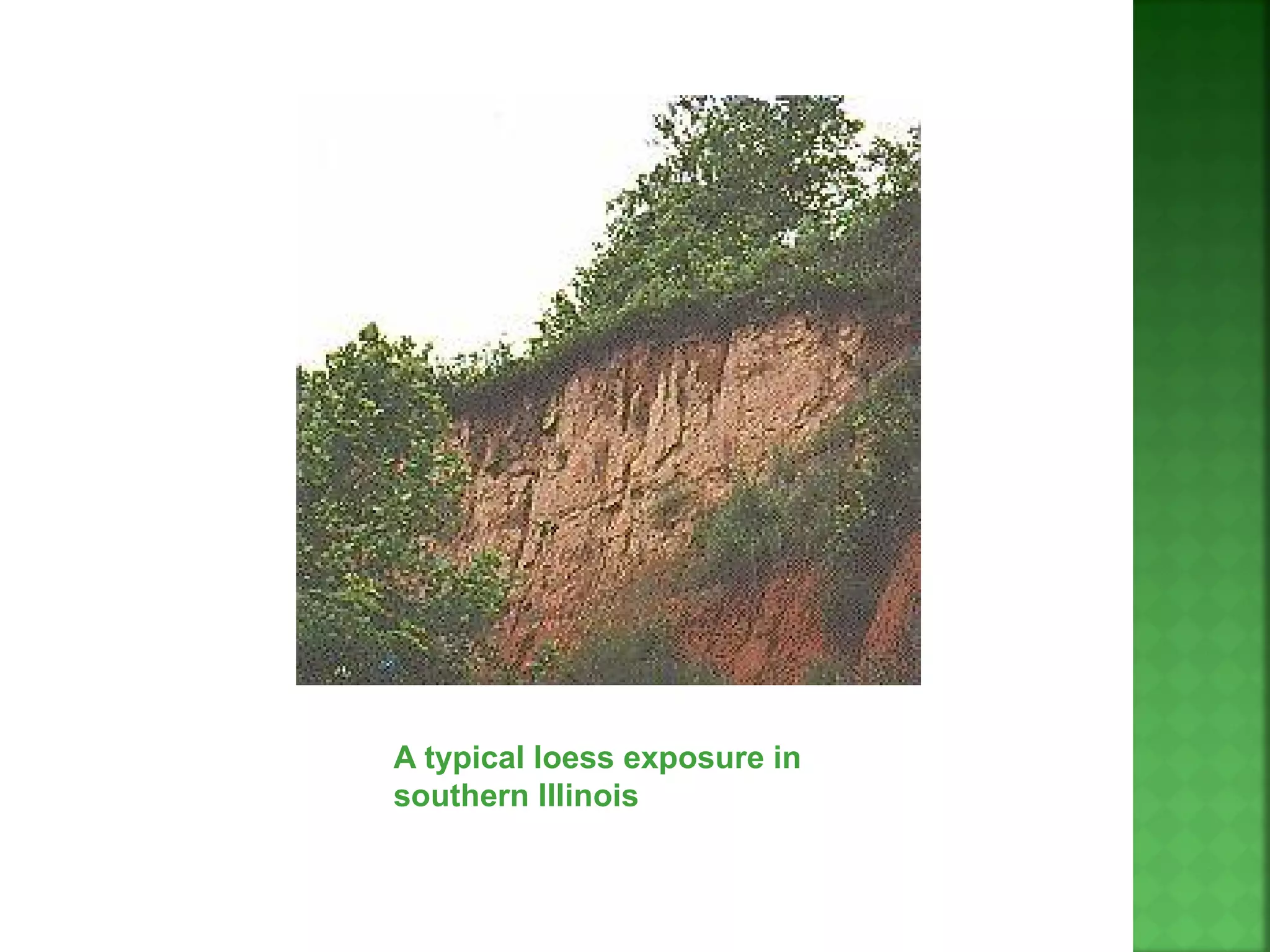
   loess (LOH•uhs)

        windblown silt and clay sediment that produce very
         fertile soil

        silt – fine sand carried by moving water
A typical loess exposure in
southern Illinois
   The Mississippi River Valley in the U.S. and
    grasslands of Argentina have extensive
    amounts of loess.
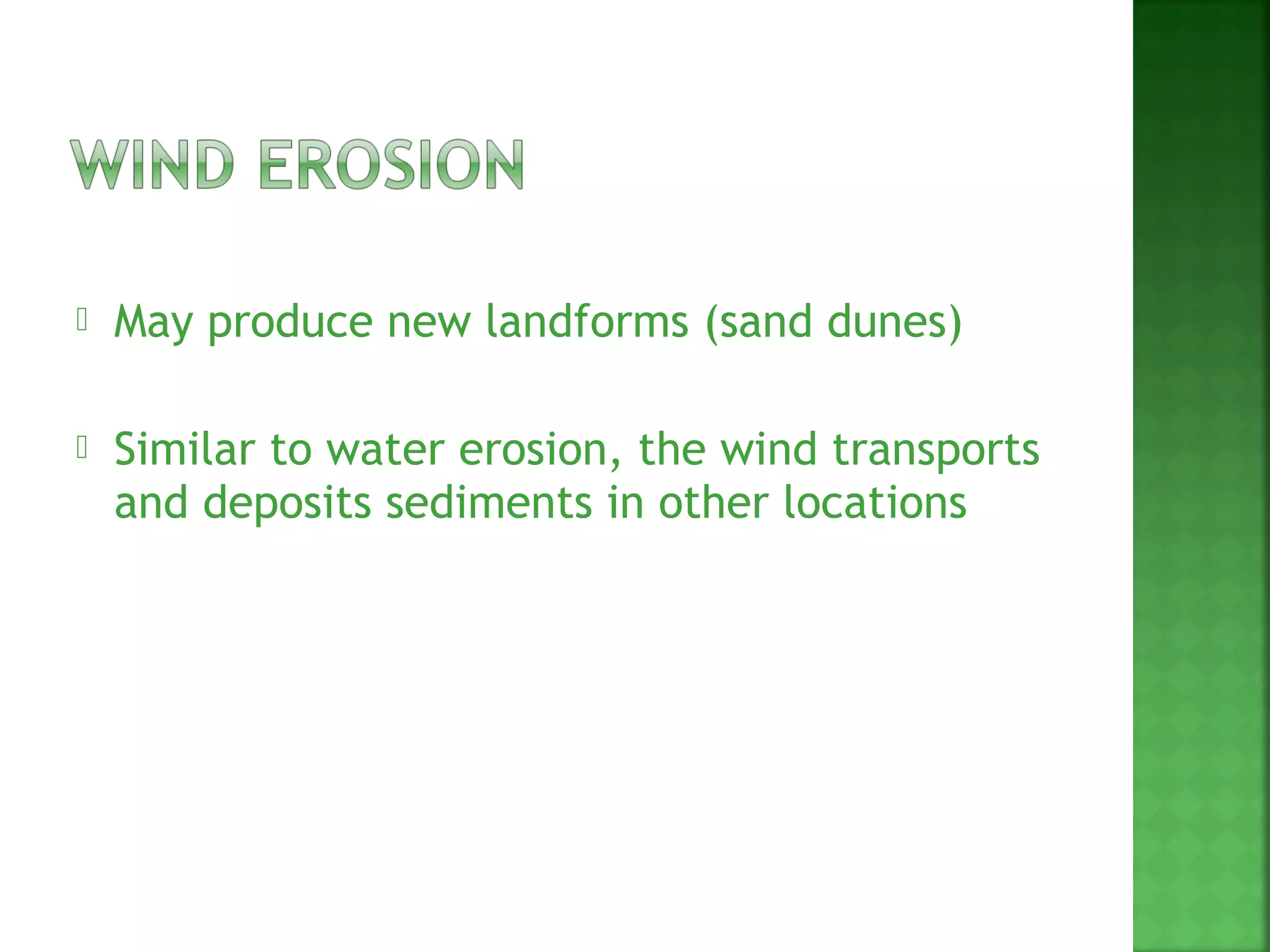
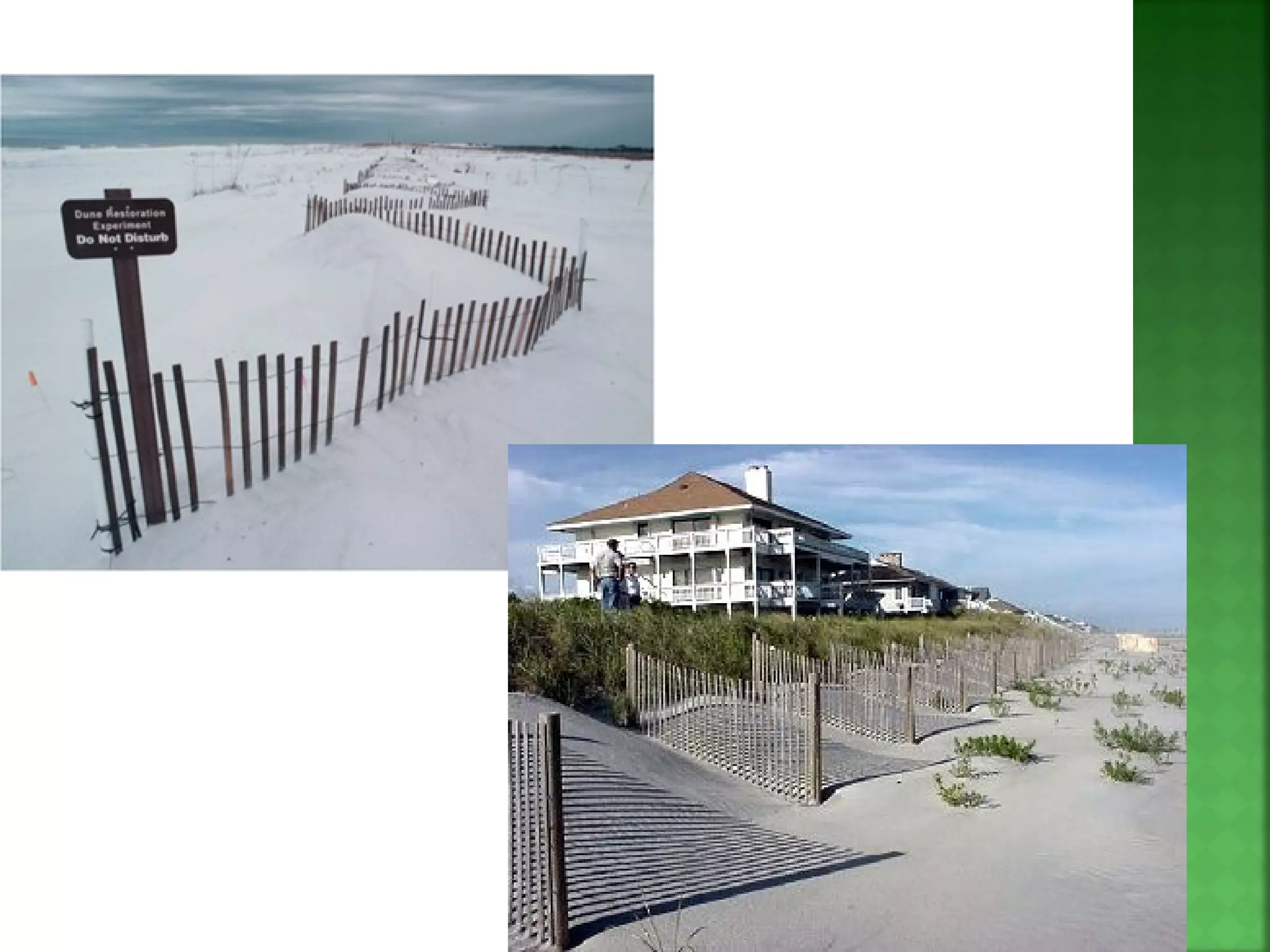
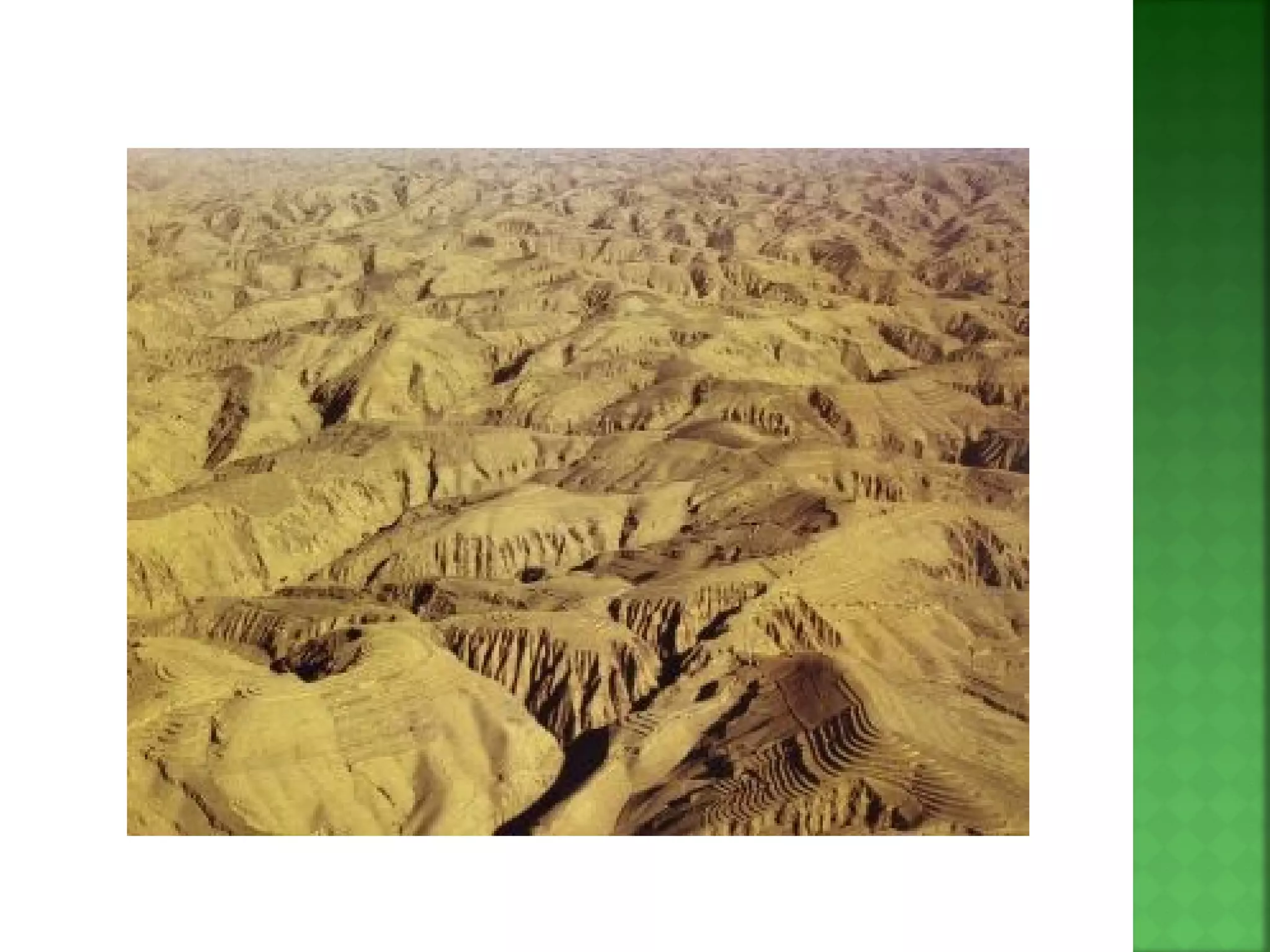
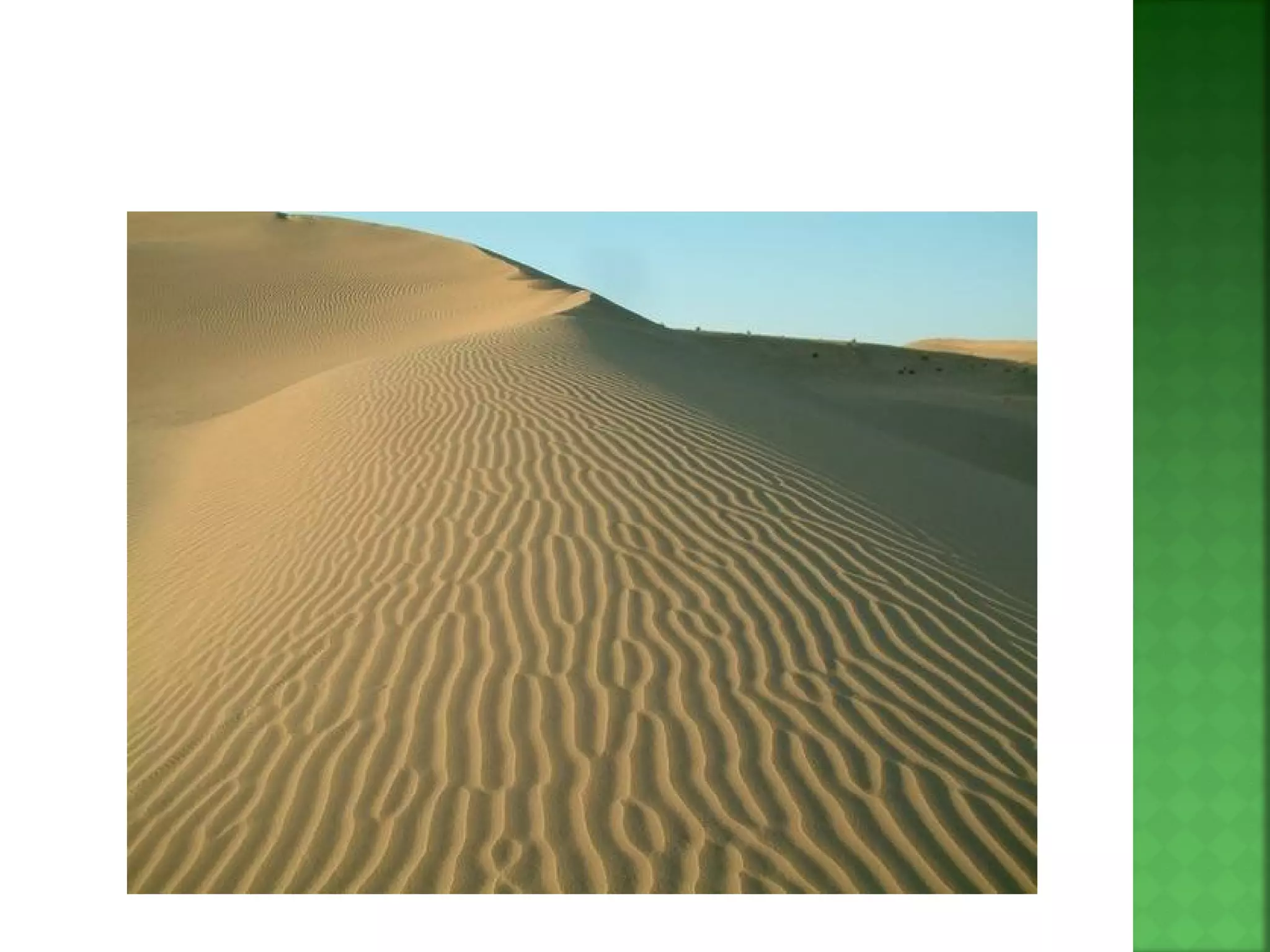
   May produce new landforms (sand dunes)

   Similar to water erosion, the wind transports
    and deposits sediments in other locations
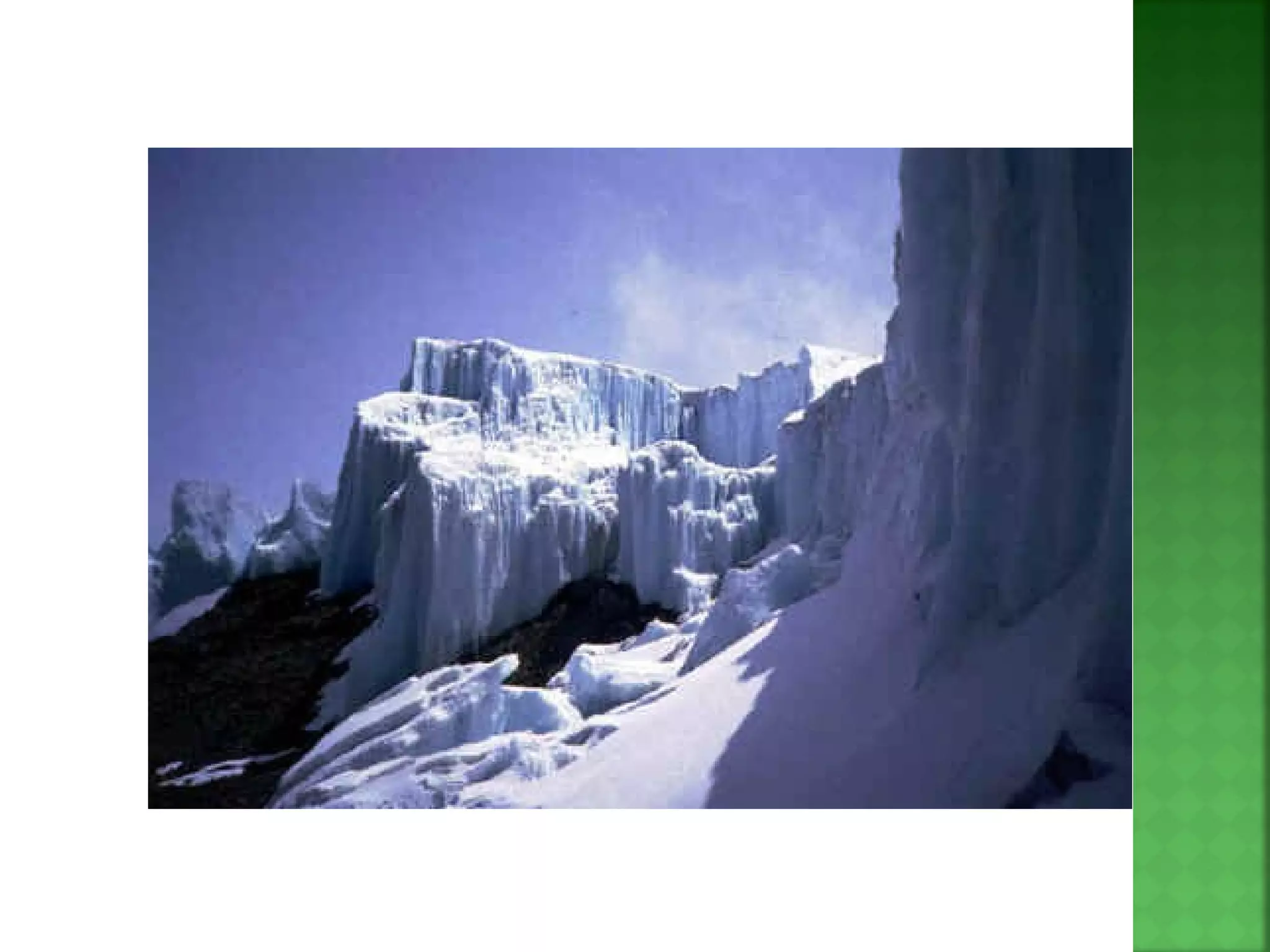
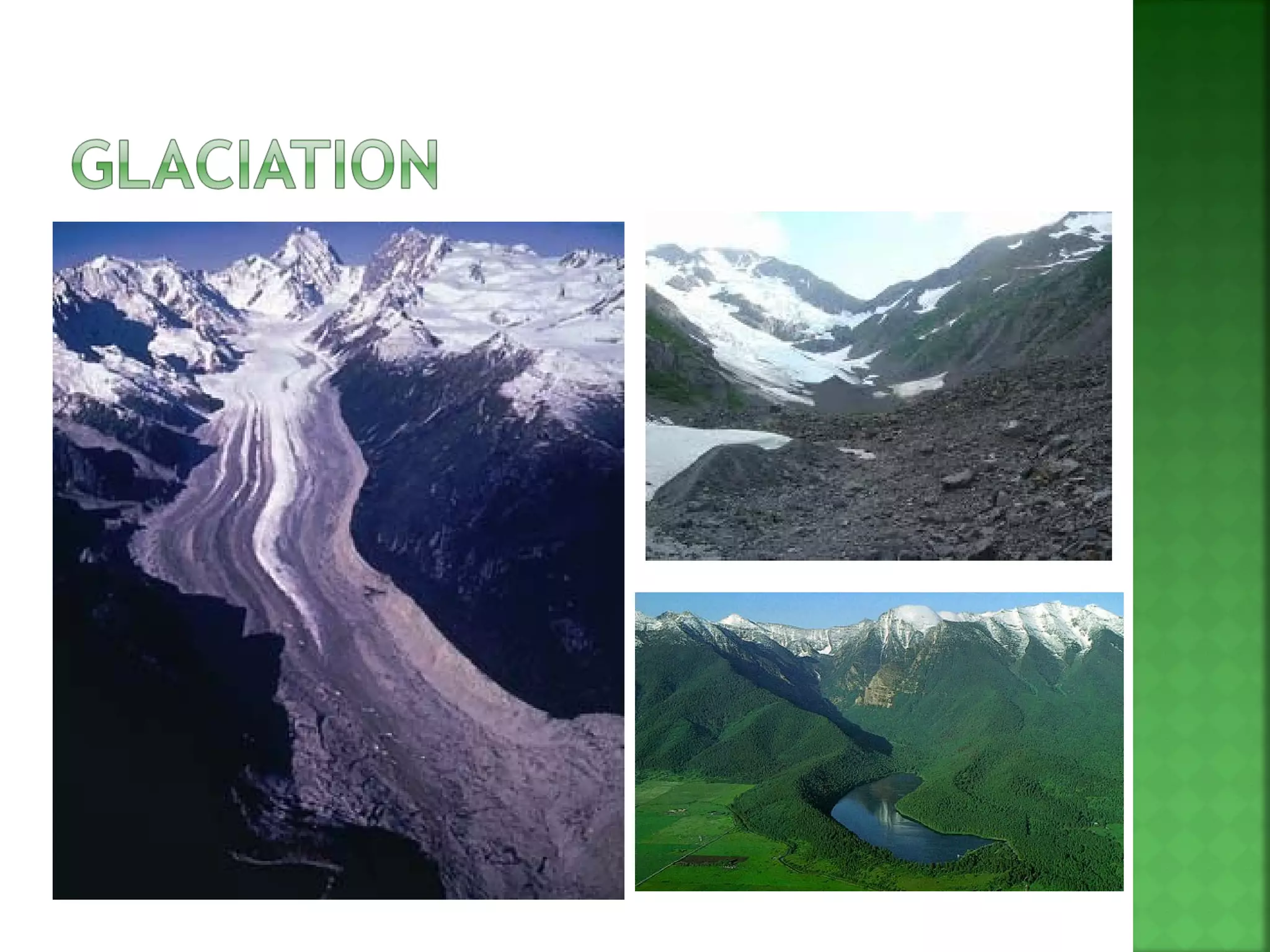
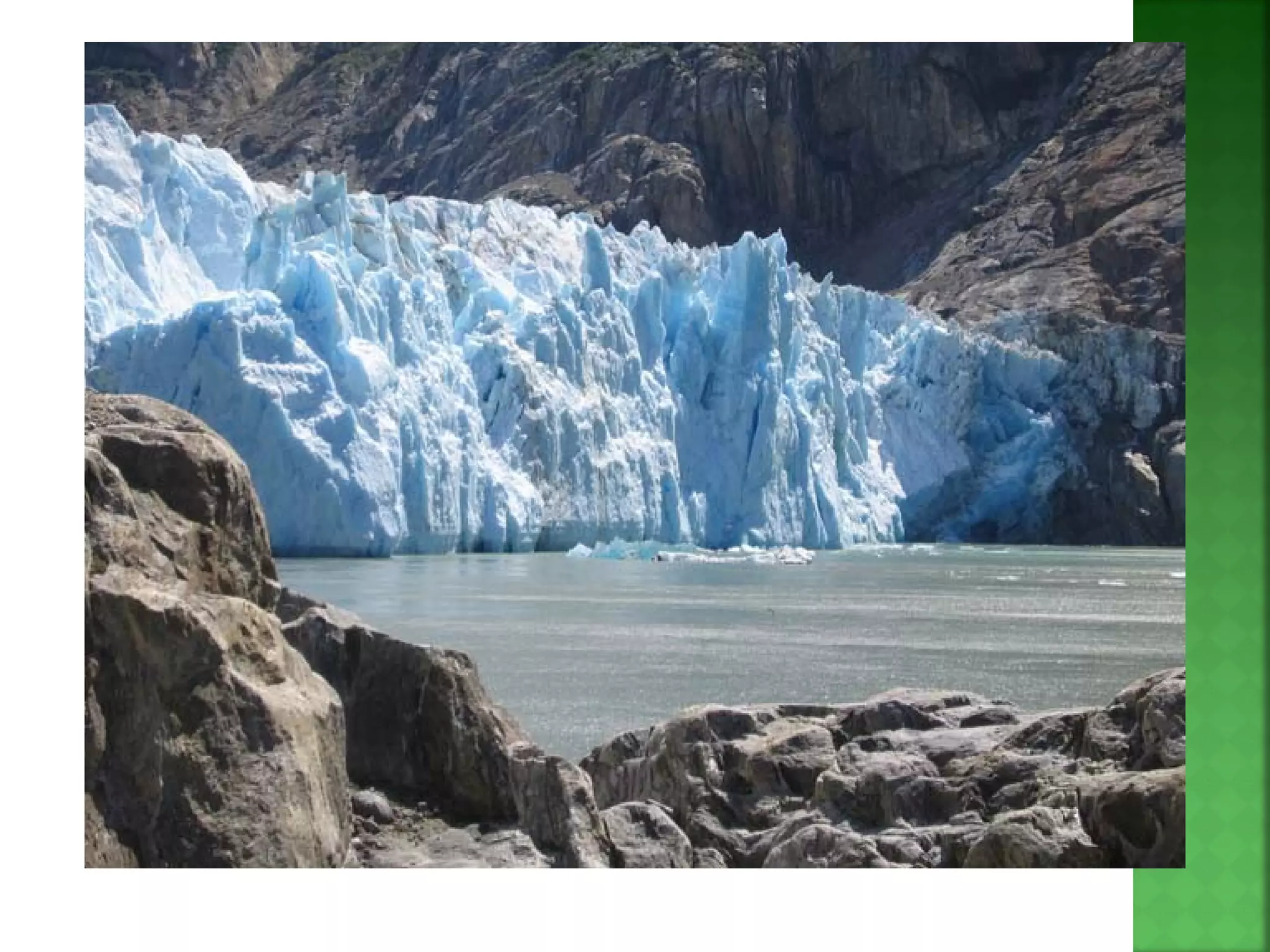
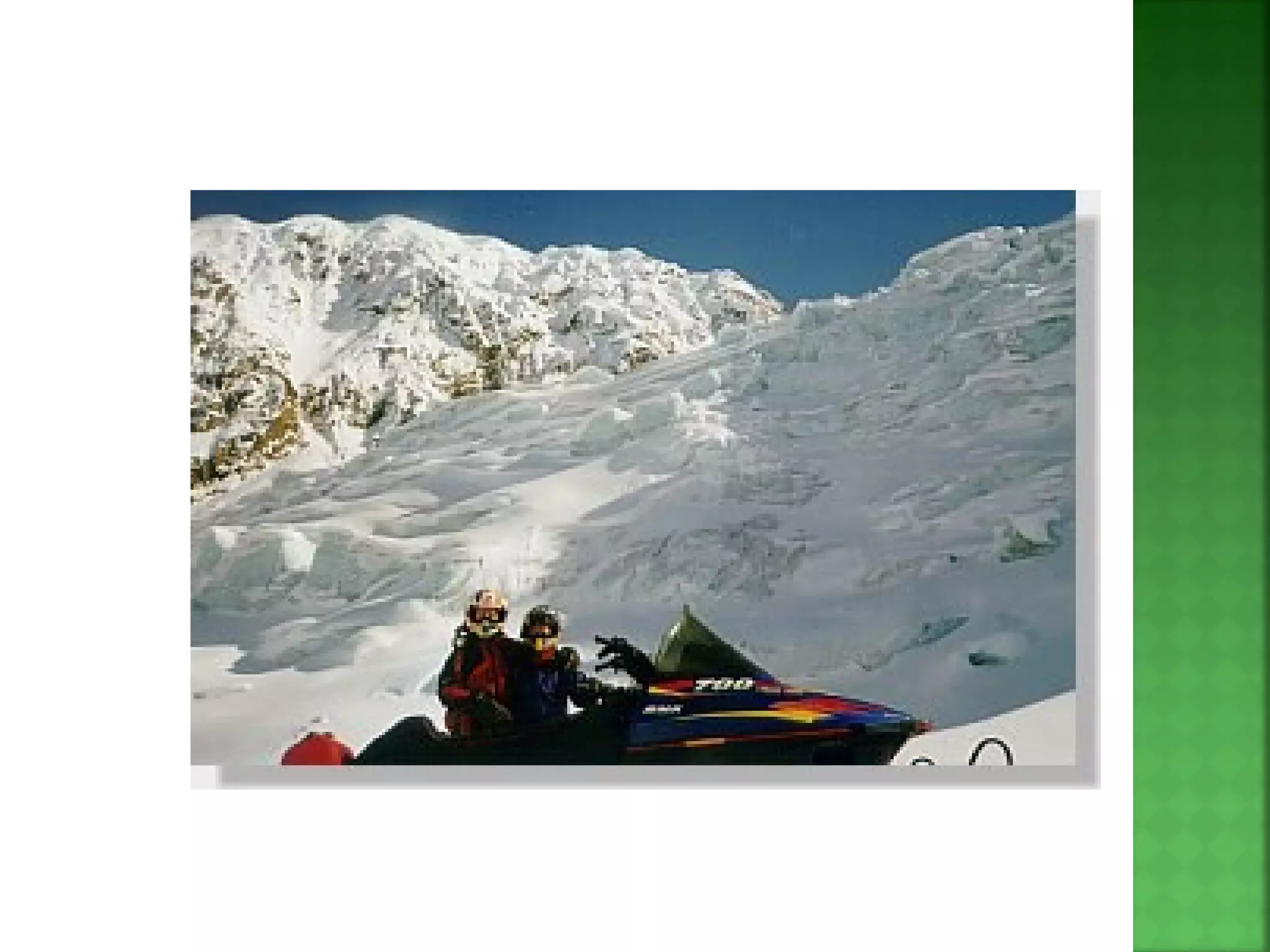
   glaciers

        large, long-lasting mass of ice
        move because of gravity
        form in mountainous areas
        form in heavy snowfall regions
   the changing of landforms by slowly moving
    glaciers

        Erosion occurs when glaciers move
   When glaciers move, they carry rocks with
    them

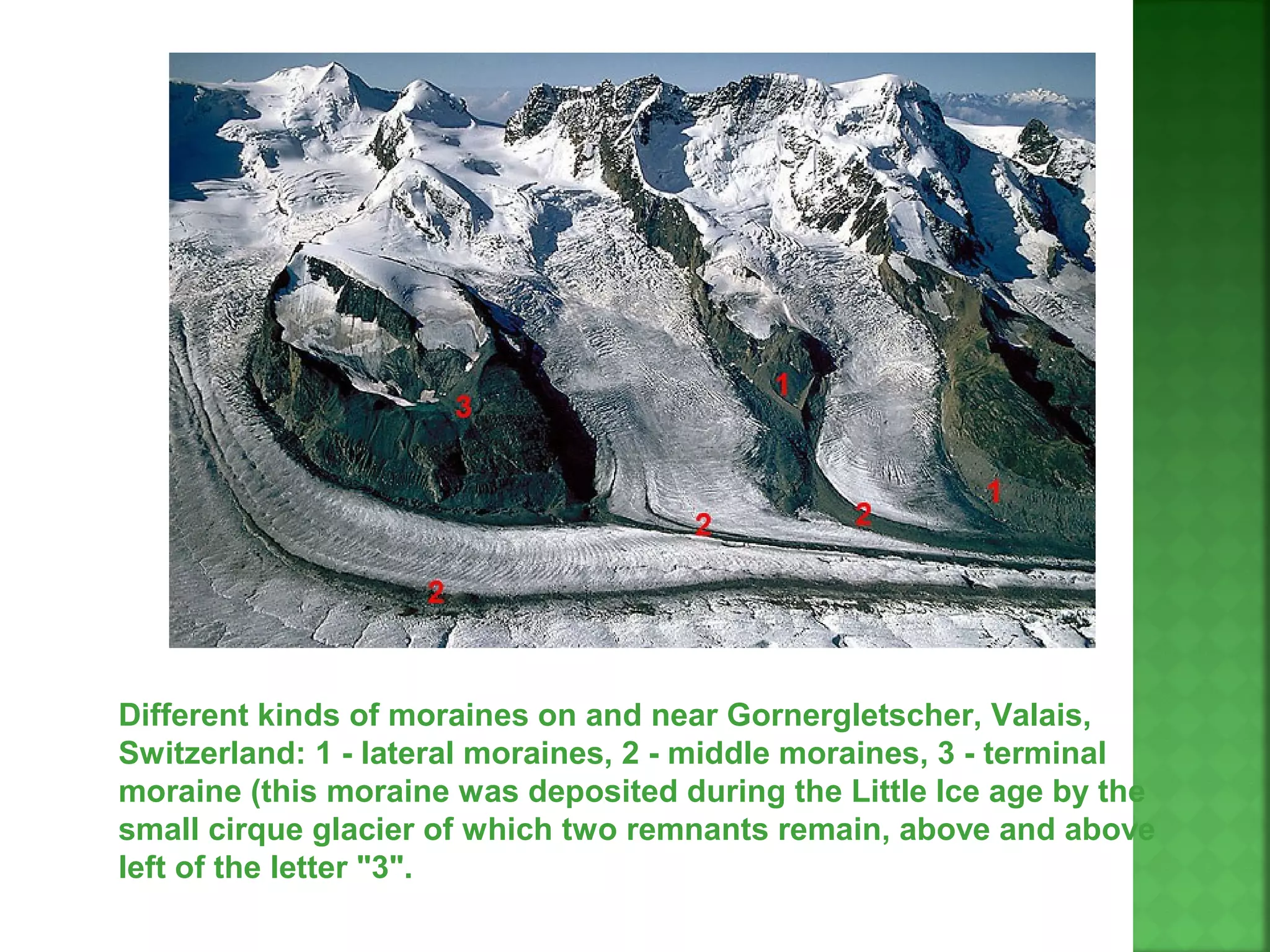
   Rocks left behind by a glacier may form a hill
    or ridge called a moraine
   Who you callin’ a
    moraine!?
Different kinds of moraines on and near Gornergletscher, Valais,
Switzerland: 1 - lateral moraines, 2 - middle moraines, 3 - terminal
moraine (this moraine was deposited during the Little Ice age by the
small cirque glacier of which two remnants remain, above and above
left of the letter "3".
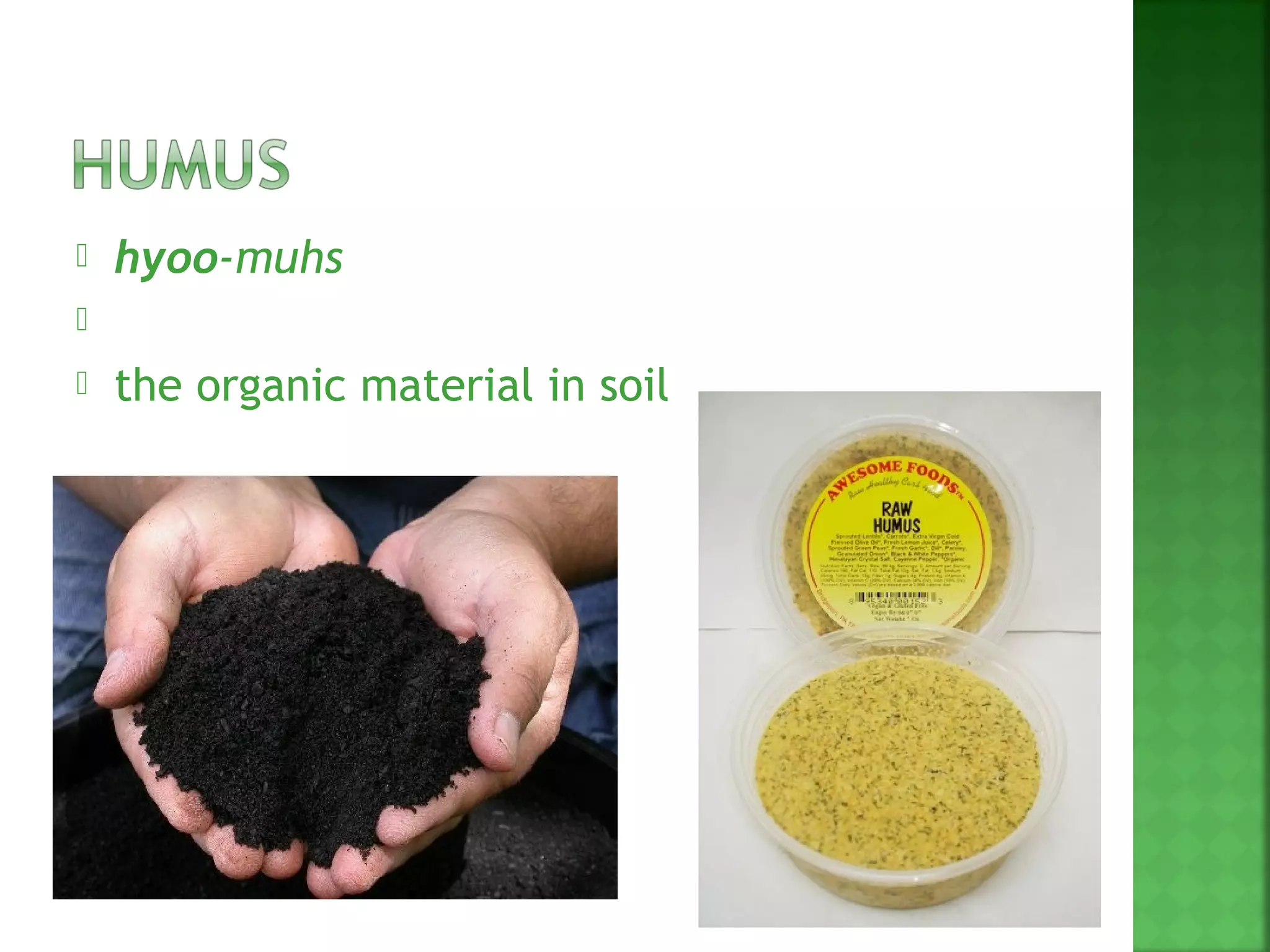
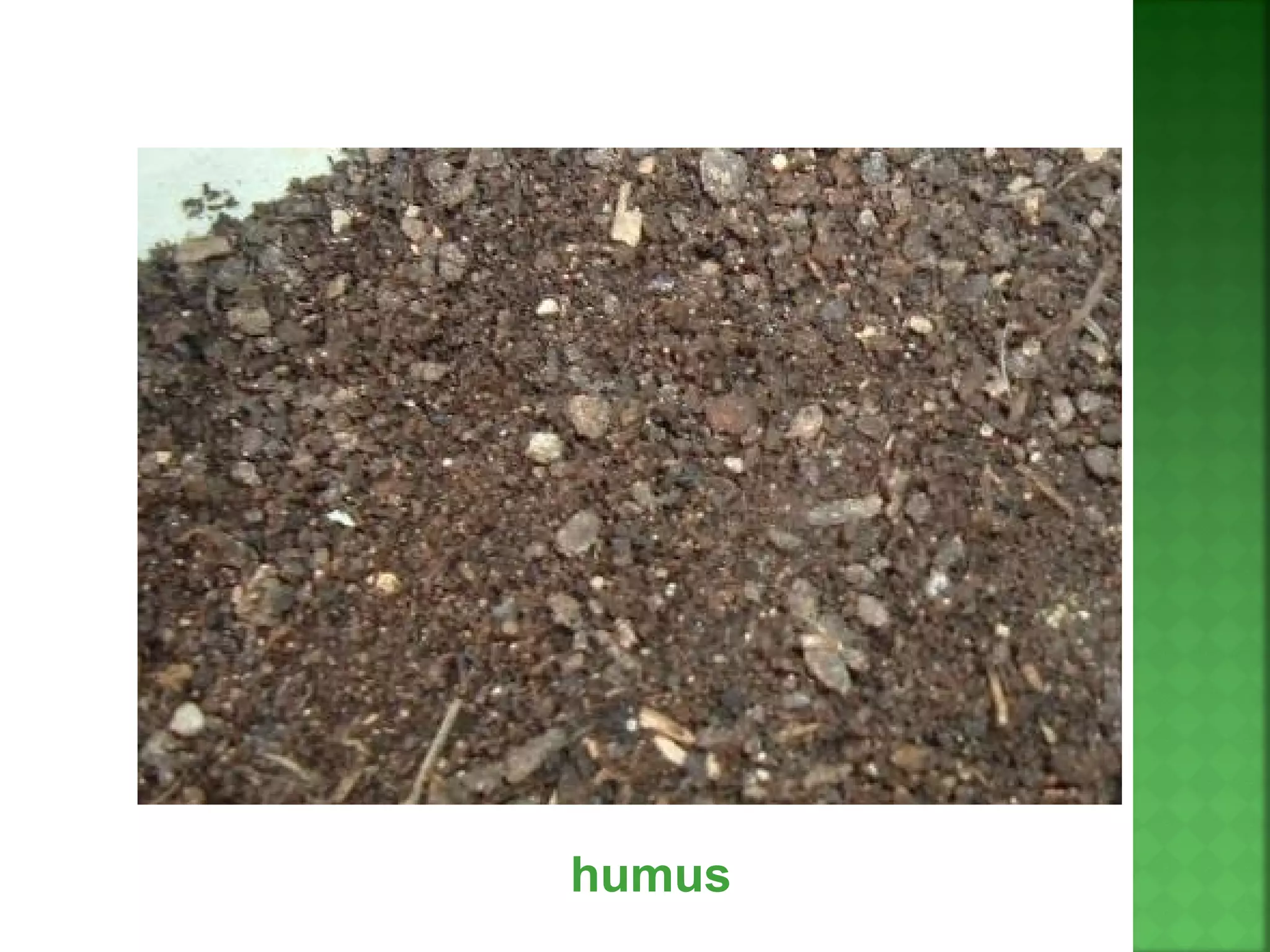
   hyoo-muhs

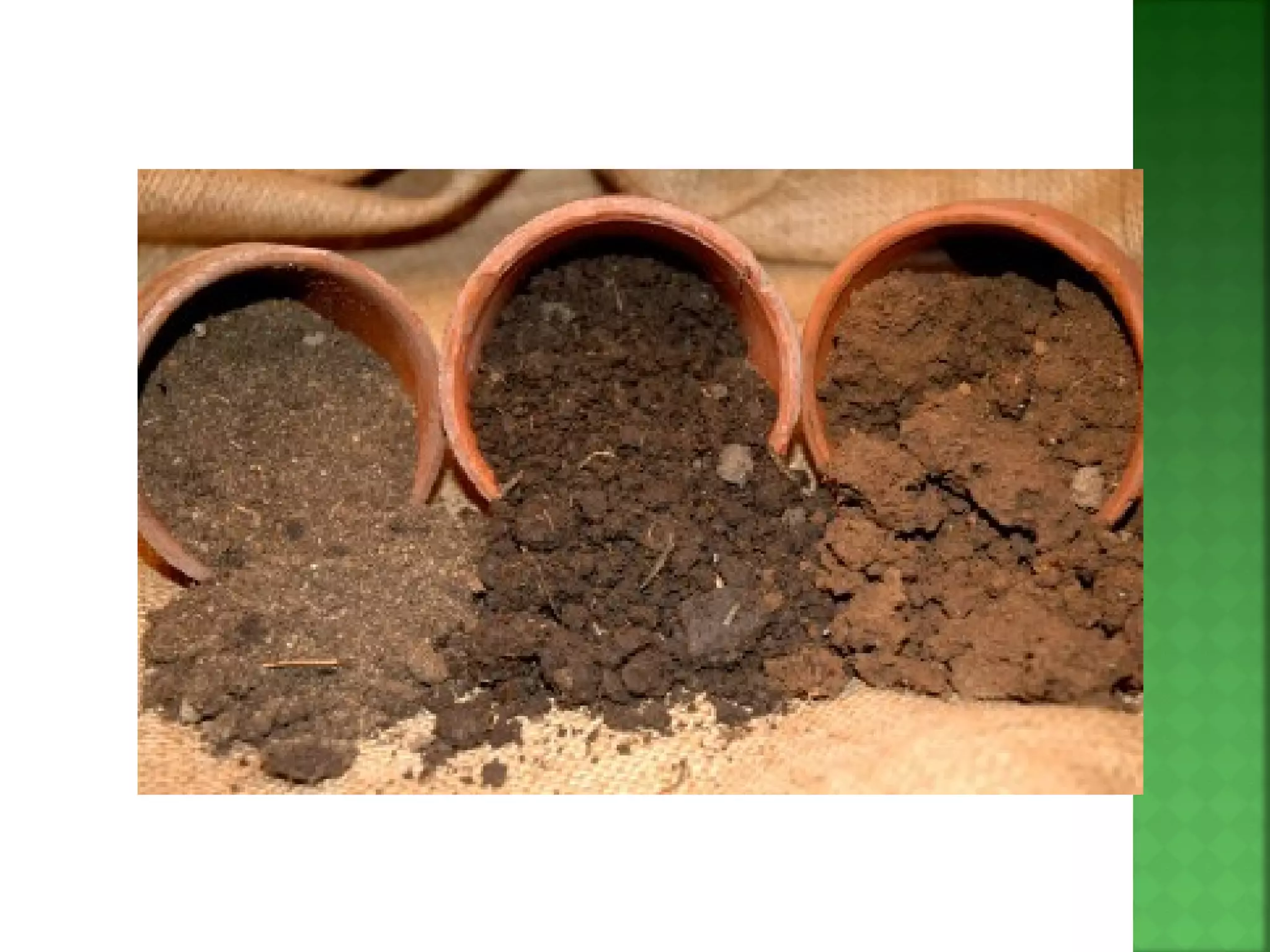
   the organic material in soil
humus
   1)   parent material
   2)   relief
   3)   organisms
   4)   climate
   5)   time
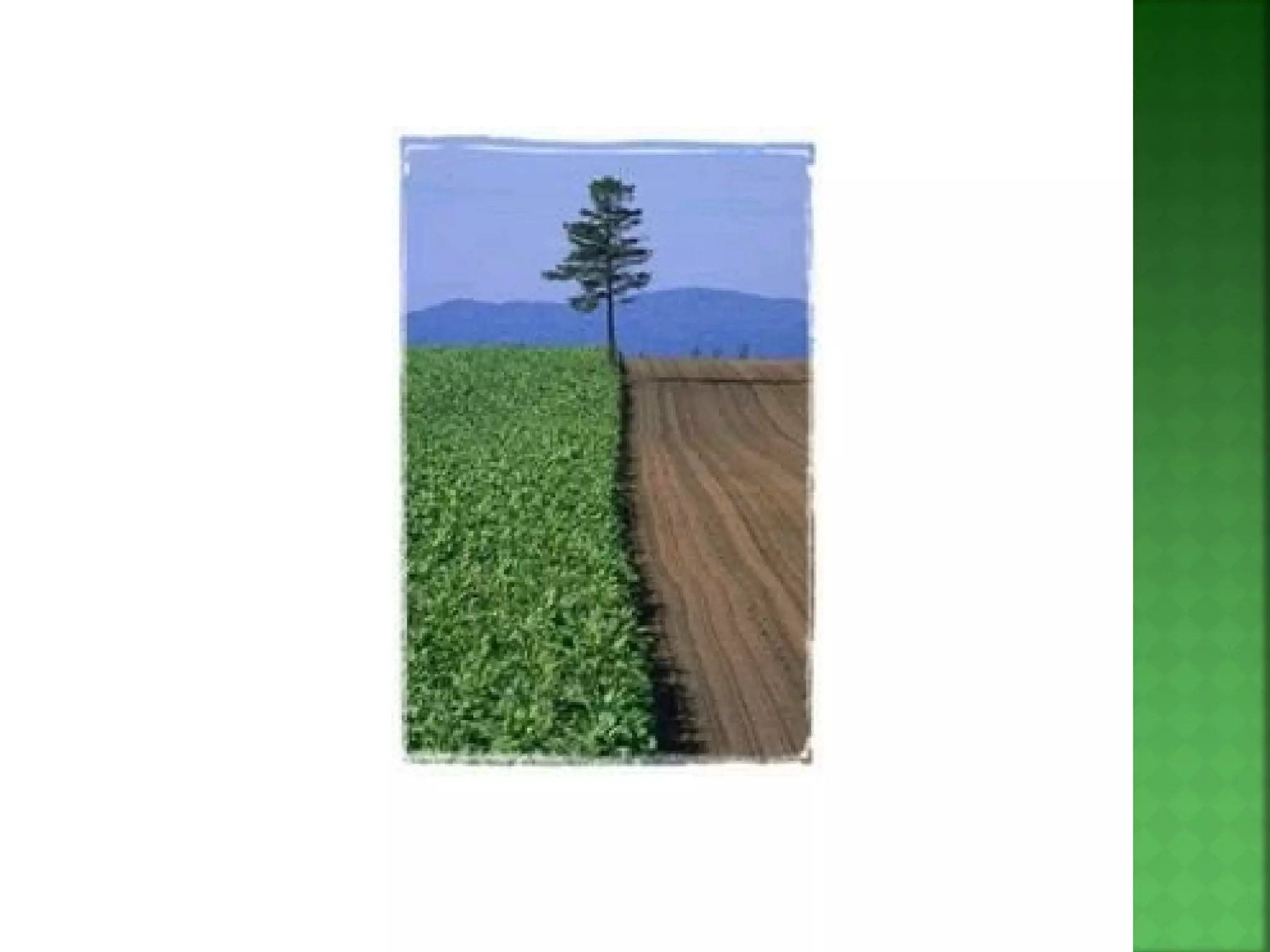
   The variety of soils – and the climates in
    which they’re found – determine what can
    grow there.
Geography Chapter 2.4 external forces

Geography Chapter 2.4 external forces

  • 2.
    Wind, heat, cold, glaciers, rivers, and floods alter the surface of the earth.  The results of weathering and erosion change the way humans interact with the environment.
  • 3.
    Weathering is the physical and chemical processes that change the characteristics of rock on or near the earth’s surface  Can change landscapes over time and create soil for plant life - Occurs slowly over MANY years, even centuries
  • 4.
    The image shows weathering of sandstone and shale. The steep cliffs are made up of weathering resistant sandstone, while the slope at the base of the cliff is composed of rock units containing a larger abundance of shale.
  • 5.
    The surface pattern on this pedestal rock is honeycomb weathering, caused by salt crystallization. This example is at Yehliu, Taiwan.
  • 6.
    • A mazeof hoodoos in Bryce Canyon National Park in southern Utah in the early morning. This photo was taken on a sunny day in May 2002.
  • 7.
    Weathering creates smaller and smaller pieces of rock called sediment.  -Sediment can be identified as fine particles of rock such as mud, sand, silt, etc.
  • 9.
    Processes that break rock into smaller pieces  - Does not change the composition of the rock – ONLY ITS SIZE!  - Many factors can contribute to mechanical weathering including; water, ice, wind, plants, animals and even humans!
  • 13.
    Occurs when rock is actually changed into a new substance due to the interactions of the elements in the air, water or minerals.  - Climates that are warm and moist will produce more chemical weathering than cool dry areas.
  • 17.
    Sea caves formfrom carbonation, a type of chemical weathering.
  • 18.
    Occurs when weathered material is moved by the action of wind, water, ice, or gravity.  Ex. Water carrying topsoil from a hill into a river will cause the river to narrow.
  • 20.
    1) when water flows in a stream or river, picks up loose material and moves it downstream
  • 21.
    2) abrasion, grinding away of rock by transported particles
  • 22.
    3) water dissolves chemical elements in the rock (changes composition of rock)
  • 23.
    When a river enters an ocean, the sediment is deposited in a fan-like landform
  • 24.
  • 25.
    Waves on a coastline may also change the land  Waves can reduce or increase beaches  Sediment from waves may build up sand bars or islands
  • 28.
    Double trouble Dana Goegelmanlooks over the damage and erosion to the beach beside her parents hotel in Indiatlantic, on Tuesday, Sept. 28, 2004. The Casablanca Inn was damaged by Hurricane Frances and then later lost much of its beach and walkway to erosion when Hurricane Jeanne pounded the Florida coast on Sunday. (AP/ Dave Martin / September 28, 2004)
  • 29.
    loess (LOH•uhs)  windblown silt and clay sediment that produce very fertile soil  silt – fine sand carried by moving water
  • 30.
    A typical loessexposure in southern Illinois
  • 31.
    The Mississippi River Valley in the U.S. and grasslands of Argentina have extensive amounts of loess.
  • 32.
    May produce new landforms (sand dunes)  Similar to water erosion, the wind transports and deposits sediments in other locations
  • 37.
    glaciers  large, long-lasting mass of ice  move because of gravity  form in mountainous areas  form in heavy snowfall regions
  • 42.
    the changing of landforms by slowly moving glaciers  Erosion occurs when glaciers move
  • 43.
    When glaciers move, they carry rocks with them  Rocks left behind by a glacier may form a hill or ridge called a moraine
  • 44.
    Who you callin’ a moraine!?
  • 46.
    Different kinds ofmoraines on and near Gornergletscher, Valais, Switzerland: 1 - lateral moraines, 2 - middle moraines, 3 - terminal moraine (this moraine was deposited during the Little Ice age by the small cirque glacier of which two remnants remain, above and above left of the letter "3".
  • 47.
    hyoo-muhs   the organic material in soil
  • 48.
  • 49.
    1) parent material  2) relief  3) organisms  4) climate  5) time
  • 50.
    The variety of soils – and the climates in which they’re found – determine what can grow there.