BIOLOGICAL
WEATHERING
M.R.RIFAS AHAMED.
FACULTY OF GEOMATICS
SABARAGAMUWA UNIVERSITY OF SRI LANKA
What is Biological Weathering?
 Biological weathering is the effect that living
organisms, such as plants and animals, have on
rocks and other inanimate objects. This phenomena
happens due to the molecular breakdown of
minerals in the rock. When biological weathering
occurs, the living organism breaks down the rock or
other nonliving object through either mechanical or
chemical erosion or the use of both.
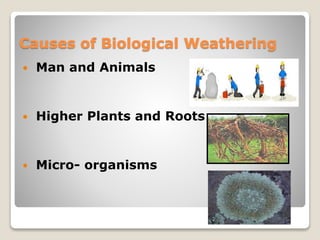
Causes of Biological Weathering
 Man and Animals
 Higher Plants and Roots
 Micro- organisms
Man and Animals
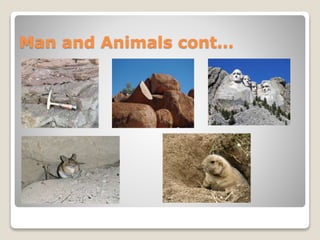
 The action of man in disintegration of rocks is well known as he cuts rocks to
build dams, channels and construct roads and buildings. All these activities
result in increasing the surface area of the rocks for attack of chemical agents
and accelerate the process of rock decomposition.
 A large number of animals, birds, insects and worms, by their activities they
make holes in them and thus aids for weathering.
 In tropical and sub tropical regions, ants and termites build galleries and
passages and carry materials from lower to upper surface and excrete acids.
The oxygen and water with many dissolved substances, reach every part of the
rock through the cracks, holes and galleries, and thus brings about speedy
disintegration.
 Rabbits, by burrowing in to the ground, destroy soft rocks. Moles, ants and
bodies of the dead animals, provides substances which react with minerals and
aid in decaying process
 The earthworms pass the soil through the alimentary canal and thus bring
about physical and chemical changes in soil material.
Man and Animals cont…
Higher Plants and Roots
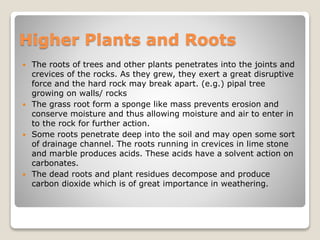
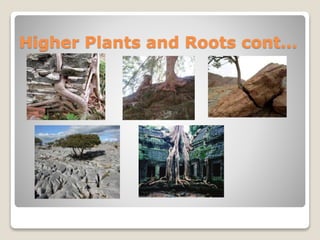
 The roots of trees and other plants penetrates into the joints and
crevices of the rocks. As they grew, they exert a great disruptive
force and the hard rock may break apart. (e.g.) pipal tree
growing on walls/ rocks
 The grass root form a sponge like mass prevents erosion and
conserve moisture and thus allowing moisture and air to enter in
to the rock for further action.
 Some roots penetrate deep into the soil and may open some sort
of drainage channel. The roots running in crevices in lime stone
and marble produces acids. These acids have a solvent action on
carbonates.
 The dead roots and plant residues decompose and produce
carbon dioxide which is of great importance in weathering.
Higher Plants and Roots cont…
Micro Organisms
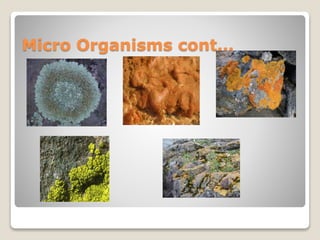
 In early stages of mineral decomposition and soil formation, the
lower forms of plants and animals like, mosses, bacteria and
fungi and actinomycetes play an important role. They extract
nutrients from the rock and N from air and live with a small
quantity of water. In due course of time, the soil develops under
the cluster of these micro-organisms.
 This organism closely associated with the decay of plant and
animal remains and thus liberates nutrients for the use of next
generation plants and also produces CO2 and organic compounds
which aid in mineral decomposition.
Micro Organisms cont…
Advantages of Biological
Weathering…
 An advantage of this would be that it creates nutrient rich soil and and allows
for plants and trees to grow.
 This is a beneficial and essential process of nature and without it, Earth would
not sustain life as it does.
 Weathering provides the sediments that form sedimentary rocks, and some
forms of chemical weathering help to remove carbon dioxide from the
atmosphere
 Much more important, however, is that weathering creates nutrient-rich soil
that allows plants and trees to grow, and ultimately makes life on Earth
possible.
 If weathering never occurred, the Earth would have a surface of bare rock,
and no plant or animal life could exist.
Disadvantages of Biological
Weathering…
 A disadvantage of this would be rock falls from cliffs and
the roofs of caves becoming to unstable to explore.
Thank You…

Biological Weathering

  • 1.
    BIOLOGICAL WEATHERING M.R.RIFAS AHAMED. FACULTY OFGEOMATICS SABARAGAMUWA UNIVERSITY OF SRI LANKA
  • 2.
    What is BiologicalWeathering?  Biological weathering is the effect that living organisms, such as plants and animals, have on rocks and other inanimate objects. This phenomena happens due to the molecular breakdown of minerals in the rock. When biological weathering occurs, the living organism breaks down the rock or other nonliving object through either mechanical or chemical erosion or the use of both.
  • 3.
    Causes of BiologicalWeathering  Man and Animals  Higher Plants and Roots  Micro- organisms
  • 4.
    Man and Animals The action of man in disintegration of rocks is well known as he cuts rocks to build dams, channels and construct roads and buildings. All these activities result in increasing the surface area of the rocks for attack of chemical agents and accelerate the process of rock decomposition.  A large number of animals, birds, insects and worms, by their activities they make holes in them and thus aids for weathering.  In tropical and sub tropical regions, ants and termites build galleries and passages and carry materials from lower to upper surface and excrete acids. The oxygen and water with many dissolved substances, reach every part of the rock through the cracks, holes and galleries, and thus brings about speedy disintegration.  Rabbits, by burrowing in to the ground, destroy soft rocks. Moles, ants and bodies of the dead animals, provides substances which react with minerals and aid in decaying process  The earthworms pass the soil through the alimentary canal and thus bring about physical and chemical changes in soil material.
  • 5.
  • 6.
    Higher Plants andRoots  The roots of trees and other plants penetrates into the joints and crevices of the rocks. As they grew, they exert a great disruptive force and the hard rock may break apart. (e.g.) pipal tree growing on walls/ rocks  The grass root form a sponge like mass prevents erosion and conserve moisture and thus allowing moisture and air to enter in to the rock for further action.  Some roots penetrate deep into the soil and may open some sort of drainage channel. The roots running in crevices in lime stone and marble produces acids. These acids have a solvent action on carbonates.  The dead roots and plant residues decompose and produce carbon dioxide which is of great importance in weathering.
  • 7.
    Higher Plants andRoots cont…
  • 8.
    Micro Organisms  Inearly stages of mineral decomposition and soil formation, the lower forms of plants and animals like, mosses, bacteria and fungi and actinomycetes play an important role. They extract nutrients from the rock and N from air and live with a small quantity of water. In due course of time, the soil develops under the cluster of these micro-organisms.  This organism closely associated with the decay of plant and animal remains and thus liberates nutrients for the use of next generation plants and also produces CO2 and organic compounds which aid in mineral decomposition.
  • 9.
  • 10.
    Advantages of Biological Weathering… An advantage of this would be that it creates nutrient rich soil and and allows for plants and trees to grow.  This is a beneficial and essential process of nature and without it, Earth would not sustain life as it does.  Weathering provides the sediments that form sedimentary rocks, and some forms of chemical weathering help to remove carbon dioxide from the atmosphere  Much more important, however, is that weathering creates nutrient-rich soil that allows plants and trees to grow, and ultimately makes life on Earth possible.  If weathering never occurred, the Earth would have a surface of bare rock, and no plant or animal life could exist.
  • 11.
    Disadvantages of Biological Weathering… A disadvantage of this would be rock falls from cliffs and the roofs of caves becoming to unstable to explore.
  • 12.