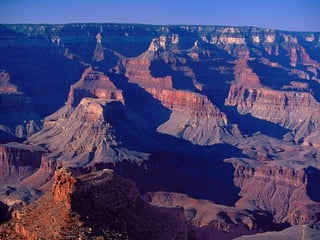
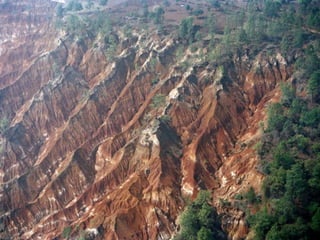
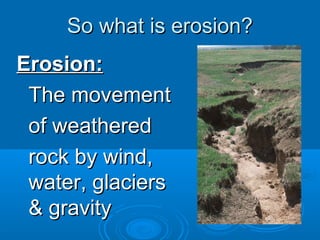
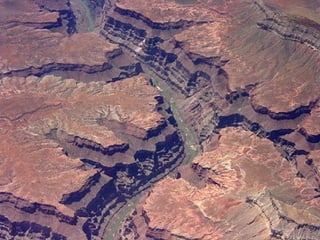
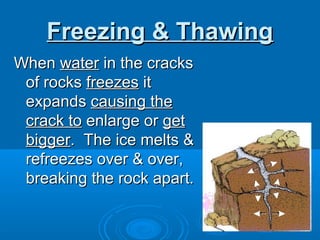
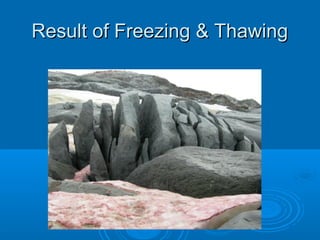
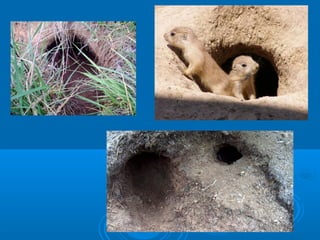
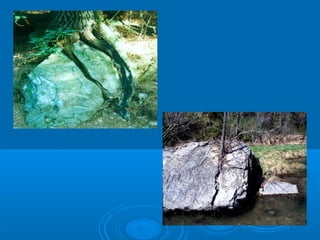
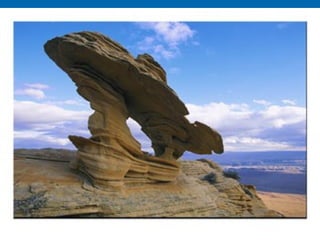
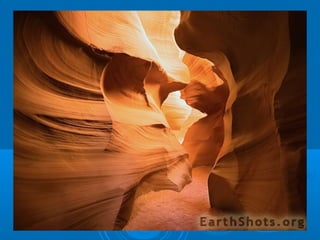
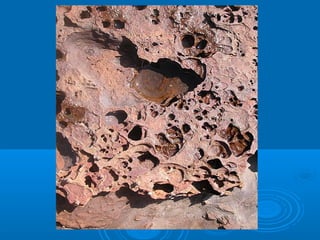
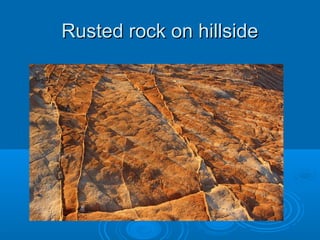
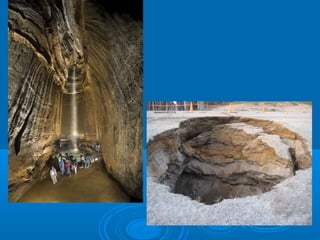
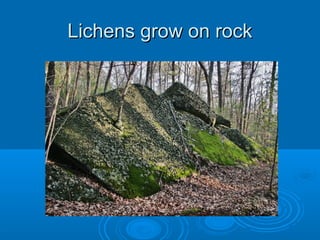
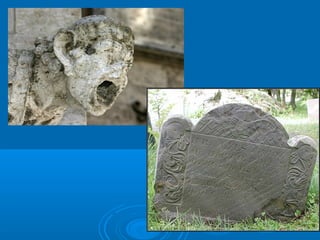
Erosion and weathering shape Earth's surface through mechanical and chemical processes. Mechanical weathering breaks rocks into smaller pieces through freezing and thawing, plant and animal actions, and abrasion by other particles. Chemical weathering alters rocks through reactions with water, oxygen, carbon dioxide, organisms, and acid rain. These weathering processes further break down rocks, which are then transported and eroded by forces like wind, water and glaciers to form landscapes like the Grand Canyon over long periods of time.