Constructive and Deconstructive Explain how natural processes (including weathering, erosion, deposition, landslides, volcanic eruptions, earthquakes, and floods) affect Earth’s oceans and land in constructive and deconstructive ways.
Constructive Processes that  create  landforms Deposition Landslides Volcanic eruptions Floods Destructive Processes that  destroy  landforms Weathering Erosion Landslides Volcanic eruptions Earthquakes floods
Weathering Weathering  is a general term used to describe processes that  break down  rocks at or near the  surface  of the earth  Weathering can be either  physical  or  chemical These processes cause the surface of the earth to  dissolve ,  decompose , and break into pieces.
What Causes Weathering Water  is an important cause of weathering Plants  cause weathering when roots break apart rock.  Changes in  temperature  can break rock as well as  ice  forming inside cracked surfaces causing it to  break  apart even more.  Anything  that causes rock to  wear down  or break apart is a cause of  weathering .
Erosion Erosion  is the  movement  of sediments and soil by  wind ,  water ,  ice  and  gravity .
Deposition Deposition  is the dropping, or  depositing  of  sediment  by water, wind or ice. Deposition  builds up  new land on Earth’s surface, like a  delta  at the end of a  river  or the pile up of a  sand dune  in the  desert .  Shells  on the beach are deposition by the  ocean waves .
Landslides Landslides  are  mass  movements of land due to  gravity   Landslides can cause  buildings  to fall, or  power  and  gas  lines to break.  Landslides even occur on the  continental slope  in the ocean.
Volcanic Eruptions Volcanoes  are mountains with an opening in the Earth's crust through which  magma ,  gases , and  ash  reach Earth’s surface. Volcanoes can  change  Earth’s surface. When the  magma  erupts from the volcano the top of the mountain can be changed, either  built up  or  exploded off .  The  lava  and  ash  can destroy forests and bury fields.
Volcanic  eruptions  can even  change  Earth’s  weather  patterns Volcanic eruptions also occur  under  the  oceans ; these  volcanoes  that built up are called  seamounts. If a seamount rises  above  the  ocean  surface it is called a  volcanic island  (for example Hawaii and Japan)
Earthquakes Earthquakes  are  vibrations  on Earth’s  surface  caused by  sudden  movement in Earth, often along a  fault , a  break  in the Earth’s surface.  Some earthquakes cause little  damage  and some cause  a lot  of damage.
Large earthquakes can cause  landslides Earthquakes under the ocean can cause huge waves, called  tsunamis  that destroy land, causing great damage if they come ashore.
Floods Floods  occur when a  large  amount of  water  covers land that is usually  dry . When the flood occurs,  rapid   erosion  can take place and move soil and sediments  away . When the  flood  recedes,  new  sediment is left behind and can  build up  rich soil deposits.
Test Preparation Define: Deposition-  this is the dropping of sediment by wind, water, or ice. Constructive-  this type of force creates landforms Weathering-  this is the movement of sediment by wind, water and gravity Landslide-  this type of movement of land is caused by gravity Destructive-  this type of force destroys landforms Erosion-  this is a type of process that breaks down landforms Ocean waves cause  erosion  when crashing up against rock surfaces, therefore causing the side of the rock or mountain to  decrease  in size.
What contributes to physical weathering? Growing plants Flowing water Freezing water A river overflows its banks due to excessive rains and floods the surrounding land. After the rain stops, the water returns to the river’s original path. However, the land surrounding land is now covered with a new soil. This is an example of  deposition of sediment – constructive force. Tsunamis are caused by  underwater earthquakes . What is one example of deposition? Wind building up sand dunes
A fast moving stream deposits what type of material first? gravel How does freezing of water cause weathering of rocks? It cracks them . How can a volcanic eruption be both constructive and destructive?  The lava and ash from volcanic eruptions can destroy forests and bury fields. The magma and lava can form new tops of the volcanic mountains or build up the land around the volcano. For example, a volcano under the sea, a seamount, erupts and erupts and erupts, building new land. This repeating eruption  creates islands such as Hawaii and Japan.
5-3.2 How is the abyssal plan different from the ocean basin? The abyssal plain is flatter If you are playing in the sand at the beach, on what oceanic landform are you playing? Continental shelf What are the indentations at the top of the mid-ocean ridge called? Rift valley
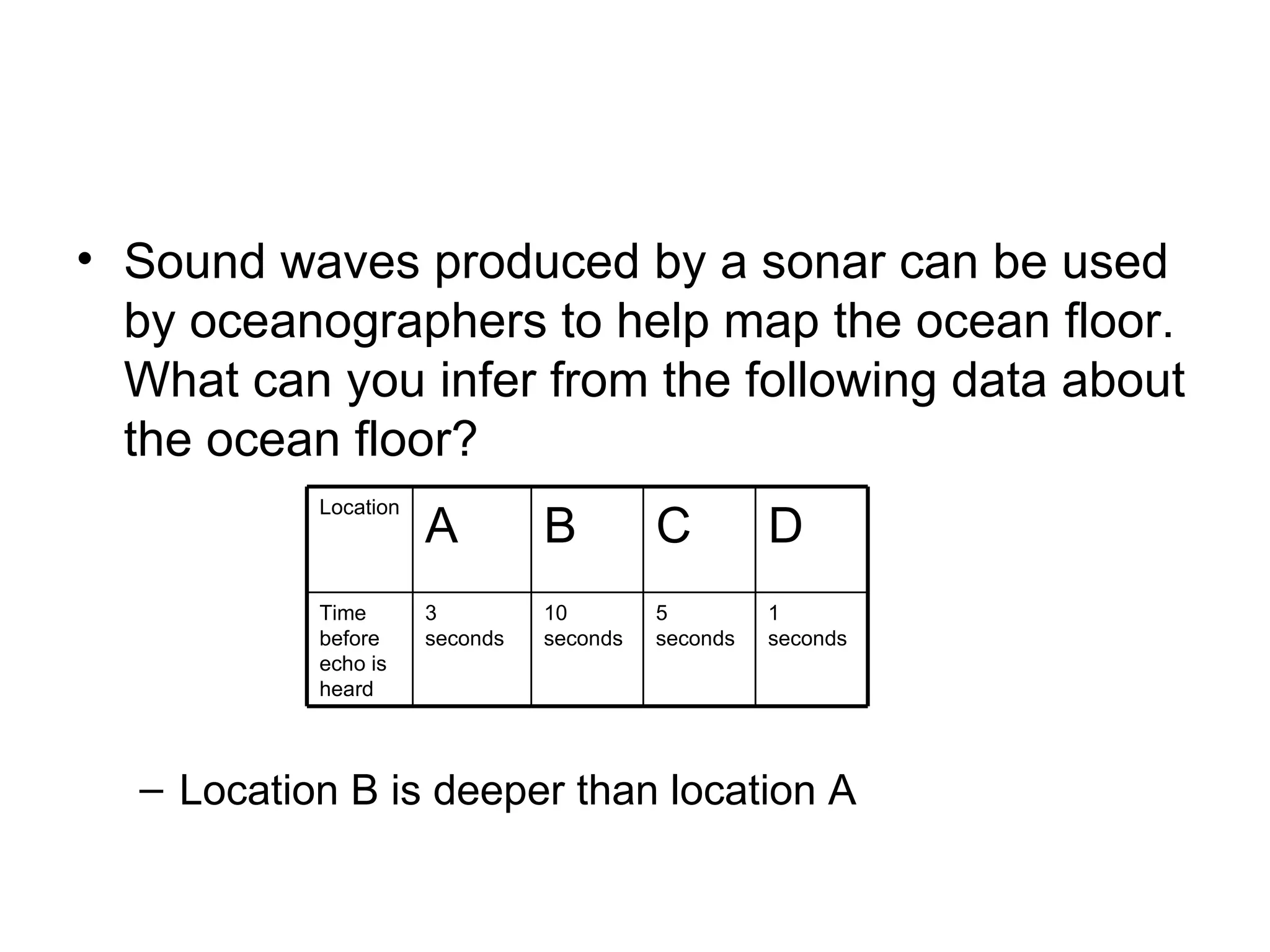
Sound waves produced by a sonar can be used by oceanographers to help map the ocean floor. What can you infer from the following data about the ocean floor?  Location B is deeper than location A 1 seconds 5 seconds 10 seconds 3 seconds Time before echo is heard D C B A Location
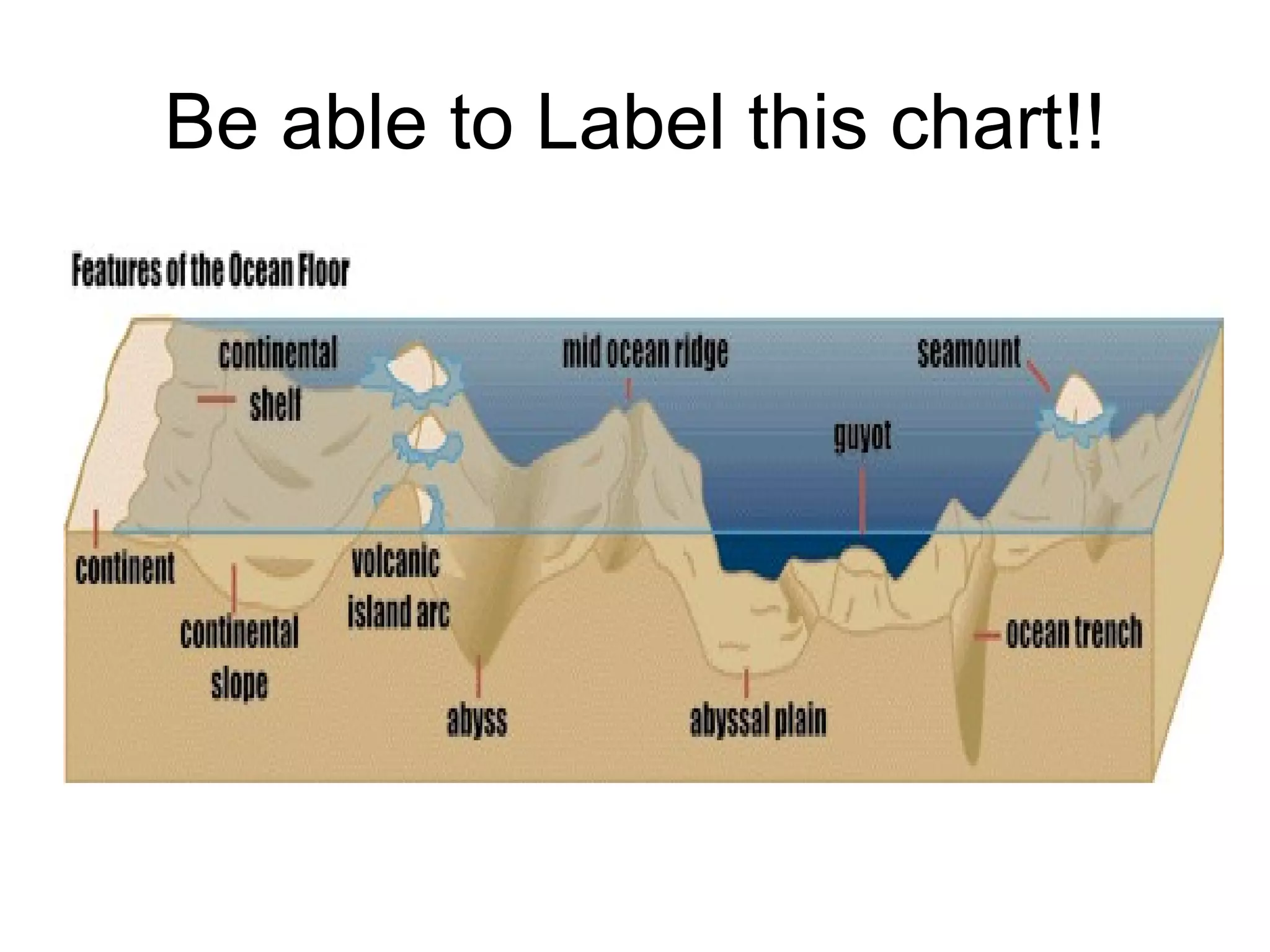
Be able to Label this chart!!
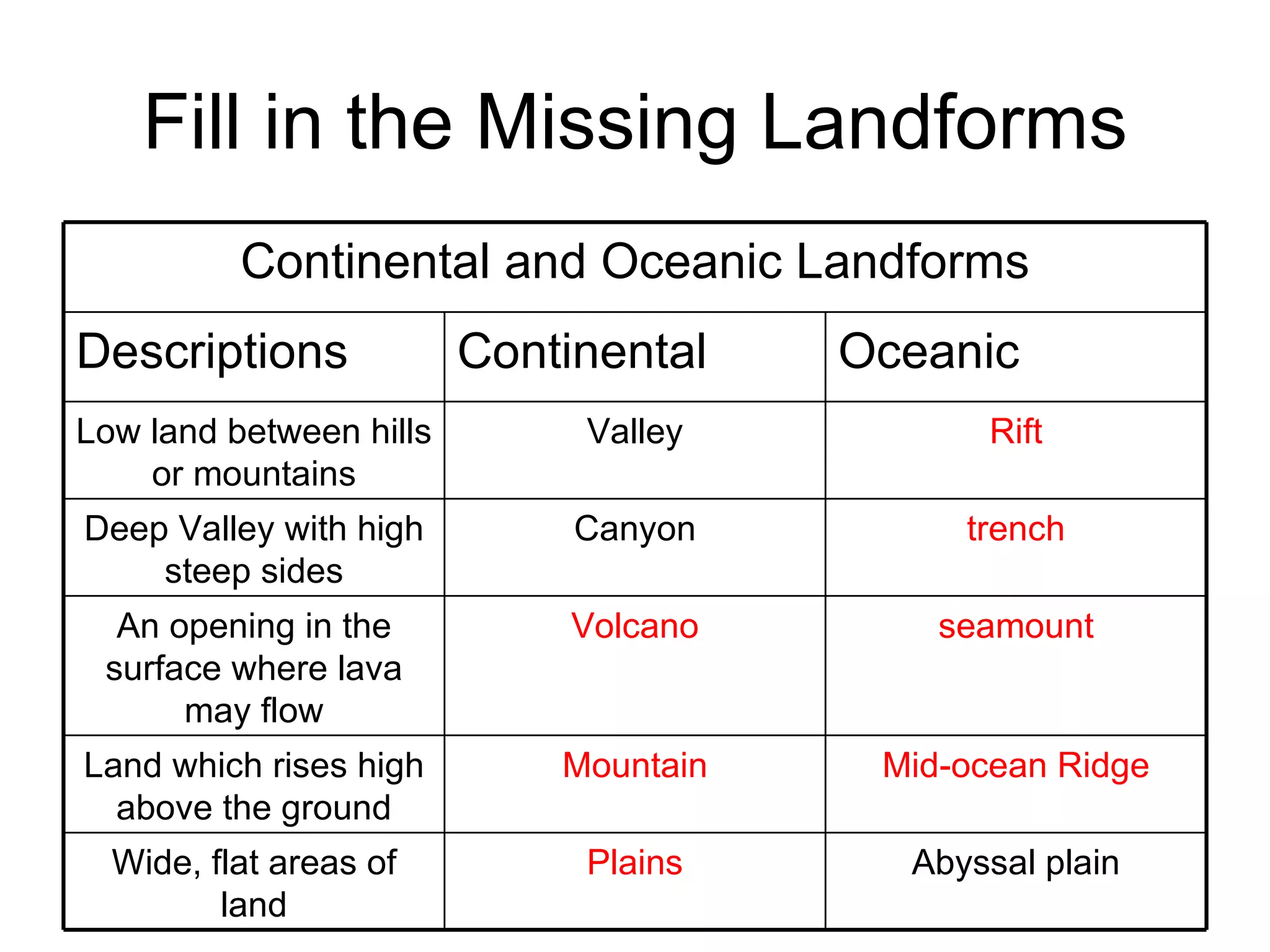
Fill in the Missing Landforms Abyssal plain Plains Wide, flat areas of land Mid-ocean Ridge Mountain Land which rises high above the ground seamount Volcano An opening in the surface where lava may flow trench Canyon Deep Valley with high steep sides Rift Valley Low land between hills or mountains Oceanic Continental Descriptions Continental and Oceanic Landforms

Constructive and deconstructive

  • 1.
    Constructive and DeconstructiveExplain how natural processes (including weathering, erosion, deposition, landslides, volcanic eruptions, earthquakes, and floods) affect Earth’s oceans and land in constructive and deconstructive ways.
  • 2.
    Constructive Processes that create landforms Deposition Landslides Volcanic eruptions Floods Destructive Processes that destroy landforms Weathering Erosion Landslides Volcanic eruptions Earthquakes floods
  • 3.
    Weathering Weathering is a general term used to describe processes that break down rocks at or near the surface of the earth Weathering can be either physical or chemical These processes cause the surface of the earth to dissolve , decompose , and break into pieces.
  • 4.
    What Causes WeatheringWater is an important cause of weathering Plants cause weathering when roots break apart rock. Changes in temperature can break rock as well as ice forming inside cracked surfaces causing it to break apart even more. Anything that causes rock to wear down or break apart is a cause of weathering .
  • 5.
    Erosion Erosion is the movement of sediments and soil by wind , water , ice and gravity .
  • 6.
    Deposition Deposition is the dropping, or depositing of sediment by water, wind or ice. Deposition builds up new land on Earth’s surface, like a delta at the end of a river or the pile up of a sand dune in the desert . Shells on the beach are deposition by the ocean waves .
  • 7.
    Landslides Landslides are mass movements of land due to gravity Landslides can cause buildings to fall, or power and gas lines to break. Landslides even occur on the continental slope in the ocean.
  • 8.
    Volcanic Eruptions Volcanoes are mountains with an opening in the Earth's crust through which magma , gases , and ash reach Earth’s surface. Volcanoes can change Earth’s surface. When the magma erupts from the volcano the top of the mountain can be changed, either built up or exploded off . The lava and ash can destroy forests and bury fields.
  • 9.
    Volcanic eruptions can even change Earth’s weather patterns Volcanic eruptions also occur under the oceans ; these volcanoes that built up are called seamounts. If a seamount rises above the ocean surface it is called a volcanic island (for example Hawaii and Japan)
  • 10.
    Earthquakes Earthquakes are vibrations on Earth’s surface caused by sudden movement in Earth, often along a fault , a break in the Earth’s surface. Some earthquakes cause little damage and some cause a lot of damage.
  • 11.
    Large earthquakes cancause landslides Earthquakes under the ocean can cause huge waves, called tsunamis that destroy land, causing great damage if they come ashore.
  • 12.
    Floods Floods occur when a large amount of water covers land that is usually dry . When the flood occurs, rapid erosion can take place and move soil and sediments away . When the flood recedes, new sediment is left behind and can build up rich soil deposits.
  • 13.
    Test Preparation Define:Deposition- this is the dropping of sediment by wind, water, or ice. Constructive- this type of force creates landforms Weathering- this is the movement of sediment by wind, water and gravity Landslide- this type of movement of land is caused by gravity Destructive- this type of force destroys landforms Erosion- this is a type of process that breaks down landforms Ocean waves cause erosion when crashing up against rock surfaces, therefore causing the side of the rock or mountain to decrease in size.
  • 14.
    What contributes tophysical weathering? Growing plants Flowing water Freezing water A river overflows its banks due to excessive rains and floods the surrounding land. After the rain stops, the water returns to the river’s original path. However, the land surrounding land is now covered with a new soil. This is an example of deposition of sediment – constructive force. Tsunamis are caused by underwater earthquakes . What is one example of deposition? Wind building up sand dunes
  • 15.
    A fast movingstream deposits what type of material first? gravel How does freezing of water cause weathering of rocks? It cracks them . How can a volcanic eruption be both constructive and destructive? The lava and ash from volcanic eruptions can destroy forests and bury fields. The magma and lava can form new tops of the volcanic mountains or build up the land around the volcano. For example, a volcano under the sea, a seamount, erupts and erupts and erupts, building new land. This repeating eruption creates islands such as Hawaii and Japan.
  • 16.
    5-3.2 How isthe abyssal plan different from the ocean basin? The abyssal plain is flatter If you are playing in the sand at the beach, on what oceanic landform are you playing? Continental shelf What are the indentations at the top of the mid-ocean ridge called? Rift valley
  • 17.
    Sound waves producedby a sonar can be used by oceanographers to help map the ocean floor. What can you infer from the following data about the ocean floor? Location B is deeper than location A 1 seconds 5 seconds 10 seconds 3 seconds Time before echo is heard D C B A Location
  • 18.
    Be able toLabel this chart!!
  • 19.
    Fill in theMissing Landforms Abyssal plain Plains Wide, flat areas of land Mid-ocean Ridge Mountain Land which rises high above the ground seamount Volcano An opening in the surface where lava may flow trench Canyon Deep Valley with high steep sides Rift Valley Low land between hills or mountains Oceanic Continental Descriptions Continental and Oceanic Landforms