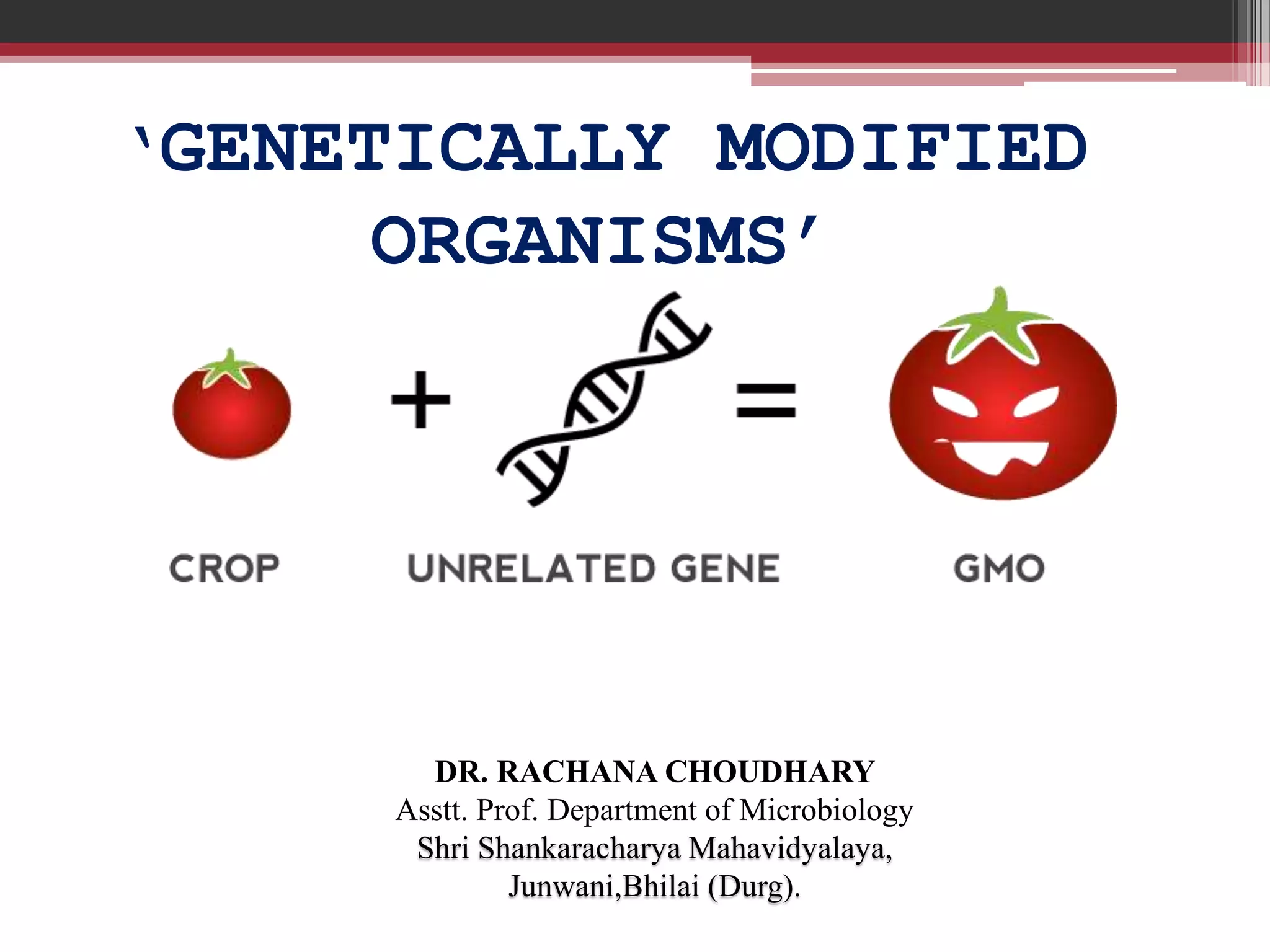
‘GENETICALLY MODIFIED
ORGANISMS’
DR. RACHANA CHOUDHARY
Asstt. Prof. Department of Microbiology
Shri Shankaracharya Mahavidyalaya,
Junwani,Bhilai (Durg).
Genetic modification is the process of altering the properties of
cells in an organism by changing the genetic makeup of the
DNA in the nucleus of the cell. This can include deleting or
changing genes, or transferring genes from one organism to
another. When an organism has had these changes made to it,
it will become a genetically modified organism and DNA
fragments are called rDNA and their technique is genetic
engineering.
Such as Bacteria and yeast, plants, fish, and mammals.
INTRODUCTION: -
HISTORY OF GMO
• The first GMOs were bacteria in 1971.
• Creation of the first recombinant DNA
molecules by Paul Berg in 1972.
• Insulin –producing bacteria were
commercialized in 1982.
CONSTRUCTION OF GMOs
Fig- Steps in molecular cloning (modified)
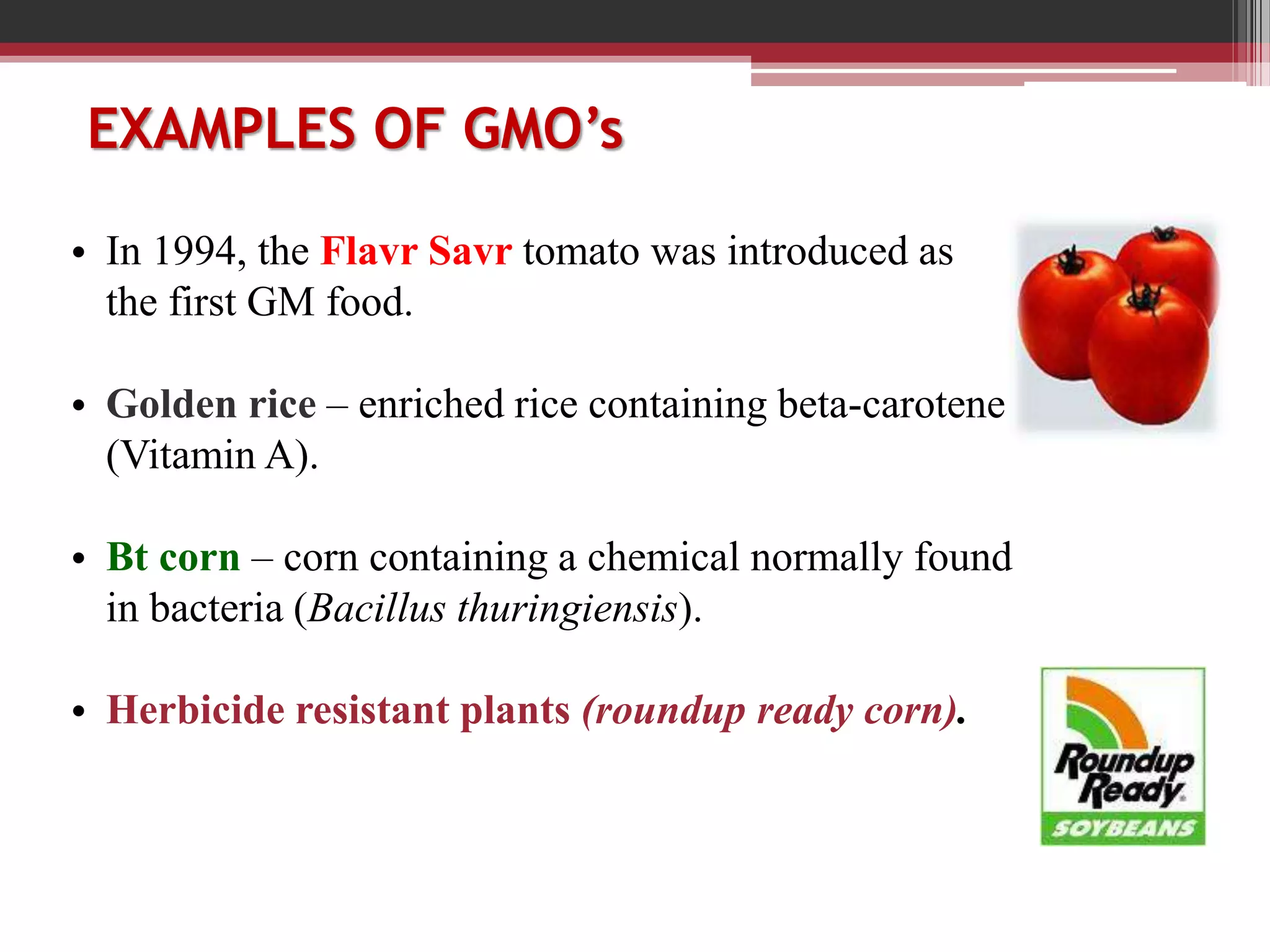
EXAMPLES OF GMO’s
• In 1994, the Flavr Savr tomato was introduced as
the first GM food.
• Golden rice – enriched rice containing beta-carotene
(Vitamin A).
• Bt corn – corn containing a chemical normally found
in bacteria (Bacillus thuringiensis).
• Herbicide resistant plants (roundup ready corn).
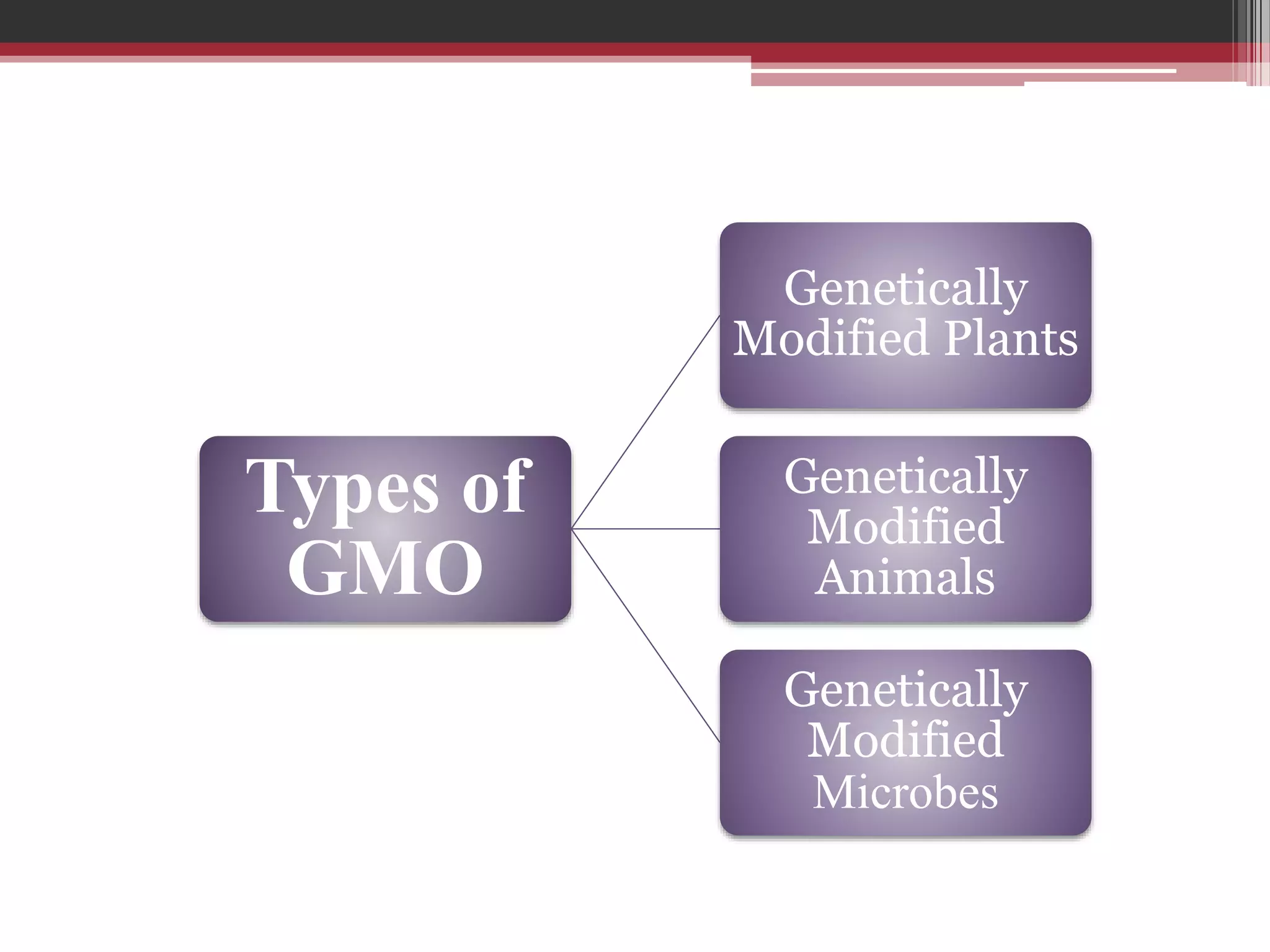
Types of
GMO
Genetically
Modified Plants
Genetically
Modified
Animals
Genetically
Modified
Microbes
Plants are genetically modified to be:
•Herbicide resistant
•Pesticide resistant
•Insect resistant
•Drought tolerant
•Extreme temperature tolerant
•Have added nutrients, such as vitamins and
minerals
GENETICALLY MODIFIED PLANTS
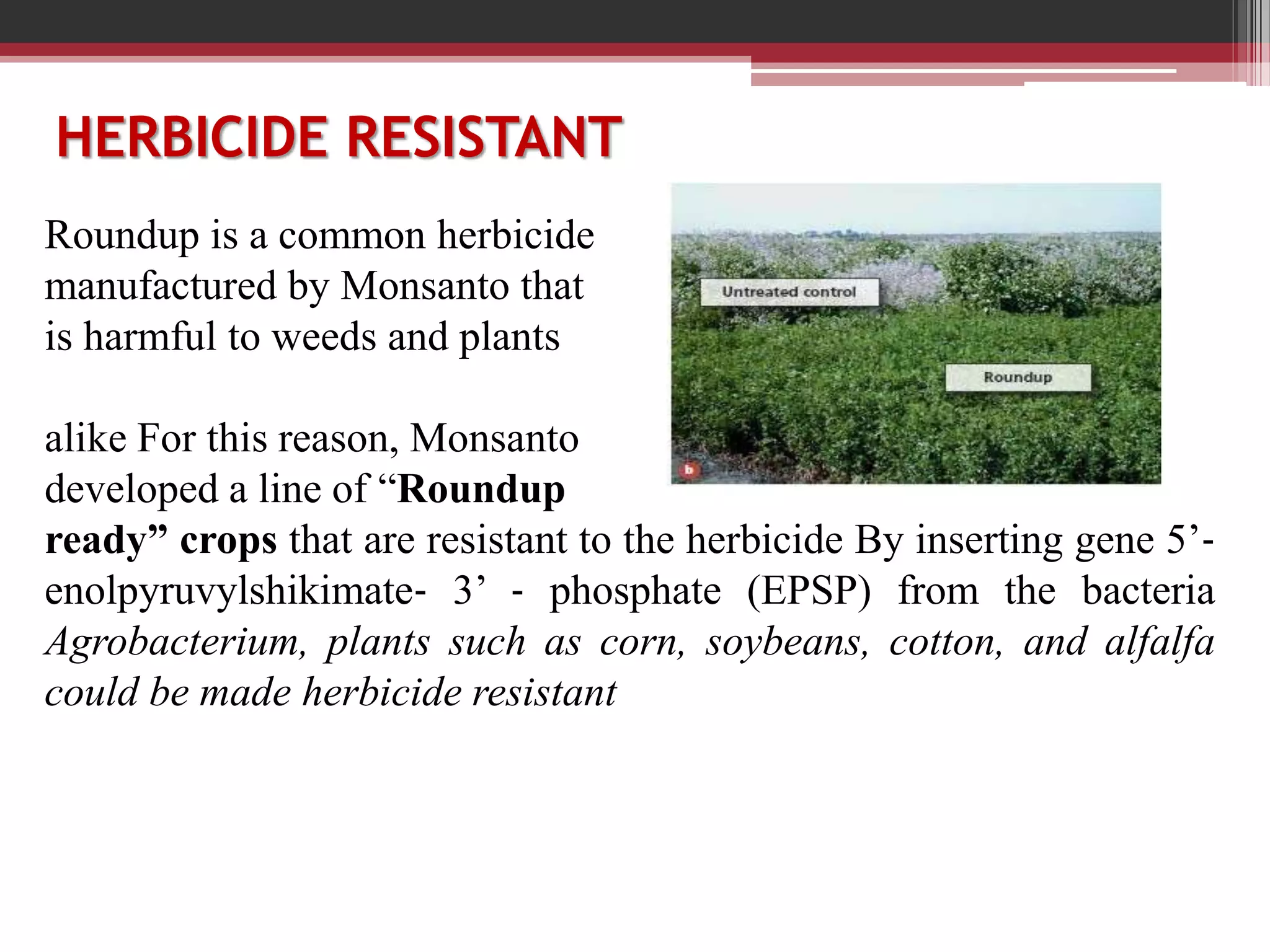
Roundup is a common herbicide
manufactured by Monsanto that
is harmful to weeds and plants
alike For this reason, Monsanto
developed a line of “Roundup
ready” crops that are resistant to the herbicide By inserting gene 5’‐
enolpyruvylshikimate‐ 3’ ‐ phosphate (EPSP) from the bacteria
Agrobacterium, plants such as corn, soybeans, cotton, and alfalfa
could be made herbicide resistant
HERBICIDE RESISTANT
Corn, cotton, and several other plants have
been genetically modified to be insect
resistant.
Insect resistance in crops is accomplished by
identifying and isolating a gene from the soil
bacterium Bacillus thuringiensis that
produces a toxin called Cry that is toxic to
plant insects.
INSECT RESISTANCE
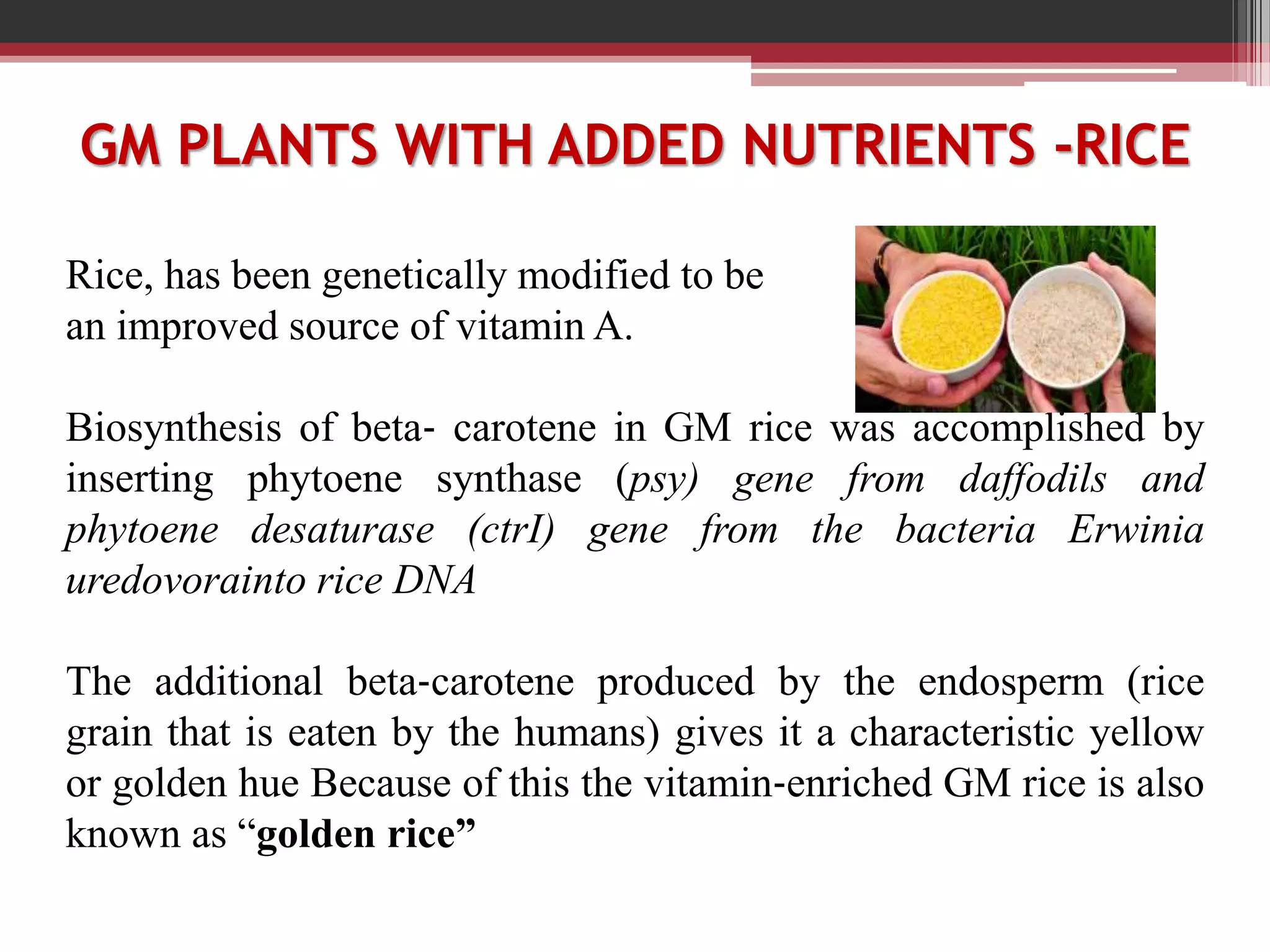
Rice, has been genetically modified to be
an improved source of vitamin A.
Biosynthesis of beta‐ carotene in GM rice was accomplished by
inserting phytoene synthase (psy) gene from daffodils and
phytoene desaturase (ctrI) gene from the bacteria Erwinia
uredovorainto rice DNA
The additional beta‐carotene produced by the endosperm (rice
grain that is eaten by the humans) gives it a characteristic yellow
or golden hue Because of this the vitamin‐enriched GM rice is also
known as “golden rice”
GM PLANTS WITH ADDED NUTRIENTS ‐RICE
Strawberries, which are a good source of vitamin C,
have been genetically modified to provide 3 times
as much vitamin C.
A gene in the strawberry plant called GalUR gene codes for an
enzyme that converts a protein in the plant to vitamin C.
A similar gene is found in the thale cress Arabidopsis thaliana.
Researchers created a DNA plasmid using the A. thaliana gene and
the bacteria Agrobacterium and inserted into the strawberry plant to
over‐express GalUR gene and produce 3 times as much vitamin C
GM PLANTS WITH ADDED NUTRIENTS ‐STRAWBERRIES
Currently, researchers around the world are working at
creating and perfecting:
• Drought resistant wheat, corn, and rice
• Salt tolerant tomatoes
• Frost resistant strawberries
• Heat tolerant beans such as kidney, red, black, and
pinto beans
• Carrots that produce a vaccine against hepatitis B
MORE GM CROPS
GENETICALLY MODIFIED ANIMALS
• Genetically modified
mammals are an
important category of
genetically modified
organisms. Ralph L.
Brinster and Richard
Palmiter developed
the techniques
responsible for
transgenic mice, rats,
rabbits, sheep, and
pigs in the early
1980s.
The FDA Center for Veterinary Medicine(CVM) regulates
genetically altered animal products
Currently no transgenic animals have been approved for human
consumption
Transgenic animals have been approved for use as biopharm
animals (for producing drugs and hormones) and they produce
such products as milk and wool.
• Production of animals with specific traits much
quicker than with traditional breeding methods
Results in –
• Better quality with increased milk production
and wool production, Increased growth rates
Efficient production of pharmaceuticals,
nutritional supplements, and hormones.
• Most pharmaceuticals are produced from the
milk of goats, cows and sheep Included are such
drugs as Insulin, Growth hormone.
BENEFITS OF TRANSGENIC ANIMALS
• Experts estimate that producing therapeutic protein
using traditional methods cost approximately $300
‐$3,000 per gram.
• In contrast, using a transgenic goat to produce the
protein in milk costs approximately $20 ‐$105 per
gram.
• Transgenic hen eggs are even cheaper, costing
approximately $.10 ‐$.25 per gram of protein
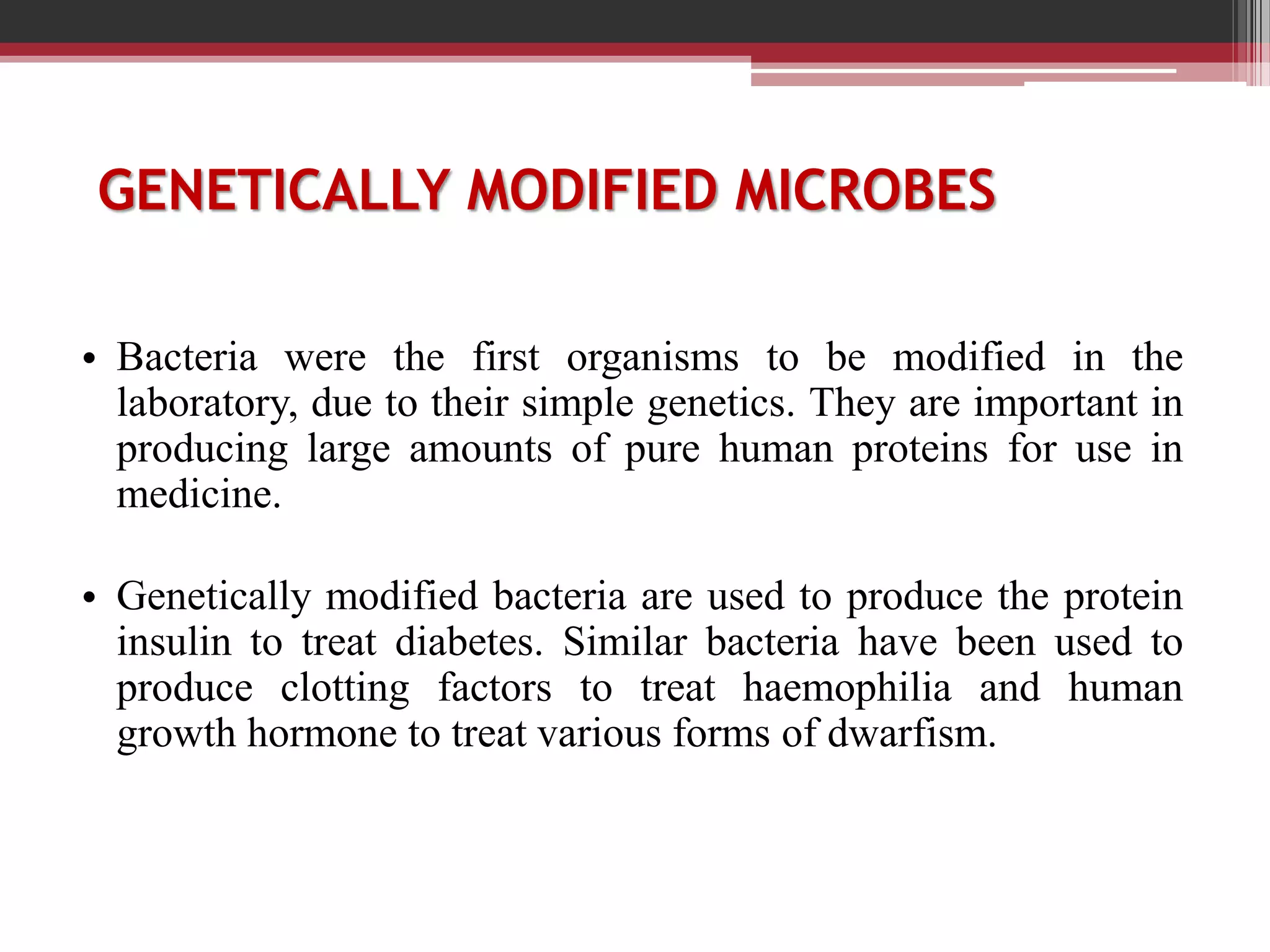
GENETICALLY MODIFIED MICROBES
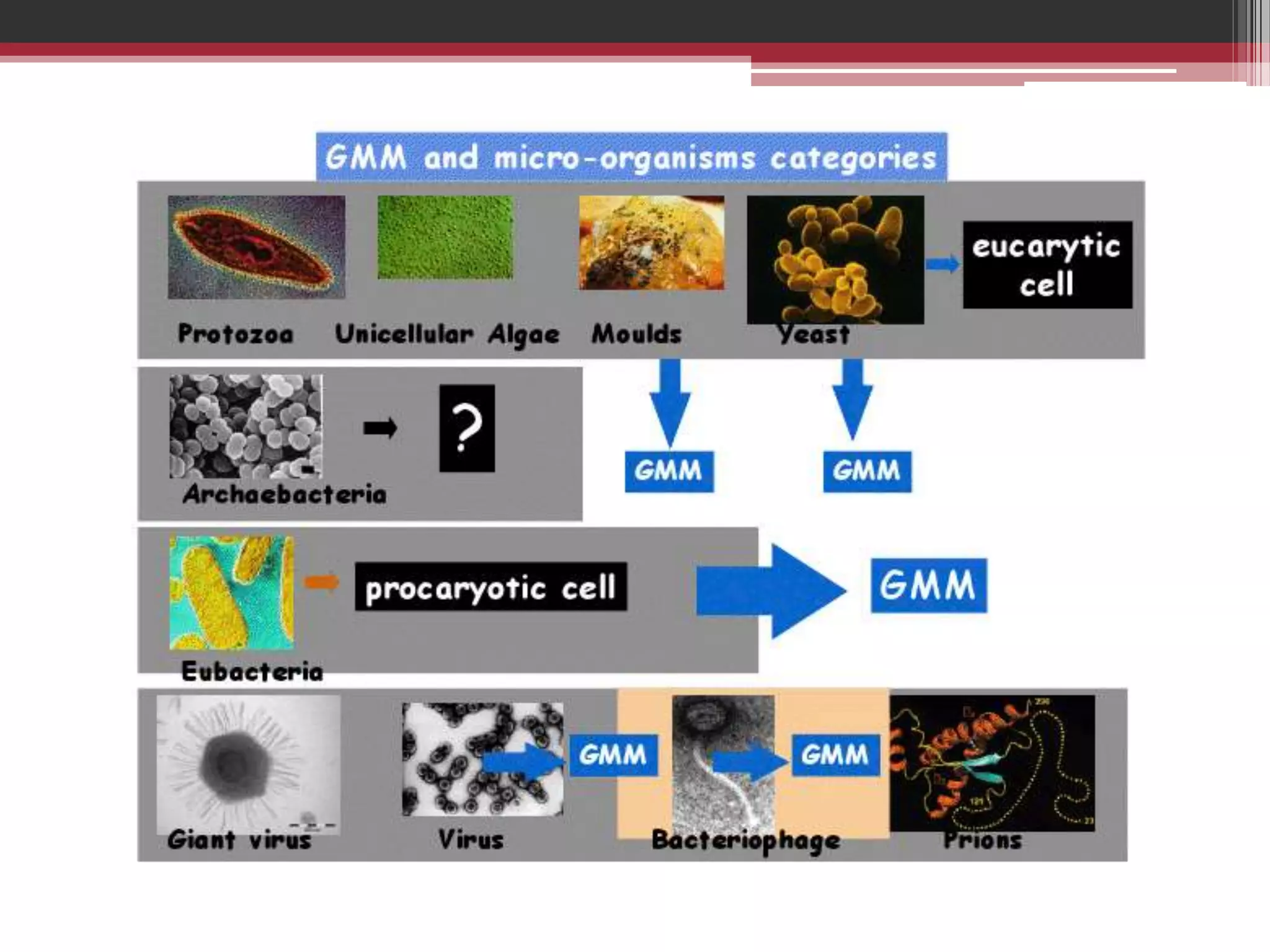
• Bacteria were the first organisms to be modified in the
laboratory, due to their simple genetics. They are important in
producing large amounts of pure human proteins for use in
medicine.
• Genetically modified bacteria are used to produce the protein
insulin to treat diabetes. Similar bacteria have been used to
produce clotting factors to treat haemophilia and human
growth hormone to treat various forms of dwarfism.
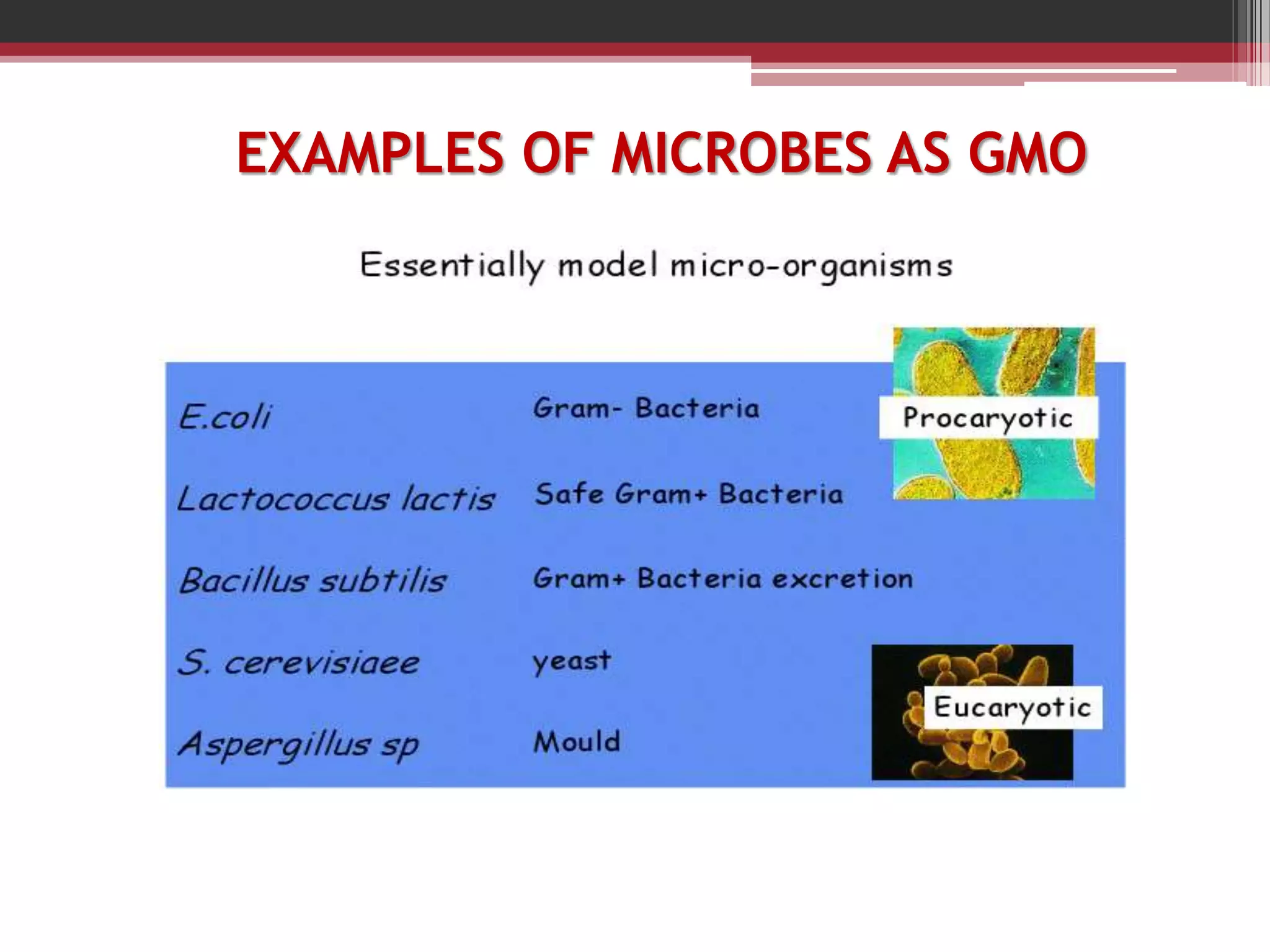
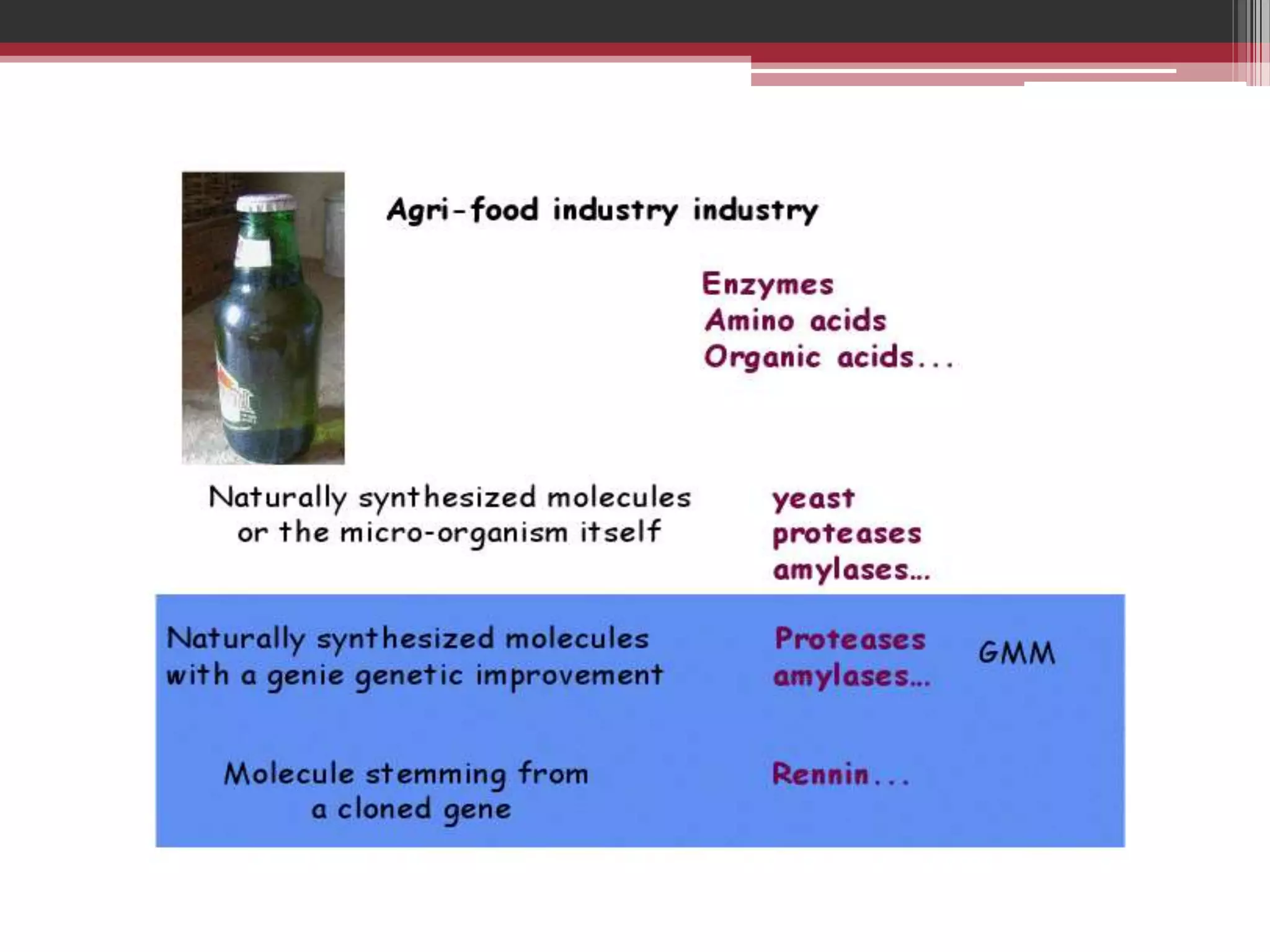
EXAMPLES OF MICROBES AS GMO
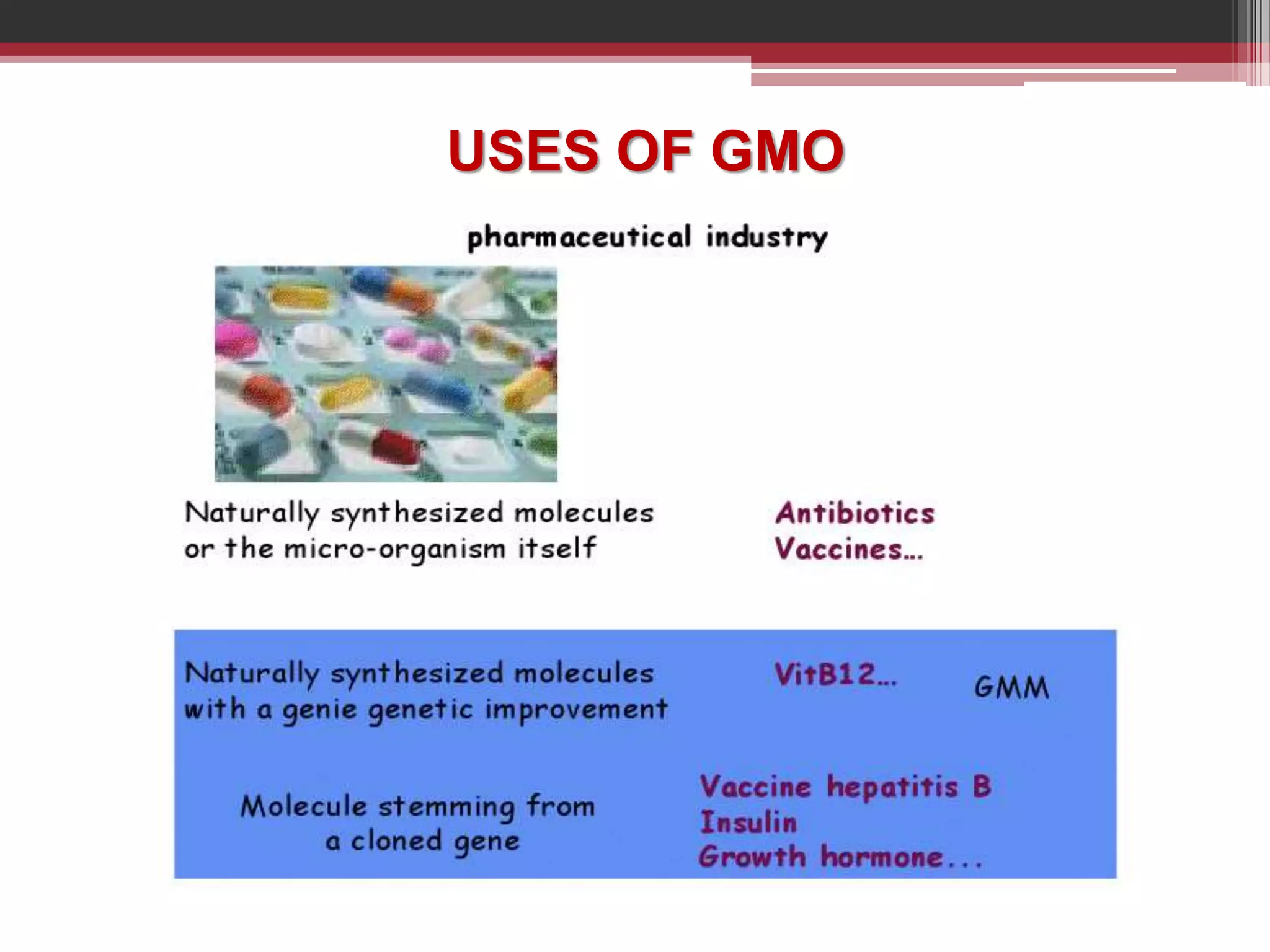
USES OF GMO
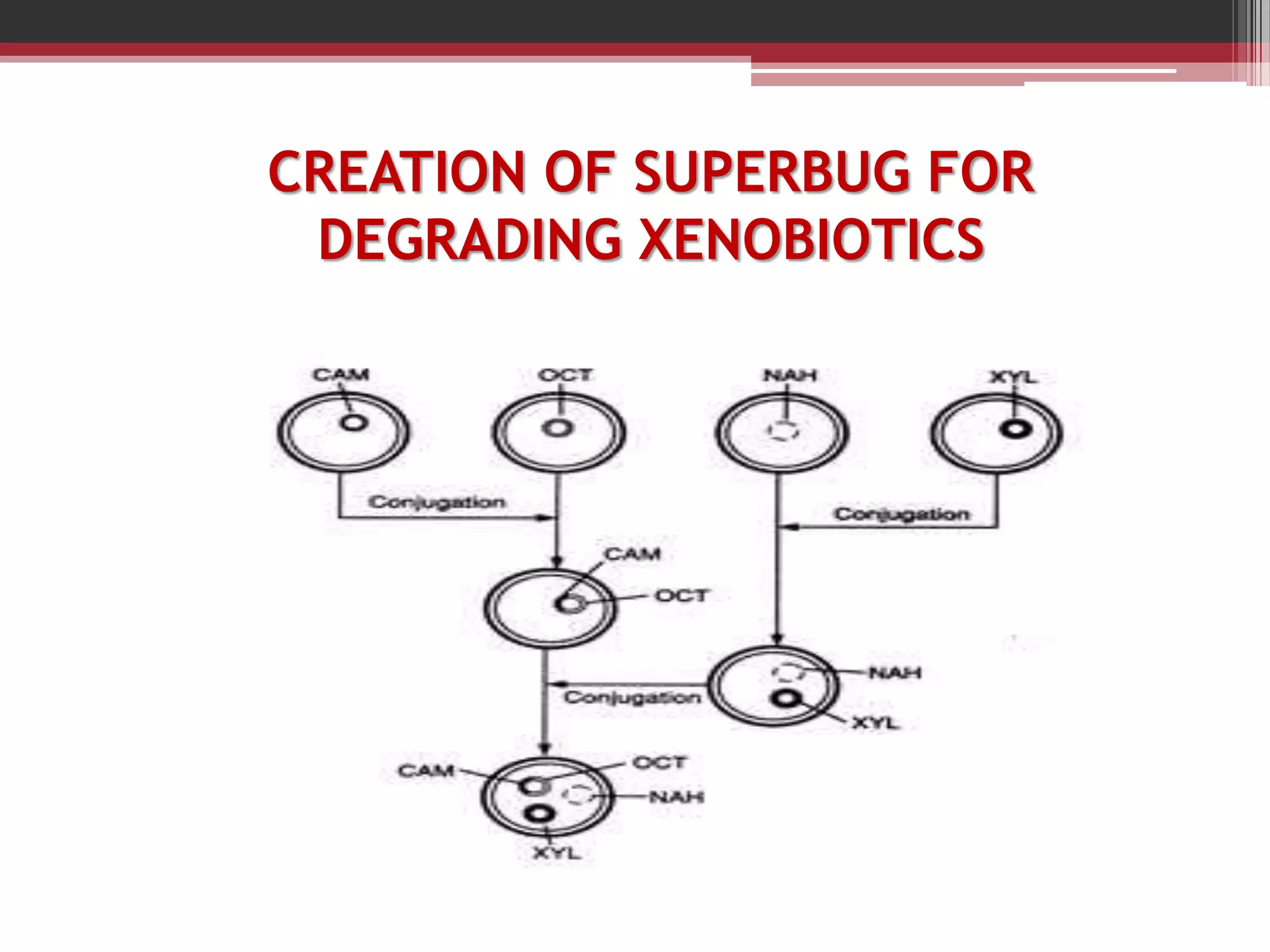
CREATION OF SUPERBUG FOR
DEGRADING XENOBIOTICS
CHALLENGES #1
• Environmental – possibility of unintended harm to other
organisms:
• potential risk of harm to non-target organisms, e.g. a pest
resistant crop that produces toxins that may harm both crop-
damaging and non crop-damaging insects
• E.g. The pollen of BT corn on milkweed is thought to affect
(slow or kill) the larvae of Monarch butterflies. Further
studies are underway.
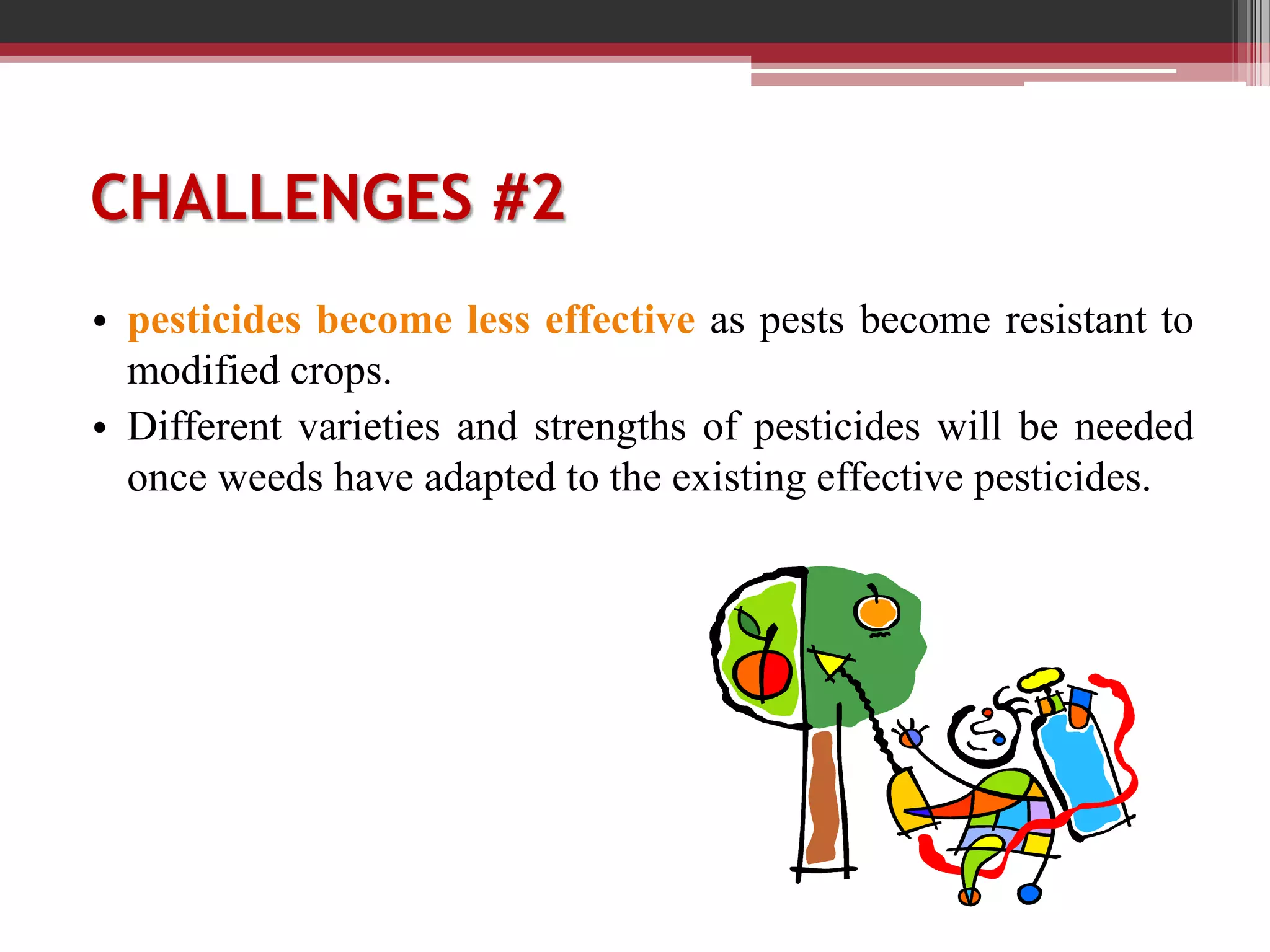
CHALLENGES #2
• pesticides become less effective as pests become resistant to
modified crops.
• Different varieties and strengths of pesticides will be needed
once weeds have adapted to the existing effective pesticides.
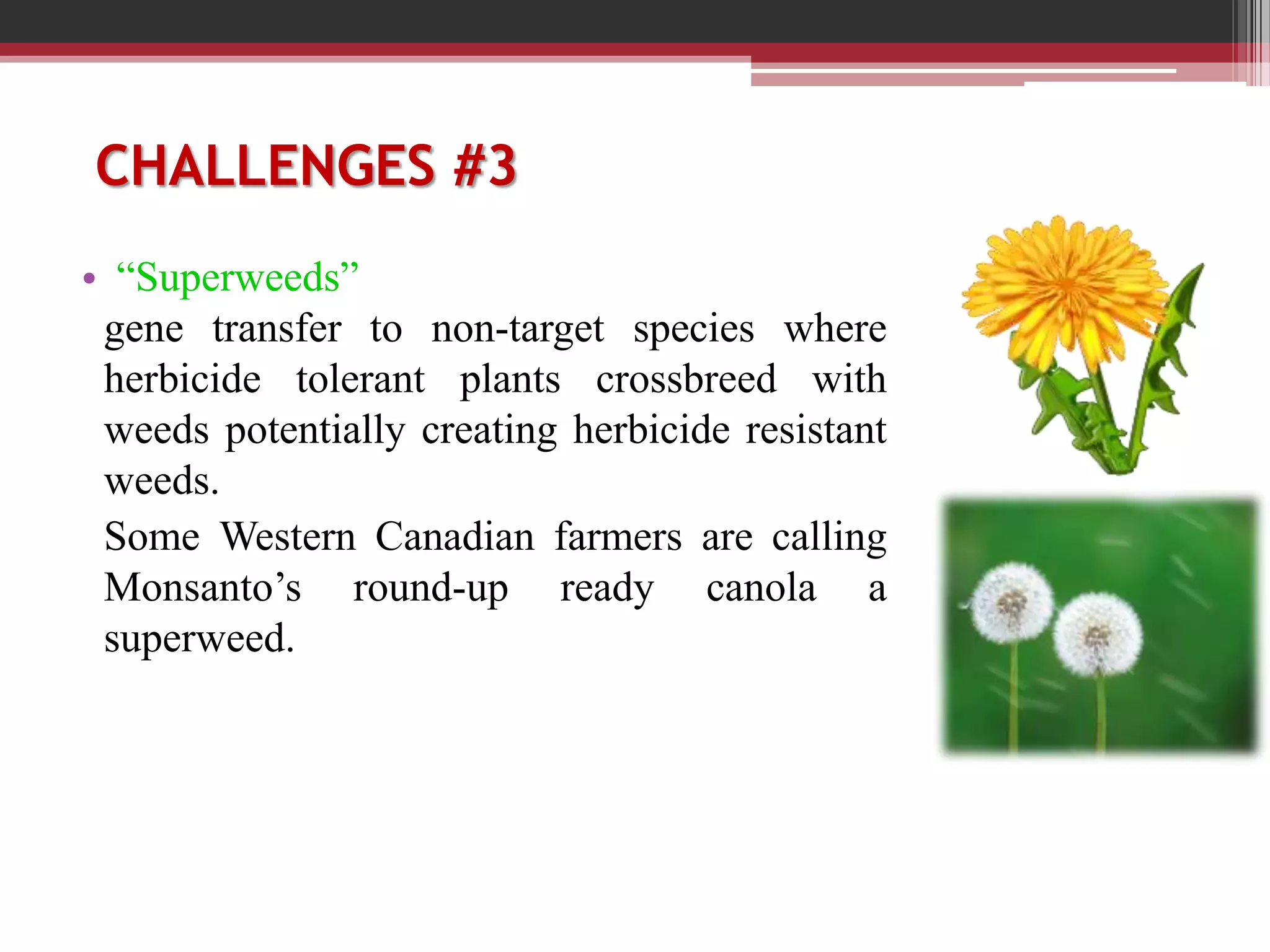
CHALLENGES #3
• “Superweeds”
gene transfer to non-target species where
herbicide tolerant plants crossbreed with
weeds potentially creating herbicide resistant
weeds.
Some Western Canadian farmers are calling
Monsanto’s round-up ready canola a
superweed.
CHALLENGES #4
• Human health risks
▫ introducing a gene into a plant
may create a new allergen or
cause an allergic reaction in
susceptible individuals
▫ For example, inserting genes from
a nut into another plant could be
dangerous for people who are
allergic to nuts
CHALLENGES #5
• Economic Hazards
• Elimination of competition
▫ GM seeds are patented (must buy each year)
• This presents problems for poor farmers in both the developed
and developing worlds.
▫ Large companies like Monsanto have resorted to suing small
farmers found to be using their seed without paying.
• Suicide seeds
▫ Plants with sterile seeds that are infertile are created
▫ Farmers are forced to buy seeds every year
• However, some companies have reduced costs or donated GM
seeds to impoverished nations.
CONCLUSION
Despite the great promise of genetic engineering it also brings
with it potential problem in area of safety, human experience,
potential ecological disruption & biological warfare.
genetically engineered microbes are emerging as a efficient
vehicle to overcome environmental pollutions.
THANK YOU

Genetically Modified Organism.ppt

  • 1.
    ‘GENETICALLY MODIFIED ORGANISMS’ DR. RACHANACHOUDHARY Asstt. Prof. Department of Microbiology Shri Shankaracharya Mahavidyalaya, Junwani,Bhilai (Durg).
  • 2.
    Genetic modification isthe process of altering the properties of cells in an organism by changing the genetic makeup of the DNA in the nucleus of the cell. This can include deleting or changing genes, or transferring genes from one organism to another. When an organism has had these changes made to it, it will become a genetically modified organism and DNA fragments are called rDNA and their technique is genetic engineering. Such as Bacteria and yeast, plants, fish, and mammals. INTRODUCTION: -
  • 3.
    HISTORY OF GMO •The first GMOs were bacteria in 1971. • Creation of the first recombinant DNA molecules by Paul Berg in 1972. • Insulin –producing bacteria were commercialized in 1982.
  • 4.
    CONSTRUCTION OF GMOs Fig-Steps in molecular cloning (modified)
  • 5.
    EXAMPLES OF GMO’s •In 1994, the Flavr Savr tomato was introduced as the first GM food. • Golden rice – enriched rice containing beta-carotene (Vitamin A). • Bt corn – corn containing a chemical normally found in bacteria (Bacillus thuringiensis). • Herbicide resistant plants (roundup ready corn).
  • 6.
  • 7.
    Plants are geneticallymodified to be: •Herbicide resistant •Pesticide resistant •Insect resistant •Drought tolerant •Extreme temperature tolerant •Have added nutrients, such as vitamins and minerals GENETICALLY MODIFIED PLANTS
  • 8.
    Roundup is acommon herbicide manufactured by Monsanto that is harmful to weeds and plants alike For this reason, Monsanto developed a line of “Roundup ready” crops that are resistant to the herbicide By inserting gene 5’‐ enolpyruvylshikimate‐ 3’ ‐ phosphate (EPSP) from the bacteria Agrobacterium, plants such as corn, soybeans, cotton, and alfalfa could be made herbicide resistant HERBICIDE RESISTANT
  • 9.
    Corn, cotton, andseveral other plants have been genetically modified to be insect resistant. Insect resistance in crops is accomplished by identifying and isolating a gene from the soil bacterium Bacillus thuringiensis that produces a toxin called Cry that is toxic to plant insects. INSECT RESISTANCE
  • 10.
    Rice, has beengenetically modified to be an improved source of vitamin A. Biosynthesis of beta‐ carotene in GM rice was accomplished by inserting phytoene synthase (psy) gene from daffodils and phytoene desaturase (ctrI) gene from the bacteria Erwinia uredovorainto rice DNA The additional beta‐carotene produced by the endosperm (rice grain that is eaten by the humans) gives it a characteristic yellow or golden hue Because of this the vitamin‐enriched GM rice is also known as “golden rice” GM PLANTS WITH ADDED NUTRIENTS ‐RICE
  • 11.
    Strawberries, which area good source of vitamin C, have been genetically modified to provide 3 times as much vitamin C. A gene in the strawberry plant called GalUR gene codes for an enzyme that converts a protein in the plant to vitamin C. A similar gene is found in the thale cress Arabidopsis thaliana. Researchers created a DNA plasmid using the A. thaliana gene and the bacteria Agrobacterium and inserted into the strawberry plant to over‐express GalUR gene and produce 3 times as much vitamin C GM PLANTS WITH ADDED NUTRIENTS ‐STRAWBERRIES
  • 12.
    Currently, researchers aroundthe world are working at creating and perfecting: • Drought resistant wheat, corn, and rice • Salt tolerant tomatoes • Frost resistant strawberries • Heat tolerant beans such as kidney, red, black, and pinto beans • Carrots that produce a vaccine against hepatitis B MORE GM CROPS
  • 13.
    GENETICALLY MODIFIED ANIMALS •Genetically modified mammals are an important category of genetically modified organisms. Ralph L. Brinster and Richard Palmiter developed the techniques responsible for transgenic mice, rats, rabbits, sheep, and pigs in the early 1980s.
  • 14.
    The FDA Centerfor Veterinary Medicine(CVM) regulates genetically altered animal products Currently no transgenic animals have been approved for human consumption Transgenic animals have been approved for use as biopharm animals (for producing drugs and hormones) and they produce such products as milk and wool.
  • 15.
    • Production ofanimals with specific traits much quicker than with traditional breeding methods Results in – • Better quality with increased milk production and wool production, Increased growth rates Efficient production of pharmaceuticals, nutritional supplements, and hormones. • Most pharmaceuticals are produced from the milk of goats, cows and sheep Included are such drugs as Insulin, Growth hormone. BENEFITS OF TRANSGENIC ANIMALS
  • 16.
    • Experts estimatethat producing therapeutic protein using traditional methods cost approximately $300 ‐$3,000 per gram. • In contrast, using a transgenic goat to produce the protein in milk costs approximately $20 ‐$105 per gram. • Transgenic hen eggs are even cheaper, costing approximately $.10 ‐$.25 per gram of protein
  • 17.
    GENETICALLY MODIFIED MICROBES •Bacteria were the first organisms to be modified in the laboratory, due to their simple genetics. They are important in producing large amounts of pure human proteins for use in medicine. • Genetically modified bacteria are used to produce the protein insulin to treat diabetes. Similar bacteria have been used to produce clotting factors to treat haemophilia and human growth hormone to treat various forms of dwarfism.
  • 19.
  • 20.
  • 23.
    CREATION OF SUPERBUGFOR DEGRADING XENOBIOTICS
  • 24.
    CHALLENGES #1 • Environmental– possibility of unintended harm to other organisms: • potential risk of harm to non-target organisms, e.g. a pest resistant crop that produces toxins that may harm both crop- damaging and non crop-damaging insects • E.g. The pollen of BT corn on milkweed is thought to affect (slow or kill) the larvae of Monarch butterflies. Further studies are underway.
  • 25.
    CHALLENGES #2 • pesticidesbecome less effective as pests become resistant to modified crops. • Different varieties and strengths of pesticides will be needed once weeds have adapted to the existing effective pesticides.
  • 26.
    CHALLENGES #3 • “Superweeds” genetransfer to non-target species where herbicide tolerant plants crossbreed with weeds potentially creating herbicide resistant weeds. Some Western Canadian farmers are calling Monsanto’s round-up ready canola a superweed.
  • 27.
    CHALLENGES #4 • Humanhealth risks ▫ introducing a gene into a plant may create a new allergen or cause an allergic reaction in susceptible individuals ▫ For example, inserting genes from a nut into another plant could be dangerous for people who are allergic to nuts
  • 28.
    CHALLENGES #5 • EconomicHazards • Elimination of competition ▫ GM seeds are patented (must buy each year) • This presents problems for poor farmers in both the developed and developing worlds. ▫ Large companies like Monsanto have resorted to suing small farmers found to be using their seed without paying. • Suicide seeds ▫ Plants with sterile seeds that are infertile are created ▫ Farmers are forced to buy seeds every year • However, some companies have reduced costs or donated GM seeds to impoverished nations.
  • 29.
    CONCLUSION Despite the greatpromise of genetic engineering it also brings with it potential problem in area of safety, human experience, potential ecological disruption & biological warfare. genetically engineered microbes are emerging as a efficient vehicle to overcome environmental pollutions.
  • 30.