Gastric and pancreatic
function tests
Gastric
function
test Out Line
 Chief constituents of
gastric juice
 Stages of gastric
secretion
 Inhibition of gastric
secretion
 Why gastric function test
are important?
 Tests of gastric function
with interpretation
Chief constituents of gastric
juice
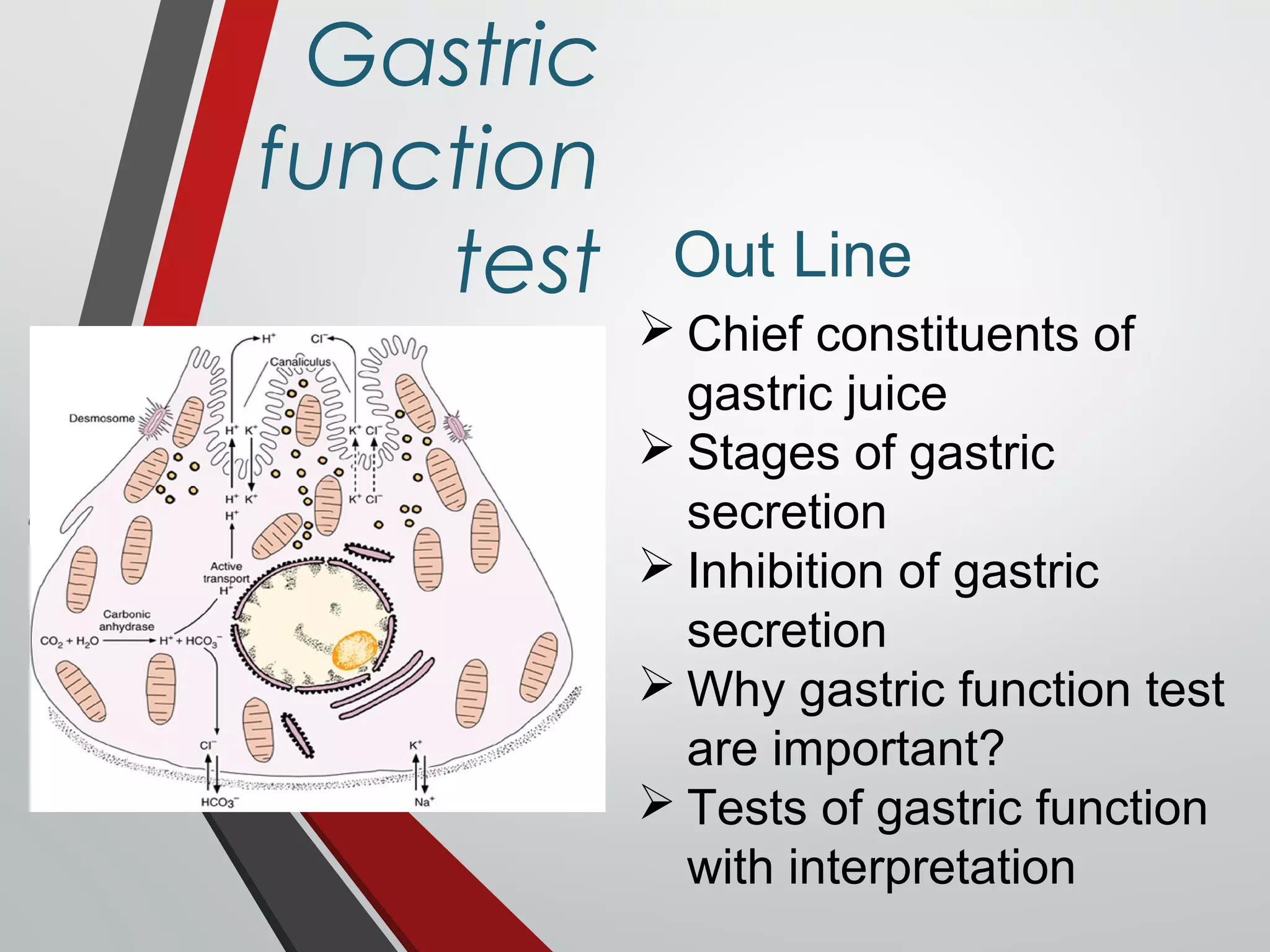
• Hydrochloric acid
• Pepsinogen
• Intrinsic factor
• Gastric mucus
• Blood group substances
• Rennin
Stimulation of gastric secretion
• Cephalic Phase: Site, taste, smell, thought of food,
insulin. Stimulation through vagus nerve.
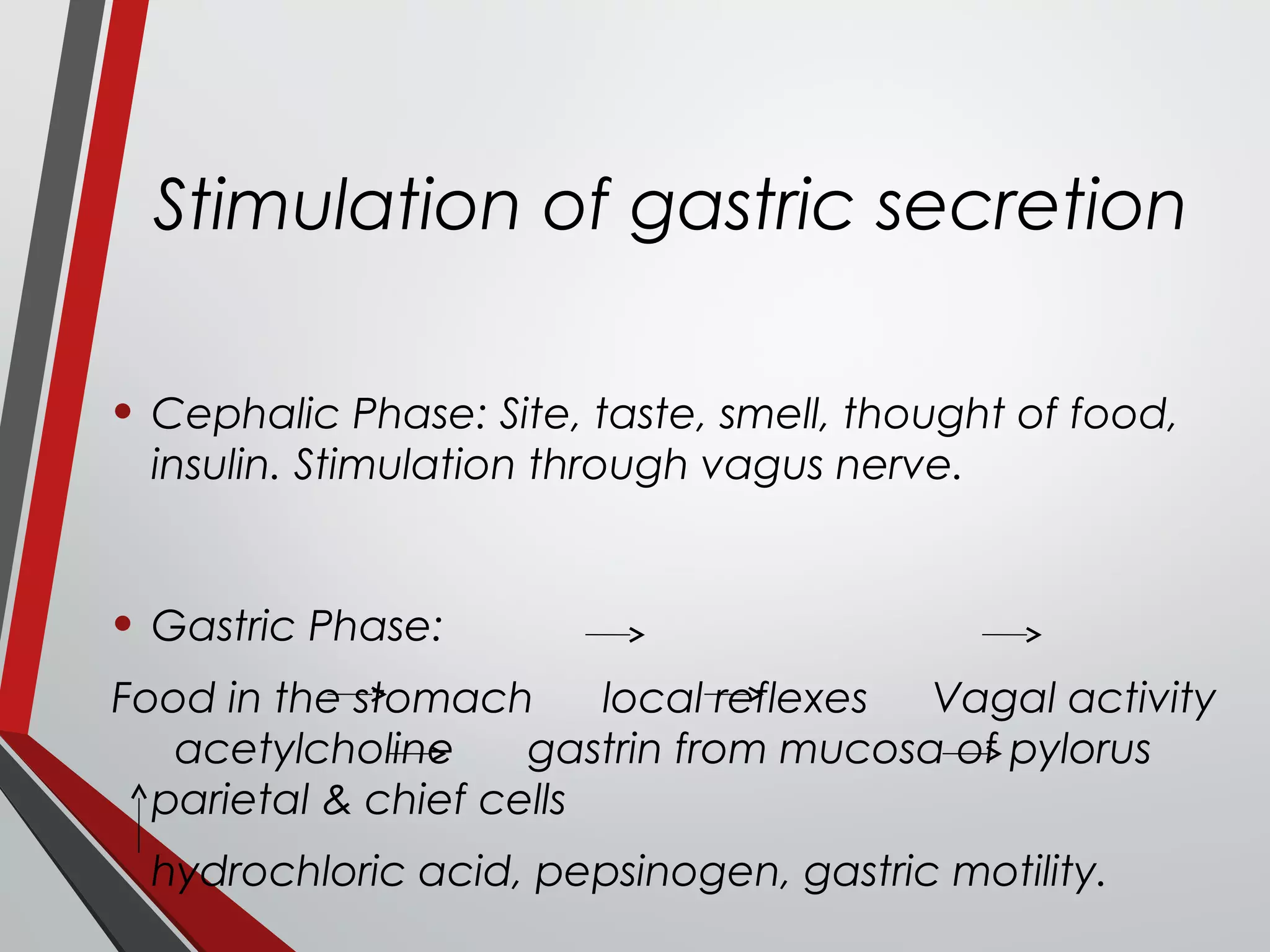
• Gastric Phase:
Food in the stomach local reflexes Vagal activity
acetylcholine gastrin from mucosa of pylorus
parietal & chief cells
hydrochloric acid, pepsinogen, gastric motility.
Inhibition of gastric secretion
• Entry of food into the duodenum.
• Secretin, cholecystokinin-pancreozymin
• Gastric Inhibitory peptide
• Vasoactive Intestinal Peptide
Why gastric function test are
important?
• Zolliger-Ellison Syndrome
• Evaluate pernicious anemia in adults
• Type of surgical procedure required for ulcer
treatment.
Stimulants for gastric secretion
• Ewald one hour meal: toast without butter, tea
without milk
• Fractional test meal of Rehffus: Pint of oat meal gruel
• Histamine test: Histamine hydrochloride 0.25mg/kg
subcutaneously.
• Augumented histamine test: 0.04mg/kg histamine is
given subcutaneously along with antihistamine.
• Histolog.
• Pentagastrin
• Insulin
Titrimetric analysis of acid
output
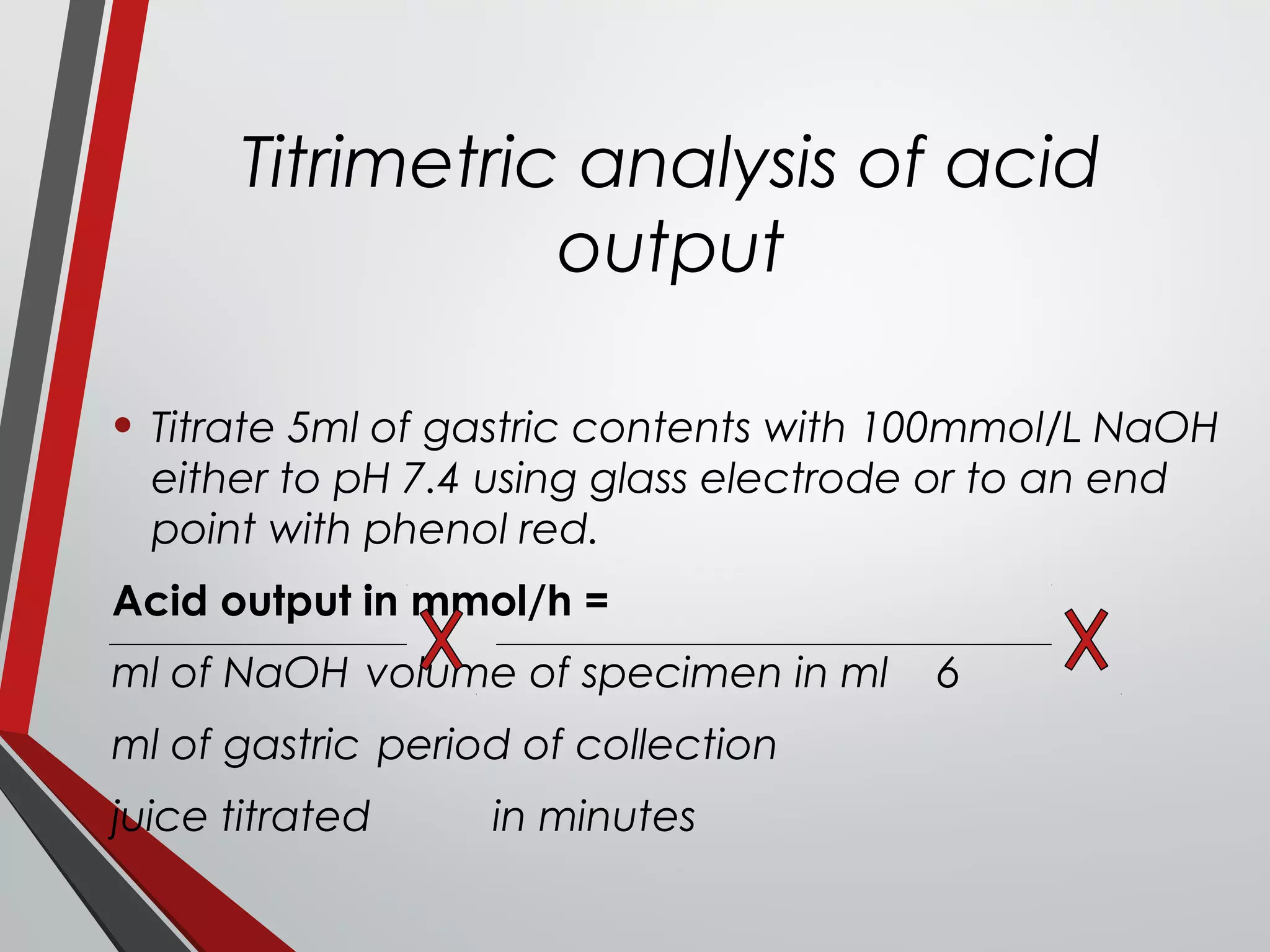
• Titrate 5ml of gastric contents with 100mmol/L NaOH
either to pH 7.4 using glass electrode or to an end
point with phenol red.
Acid output in mmol/h =
ml of NaOH volume of specimen in ml 6
ml of gastric period of collection
juice titrated in minutes
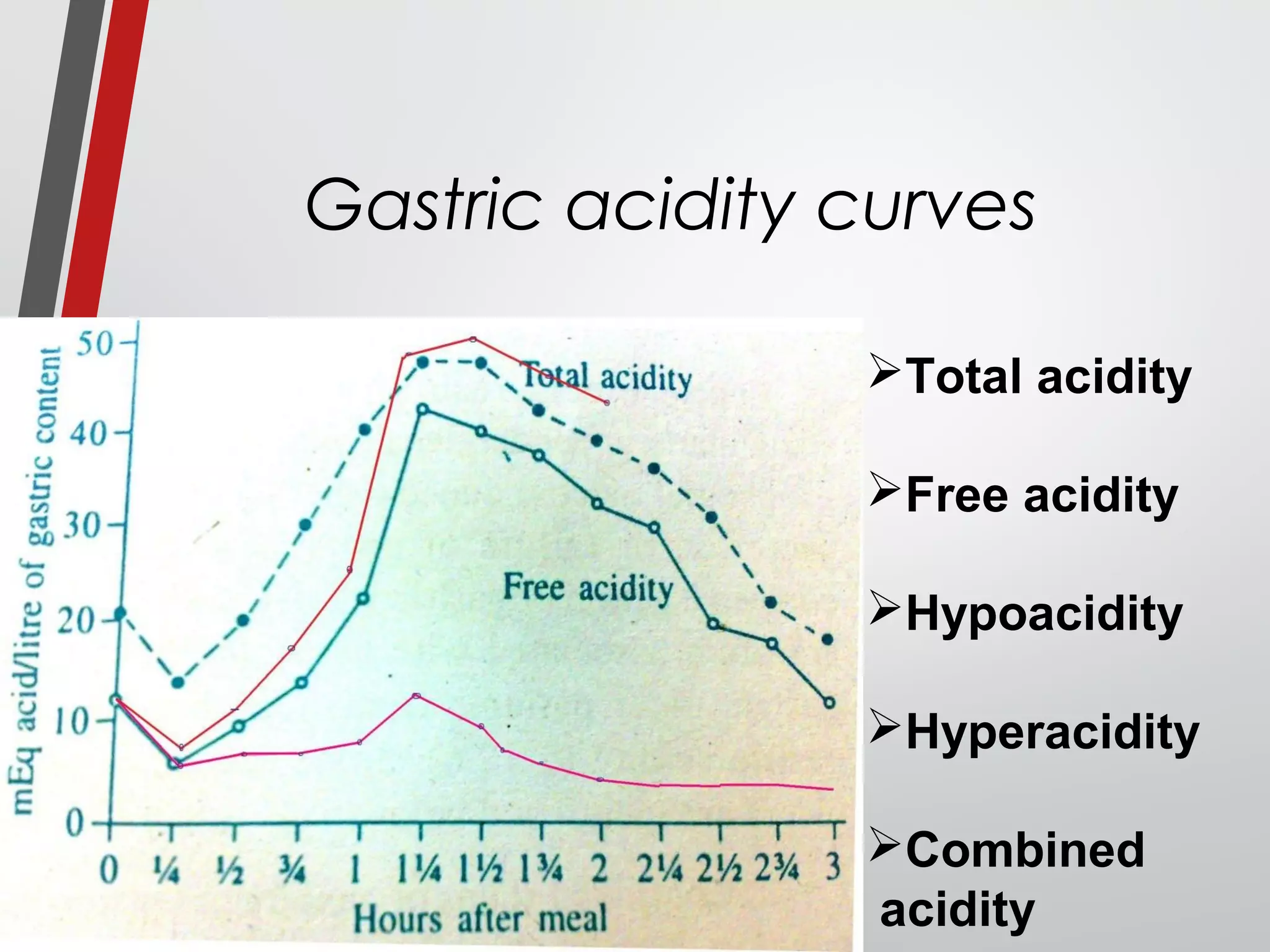
Gastric acidity curves
Total acidity
Free acidity
Hypoacidity
Hyperacidity
Combined
acidity
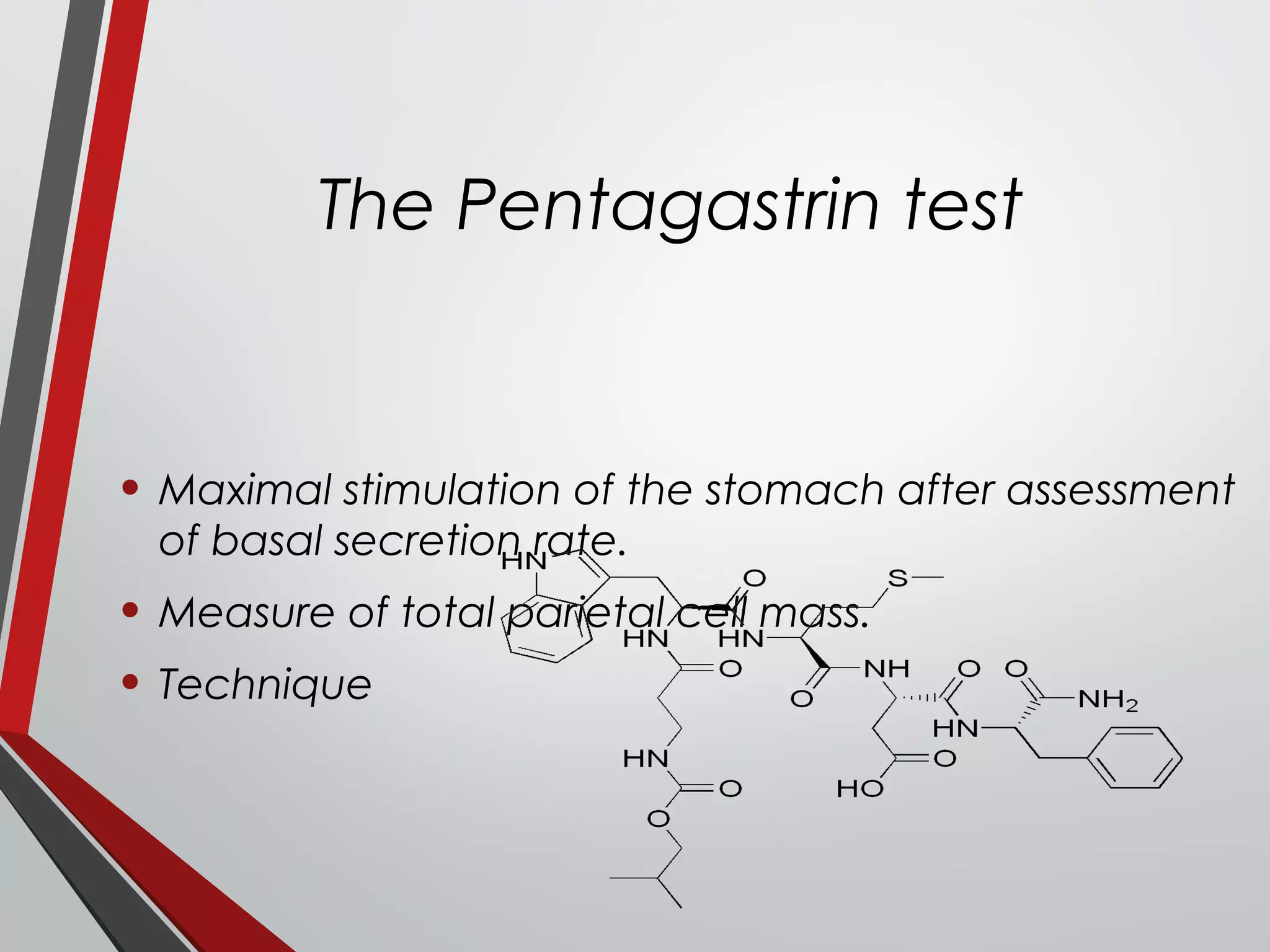
The Pentagastrin test
• Maximal stimulation of the stomach after assessment
of basal secretion rate.
• Measure of total parietal cell mass.
• Technique
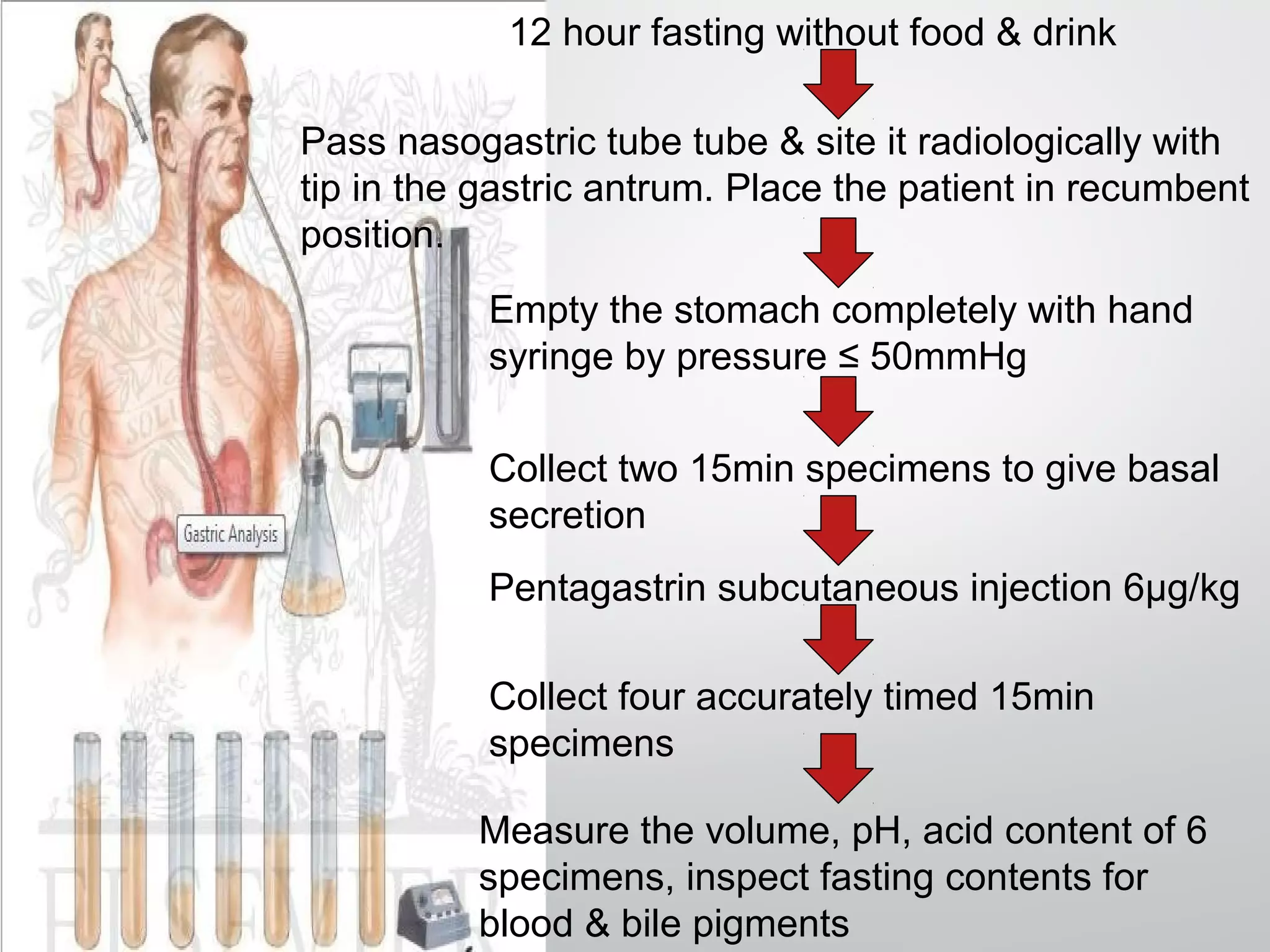
12 hour fasting without food & drink
Pass nasogastric tube tube & site it radiologically with
tip in the gastric antrum. Place the patient in recumbent
position.
Empty the stomach completely with hand
syringe by pressure ≤ 50mmHg
Collect two 15min specimens to give basal
secretion
Pentagastrin subcutaneous injection 6µg/kg
Collect four accurately timed 15min
specimens
Measure the volume, pH, acid content of 6
specimens, inspect fasting contents for
blood & bile pigments
Interpretation
• It may suggest appropriate measures in active
duodenal ulcer, pernicious anemia & in Zolliger- Ellison
Syndrome.
• Normal basal secretion: 1 – 2.5mmol/h
• Normal range of maximal secretion: 20 – 40mmol/h
• Zolliger- Ellison Syndrome: basal secretion is
>10mmol/h & no further rise after giving pentagastrin.
• Achlorhydria is seen in gastric cancer, pernicious
anemia. pH will be above 6.
• acute and chronic gastritis.
Insulin Stimulation test
• Insulin hypogycemia is a potent stimulus of acid
secretion.
• When blood sugar is < 50.0mg/dl (2.8mmol/L)
vagus is stimulated by hypoglycemia.
• This test is best limited to those patients
suspected to have recurrent ulceration after
vagotomy which was probably incomplete.
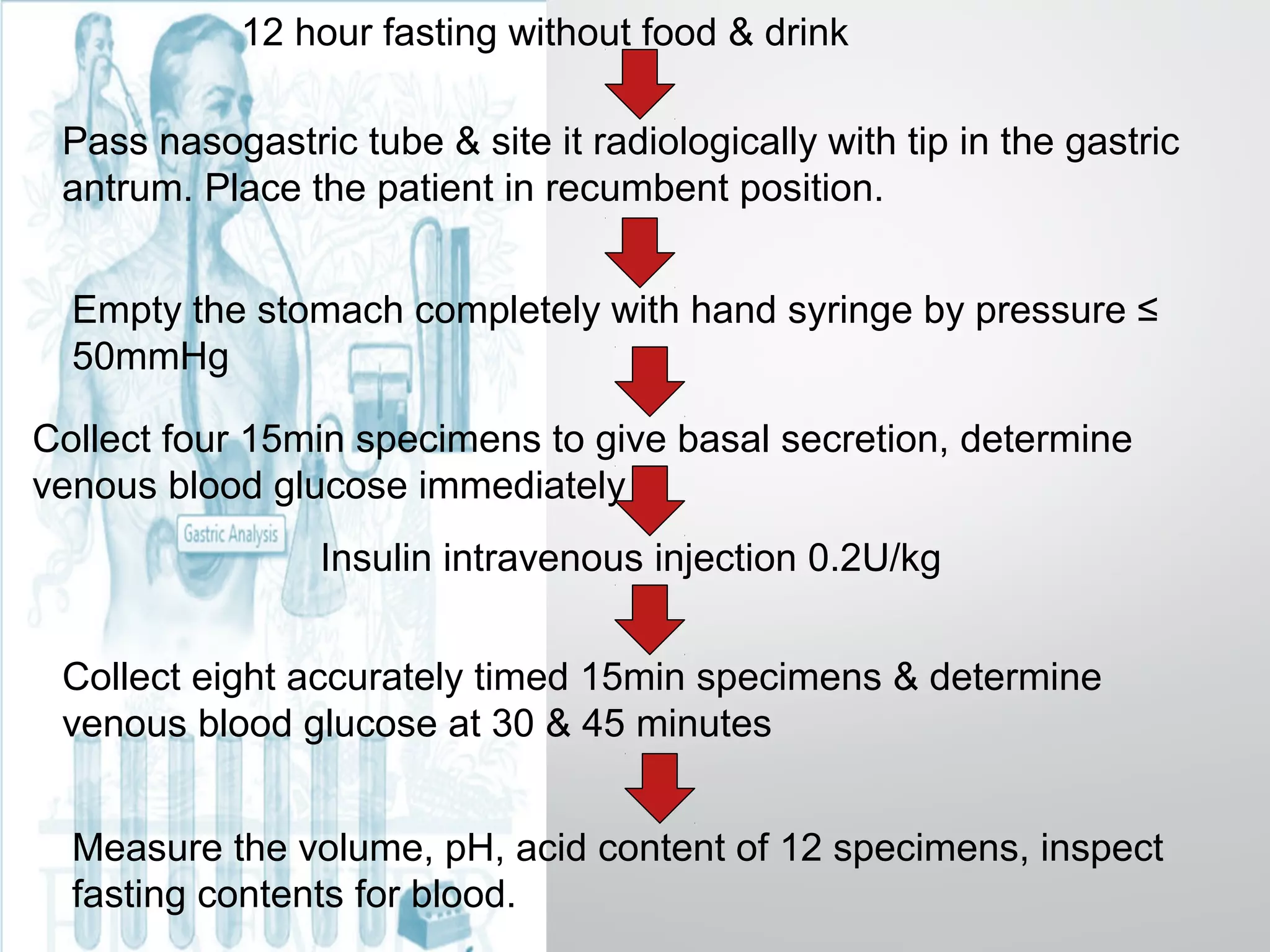
• Technique
12 hour fasting without food & drink
Pass nasogastric tube & site it radiologically with tip in the gastric
antrum. Place the patient in recumbent position.
Empty the stomach completely with hand syringe by pressure ≤
50mmHg
Collect four 15min specimens to give basal secretion, determine
venous blood glucose immediately
Insulin intravenous injection 0.2U/kg
Collect eight accurately timed 15min specimens & determine
venous blood glucose at 30 & 45 minutes
Measure the volume, pH, acid content of 12 specimens, inspect
fasting contents for blood.
Interpretation
• Before operation for vagotomy there is marked
& prolonged rise in acid over 100mmol/L. After
successful vagotomy there is no response or only
fluctuation in the baseline.
• Basal secretion 10mmol/L
• Basal secretion > 20mmol/L suggest incomplete
section of vagus.
Plasma Gastrin
• Valuable in diagnosis of Zolliger- Ellison
Syndrome.
• Normal plasma concentration: 50 – 150pg/ml.
• Zolliger- Ellison Syndrome: 1000 – 400,000pg/ml.
• Not increased in simple peptic ulcer.
• Increased in pernicious anemia.
Tubeless gastric analysis
• Segal et al 1953 demonstrated direct HCl secretion
without intubation by Diagnex blue.
• Principle: Orally administered quinimum resin
indicator forms quinine in the stomach at pH <3 and
quinine hydrochloride is generated. This is then
absorbed in the small intestine, excreted in the urine.
Quninine was extracted from the urine and
determined florimetrically.
• Procedure
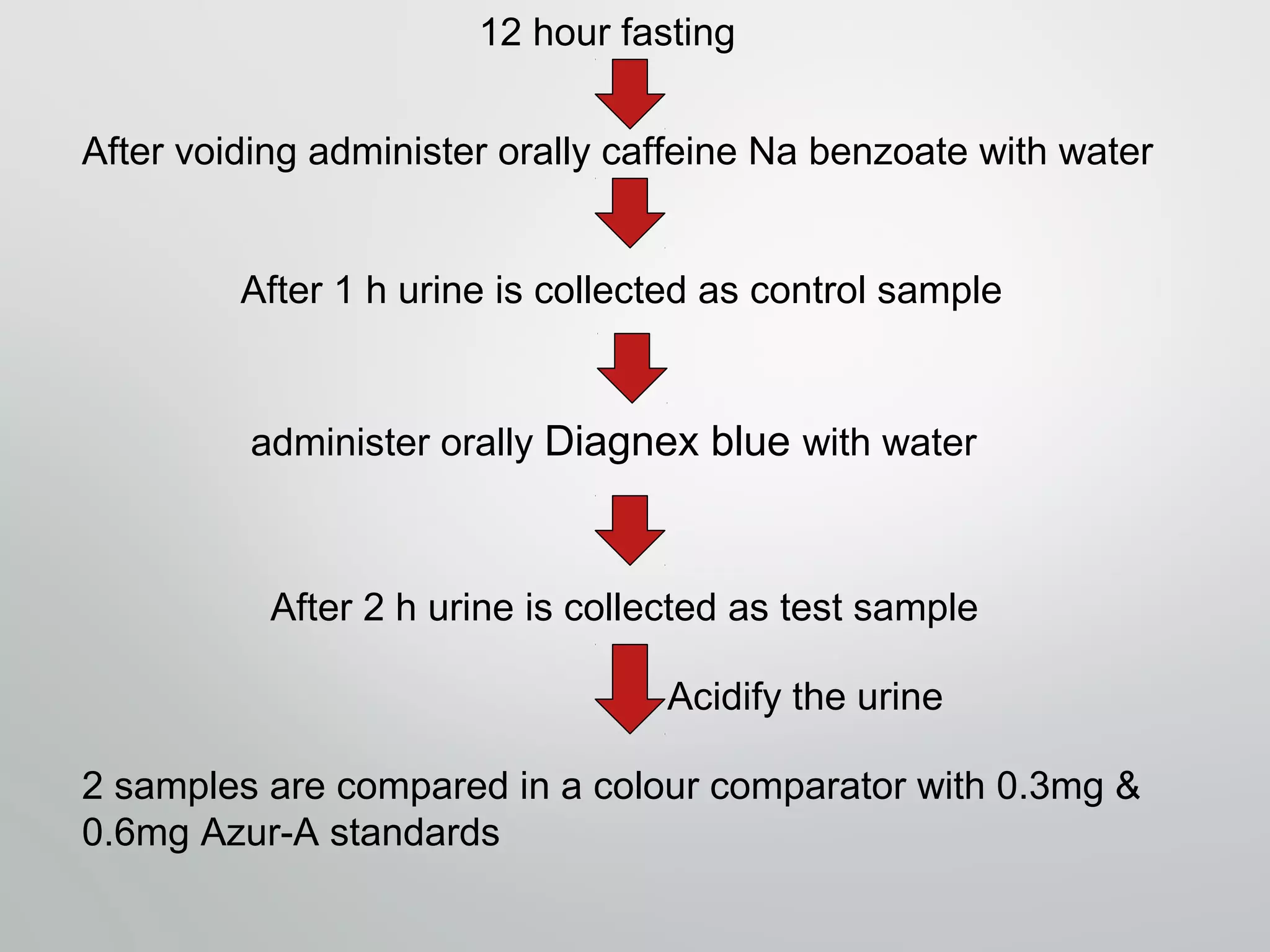
12 hour fasting
After voiding administer orally caffeine Na benzoate with water
After 1 h urine is collected as control sample
administer orally Diagnex blue with water
After 2 h urine is collected as test sample
2 samples are compared in a colour comparator with 0.3mg &
0.6mg Azur-A standards
Acidify the urine
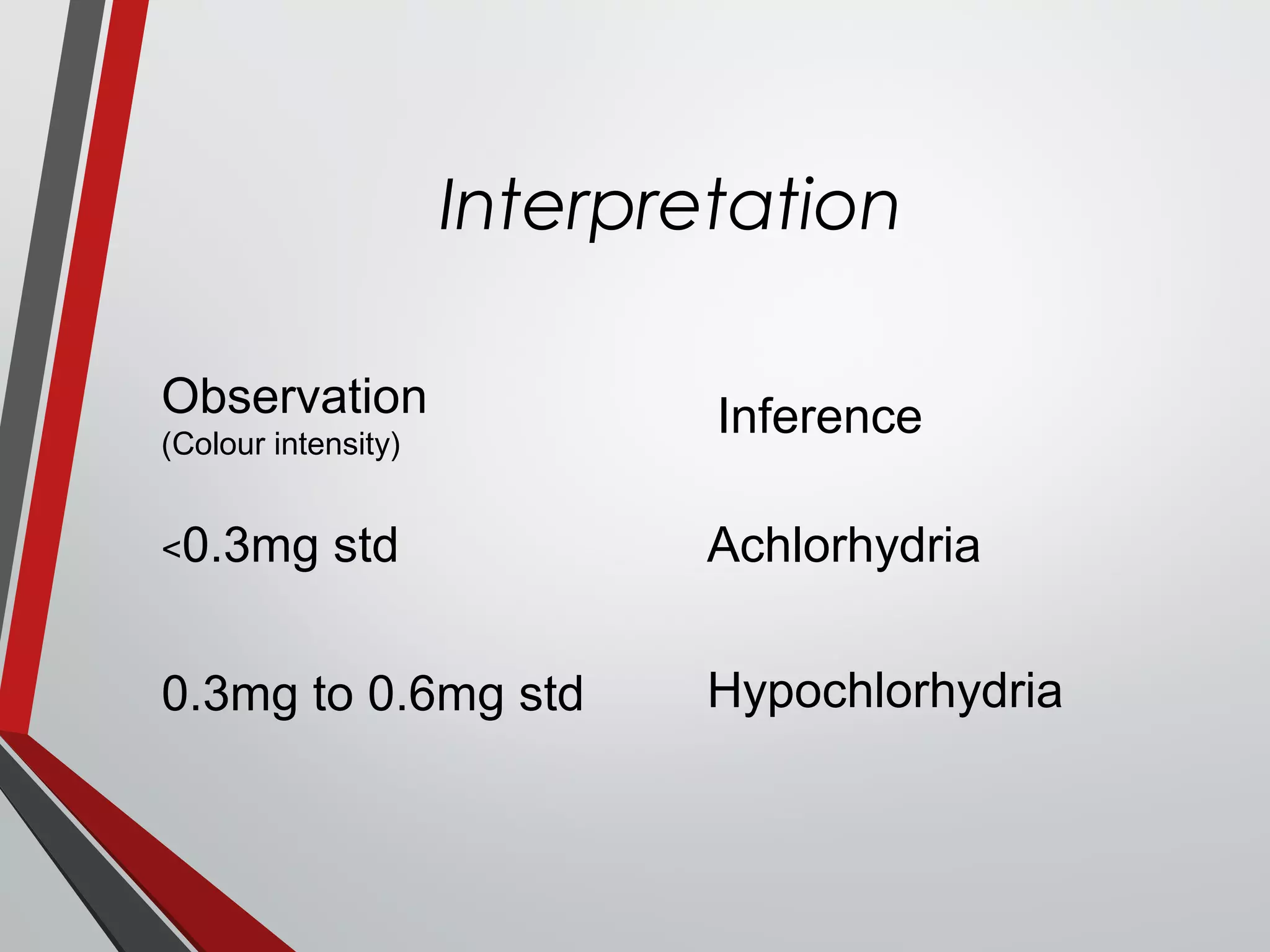
Interpretation
Observation
(Colour intensity)
Inference
<0.3mg std Achlorhydria
0.3mg to 0.6mg std Hypochlorhydria
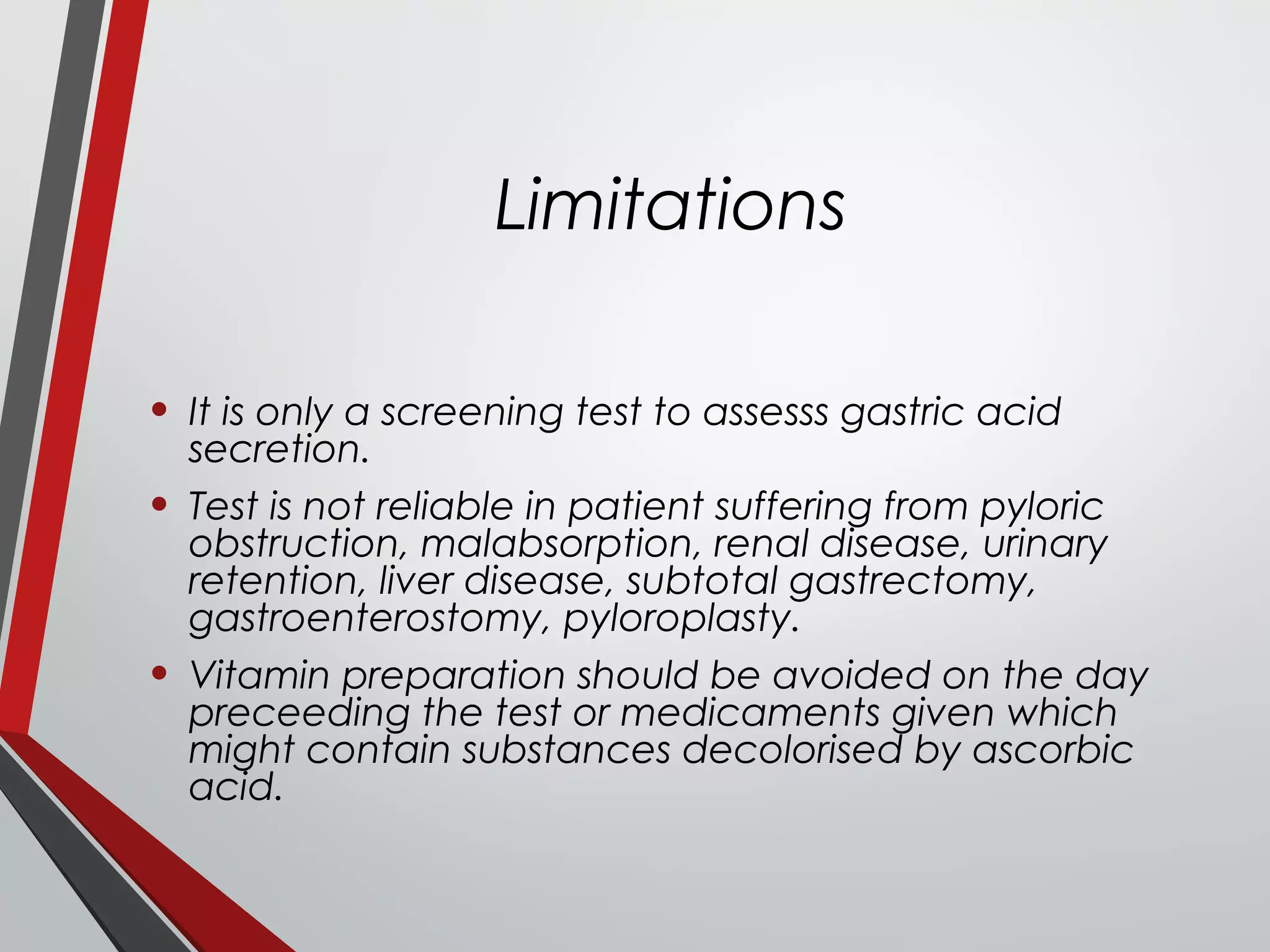
Limitations
• It is only a screening test to assesss gastric acid
secretion.
• Test is not reliable in patient suffering from pyloric
obstruction, malabsorption, renal disease, urinary
retention, liver disease, subtotal gastrectomy,
gastroenterostomy, pyloroplasty.
• Vitamin preparation should be avoided on the day
preceeding the test or medicaments given which
might contain substances decolorised by ascorbic
acid.
Test for Occult blood in the
feces
• Definition: Tests to detect blood in feces in amounts
or forms not observable on inspection are referred as
occult blood test.
• Normal blood loss in the feces 2.5ml/day by
radiochrome studies. Blood may be introduced from
mouth, around teeth, minor abrasion in the GI tract
by roughage of food, hemoglobin, myoglobin, their
breakdown products, peroxidases of plant &
bacterial origin.
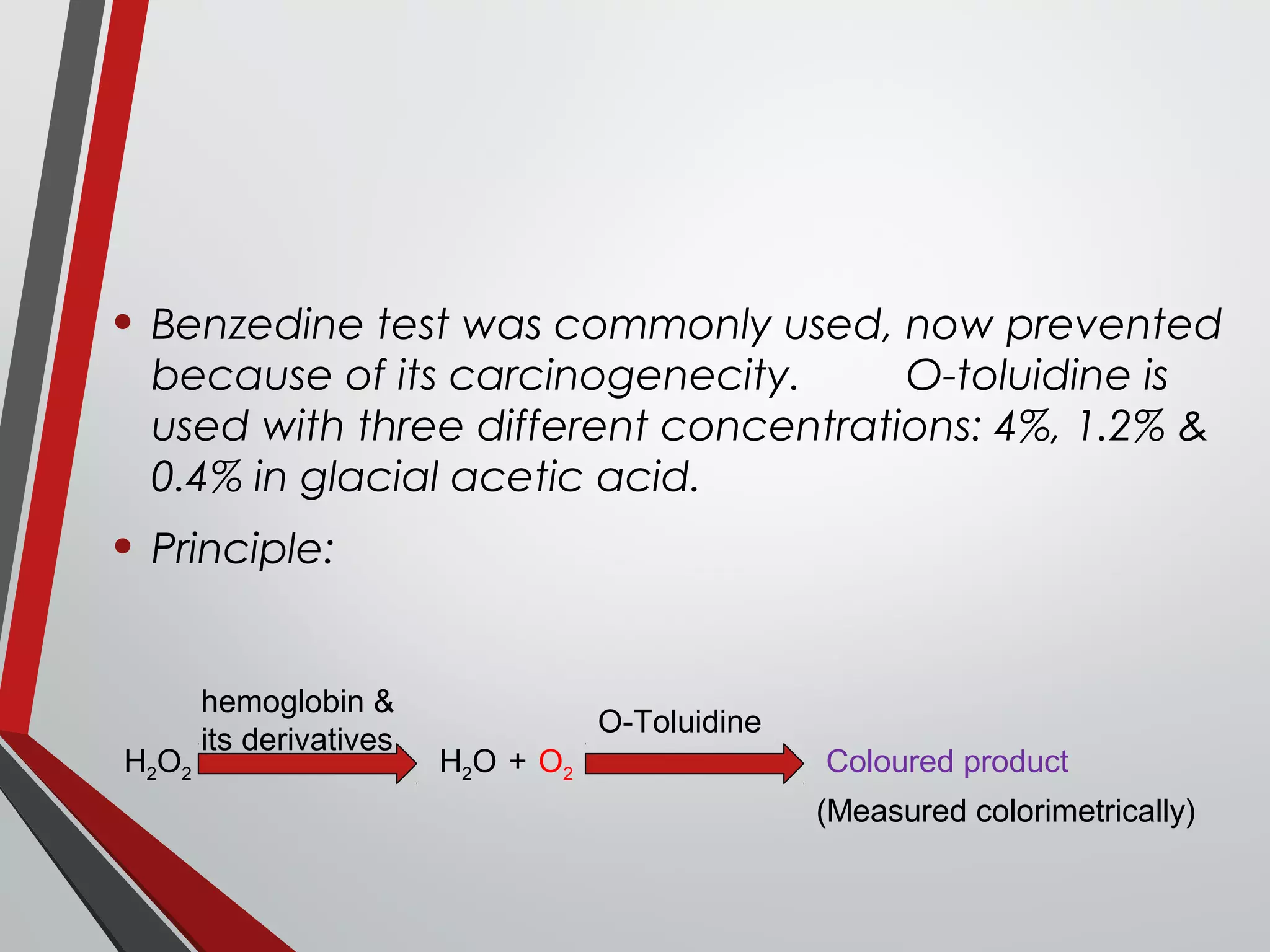
• Benzedine test was commonly used, now prevented
because of its carcinogenecity. O-toluidine is
used with three different concentrations: 4%, 1.2% &
0.4% in glacial acetic acid.
• Principle:
hemoglobin &
its derivatives
H2O2 H2O O2+
O-Toluidine
Coloured product
(Measured colorimetrically)
Test procedure
• A small portion of feces mixed in 10ml DW & boil for a
minute to destroy peroxidases. Mix fecal suspension
+ reagent (O-toluidine & H2O2)
• Blue colour --- Positive test.
• If a single concentration was used 1.2%
recommended.
• If all three used 1st
4% used, positive samples tried
with 1.2%, still positive samples tried with 0.4%.
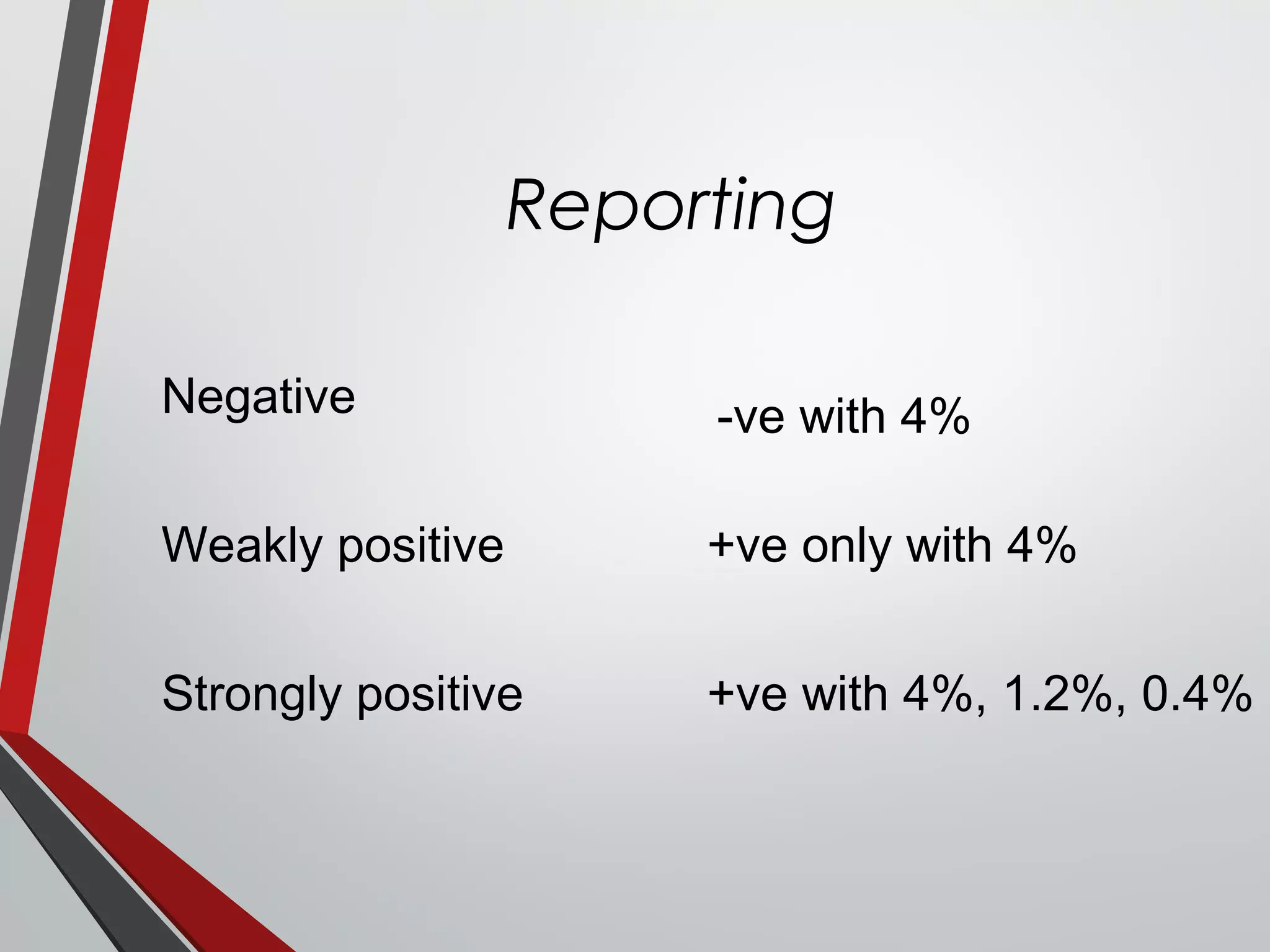
Reporting
Negative -ve with 4%
Weakly positive +ve only with 4%
Strongly positive +ve with 4%, 1.2%, 0.4%
Interpretation
• Test is mainly used in the diagnosis & treament of
ulcers, cancer of stomach, gastritis, perpura, lesion in
duodenum, small & large intestine.
• In case of humorrhoids blood can be seen as streeks
of fresh blood on the surface of feces confirmed by
misroscopic examinations.
• It is also useful practice to do the test on three
successive days when the patient is on meat free
diet.
• Oxyhaemoglobin released from bleeding converted
to hematin & porphyrin by gastric HCl. Only hematin
gives the positive test.
• In case bleeding lower down the alimentary tract,
Oxyhaemoglobin released can be recognised by
spectroscopic examination of supernatant fluid from
a centrifuged fecal suspension.
• Does not afford any information about bleeding
from mouth, nose, throught & the type of lesion
present.
Out Line
Exocrine secretions of
Pancrease
Tests in Pancreatic Diseases
with interpretation
Determination of [HCO3
-
]
Amylase (AMS)
Essay of AMS activity
Macroamylasemia
Isoenzymes of AMS
Renal clearance of AMS
Lipase (LPS)
Assay of LPS activity
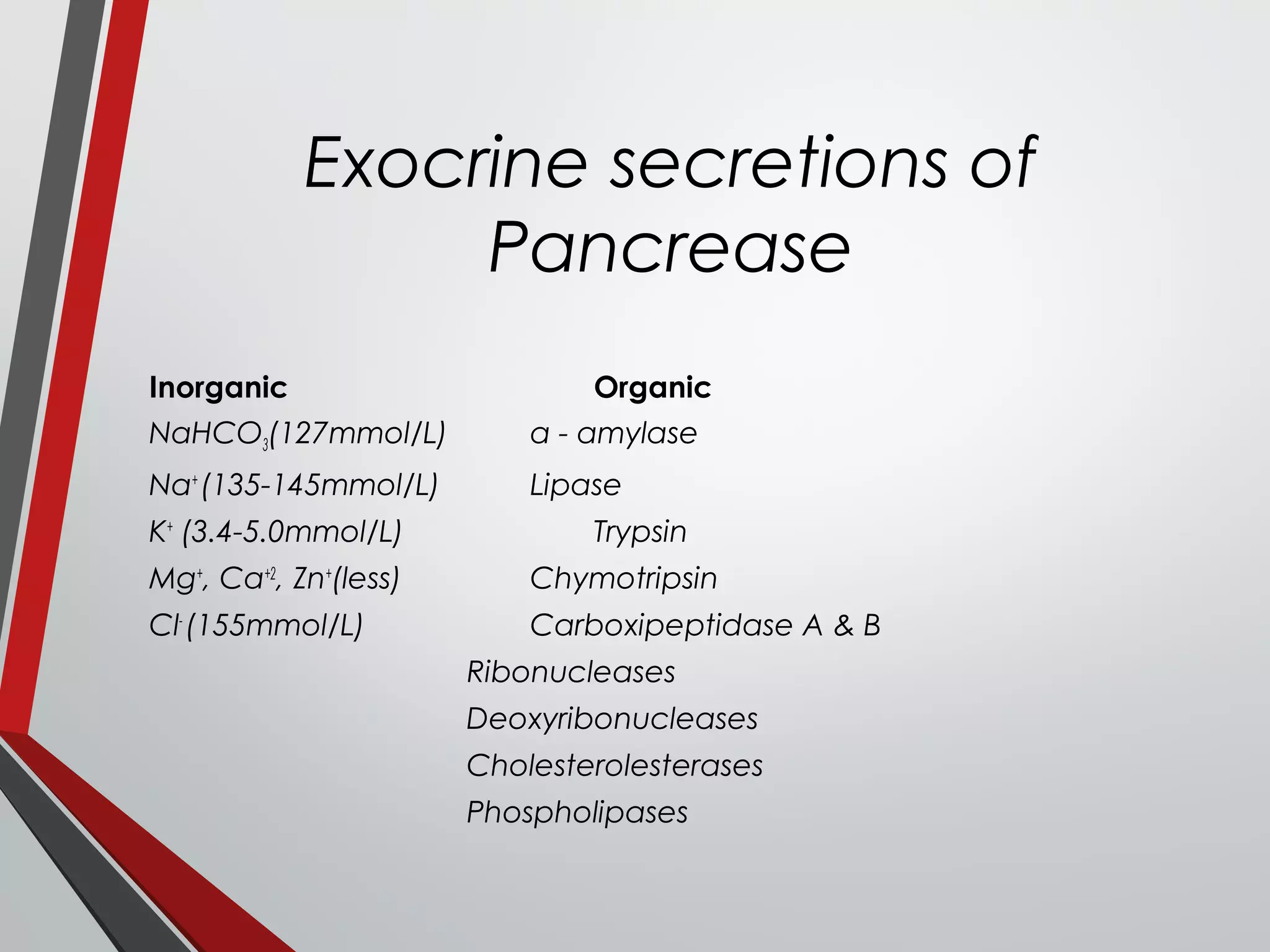
Exocrine secretions of
Pancrease
Inorganic Organic
NaHCO3(127mmol/L) α - amylase
Na+
(135-145mmol/L) Lipase
K+
(3.4-5.0mmol/L) Trypsin
Mg+
, Ca+2
, Zn+
(less) Chymotripsin
Cl-
(155mmol/L) Carboxipeptidase A & B
Ribonucleases
Deoxyribonucleases
Cholesterolesterases
Phospholipases
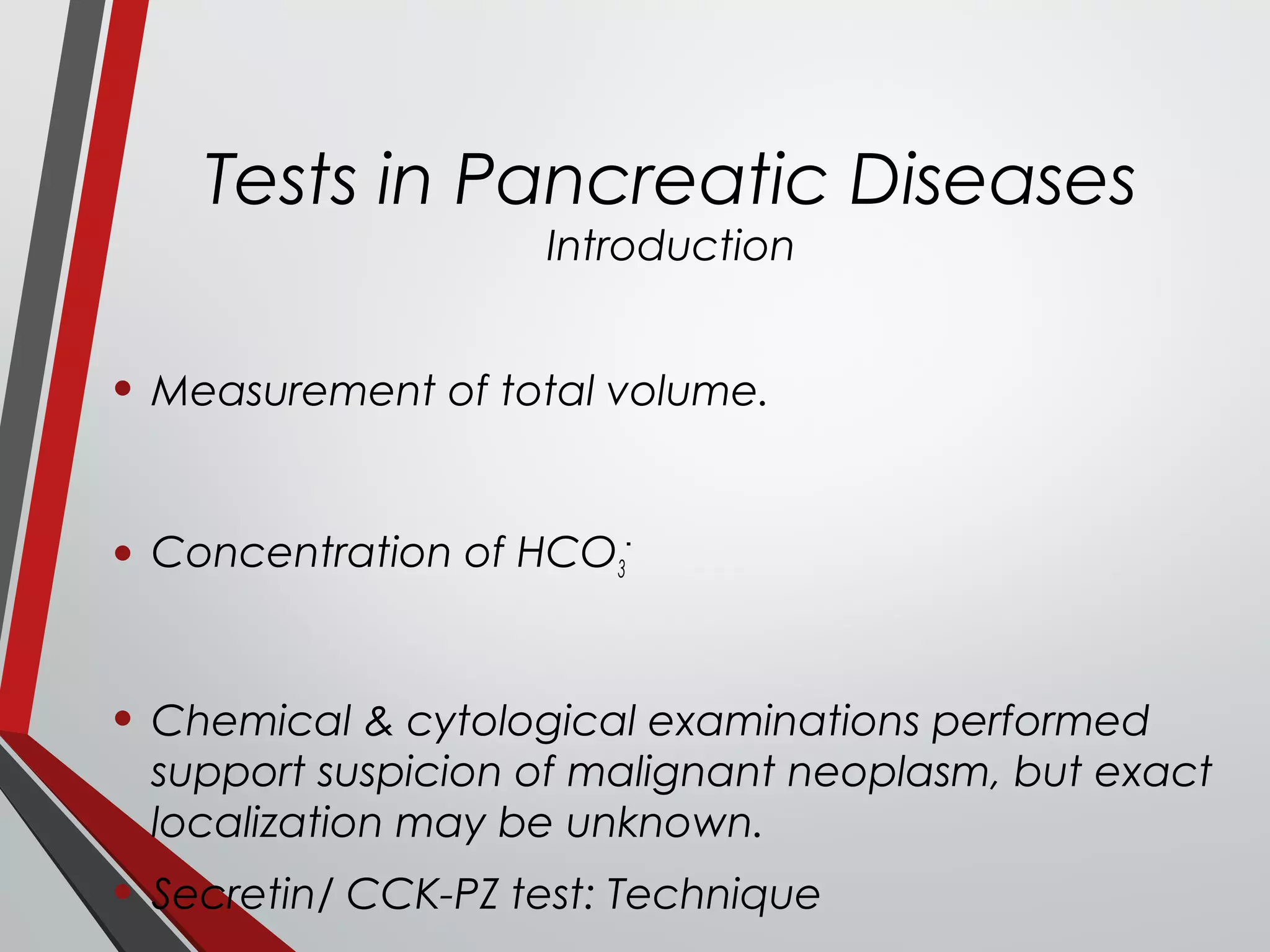
Tests in Pancreatic Diseases
Introduction
• Measurement of total volume.
• Concentration of HCO3
-
• Chemical & cytological examinations performed
support suspicion of malignant neoplasm, but exact
localization may be unknown.
• Secretin/ CCK-PZ test: Technique
12 hour fasting without food & drink
Pass the double lumen tube & site it radiologically with tip of inner
tube in the 3rd
part of duodenum.
Clear bile stained juice (two 10min samples) from the deuodenal tube
& juice free from bile from gastric tube were collected as basal
secretion.
2-3U/kg Secretin/CCK-PZ administred intravenously over 2 min.
Pancreatic secretions are collected for 30, 60, 80 minutes.
pH, secretory rate, [HCO3
-
] are measured.
Determination of [HCO3
-
]
• To 5ml duodenal juice add 10ml of 100mmol/l
HCl in a small beaker, boil to expel CO2, cool &
titrate with 100mmol/l NaOH to pH 7.0 by a glass
electrode or to an end point with
phenolphthalein indictor.
• [HCO3
-
] in mmol/l =
(Vol. of HCl – Vol. of NaOH) 20
Interpretation
• Normal [HCO3
-
] = 127mmol/L
• Secretory rate:
• Men: 15mmol/h
• Women: 12mmol/h
Rate found in pancreatic obstruction with enzyme
concentration.
[HCO3
-
] and enzymes associated with cystic fibrosis, chronic
pancreatitis, pancreatic cysts, calcification & edema of
the pancreas.
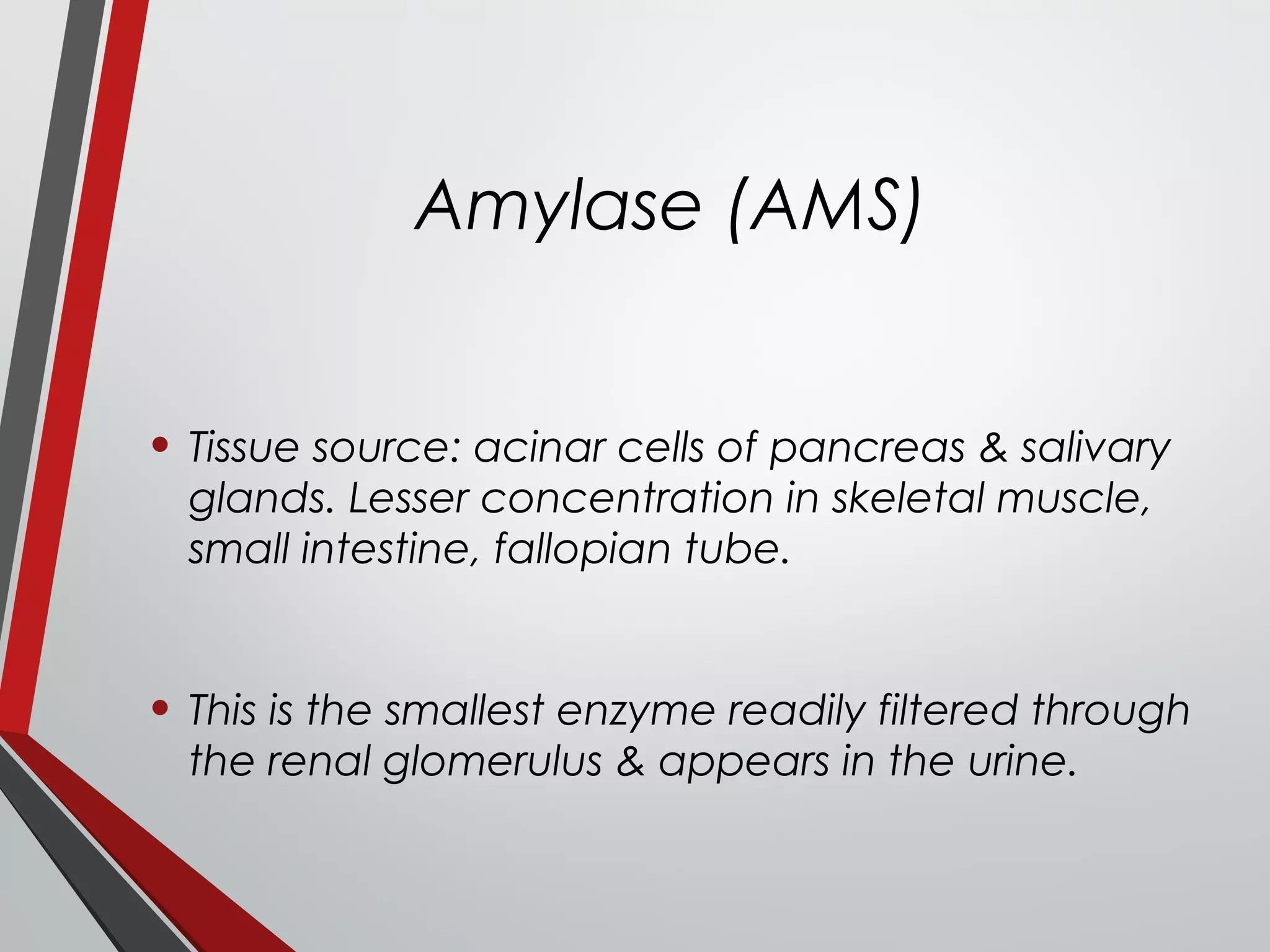
Amylase (AMS)
• Tissue source: acinar cells of pancreas & salivary
glands. Lesser concentration in skeletal muscle,
small intestine, fallopian tube.
• This is the smallest enzyme readily filtered through
the renal glomerulus & appears in the urine.
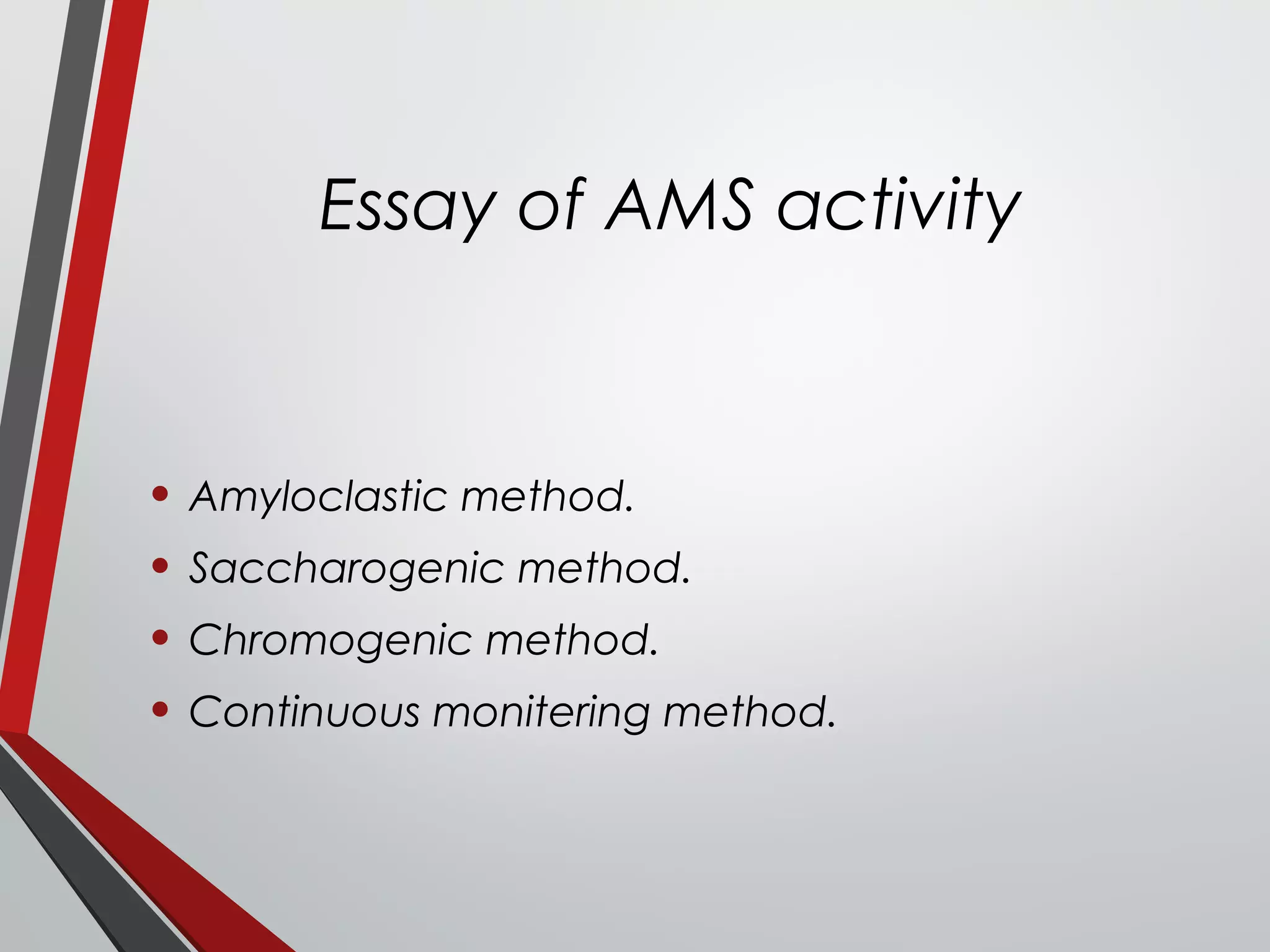
Essay of AMS activity
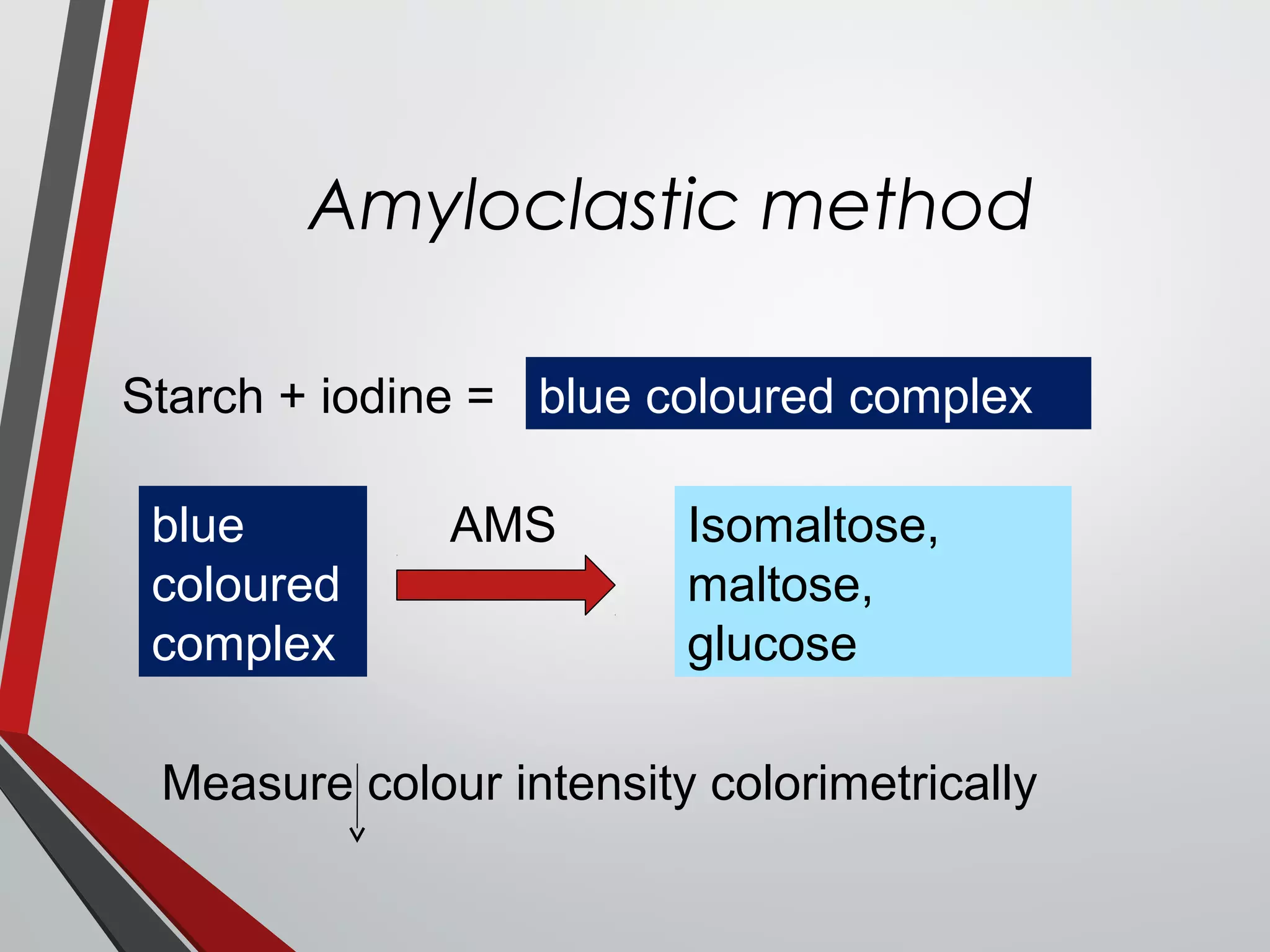
• Amyloclastic method.
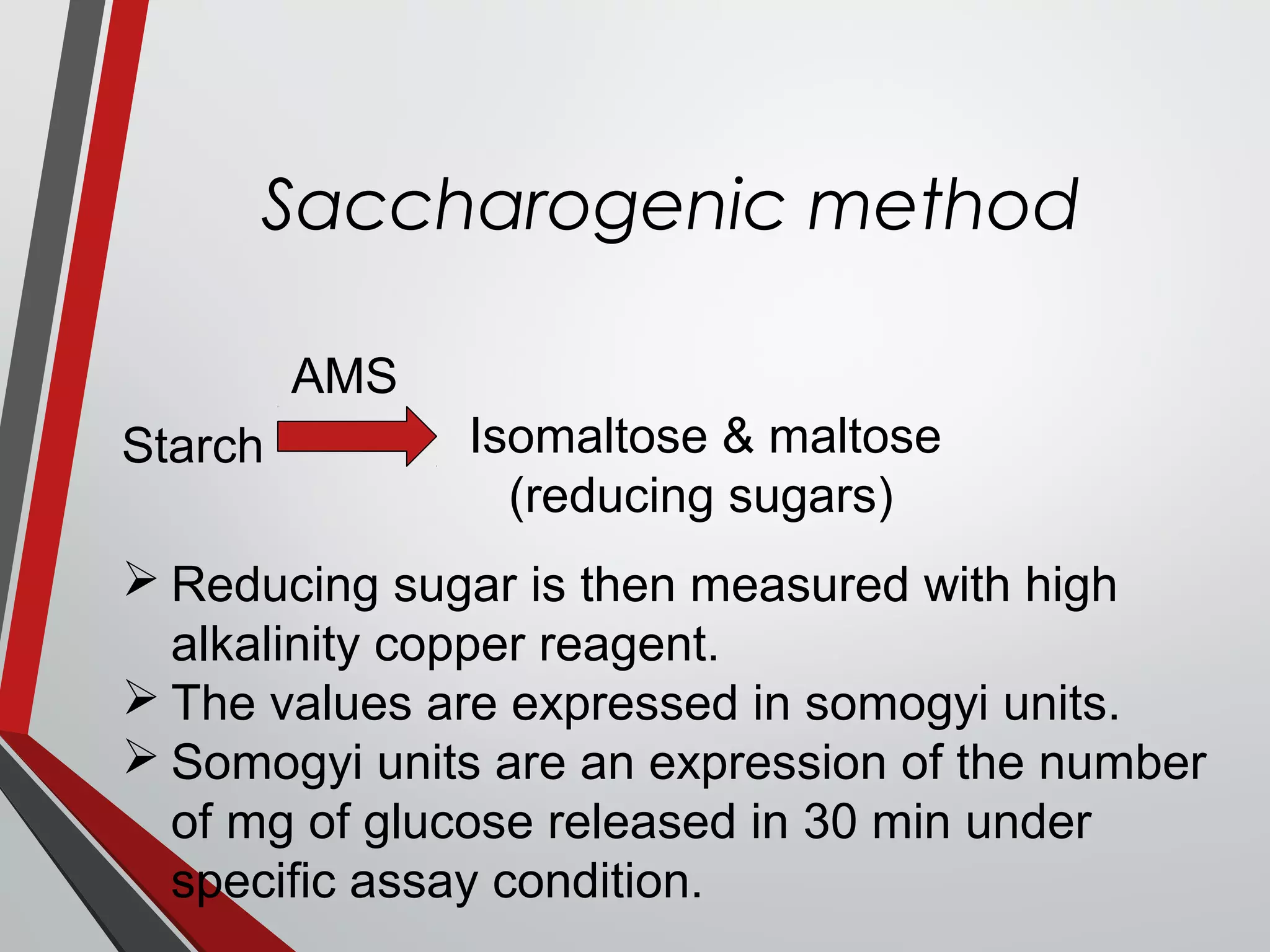
• Saccharogenic method.
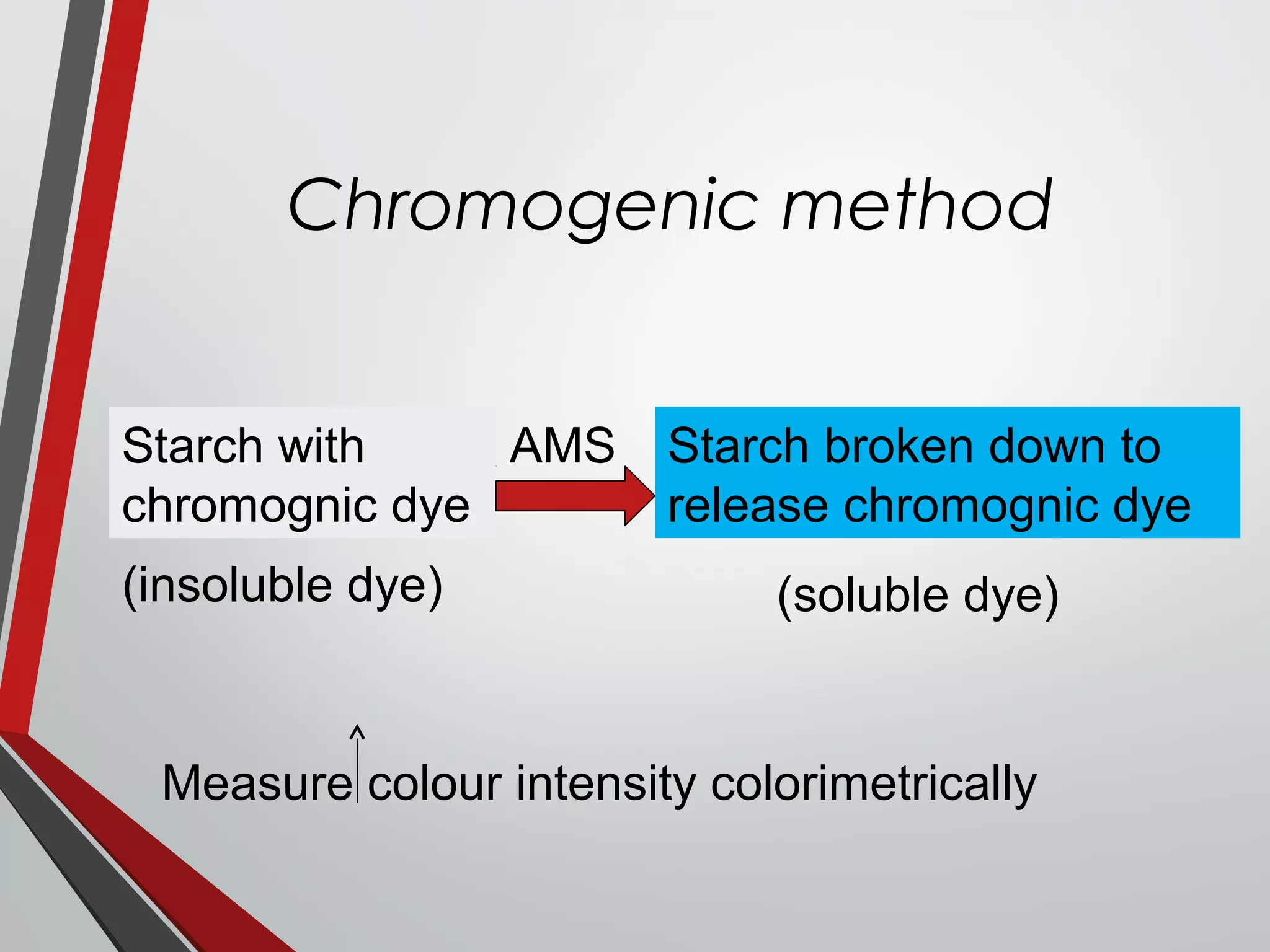
• Chromogenic method.
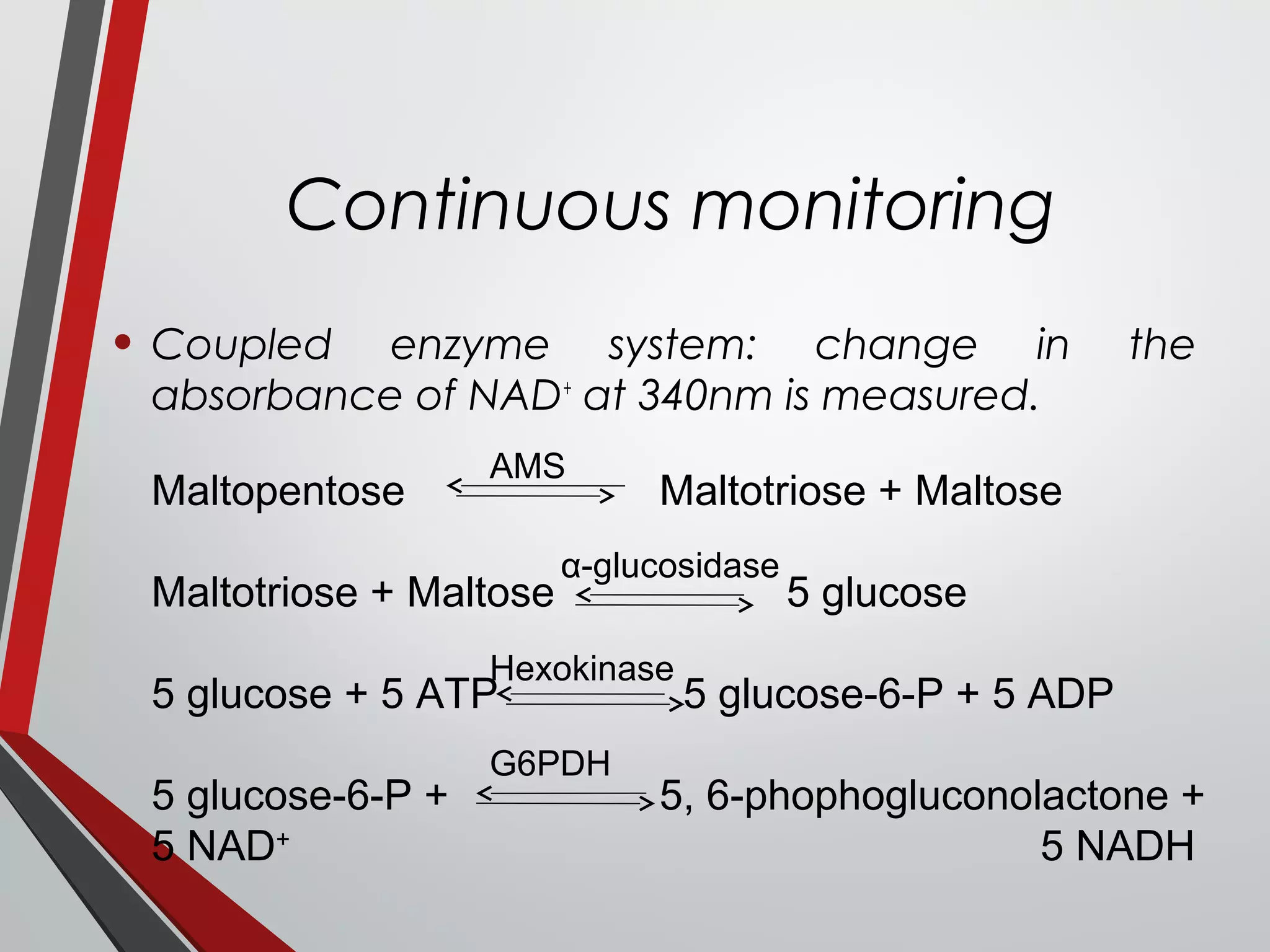
• Continuous monitering method.
Amyloclastic method
Starch + iodine =
AMS Isomaltose,
maltose,
glucose
blue coloured complex
blue
coloured
complex
Measure colour intensity colorimetrically
Saccharogenic method
Starch Isomaltose & maltose
AMS
(reducing sugars)
 Reducing sugar is then measured with high
alkalinity copper reagent.
 The values are expressed in somogyi units.
 Somogyi units are an expression of the number
of mg of glucose released in 30 min under
specific assay condition.
Chromogenic method
Starch with
chromognic dye
AMS Starch broken down to
release chromognic dye
(insoluble dye) (soluble dye)
Measure colour intensity colorimetrically
Continuous monitoring
• Coupled enzyme system: change in the
absorbance of NAD+
at 340nm is measured.
Maltopentose Maltotriose + Maltose
Maltotriose + Maltose 5 glucose
5 glucose + 5 ATP 5 glucose-6-P + 5 ADP
5 glucose-6-P + 5, 6-phophogluconolactone +
5 NAD+
5 NADH
AMS
α-glucosidase
Hexokinase
G6PDH
Interpretation
• Reference ranges of AMS:
• Serum: 25 – 130U/L.
• Urine: 1 – 15U/L.
• Approximate conversion factor between somogyi units &
international units is 1.85
• In acute pancreatitis AMS begin to rise 2 – 12 h after
the onset of attack, peak at 24h & return to normal
within 3 – 5 days. Values generally varies between
250 – 1000 somogyi units/dl.
• In salivary gland lesion, mumps, parotitis,
perforated peptic ulcer, intestinal obstruction,
cholecystitis, ruptured ectopic pregnancy,
mesenteric infarction, acute appendicitis, renal
insufficiency, diabetic ketoacedosis.
• Serum AMS other than acute pancreatitis are
usually less than 500 somogyi units/dl.
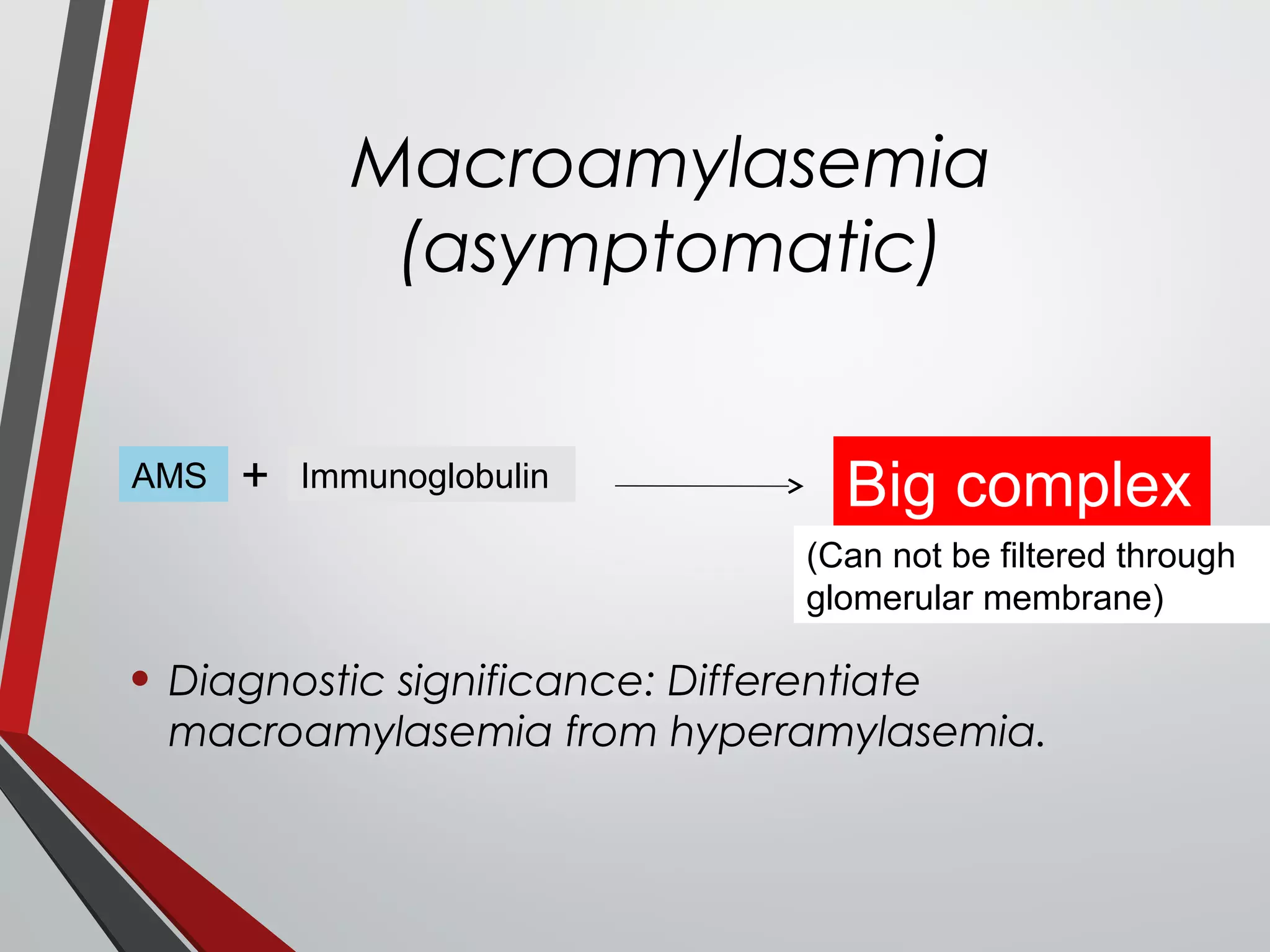
Macroamylasemia
(asymptomatic)
• Diagnostic significance: Differentiate
macroamylasemia from hyperamylasemia.
ImmunoglobulinAMS + Big complex
(Can not be filtered through
glomerular membrane)
Isoenzymes of AMS
• P-type: pancreatic
• S- type: salivary, fallopian tube, lung
• Isoenzymes of salivary origin migrate most quickly (S1,
S2, S3), where as pancreatic origin move slower (P1,
P2, P3).
• AMS migrate in the regions corresponding to β to α-
globulin regions of the protein.
• P-type activity, specifically P3 in acute pancreatitis
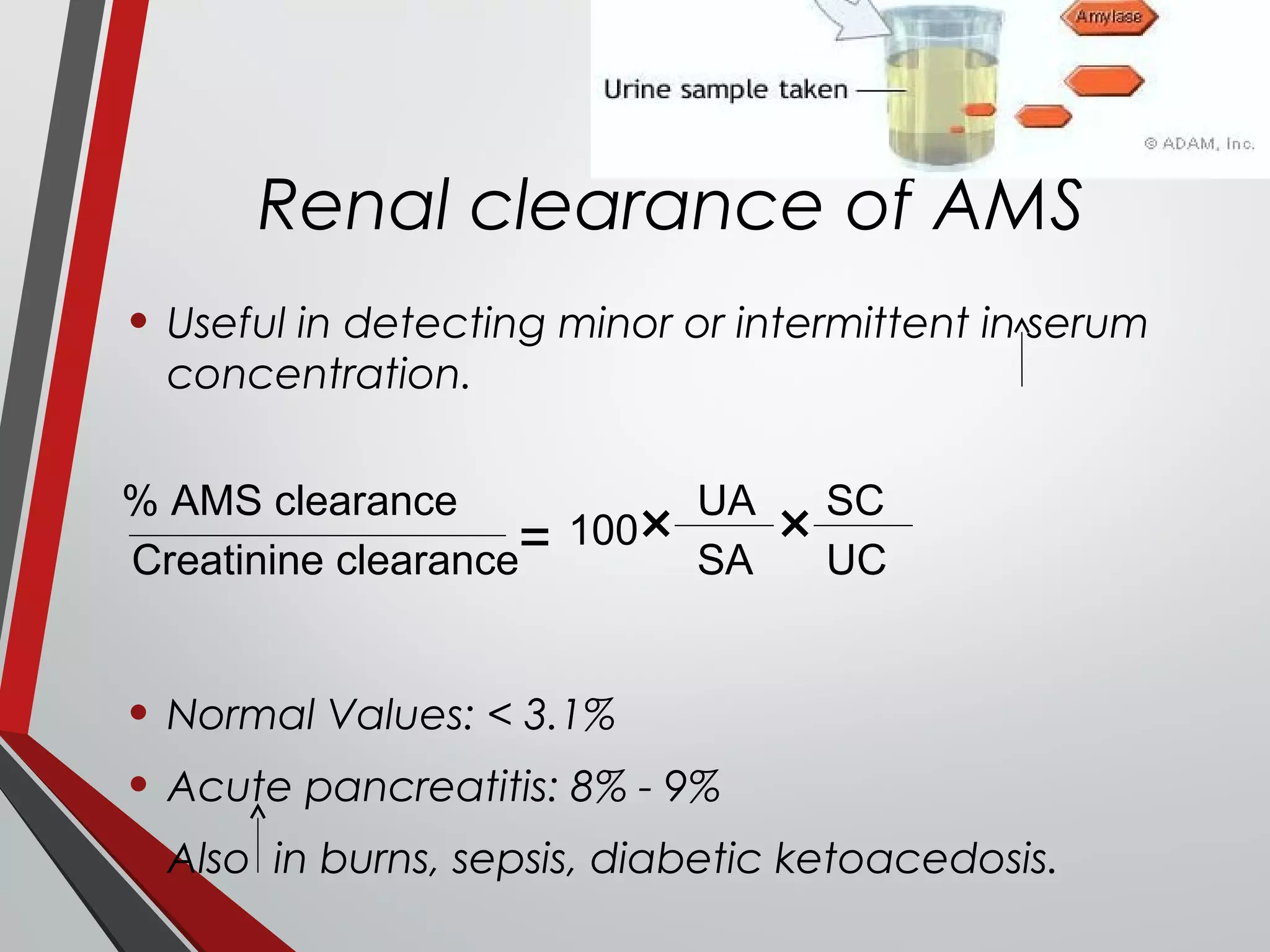
Renal clearance of AMS
• Useful in detecting minor or intermittent in serum
concentration.
• Normal Values: < 3.1%
• Acute pancreatitis: 8% - 9%
• Also in burns, sepsis, diabetic ketoacedosis.
% AMS clearance
Creatinine clearance= 100
UA SC
SA UC
× ×
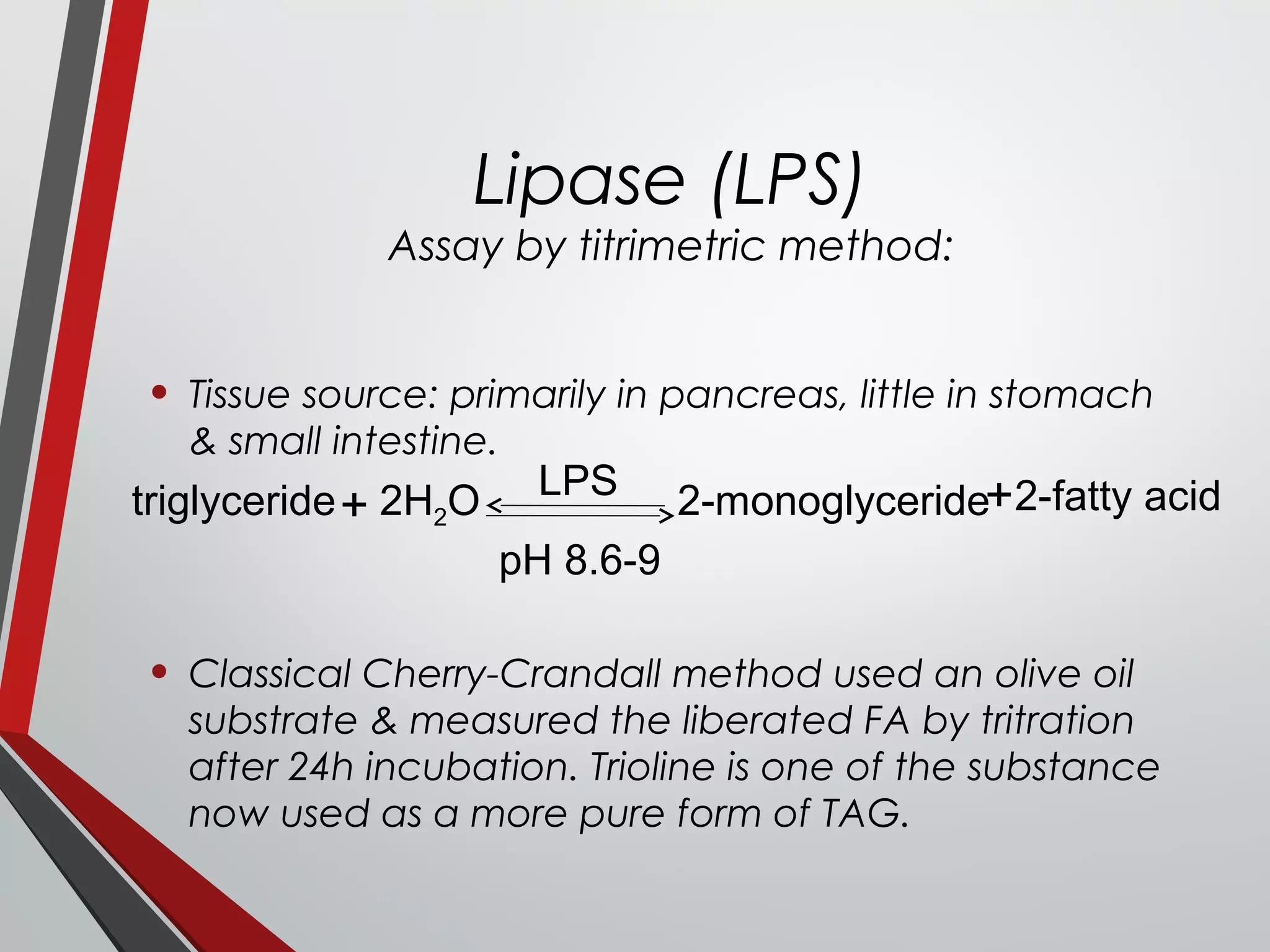
Lipase (LPS)
Assay by titrimetric method:
• Tissue source: primarily in pancreas, little in stomach
& small intestine.
• Classical Cherry-Crandall method used an olive oil
substrate & measured the liberated FA by tritration
after 24h incubation. Trioline is one of the substance
now used as a more pure form of TAG.
triglyceride+ 2H2O LPS
pH 8.6-9
2-monoglyceride+2-fatty acid
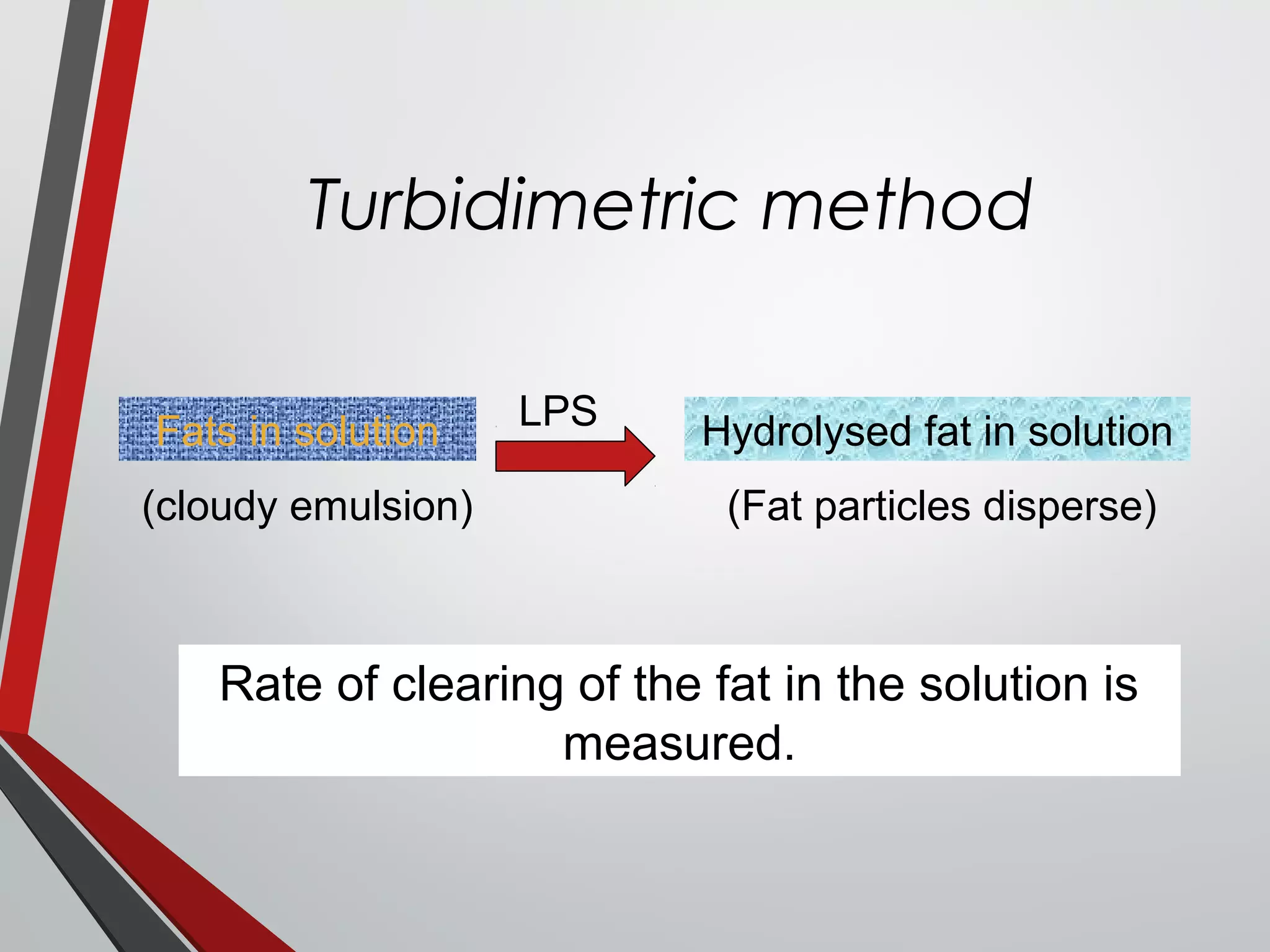
Turbidimetric method
Fats in solution
(cloudy emulsion)
LPS Hydrolysed fat in solution
(Fat particles disperse)
Rate of clearing of the fat in the solution is
measured.
Interpretation
• Reference range: 0 – 1.0U/ml
• This is exclusive for the diagnosis of acute
pancreatitis.
• Both AMS & LPS levels rise quickly, but LPS elevation
persist for 5 days, whereas AMS only for 2 – 3 days.
• Elevated also in penetrating duodenal ulcer,
intestinal obstruction, acute cholecystitis.
• In contrast to AMS levels, LPS levels are normal in
conditions of salivary gland involvement.
• Of the three LPS isoenzymes, L2 is thought to be
most clinically specific & sensitive.

Gastric and Pancreatic function tests

  • 1.
  • 2.
    Gastric function test Out Line Chief constituents of gastric juice  Stages of gastric secretion  Inhibition of gastric secretion  Why gastric function test are important?  Tests of gastric function with interpretation
  • 3.
    Chief constituents ofgastric juice • Hydrochloric acid • Pepsinogen • Intrinsic factor • Gastric mucus • Blood group substances • Rennin
  • 4.
    Stimulation of gastricsecretion • Cephalic Phase: Site, taste, smell, thought of food, insulin. Stimulation through vagus nerve. • Gastric Phase: Food in the stomach local reflexes Vagal activity acetylcholine gastrin from mucosa of pylorus parietal & chief cells hydrochloric acid, pepsinogen, gastric motility.
  • 5.
    Inhibition of gastricsecretion • Entry of food into the duodenum. • Secretin, cholecystokinin-pancreozymin • Gastric Inhibitory peptide • Vasoactive Intestinal Peptide
  • 6.
    Why gastric functiontest are important? • Zolliger-Ellison Syndrome • Evaluate pernicious anemia in adults • Type of surgical procedure required for ulcer treatment.
  • 7.
    Stimulants for gastricsecretion • Ewald one hour meal: toast without butter, tea without milk • Fractional test meal of Rehffus: Pint of oat meal gruel
  • 8.
    • Histamine test:Histamine hydrochloride 0.25mg/kg subcutaneously. • Augumented histamine test: 0.04mg/kg histamine is given subcutaneously along with antihistamine. • Histolog. • Pentagastrin • Insulin
  • 9.
    Titrimetric analysis ofacid output • Titrate 5ml of gastric contents with 100mmol/L NaOH either to pH 7.4 using glass electrode or to an end point with phenol red. Acid output in mmol/h = ml of NaOH volume of specimen in ml 6 ml of gastric period of collection juice titrated in minutes
  • 10.
    Gastric acidity curves Totalacidity Free acidity Hypoacidity Hyperacidity Combined acidity
  • 11.
    The Pentagastrin test •Maximal stimulation of the stomach after assessment of basal secretion rate. • Measure of total parietal cell mass. • Technique
  • 12.
    12 hour fastingwithout food & drink Pass nasogastric tube tube & site it radiologically with tip in the gastric antrum. Place the patient in recumbent position. Empty the stomach completely with hand syringe by pressure ≤ 50mmHg Collect two 15min specimens to give basal secretion Pentagastrin subcutaneous injection 6µg/kg Collect four accurately timed 15min specimens Measure the volume, pH, acid content of 6 specimens, inspect fasting contents for blood & bile pigments
  • 13.
    Interpretation • It maysuggest appropriate measures in active duodenal ulcer, pernicious anemia & in Zolliger- Ellison Syndrome. • Normal basal secretion: 1 – 2.5mmol/h • Normal range of maximal secretion: 20 – 40mmol/h • Zolliger- Ellison Syndrome: basal secretion is >10mmol/h & no further rise after giving pentagastrin.
  • 14.
    • Achlorhydria isseen in gastric cancer, pernicious anemia. pH will be above 6. • acute and chronic gastritis.
  • 15.
    Insulin Stimulation test •Insulin hypogycemia is a potent stimulus of acid secretion. • When blood sugar is < 50.0mg/dl (2.8mmol/L) vagus is stimulated by hypoglycemia. • This test is best limited to those patients suspected to have recurrent ulceration after vagotomy which was probably incomplete. • Technique
  • 16.
    12 hour fastingwithout food & drink Pass nasogastric tube & site it radiologically with tip in the gastric antrum. Place the patient in recumbent position. Empty the stomach completely with hand syringe by pressure ≤ 50mmHg Collect four 15min specimens to give basal secretion, determine venous blood glucose immediately Insulin intravenous injection 0.2U/kg Collect eight accurately timed 15min specimens & determine venous blood glucose at 30 & 45 minutes Measure the volume, pH, acid content of 12 specimens, inspect fasting contents for blood.
  • 17.
    Interpretation • Before operationfor vagotomy there is marked & prolonged rise in acid over 100mmol/L. After successful vagotomy there is no response or only fluctuation in the baseline. • Basal secretion 10mmol/L • Basal secretion > 20mmol/L suggest incomplete section of vagus.
  • 18.
    Plasma Gastrin • Valuablein diagnosis of Zolliger- Ellison Syndrome. • Normal plasma concentration: 50 – 150pg/ml. • Zolliger- Ellison Syndrome: 1000 – 400,000pg/ml. • Not increased in simple peptic ulcer. • Increased in pernicious anemia.
  • 19.
    Tubeless gastric analysis •Segal et al 1953 demonstrated direct HCl secretion without intubation by Diagnex blue. • Principle: Orally administered quinimum resin indicator forms quinine in the stomach at pH <3 and quinine hydrochloride is generated. This is then absorbed in the small intestine, excreted in the urine. Quninine was extracted from the urine and determined florimetrically. • Procedure
  • 20.
    12 hour fasting Aftervoiding administer orally caffeine Na benzoate with water After 1 h urine is collected as control sample administer orally Diagnex blue with water After 2 h urine is collected as test sample 2 samples are compared in a colour comparator with 0.3mg & 0.6mg Azur-A standards Acidify the urine
  • 21.
    Interpretation Observation (Colour intensity) Inference <0.3mg stdAchlorhydria 0.3mg to 0.6mg std Hypochlorhydria
  • 22.
    Limitations • It isonly a screening test to assesss gastric acid secretion. • Test is not reliable in patient suffering from pyloric obstruction, malabsorption, renal disease, urinary retention, liver disease, subtotal gastrectomy, gastroenterostomy, pyloroplasty. • Vitamin preparation should be avoided on the day preceeding the test or medicaments given which might contain substances decolorised by ascorbic acid.
  • 23.
    Test for Occultblood in the feces • Definition: Tests to detect blood in feces in amounts or forms not observable on inspection are referred as occult blood test. • Normal blood loss in the feces 2.5ml/day by radiochrome studies. Blood may be introduced from mouth, around teeth, minor abrasion in the GI tract by roughage of food, hemoglobin, myoglobin, their breakdown products, peroxidases of plant & bacterial origin.
  • 24.
    • Benzedine testwas commonly used, now prevented because of its carcinogenecity. O-toluidine is used with three different concentrations: 4%, 1.2% & 0.4% in glacial acetic acid. • Principle: hemoglobin & its derivatives H2O2 H2O O2+ O-Toluidine Coloured product (Measured colorimetrically)
  • 25.
    Test procedure • Asmall portion of feces mixed in 10ml DW & boil for a minute to destroy peroxidases. Mix fecal suspension + reagent (O-toluidine & H2O2) • Blue colour --- Positive test. • If a single concentration was used 1.2% recommended. • If all three used 1st 4% used, positive samples tried with 1.2%, still positive samples tried with 0.4%.
  • 26.
    Reporting Negative -ve with4% Weakly positive +ve only with 4% Strongly positive +ve with 4%, 1.2%, 0.4%
  • 27.
    Interpretation • Test ismainly used in the diagnosis & treament of ulcers, cancer of stomach, gastritis, perpura, lesion in duodenum, small & large intestine. • In case of humorrhoids blood can be seen as streeks of fresh blood on the surface of feces confirmed by misroscopic examinations. • It is also useful practice to do the test on three successive days when the patient is on meat free diet.
  • 28.
    • Oxyhaemoglobin releasedfrom bleeding converted to hematin & porphyrin by gastric HCl. Only hematin gives the positive test. • In case bleeding lower down the alimentary tract, Oxyhaemoglobin released can be recognised by spectroscopic examination of supernatant fluid from a centrifuged fecal suspension. • Does not afford any information about bleeding from mouth, nose, throught & the type of lesion present.
  • 29.
    Out Line Exocrine secretionsof Pancrease Tests in Pancreatic Diseases with interpretation Determination of [HCO3 - ] Amylase (AMS) Essay of AMS activity Macroamylasemia Isoenzymes of AMS Renal clearance of AMS Lipase (LPS) Assay of LPS activity
  • 30.
    Exocrine secretions of Pancrease InorganicOrganic NaHCO3(127mmol/L) α - amylase Na+ (135-145mmol/L) Lipase K+ (3.4-5.0mmol/L) Trypsin Mg+ , Ca+2 , Zn+ (less) Chymotripsin Cl- (155mmol/L) Carboxipeptidase A & B Ribonucleases Deoxyribonucleases Cholesterolesterases Phospholipases
  • 31.
    Tests in PancreaticDiseases Introduction • Measurement of total volume. • Concentration of HCO3 - • Chemical & cytological examinations performed support suspicion of malignant neoplasm, but exact localization may be unknown. • Secretin/ CCK-PZ test: Technique
  • 32.
    12 hour fastingwithout food & drink Pass the double lumen tube & site it radiologically with tip of inner tube in the 3rd part of duodenum. Clear bile stained juice (two 10min samples) from the deuodenal tube & juice free from bile from gastric tube were collected as basal secretion. 2-3U/kg Secretin/CCK-PZ administred intravenously over 2 min. Pancreatic secretions are collected for 30, 60, 80 minutes. pH, secretory rate, [HCO3 - ] are measured.
  • 33.
    Determination of [HCO3 - ] •To 5ml duodenal juice add 10ml of 100mmol/l HCl in a small beaker, boil to expel CO2, cool & titrate with 100mmol/l NaOH to pH 7.0 by a glass electrode or to an end point with phenolphthalein indictor. • [HCO3 - ] in mmol/l = (Vol. of HCl – Vol. of NaOH) 20
  • 34.
    Interpretation • Normal [HCO3 - ]= 127mmol/L • Secretory rate: • Men: 15mmol/h • Women: 12mmol/h Rate found in pancreatic obstruction with enzyme concentration. [HCO3 - ] and enzymes associated with cystic fibrosis, chronic pancreatitis, pancreatic cysts, calcification & edema of the pancreas.
  • 35.
    Amylase (AMS) • Tissuesource: acinar cells of pancreas & salivary glands. Lesser concentration in skeletal muscle, small intestine, fallopian tube. • This is the smallest enzyme readily filtered through the renal glomerulus & appears in the urine.
  • 36.
    Essay of AMSactivity • Amyloclastic method. • Saccharogenic method. • Chromogenic method. • Continuous monitering method.
  • 37.
    Amyloclastic method Starch +iodine = AMS Isomaltose, maltose, glucose blue coloured complex blue coloured complex Measure colour intensity colorimetrically
  • 38.
    Saccharogenic method Starch Isomaltose& maltose AMS (reducing sugars)  Reducing sugar is then measured with high alkalinity copper reagent.  The values are expressed in somogyi units.  Somogyi units are an expression of the number of mg of glucose released in 30 min under specific assay condition.
  • 39.
    Chromogenic method Starch with chromognicdye AMS Starch broken down to release chromognic dye (insoluble dye) (soluble dye) Measure colour intensity colorimetrically
  • 40.
    Continuous monitoring • Coupledenzyme system: change in the absorbance of NAD+ at 340nm is measured. Maltopentose Maltotriose + Maltose Maltotriose + Maltose 5 glucose 5 glucose + 5 ATP 5 glucose-6-P + 5 ADP 5 glucose-6-P + 5, 6-phophogluconolactone + 5 NAD+ 5 NADH AMS α-glucosidase Hexokinase G6PDH
  • 41.
    Interpretation • Reference rangesof AMS: • Serum: 25 – 130U/L. • Urine: 1 – 15U/L. • Approximate conversion factor between somogyi units & international units is 1.85 • In acute pancreatitis AMS begin to rise 2 – 12 h after the onset of attack, peak at 24h & return to normal within 3 – 5 days. Values generally varies between 250 – 1000 somogyi units/dl.
  • 42.
    • In salivarygland lesion, mumps, parotitis, perforated peptic ulcer, intestinal obstruction, cholecystitis, ruptured ectopic pregnancy, mesenteric infarction, acute appendicitis, renal insufficiency, diabetic ketoacedosis. • Serum AMS other than acute pancreatitis are usually less than 500 somogyi units/dl.
  • 43.
    Macroamylasemia (asymptomatic) • Diagnostic significance:Differentiate macroamylasemia from hyperamylasemia. ImmunoglobulinAMS + Big complex (Can not be filtered through glomerular membrane)
  • 44.
    Isoenzymes of AMS •P-type: pancreatic • S- type: salivary, fallopian tube, lung • Isoenzymes of salivary origin migrate most quickly (S1, S2, S3), where as pancreatic origin move slower (P1, P2, P3). • AMS migrate in the regions corresponding to β to α- globulin regions of the protein. • P-type activity, specifically P3 in acute pancreatitis
  • 45.
    Renal clearance ofAMS • Useful in detecting minor or intermittent in serum concentration. • Normal Values: < 3.1% • Acute pancreatitis: 8% - 9% • Also in burns, sepsis, diabetic ketoacedosis. % AMS clearance Creatinine clearance= 100 UA SC SA UC × ×
  • 46.
    Lipase (LPS) Assay bytitrimetric method: • Tissue source: primarily in pancreas, little in stomach & small intestine. • Classical Cherry-Crandall method used an olive oil substrate & measured the liberated FA by tritration after 24h incubation. Trioline is one of the substance now used as a more pure form of TAG. triglyceride+ 2H2O LPS pH 8.6-9 2-monoglyceride+2-fatty acid
  • 47.
    Turbidimetric method Fats insolution (cloudy emulsion) LPS Hydrolysed fat in solution (Fat particles disperse) Rate of clearing of the fat in the solution is measured.
  • 48.
    Interpretation • Reference range:0 – 1.0U/ml • This is exclusive for the diagnosis of acute pancreatitis. • Both AMS & LPS levels rise quickly, but LPS elevation persist for 5 days, whereas AMS only for 2 – 3 days. • Elevated also in penetrating duodenal ulcer, intestinal obstruction, acute cholecystitis.
  • 49.
    • In contrastto AMS levels, LPS levels are normal in conditions of salivary gland involvement. • Of the three LPS isoenzymes, L2 is thought to be most clinically specific & sensitive.