FUEL TYPES
INTRODUCTION
• Fuel is a substance which produces a
large amount of heat when burnt with
oxygen of atmospheric air.
• Fuels are primarily used for heating
purposes.
Fuels are available in the form of
• Solids
• Liquids
• Gases
• Electrcity
• Steam
SOLID FUELS
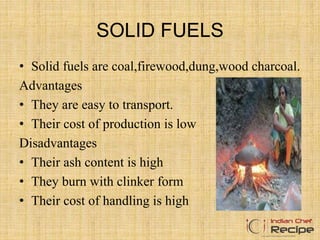
• Solid fuels are coal,firewood,dung,wood charcoal.
Advantages
• They are easy to transport.
• Their cost of production is low
Disadvantages
• Their ash content is high
• They burn with clinker form
• Their cost of handling is high
LIQUID FUELS
• Liquid fuel are kerosene,diesel,petrol,furnace oil.
Advantages
• Their flame can be controlled.
• They are clean in operation.
• They burnt with out forming ash.
Disadvantages
• The cost is high
• They give bad odour
• Costly special storage tanks are needed.
GASES
• Gases fuels are liquified
petroleum,biogas,producer gas.
Advantages
• They can be easily conveyed through pipelines.
• They can be lighted at any moment.
• They are clean in use
Disadvantages of gaseous fuels
• Very large storage tanks are neded.
• Highly inflammable
• Costly.
ELECTRICITY
Advantages
• Easily controlable
• Heat adjustment is very easy
• No storage is needed
Disadvantages
• A gas burner can produes more haet than a
electric burner
• Power cut interruptions are there
• Installation cost is higher
STEAM
• Steam jacketed kettles are some times though
of has stock pots that are heated not just on the
bottom but on the sides as well.
• The comparison is only partly accurate.
• Steam kettles heat much more quickly and
have more uniform and controlable heat than
pots on the range.
THANK YOU
BY
WWW.INDIANCHEFRECIPE.COM

Fuel types

  • 1.
  • 2.
    INTRODUCTION • Fuel isa substance which produces a large amount of heat when burnt with oxygen of atmospheric air. • Fuels are primarily used for heating purposes.
  • 3.
    Fuels are availablein the form of • Solids • Liquids • Gases • Electrcity • Steam
  • 4.
    SOLID FUELS • Solidfuels are coal,firewood,dung,wood charcoal. Advantages • They are easy to transport. • Their cost of production is low Disadvantages • Their ash content is high • They burn with clinker form • Their cost of handling is high
  • 5.
    LIQUID FUELS • Liquidfuel are kerosene,diesel,petrol,furnace oil. Advantages • Their flame can be controlled. • They are clean in operation. • They burnt with out forming ash. Disadvantages • The cost is high • They give bad odour • Costly special storage tanks are needed.
  • 6.
    GASES • Gases fuelsare liquified petroleum,biogas,producer gas. Advantages • They can be easily conveyed through pipelines. • They can be lighted at any moment. • They are clean in use Disadvantages of gaseous fuels • Very large storage tanks are neded. • Highly inflammable • Costly.
  • 7.
    ELECTRICITY Advantages • Easily controlable •Heat adjustment is very easy • No storage is needed Disadvantages • A gas burner can produes more haet than a electric burner • Power cut interruptions are there • Installation cost is higher
  • 8.
    STEAM • Steam jacketedkettles are some times though of has stock pots that are heated not just on the bottom but on the sides as well. • The comparison is only partly accurate. • Steam kettles heat much more quickly and have more uniform and controlable heat than pots on the range.
  • 9.