DIFFERENT BETWEEN TABLE
D'HÔTE & A’ A CARTE MENU
WWW.INDIANCHEFRECIPE.COM
WHAT IS MENU
A Menu is a list of dishes that are available
for sale in a food service outlet or that can be
served at a meal. In French, menu means ‘in
minute detail’ and in English, it is also termed
as ‘bill of fare’. The term menu first used in
1541.
WWW.INDIANCHEFRECIPE.COM
TYPES OF MENU
Table d'hôte menu
A’ la carte menu
WWW.INDIANCHEFRECIPE.COM
TABLE D'HOTE MENU
It is a fixed menu with limited number of courses for
a set price. A limited choice may be given for each
course.
the key characteristics of this type of menu are as follows
 set number of courses
Limited choice within each course or amongst course
Set price of all courses
Food prepared beforehand and available at a set time.
WWW.INDIANCHEFRECIPE.COM
ADVANTAGES FOR TABLE
D'HOTE MENU
 Does not require too much of kitchen area
Needs limited kitchen and service equipment
Mise en place work to be carried out less
Does not required much of labour as a number of dishes to be prepared
are limited
Does not required much of food storage area
Food wastage is almost nil in welfare catering
WWW.INDIANCHEFRECIPE.COM
A' LA CARTE MENU
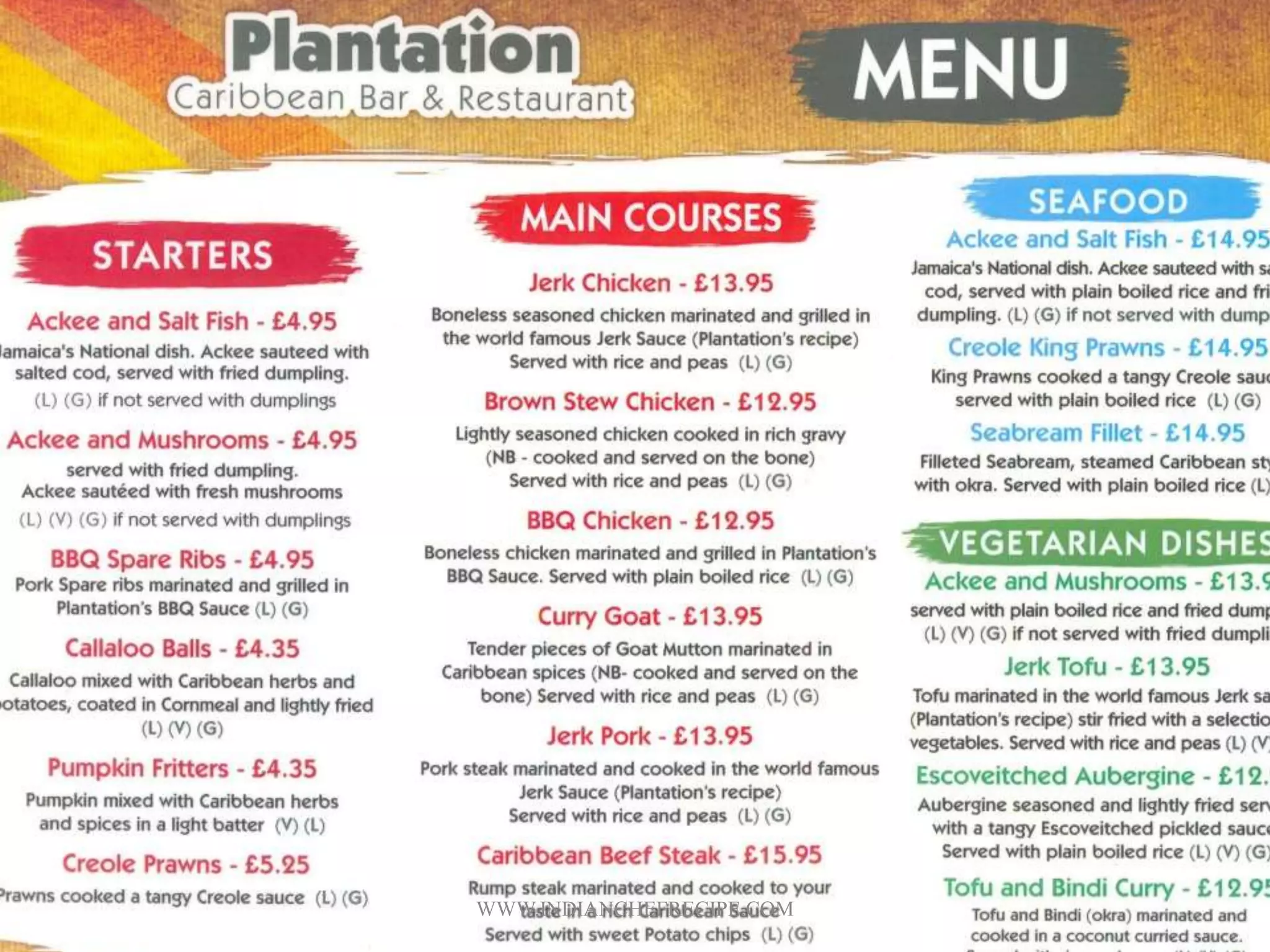
This type of menu offers a wide choices of
dishes under each category and each dish is
priced separately. The bill will be according to
the guests order
WWW.INDIANCHEFRECIPE.COM
The key characteristics of this type of menu
 extensive choice of dishes within each course
Each dish is priced separately
Dishes are cooked as per the order
Each dish has a waiting time
Customer billed according to the order placed
Shot discrimination mentioned under each dish for
customer to know what dish they ordering.
WWW.INDIANCHEFRECIPE.COM
ADVANTAGES
Guest have extensive choice of dishes
to choose from the menu
Guest pay for the dishes they order for
Guest get freshly cooked dishes
WWW.INDIANCHEFRECIPE.COM
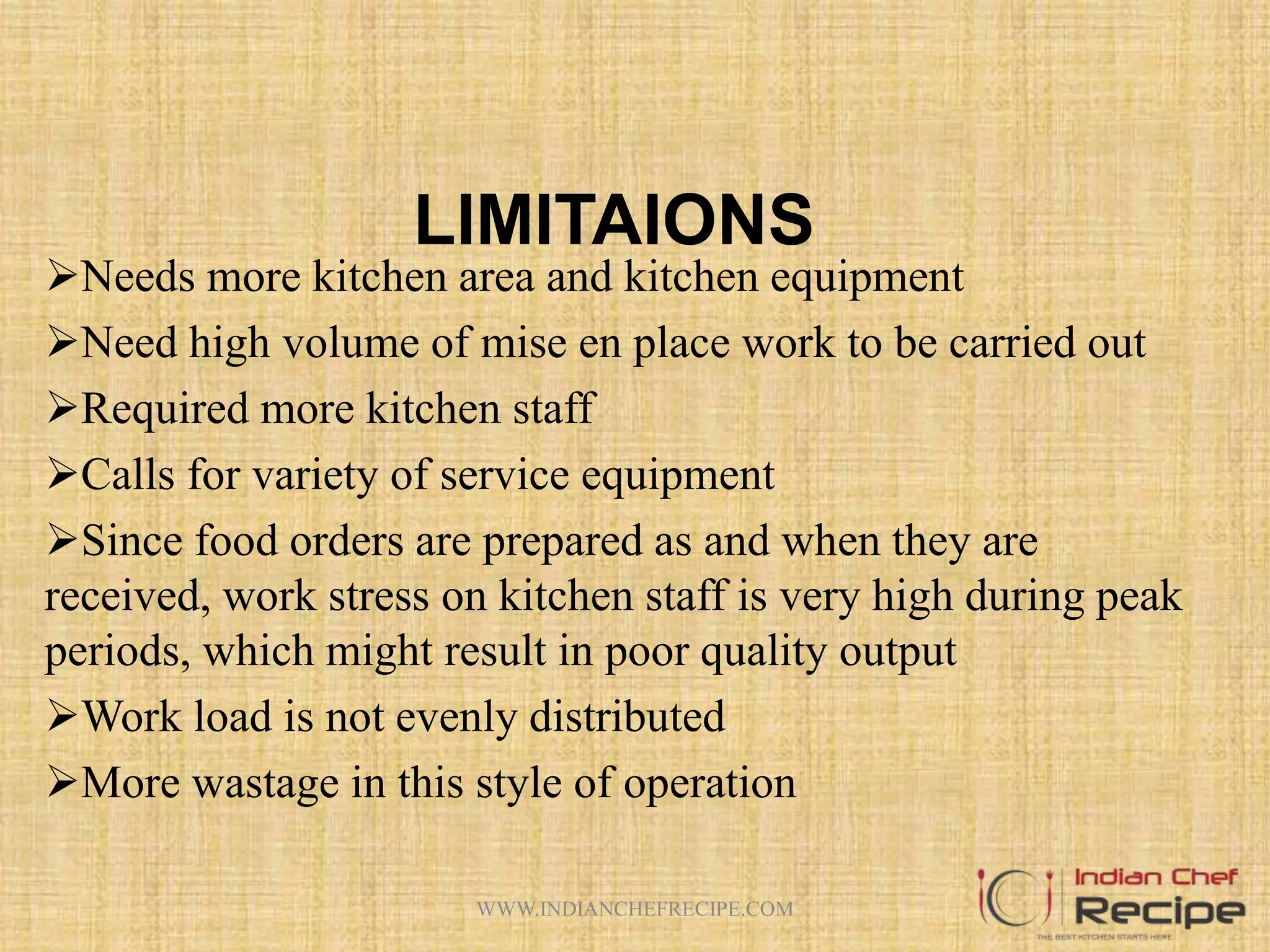
LIMITAIONS
Needs more kitchen area and kitchen equipment
Need high volume of mise en place work to be carried out
Required more kitchen staff
Calls for variety of service equipment
Since food orders are prepared as and when they are
received, work stress on kitchen staff is very high during peak
periods, which might result in poor quality output
Work load is not evenly distributed
More wastage in this style of operation
WWW.INDIANCHEFRECIPE.COM
Thank you
have a nice day
WWW.INDIANCHEFRECIPE.COM

DIFFERENT BETWEEN TABLE D HOTE AND A LA CARTE MENU

  • 1.
    DIFFERENT BETWEEN TABLE D'HÔTE& A’ A CARTE MENU WWW.INDIANCHEFRECIPE.COM
  • 2.
    WHAT IS MENU AMenu is a list of dishes that are available for sale in a food service outlet or that can be served at a meal. In French, menu means ‘in minute detail’ and in English, it is also termed as ‘bill of fare’. The term menu first used in 1541. WWW.INDIANCHEFRECIPE.COM
  • 3.
    TYPES OF MENU Tabled'hôte menu A’ la carte menu WWW.INDIANCHEFRECIPE.COM
  • 4.
    TABLE D'HOTE MENU Itis a fixed menu with limited number of courses for a set price. A limited choice may be given for each course. the key characteristics of this type of menu are as follows  set number of courses Limited choice within each course or amongst course Set price of all courses Food prepared beforehand and available at a set time. WWW.INDIANCHEFRECIPE.COM
  • 5.
    ADVANTAGES FOR TABLE D'HOTEMENU  Does not require too much of kitchen area Needs limited kitchen and service equipment Mise en place work to be carried out less Does not required much of labour as a number of dishes to be prepared are limited Does not required much of food storage area Food wastage is almost nil in welfare catering WWW.INDIANCHEFRECIPE.COM
  • 6.
    A' LA CARTEMENU This type of menu offers a wide choices of dishes under each category and each dish is priced separately. The bill will be according to the guests order WWW.INDIANCHEFRECIPE.COM
  • 7.
    The key characteristicsof this type of menu  extensive choice of dishes within each course Each dish is priced separately Dishes are cooked as per the order Each dish has a waiting time Customer billed according to the order placed Shot discrimination mentioned under each dish for customer to know what dish they ordering. WWW.INDIANCHEFRECIPE.COM
  • 8.
    ADVANTAGES Guest have extensivechoice of dishes to choose from the menu Guest pay for the dishes they order for Guest get freshly cooked dishes WWW.INDIANCHEFRECIPE.COM
  • 9.
    LIMITAIONS Needs more kitchenarea and kitchen equipment Need high volume of mise en place work to be carried out Required more kitchen staff Calls for variety of service equipment Since food orders are prepared as and when they are received, work stress on kitchen staff is very high during peak periods, which might result in poor quality output Work load is not evenly distributed More wastage in this style of operation WWW.INDIANCHEFRECIPE.COM
  • 10.
  • 11.
    Thank you have anice day WWW.INDIANCHEFRECIPE.COM