
PRESENTATION
ON
PRODUCER GAS
DEPARTMENT OF
RENEWABLE ENERGY
ENGINEERING
INDEX
1. Gasification
2. Producer Gas and it’s Constituents
3. Producer gas applications
4. Types of gasifier
5. Gasification reactions
6. Advantages and disadvantages
Gasification
• Gasification is basically a thermo chemical
process which converts biomass materials
into gaseous components.
• The results of gasification are the producer
gas, containing carbon monoxide, hydrogen,
methane and carbon dioxide.
Producer Gas and it’s Constituents
• Producer gas is the mixture of combustible and
non- combustible gases
 Combustible gases
1) 18%–22% carbon monoxide (CO),
2) 8%–12% hydrogen (H2),
3) 2%–4% methane (CH4).
 Non- combustible gases
1) 8%–12% carbon dioxide (CO2),
2) 45%–50% nitrogen (N2).
Producer gas applications
• The producer gas obtained can be used either to
produce heat or to generate electricity.
• In general, the fuel-to electricity efficiency of
gasification is much higher than that of direct
combustion.
• The conversion efficiency of gasification is 35%–45%
whereas that of combustion is only 10%–20%.
• Generated electricity can be fed into the grid or can
be used for farm operations, irrigation, chilling or
cold storage, and other commercial and industrial
applications.
• Producer gas can be used
for generating motive
power to run either
dual-fuel engines
• which run on a mixture
of gas and diesel, with
gas replacement of up to
85% of diesel
Types Of Gasifier
1. Downdraft gasifier
2. Updraft gasifier
3. Crossdraft gasifier
4. Fluidized bed gasifier
5. Twin-fire gasifier
 Although updraft, downdraft or crossdraft
gasifier have been the most commonly used
systems
Updraft or counter-current
gasifier
• In updraft gasifiers (also known as counter-current), air
enters from below the grate and flows upwards, whereas the
fuel flows downwards.
• The gas produced in the reduction zone leaves the gasifier
reactor together with the products of pyrolysis from the
pyrolysis zone and steam from the drying zone.
• The resulting combustible producer gas is rich in
hydrocarbons (tars).
Updraft or counter-current
gasifier
Downdraft or co-current
gasifier
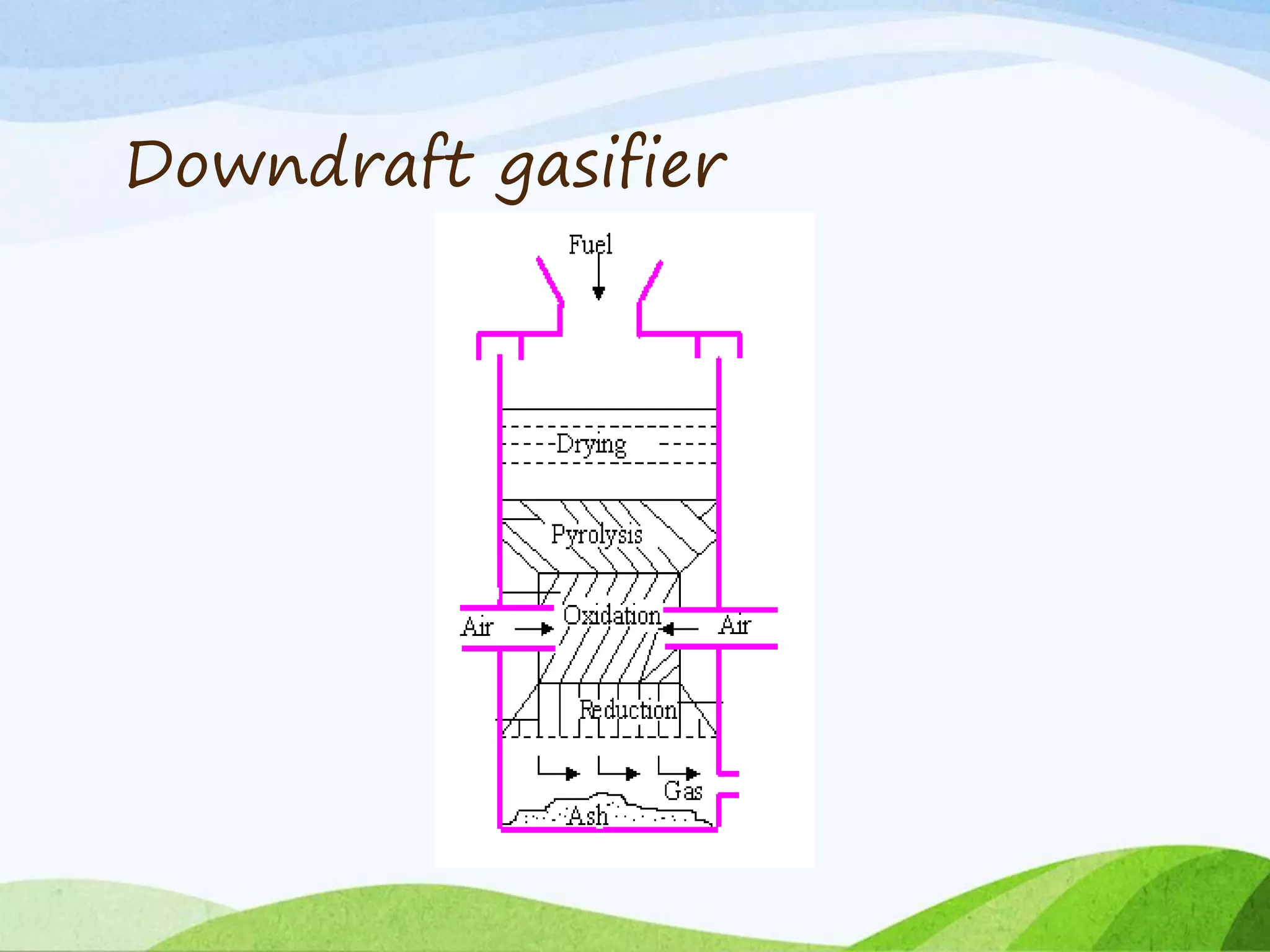
• The downdraft (also known as co-current) gasifier is the
most common type of gasifier.
• The term co-current is used because air moves in the
same direction as that of fuel, downwards.
• Downdraft gasifier is so designed that tar, which is
produced in the pyrolysis zone, travels through the
combustion zone, where it is broken down or burnt.
• Its main advantage being that produces gas with low tar
content, which is suitable for gas engines.
Downdraft gasifier
Gasification reactions
1. Drying:
Biomass fuels usually contain 10%–35%
moisture. When biomass is heated to about 100
°C, the moisture is converted into steam.
2. Pyrolysis:
After drying, as heating continues, the biomass
undergoes pyrolysis.
• Pyrolysis involves burning biomass completely
without supplying any oxygen.
• As a result, the biomass is decomposed or separated
into solids, liquids, and gases.
• Charcoal is the solid part, tar is the liquid part,
and flue gases make up the gaseous part.
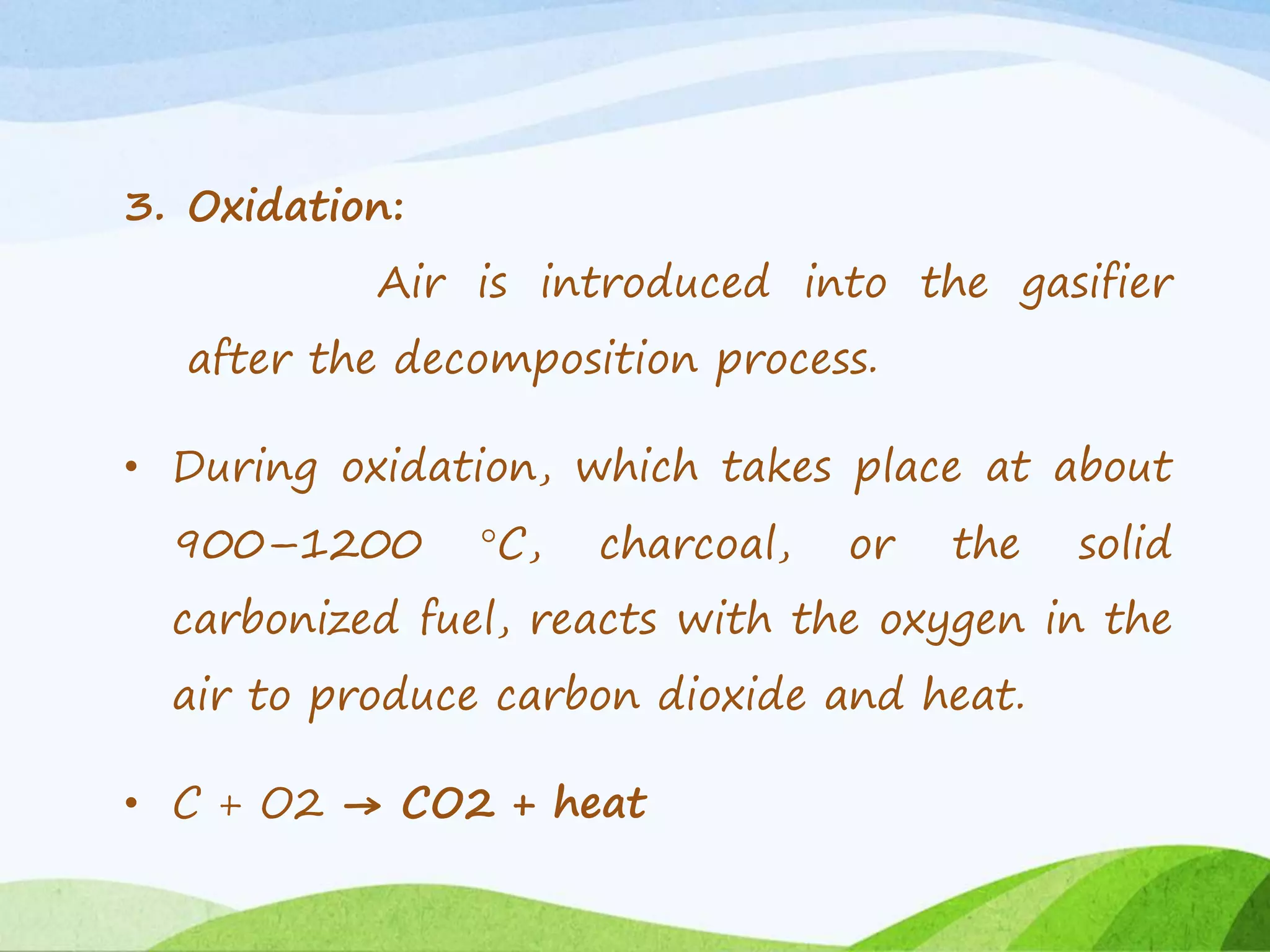
3. Oxidation:
Air is introduced into the gasifier
after the decomposition process.
• During oxidation, which takes place at about
900–1200 °C, charcoal, or the solid
carbonized fuel, reacts with the oxygen in the
air to produce carbon dioxide and heat.
• C + O2 → CO2 + heat
4. Reduction:
At higher temperatures and under reducing conditions,
that is when not enough oxygen is available, the following
reactions take place forming carbon dioxide, hydrogen,
carbon monoxide and methane.
• C + CO2 → 2 CO
• C + H2O → CO + H2
• CO + H2O → CO2 + H2
• C + 2H2 → CH4
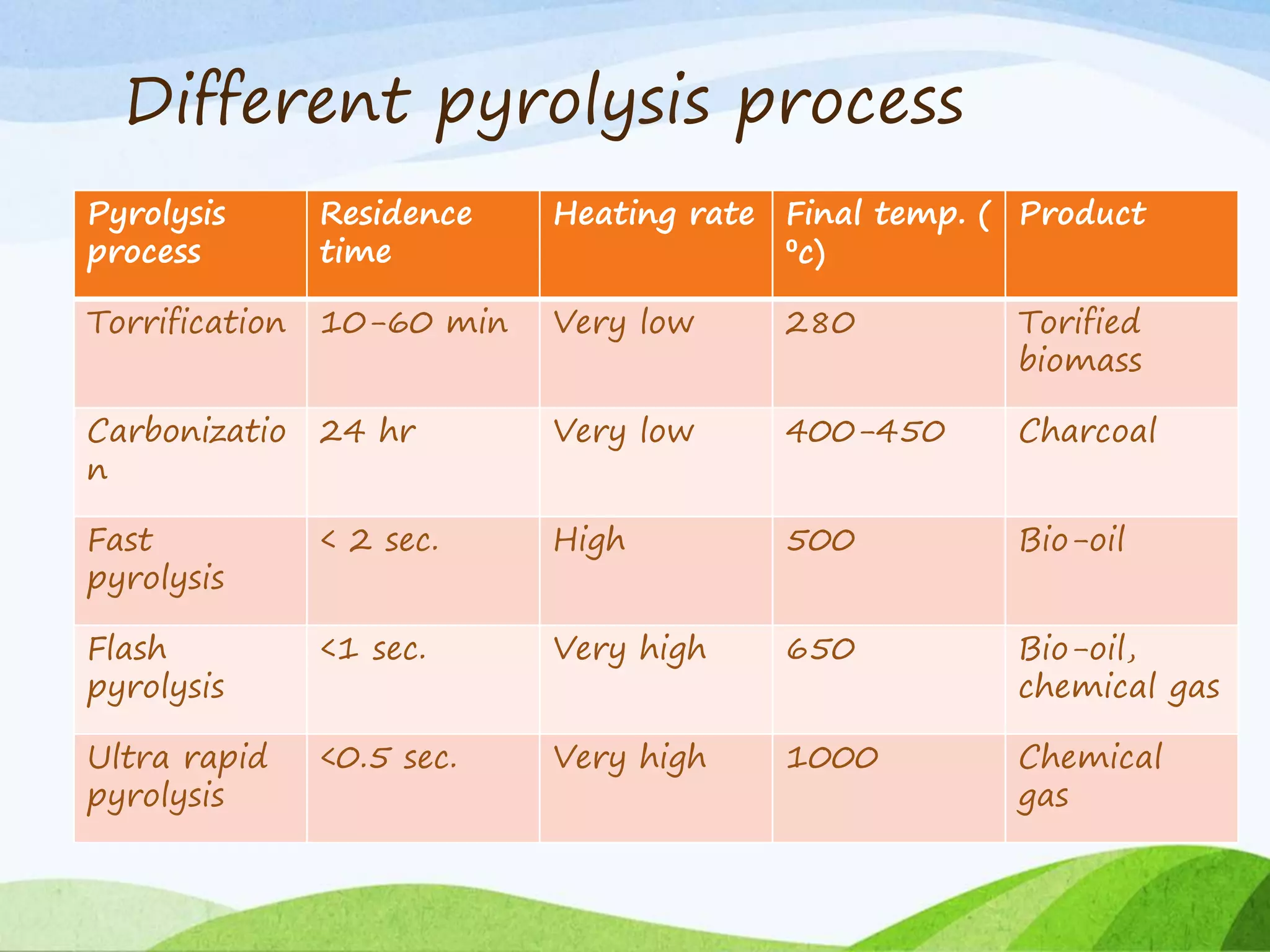
Different pyrolysis process
Pyrolysis
process
Residence
time
Heating rate Final temp. (
⁰c)
Product
Torrification 10-60 min Very low 280 Torified
biomass
Carbonizatio
n
24 hr Very low 400-450 Charcoal
Fast
pyrolysis
< 2 sec. High 500 Bio-oil
Flash
pyrolysis
<1 sec. Very high 650 Bio-oil,
chemical gas
Ultra rapid
pyrolysis
<0.5 sec. Very high 1000 Chemical
gas
Advantages and disadvantages
Gasifier type Advantages Disadvantages
Updraft Simple design High amount of tar (500-
600 ppm) and pyrolysis
products
High charcoal burn-out Extensive gas cleaning
required if used for power
application
Accepts fuels with higher
moisture content
Accepts fuels of different
sizes
Downdraft Low tar(150-180 ppm) High amounts of ash and
dust
Best option for usage in
gas engines
Fuel requirements are
strict
At lower loads, fewer
particles in the gas
At low temperatures,
more tar
produced
• Let’s have a look at Video Clip for a quick
summary.
• ppt on producer gasvideoplayback (1).mp4
Thank you

Producer gas ppt

  • 1.
  • 2.
    INDEX 1. Gasification 2. ProducerGas and it’s Constituents 3. Producer gas applications 4. Types of gasifier 5. Gasification reactions 6. Advantages and disadvantages
  • 3.
    Gasification • Gasification isbasically a thermo chemical process which converts biomass materials into gaseous components. • The results of gasification are the producer gas, containing carbon monoxide, hydrogen, methane and carbon dioxide.
  • 4.
    Producer Gas andit’s Constituents
  • 5.
    • Producer gasis the mixture of combustible and non- combustible gases  Combustible gases 1) 18%–22% carbon monoxide (CO), 2) 8%–12% hydrogen (H2), 3) 2%–4% methane (CH4).  Non- combustible gases 1) 8%–12% carbon dioxide (CO2), 2) 45%–50% nitrogen (N2).
  • 6.
    Producer gas applications •The producer gas obtained can be used either to produce heat or to generate electricity.
  • 7.
    • In general,the fuel-to electricity efficiency of gasification is much higher than that of direct combustion. • The conversion efficiency of gasification is 35%–45% whereas that of combustion is only 10%–20%. • Generated electricity can be fed into the grid or can be used for farm operations, irrigation, chilling or cold storage, and other commercial and industrial applications.
  • 8.
    • Producer gascan be used for generating motive power to run either dual-fuel engines • which run on a mixture of gas and diesel, with gas replacement of up to 85% of diesel
  • 9.
    Types Of Gasifier 1.Downdraft gasifier 2. Updraft gasifier 3. Crossdraft gasifier 4. Fluidized bed gasifier 5. Twin-fire gasifier  Although updraft, downdraft or crossdraft gasifier have been the most commonly used systems
  • 10.
    Updraft or counter-current gasifier •In updraft gasifiers (also known as counter-current), air enters from below the grate and flows upwards, whereas the fuel flows downwards. • The gas produced in the reduction zone leaves the gasifier reactor together with the products of pyrolysis from the pyrolysis zone and steam from the drying zone. • The resulting combustible producer gas is rich in hydrocarbons (tars).
  • 11.
  • 12.
    Downdraft or co-current gasifier •The downdraft (also known as co-current) gasifier is the most common type of gasifier. • The term co-current is used because air moves in the same direction as that of fuel, downwards. • Downdraft gasifier is so designed that tar, which is produced in the pyrolysis zone, travels through the combustion zone, where it is broken down or burnt. • Its main advantage being that produces gas with low tar content, which is suitable for gas engines.
  • 13.
  • 14.
  • 15.
    1. Drying: Biomass fuelsusually contain 10%–35% moisture. When biomass is heated to about 100 °C, the moisture is converted into steam. 2. Pyrolysis: After drying, as heating continues, the biomass undergoes pyrolysis. • Pyrolysis involves burning biomass completely without supplying any oxygen. • As a result, the biomass is decomposed or separated into solids, liquids, and gases. • Charcoal is the solid part, tar is the liquid part, and flue gases make up the gaseous part.
  • 16.
    3. Oxidation: Air isintroduced into the gasifier after the decomposition process. • During oxidation, which takes place at about 900–1200 °C, charcoal, or the solid carbonized fuel, reacts with the oxygen in the air to produce carbon dioxide and heat. • C + O2 → CO2 + heat
  • 17.
    4. Reduction: At highertemperatures and under reducing conditions, that is when not enough oxygen is available, the following reactions take place forming carbon dioxide, hydrogen, carbon monoxide and methane. • C + CO2 → 2 CO • C + H2O → CO + H2 • CO + H2O → CO2 + H2 • C + 2H2 → CH4
  • 18.
    Different pyrolysis process Pyrolysis process Residence time Heatingrate Final temp. ( ⁰c) Product Torrification 10-60 min Very low 280 Torified biomass Carbonizatio n 24 hr Very low 400-450 Charcoal Fast pyrolysis < 2 sec. High 500 Bio-oil Flash pyrolysis <1 sec. Very high 650 Bio-oil, chemical gas Ultra rapid pyrolysis <0.5 sec. Very high 1000 Chemical gas
  • 19.
    Advantages and disadvantages Gasifiertype Advantages Disadvantages Updraft Simple design High amount of tar (500- 600 ppm) and pyrolysis products High charcoal burn-out Extensive gas cleaning required if used for power application Accepts fuels with higher moisture content Accepts fuels of different sizes Downdraft Low tar(150-180 ppm) High amounts of ash and dust Best option for usage in gas engines Fuel requirements are strict At lower loads, fewer particles in the gas At low temperatures, more tar produced
  • 20.
    • Let’s havea look at Video Clip for a quick summary. • ppt on producer gasvideoplayback (1).mp4
  • 21.