DIABETIC FOOTCARE MITHRA ROLL NO-44
SYMPTOMS Persistent pain Redness Swelling Loss of hair Hard  shiny skin Localised warmth Break in the skin
Drainage of pus or bloody discharge Limp or difficulty walking Fever Numbness
DIABETIC  NEUROPATHY Damage of nerves in the legs and feet –loss of sensation.  Foot ulcers occur because of nerve damage.
PERIPHERAL  VASCULAR DISEASE Diabetes  affects the blood vessels and alters the flow of blood. Unhealed injury increase the risk of ulcer and gangrene .
FOOT  ULCER It is a break in the skin or a deep sore, which can become infected.  It result from minor scrapes, cuts that heal slowly, or from the rubbing of shoes .
ATHLETE’S  FOOT Cause redness,itching, crackin. PLANTAR WARTS Caused by virus  affecting outer layer of skin.
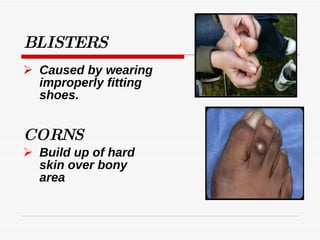
BLISTERS Caused by wearing improperly fitting shoes. CORNS Build up of hard skin over bony area
FUNGAL NAIL  INFECTION Nails become discolored  thick and brittle. BUNIONS Big toe angles towards the second toe.
PREVENTION Keep the blood glucose level within the range recommended by  doctor.  Avoid smoking.
Maintain the blood flow to the feet. Put the feet up when sitting. Wiggle the toes and move the ankles several times a day  Don't cross the legs for long periods of time
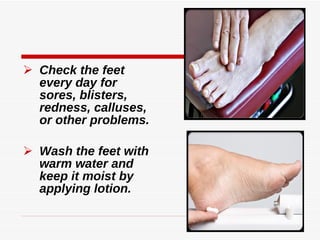
Check the feet every day for sores, blisters, redness, calluses, or other problems. Wash the feet with warm water and  keep it moist by applying lotion.
Gently smooth corns and calluses with an emery board or pumice stone .  Check and trim the toe nails once a week.
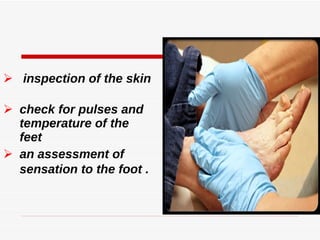
inspection of the skin  check for pulses and temperature of the feet  an assessment of sensation to the foot .
WHEN TO SEEK MEDICAL CARE Changes in skin color  Changes in skin temperature in the foot or ankle Dry cracks in the skin, especially around the heal. Unusual and/or persistent foot pain in the legs. Open sores on the feet that are slow to or are draining. Ingrown or toenail infected with fungus. Corns or calluses .
EXAMINATION AND TESTS History and physical examination Laboratory Tests X-ray Doppler Consultation
TREATMENT Self  Care at  home Medical Treatment Antibiotics Surgical debridement of wound Improvement of  circulation by surgery or therapy. Referral to Orthopaedic  surgeon Follow up
 

Foot Care 8

  • 1.
  • 2.
    SYMPTOMS Persistent painRedness Swelling Loss of hair Hard shiny skin Localised warmth Break in the skin
  • 3.
    Drainage of pusor bloody discharge Limp or difficulty walking Fever Numbness
  • 4.
    DIABETIC NEUROPATHYDamage of nerves in the legs and feet –loss of sensation. Foot ulcers occur because of nerve damage.
  • 5.
    PERIPHERAL VASCULARDISEASE Diabetes affects the blood vessels and alters the flow of blood. Unhealed injury increase the risk of ulcer and gangrene .
  • 6.
    FOOT ULCERIt is a break in the skin or a deep sore, which can become infected. It result from minor scrapes, cuts that heal slowly, or from the rubbing of shoes .
  • 7.
    ATHLETE’S FOOTCause redness,itching, crackin. PLANTAR WARTS Caused by virus affecting outer layer of skin.
  • 8.
    BLISTERS Caused bywearing improperly fitting shoes. CORNS Build up of hard skin over bony area
  • 9.
    FUNGAL NAIL INFECTION Nails become discolored thick and brittle. BUNIONS Big toe angles towards the second toe.
  • 10.
    PREVENTION Keep theblood glucose level within the range recommended by doctor. Avoid smoking.
  • 11.
    Maintain the bloodflow to the feet. Put the feet up when sitting. Wiggle the toes and move the ankles several times a day Don't cross the legs for long periods of time
  • 12.
    Check the feetevery day for sores, blisters, redness, calluses, or other problems. Wash the feet with warm water and keep it moist by applying lotion.
  • 13.
    Gently smooth cornsand calluses with an emery board or pumice stone . Check and trim the toe nails once a week.
  • 14.
    inspection of theskin check for pulses and temperature of the feet an assessment of sensation to the foot .
  • 15.
    WHEN TO SEEKMEDICAL CARE Changes in skin color Changes in skin temperature in the foot or ankle Dry cracks in the skin, especially around the heal. Unusual and/or persistent foot pain in the legs. Open sores on the feet that are slow to or are draining. Ingrown or toenail infected with fungus. Corns or calluses .
  • 16.
    EXAMINATION AND TESTSHistory and physical examination Laboratory Tests X-ray Doppler Consultation
  • 17.
    TREATMENT Self Care at home Medical Treatment Antibiotics Surgical debridement of wound Improvement of circulation by surgery or therapy. Referral to Orthopaedic surgeon Follow up
  • 18.