Is one of the most significant and devastating complications
of diabetes .
Foot affected by ulceration that is associated with
neuropathy and/or peripheral arterial disease of
the lower limb in a patient with diabetes.
Diabetic Foot Disease
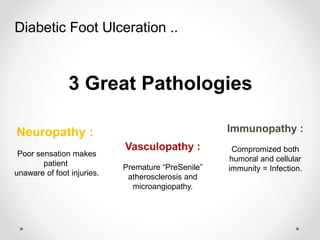
Diabetic Foot Ulceration ..
3 Great Pathologies
Neuropathy :
Poor sensation makes
patient
unaware of foot injuries.
Vasculopathy :
Premature “PreSenile”
atherosclerosis and
microangiopathy.
Immunopathy :
Compromized both
humoral and cellular
immunity = Infection.
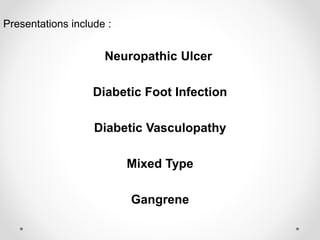
Presentations include :
Neuropathic Ulcer
Diabetic Foot Infection
Diabetic Vasculopathy
Mixed Type
Gangrene
Diabetic Foot Ulcer :
Neuropathy & MicroAngiopathy can result in two sets of what
superficially appear to be contradictory problems:
* Pain, burning, pins and needles or numbness which lead to
discomfort
( Neuropathic Pain ) .
* Loss of ability to feel pain and other sensation which leads to
neuropathic ulceration .
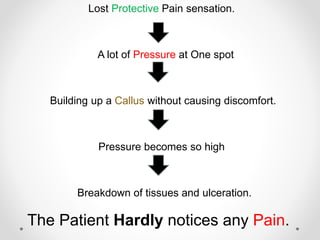
Lost Protective Pain sensation.
A lot of Pressure at One spot
Building up a Callus without causing discomfort.
Pressure becomes so high
Breakdown of tissues and ulceration.
The Patient Hardly notices any Pain.
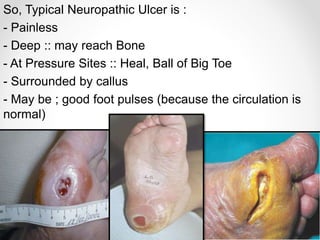
So, Typical Neuropathic Ulcer is :
- Painless
- Deep :: may reach Bone
- At Pressure Sites :: Heal, Ball of Big Toe
- Surrounded by callus
- May be ; good foot pulses (because the circulation is
normal)
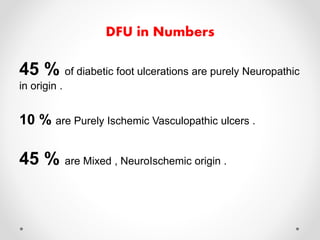
45 % of diabetic foot ulcerations are purely Neuropathic
in origin .
10 % are Purely Ischemic Vasculopathic ulcers .
45 % are Mixed , NeuroIschemic origin .
DFU in Numbers
one or more of the following
:
* Severely Swollen Limb, Red, Hot, Tender .
* Persistent Non-Healing Ulcer .
* Pus Loculus, Dark tissue & Sloughs .
* May Spread :
Locally : OsteoMyelitis
Systemically : Septicemia & Septic
Shock .
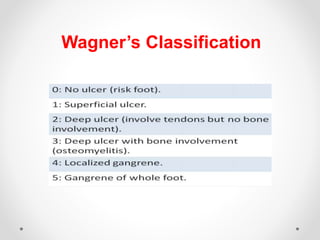
Wagner’s Classification
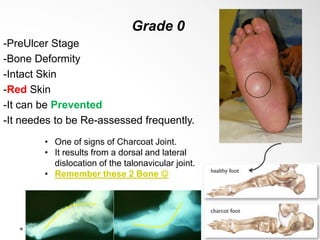
Grade 0
-PreUlcer Stage
-Bone Deformity
-Intact Skin
-Red Skin
-It can be Prevented
-It needes to be Re-assessed frequently.
• One of signs of Charcoat Joint.
• It results from a dorsal and lateral
dislocation of the talonavicular joint.
• Remember these 2 Bone 
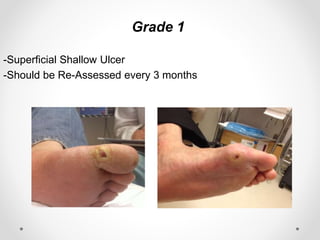
Grade 1
-Superficial Shallow Ulcer
-Should be Re-Assessed every 3 months
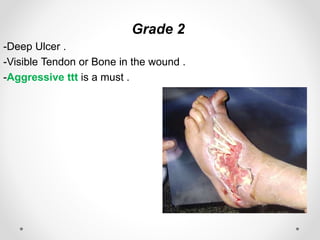
Grade 2
-Deep Ulcer .
-Visible Tendon or Bone in the wound .
-Aggressive ttt is a must .
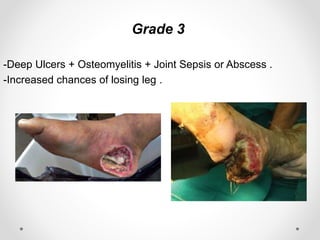
Grade 3
-Deep Ulcers + Osteomyelitis + Joint Sepsis or Abscess .
-Increased chances of losing leg .
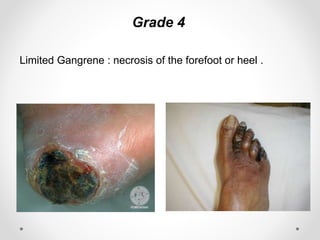
Grade 4
Limited Gangrene : necrosis of the forefoot or heel .
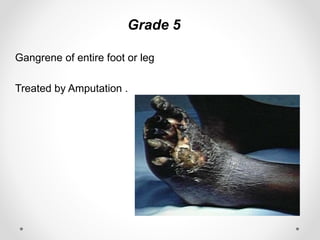
Grade 5
Gangrene of entire foot or leg
Treated by Amputation .
Our Main Topic ..,
Medical Treatment of DF
Prophylaxis is Better than Treatment .
Time is Money .
Prevention becomes Cost effective , if we reduce
incidence of foot ulcers and amputations by 25% .
Boulton et al ;
Lancet Nov. 2006
How to Prevent !?
Risk
Identification
Foot Examination
Patient
Education
:1) RISK IDENTIFICATION
- Previous amputation
- Previous history of DFU
- Peripheral neuropathy
- Peripheral Arterial Disease
- Poor glycemic control
- Diabetic Retinopathy = Impaired Vision
- Diabetic Nephropathy specially ESRD
- Foot deformity
- Smoking.
- Obesity
2) FOOT EXAM :
Assessment of :
- Protective sensation
bone deformities:- Foot structure
- Vascular status
- Skin integrity : especially between the toes and
under the metatarsal heads.
- History for claudication
:3) PATIENT EDUCATION
Regarding
- Risk factors and appropriate management
:- Foot monitoring on a daily basis
proper care of the foot, including nail and skin care,
and the selection of appropriate footwear.
Management can be easily
kept in ur Memory as follow
:
Care of Patient
Care of Foot
Some Drugs
:
Strict Control of Diabetes Mellitus :
Diet
Excersise
Loss of Weight
Oral HypoGlycemic Drugs
Insulins “Various types”
Stop Smoking
Correct Vision errors
Care of Foot :
DOs :
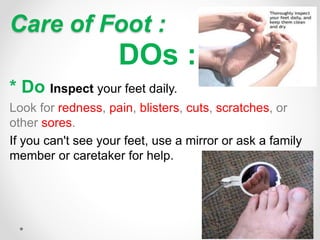
* Do Inspect your feet daily.
Look for redness, pain, blisters, cuts, scratches, or
other sores.
If you can't see your feet, use a mirror or ask a family
member or caretaker for help.
* Do Wash your feet regularly.
Dry them carefully,
Powder them, especially between toes.
‫سل‬‫غ‬‫ا‬..‫ف‬ّ‫ش‬‫ن‬..‫د‬َ‫ب‬‫ر‬
* Do use Lubricants or Moisturizers to keep your skin
from getting dry or cracking.
These also prevent calluses from forming.
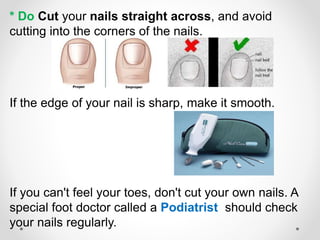
* Do Cut your nails straight across, and avoid
cutting into the corners of the nails.
If the edge of your nail is sharp, make it smooth.
If you can't feel your toes, don't cut your own nails. A
special foot doctor called a Podiatrist should check
your nails regularly.
* Do Avoid extremely Hot or Cold temperatures.
Always test the temperature of the water before you take a bath
or
shower.
* Do Treat any infections as Taenia Pedis infection
* Do visit your Podiatrist right away if you find anything wrong
with your feet.
* DoWear comfortable shoes.
Make sure to check the inside of your shoes and feel around
for anything that could rub against your feet.
Avoid walking Barefoot .
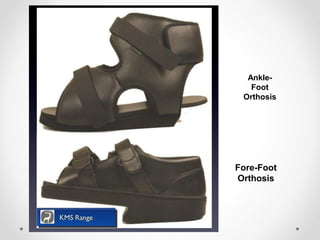
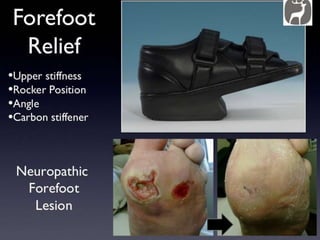
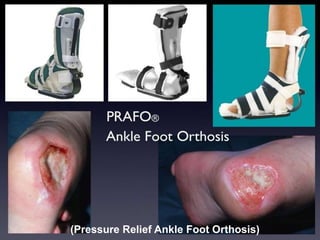
Small Hints
About Orthotic Handling of DF
Fore-Foot
Orthosis
Ankle-
Foot
Orthosis
(Pressure Relief Ankle Foot Orthosis)
Prophylactic :
Care of Patient
Care of Foot
Some Drugs
Be Alert ..
Remember the Headlines 
Some Drugs
:
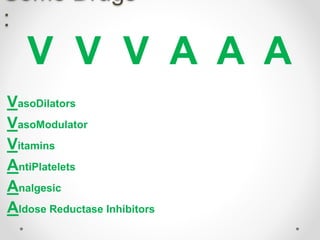
V V V A A A
VasoDilators
VasoModulator
Vitamins
AntiPlatelets
Analgesic
Aldose Reductase Inhibitors
VasoDilators
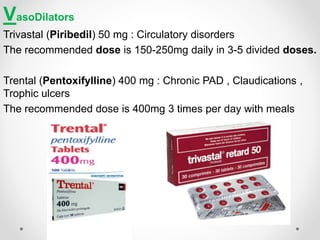
Trivastal (Piribedil) 50 mg : Circulatory disorders
The recommended dose is 150-250mg daily in 3-5 divided doses.
Trental (Pentoxifylline) 400 mg : Chronic PAD , Claudications ,
Trophic ulcers
The recommended dose is 400mg 3 times per day with meals
VasoModulator
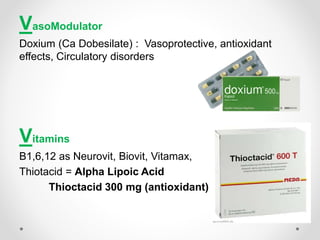
Doxium (Ca Dobesilate) : Vasoprotective, antioxidant
effects, Circulatory disorders
Vitamins
B1,6,12 as Neurovit, Biovit, Vitamax,
Thiotacid = Alpha Lipoic Acid
Thioctacid 300 mg (antioxidant)
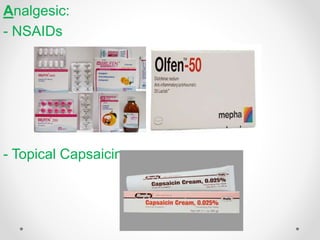
Analgesic:
- NSAIDs
- Topical Capsaicin
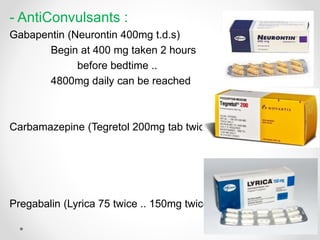
- AntiConvulsants :
Gabapentin (Neurontin 400mg t.d.s)
Begin at 400 mg taken 2 hours
before bedtime ..
4800mg daily can be reached
Carbamazepine (Tegretol 200mg tab twice)
Pregabalin (Lyrica 75 twice .. 150mg twice)
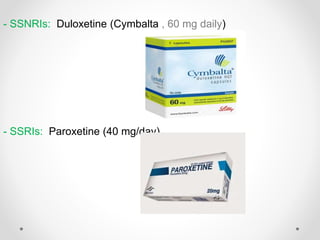
Duloxetine (Cymbalta , 60 mg daily)- SSNRIs:
- SSRIs: Paroxetine (40 mg/day)
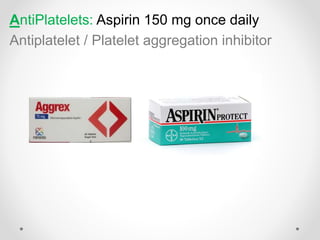
Aspirin 150 mg once daily:AntiPlatelets
Antiplatelet / Platelet aggregation inhibitor
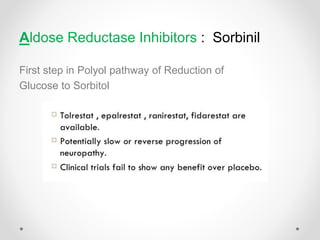
Aldose Reductase Inhibitors : Sorbinil
First step in Polyol pathway of Reduction of
Glucose to Sorbitol
Management can be easily
kept in ur Memory as follow
:
Care of Patient
Care of Foot
Some Drugs
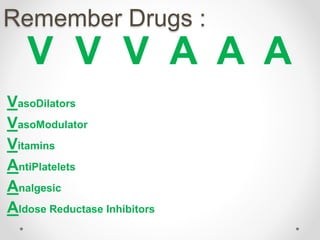
Remember Drugs :
V V V A A A
VasoDilators
VasoModulator
Vitamins
AntiPlatelets
Analgesic
Aldose Reductase Inhibitors
Refrences
• Medscape
• PubMed
• Prof. Doctor Hassan Elwan Of Illustrated
Neurology for Undergraduates
• Cairo Uni. Department of Surgery Official
Surgery Book
Thank You
Dearest,
Prof. Dr.
Hussein Khairy
Thank You
for your
Attention

Diabetic Foot

  • 1.
    Is one ofthe most significant and devastating complications of diabetes . Foot affected by ulceration that is associated with neuropathy and/or peripheral arterial disease of the lower limb in a patient with diabetes. Diabetic Foot Disease
  • 2.
    Diabetic Foot Ulceration.. 3 Great Pathologies Neuropathy : Poor sensation makes patient unaware of foot injuries. Vasculopathy : Premature “PreSenile” atherosclerosis and microangiopathy. Immunopathy : Compromized both humoral and cellular immunity = Infection.
  • 3.
    Presentations include : NeuropathicUlcer Diabetic Foot Infection Diabetic Vasculopathy Mixed Type Gangrene
  • 4.
    Diabetic Foot Ulcer: Neuropathy & MicroAngiopathy can result in two sets of what superficially appear to be contradictory problems: * Pain, burning, pins and needles or numbness which lead to discomfort ( Neuropathic Pain ) . * Loss of ability to feel pain and other sensation which leads to neuropathic ulceration .
  • 5.
    Lost Protective Painsensation. A lot of Pressure at One spot Building up a Callus without causing discomfort. Pressure becomes so high Breakdown of tissues and ulceration. The Patient Hardly notices any Pain.
  • 6.
    So, Typical NeuropathicUlcer is : - Painless - Deep :: may reach Bone - At Pressure Sites :: Heal, Ball of Big Toe - Surrounded by callus - May be ; good foot pulses (because the circulation is normal)
  • 7.
    45 % ofdiabetic foot ulcerations are purely Neuropathic in origin . 10 % are Purely Ischemic Vasculopathic ulcers . 45 % are Mixed , NeuroIschemic origin . DFU in Numbers
  • 8.
    one or moreof the following : * Severely Swollen Limb, Red, Hot, Tender . * Persistent Non-Healing Ulcer . * Pus Loculus, Dark tissue & Sloughs . * May Spread : Locally : OsteoMyelitis Systemically : Septicemia & Septic Shock .
  • 9.
  • 10.
    Grade 0 -PreUlcer Stage -BoneDeformity -Intact Skin -Red Skin -It can be Prevented -It needes to be Re-assessed frequently. • One of signs of Charcoat Joint. • It results from a dorsal and lateral dislocation of the talonavicular joint. • Remember these 2 Bone 
  • 11.
    Grade 1 -Superficial ShallowUlcer -Should be Re-Assessed every 3 months
  • 12.
    Grade 2 -Deep Ulcer. -Visible Tendon or Bone in the wound . -Aggressive ttt is a must .
  • 13.
    Grade 3 -Deep Ulcers+ Osteomyelitis + Joint Sepsis or Abscess . -Increased chances of losing leg .
  • 14.
    Grade 4 Limited Gangrene: necrosis of the forefoot or heel .
  • 15.
    Grade 5 Gangrene ofentire foot or leg Treated by Amputation .
  • 16.
    Our Main Topic.., Medical Treatment of DF Prophylaxis is Better than Treatment . Time is Money .
  • 17.
    Prevention becomes Costeffective , if we reduce incidence of foot ulcers and amputations by 25% . Boulton et al ; Lancet Nov. 2006
  • 18.
    How to Prevent!? Risk Identification Foot Examination Patient Education
  • 19.
    :1) RISK IDENTIFICATION -Previous amputation - Previous history of DFU - Peripheral neuropathy - Peripheral Arterial Disease - Poor glycemic control - Diabetic Retinopathy = Impaired Vision - Diabetic Nephropathy specially ESRD - Foot deformity - Smoking. - Obesity
  • 20.
    2) FOOT EXAM: Assessment of : - Protective sensation bone deformities:- Foot structure - Vascular status - Skin integrity : especially between the toes and under the metatarsal heads. - History for claudication
  • 21.
    :3) PATIENT EDUCATION Regarding -Risk factors and appropriate management :- Foot monitoring on a daily basis proper care of the foot, including nail and skin care, and the selection of appropriate footwear.
  • 22.
    Management can beeasily kept in ur Memory as follow : Care of Patient Care of Foot Some Drugs
  • 23.
    : Strict Control ofDiabetes Mellitus : Diet Excersise Loss of Weight Oral HypoGlycemic Drugs Insulins “Various types” Stop Smoking Correct Vision errors
  • 24.
    Care of Foot: DOs : * Do Inspect your feet daily. Look for redness, pain, blisters, cuts, scratches, or other sores. If you can't see your feet, use a mirror or ask a family member or caretaker for help.
  • 25.
    * Do Washyour feet regularly. Dry them carefully, Powder them, especially between toes. ‫سل‬‫غ‬‫ا‬..‫ف‬ّ‫ش‬‫ن‬..‫د‬َ‫ب‬‫ر‬
  • 26.
    * Do useLubricants or Moisturizers to keep your skin from getting dry or cracking. These also prevent calluses from forming.
  • 27.
    * Do Cutyour nails straight across, and avoid cutting into the corners of the nails. If the edge of your nail is sharp, make it smooth. If you can't feel your toes, don't cut your own nails. A special foot doctor called a Podiatrist should check your nails regularly.
  • 28.
    * Do Avoidextremely Hot or Cold temperatures. Always test the temperature of the water before you take a bath or shower. * Do Treat any infections as Taenia Pedis infection * Do visit your Podiatrist right away if you find anything wrong with your feet.
  • 29.
    * DoWear comfortableshoes. Make sure to check the inside of your shoes and feel around for anything that could rub against your feet. Avoid walking Barefoot .
  • 30.
  • 31.
  • 33.
    (Pressure Relief AnkleFoot Orthosis)
  • 34.
    Prophylactic : Care ofPatient Care of Foot Some Drugs Be Alert .. Remember the Headlines 
  • 35.
    Some Drugs : V VV A A A VasoDilators VasoModulator Vitamins AntiPlatelets Analgesic Aldose Reductase Inhibitors
  • 36.
    VasoDilators Trivastal (Piribedil) 50mg : Circulatory disorders The recommended dose is 150-250mg daily in 3-5 divided doses. Trental (Pentoxifylline) 400 mg : Chronic PAD , Claudications , Trophic ulcers The recommended dose is 400mg 3 times per day with meals
  • 37.
    VasoModulator Doxium (Ca Dobesilate): Vasoprotective, antioxidant effects, Circulatory disorders Vitamins B1,6,12 as Neurovit, Biovit, Vitamax, Thiotacid = Alpha Lipoic Acid Thioctacid 300 mg (antioxidant)
  • 38.
  • 39.
    - AntiConvulsants : Gabapentin(Neurontin 400mg t.d.s) Begin at 400 mg taken 2 hours before bedtime .. 4800mg daily can be reached Carbamazepine (Tegretol 200mg tab twice) Pregabalin (Lyrica 75 twice .. 150mg twice)
  • 40.
    Duloxetine (Cymbalta ,60 mg daily)- SSNRIs: - SSRIs: Paroxetine (40 mg/day)
  • 41.
    Aspirin 150 mgonce daily:AntiPlatelets Antiplatelet / Platelet aggregation inhibitor
  • 42.
    Aldose Reductase Inhibitors: Sorbinil First step in Polyol pathway of Reduction of Glucose to Sorbitol
  • 43.
    Management can beeasily kept in ur Memory as follow : Care of Patient Care of Foot Some Drugs
  • 44.
    Remember Drugs : VV V A A A VasoDilators VasoModulator Vitamins AntiPlatelets Analgesic Aldose Reductase Inhibitors
  • 45.
    Refrences • Medscape • PubMed •Prof. Doctor Hassan Elwan Of Illustrated Neurology for Undergraduates • Cairo Uni. Department of Surgery Official Surgery Book
  • 46.
  • 47.