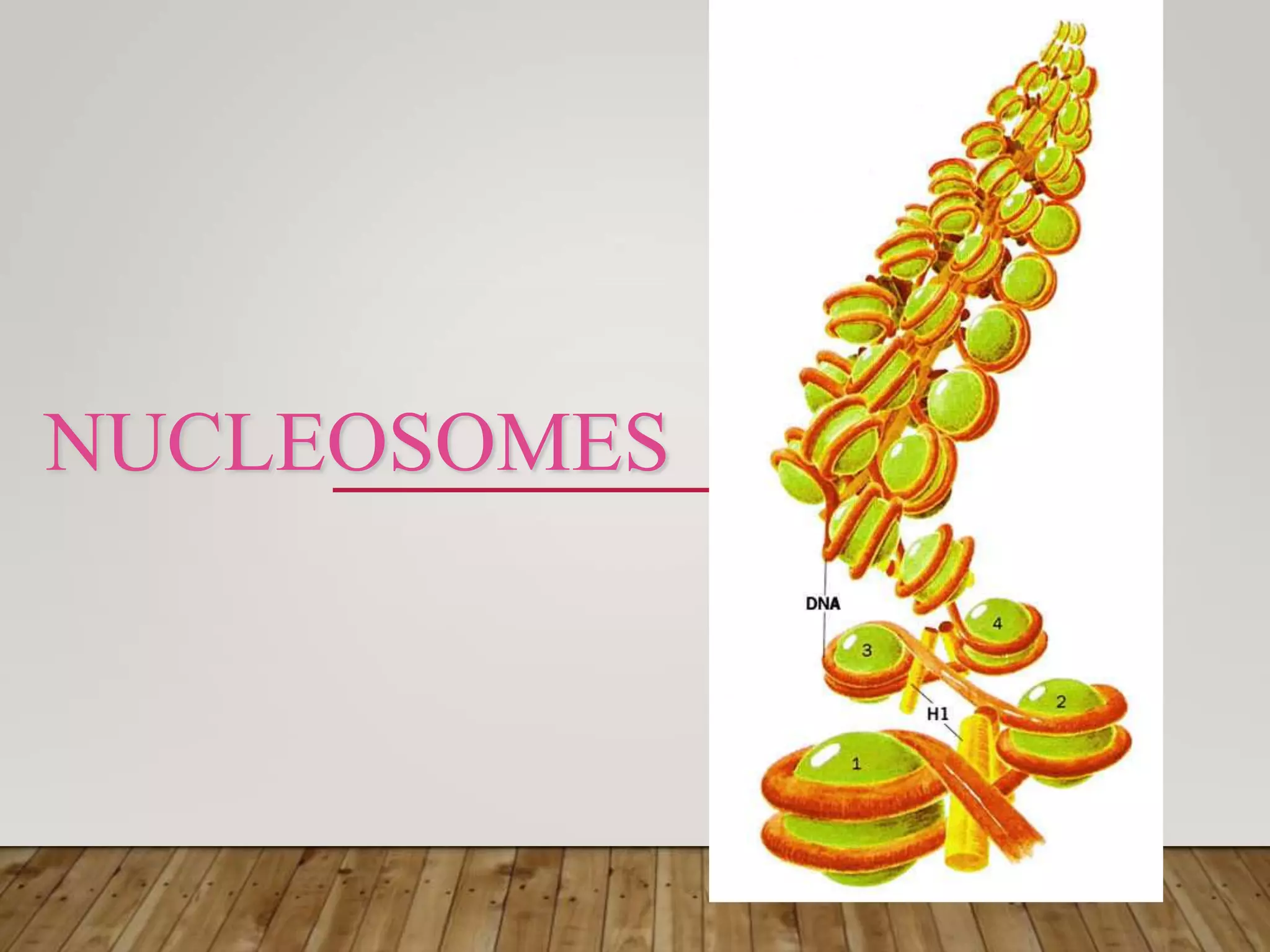
NUCLEOSOMES
Chromosome Structure
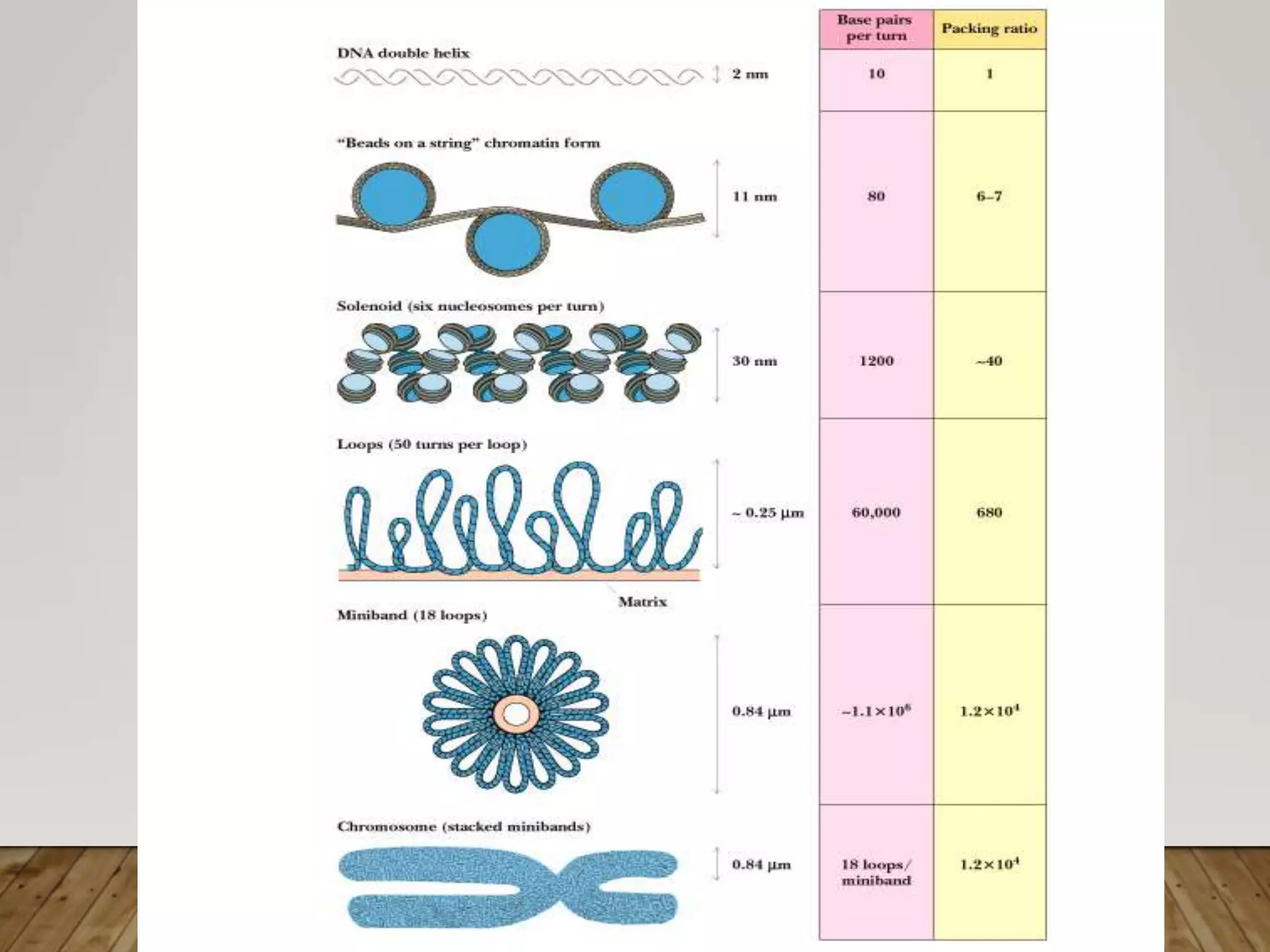
• Human DNA’s total length is ~2 meters!
• This must be packaged into a nucleus that is
about 5 micrometers in diameter
• This represents a compression of more than
100,000!
• It is made possible by wrapping the DNA around
protein spools called nucleosomes and then
packing these in helical filaments
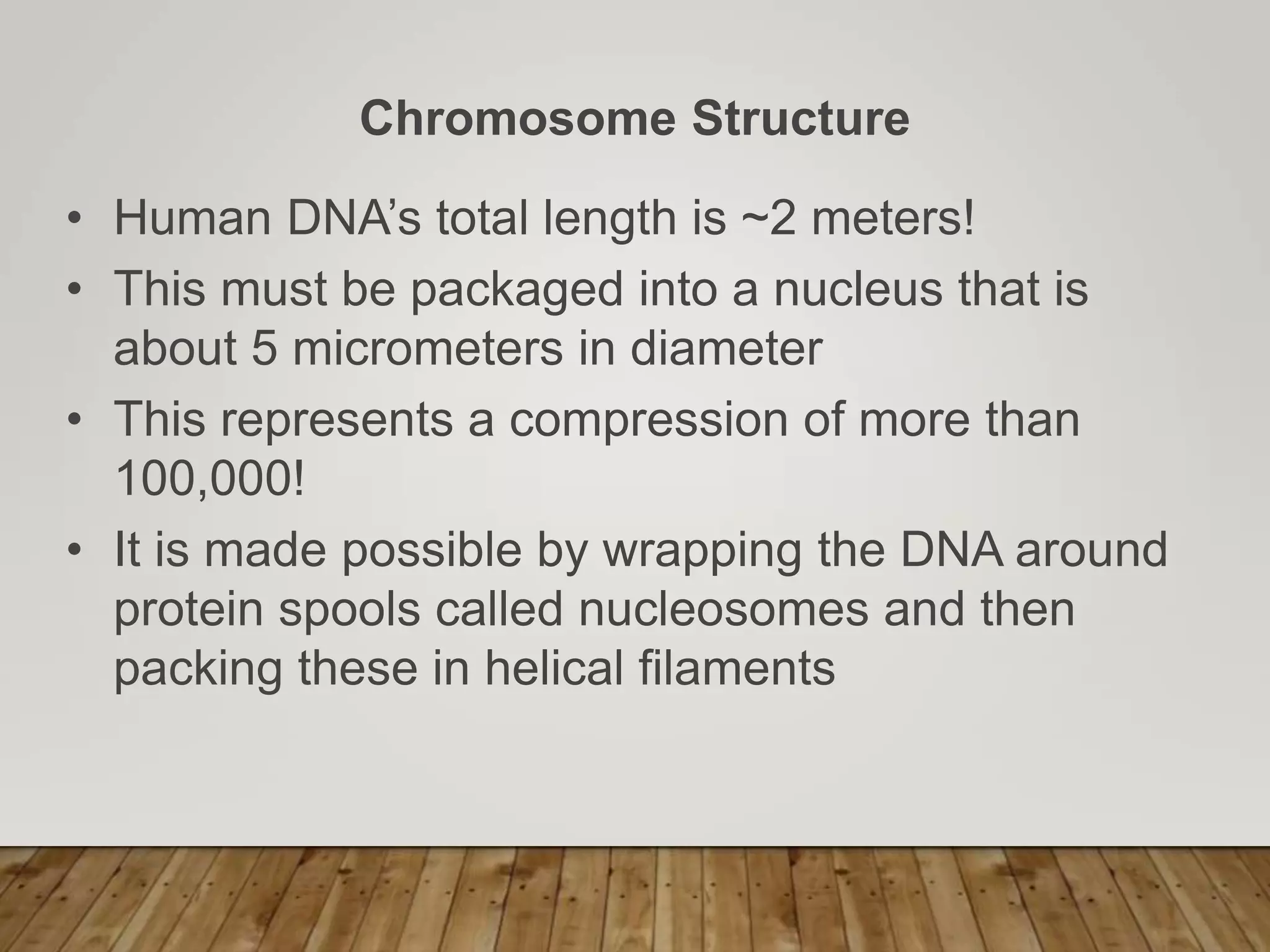
Electron micrograph of extended chromatin showing "beads-
on-a-string" organization. The "beads" are DNA-histone
complexes called nucleosomes, and the "string" is double-
stranded DNA.
Micrograph of extended chromatin
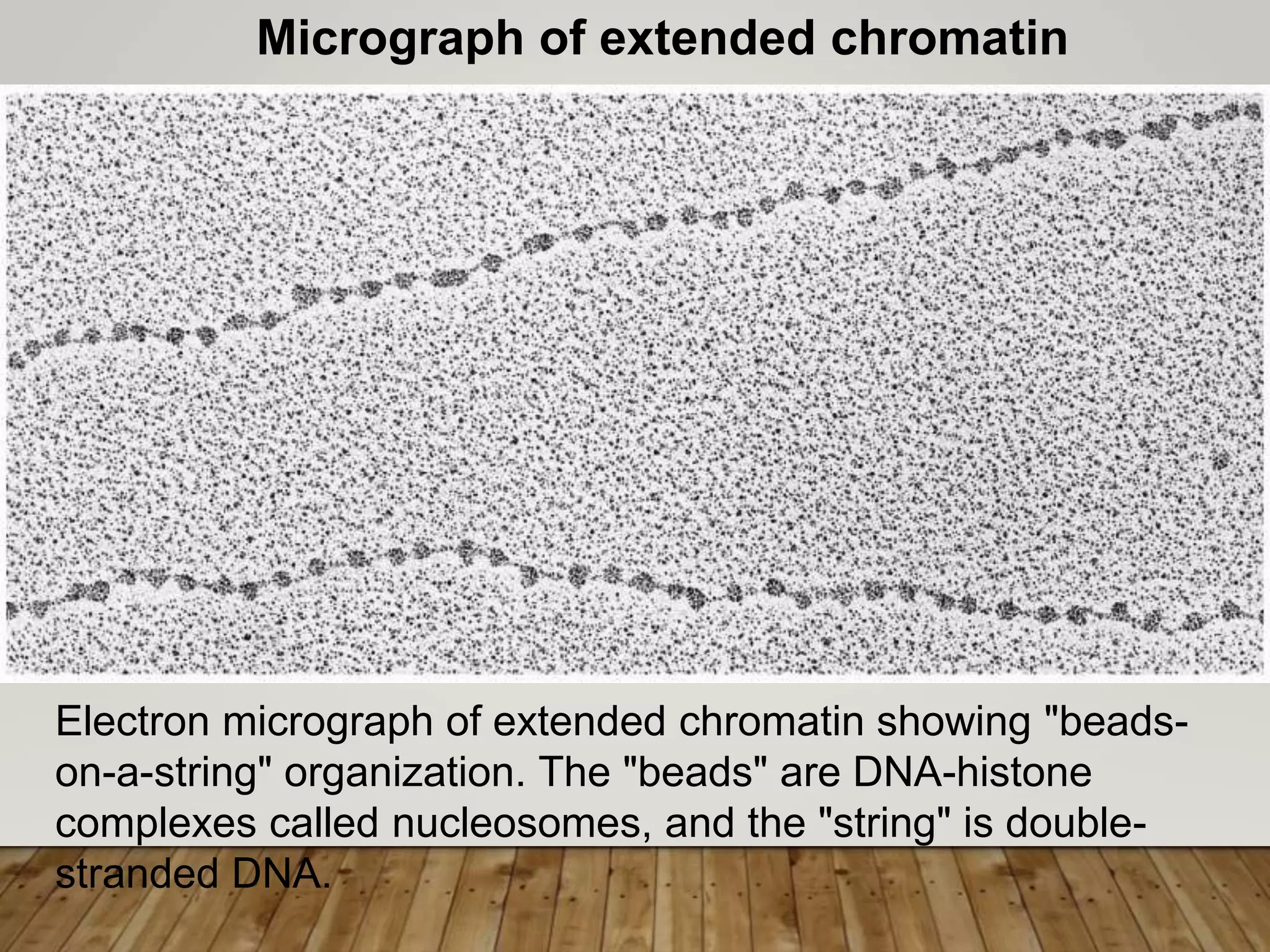
Nucleosome structure
(a) Four pairs of Histone protein
monomers namely
H2A,H2B,H3,H4 make up the
histone core (octamer).
(b) Each nucleosome is
composed of a core (octamer)
particle, histone H1 and linker
DNA. Nucleosome core particle
is composed of histone octamer
and 146 base pairs of DNA.
Linker DNA consists of 54 base
pairs. Histone H1 binds to core
particle and linker DNA.. DNA
forms left-handed wraps around
the histone octamer. These coils
are topologically equivalent to
negative super coils.
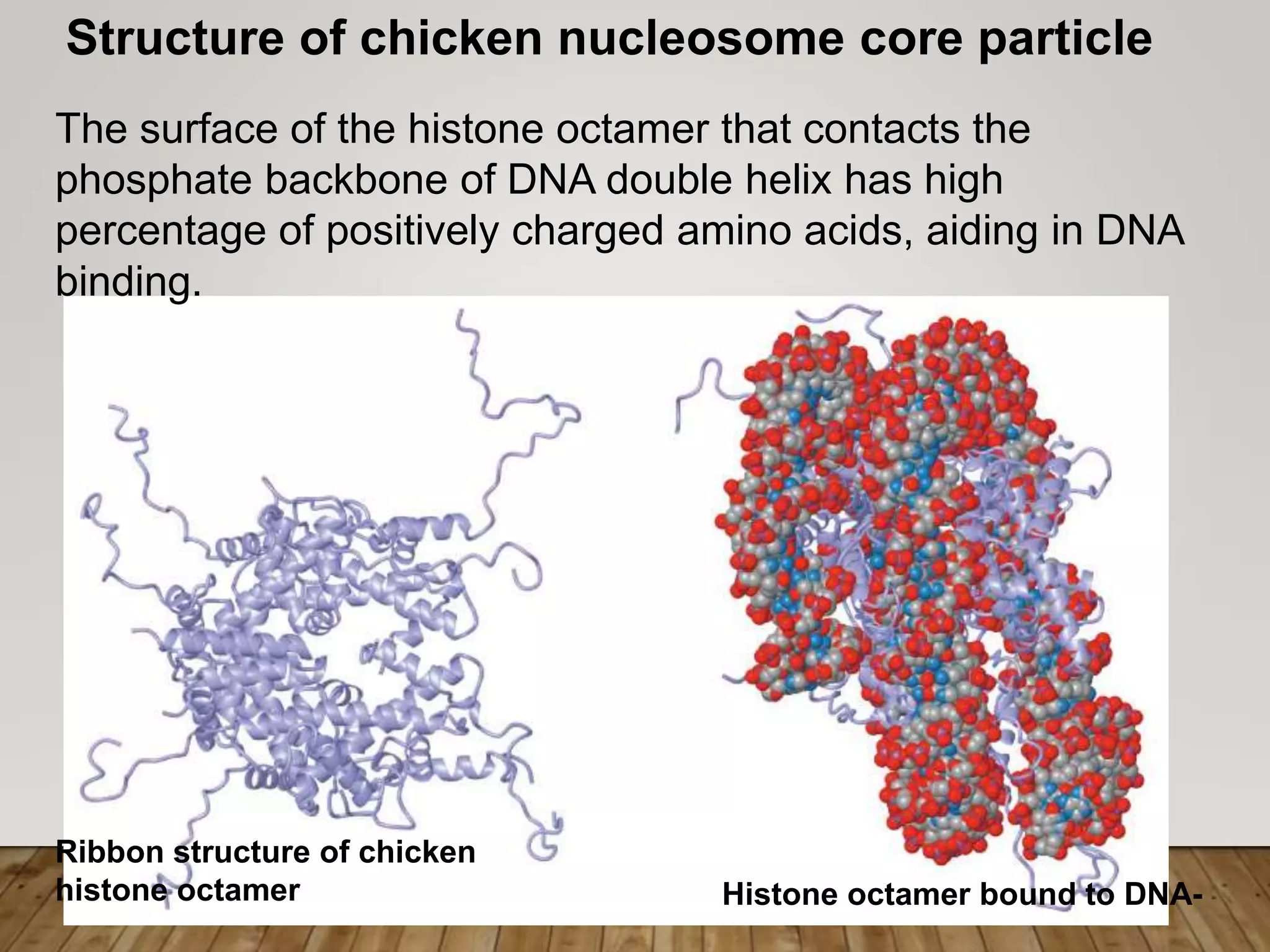
Structure of chicken nucleosome core particle
The surface of the histone octamer that contacts the
phosphate backbone of DNA double helix has high
percentage of positively charged amino acids, aiding in DNA
binding.
Ribbon structure of chicken
histone octamer Histone octamer bound to DNA-
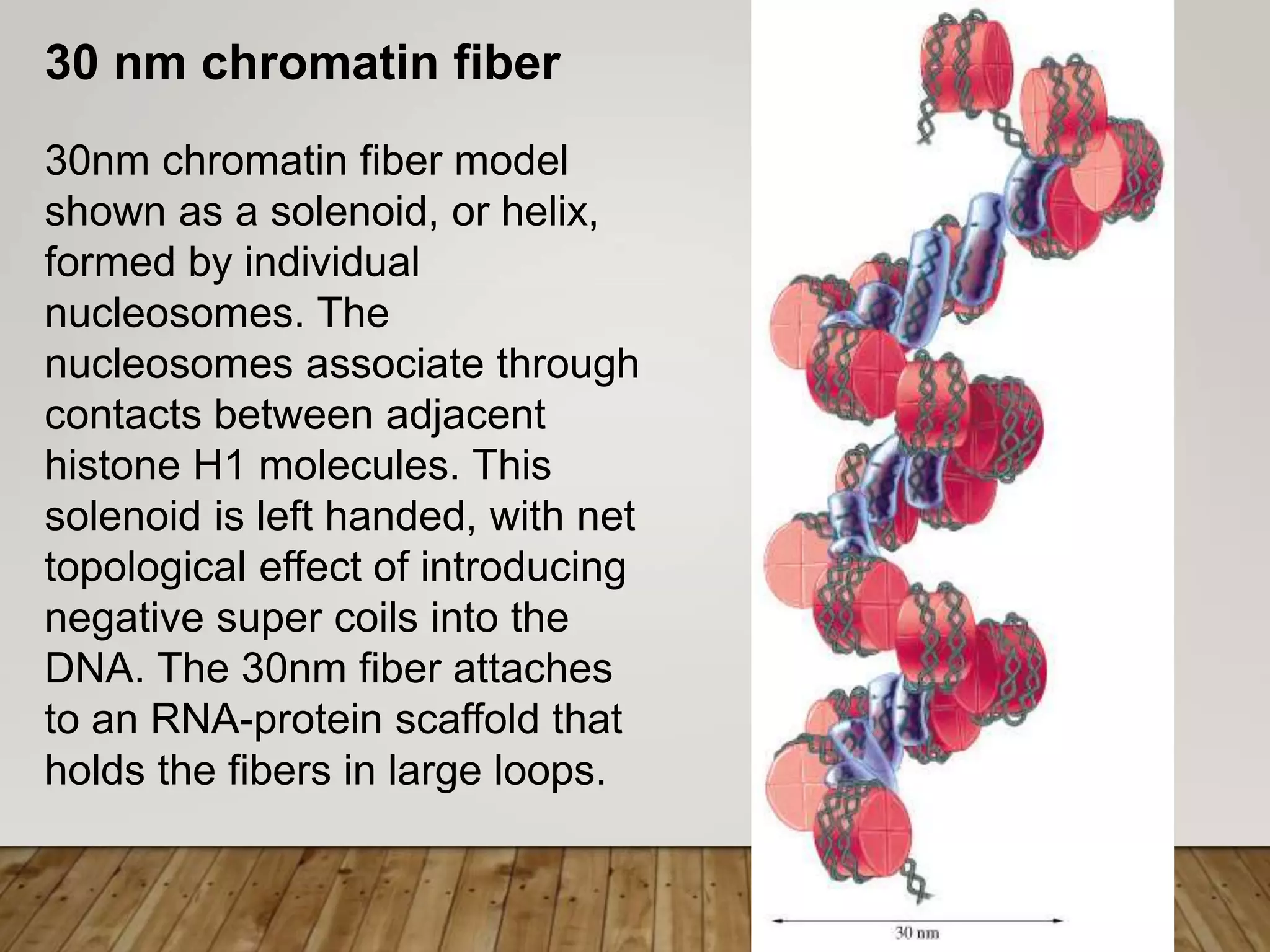
30 nm chromatin fiber
30nm chromatin fiber model
shown as a solenoid, or helix,
formed by individual
nucleosomes. The
nucleosomes associate through
contacts between adjacent
histone H1 molecules. This
solenoid is left handed, with net
topological effect of introducing
negative super coils into the
DNA. The 30nm fiber attaches
to an RNA-protein scaffold that
holds the fibers in large loops.
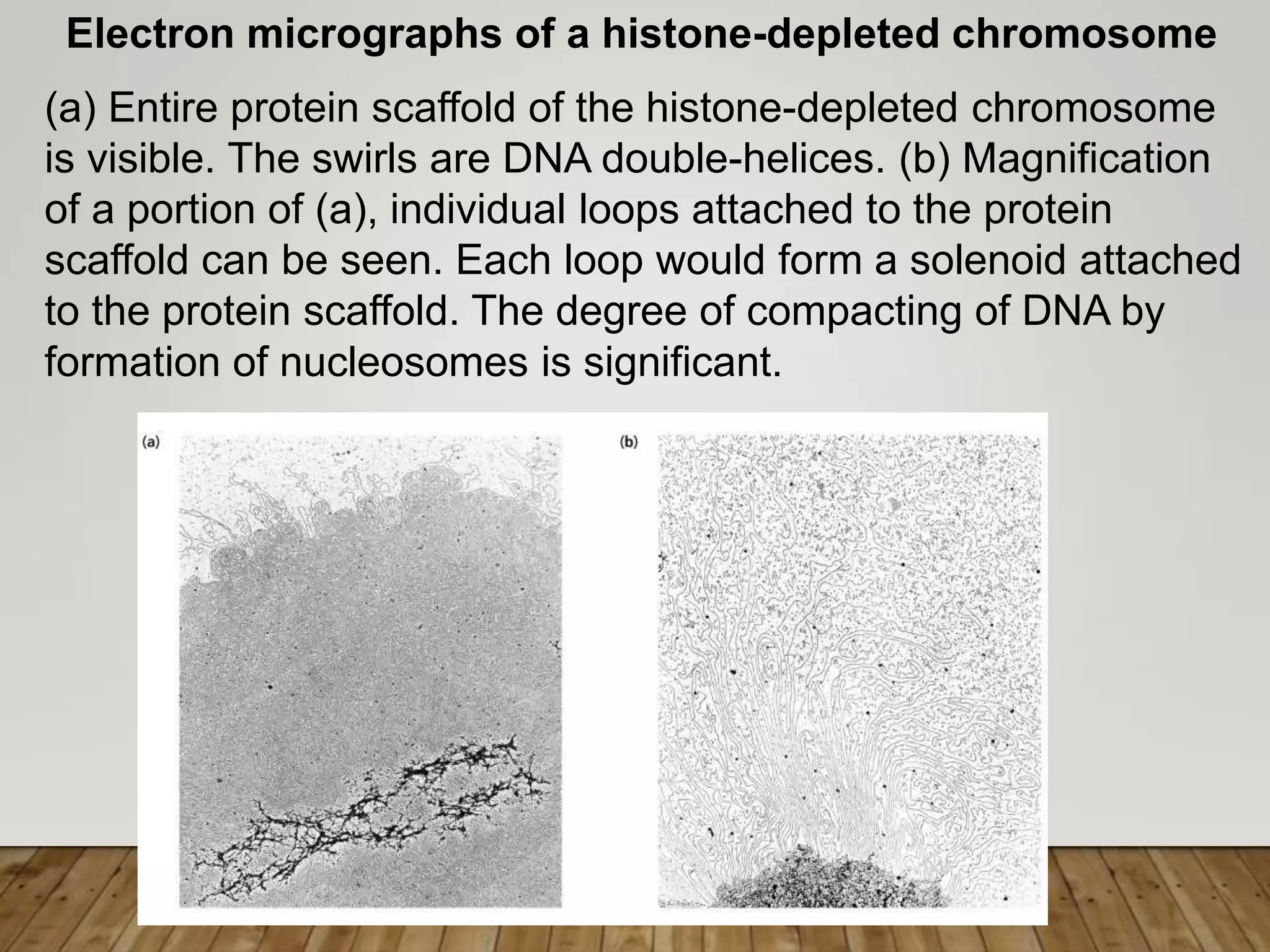
Electron micrographs of a histone-depleted chromosome
(a) Entire protein scaffold of the histone-depleted chromosome
is visible. The swirls are DNA double-helices. (b) Magnification
of a portion of (a), individual loops attached to the protein
scaffold can be seen. Each loop would form a solenoid attached
to the protein scaffold. The degree of compacting of DNA by
formation of nucleosomes is significant.
CHROMOSOMES
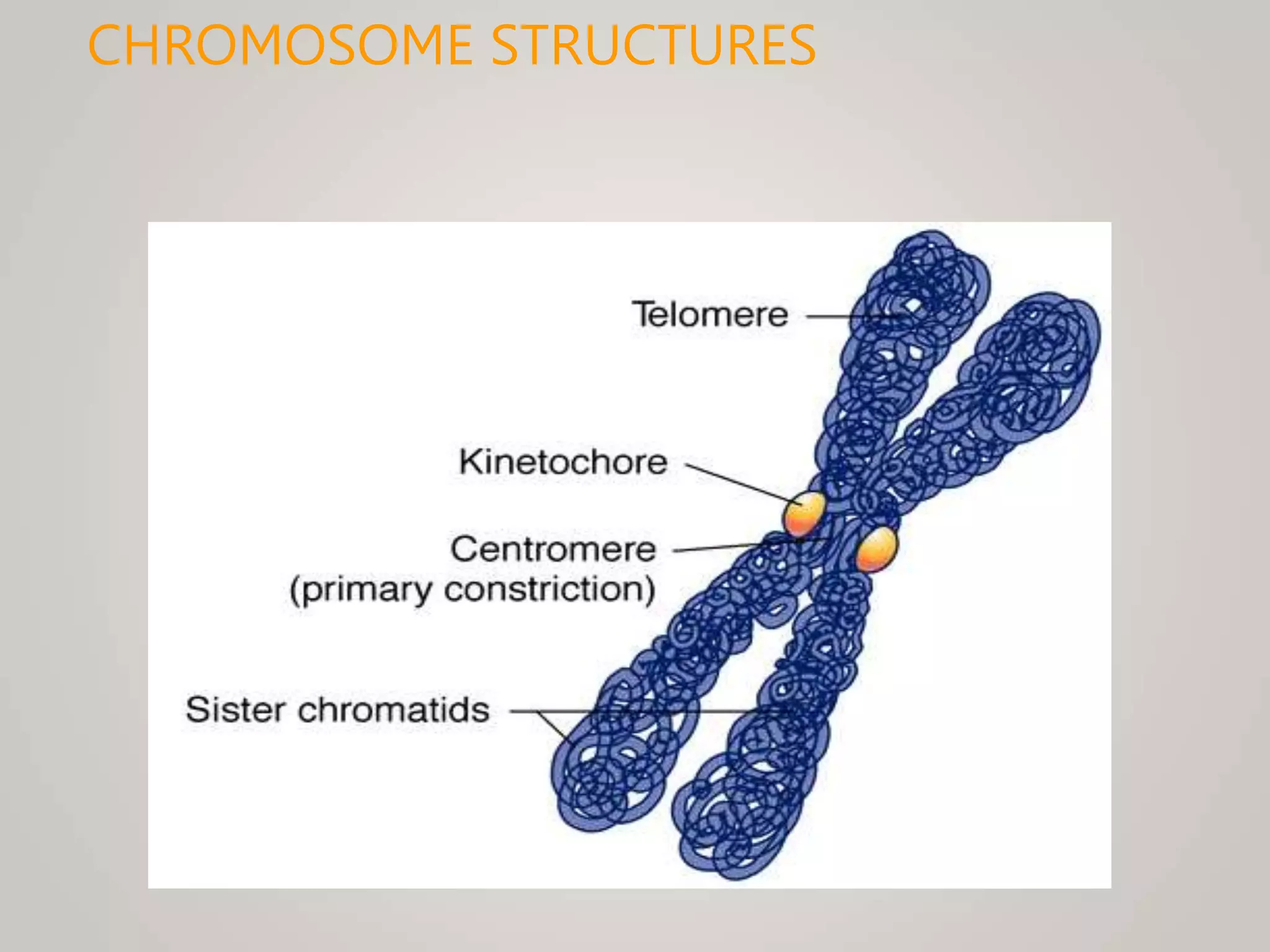
CHROMOSOME STRUCTURES
Chromosome: a very long DNA molecule and
associated proteins, that carry portions of the
hereditary information of an organism.
Structure of a chromosome (Typical metaphase
chromosome):
A chromosome is formed from a single DNA molecule
that contains many genes.
Chromosomal DNA molecule contains three specific
nucleotide sequences which are required for
replication:
Origin replication of DNA
Centromere to attach the DNA to the mitotic spindle
Telomere located at each end of the linear
chromosome.
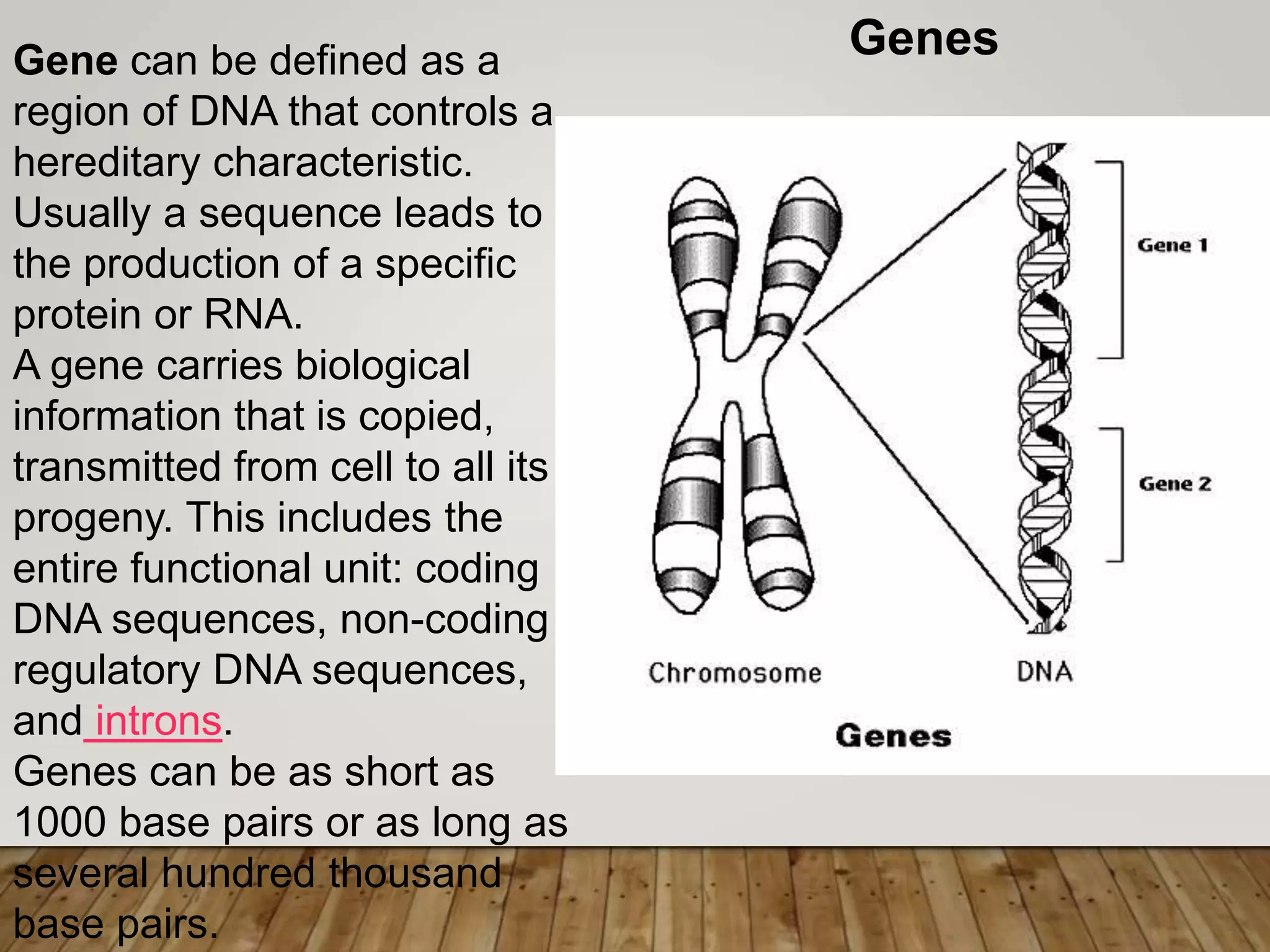
Gene can be defined as a
region of DNA that controls a
hereditary characteristic.
Usually a sequence leads to
the production of a specific
protein or RNA.
A gene carries biological
information that is copied,
transmitted from cell to all its
progeny. This includes the
entire functional unit: coding
DNA sequences, non-coding
regulatory DNA sequences,
and introns.
Genes can be as short as
1000 base pairs or as long as
several hundred thousand
base pairs.
Genes
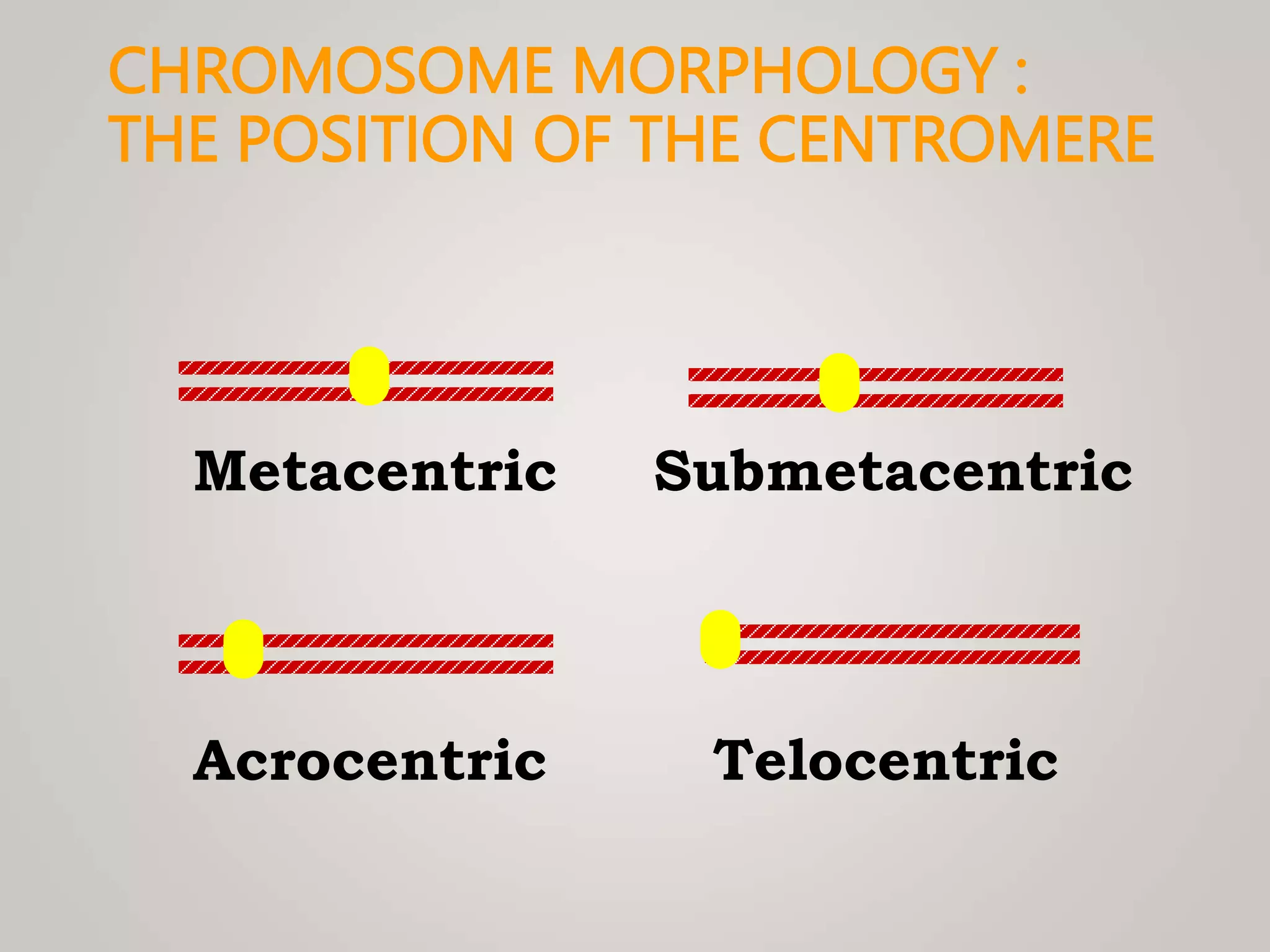
CHROMOSOME MORPHOLOGY :
THE POSITION OF THE CENTROMERE
Metacentric
Acrocentric Telocentric
Submetacentric
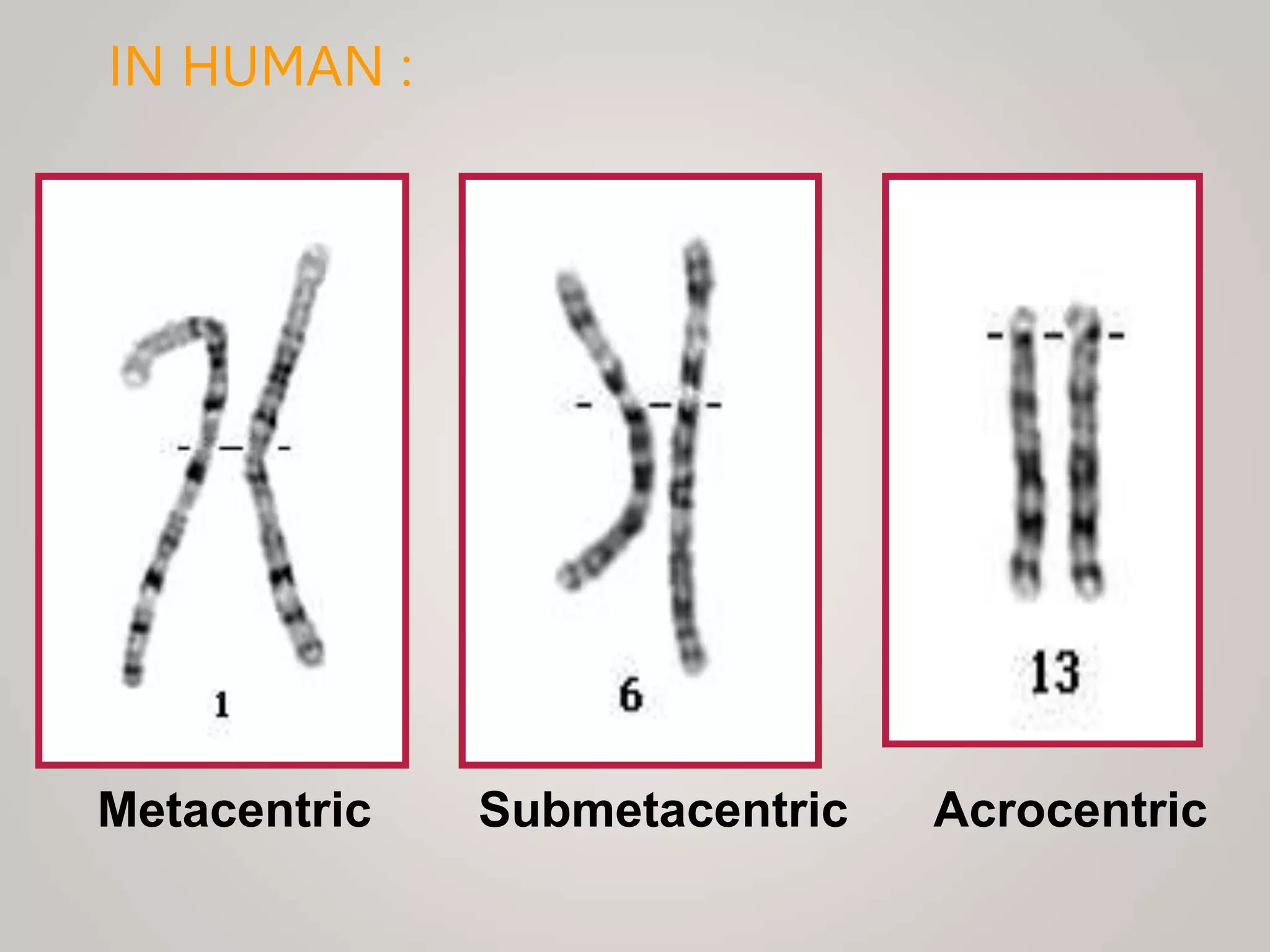
IN HUMAN :
Metacentric Submetacentric Acrocentric

F-NUCLEOSOMES.ppt

  • 1.
  • 2.
    Chromosome Structure • HumanDNA’s total length is ~2 meters! • This must be packaged into a nucleus that is about 5 micrometers in diameter • This represents a compression of more than 100,000! • It is made possible by wrapping the DNA around protein spools called nucleosomes and then packing these in helical filaments
  • 3.
    Electron micrograph ofextended chromatin showing "beads- on-a-string" organization. The "beads" are DNA-histone complexes called nucleosomes, and the "string" is double- stranded DNA. Micrograph of extended chromatin
  • 4.
    Nucleosome structure (a) Fourpairs of Histone protein monomers namely H2A,H2B,H3,H4 make up the histone core (octamer). (b) Each nucleosome is composed of a core (octamer) particle, histone H1 and linker DNA. Nucleosome core particle is composed of histone octamer and 146 base pairs of DNA. Linker DNA consists of 54 base pairs. Histone H1 binds to core particle and linker DNA.. DNA forms left-handed wraps around the histone octamer. These coils are topologically equivalent to negative super coils.
  • 5.
    Structure of chickennucleosome core particle The surface of the histone octamer that contacts the phosphate backbone of DNA double helix has high percentage of positively charged amino acids, aiding in DNA binding. Ribbon structure of chicken histone octamer Histone octamer bound to DNA-
  • 6.
    30 nm chromatinfiber 30nm chromatin fiber model shown as a solenoid, or helix, formed by individual nucleosomes. The nucleosomes associate through contacts between adjacent histone H1 molecules. This solenoid is left handed, with net topological effect of introducing negative super coils into the DNA. The 30nm fiber attaches to an RNA-protein scaffold that holds the fibers in large loops.
  • 7.
    Electron micrographs ofa histone-depleted chromosome (a) Entire protein scaffold of the histone-depleted chromosome is visible. The swirls are DNA double-helices. (b) Magnification of a portion of (a), individual loops attached to the protein scaffold can be seen. Each loop would form a solenoid attached to the protein scaffold. The degree of compacting of DNA by formation of nucleosomes is significant.
  • 9.
  • 10.
  • 11.
    Chromosome: a verylong DNA molecule and associated proteins, that carry portions of the hereditary information of an organism. Structure of a chromosome (Typical metaphase chromosome): A chromosome is formed from a single DNA molecule that contains many genes. Chromosomal DNA molecule contains three specific nucleotide sequences which are required for replication: Origin replication of DNA Centromere to attach the DNA to the mitotic spindle Telomere located at each end of the linear chromosome.
  • 12.
    Gene can bedefined as a region of DNA that controls a hereditary characteristic. Usually a sequence leads to the production of a specific protein or RNA. A gene carries biological information that is copied, transmitted from cell to all its progeny. This includes the entire functional unit: coding DNA sequences, non-coding regulatory DNA sequences, and introns. Genes can be as short as 1000 base pairs or as long as several hundred thousand base pairs. Genes
  • 13.
    CHROMOSOME MORPHOLOGY : THEPOSITION OF THE CENTROMERE Metacentric Acrocentric Telocentric Submetacentric
  • 14.
    IN HUMAN : MetacentricSubmetacentric Acrocentric