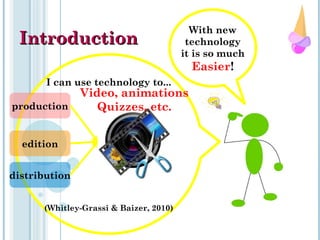
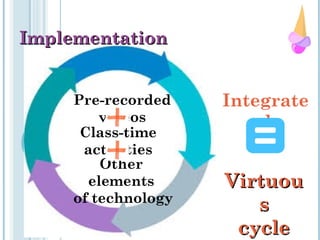
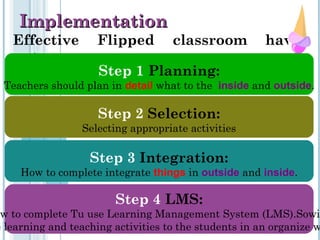
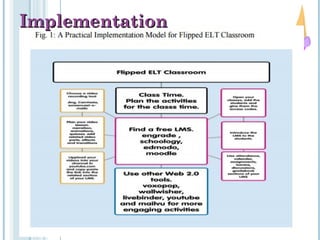
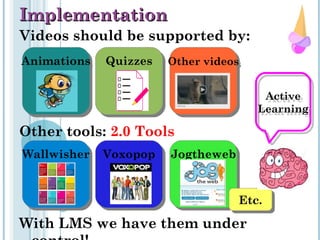
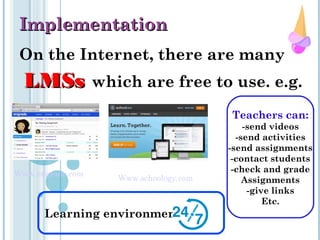
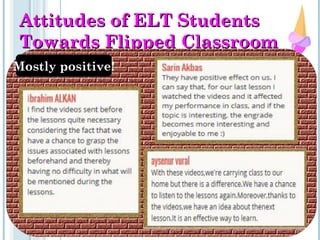
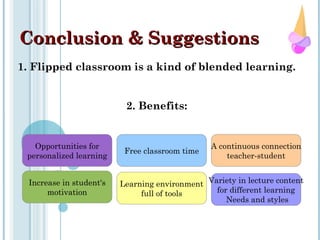
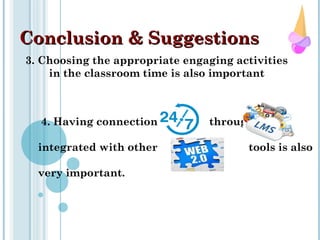
This document discusses the use of flipped classroom in foreign language teaching. It defines flipped classroom as activities traditionally done in class, such as lectures, being moved outside of class, while activities traditionally done as homework, such as problem-solving, are moved into the classroom. This allows class time to be used for active learning activities like discussions and working on difficult concepts. The document outlines how to implement flipped classroom, including creating pre-recorded videos and integrating online tools. It also discusses common approaches and steps for an effective flipped classroom model. Research has shown students have mostly positive attitudes towards flipped classroom. Benefits include personalized learning, increased motivation, and a continuous connection between teachers and students.








![[[ENG]] (PPT) Day 1- Flipped Classroom..pdf](https://cdn.slidesharecdn.com/ss_thumbnails/engpptday1-flippedclassroom-240213213707-6a0f7c90-thumbnail.jpg?width=640&height=640&fit=bounds)


