What Is a Flipped Classroom?

  BBS Professional Development Day
           7 October 2012
 Kathleen McKim, HS Media Specialist
In this session, we will
• Define "the flipped classroom."
• Explore how this concept changes the
  instructional landscape.
• Reflect on ways that "flipping" can enable
  student success.
Some Definitions
• The flipped classroom changes the place in
  which content is delivered (Valenza, 2012).
• Basically the concept of a flipped class is this:
  that which is traditionally done in class is now
  done at home, and that which is traditionally
  done as homework is now completed in class.
  But as you will see, there is more to a flipped
  classroom than this (Bergmann & Sams,
  2012).
Expert Video
The Changing Educational Landscape
• The home becomes the lecture space. The
  hundred+ year-old frontal teaching model flips.
• The class becomes conversation space, creation
  space, space where teachers actively facilitate
  learning.
• Class time is freed up for interactive and applied
  learning, activities that inspire critical thinking,
  exploration, inquiry, discussion, collaboration,
  problem solving.
                                          -Valenza, 2012
Expert Video
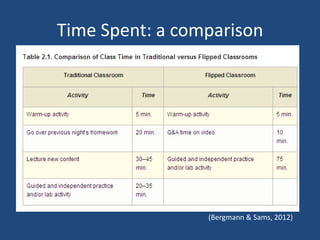
Time Spent: a comparison


                 (Bergmann & Sams, 2012)
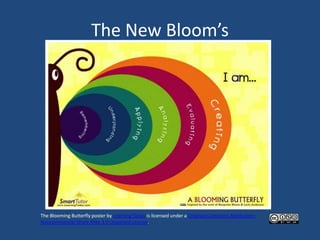
The New Bloom’s


The Blooming Butterfly poster by Learning Today is licensed under a Creative Commons Attribution-
Noncommercial-Share Alike 3.0 Unported License.
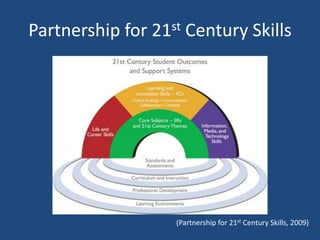
Partnership for 21st Century Skills


                   (Partnership for 21st Century Skills, 2009)
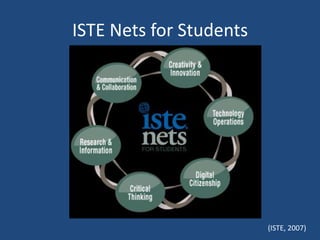
ISTE Nets for Students


                         (ISTE, 2007)
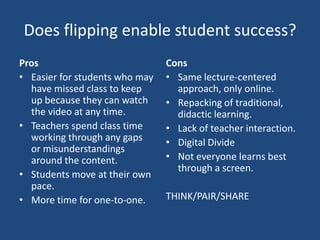
Does flipping enable student success?
Pros                            Cons
• Easier for students who may   • Same lecture-centered
  have missed class to keep       approach, only online.
  up because they can watch     • Repacking of traditional,
  the video at any time.          didactic learning.
• Teachers spend class time     • Lack of teacher interaction.
  working through any gaps      • Digital Divide
  or misunderstandings
  around the content.           • Not everyone learns best
                                  through a screen.
• Students move at their own
  pace.
• More time for one-to-one.     THINK/PAIR/SHARE
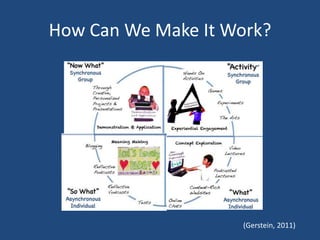
How Can We Make It Work?


                    (Gerstein, 2011)
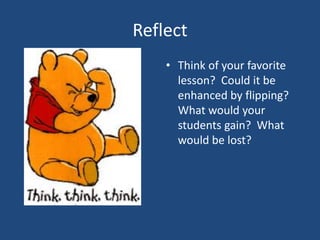
Reflect
    • Think of your favorite
      lesson? Could it be
      enhanced by flipping?
      What would your
      students gain? What
      would be lost?
Take Away
• Reflecting on pedagogy.
• Rethinking how
  teachers reach
  students.
• Inspiring teachers to
  change the way they’ve
  always done things.
• Motivating teachers to
  use technology.
               (Herz, 2012)
Resources
• Flipped Learning Network        For great videos you can use:
  (www.flippedlearning.org)       • TED-ed , www.ed.ted.com
• Flipped Classroom Manifest,     • OER Commons,
  http://www.thedailyriff.com/a      www.oercommons.org
  rticles/the-flipped-class-      • Curriki,
  manifest-823.php                   www.welcome.curriki.org
• Jackie Gerstein,                • Khan Academy,
  http://usergeneratededucatio       www.kahnacademy.org
  n.wordpress.com/2011/06/13/
  the-flipped-classroom-model-    • SolveforX ,
  a-full-picture/                    www.wesolveforx.com
• TechSmith, The Flipped          • MIT Open Courseware,
  Classroom,                         www.ocw.mit.edu/high-school
  http://www.techsmith.com/fli
  pped-classroom.html
References
•   Bergmann, J. & Sams, A. (2012). Chapter 2: the flipped classroom. Flip Your Classroom: Reach
    Every Student in Every Class Every Day. Virginia: ASCD/ISTE.
•   DMS Flipped Math. The Flipped Classroom by Aaron Sams. Accessed October 4, 2012, from
    http://www.youtube.com/watch?v=AHYm7U0ePWY.
•   Gerstein, J. (2011). Flipped classroom full picture: an example lesson. User Generated
    Education. Accessed October 4, 2012, from
    http://usergeneratededucation.wordpress.com/2011/11/20/flipped-classroom-full-picture-
    an-example-lesson/.
•   Gerstein, J. (2012). An illustration of the flipped classroom: the full picture. Accessed October
    4, 2012, from
    http://www.youtube.com/watch?v=cXcCBuU3ytU&list=UUxhUm1DtscZtu6mHOpORivQ&ind
    ex=2&feature=plcp.
•   Herz, M.B. (July 10, 2012). The flipped classroom: pro and con. Edutopia. Accessed October
    4, 2012, from http://www.edutopia.org/blog/flipped-classroom-pro-and-con-mary-beth-
    hertz.
•   International Society for Technology in Education (2007). ISTE nets-s. Accessed October 4,
    2012, from www.iste.org/nets.
•   Partnership for 21st Century Skills. (2009). 21st century student outcomes and support
    systems. Accessed October 4, 1012, from http://www.p21.org/overview/skills-framework.
•   Valenza, J. (August 14, 2012). The flipping librarian. Neverending Search. School Library
    Journal. Accessed October 4, 2012, from
    http://blog.schoollibraryjournal.com/neverendingsearch/2012/08/14/the-flipping-librarian/

What is a flipped classroom?

  • 2.
    What Is aFlipped Classroom? BBS Professional Development Day 7 October 2012 Kathleen McKim, HS Media Specialist
  • 3.
    In this session,we will • Define "the flipped classroom." • Explore how this concept changes the instructional landscape. • Reflect on ways that "flipping" can enable student success.
  • 4.
    Some Definitions • Theflipped classroom changes the place in which content is delivered (Valenza, 2012). • Basically the concept of a flipped class is this: that which is traditionally done in class is now done at home, and that which is traditionally done as homework is now completed in class. But as you will see, there is more to a flipped classroom than this (Bergmann & Sams, 2012).
  • 5.
  • 6.
    The Changing EducationalLandscape • The home becomes the lecture space. The hundred+ year-old frontal teaching model flips. • The class becomes conversation space, creation space, space where teachers actively facilitate learning. • Class time is freed up for interactive and applied learning, activities that inspire critical thinking, exploration, inquiry, discussion, collaboration, problem solving. -Valenza, 2012
  • 7.
  • 8.
    Time Spent: acomparison (Bergmann & Sams, 2012)
  • 9.
    The New Bloom’s TheBlooming Butterfly poster by Learning Today is licensed under a Creative Commons Attribution- Noncommercial-Share Alike 3.0 Unported License.
  • 10.
    Partnership for 21stCentury Skills (Partnership for 21st Century Skills, 2009)
  • 11.
    ISTE Nets forStudents (ISTE, 2007)
  • 12.
    Does flipping enablestudent success? Pros Cons • Easier for students who may • Same lecture-centered have missed class to keep approach, only online. up because they can watch • Repacking of traditional, the video at any time. didactic learning. • Teachers spend class time • Lack of teacher interaction. working through any gaps • Digital Divide or misunderstandings around the content. • Not everyone learns best through a screen. • Students move at their own pace. • More time for one-to-one. THINK/PAIR/SHARE
  • 13.
    How Can WeMake It Work? (Gerstein, 2011)
  • 14.
    Reflect • Think of your favorite lesson? Could it be enhanced by flipping? What would your students gain? What would be lost?
  • 15.
    Take Away • Reflectingon pedagogy. • Rethinking how teachers reach students. • Inspiring teachers to change the way they’ve always done things. • Motivating teachers to use technology. (Herz, 2012)
  • 16.
    Resources • Flipped LearningNetwork For great videos you can use: (www.flippedlearning.org) • TED-ed , www.ed.ted.com • Flipped Classroom Manifest, • OER Commons, http://www.thedailyriff.com/a www.oercommons.org rticles/the-flipped-class- • Curriki, manifest-823.php www.welcome.curriki.org • Jackie Gerstein, • Khan Academy, http://usergeneratededucatio www.kahnacademy.org n.wordpress.com/2011/06/13/ the-flipped-classroom-model- • SolveforX , a-full-picture/ www.wesolveforx.com • TechSmith, The Flipped • MIT Open Courseware, Classroom, www.ocw.mit.edu/high-school http://www.techsmith.com/fli pped-classroom.html
  • 17.
    References • Bergmann, J. & Sams, A. (2012). Chapter 2: the flipped classroom. Flip Your Classroom: Reach Every Student in Every Class Every Day. Virginia: ASCD/ISTE. • DMS Flipped Math. The Flipped Classroom by Aaron Sams. Accessed October 4, 2012, from http://www.youtube.com/watch?v=AHYm7U0ePWY. • Gerstein, J. (2011). Flipped classroom full picture: an example lesson. User Generated Education. Accessed October 4, 2012, from http://usergeneratededucation.wordpress.com/2011/11/20/flipped-classroom-full-picture- an-example-lesson/. • Gerstein, J. (2012). An illustration of the flipped classroom: the full picture. Accessed October 4, 2012, from http://www.youtube.com/watch?v=cXcCBuU3ytU&list=UUxhUm1DtscZtu6mHOpORivQ&ind ex=2&feature=plcp. • Herz, M.B. (July 10, 2012). The flipped classroom: pro and con. Edutopia. Accessed October 4, 2012, from http://www.edutopia.org/blog/flipped-classroom-pro-and-con-mary-beth- hertz. • International Society for Technology in Education (2007). ISTE nets-s. Accessed October 4, 2012, from www.iste.org/nets. • Partnership for 21st Century Skills. (2009). 21st century student outcomes and support systems. Accessed October 4, 1012, from http://www.p21.org/overview/skills-framework. • Valenza, J. (August 14, 2012). The flipping librarian. Neverending Search. School Library Journal. Accessed October 4, 2012, from http://blog.schoollibraryjournal.com/neverendingsearch/2012/08/14/the-flipping-librarian/