(CLL) Community Language Learning
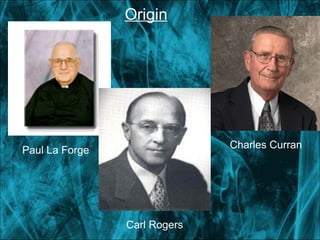
Origin


                              Charles Curran
Paul La Forge


                Carl Rogers
Stage 1 Reflection              Stages
Stage 2 Recorded conversation
Stage 3 Discussion
Stage 4 Transcription
Stage 5 Language analysis
Five psychological stages from childhood to adulthood :


1. Birth : the learners know nothing of the target language,
and are completely dependent on the knower for everything
they want to say.


2. Self : the learners start to get an idea of how the
language works and to use it for themselves, but still seek
the knower’s help. They may, for instance tell the knower
what they want to say directly in the target language,
looking to the knower only for confirmation or correction.
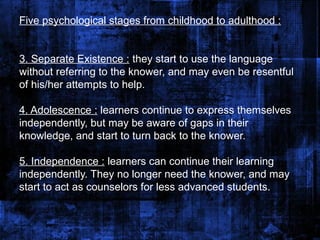
Five psychological stages from childhood to adulthood :


3. Separate Existence : they start to use the language
without referring to the knower, and may even be resentful
of his/her attempts to help.

4. Adolescence : learners continue to express themselves
independently, but may be aware of gaps in their
knowledge, and start to turn back to the knower.

5. Independence : learners can continue their learning
independently. They no longer need the knower, and may
start to act as counselors for less advanced students.
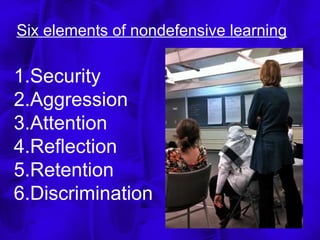
Six elements of nondefensive learning

1.Security
2.Aggression
3.Attention
4.Reflection
5.Retention
6.Discrimination
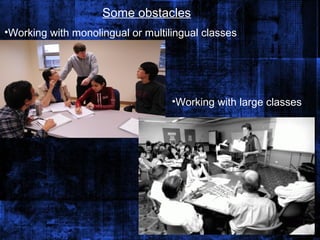
Working with large classes
                    Some obstacles
•Working with monolingual or multilingual classes


                                            •Working with large classes
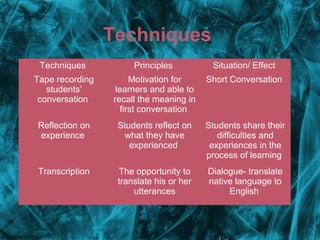
Techniques
 Techniques           Principles          Situation/ Effect
Tape recording         Motivation for    Short Conversation
   students’      learners and able to
 conversation    recall the meaning in
                    first conversation
Reflection on     Students reflect on    Students share their
experience          what they have          difficulties and
                     experienced          experiences in the
                                         process of learning
Transcription     The opportunity to     Dialogue- translate
                  translate his or her   native language to
                      utterances              English
Techniques
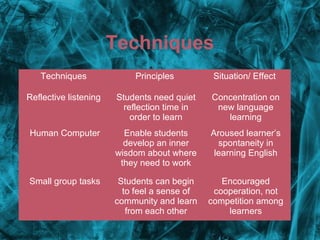
   Techniques               Principles         Situation/ Effect

Reflective listening   Students need quiet    Concentration on
                         reflection time in    new language
                           order to learn        learning
Human Computer           Enable students      Aroused learner’s
                         develop an inner       spontaneity in
                       wisdom about where      learning English
                        they need to work

Small group tasks       Students can begin       Encouraged
                         to feel a sense of    cooperation, not
                       community and learn    competition among
                          from each other         learners
Pros
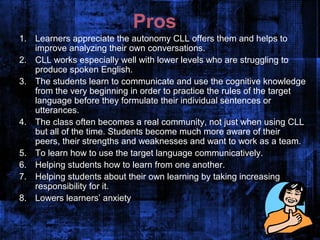
1. Learners appreciate the autonomy CLL offers them and helps to
   improve analyzing their own conversations.
2. CLL works especially well with lower levels who are struggling to
   produce spoken English.
3. The students learn to communicate and use the cognitive knowledge
   from the very beginning in order to practice the rules of the target
   language before they formulate their individual sentences or
   utterances.
4. The class often becomes a real community, not just when using CLL
   but all of the time. Students become much more aware of their
   peers, their strengths and weaknesses and want to work as a team.
5. To learn how to use the target language communicatively.
6. Helping students how to learn from one another.
7. Helping students about their own learning by taking increasing
   responsibility for it.
8. Lowers learners’ anxiety
Cons

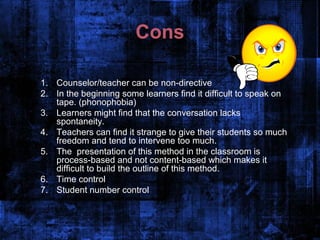
1. Counselor/teacher can be non-directive
2. In the beginning some learners find it difficult to speak on
   tape. (phonophobia)
3. Learners might find that the conversation lacks
   spontaneity.
4. Teachers can find it strange to give their students so much
   freedom and tend to intervene too much.
5. The presentation of this method in the classroom is
   process-based and not content-based which makes it
   difficult to build the outline of this method.
6. Time control
7. Student number control
Prepared by
Aytekin Aliyeva

Community language learning

  • 1.
  • 2.
    Origin Charles Curran Paul La Forge Carl Rogers
  • 3.
    Stage 1 Reflection Stages Stage 2 Recorded conversation Stage 3 Discussion Stage 4 Transcription Stage 5 Language analysis
  • 4.
    Five psychological stagesfrom childhood to adulthood : 1. Birth : the learners know nothing of the target language, and are completely dependent on the knower for everything they want to say. 2. Self : the learners start to get an idea of how the language works and to use it for themselves, but still seek the knower’s help. They may, for instance tell the knower what they want to say directly in the target language, looking to the knower only for confirmation or correction.
  • 5.
    Five psychological stagesfrom childhood to adulthood : 3. Separate Existence : they start to use the language without referring to the knower, and may even be resentful of his/her attempts to help. 4. Adolescence : learners continue to express themselves independently, but may be aware of gaps in their knowledge, and start to turn back to the knower. 5. Independence : learners can continue their learning independently. They no longer need the knower, and may start to act as counselors for less advanced students.
  • 6.
    Six elements ofnondefensive learning 1.Security 2.Aggression 3.Attention 4.Reflection 5.Retention 6.Discrimination
  • 7.
    Working with largeclasses Some obstacles •Working with monolingual or multilingual classes •Working with large classes
  • 8.
    Techniques Techniques Principles Situation/ Effect Tape recording Motivation for Short Conversation students’ learners and able to conversation recall the meaning in first conversation Reflection on Students reflect on Students share their experience what they have difficulties and experienced experiences in the process of learning Transcription The opportunity to Dialogue- translate translate his or her native language to utterances English
  • 9.
    Techniques Techniques Principles Situation/ Effect Reflective listening Students need quiet Concentration on reflection time in new language order to learn learning Human Computer Enable students Aroused learner’s develop an inner spontaneity in wisdom about where learning English they need to work Small group tasks Students can begin Encouraged to feel a sense of cooperation, not community and learn competition among from each other learners
  • 10.
    Pros 1. Learners appreciatethe autonomy CLL offers them and helps to improve analyzing their own conversations. 2. CLL works especially well with lower levels who are struggling to produce spoken English. 3. The students learn to communicate and use the cognitive knowledge from the very beginning in order to practice the rules of the target language before they formulate their individual sentences or utterances. 4. The class often becomes a real community, not just when using CLL but all of the time. Students become much more aware of their peers, their strengths and weaknesses and want to work as a team. 5. To learn how to use the target language communicatively. 6. Helping students how to learn from one another. 7. Helping students about their own learning by taking increasing responsibility for it. 8. Lowers learners’ anxiety
  • 11.
    Cons 1. Counselor/teacher canbe non-directive 2. In the beginning some learners find it difficult to speak on tape. (phonophobia) 3. Learners might find that the conversation lacks spontaneity. 4. Teachers can find it strange to give their students so much freedom and tend to intervene too much. 5. The presentation of this method in the classroom is process-based and not content-based which makes it difficult to build the outline of this method. 6. Time control 7. Student number control
  • 12.