

CONTENT AND LANGUAGE INTEGRATED LEARNING CLIL
Let´s discuss… 1. What does “content and language integrated learning” mean? 2. What type of curricular design? 3. Methodological aspects: what’s the role of language and content teachers?
Basics of CLIL The foreign language is used as a vehicle for accessing information. The foreign language is used for instruction and communication. Learning the language and learning content are part of the same process.  Development of cognitive flexibility and reflection upon the linguistic and communicative functioning of both languages is key.
Benefits The learning of a foreign language is seen as more attractive when we use linguistic resources that offer a means of acquiring information. Metalinguistic and intellectual improvement: students are forced to use a greater variety of communication strategies. Emphasis on the creative use of the language provides stimulation in the learning process.
CLIL increases of quantity and quality of exposition to the L2. Learning the language becomes more functional and communicative in a CLIL context
 
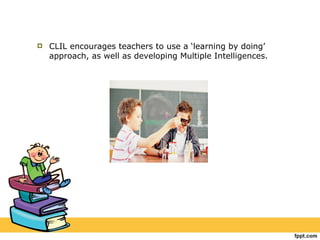
CLIL encourages teachers to use a ‘learning by doing’ approach, as well as developing Multiple Intelligences.
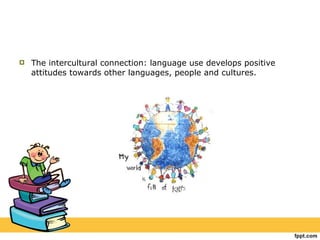
The intercultural connection: language use develops positive attitudes towards other languages, people and cultures.
CHANGES IN METHODOLOGY FOR CONTENT TEACHERS
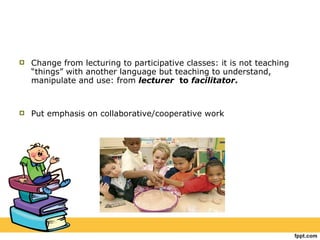
Change from lecturing to participative classes: it is not teaching “things” with another language but teaching to understand, manipulate and use: from  lecturer  to  facilitator . Put emphasis on collaborative/cooperative work
Train learners to discover: tasks which promote noticing. Focus on fluency activities and on the oral aspect of the language.
Change the perception of the foreign language: from a  subject  to a  tool .
Professional blog: http://primaryenglishteaching.blogspot.com Graciela Bilat

Content and Language Integrated Learning

  • 1.
    CONTENT AND LANGUAGEINTEGRATED LEARNING CLIL
  • 2.
    Let´s discuss… 1.What does “content and language integrated learning” mean? 2. What type of curricular design? 3. Methodological aspects: what’s the role of language and content teachers?
  • 3.
    Basics of CLILThe foreign language is used as a vehicle for accessing information. The foreign language is used for instruction and communication. Learning the language and learning content are part of the same process. Development of cognitive flexibility and reflection upon the linguistic and communicative functioning of both languages is key.
  • 4.
    Benefits The learningof a foreign language is seen as more attractive when we use linguistic resources that offer a means of acquiring information. Metalinguistic and intellectual improvement: students are forced to use a greater variety of communication strategies. Emphasis on the creative use of the language provides stimulation in the learning process.
  • 5.
    CLIL increases ofquantity and quality of exposition to the L2. Learning the language becomes more functional and communicative in a CLIL context
  • 6.
  • 7.
    CLIL encourages teachersto use a ‘learning by doing’ approach, as well as developing Multiple Intelligences.
  • 8.
    The intercultural connection:language use develops positive attitudes towards other languages, people and cultures.
  • 9.
    CHANGES IN METHODOLOGYFOR CONTENT TEACHERS
  • 10.
    Change from lecturingto participative classes: it is not teaching “things” with another language but teaching to understand, manipulate and use: from lecturer to facilitator . Put emphasis on collaborative/cooperative work
  • 11.
    Train learners todiscover: tasks which promote noticing. Focus on fluency activities and on the oral aspect of the language.
  • 12.
    Change the perceptionof the foreign language: from a subject to a tool .
  • 13.