INSTRUMENTATION
QUOTE FOR THE DAY
OBJECTIVES
• AT THE END OF THE LECTURE, YOU
SHOULD BE ABLE TO:
• 1. EXPLAIN THE PRINCIPLES OF THE

METHODS.
• 2. DISCUSS THE FACTORS THAT MAY
AFFECT THE METHODS.
• 3. KNOW THE IMPORTANCE OF THESE
METHODS TO THE PROFESSION.
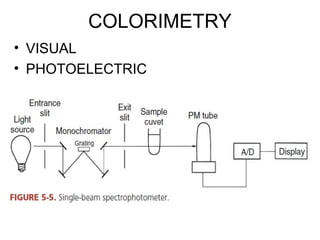
COLORIMETRY
• VISUAL
• PHOTOELECTRIC
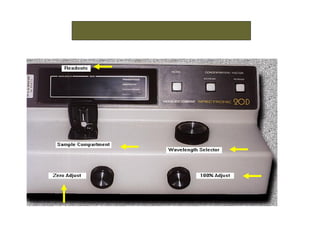
SPECTRONIC 20 D
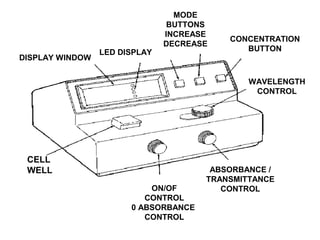
CELL
WELL
ON/OF
CONTROL
0 ABSORBANCE
CONTROL
ABSORBANCE /
TRANSMITTANCE
CONTROL
DISPLAY WINDOW
LED DISPLAY
MODE
BUTTONS
INCREASE
DECREASE
CONCENTRATION
BUTTON
WAVELENGTH
CONTROL
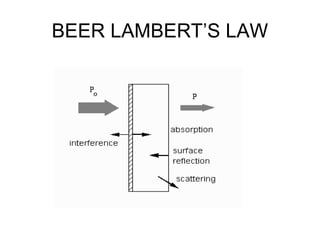
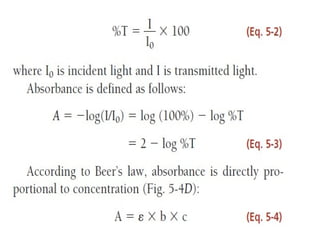
BEER LAMBERT’S LAW
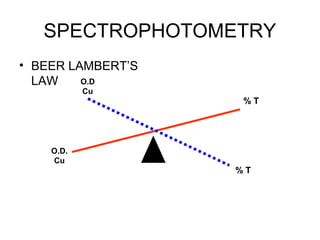
SPECTROPHOTOMETRY
• BEER LAMBERT’S
LAW O.D
Cu
% T
O.D.
Cu
% T
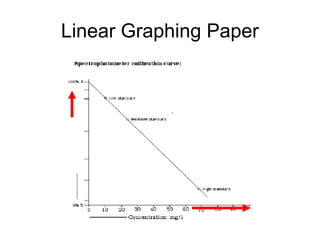
Linear Graphing Paper
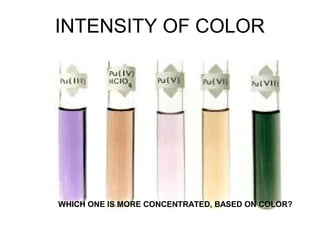
WHICH ONE IS MORE CONCENTRATED, BASED ON COLOR?
INTENSITY OF COLOR
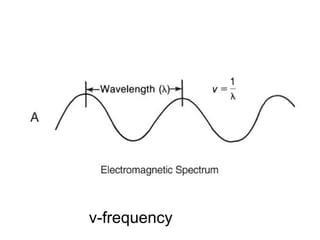
v-frequency
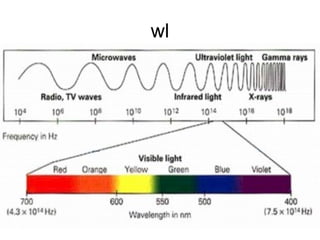
wl
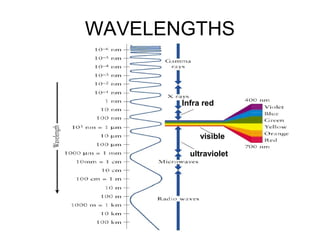
WAVELENGTHS
Infra red
visible
ultraviolet
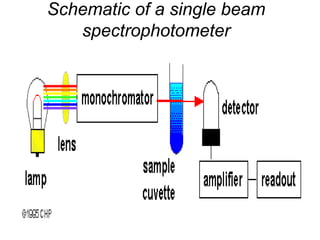
Schematic of a single beam
spectrophotometer
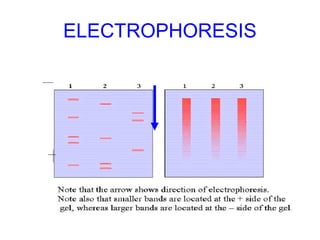
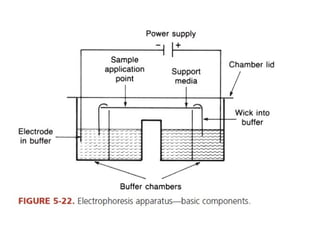
ELECTROPHORESIS
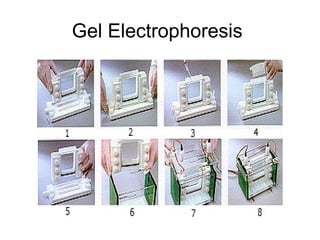
Gel Electrophoresis
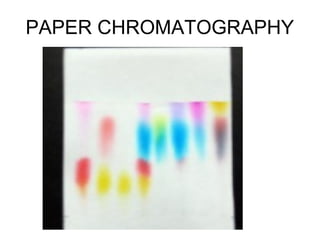
PAPER CHROMATOGRAPHY
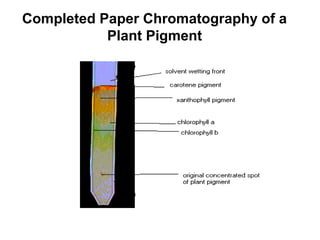
Completed Paper Chromatography of a
Plant Pigment
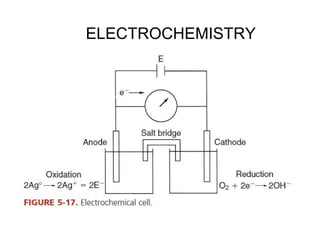
ELECTROCHEMISTRY
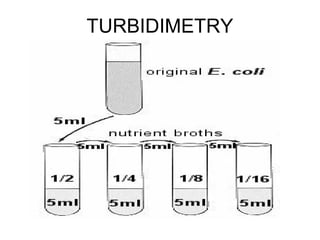
TURBIDIMETRY
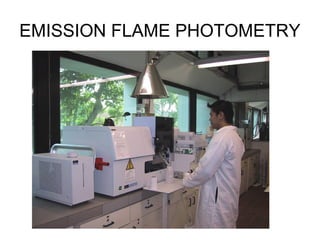
EMISSION FLAME PHOTOMETRY
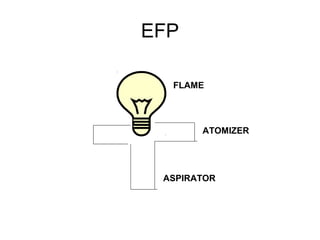
EFP
ASPIRATOR
ATOMIZER
FLAME
VOLUMETRIC & TITRIMETRIC
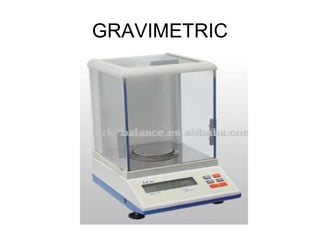
GRAVIMETRIC
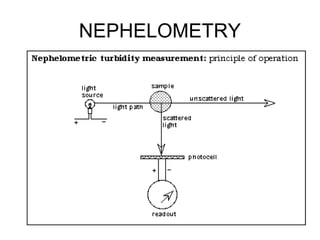
NEPHELOMETRY
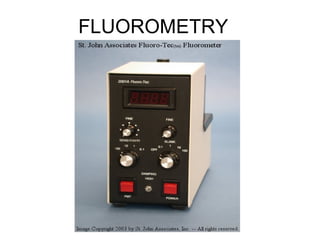
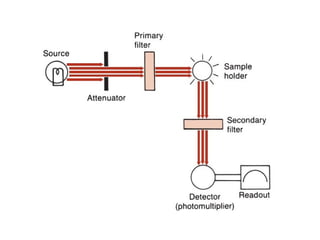
FLUOROMETRY
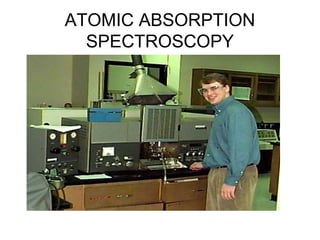
ATOMIC ABSORPTION
SPECTROSCOPY
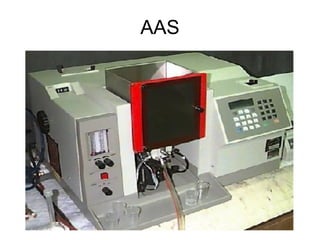
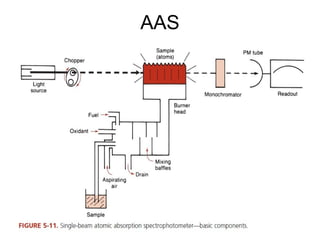
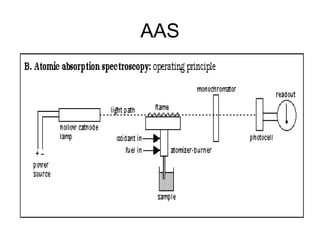
AAS
AAS
AAS
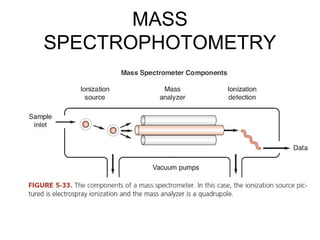
MASS
SPECTROPHOTOMETRY
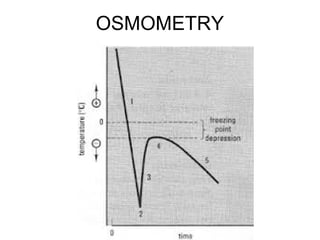
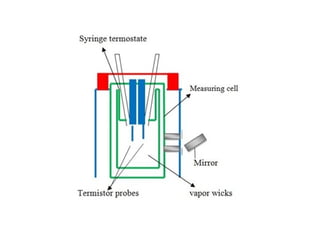
OSMOMETRY
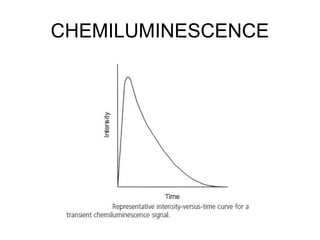
CHEMILUMINESCENCE
BRING OUT ¼ SHEET OF YELLOW PAPER
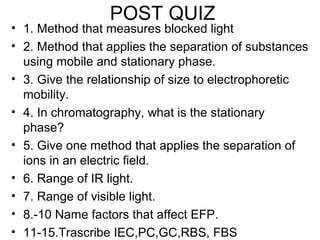
POST QUIZ
• 1. Method that measures blocked light
• 2. Method that applies the separation of substances
using mobile and stationary phase.
• 3. Give the relationship of size to electrophoretic
mobility.
• 4. In chromatography, what is the stationary
phase?
• 5. Give one method that applies the separation of
ions in an electric field.
• 6. Range of IR light.
• 7. Range of visible light.
• 8.-10 Name factors that affect EFP.
• 11-15.Trascribe IEC,PC,GC,RBS, FBS
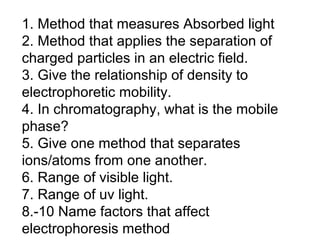
1. Method that measures Absorbed light
2. Method that applies the separation of
charged particles in an electric field.
3. Give the relationship of density to
electrophoretic mobility.
4. In chromatography, what is the mobile
phase?
5. Give one method that separates
ions/atoms from one another.
6. Range of visible light.
7. Range of uv light.
8.-10 Name factors that affect
electrophoresis method

Clinical Chemistry Instrumentation ppt

Editor's Notes

  • #13 is a constant (6.62 1027 erg sec), known as Planck’s constant, and v is frequency.-E=hv
  • #23 STOPPED-SECTION-A
  • #28 Stopped-SECTION-B
  • #30 STOPPED=SEC-E
  • #39 Advantages of chemiluminescence assays include subpicomolar detection limits, speed (with flash-type reactions, light is only measured for 10 seconds), ease of use (most assays are one-step procedures), and simple instrumentation. 7 The main disadvantage is that impurities can cause a background signal that degrades sensitivity and specificity.