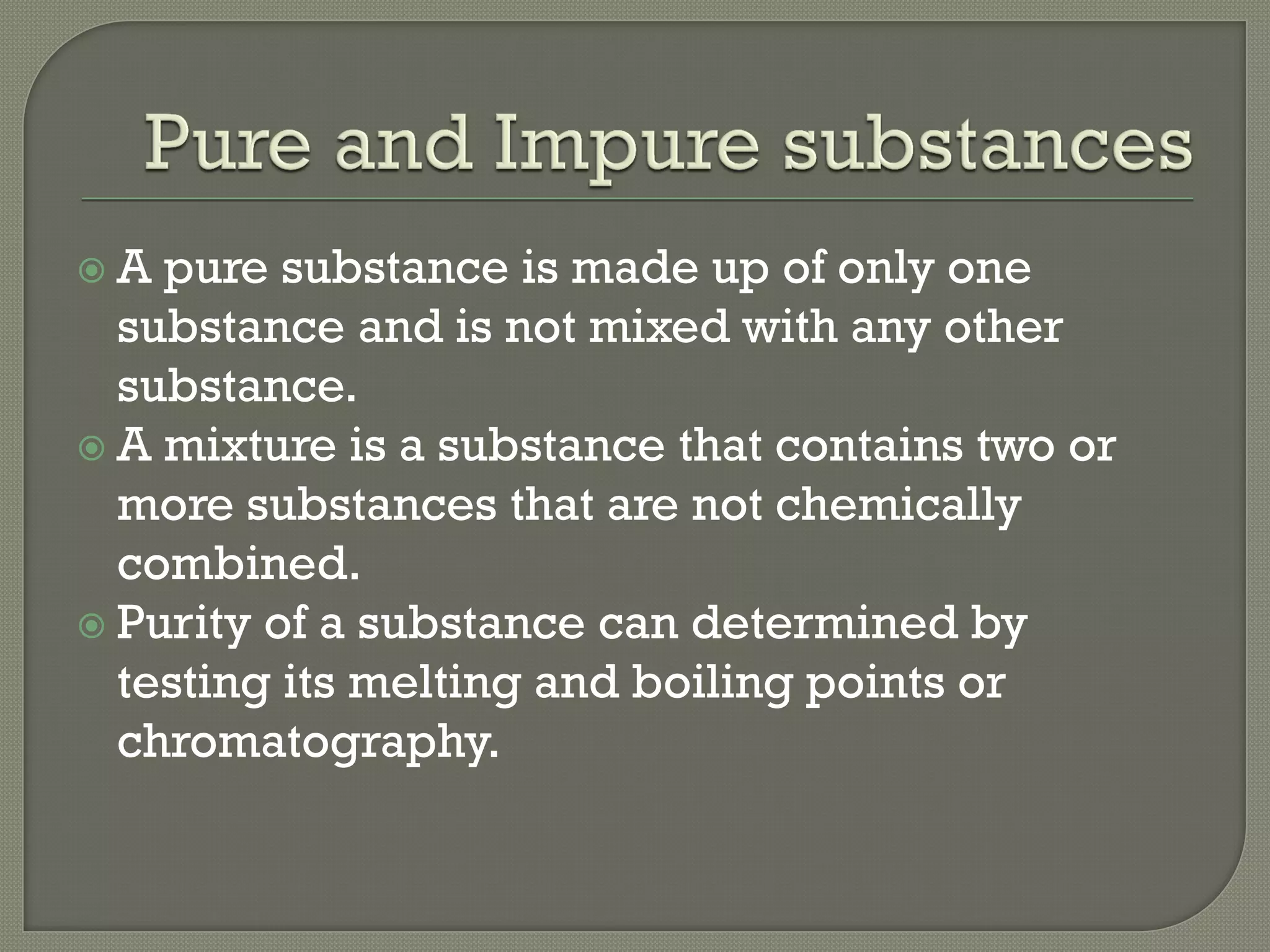
 A pure substance is made up of only one
substance and is not mixed with any other
substance.
 A mixture is a substance that contains two or
more substances that are not chemically
combined.
 Purity of a substance can determined by
testing its melting and boiling points or
chromatography.
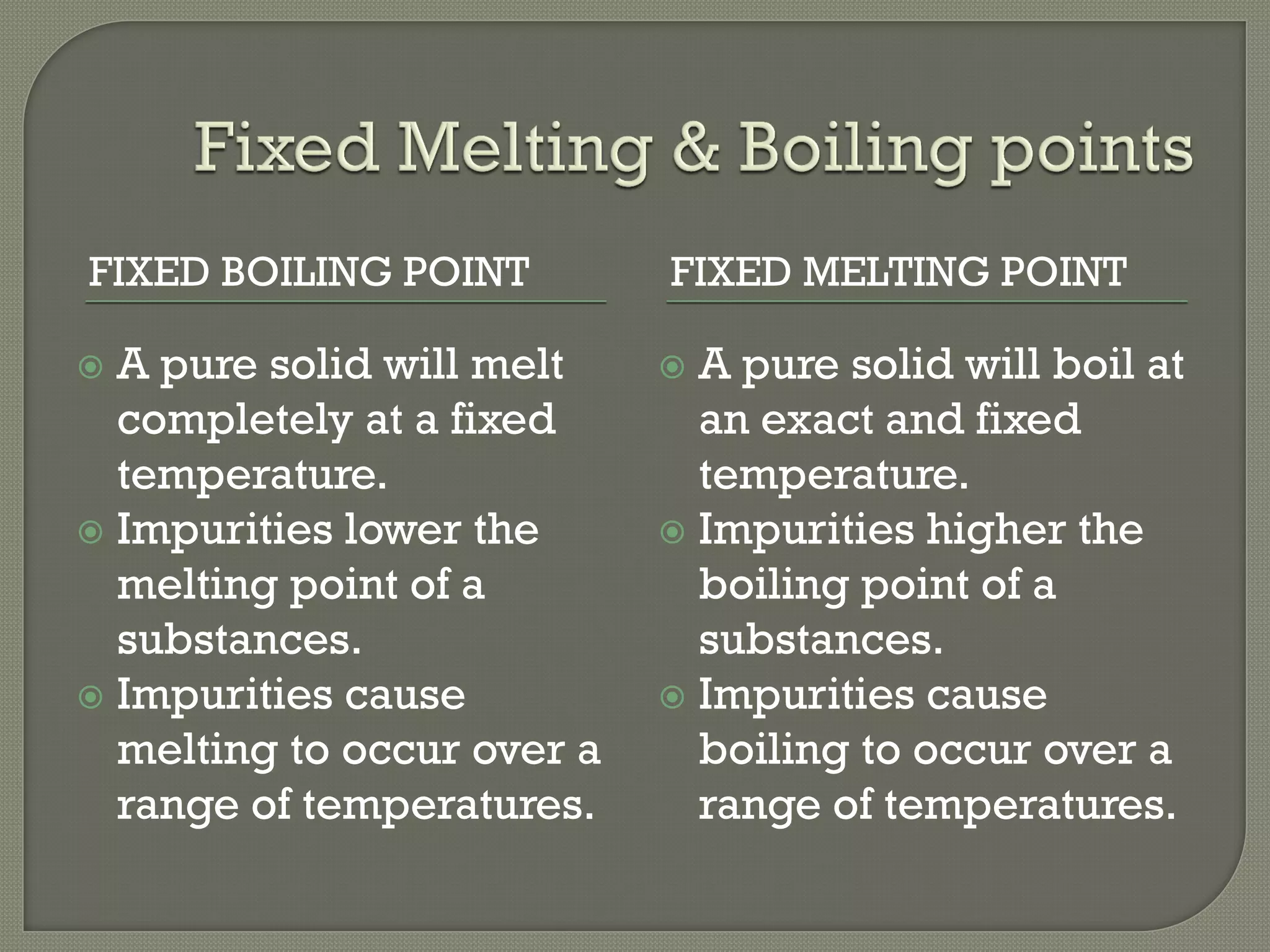
FIXED BOILING POINT FIXED MELTING POINT
 A pure solid will melt
completely at a fixed
temperature.
 Impurities lower the
melting point of a
substances.
 Impurities cause
melting to occur over a
range of temperatures.
 A pure solid will boil at
an exact and fixed
temperature.
 Impurities higher the
boiling point of a
substances.
 Impurities cause
boiling to occur over a
range of temperatures.
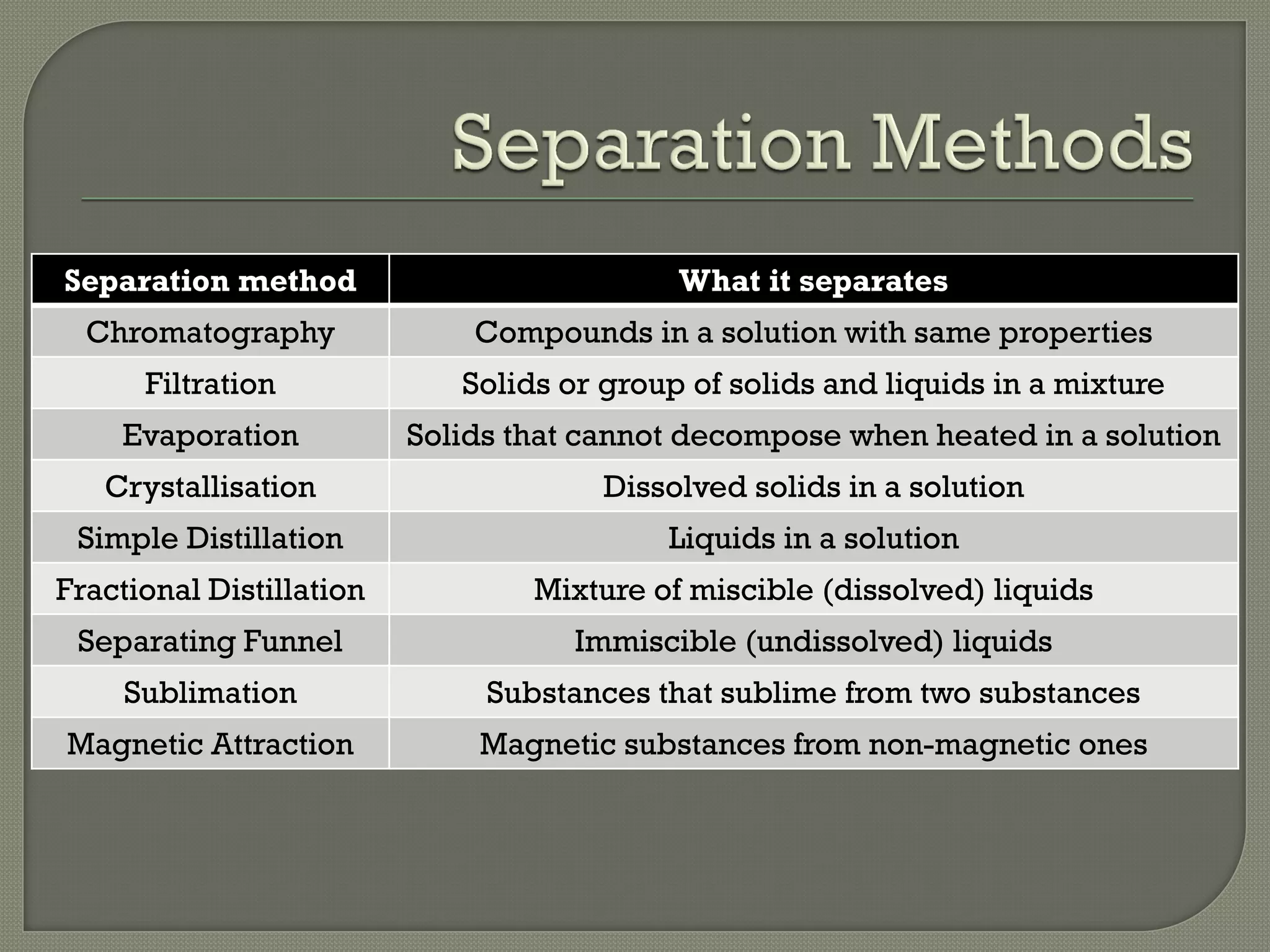
Separation method What it separates
Chromatography Compounds in a solution with same properties
Filtration Solids or group of solids and liquids in a mixture
Evaporation Solids that cannot decompose when heated in a solution
Crystallisation Dissolved solids in a solution
Simple Distillation Liquids in a solution
Fractional Distillation Mixture of miscible (dissolved) liquids
Separating Funnel Immiscible (undissolved) liquids
Sublimation Substances that sublime from two substances
Magnetic Attraction Magnetic substances from non-magnetic ones
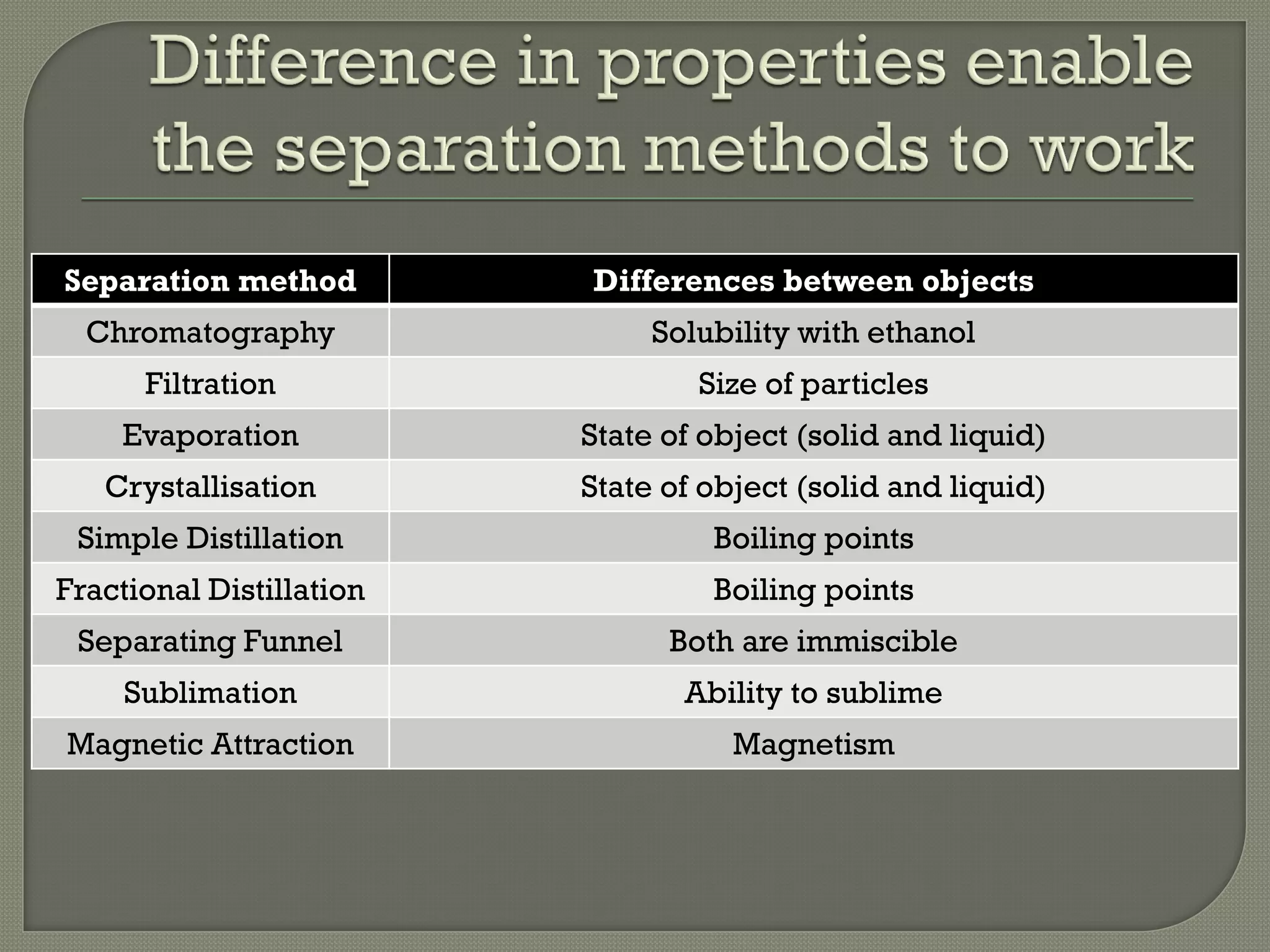
Separation method Differences between objects
Chromatography Solubility with ethanol
Filtration Size of particles
Evaporation State of object (solid and liquid)
Crystallisation State of object (solid and liquid)
Simple Distillation Boiling points
Fractional Distillation Boiling points
Separating Funnel Both are immiscible
Sublimation Ability to sublime
Magnetic Attraction Magnetism
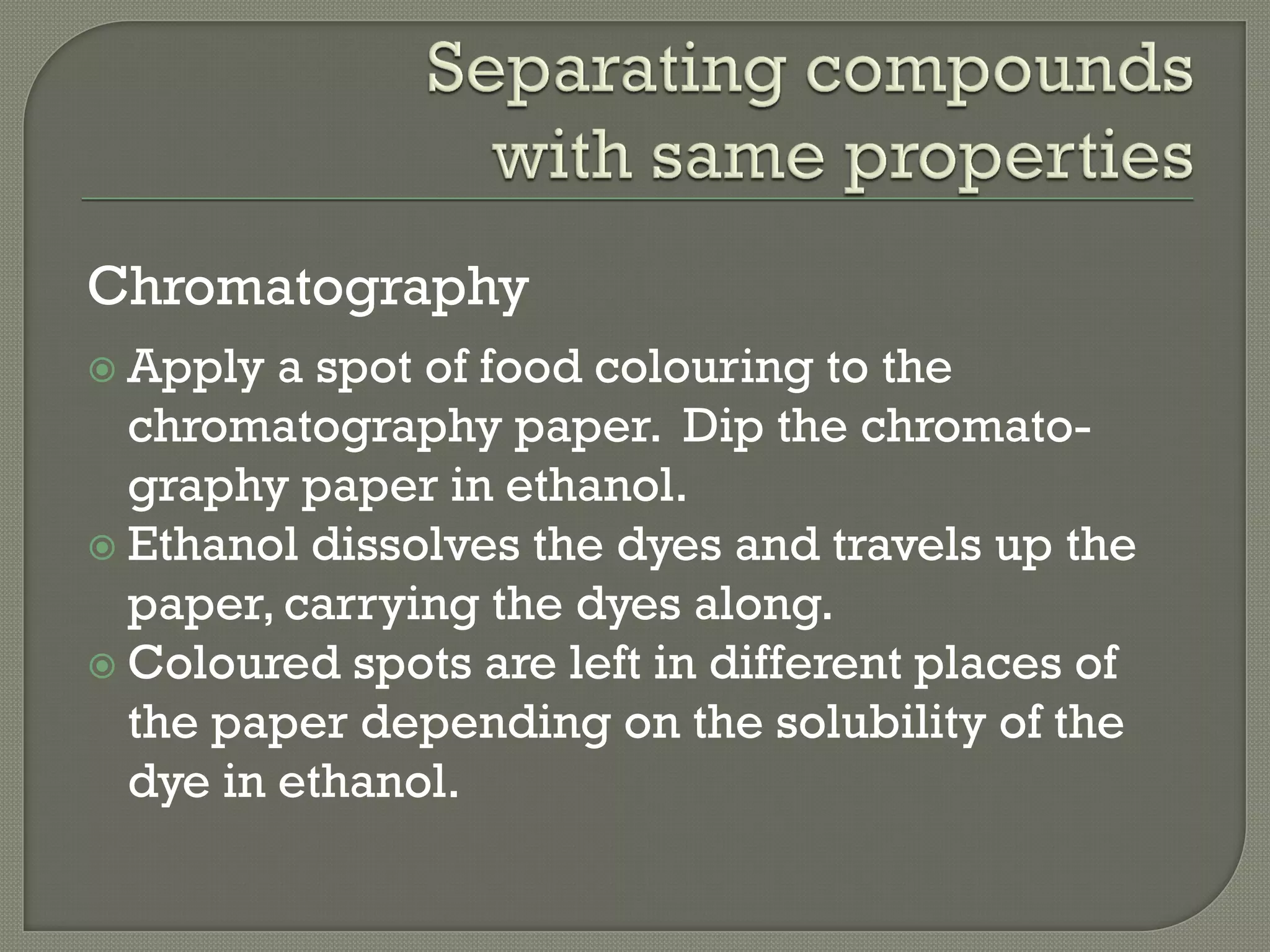
Chromatography
 Apply a spot of food colouring to the
chromatography paper. Dip the chromato-
graphy paper in ethanol.
 Ethanol dissolves the dyes and travels up the
paper, carrying the dyes along.
 Coloured spots are left in different places of
the paper depending on the solubility of the
dye in ethanol.
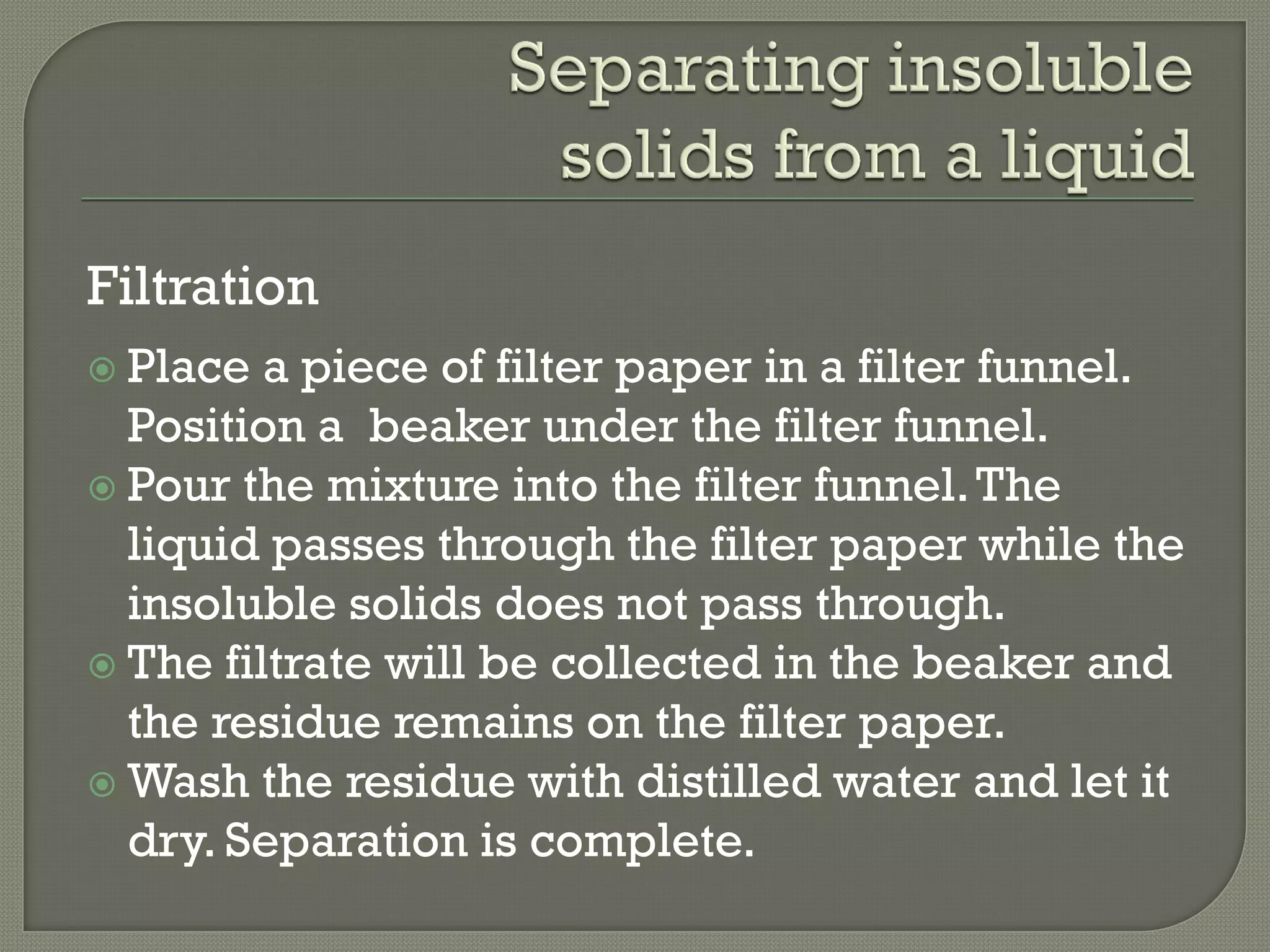
Filtration
 Place a piece of filter paper in a filter funnel.
Position a beaker under the filter funnel.
 Pour the mixture into the filter funnel.The
liquid passes through the filter paper while the
insoluble solids does not pass through.
 The filtrate will be collected in the beaker and
the residue remains on the filter paper.
 Wash the residue with distilled water and let it
dry. Separation is complete.
Filtration
 Place a piece of filter paper in a filter funnel.
Position a beaker under the filter funnel.
 Pour the mixture into the filter funnel.The
liquid passes through the filter paper while the
insoluble solids does not pass through.
 The filtrate will be collected in the beaker and
the residue remains on the filter paper.
 Wash the residue with distilled water and let it
dry. Separation is complete.
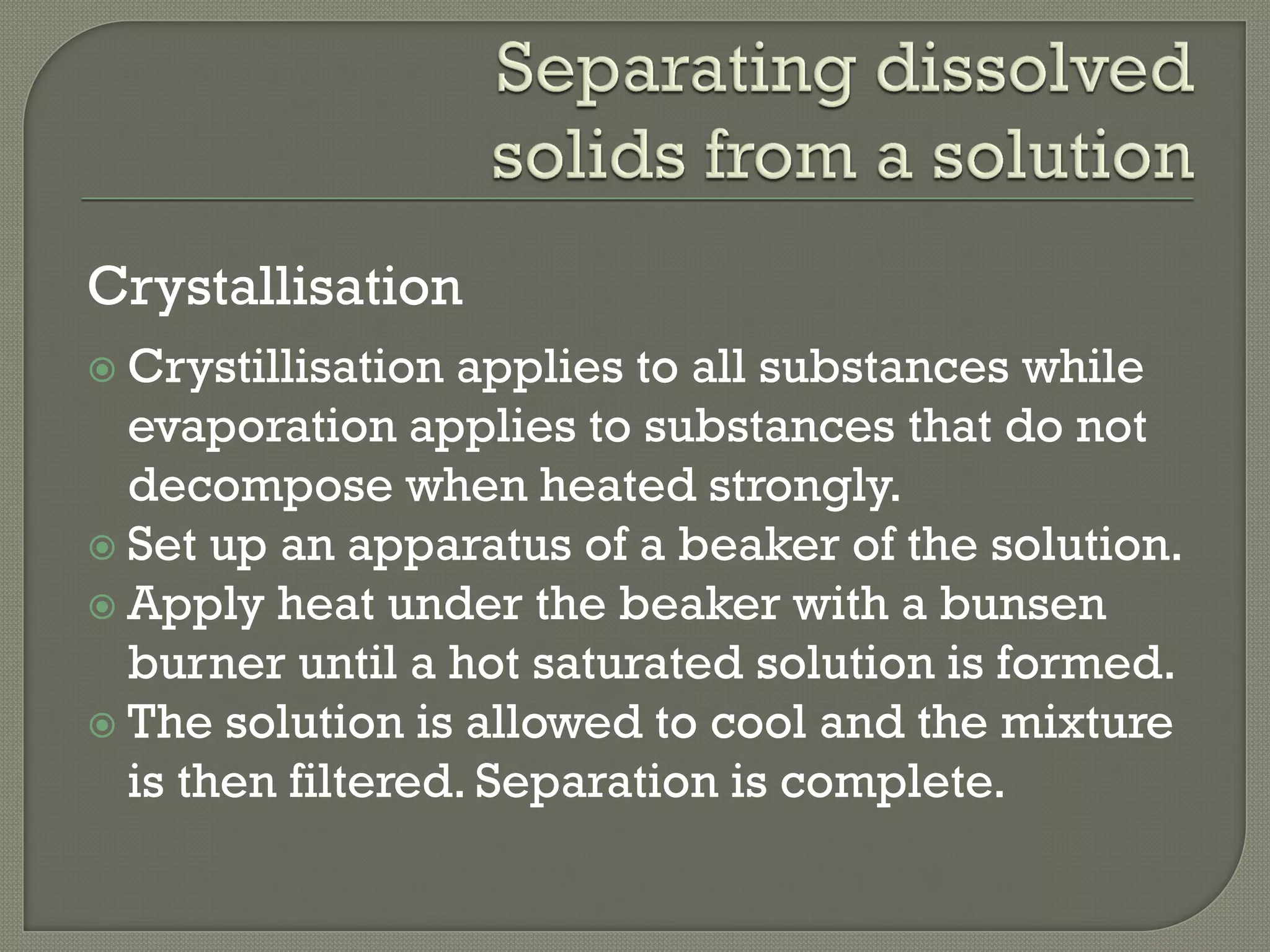
Crystallisation
 Crystillisation applies to all substances while
evaporation applies to substances that do not
decompose when heated strongly.
 Set up an apparatus of a beaker of the solution.
 Apply heat under the beaker with a bunsen
burner until a hot saturated solution is formed.
 The solution is allowed to cool and the mixture
is then filtered. Separation is complete.
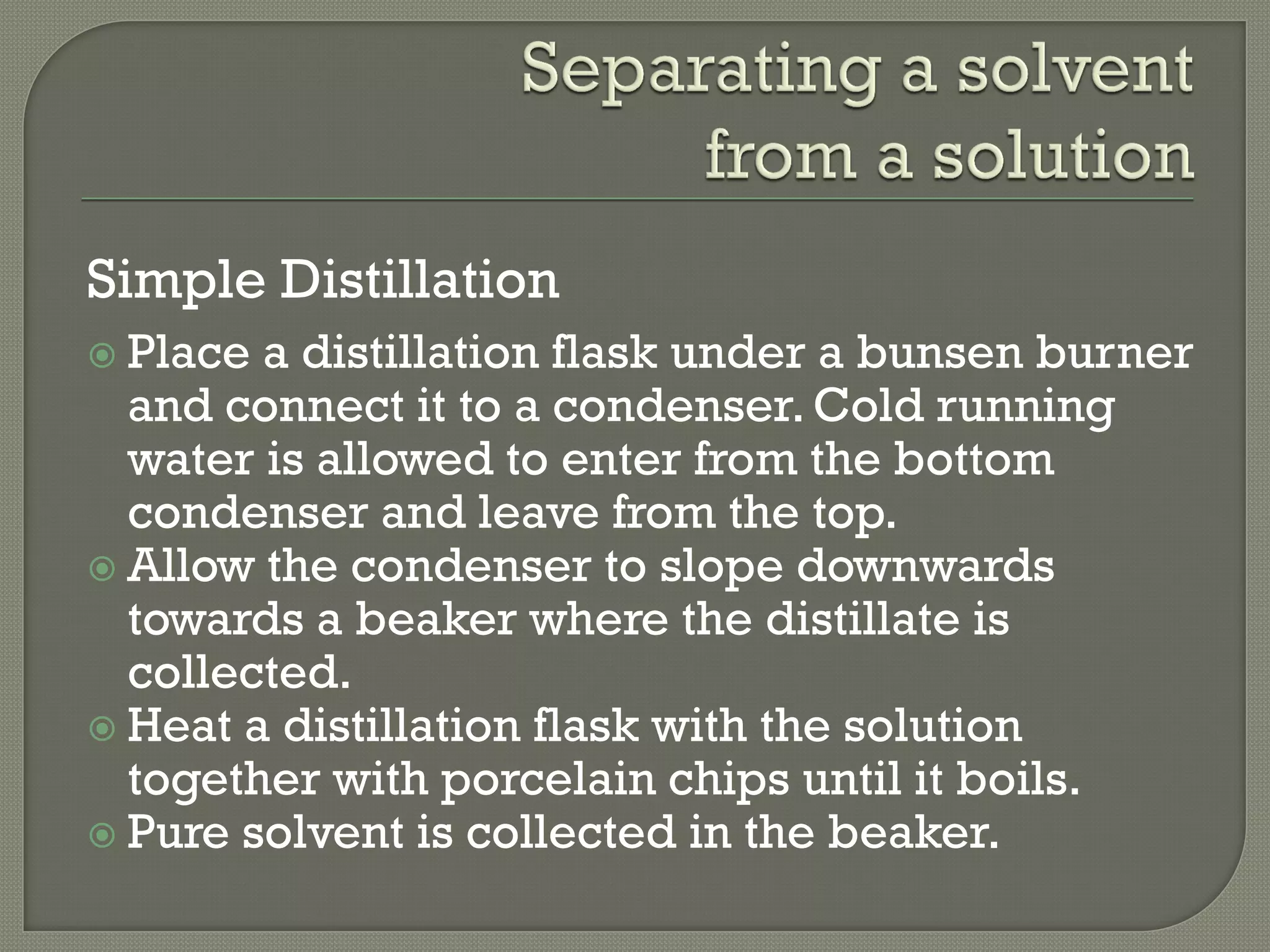
Simple Distillation
 Place a distillation flask under a bunsen burner
and connect it to a condenser. Cold running
water is allowed to enter from the bottom
condenser and leave from the top.
 Allow the condenser to slope downwards
towards a beaker where the distillate is
collected.
 Heat a distillation flask with the solution
together with porcelain chips until it boils.
 Pure solvent is collected in the beaker.
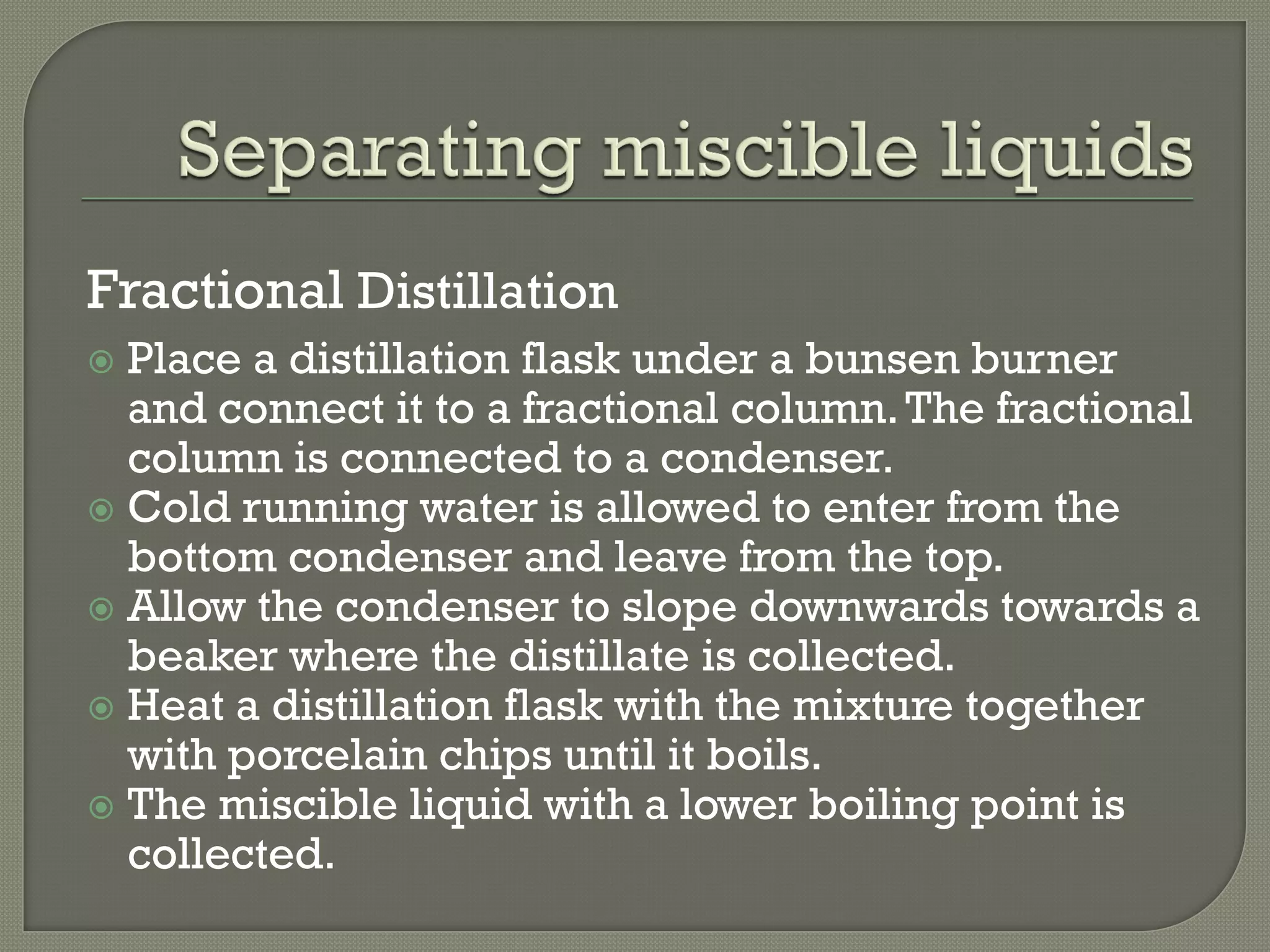
Fractional Distillation
 Place a distillation flask under a bunsen burner
and connect it to a fractional column.The fractional
column is connected to a condenser.
 Cold running water is allowed to enter from the
bottom condenser and leave from the top.
 Allow the condenser to slope downwards towards a
beaker where the distillate is collected.
 Heat a distillation flask with the mixture together
with porcelain chips until it boils.
 The miscible liquid with a lower boiling point is
collected.
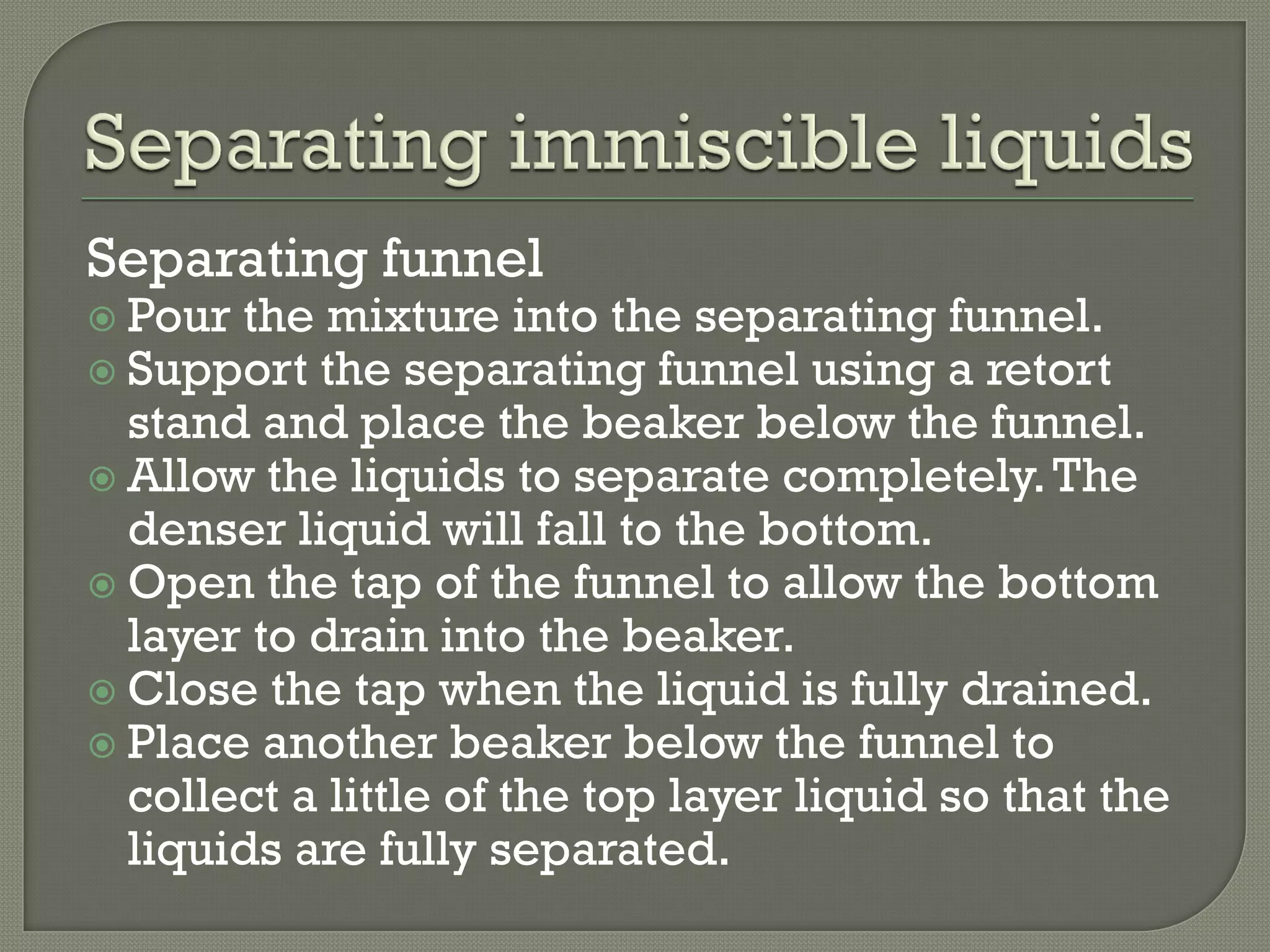
Separating funnel
 Pour the mixture into the separating funnel.
 Support the separating funnel using a retort
stand and place the beaker below the funnel.
 Allow the liquids to separate completely.The
denser liquid will fall to the bottom.
 Open the tap of the funnel to allow the bottom
layer to drain into the beaker.
 Close the tap when the liquid is fully drained.
 Place another beaker below the funnel to
collect a little of the top layer liquid so that the
liquids are fully separated.
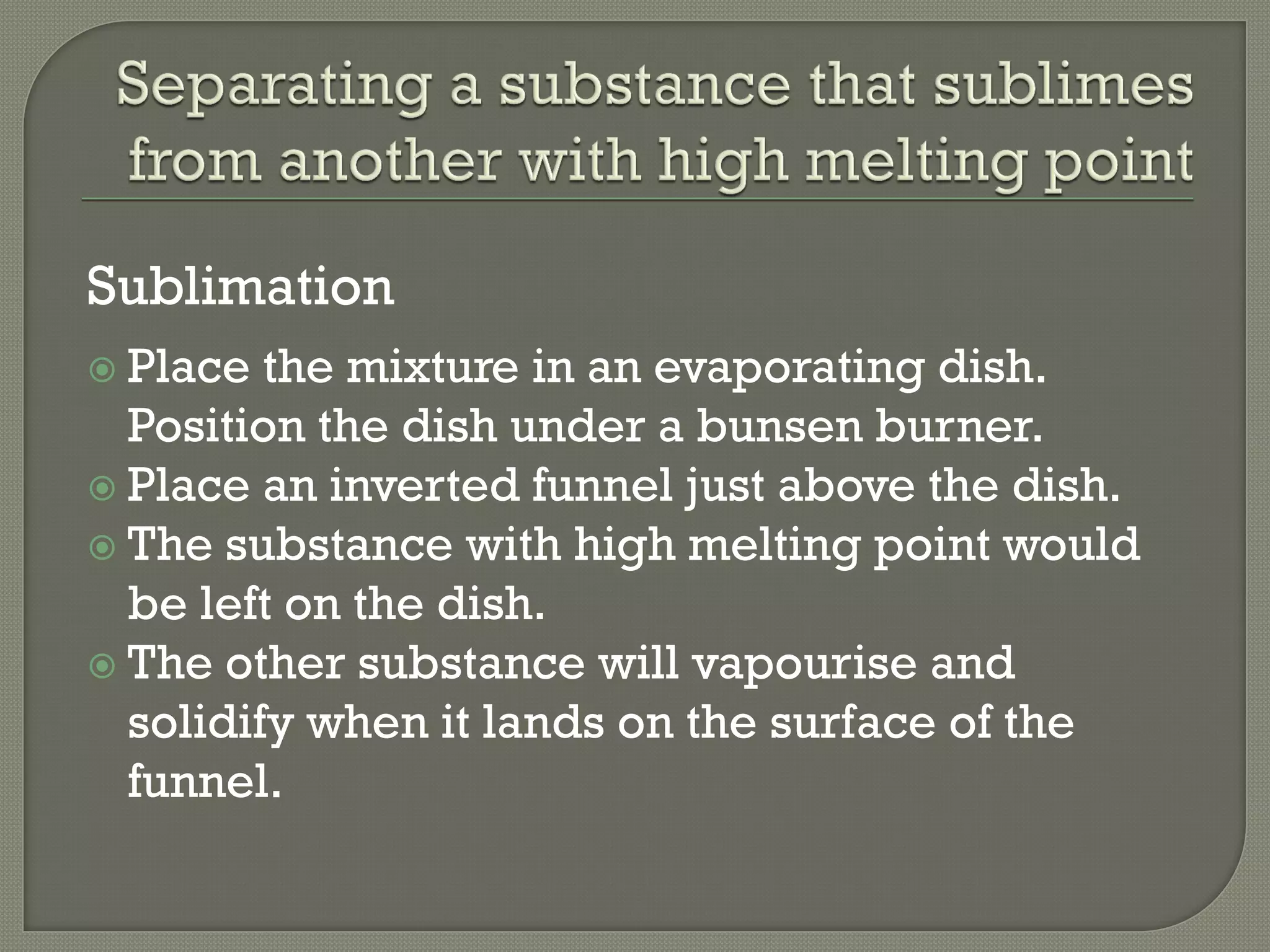
Sublimation
 Place the mixture in an evaporating dish.
Position the dish under a bunsen burner.
 Place an inverted funnel just above the dish.
 The substance with high melting point would
be left on the dish.
 The other substance will vapourise and
solidify when it lands on the surface of the
funnel.
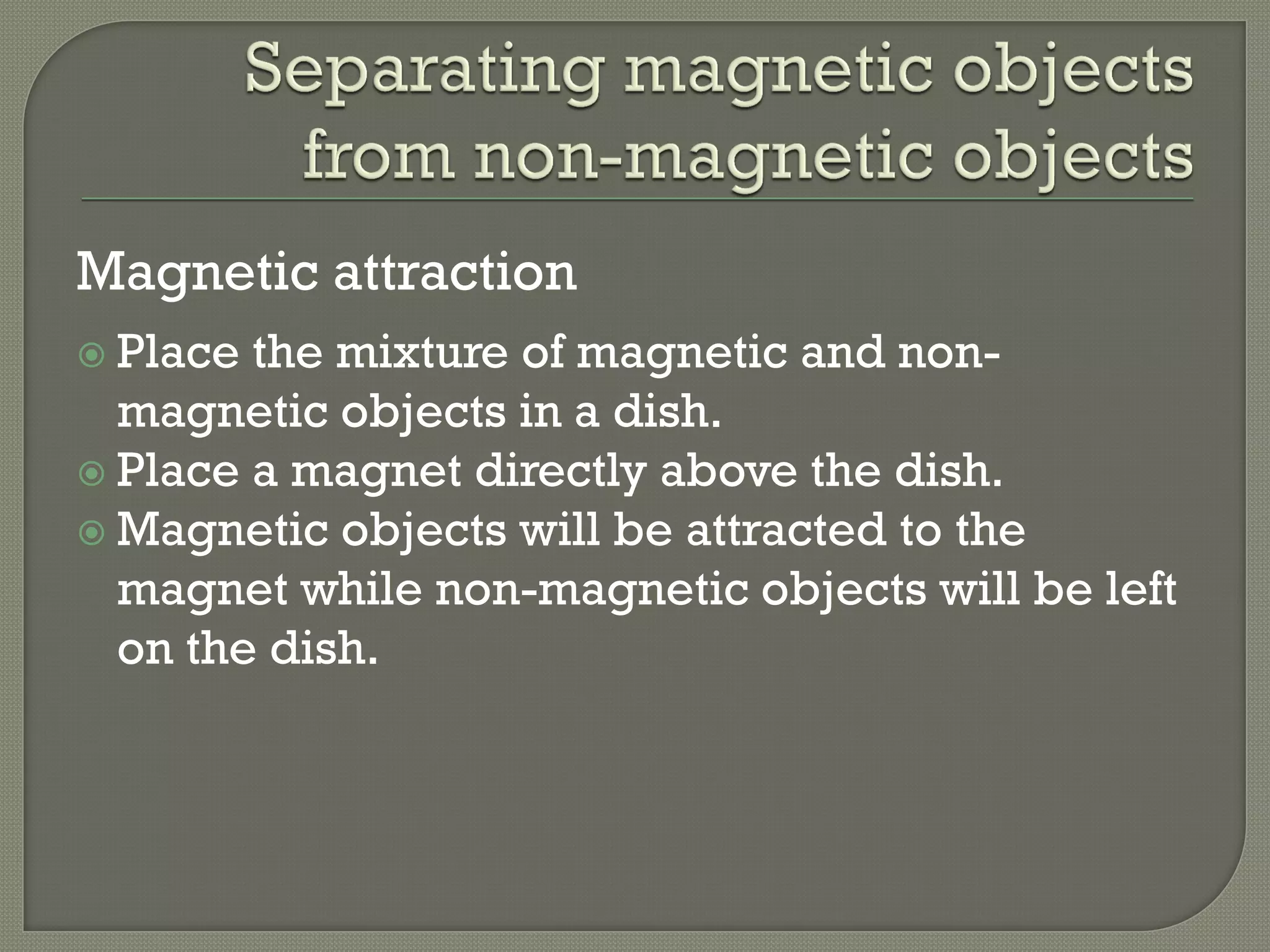
Magnetic attraction
 Place the mixture of magnetic and non-
magnetic objects in a dish.
 Place a magnet directly above the dish.
 Magnetic objects will be attracted to the
magnet while non-magnetic objects will be left
on the dish.
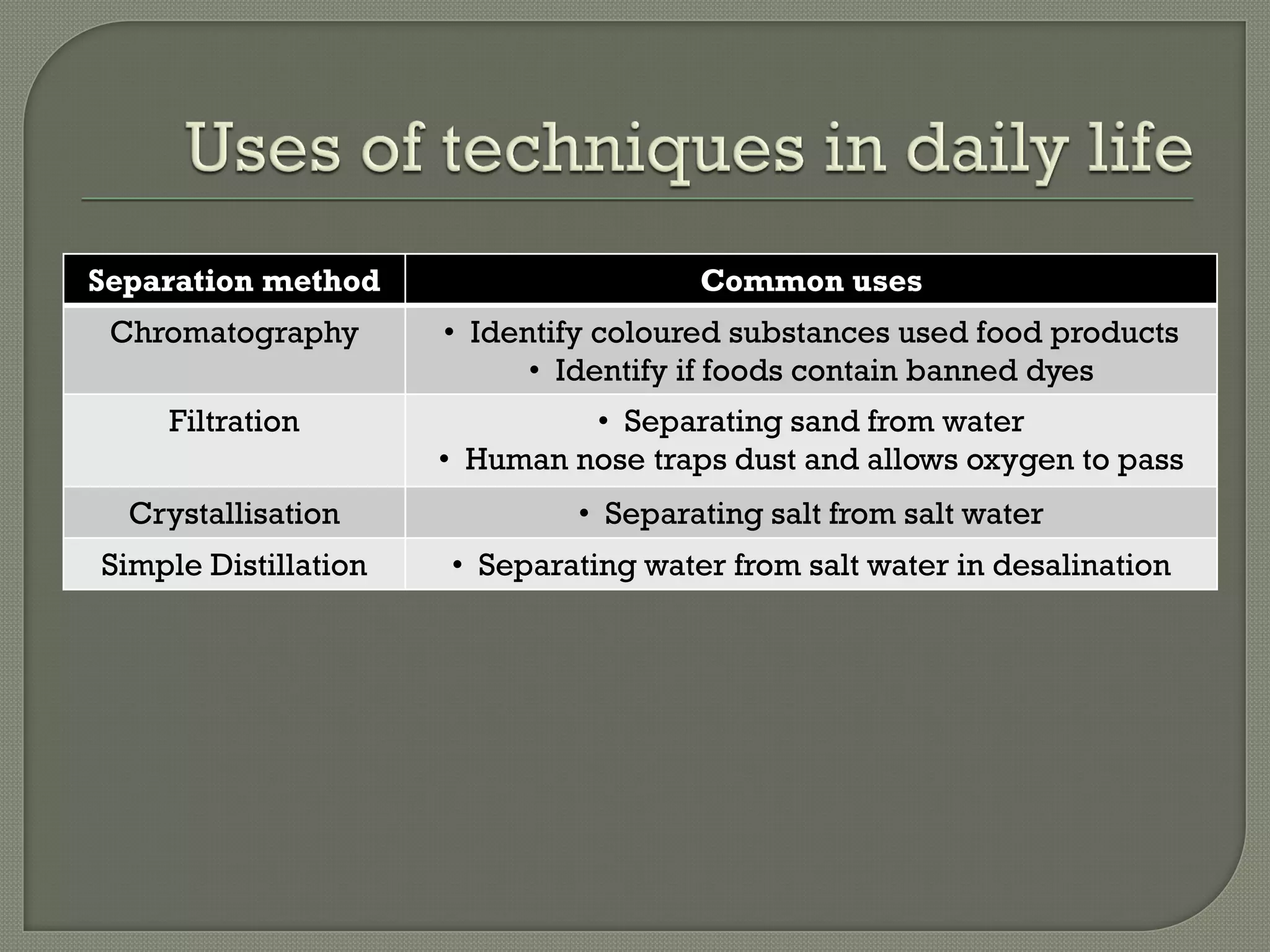
Separation method Common uses
Chromatography • Identify coloured substances used food products
• Identify if foods contain banned dyes
Filtration • Separating sand from water
• Human nose traps dust and allows oxygen to pass
Crystallisation • Separating salt from salt water
Simple Distillation • Separating water from salt water in desalination
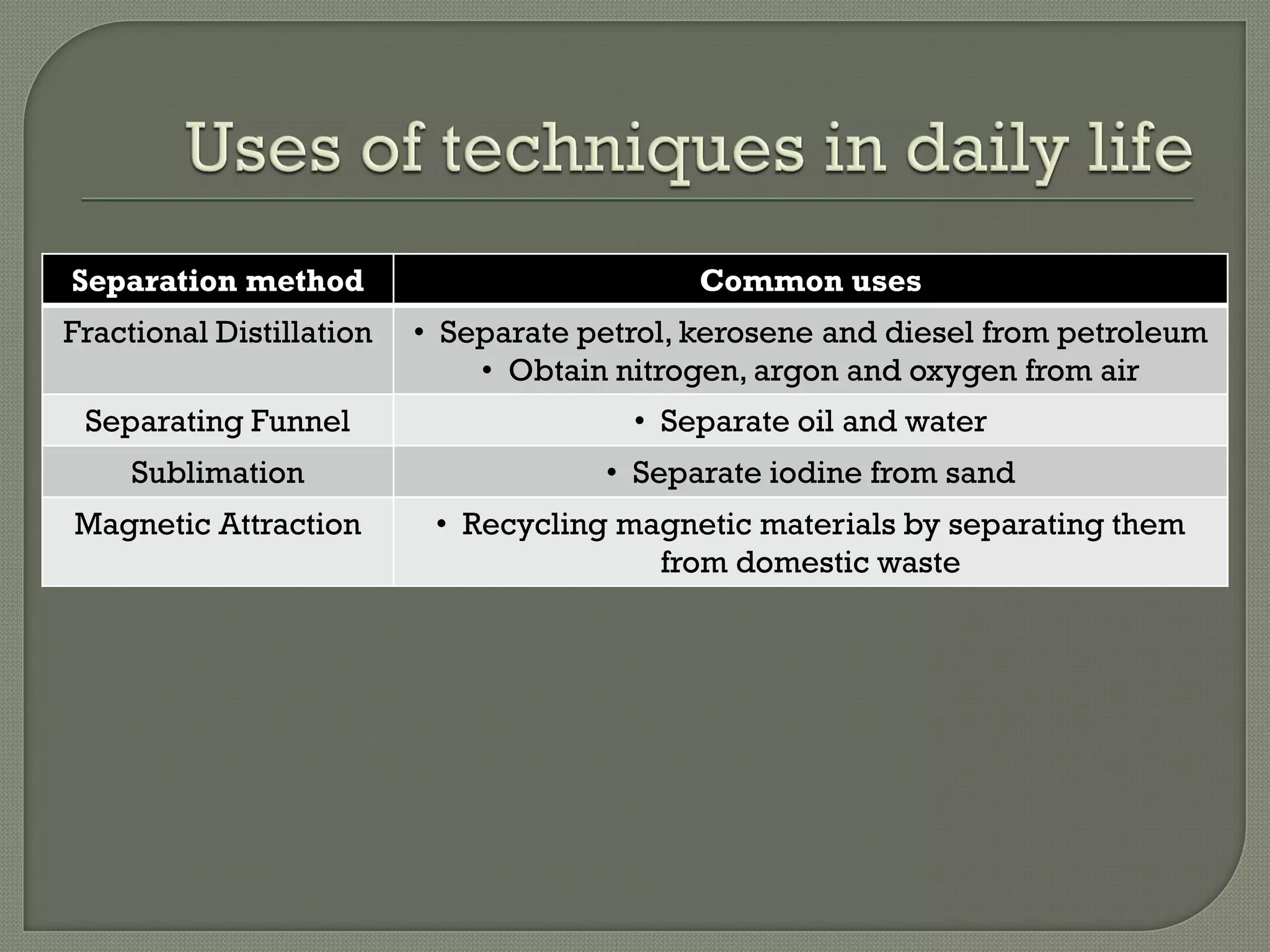
Separation method Common uses
Fractional Distillation • Separate petrol, kerosene and diesel from petroleum
• Obtain nitrogen, argon and oxygen from air
Separating Funnel • Separate oil and water
Sublimation • Separate iodine from sand
Magnetic Attraction • Recycling magnetic materials by separating them
from domestic waste

Separation Techniques

  • 2.
     A puresubstance is made up of only one substance and is not mixed with any other substance.  A mixture is a substance that contains two or more substances that are not chemically combined.  Purity of a substance can determined by testing its melting and boiling points or chromatography.
  • 3.
    FIXED BOILING POINTFIXED MELTING POINT  A pure solid will melt completely at a fixed temperature.  Impurities lower the melting point of a substances.  Impurities cause melting to occur over a range of temperatures.  A pure solid will boil at an exact and fixed temperature.  Impurities higher the boiling point of a substances.  Impurities cause boiling to occur over a range of temperatures.
  • 4.
    Separation method Whatit separates Chromatography Compounds in a solution with same properties Filtration Solids or group of solids and liquids in a mixture Evaporation Solids that cannot decompose when heated in a solution Crystallisation Dissolved solids in a solution Simple Distillation Liquids in a solution Fractional Distillation Mixture of miscible (dissolved) liquids Separating Funnel Immiscible (undissolved) liquids Sublimation Substances that sublime from two substances Magnetic Attraction Magnetic substances from non-magnetic ones
  • 5.
    Separation method Differencesbetween objects Chromatography Solubility with ethanol Filtration Size of particles Evaporation State of object (solid and liquid) Crystallisation State of object (solid and liquid) Simple Distillation Boiling points Fractional Distillation Boiling points Separating Funnel Both are immiscible Sublimation Ability to sublime Magnetic Attraction Magnetism
  • 6.
    Chromatography  Apply aspot of food colouring to the chromatography paper. Dip the chromato- graphy paper in ethanol.  Ethanol dissolves the dyes and travels up the paper, carrying the dyes along.  Coloured spots are left in different places of the paper depending on the solubility of the dye in ethanol.
  • 7.
    Filtration  Place apiece of filter paper in a filter funnel. Position a beaker under the filter funnel.  Pour the mixture into the filter funnel.The liquid passes through the filter paper while the insoluble solids does not pass through.  The filtrate will be collected in the beaker and the residue remains on the filter paper.  Wash the residue with distilled water and let it dry. Separation is complete.
  • 8.
    Filtration  Place apiece of filter paper in a filter funnel. Position a beaker under the filter funnel.  Pour the mixture into the filter funnel.The liquid passes through the filter paper while the insoluble solids does not pass through.  The filtrate will be collected in the beaker and the residue remains on the filter paper.  Wash the residue with distilled water and let it dry. Separation is complete.
  • 9.
    Crystallisation  Crystillisation appliesto all substances while evaporation applies to substances that do not decompose when heated strongly.  Set up an apparatus of a beaker of the solution.  Apply heat under the beaker with a bunsen burner until a hot saturated solution is formed.  The solution is allowed to cool and the mixture is then filtered. Separation is complete.
  • 10.
    Simple Distillation  Placea distillation flask under a bunsen burner and connect it to a condenser. Cold running water is allowed to enter from the bottom condenser and leave from the top.  Allow the condenser to slope downwards towards a beaker where the distillate is collected.  Heat a distillation flask with the solution together with porcelain chips until it boils.  Pure solvent is collected in the beaker.
  • 11.
    Fractional Distillation  Placea distillation flask under a bunsen burner and connect it to a fractional column.The fractional column is connected to a condenser.  Cold running water is allowed to enter from the bottom condenser and leave from the top.  Allow the condenser to slope downwards towards a beaker where the distillate is collected.  Heat a distillation flask with the mixture together with porcelain chips until it boils.  The miscible liquid with a lower boiling point is collected.
  • 12.
    Separating funnel  Pourthe mixture into the separating funnel.  Support the separating funnel using a retort stand and place the beaker below the funnel.  Allow the liquids to separate completely.The denser liquid will fall to the bottom.  Open the tap of the funnel to allow the bottom layer to drain into the beaker.  Close the tap when the liquid is fully drained.  Place another beaker below the funnel to collect a little of the top layer liquid so that the liquids are fully separated.
  • 13.
    Sublimation  Place themixture in an evaporating dish. Position the dish under a bunsen burner.  Place an inverted funnel just above the dish.  The substance with high melting point would be left on the dish.  The other substance will vapourise and solidify when it lands on the surface of the funnel.
  • 14.
    Magnetic attraction  Placethe mixture of magnetic and non- magnetic objects in a dish.  Place a magnet directly above the dish.  Magnetic objects will be attracted to the magnet while non-magnetic objects will be left on the dish.
  • 15.
    Separation method Commonuses Chromatography • Identify coloured substances used food products • Identify if foods contain banned dyes Filtration • Separating sand from water • Human nose traps dust and allows oxygen to pass Crystallisation • Separating salt from salt water Simple Distillation • Separating water from salt water in desalination
  • 16.
    Separation method Commonuses Fractional Distillation • Separate petrol, kerosene and diesel from petroleum • Obtain nitrogen, argon and oxygen from air Separating Funnel • Separate oil and water Sublimation • Separate iodine from sand Magnetic Attraction • Recycling magnetic materials by separating them from domestic waste