Hyperlipidemias and Drug
   therapy of Hyperlipidemia

Presented by
Md Akbar Siddiq Khan
M.Pharm
                                              Guided by
                               Prof. Asadullah Bakhtyari


              Nizam College Of Pharmacy
                   Hyderabad - A.P
INTRODUCTION
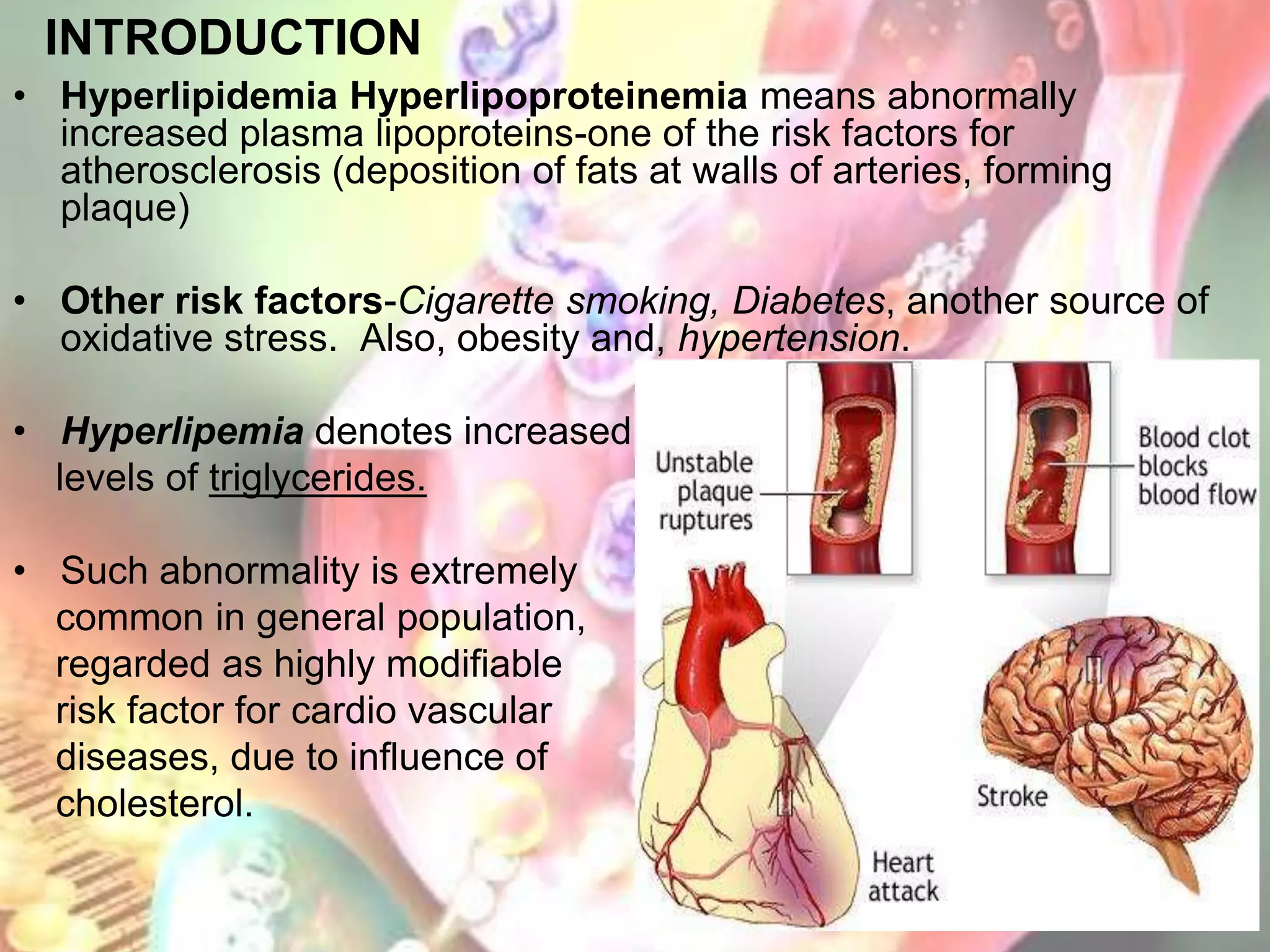
• Hyperlipidemia Hyperlipoproteinemia means abnormally
  increased plasma lipoproteins-one of the risk factors for
  atherosclerosis (deposition of fats at walls of arteries, forming
  plaque)

• Other risk factors-Cigarette smoking, Diabetes, another source of
  oxidative stress. Also, obesity and, hypertension.

• Hyperlipemia denotes increased
  levels of triglycerides.

• Such abnormality is extremely
  common in general population,
  regarded as highly modifiable
  risk factor for cardio vascular
  diseases, due to influence of
  cholesterol.
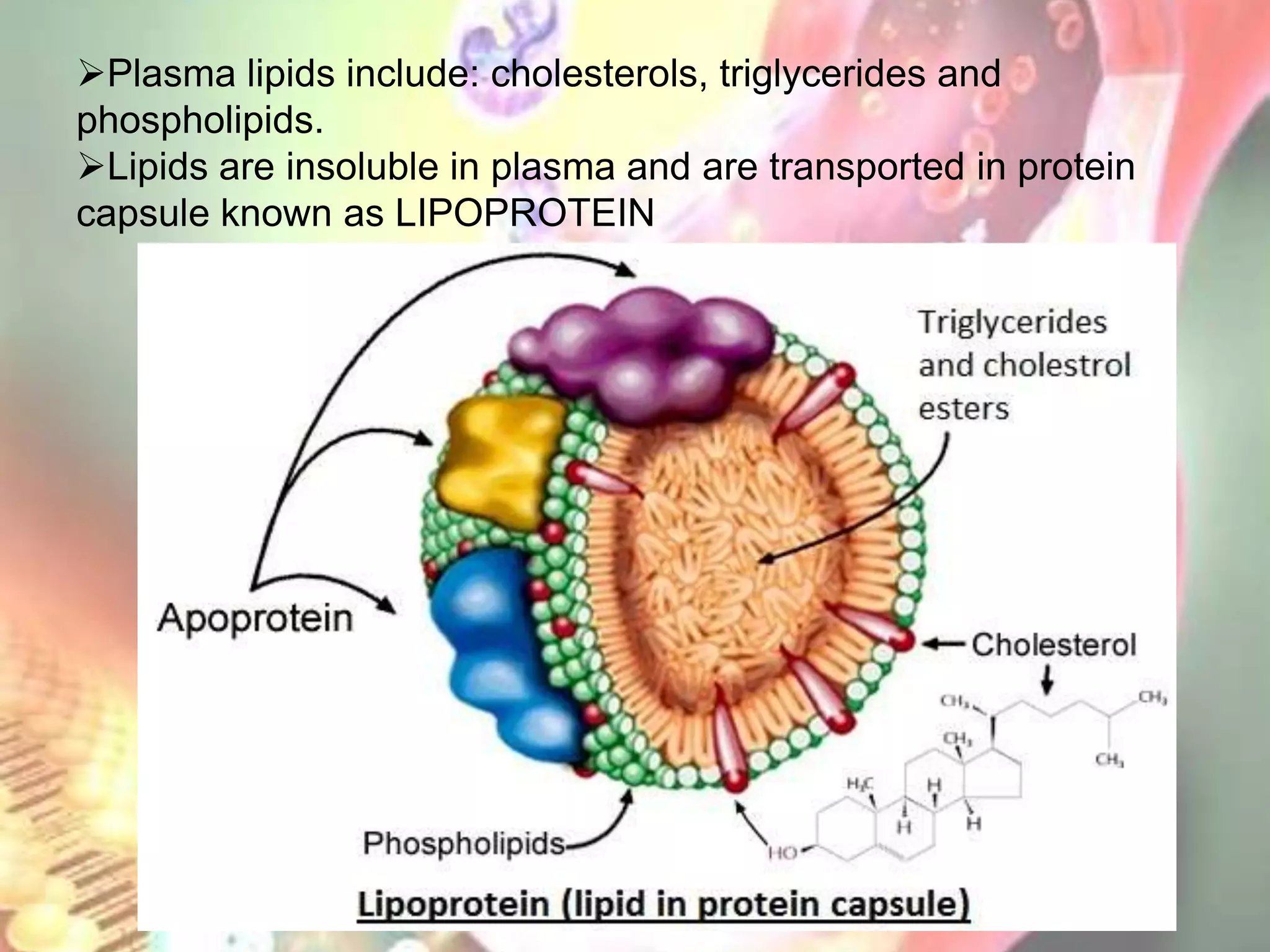
Plasma lipids include: cholesterols, triglycerides and
phospholipids.
Lipids are insoluble in plasma and are transported in protein
capsule known as LIPOPROTEIN
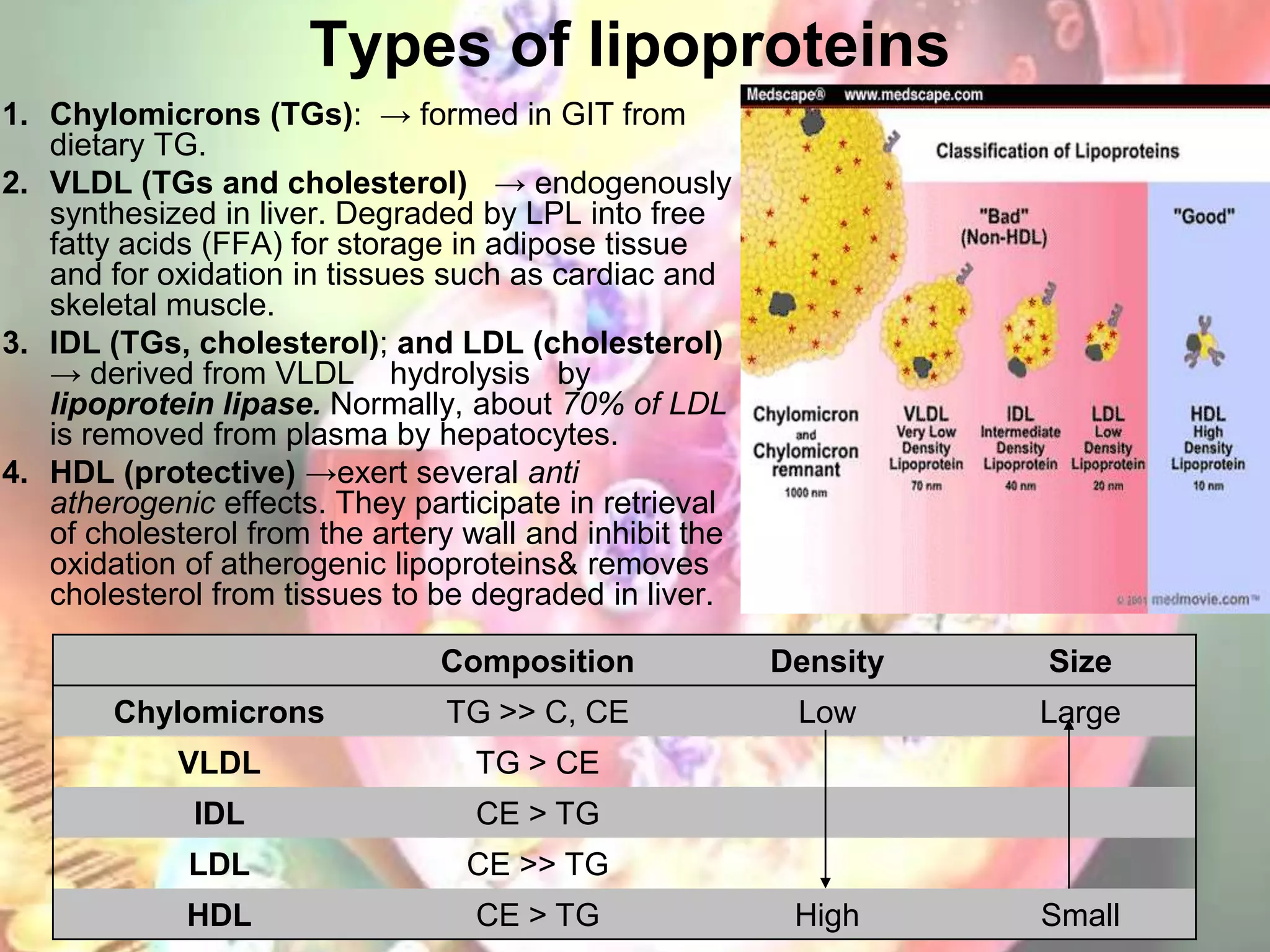
Types of lipoproteins
1. Chylomicrons (TGs): → formed in GIT from
   dietary TG.
2. VLDL (TGs and cholesterol) → endogenously
   synthesized in liver. Degraded by LPL into free
   fatty acids (FFA) for storage in adipose tissue
   and for oxidation in tissues such as cardiac and
   skeletal muscle.
3. IDL (TGs, cholesterol); and LDL (cholesterol)
   → derived from VLDL hydrolysis by
   lipoprotein lipase. Normally, about 70% of LDL
   is removed from plasma by hepatocytes.
4. HDL (protective) →exert several anti
   atherogenic effects. They participate in retrieval
   of cholesterol from the artery wall and inhibit the
   oxidation of atherogenic lipoproteins& removes
   cholesterol from tissues to be degraded in liver.

                                Composition              Density   Size
        Chylomicrons            TG >> C, CE               Low      Large
             VLDL                  TG > CE
              IDL                  CE > TG
             LDL                  CE >> TG
             HDL                   CE > TG                High     Small
The major pathways involved in the metabolism of chylomicrons synthesized by the
                  intestine and VLDL synthesized by the liver
Etiology of hyperlipidemias
•   1- Primary (genetic origin): hereditary.
•   2- Secondary to:
•   Diseases e.g. hypothyroidism, diabetes
•   Drugs: β blockers, alcohol, thiazides, anti-
    depressants.
•   Over weight
•   Lack of exercise and inactive life style
•   Higher levels of female hormones increases or
    changes cholesterol levels eg: women on birth
    control pills.
•   Smoking does not cause higher cholesterol
    levels, but it can reduce the HDL, which is good
    cholesterol.
Types of Hyperlipidemia
FRERICKSON CLASSIFICATION- based on the pattern of
  lipoprotein on electrophoresis or ultracentrifugation.
• Primary Chylomicronemia (I): Chylomicrons are not
  present in the serum of normal individuals who have
  fasted 10 hours. The recessive traits of deficiency of
  lipoprotein lipase or its cofactor are usually associated with
  severe lipemia.
• Familial Hypercholesterolemia (IIA): Familial
  hypercholesterolemia is an autosomal dominant trait.
  Although levels of LDL tend to increase with normal VLDL.
• Familial Combined (mixed) Hyperlipoproteinemia (IIB):
  elevated levels of VLDL, LDL.
• Familial Dysbetalipoproteinemia (III): Increased IDL
  resulting increased TG and cholesterol levels.
• Familial Hypertriglyceridemia (VI): Increase VLDL
  production with normal or decreased LDL.
• Familial mixed hypertriglyceridemia (V): Serum VLDL and
  chylomicrons are increased
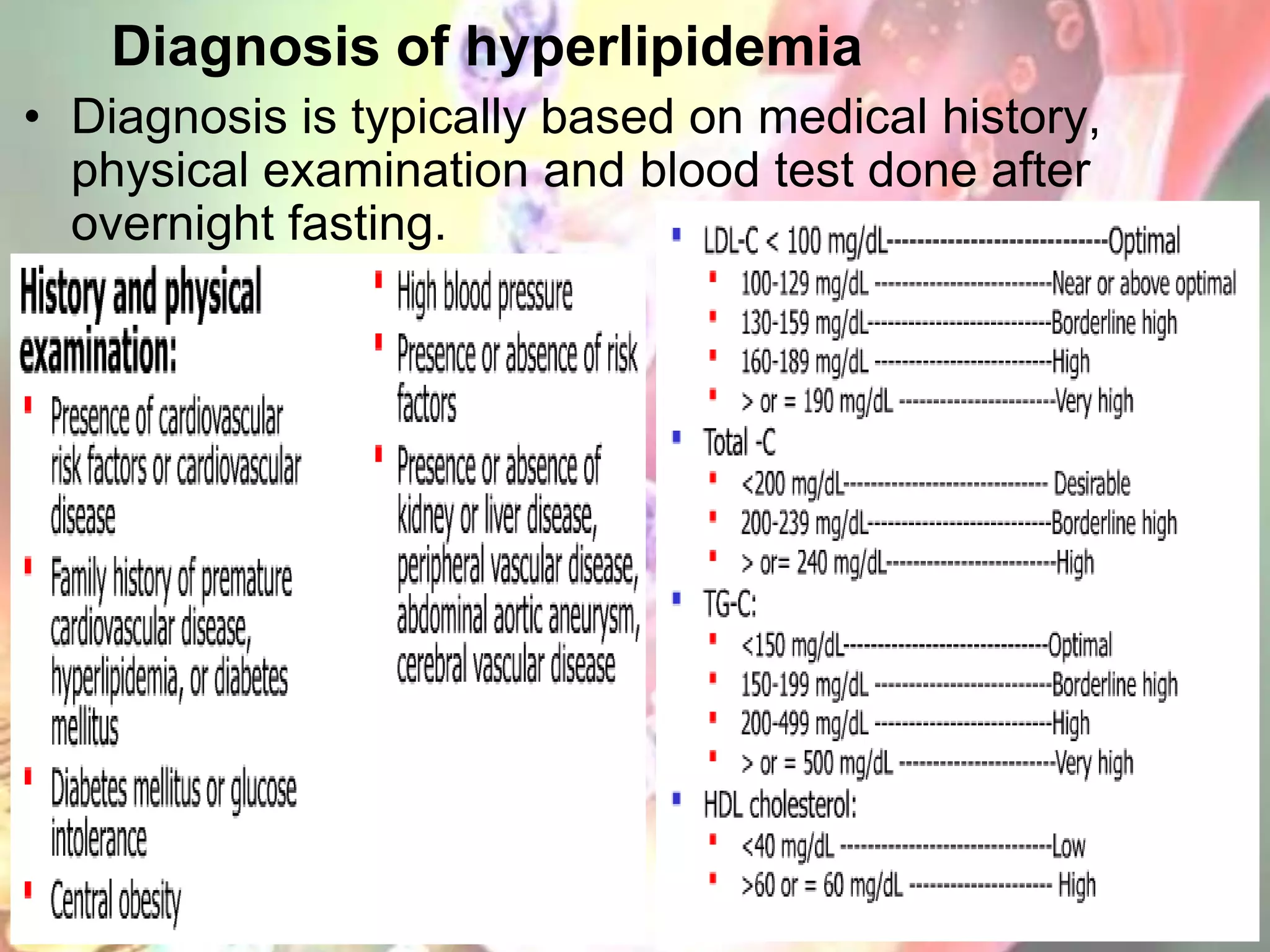
Diagnosis of hyperlipidemia
• Diagnosis is typically based on medical history,
  physical examination and blood test done after
  overnight fasting.
Management of Hyperlipidemias
 I- Diet:
• Avoid saturated fatty acids (animal fats) and give
  unsaturated fatty acids (plant fats).
• - Regular consumption of fish oil which contains
  omega 3 fatty acids and vitamins E and C
  (antioxidants).
 II. Exercise:
• - ↑ HDL and insulin sensitivity.
 III- Drug therapy: the primary goal of therapy is to
  decrease levels of LDL . Also,increase in HDL is
  recommended.
Anti-hyperlipidemic drugs are mainly classified into five
  types they are:

 1. HMG CoA REDUCTASE INHIBITORS:
  E.g.: Atorvastatin, Fluvastatin, Lovastatin, Pravastatin, Rosuvastatin,
  Simvastatin.
 2. FIBRATES:
  E.g.: Fenofibrate, Gemfibrozil, Clofibrate.
 3. Nicotinic acid:
  E.g: NIACIN.
 4. BILE ACID SEQUESTRANTS:
  E.g.: Colesevelam, Colestipol, Cholestyramine
 5. CHOLESTEROL ABSORPTION INHIBITORS:
  E.g.: Ezetimibe.
A- HMG –COA reductase inhibitors
           (statins):
• Inhibit the first enzymatic step in cholesterol
  synthesis.
• Production of this enzyme and of LDL receptors is
  transcriptionally regulated by the content of cholesterol in
  the cell.
• -Simvastatin, lovastatin (prodrugs). Atorvastatin
  &Rosuvastatin are the most potent.
• In 2009 the world statins market generated over $27bn
  in revenues
• 2010 onwards, there will be major patent expires – most
  notably for Lipitor-mfg by Pfizer, and rising competition
  from generic alternatives.
Mechanism of action:(statins)
•   Structural analogues of HMG –
    COA reductase (the rate limiting
    enzyme in cholesterol synthesis)
    → reduction of cholesterol
    synthesis in liver →
    compensatory ↑ in synthesis
    of LDL receptors on hepatic and
    extra hepatic tissues →Increase
    in hepatic uptake of circulating
    LDL which decreases plasma
    LDL cholesterol .
•   - Decrease TGs to some extent
    and ↑ HDL.
•   - Cardio protective: vasodilators
    and decrease atherosclerosis
    (stabilize plaque).
•   Therapeutic uses:
•   - Effective in all types of
    hyperlipidemia except those who
    are homozygous for familial
    hypercholesterolemia (lack of
    LDL receptors).
•   Usually combined with other
    drugs.
Adverse effects
• 1- Increase in liver enzymes (serum
  transaminases should be monitored
  continuously ,CI in hepatic dysfunction).
• 2-Myopathy and muscle
  damageInhibits the production of
  CoQ10, which is essential for the
  creation of ATP (energy a cell uses).
• Muscle fatigue and weakness is caused
  by the disruption of CoQ10
  production(95% source of ATP) and
  resulting lack of ATP production-esp in
  heart, liver and kidney which have the
  highest CoQ10 concentrations.
• 3- Cataract and GIT upset.
• 4- Increase in warfarin levels.
• 5- CI in pregnancy and nursing mothers
  (safety in pregnancy is not established),
  lactation, children and teenagers.
B- Bile acids Sequestrants(resins):

• Cholestyramine and colestipol.
• Mechanism of action: are anion
  exchange resins; bind bile acids in
  the intestine forming complex →loss
  of bile acids in the stools →↑
  conversion of cholesterol into bile
  acids in the liver.
• Decreased concentration of
  intrahepatic cholesterol →
  compensatory increase in LDL
  receptors →↑ hepatic uptake of
  circulating LDL → ↓ serum LDL
  cholesterol levels.
Therapeutic uses:
• Of choice in treatment of type IIA and IIB hyperlipidemias
  (along with statins when response to statins is inadequate
  or they are contraindicated).
• useful for Pruritus in biliary obstruction (↑ bile acids).
• Pharmacokinetics:
 Orally given but neither absorbed nor metabolically altered
  by intestine, totally excreted in feces.
Adverse effects:
•  Constipation is the most common.
• ↓ absorption of fat soluble vitamins (A, D, K,
  E) , ↓ Vit K → hypoprothrombinemia.
• ↓ absorption of many drugs as digitoxin,
  warfarin, aspirin, phenobarbitone.
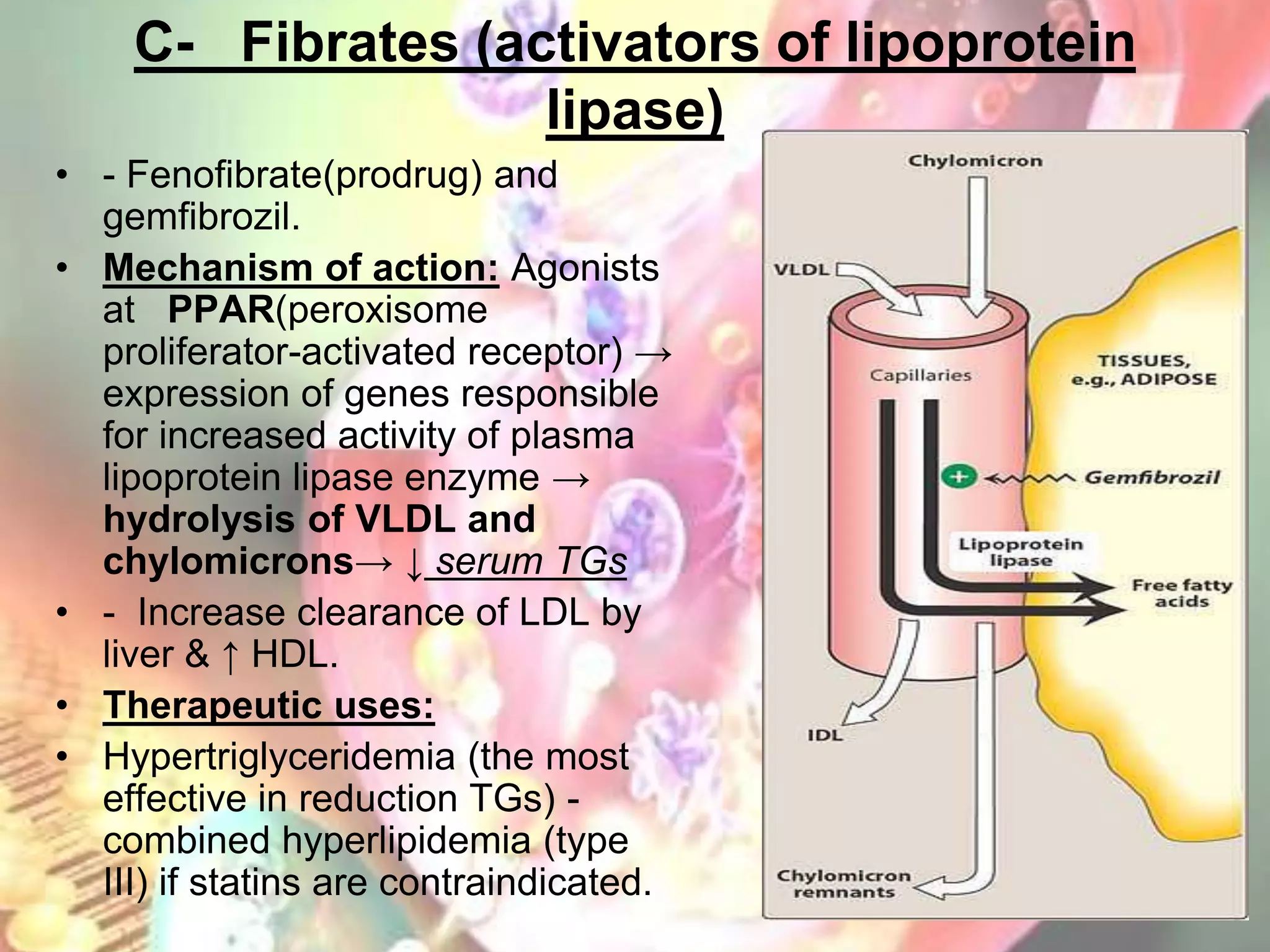
C- Fibrates (activators of lipoprotein
                   lipase)
• - Fenofibrate(prodrug) and
  gemfibrozil.
• Mechanism of action: Agonists
  at PPAR(peroxisome
  proliferator-activated receptor) →
  expression of genes responsible
  for increased activity of plasma
  lipoprotein lipase enzyme →
  hydrolysis of VLDL and
  chylomicrons→ ↓ serum TGs
• - Increase clearance of LDL by
  liver & ↑ HDL.
• Therapeutic uses:
• Hypertriglyceridemia (the most
  effective in reduction TGs) -
  combined hyperlipidemia (type
  III) if statins are contraindicated.
Pharmacokinetics:
• - Completely absorbed after oral administration.
• - Highly bound to plasma proteins(pp), extensively
  metabolized, excreted in urine.
• Adverse effects:
• -GIT disturbances.
• -Gall stones (increased biliary cholesterol excretion).
• - Muscle pain and myopathy (patients with renal
  impairment are at risk).
• - Increase coumarin levels(competitive plasma protien
  binding)
• -CI in pregnancy, lactating women, renal and hepatic
  dysfunction, gall stones.
D- Niacin; Nicotinic acid (Inhibitor of
  lipolysis)
• -The first and cheapest anti
  hyperlipidemic.
• -Decrease both TGs (VLDL) and
  cholesterol (LDL) levels.
• Mechanism of action:
• It is a potent inhibitor of lipolysis in
  adipose tissues → ↓ mobilization of
  FFAs (major precursor of TGs) to the
  liver → ↓ VLDL (after few hours).
• Since LDL is derived from VLDL so ↓
  VLDL → ↓ LDL (after few hours).
• - ↑ HDL levels ( the most potent
  antihyperlipidemic).
• ↓ endothelial dysfunction →↓
  thrombosis.
• Pharmacokinetics:
• - Orally given, converted to nicotinamide which
  does not decrease plasma lipids alone(must be
  incorporated with NAD Co).
• Therapeutic uses:
• -Familial hyperlipidemias (type IIB) (↑VLDL and↑
  LDL).
• - Sever hypercholesterolemia, combined with
  fibrates or cholestyramine.
• Adverse effects:
• - Cutaneous flush (PG- mediated, ↓ by aspirin)
  and pruritus.
• - GIT disturbances.
• - Glucose intolerance.
• - Gouty arthritis (hyperurecemia).
• - Myopathy (rare).
E- Ezetimibe (cholesterol absorption
                inhibitors)
• Inhibits intestinal
  cholesterol absorption → ↓
  concentration of intrahepatic
  cholesterol→ compensatory
  ↑ in LDL receptors →↑
  uptake of circulating LDL
  →↓ serum LDL cholesterol
  levels.
• - Used in
  hypercholesterolemia
  together with statins & diet
  regulation.
• - Adverse effects: diarrhea
  and abdominal pain.
• CI in patients with liver
  dysfunction.
Combination drug therapy
• If no improvement within 6 weeks with a
  single drug therapy, the dose should be
  increased. If no improvement after 3 months
  change the drug or consider combination
  therapy:
• - Bile acid resins can be safely combined with
  statins or nicotinic acid (↓ LDL, VLDL
  cholesterol levels respectively).
• - Ezetimibe + statins → synergistic effects.
• - Fibrates and statins are CI → myopathy.
• - Nicotinic acid and statins (must be cautiously
  used) → myopathy.
Sites of action of HMG-CoA reductase inhibitors, niacin, ezetimibe, and resins
used in treating hyperlipidemias. LDL receptors (R) are increased by treatment
                 with resins and HMG-CoA reductase inhibitors.
REFERENCE:

 K.D.Tripathi, Essentials of Medical Pharmacology, 6th Edition, PgNo.
  612-626.
 Goodman & Gilman’s, The Pharmacological Basis Of Therapeutics,
  11th Edition, PgNo. 933-965.
 INTERNET.

Hyperlipidemia and drug therapy for hyperlipidemia

  • 1.
    Hyperlipidemias and Drug therapy of Hyperlipidemia Presented by Md Akbar Siddiq Khan M.Pharm Guided by Prof. Asadullah Bakhtyari Nizam College Of Pharmacy Hyderabad - A.P
  • 2.
    INTRODUCTION • Hyperlipidemia Hyperlipoproteinemiameans abnormally increased plasma lipoproteins-one of the risk factors for atherosclerosis (deposition of fats at walls of arteries, forming plaque) • Other risk factors-Cigarette smoking, Diabetes, another source of oxidative stress. Also, obesity and, hypertension. • Hyperlipemia denotes increased levels of triglycerides. • Such abnormality is extremely common in general population, regarded as highly modifiable risk factor for cardio vascular diseases, due to influence of cholesterol.
  • 3.
    Plasma lipids include:cholesterols, triglycerides and phospholipids. Lipids are insoluble in plasma and are transported in protein capsule known as LIPOPROTEIN
  • 4.
    Types of lipoproteins 1.Chylomicrons (TGs): → formed in GIT from dietary TG. 2. VLDL (TGs and cholesterol) → endogenously synthesized in liver. Degraded by LPL into free fatty acids (FFA) for storage in adipose tissue and for oxidation in tissues such as cardiac and skeletal muscle. 3. IDL (TGs, cholesterol); and LDL (cholesterol) → derived from VLDL hydrolysis by lipoprotein lipase. Normally, about 70% of LDL is removed from plasma by hepatocytes. 4. HDL (protective) →exert several anti atherogenic effects. They participate in retrieval of cholesterol from the artery wall and inhibit the oxidation of atherogenic lipoproteins& removes cholesterol from tissues to be degraded in liver. Composition Density Size Chylomicrons TG >> C, CE Low Large VLDL TG > CE IDL CE > TG LDL CE >> TG HDL CE > TG High Small
  • 5.
    The major pathwaysinvolved in the metabolism of chylomicrons synthesized by the intestine and VLDL synthesized by the liver
  • 6.
    Etiology of hyperlipidemias • 1- Primary (genetic origin): hereditary. • 2- Secondary to: • Diseases e.g. hypothyroidism, diabetes • Drugs: β blockers, alcohol, thiazides, anti- depressants. • Over weight • Lack of exercise and inactive life style • Higher levels of female hormones increases or changes cholesterol levels eg: women on birth control pills. • Smoking does not cause higher cholesterol levels, but it can reduce the HDL, which is good cholesterol.
  • 7.
    Types of Hyperlipidemia FRERICKSONCLASSIFICATION- based on the pattern of lipoprotein on electrophoresis or ultracentrifugation. • Primary Chylomicronemia (I): Chylomicrons are not present in the serum of normal individuals who have fasted 10 hours. The recessive traits of deficiency of lipoprotein lipase or its cofactor are usually associated with severe lipemia. • Familial Hypercholesterolemia (IIA): Familial hypercholesterolemia is an autosomal dominant trait. Although levels of LDL tend to increase with normal VLDL. • Familial Combined (mixed) Hyperlipoproteinemia (IIB): elevated levels of VLDL, LDL. • Familial Dysbetalipoproteinemia (III): Increased IDL resulting increased TG and cholesterol levels. • Familial Hypertriglyceridemia (VI): Increase VLDL production with normal or decreased LDL. • Familial mixed hypertriglyceridemia (V): Serum VLDL and chylomicrons are increased
  • 8.
    Diagnosis of hyperlipidemia •Diagnosis is typically based on medical history, physical examination and blood test done after overnight fasting.
  • 9.
    Management of Hyperlipidemias I- Diet: • Avoid saturated fatty acids (animal fats) and give unsaturated fatty acids (plant fats). • - Regular consumption of fish oil which contains omega 3 fatty acids and vitamins E and C (antioxidants).  II. Exercise: • - ↑ HDL and insulin sensitivity.  III- Drug therapy: the primary goal of therapy is to decrease levels of LDL . Also,increase in HDL is recommended.
  • 10.
    Anti-hyperlipidemic drugs aremainly classified into five types they are:  1. HMG CoA REDUCTASE INHIBITORS: E.g.: Atorvastatin, Fluvastatin, Lovastatin, Pravastatin, Rosuvastatin, Simvastatin.  2. FIBRATES: E.g.: Fenofibrate, Gemfibrozil, Clofibrate.  3. Nicotinic acid: E.g: NIACIN.  4. BILE ACID SEQUESTRANTS: E.g.: Colesevelam, Colestipol, Cholestyramine  5. CHOLESTEROL ABSORPTION INHIBITORS: E.g.: Ezetimibe.
  • 11.
    A- HMG –COAreductase inhibitors (statins): • Inhibit the first enzymatic step in cholesterol synthesis. • Production of this enzyme and of LDL receptors is transcriptionally regulated by the content of cholesterol in the cell. • -Simvastatin, lovastatin (prodrugs). Atorvastatin &Rosuvastatin are the most potent. • In 2009 the world statins market generated over $27bn in revenues • 2010 onwards, there will be major patent expires – most notably for Lipitor-mfg by Pfizer, and rising competition from generic alternatives.
  • 12.
    Mechanism of action:(statins) • Structural analogues of HMG – COA reductase (the rate limiting enzyme in cholesterol synthesis) → reduction of cholesterol synthesis in liver → compensatory ↑ in synthesis of LDL receptors on hepatic and extra hepatic tissues →Increase in hepatic uptake of circulating LDL which decreases plasma LDL cholesterol . • - Decrease TGs to some extent and ↑ HDL. • - Cardio protective: vasodilators and decrease atherosclerosis (stabilize plaque). • Therapeutic uses: • - Effective in all types of hyperlipidemia except those who are homozygous for familial hypercholesterolemia (lack of LDL receptors). • Usually combined with other drugs.
  • 13.
    Adverse effects • 1-Increase in liver enzymes (serum transaminases should be monitored continuously ,CI in hepatic dysfunction). • 2-Myopathy and muscle damageInhibits the production of CoQ10, which is essential for the creation of ATP (energy a cell uses). • Muscle fatigue and weakness is caused by the disruption of CoQ10 production(95% source of ATP) and resulting lack of ATP production-esp in heart, liver and kidney which have the highest CoQ10 concentrations. • 3- Cataract and GIT upset. • 4- Increase in warfarin levels. • 5- CI in pregnancy and nursing mothers (safety in pregnancy is not established), lactation, children and teenagers.
  • 15.
    B- Bile acidsSequestrants(resins): • Cholestyramine and colestipol. • Mechanism of action: are anion exchange resins; bind bile acids in the intestine forming complex →loss of bile acids in the stools →↑ conversion of cholesterol into bile acids in the liver. • Decreased concentration of intrahepatic cholesterol → compensatory increase in LDL receptors →↑ hepatic uptake of circulating LDL → ↓ serum LDL cholesterol levels.
  • 16.
    Therapeutic uses: • Ofchoice in treatment of type IIA and IIB hyperlipidemias (along with statins when response to statins is inadequate or they are contraindicated). • useful for Pruritus in biliary obstruction (↑ bile acids). • Pharmacokinetics: Orally given but neither absorbed nor metabolically altered by intestine, totally excreted in feces.
  • 17.
    Adverse effects: • Constipation is the most common. • ↓ absorption of fat soluble vitamins (A, D, K, E) , ↓ Vit K → hypoprothrombinemia. • ↓ absorption of many drugs as digitoxin, warfarin, aspirin, phenobarbitone.
  • 18.
    C- Fibrates (activatorsof lipoprotein lipase) • - Fenofibrate(prodrug) and gemfibrozil. • Mechanism of action: Agonists at PPAR(peroxisome proliferator-activated receptor) → expression of genes responsible for increased activity of plasma lipoprotein lipase enzyme → hydrolysis of VLDL and chylomicrons→ ↓ serum TGs • - Increase clearance of LDL by liver & ↑ HDL. • Therapeutic uses: • Hypertriglyceridemia (the most effective in reduction TGs) - combined hyperlipidemia (type III) if statins are contraindicated.
  • 19.
    Pharmacokinetics: • - Completelyabsorbed after oral administration. • - Highly bound to plasma proteins(pp), extensively metabolized, excreted in urine. • Adverse effects: • -GIT disturbances. • -Gall stones (increased biliary cholesterol excretion). • - Muscle pain and myopathy (patients with renal impairment are at risk). • - Increase coumarin levels(competitive plasma protien binding) • -CI in pregnancy, lactating women, renal and hepatic dysfunction, gall stones.
  • 20.
    D- Niacin; Nicotinicacid (Inhibitor of lipolysis) • -The first and cheapest anti hyperlipidemic. • -Decrease both TGs (VLDL) and cholesterol (LDL) levels. • Mechanism of action: • It is a potent inhibitor of lipolysis in adipose tissues → ↓ mobilization of FFAs (major precursor of TGs) to the liver → ↓ VLDL (after few hours). • Since LDL is derived from VLDL so ↓ VLDL → ↓ LDL (after few hours). • - ↑ HDL levels ( the most potent antihyperlipidemic). • ↓ endothelial dysfunction →↓ thrombosis.
  • 21.
    • Pharmacokinetics: • -Orally given, converted to nicotinamide which does not decrease plasma lipids alone(must be incorporated with NAD Co). • Therapeutic uses: • -Familial hyperlipidemias (type IIB) (↑VLDL and↑ LDL). • - Sever hypercholesterolemia, combined with fibrates or cholestyramine. • Adverse effects: • - Cutaneous flush (PG- mediated, ↓ by aspirin) and pruritus. • - GIT disturbances. • - Glucose intolerance. • - Gouty arthritis (hyperurecemia). • - Myopathy (rare).
  • 22.
    E- Ezetimibe (cholesterolabsorption inhibitors) • Inhibits intestinal cholesterol absorption → ↓ concentration of intrahepatic cholesterol→ compensatory ↑ in LDL receptors →↑ uptake of circulating LDL →↓ serum LDL cholesterol levels. • - Used in hypercholesterolemia together with statins & diet regulation. • - Adverse effects: diarrhea and abdominal pain. • CI in patients with liver dysfunction.
  • 23.
    Combination drug therapy •If no improvement within 6 weeks with a single drug therapy, the dose should be increased. If no improvement after 3 months change the drug or consider combination therapy: • - Bile acid resins can be safely combined with statins or nicotinic acid (↓ LDL, VLDL cholesterol levels respectively). • - Ezetimibe + statins → synergistic effects. • - Fibrates and statins are CI → myopathy. • - Nicotinic acid and statins (must be cautiously used) → myopathy.
  • 24.
    Sites of actionof HMG-CoA reductase inhibitors, niacin, ezetimibe, and resins used in treating hyperlipidemias. LDL receptors (R) are increased by treatment with resins and HMG-CoA reductase inhibitors.
  • 25.
    REFERENCE:  K.D.Tripathi, Essentialsof Medical Pharmacology, 6th Edition, PgNo. 612-626.  Goodman & Gilman’s, The Pharmacological Basis Of Therapeutics, 11th Edition, PgNo. 933-965.  INTERNET.