Downloaded 31 times
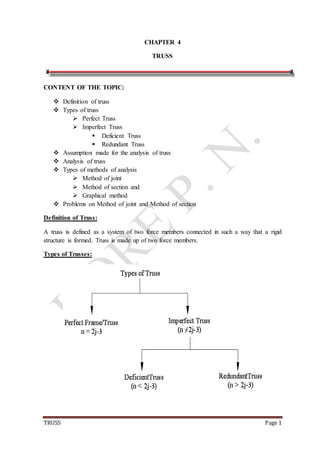
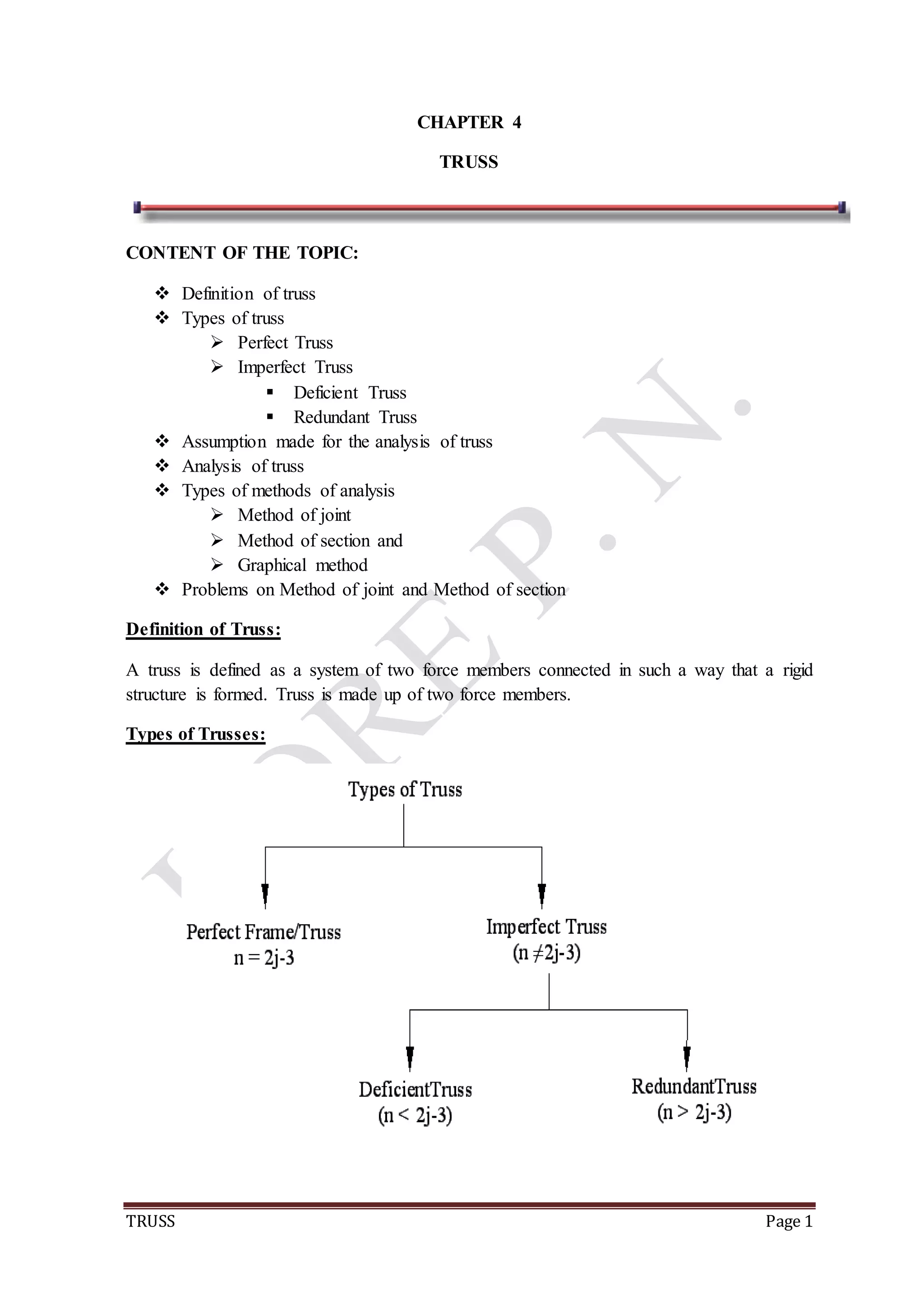
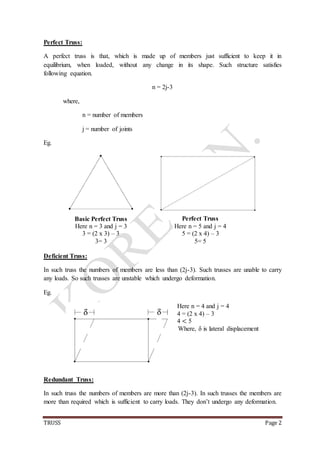
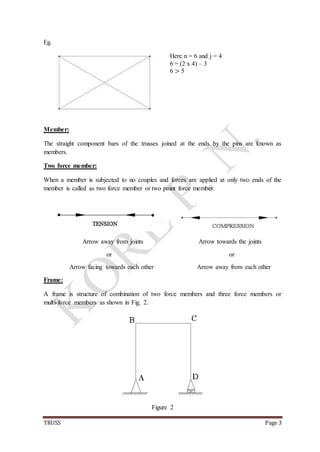
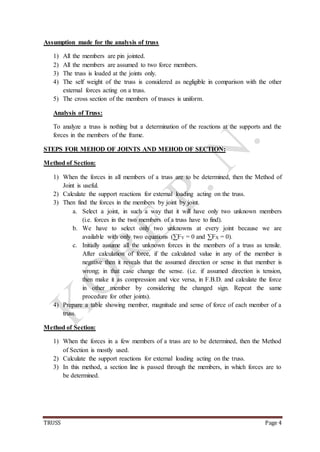
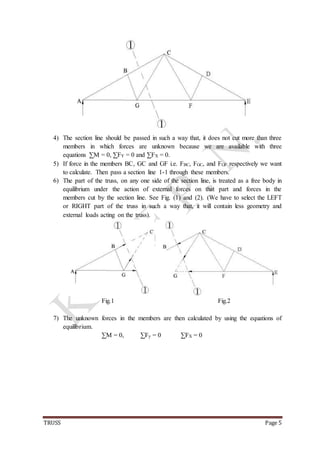
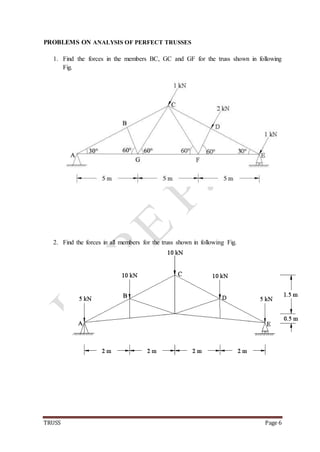
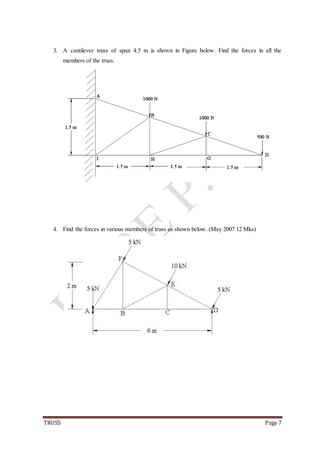
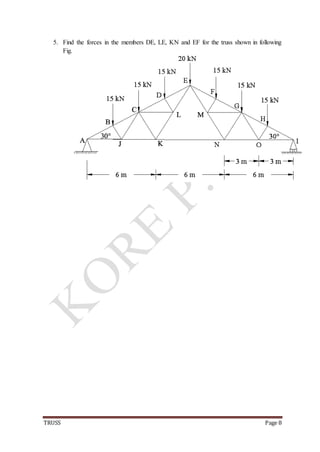
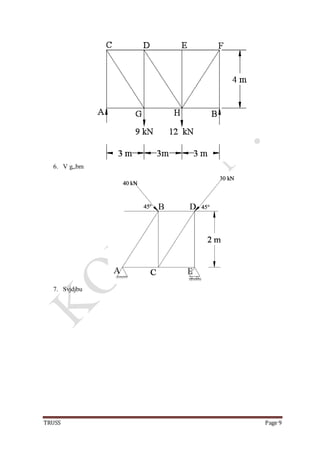
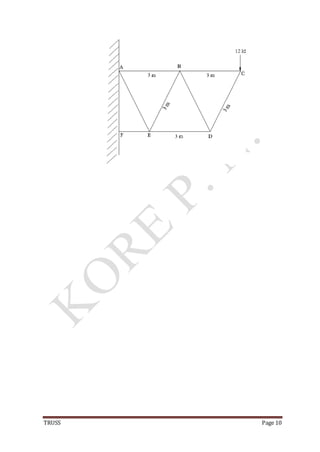

The document defines a truss as a rigid structure composed of two force members connected at joints. There are three types of trusses: perfect trusses which have just enough members to remain stable under loading, deficient trusses with too few members, and redundant trusses with excess members. The key assumptions in truss analysis are that members are pin jointed and carry only axial forces, and trusses are loaded at joints. Two common methods to analyze trusses are the method of joints, which determines member forces by analyzing joints individually, and the method of sections, which analyzes equilibrium across a cut through selected members. Several example problems demonstrate applying these analysis methods to various truss configurations.


