FILM LANGUAGE
Dr. J. Janardhan
FILM LANGUAGE
• The words are the building blocks of a written language
• Individual shots are the building blocks of the film
language
• Different shots can be thought of as different parts of
speech
• Undoubtedly 5 W’s & H are the basic components of
story
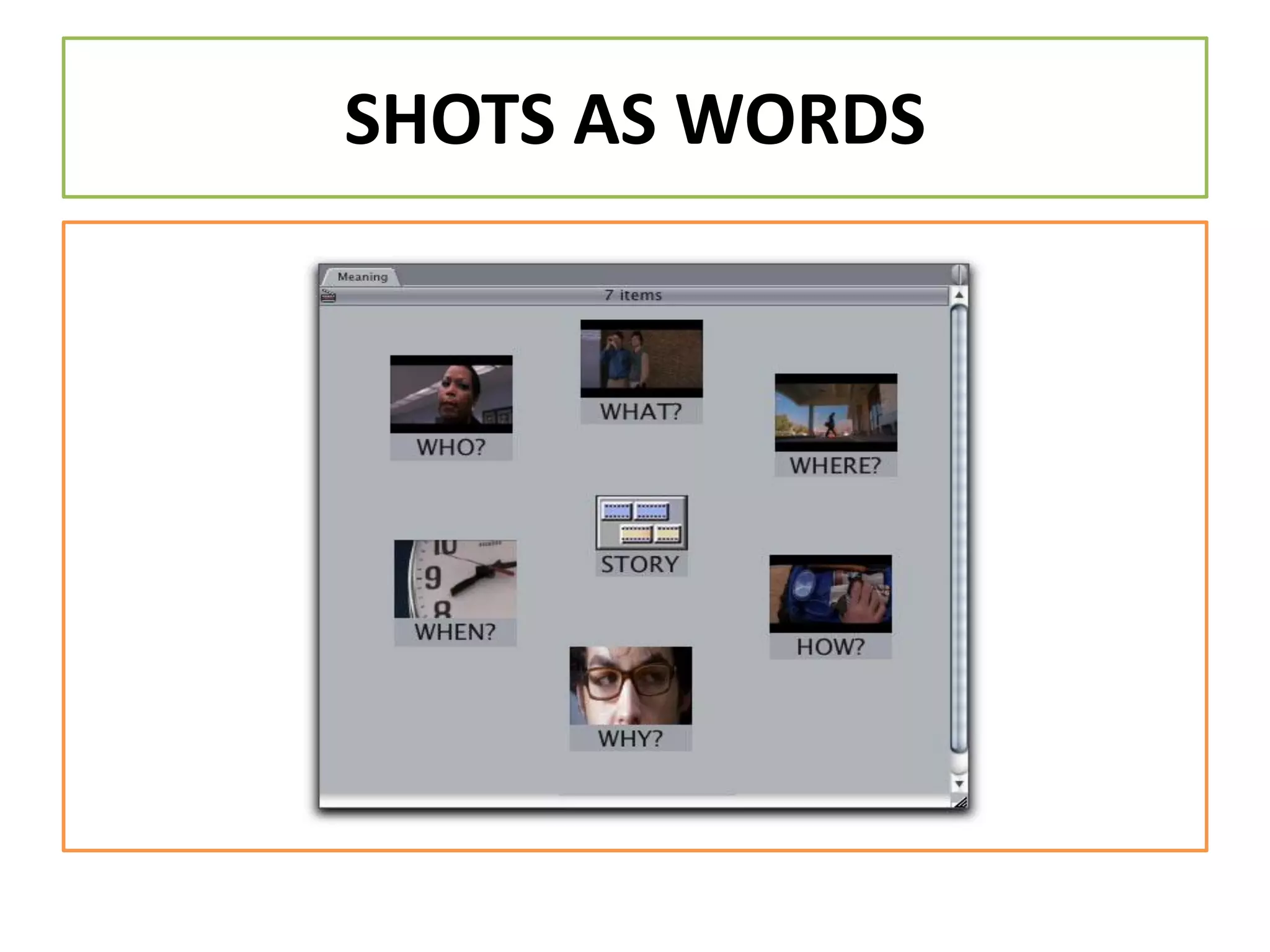
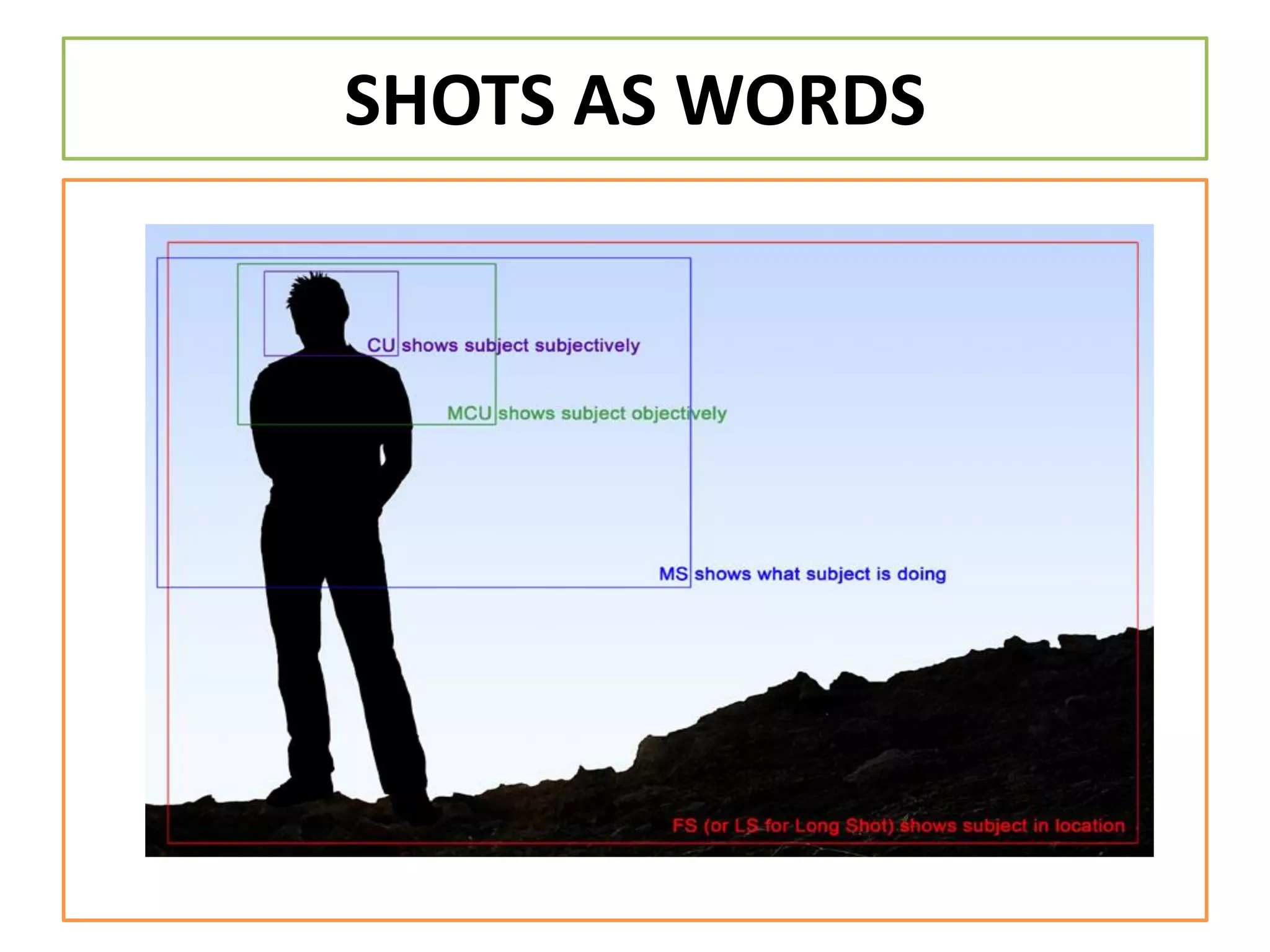
SHOTS AS WORDS
CLOSE UP SHOT AS WORD
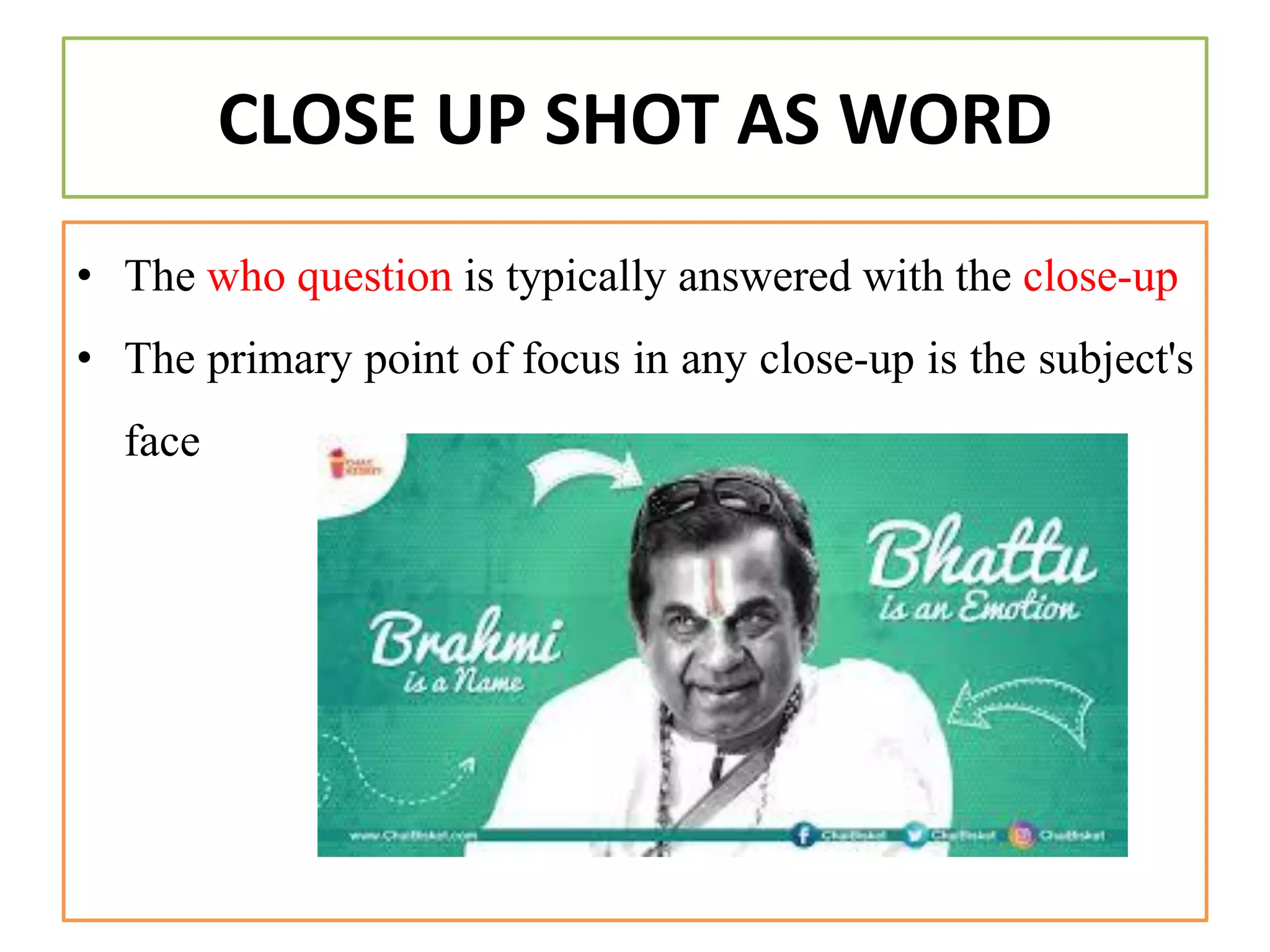
• The who question is typically answered with the close-up
• The primary point of focus in any close-up is the subject's
face
MEDIUM SHOT AS WORD
• If you want to communicate what is going on, you
probably need to show a subject performing an activity
• Typically this is conveyed in a medium shot (MS).
LONG SHOT AS WORD
• Where: The location of an event is critical.
• Sometimes, location is deliberately omitted for a while to
emphasize suspense
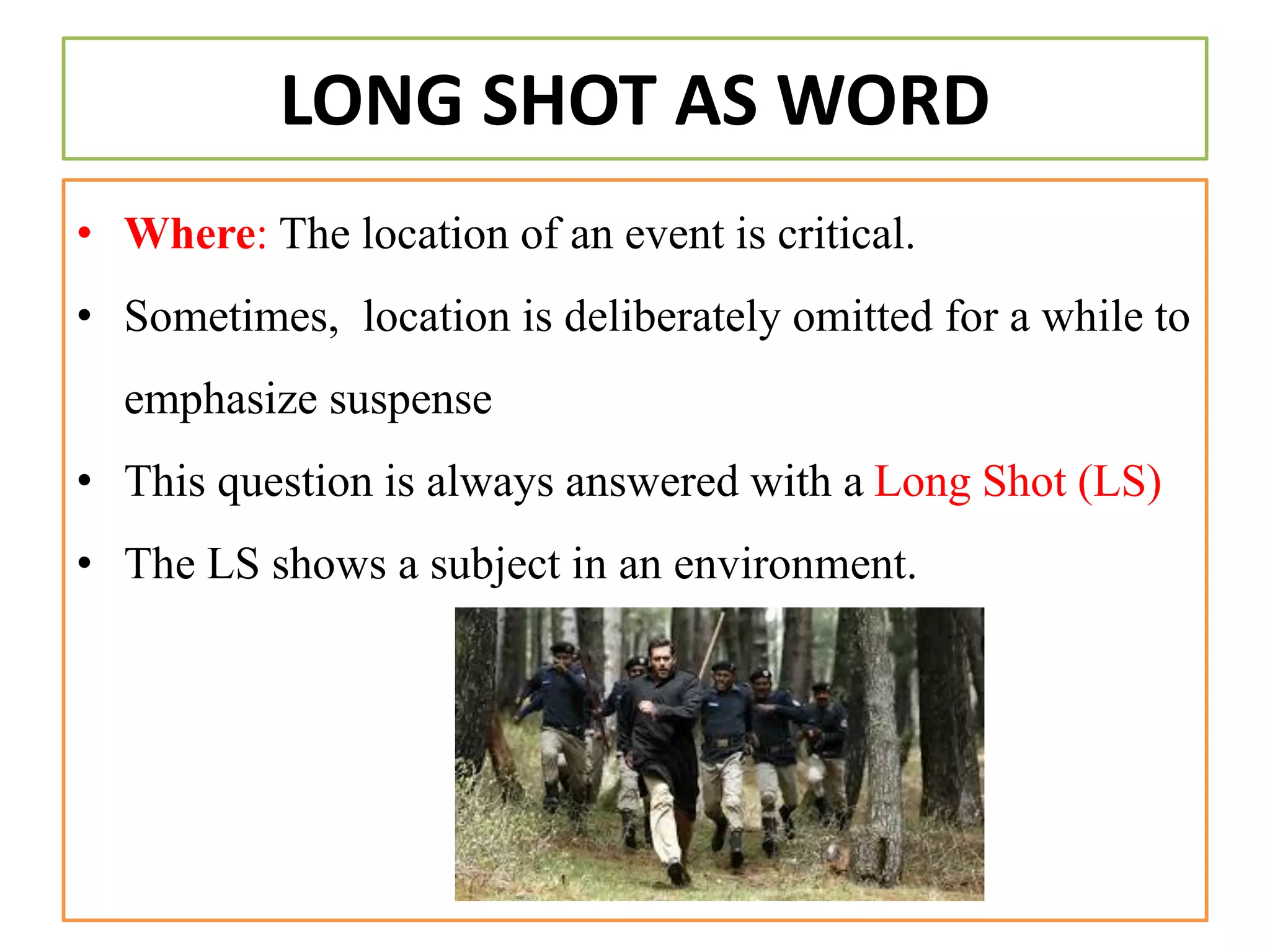
• This question is always answered with a Long Shot (LS)
• The LS shows a subject in an environment.
EL SHOT AS WORDS
• When : This question can seem tricky
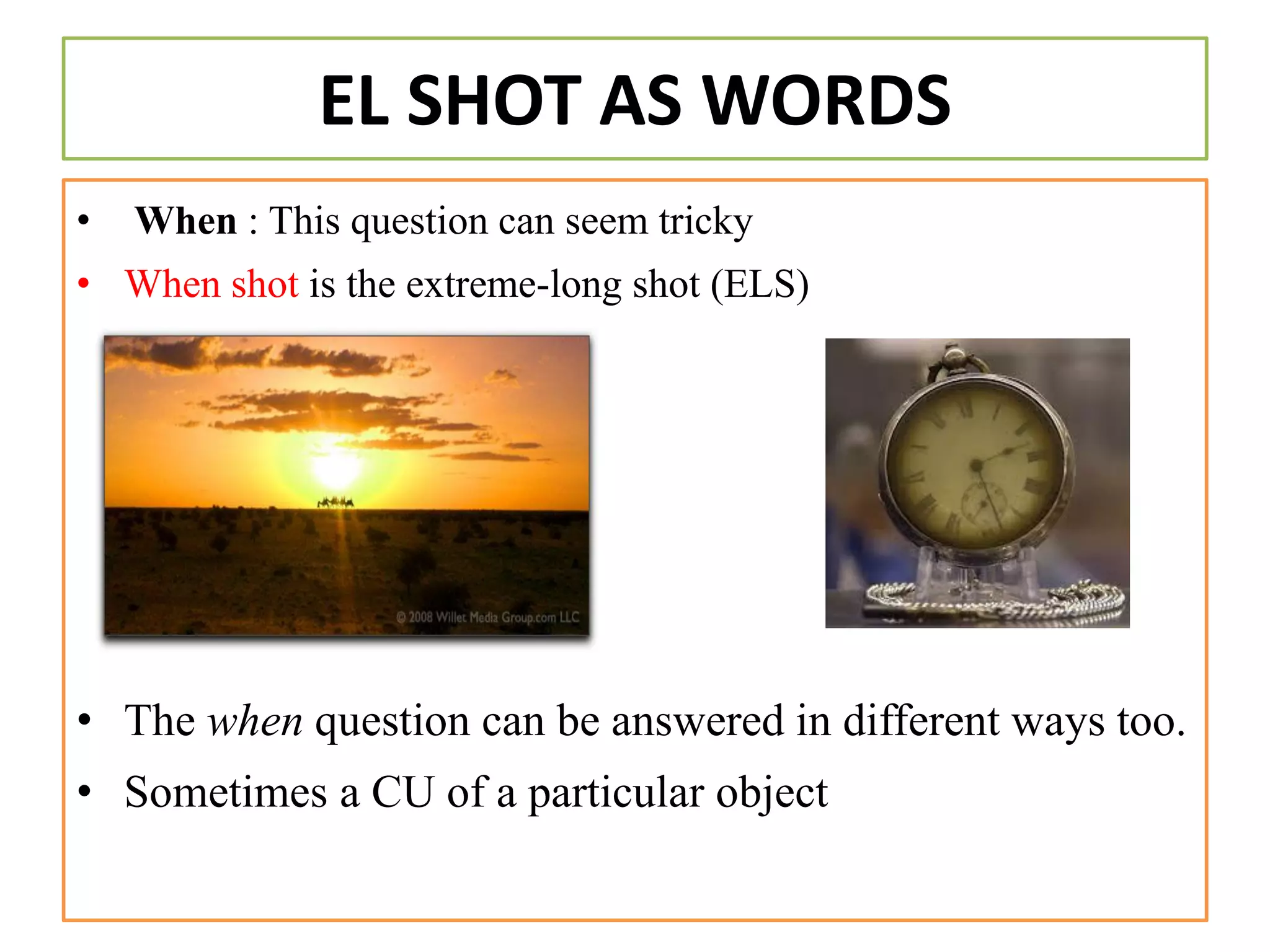
• When shot is the extreme-long shot (ELS)
• The when question can be answered in different ways too.
• Sometimes a CU of a particular object
ECU SHOT AS WORDS
• Why : This question points to the internal decision
making of your subject
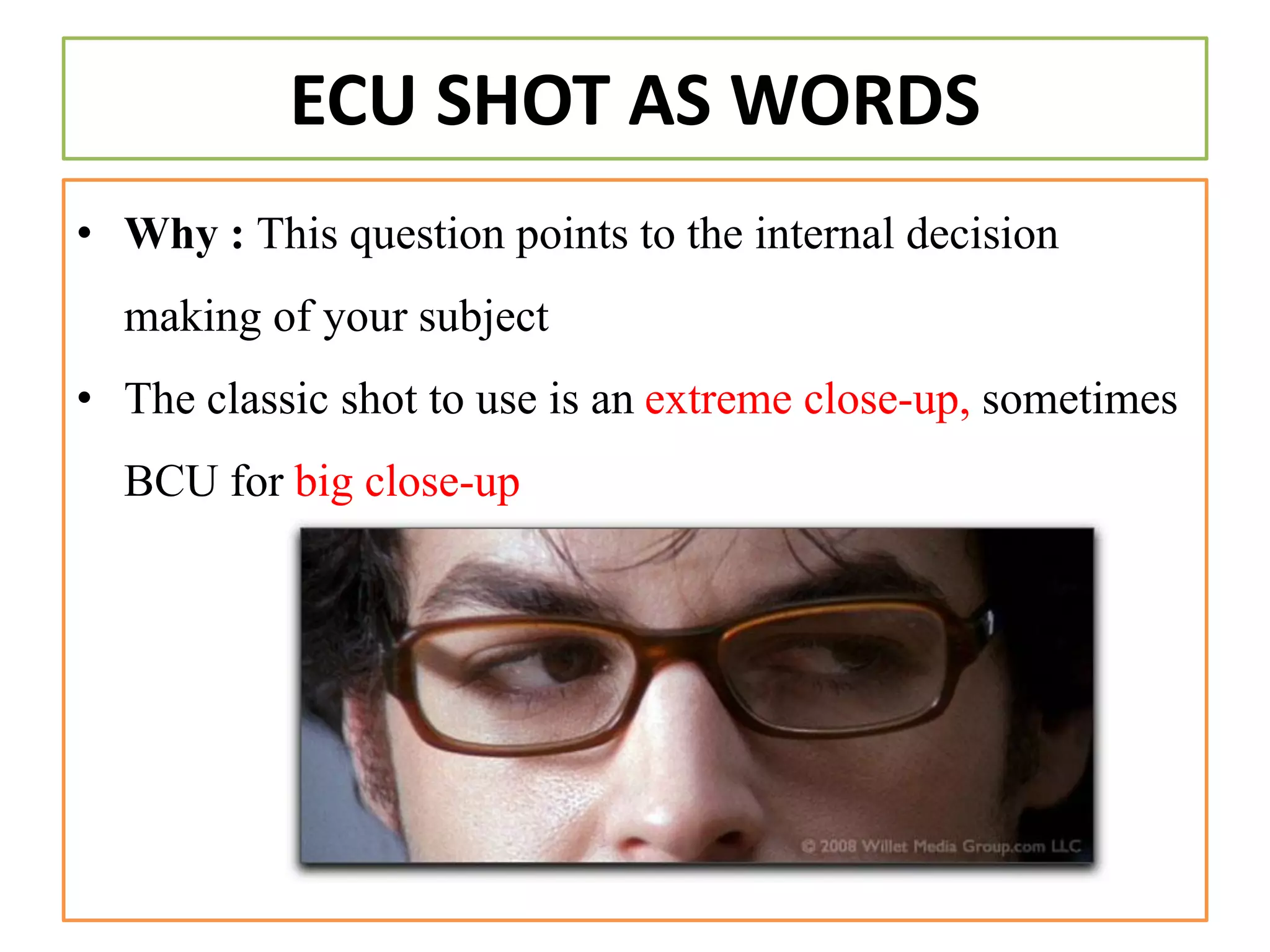
• The classic shot to use is an extreme close-up, sometimes
BCU for big close-up
SERIES OF SHOTS AS WORDS
• How: While the why is usually a very internal aspect of
the story shots
• the how is just the opposite to the Why and very external
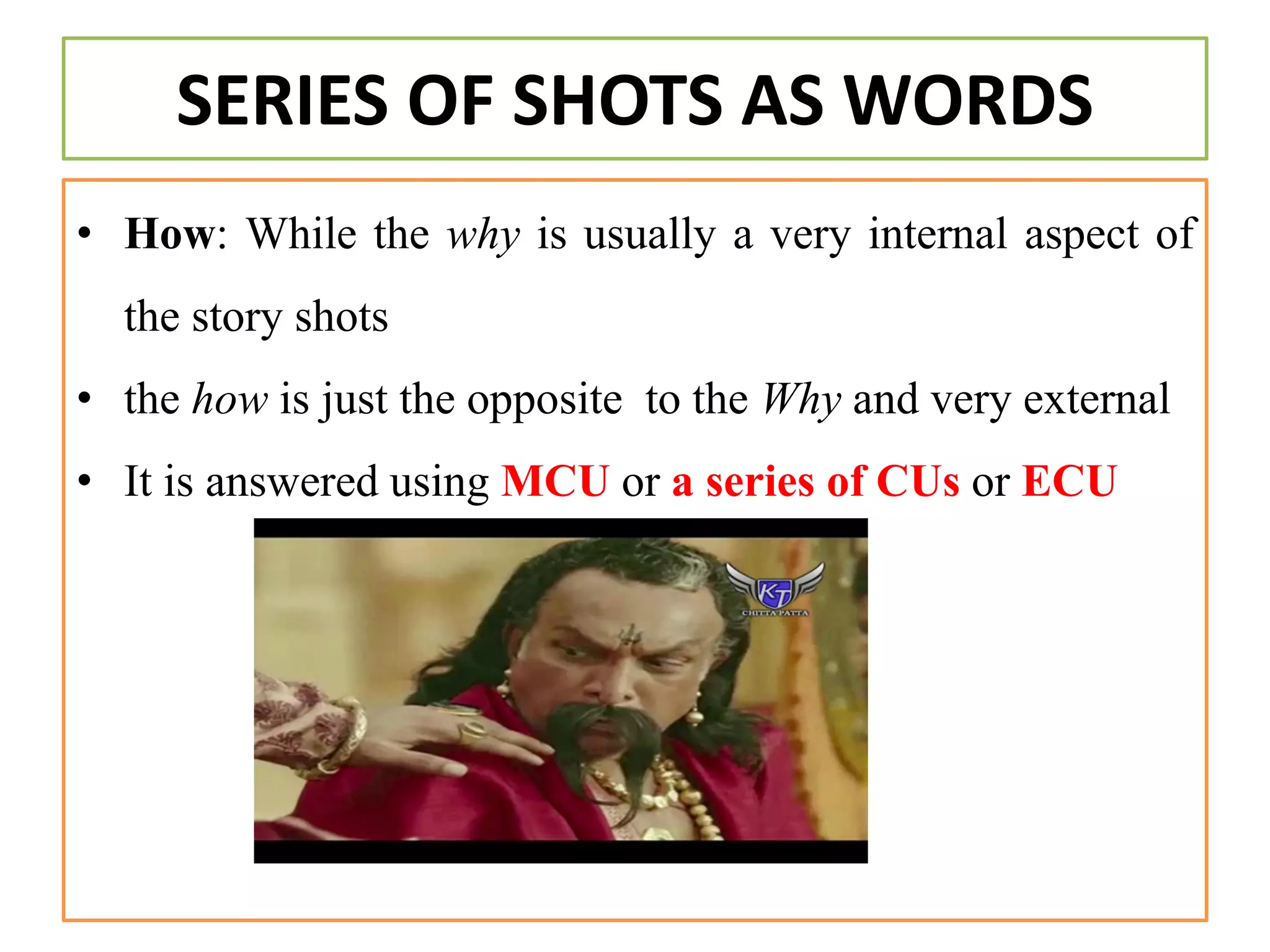
• It is answered using MCU or a series of CUs or ECU
SHOTS AS WORDS
USING VERBS
• If you think of shots as nouns,
• you can think of edit points as verbs.
• When the time and action remains continuous across the
two shots you can employ a jump cut
• where time or space is deliberately mismatched; you may
make a scene cut
• where you transition from one location or event to
another; you can use a cross dissolve
USING VERBS
• Every Shot Must Provide New Information
• Cut on Action- every cut is an opportunity for your
audience to stop thinking about your story and start
wondering
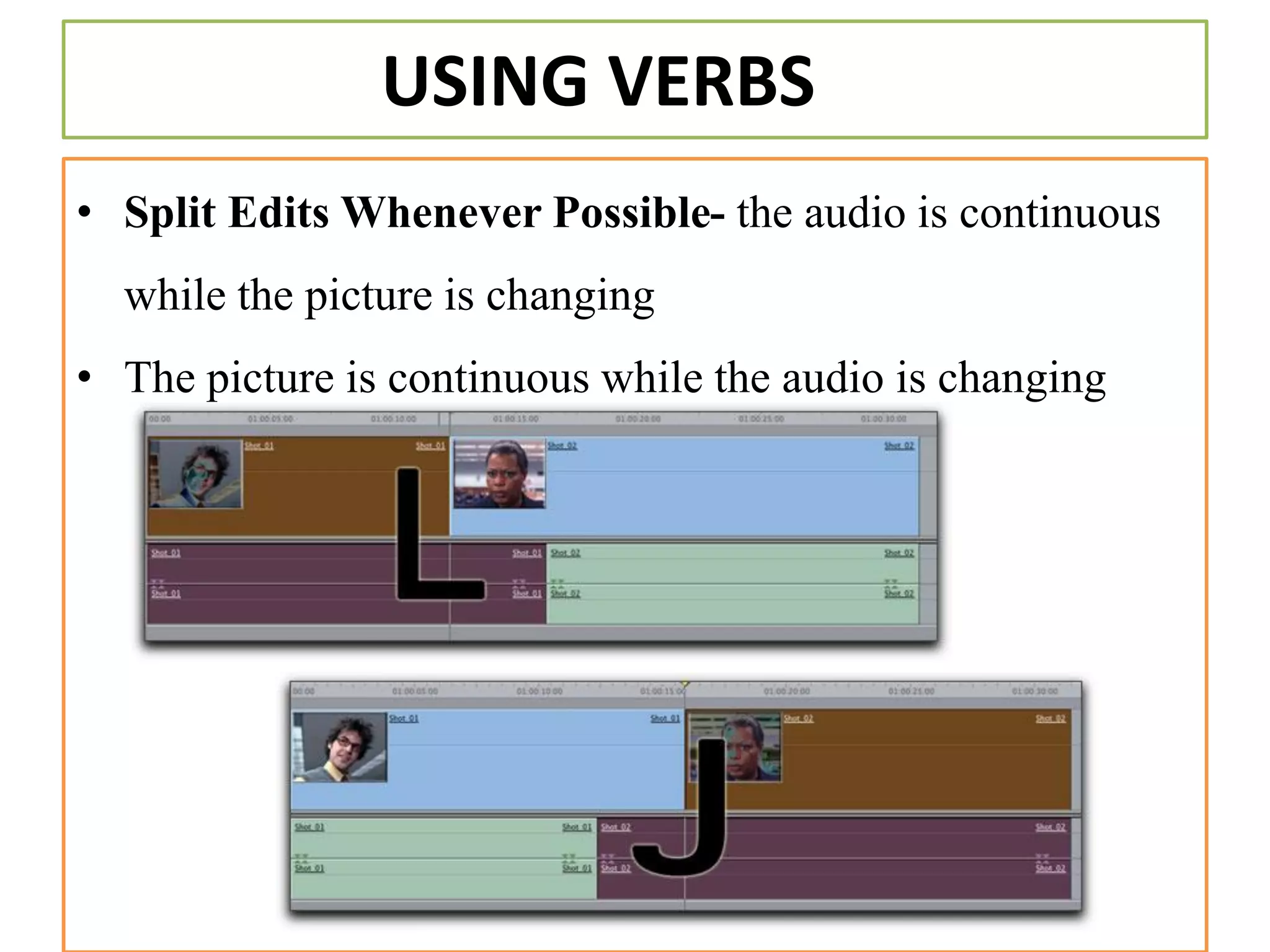
USING VERBS
• Split Edits Whenever Possible- the audio is continuous
while the picture is changing
• The picture is continuous while the audio is changing
MATCHING SHOTS/ANGLES
• Matching Angles: CU to CU, MCU to MCU, and so on
Ex: https://www.youtube.com/watch?v=AYky1VVdP0Q
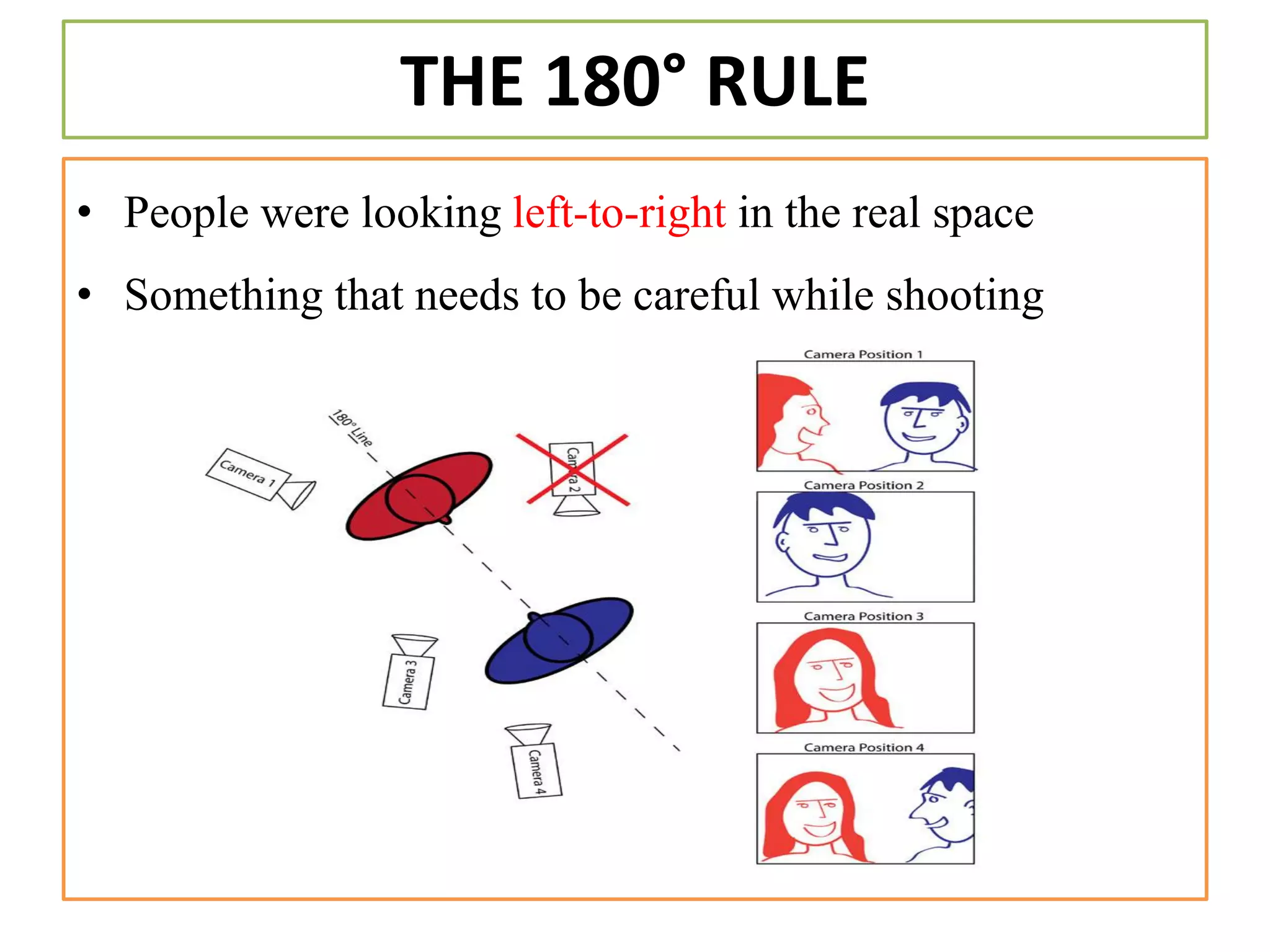
THE 180° RULE
• People were looking left-to-right in the real space
• Something that needs to be careful while shooting
THANK YOU

Film language converted

  • 1.
  • 2.
    FILM LANGUAGE • Thewords are the building blocks of a written language • Individual shots are the building blocks of the film language • Different shots can be thought of as different parts of speech • Undoubtedly 5 W’s & H are the basic components of story
  • 3.
  • 4.
    CLOSE UP SHOTAS WORD • The who question is typically answered with the close-up • The primary point of focus in any close-up is the subject's face
  • 5.
    MEDIUM SHOT ASWORD • If you want to communicate what is going on, you probably need to show a subject performing an activity • Typically this is conveyed in a medium shot (MS).
  • 6.
    LONG SHOT ASWORD • Where: The location of an event is critical. • Sometimes, location is deliberately omitted for a while to emphasize suspense • This question is always answered with a Long Shot (LS) • The LS shows a subject in an environment.
  • 7.
    EL SHOT ASWORDS • When : This question can seem tricky • When shot is the extreme-long shot (ELS) • The when question can be answered in different ways too. • Sometimes a CU of a particular object
  • 8.
    ECU SHOT ASWORDS • Why : This question points to the internal decision making of your subject • The classic shot to use is an extreme close-up, sometimes BCU for big close-up
  • 9.
    SERIES OF SHOTSAS WORDS • How: While the why is usually a very internal aspect of the story shots • the how is just the opposite to the Why and very external • It is answered using MCU or a series of CUs or ECU
  • 10.
  • 11.
    USING VERBS • Ifyou think of shots as nouns, • you can think of edit points as verbs. • When the time and action remains continuous across the two shots you can employ a jump cut • where time or space is deliberately mismatched; you may make a scene cut • where you transition from one location or event to another; you can use a cross dissolve
  • 12.
    USING VERBS • EveryShot Must Provide New Information • Cut on Action- every cut is an opportunity for your audience to stop thinking about your story and start wondering
  • 13.
    USING VERBS • SplitEdits Whenever Possible- the audio is continuous while the picture is changing • The picture is continuous while the audio is changing
  • 14.
    MATCHING SHOTS/ANGLES • MatchingAngles: CU to CU, MCU to MCU, and so on Ex: https://www.youtube.com/watch?v=AYky1VVdP0Q
  • 15.
    THE 180° RULE •People were looking left-to-right in the real space • Something that needs to be careful while shooting
  • 16.