Short film
Last week
What were we looking at last week?
This week
We’re going to look at cinematography and
how we use it to create atmosphere, tension
& meaning
By the end of today, you
MUST define what cinematography is
SHOULD explain the different tools we
use to create a films visual look
COULD explain the how cinematography
builds tension, atmosphere, meaning.
Intro
What do we use to create the visual style of
a shot / film.
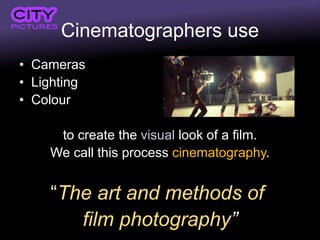
Cinematographers use
• Cameras
• Lighting
• Colour
to create the visual look of a film.
We call this process cinematography.
“The art and methods of
film photography”
Watch The Godfather ‘s
opening scene.
http://moodle.covcollege.ac.uk/course/view.p
hp?id=14870#section-3
Think about how the cinematographer,
Gordon Willis, creates mood, atmosphere
and suspense in this scene.
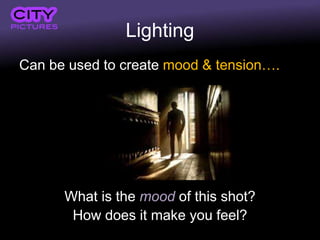
Lighting
Can be used to create mood & tension….
What is the mood of this shot?
How does it make you feel?
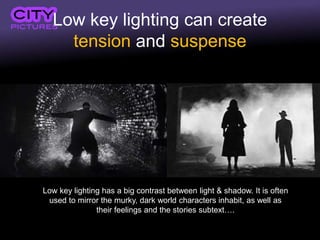
Low key lighting can create
tension and suspense
Low key lighting has a big contrast between light & shadow. It is often
used to mirror the murky, dark world characters inhabit, as well as
their feelings and the stories subtext….
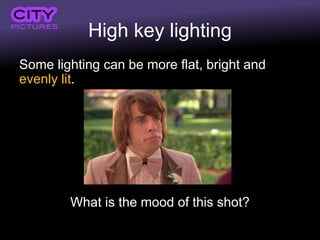
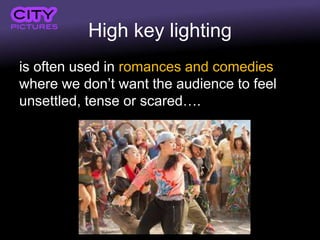
High key lighting
Some lighting can be more flat, bright and
evenly lit.
What is the mood of this shot?
High key lighting
is often used in romances and comedies
where we don’t want the audience to feel
unsettled, tense or scared….
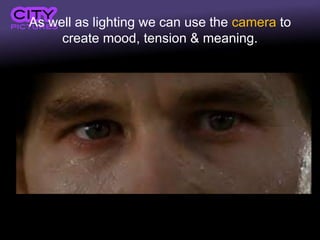
As well as lighting we can use the camera to
create mood, tension & meaning.
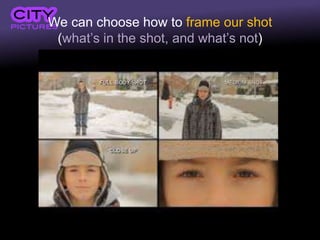
We can choose how to frame our shot
(what’s in the shot, and what’s not)
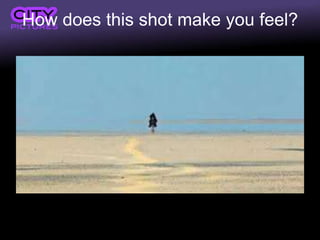
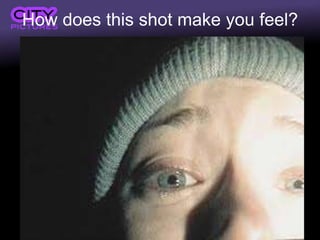
How does this shot make you feel?
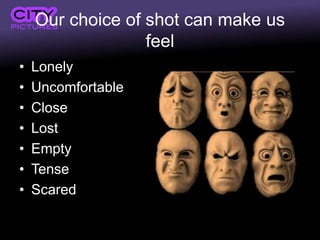
Our choice of shot can make us
feel
• Lonely
• Uncomfortable
• Close
• Lost
• Empty
• Tense
• Scared
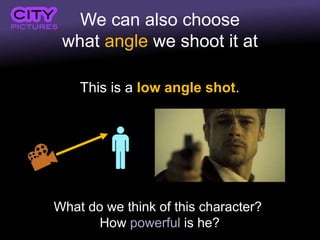
We can also choose
what angle we shoot it at
This is a low angle shot.
What do we think of this character?
How powerful is he?
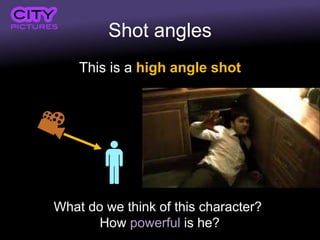
Shot angles
This is a high angle shot
What do we think of this character?
How powerful is he?
Camera movement
Moving the camera whilst shooting helps to
draw our audience in and direct their
attention to where we want it.
http://moodle.covcollege.ac.uk/course/view.p
hp?id=14870#section-3
Watch this scene from La Haine….
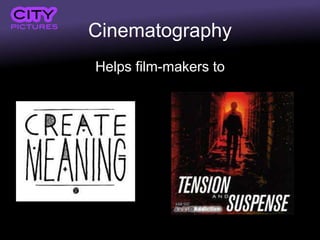
Cinematography
Helps film-makers to
Today
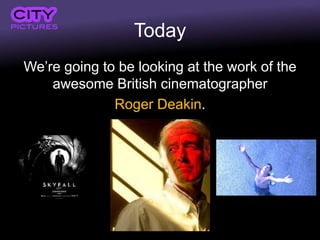
We’re going to be looking at the work of the
awesome British cinematographer
Roger Deakin.
Roger Deakins on
shooting single camera
• "I prefer shooting with a single camera
simply because I don't like shooting
generic 'coverage'. I believe in
constructing a shot that has a purpose
within a scene rather than leaving it to the
editor to cut something out of coverage! “
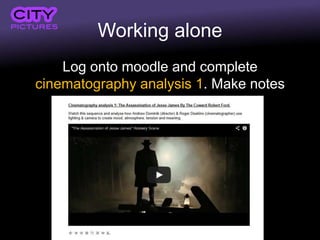
Working alone
Log onto moodle and complete
cinematography analysis 1. Make notes
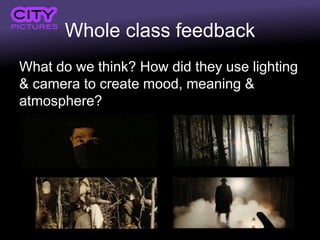
Whole class feedback
What do we think? How did they use lighting
& camera to create mood, meaning &
atmosphere?
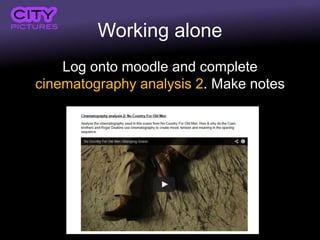
Working alone
Log onto moodle and complete
cinematography analysis 2. Make notes
Feedback to the person next to you
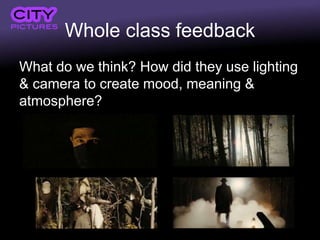
Whole class feedback
What do we think? How did they use lighting
& camera to create mood, meaning &
atmosphere?
End of lesson plenary

Lesson 3 - cinematography

  • 1.
  • 2.
    Last week What werewe looking at last week?
  • 3.
    This week We’re goingto look at cinematography and how we use it to create atmosphere, tension & meaning
  • 4.
    By the endof today, you MUST define what cinematography is SHOULD explain the different tools we use to create a films visual look COULD explain the how cinematography builds tension, atmosphere, meaning.
  • 5.
    Intro What do weuse to create the visual style of a shot / film.
  • 6.
    Cinematographers use • Cameras •Lighting • Colour to create the visual look of a film. We call this process cinematography. “The art and methods of film photography”
  • 7.
    Watch The Godfather‘s opening scene. http://moodle.covcollege.ac.uk/course/view.p hp?id=14870#section-3 Think about how the cinematographer, Gordon Willis, creates mood, atmosphere and suspense in this scene.
  • 8.
    Lighting Can be usedto create mood & tension…. What is the mood of this shot? How does it make you feel?
  • 9.
    Low key lightingcan create tension and suspense Low key lighting has a big contrast between light & shadow. It is often used to mirror the murky, dark world characters inhabit, as well as their feelings and the stories subtext….
  • 10.
    High key lighting Somelighting can be more flat, bright and evenly lit. What is the mood of this shot?
  • 11.
    High key lighting isoften used in romances and comedies where we don’t want the audience to feel unsettled, tense or scared….
  • 12.
    As well aslighting we can use the camera to create mood, tension & meaning.
  • 13.
    We can choosehow to frame our shot (what’s in the shot, and what’s not)
  • 14.
    How does thisshot make you feel?
  • 15.
    How does thisshot make you feel?
  • 16.
    Our choice ofshot can make us feel • Lonely • Uncomfortable • Close • Lost • Empty • Tense • Scared
  • 17.
    We can alsochoose what angle we shoot it at This is a low angle shot. What do we think of this character? How powerful is he?
  • 18.
    Shot angles This isa high angle shot What do we think of this character? How powerful is he?
  • 19.
    Camera movement Moving thecamera whilst shooting helps to draw our audience in and direct their attention to where we want it. http://moodle.covcollege.ac.uk/course/view.p hp?id=14870#section-3 Watch this scene from La Haine….
  • 20.
  • 21.
    Today We’re going tobe looking at the work of the awesome British cinematographer Roger Deakin.
  • 22.
    Roger Deakins on shootingsingle camera • "I prefer shooting with a single camera simply because I don't like shooting generic 'coverage'. I believe in constructing a shot that has a purpose within a scene rather than leaving it to the editor to cut something out of coverage! “
  • 23.
    Working alone Log ontomoodle and complete cinematography analysis 1. Make notes
  • 24.
    Whole class feedback Whatdo we think? How did they use lighting & camera to create mood, meaning & atmosphere?
  • 25.
    Working alone Log ontomoodle and complete cinematography analysis 2. Make notes
  • 26.
    Feedback to theperson next to you
  • 27.
    Whole class feedback Whatdo we think? How did they use lighting & camera to create mood, meaning & atmosphere?
  • 28.