Downloaded 19 times
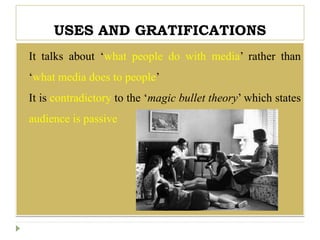

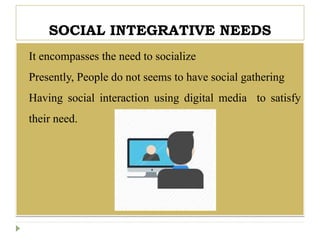
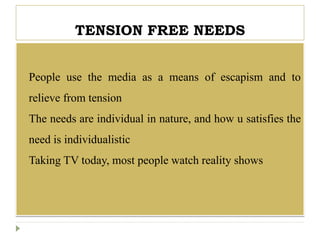

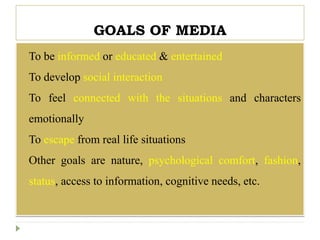
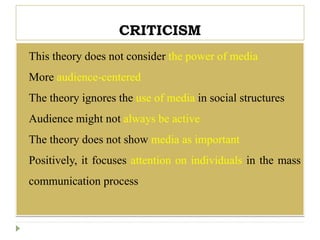


The uses and gratifications theory, introduced by Katz, McQuail, and Gurevitch, focuses on how individuals actively use media to fulfill various needs rather than being passive recipients of media influence. It categorizes needs into five types: cognitive, affective, personal integrative, social integrative, and tension free needs, highlighting the diverse reasons people engage with media for knowledge, emotional satisfaction, self-esteem, social interaction, and escapism. While it emphasizes the audience's active role, the theory faces criticism for downplaying media's power and influence within social structures.


