ELEMENTS OF A NARRATIVE
Dr. J. JANARDHAN
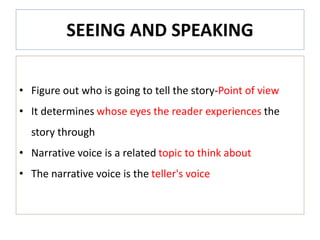
SEEING AND SPEAKING
• Figure out who is going to tell the story-Point of view
• It determines whose eyes the reader experiences the
story through
• Narrative voice is a related topic to think about
• The narrative voice is the teller's voice
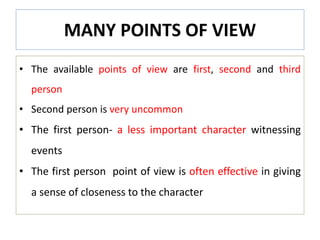
MANY POINTS OF VIEW
• The available points of view are first, second and third
person
• Second person is very uncommon
• The first person- a less important character witnessing
events
• The first person point of view is often effective in giving
a sense of closeness to the character
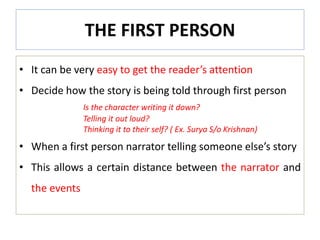
THE FIRST PERSON
• It can be very easy to get the reader’s attention
• Decide how the story is being told through first person
Is the character writing it down?
Telling it out loud?
Thinking it to their self? ( Ex. Surya S/o Krishnan)
• When a first person narrator telling someone else’s story
• This allows a certain distance between the narrator and
the events
THE FIRST PERSON
• First Person Protagonist-A character relates events that
occurred to them;
• Narrator is the main character telling own story
• First Person Witness- Narrator tells the someone’s story
by observing the events (Eg: Kattappa-Baahubali-the beginning)
• First Person Re-teller – The story is told, not by a witness,
but who heard the story
THE SECOND PERSON
• The narrator addresses the protagonist as "you.“
• This kind of story has the narrator speaking to a younger
version of their self
• Second Person point of view is very rare
• If you choose Second Person point of view, make it clear
to the reader who is being addressed
THE THIRD PERSON
• The narrator is not a character in the story
• The narrator may know -- and be able to tell about – the
thoughts and feelings of all characters
• Third person narration is very flexible
• It is still the most common point of view
• For fictional narration, Third Person Point of view is the
best option
THIRD PERSON
• Third Person Omniscient- The narrator knows everything
(Ex: KGF movie)
• Third Person Objective- The narrator can only relate to
the reader
• A good writer can tell a completely objective story
• Third Person Limited- The narrator is able to see into the
mind of a single character
• This point of view is sort of the "default" in fiction
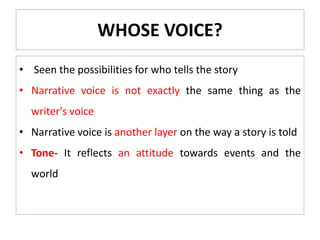
WHOSE VOICE?
• Seen the possibilities for who tells the story
• Narrative voice is not exactly the same thing as the
writer's voice
• Narrative voice is another layer on the way a story is told
• Tone- It reflects an attitude towards events and the
world
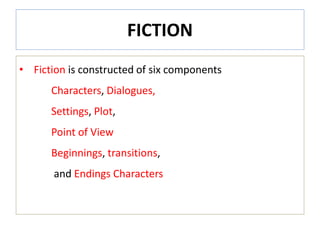
FICTION
• Fiction is constructed of six components
Characters, Dialogues,
Settings, Plot,
Point of View
Beginnings, transitions,
and Endings Characters
THANK YOU

Elements of narratives converted

  • 1.
    ELEMENTS OF ANARRATIVE Dr. J. JANARDHAN
  • 2.
    SEEING AND SPEAKING •Figure out who is going to tell the story-Point of view • It determines whose eyes the reader experiences the story through • Narrative voice is a related topic to think about • The narrative voice is the teller's voice
  • 3.
    MANY POINTS OFVIEW • The available points of view are first, second and third person • Second person is very uncommon • The first person- a less important character witnessing events • The first person point of view is often effective in giving a sense of closeness to the character
  • 4.
    THE FIRST PERSON •It can be very easy to get the reader’s attention • Decide how the story is being told through first person Is the character writing it down? Telling it out loud? Thinking it to their self? ( Ex. Surya S/o Krishnan) • When a first person narrator telling someone else’s story • This allows a certain distance between the narrator and the events
  • 5.
    THE FIRST PERSON •First Person Protagonist-A character relates events that occurred to them; • Narrator is the main character telling own story • First Person Witness- Narrator tells the someone’s story by observing the events (Eg: Kattappa-Baahubali-the beginning) • First Person Re-teller – The story is told, not by a witness, but who heard the story
  • 6.
    THE SECOND PERSON •The narrator addresses the protagonist as "you.“ • This kind of story has the narrator speaking to a younger version of their self • Second Person point of view is very rare • If you choose Second Person point of view, make it clear to the reader who is being addressed
  • 7.
    THE THIRD PERSON •The narrator is not a character in the story • The narrator may know -- and be able to tell about – the thoughts and feelings of all characters • Third person narration is very flexible • It is still the most common point of view • For fictional narration, Third Person Point of view is the best option
  • 8.
    THIRD PERSON • ThirdPerson Omniscient- The narrator knows everything (Ex: KGF movie) • Third Person Objective- The narrator can only relate to the reader • A good writer can tell a completely objective story • Third Person Limited- The narrator is able to see into the mind of a single character • This point of view is sort of the "default" in fiction
  • 9.
    WHOSE VOICE? • Seenthe possibilities for who tells the story • Narrative voice is not exactly the same thing as the writer's voice • Narrative voice is another layer on the way a story is told • Tone- It reflects an attitude towards events and the world
  • 10.
    FICTION • Fiction isconstructed of six components Characters, Dialogues, Settings, Plot, Point of View Beginnings, transitions, and Endings Characters
  • 11.