Shot Types and Camera
Movments
Christy Duvenhage
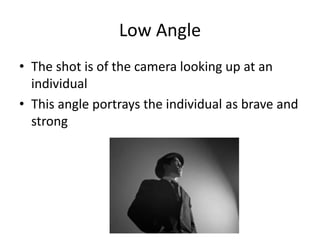
Low Angle
• The shot is of the camera looking up at an
individual
• This angle portrays the individual as brave and
strong
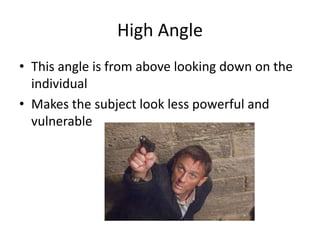
High Angle
• This angle is from above looking down on the
individual
• Makes the subject look less powerful and
vulnerable
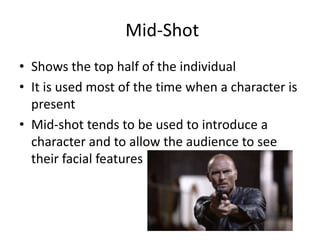
Mid-Shot
• Shows the top half of the individual
• It is used most of the time when a character is
present
• Mid-shot tends to be used to introduce a
character and to allow the audience to see
their facial features
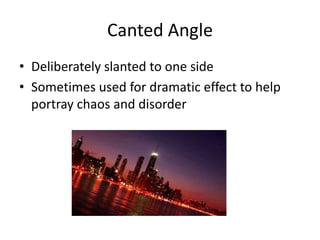
Canted Angle
• Deliberately slanted to one side
• Sometimes used for dramatic effect to help
portray chaos and disorder
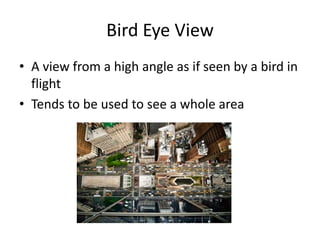
Bird Eye View
• A view from a high angle as if seen by a bird in
flight
• Tends to be used to see a whole area
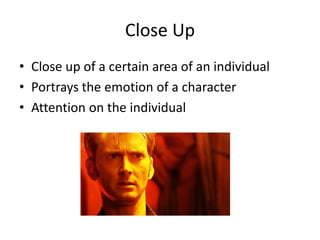
Close Up
• Close up of a certain area of an individual
• Portrays the emotion of a character
• Attention on the individual
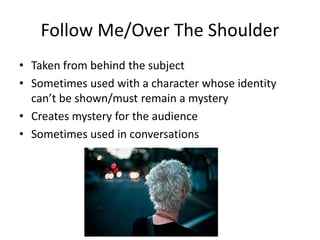
Follow Me/Over The Shoulder
• Taken from behind the subject
• Sometimes used with a character whose identity
can’t be shown/must remain a mystery
• Creates mystery for the audience
• Sometimes used in conversations
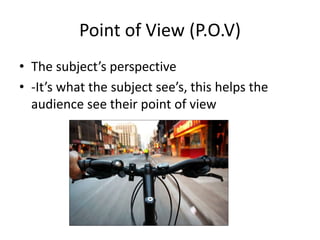
Point of View (P.O.V)
• The subject’s perspective
• -It’s what the subject see’s, this helps the
audience see their point of view
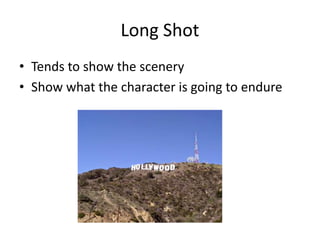
Long Shot
• Tends to show the scenery
• Show what the character is going to endure
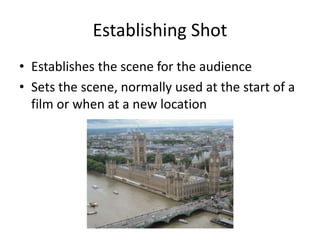
Establishing Shot
• Establishes the scene for the audience
• Sets the scene, normally used at the start of a
film or when at a new location
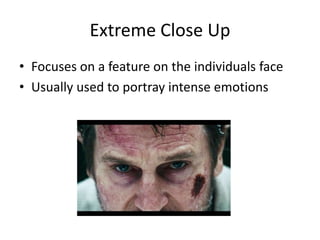
Extreme Close Up
• Focuses on a feature on the individuals face
• Usually used to portray intense emotions
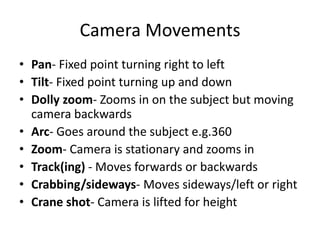
Camera Movements
• Pan- Fixed point turning right to left
• Tilt- Fixed point turning up and down
• Dolly zoom- Zooms in on the subject but moving
camera backwards
• Arc- Goes around the subject e.g.360
• Zoom- Camera is stationary and zooms in
• Track(ing) - Moves forwards or backwards
• Crabbing/sideways- Moves sideways/left or right
• Crane shot- Camera is lifted for height

Shot Types and Camera Movments

  • 1.
    Shot Types andCamera Movments Christy Duvenhage
  • 2.
    Low Angle • Theshot is of the camera looking up at an individual • This angle portrays the individual as brave and strong
  • 3.
    High Angle • Thisangle is from above looking down on the individual • Makes the subject look less powerful and vulnerable
  • 4.
    Mid-Shot • Shows thetop half of the individual • It is used most of the time when a character is present • Mid-shot tends to be used to introduce a character and to allow the audience to see their facial features
  • 5.
    Canted Angle • Deliberatelyslanted to one side • Sometimes used for dramatic effect to help portray chaos and disorder
  • 6.
    Bird Eye View •A view from a high angle as if seen by a bird in flight • Tends to be used to see a whole area
  • 7.
    Close Up • Closeup of a certain area of an individual • Portrays the emotion of a character • Attention on the individual
  • 8.
    Follow Me/Over TheShoulder • Taken from behind the subject • Sometimes used with a character whose identity can’t be shown/must remain a mystery • Creates mystery for the audience • Sometimes used in conversations
  • 9.
    Point of View(P.O.V) • The subject’s perspective • -It’s what the subject see’s, this helps the audience see their point of view
  • 10.
    Long Shot • Tendsto show the scenery • Show what the character is going to endure
  • 11.
    Establishing Shot • Establishesthe scene for the audience • Sets the scene, normally used at the start of a film or when at a new location
  • 12.
    Extreme Close Up •Focuses on a feature on the individuals face • Usually used to portray intense emotions
  • 13.
    Camera Movements • Pan-Fixed point turning right to left • Tilt- Fixed point turning up and down • Dolly zoom- Zooms in on the subject but moving camera backwards • Arc- Goes around the subject e.g.360 • Zoom- Camera is stationary and zooms in • Track(ing) - Moves forwards or backwards • Crabbing/sideways- Moves sideways/left or right • Crane shot- Camera is lifted for height