Mise en scene
Dr. Janardhan Juvvigunta
 Mise en scène encompasses the most recognizable
elements of a film
The setting
The actors
 It includes costumes and make-up, props
 The term is borrowed from a French theatrical
expression,
 Meaning roughly “put into the scene”
 Mise-en-scène describes in the frame and the way it is
shown and arranged
 We have organized according to major areas:
 Setting
 Lighting
 Costume
 Depth of Space
 Visual Effects
SETTING
 It creates both a sense of place and a mood
 It may also reflect a character’s emotional state of
mind.
 It can be entirely fabricated within a studio –
 Either as an authentic re-construction of reality or as a
unusual fiction
LIGHTING
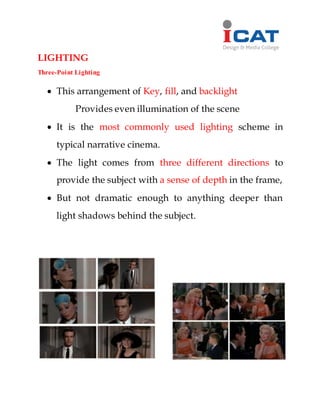
Three-Point Lighting
 This arrangement of Key, fill, and backlight
Provides even illumination of the scene
 It is the most commonly used lighting scheme in
typical narrative cinema.
 The light comes from three different directions to
provide the subject with a sense of depth in the frame,
 But not dramatic enough to anything deeper than
light shadows behind the subject.
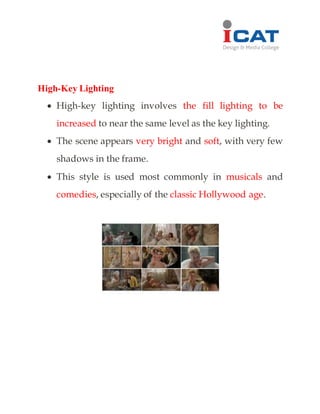
High-Key Lighting
 High-key lighting involves the fill lighting to be
increased to near the same level as the key lighting.
 The scene appears very bright and soft, with very few
shadows in the frame.
 This style is used most commonly in musicals and
comedies, especially of the classic Hollywood age.
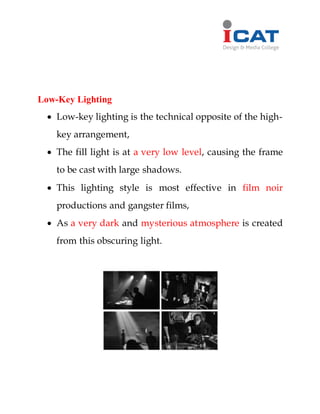
Low-Key Lighting
 Low-key lighting is the technical opposite of the high-
key arrangement,
 The fill light is at a very low level, causing the frame
to be cast with large shadows.
 This lighting style is most effective in film noir
productions and gangster films,
 As a very dark and mysterious atmosphere is created
from this obscuring light.
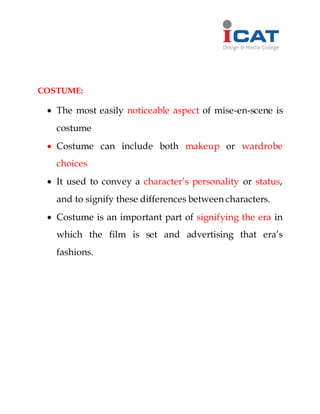
COSTUME:
 The most easily noticeable aspect of mise-en-scene is
costume
 Costume can include both makeup or wardrobe
choices
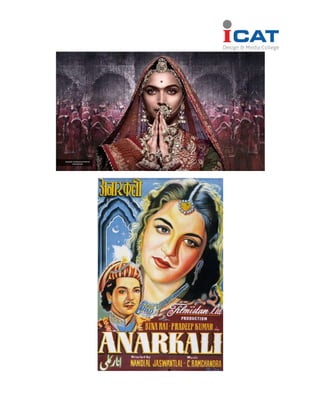
 It used to convey a character’s personality or status,
and to signify these differences between characters.
 Costume is an important part of signifying the era in
which the film is set and advertising that era’s
fashions.
SPACE
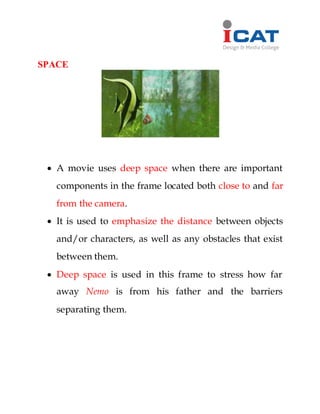
 A movie uses deep space when there are important
components in the frame located both close to and far
from the camera.
 It is used to emphasize the distance between objects
and/or characters, as well as any obstacles that exist
between them.
 Deep space is used in this frame to stress how far
away Nemo is from his father and the barriers
separating them.
Shallow space
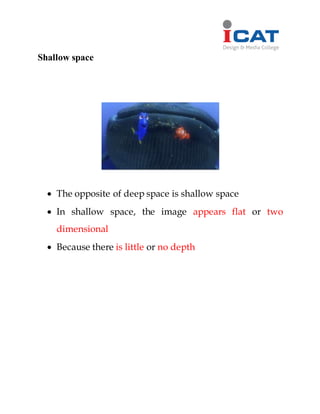
 The opposite of deep space is shallow space
 In shallow space, the image appears flat or two
dimensional
 Because there is little or no depth
Off-screen Space
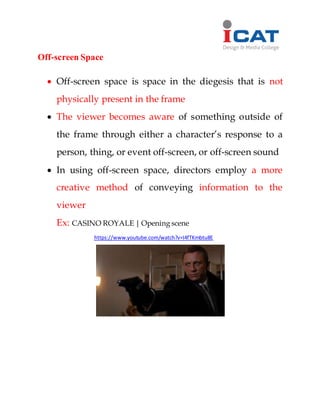
 Off-screen space is space in the diegesis that is not
physically present in the frame
 The viewer becomes aware of something outside of
the frame through either a character’s response to a
person, thing, or event off-screen, or off-screen sound
 In using off-screen space, directors employ a more
creative method of conveying information to the
viewer
Ex: CASINO ROYALE | Opening scene
https://www.youtube.com/watch?v=I4fTKmbtu8E
Frontality:
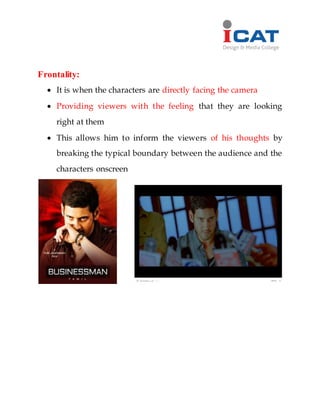
 It is when the characters are directly facing the camera
 Providing viewers with the feeling that they are looking
right at them
 This allows him to inform the viewers of his thoughts by
breaking the typical boundary between the audience and the
characters onscreen
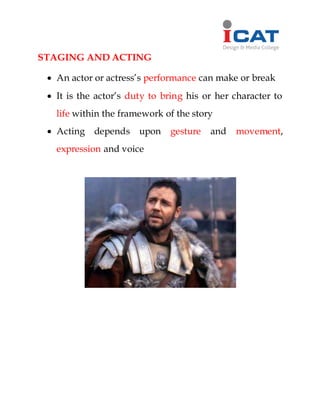
STAGING AND ACTING
 An actor or actress’s performance can make or break
 It is the actor’s duty to bring his or her character to
life within the framework of the story
 Acting depends upon gesture and movement,
expression and voice
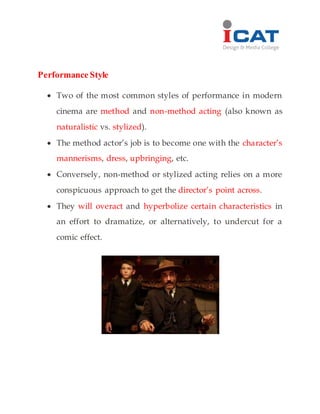
Performance Style
 Two of the most common styles of performance in modern
cinema are method and non-method acting (also known as
naturalistic vs. stylized).
 The method actor’s job is to become one with the character’s
mannerisms, dress, upbringing, etc.
 Conversely, non-method or stylized acting relies on a more
conspicuous approach to get the director’s point across.
 They will overact and hyperbolize certain characteristics in
an effort to dramatize, or alternatively, to undercut for a
comic effect.
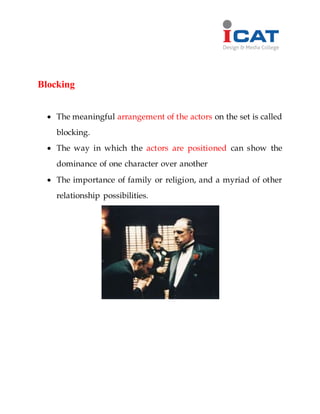
Blocking
 The meaningful arrangement of the actors on the set is called
blocking.
 The way in which the actors are positioned can show the
dominance of one character over another
 The importance of family or religion, and a myriad of other
relationship possibilities.
SPECIAL EFFECTS
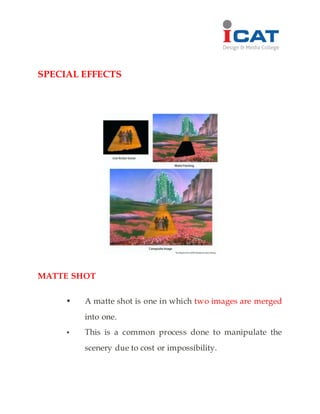
MATTE SHOT
• A matte shot is one in which two images are merged
into one.
• This is a common process done to manipulate the
scenery due to cost or impossibility.
REAR PROJECTION:
 Rear projection is a special effects technique used to give the
illusion of filming a scene on location.
 The technique combines pre-filmed background footage
with present foreground action.
 Rear projection was most popularized in driving sequences,
when actors would sit inside a prop vehicle rigged up to a
projector
THANK YOU

Mise en scene

  • 1.
    Mise en scene Dr.Janardhan Juvvigunta
  • 2.
     Mise enscène encompasses the most recognizable elements of a film The setting The actors  It includes costumes and make-up, props  The term is borrowed from a French theatrical expression,  Meaning roughly “put into the scene”  Mise-en-scène describes in the frame and the way it is shown and arranged  We have organized according to major areas:  Setting  Lighting  Costume  Depth of Space  Visual Effects
  • 3.
    SETTING  It createsboth a sense of place and a mood  It may also reflect a character’s emotional state of mind.  It can be entirely fabricated within a studio –  Either as an authentic re-construction of reality or as a unusual fiction
  • 4.
    LIGHTING Three-Point Lighting  Thisarrangement of Key, fill, and backlight Provides even illumination of the scene  It is the most commonly used lighting scheme in typical narrative cinema.  The light comes from three different directions to provide the subject with a sense of depth in the frame,  But not dramatic enough to anything deeper than light shadows behind the subject.
  • 5.
    High-Key Lighting  High-keylighting involves the fill lighting to be increased to near the same level as the key lighting.  The scene appears very bright and soft, with very few shadows in the frame.  This style is used most commonly in musicals and comedies, especially of the classic Hollywood age.
  • 6.
    Low-Key Lighting  Low-keylighting is the technical opposite of the high- key arrangement,  The fill light is at a very low level, causing the frame to be cast with large shadows.  This lighting style is most effective in film noir productions and gangster films,  As a very dark and mysterious atmosphere is created from this obscuring light.
  • 7.
    COSTUME:  The mosteasily noticeable aspect of mise-en-scene is costume  Costume can include both makeup or wardrobe choices  It used to convey a character’s personality or status, and to signify these differences between characters.  Costume is an important part of signifying the era in which the film is set and advertising that era’s fashions.
  • 9.
    SPACE  A movieuses deep space when there are important components in the frame located both close to and far from the camera.  It is used to emphasize the distance between objects and/or characters, as well as any obstacles that exist between them.  Deep space is used in this frame to stress how far away Nemo is from his father and the barriers separating them.
  • 10.
    Shallow space  Theopposite of deep space is shallow space  In shallow space, the image appears flat or two dimensional  Because there is little or no depth
  • 11.
    Off-screen Space  Off-screenspace is space in the diegesis that is not physically present in the frame  The viewer becomes aware of something outside of the frame through either a character’s response to a person, thing, or event off-screen, or off-screen sound  In using off-screen space, directors employ a more creative method of conveying information to the viewer Ex: CASINO ROYALE | Opening scene https://www.youtube.com/watch?v=I4fTKmbtu8E
  • 12.
    Frontality:  It iswhen the characters are directly facing the camera  Providing viewers with the feeling that they are looking right at them  This allows him to inform the viewers of his thoughts by breaking the typical boundary between the audience and the characters onscreen
  • 13.
    STAGING AND ACTING An actor or actress’s performance can make or break  It is the actor’s duty to bring his or her character to life within the framework of the story  Acting depends upon gesture and movement, expression and voice
  • 14.
    Performance Style  Twoof the most common styles of performance in modern cinema are method and non-method acting (also known as naturalistic vs. stylized).  The method actor’s job is to become one with the character’s mannerisms, dress, upbringing, etc.  Conversely, non-method or stylized acting relies on a more conspicuous approach to get the director’s point across.  They will overact and hyperbolize certain characteristics in an effort to dramatize, or alternatively, to undercut for a comic effect.
  • 15.
    Blocking  The meaningfularrangement of the actors on the set is called blocking.  The way in which the actors are positioned can show the dominance of one character over another  The importance of family or religion, and a myriad of other relationship possibilities.
  • 16.
    SPECIAL EFFECTS MATTE SHOT •A matte shot is one in which two images are merged into one. • This is a common process done to manipulate the scenery due to cost or impossibility.
  • 17.
    REAR PROJECTION:  Rearprojection is a special effects technique used to give the illusion of filming a scene on location.  The technique combines pre-filmed background footage with present foreground action.  Rear projection was most popularized in driving sequences, when actors would sit inside a prop vehicle rigged up to a projector
  • 18.