Basic Conventions of
   Documentary

      Elle Disley
A-Roll footage
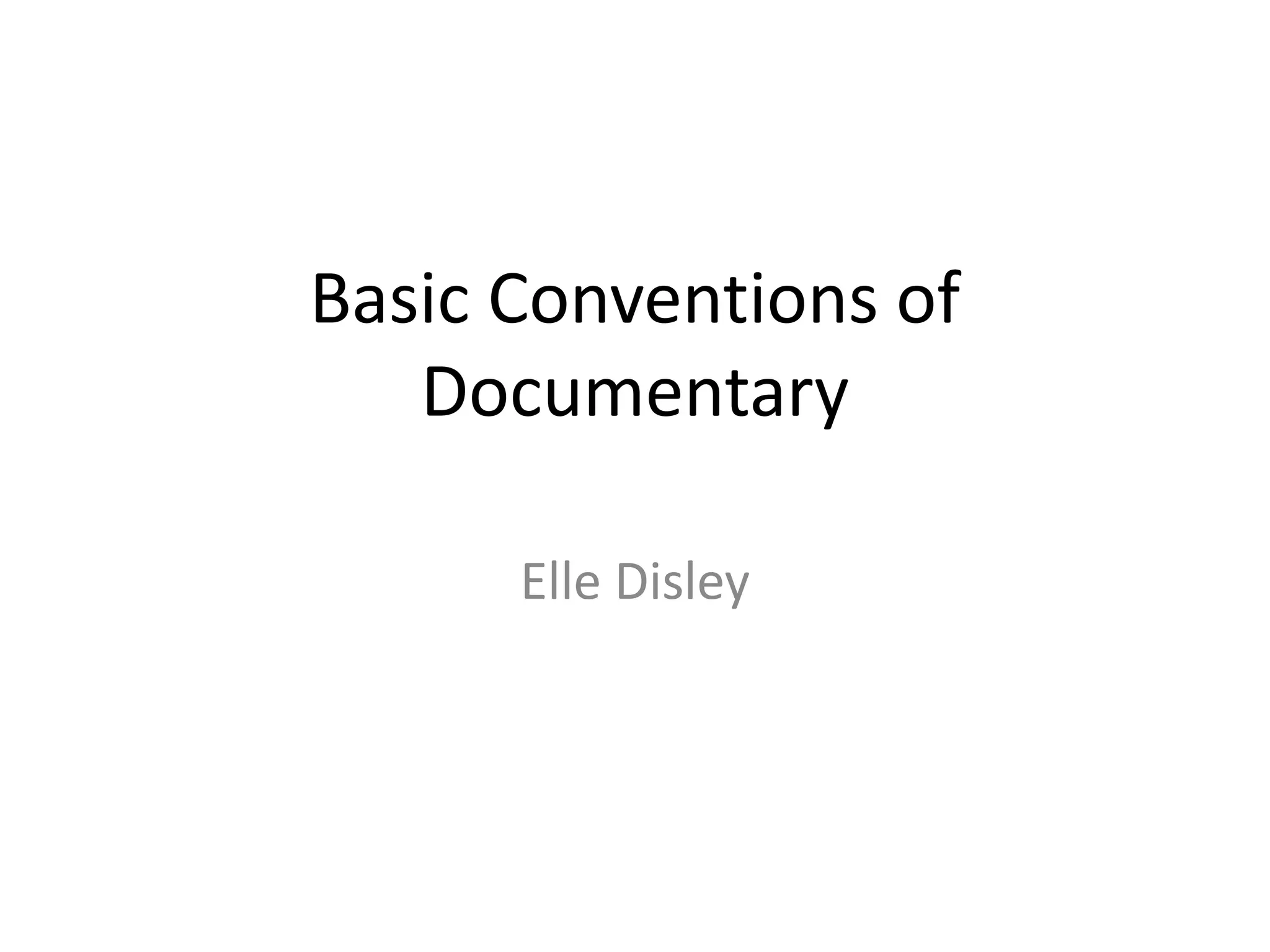
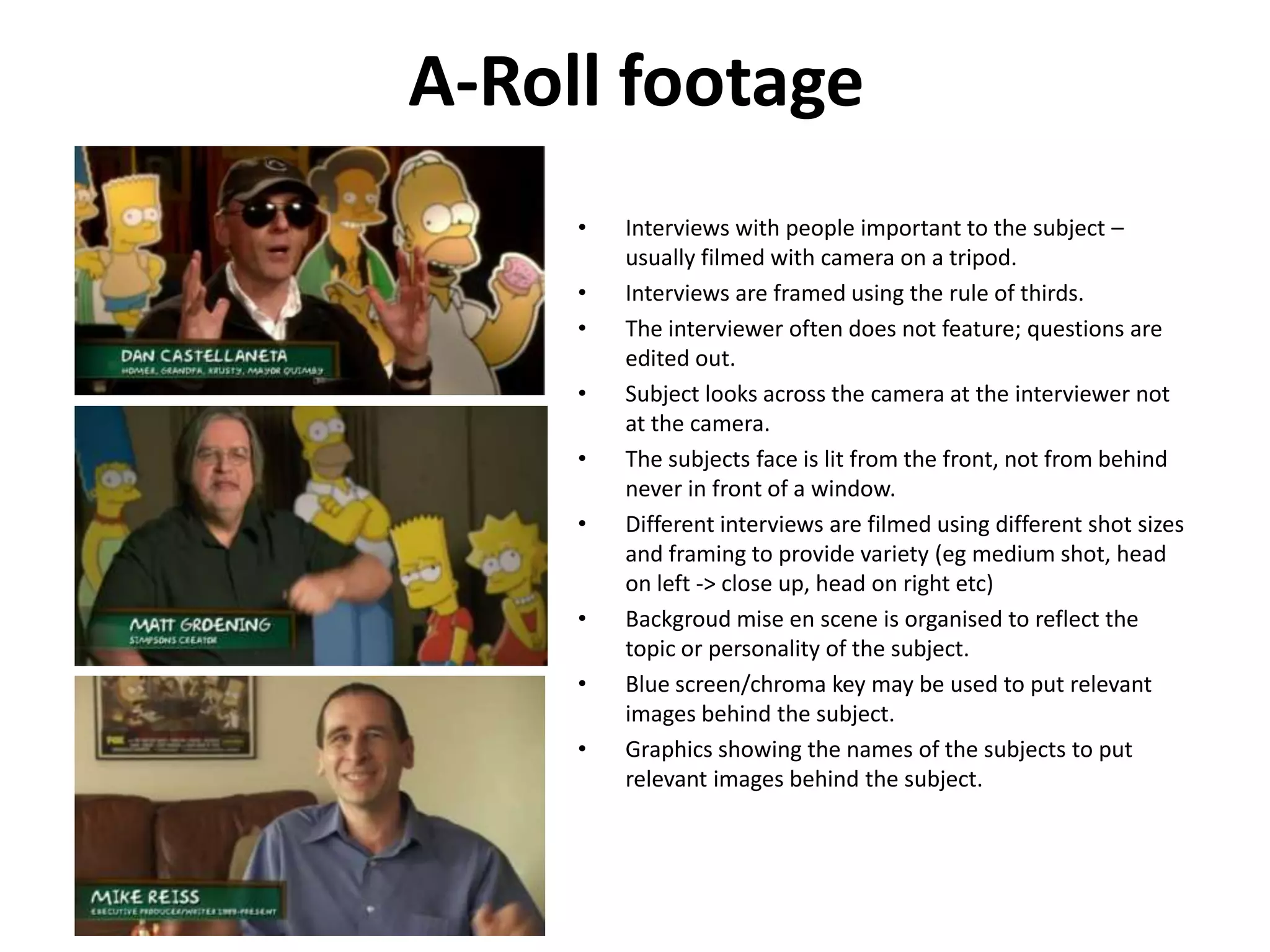
     •   Interviews with people important to the subject –
         usually filmed with camera on a tripod.
     •   Interviews are framed using the rule of thirds.
     •   The interviewer often does not feature; questions are
         edited out.
     •   Subject looks across the camera at the interviewer not
         at the camera.
     •   The subjects face is lit from the front, not from behind
         never in front of a window.
     •   Different interviews are filmed using different shot sizes
         and framing to provide variety (eg medium shot, head
         on left -> close up, head on right etc)
     •   Backgroud mise en scene is organised to reflect the
         topic or personality of the subject.
     •   Blue screen/chroma key may be used to put relevant
         images behind the subject.
     •   Graphics showing the names of the subjects to put
         relevant images behind the subject.
B- Roll footage
      •   Used to supplement the main interview footage, edited
          together between footage sometimes in a montage.
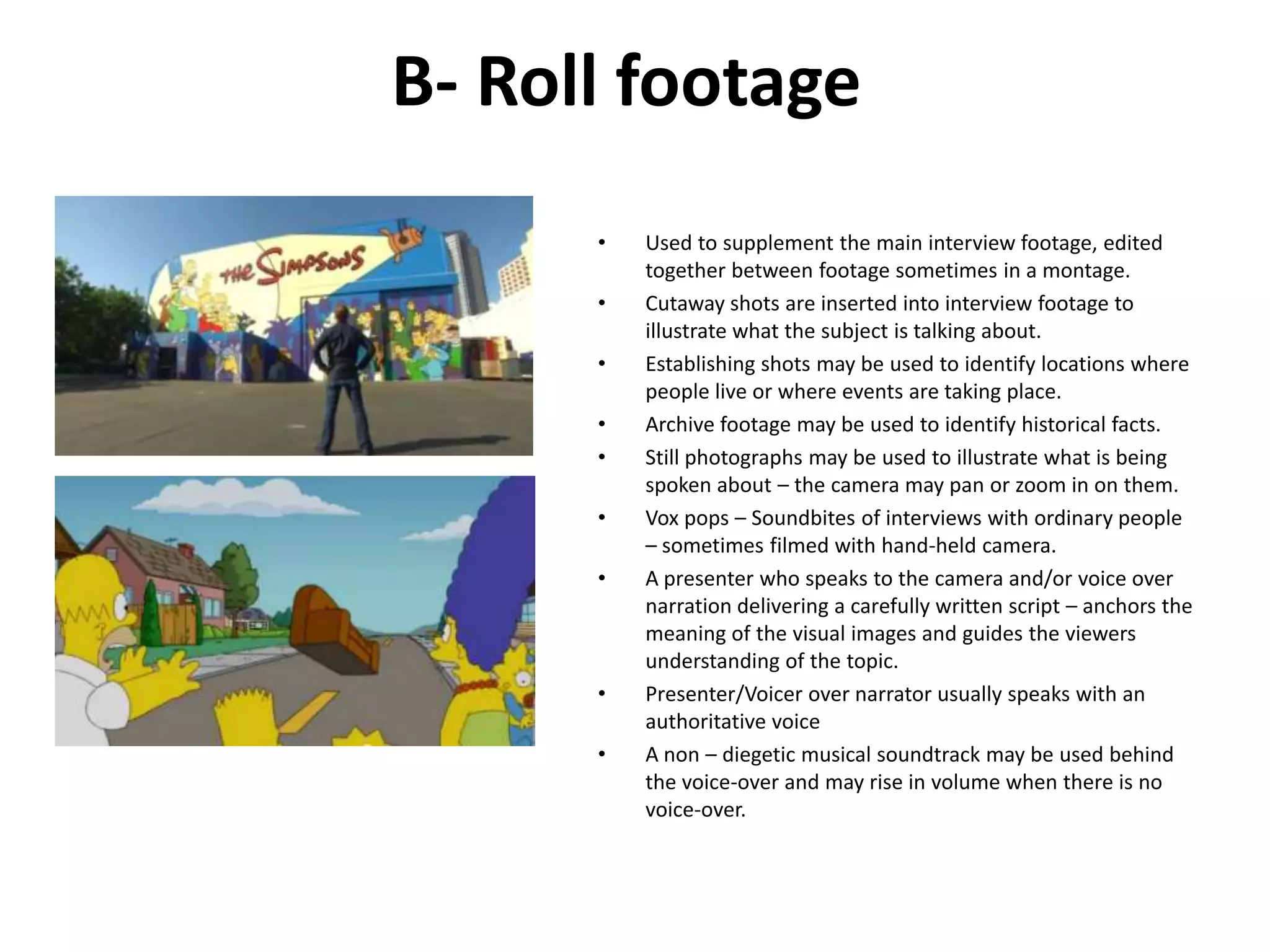
      •   Cutaway shots are inserted into interview footage to
          illustrate what the subject is talking about.
      •   Establishing shots may be used to identify locations where
          people live or where events are taking place.
      •   Archive footage may be used to identify historical facts.
      •   Still photographs may be used to illustrate what is being
          spoken about – the camera may pan or zoom in on them.
      •   Vox pops – Soundbites of interviews with ordinary people
          – sometimes filmed with hand-held camera.
      •   A presenter who speaks to the camera and/or voice over
          narration delivering a carefully written script – anchors the
          meaning of the visual images and guides the viewers
          understanding of the topic.
      •   Presenter/Voicer over narrator usually speaks with an
          authoritative voice
      •   A non – diegetic musical soundtrack may be used behind
          the voice-over and may rise in volume when there is no
          voice-over.

Basic conventions of documentary

  • 1.
    Basic Conventions of Documentary Elle Disley
  • 2.
    A-Roll footage • Interviews with people important to the subject – usually filmed with camera on a tripod. • Interviews are framed using the rule of thirds. • The interviewer often does not feature; questions are edited out. • Subject looks across the camera at the interviewer not at the camera. • The subjects face is lit from the front, not from behind never in front of a window. • Different interviews are filmed using different shot sizes and framing to provide variety (eg medium shot, head on left -> close up, head on right etc) • Backgroud mise en scene is organised to reflect the topic or personality of the subject. • Blue screen/chroma key may be used to put relevant images behind the subject. • Graphics showing the names of the subjects to put relevant images behind the subject.
  • 3.
    B- Roll footage • Used to supplement the main interview footage, edited together between footage sometimes in a montage. • Cutaway shots are inserted into interview footage to illustrate what the subject is talking about. • Establishing shots may be used to identify locations where people live or where events are taking place. • Archive footage may be used to identify historical facts. • Still photographs may be used to illustrate what is being spoken about – the camera may pan or zoom in on them. • Vox pops – Soundbites of interviews with ordinary people – sometimes filmed with hand-held camera. • A presenter who speaks to the camera and/or voice over narration delivering a carefully written script – anchors the meaning of the visual images and guides the viewers understanding of the topic. • Presenter/Voicer over narrator usually speaks with an authoritative voice • A non – diegetic musical soundtrack may be used behind the voice-over and may rise in volume when there is no voice-over.