AS Film Studies
        Unit FM1


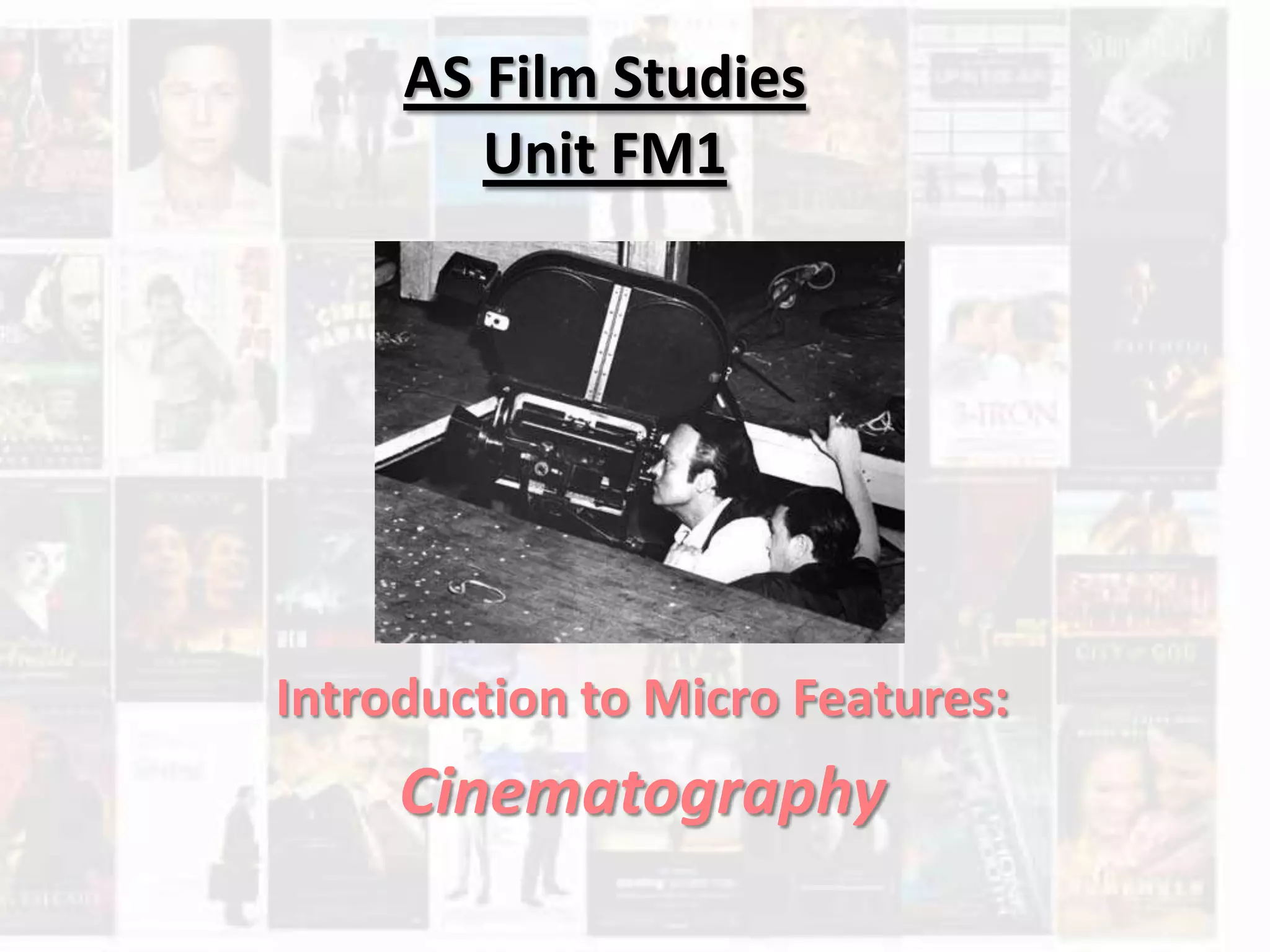
Introduction to Micro Features:
     Cinematography
Lesson Aims
By the end of the lesson you will be able to:

• Understand what cinematography is

• Deconstruct how cinematography is used in
  film extract to communicate meaning
Definition: Cinematography
• The way in which the camera is used to communicate
  meaning

• Composition of visual elements

• Communicates essential information to the audience

• Made up of shots (framing), angles and movements, lighting
  can also be included
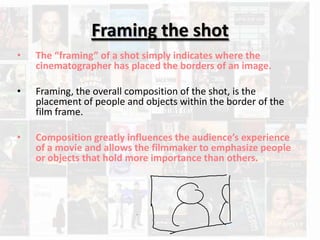
Framing the shot
•   The “framing” of a shot simply indicates where the
    cinematographer has placed the borders of an image.

•   Framing, the overall composition of the shot, is the
    placement of people and objects within the border of the
    film frame.

•   Composition greatly influences the audience’s experience
    of a movie and allows the filmmaker to emphasize people
    or objects that hold more importance than others.
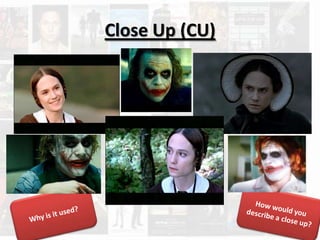
Close Up (CU)
Close Up (CU)
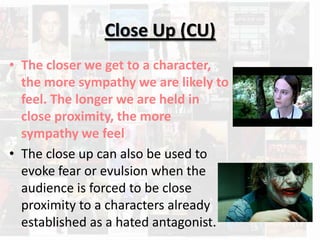
• The closer we get to a character,
  the more sympathy we are likely to
  feel. The longer we are held in
  close proximity, the more
  sympathy we feel
• The close up can also be used to
  evoke fear or evulsion when the
  audience is forced to be close
  proximity to a characters already
  established as a hated antagonist.
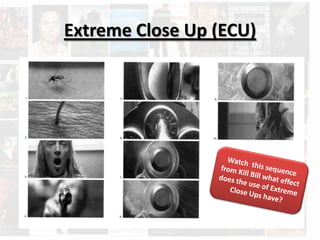
Extreme Close Up (ECU)
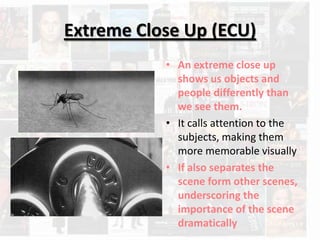
           • An extreme close up
             shows us objects and
             people differently than
             we see them.
           • It calls attention to the
             subjects, making them
             more memorable visually
           • If also separates the
             scene form other scenes,
             underscoring the
             importance of the scene
             dramatically
Two Shot
Two Shot
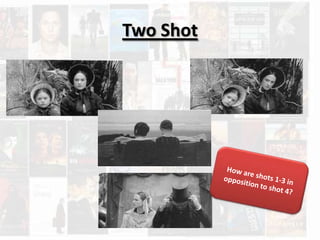
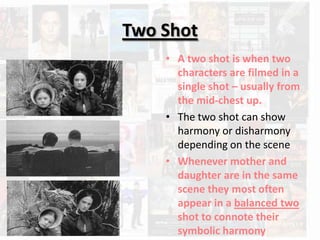
    • A two shot is when two
      characters are filmed in a
      single shot – usually from
      the mid-chest up.
    • The two shot can show
      harmony or disharmony
      depending on the scene
    • Whenever mother and
      daughter are in the same
      scene they most often
      appear in a balanced two
      shot to connote their
      symbolic harmony
Two Shot
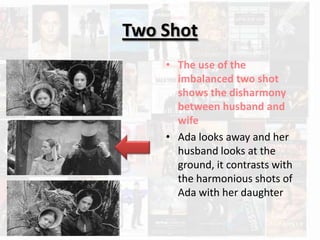
    • The use of the
      imbalanced two shot
      shows the disharmony
      between husband and
      wife
    • Ada looks away and her
      husband looks at the
      ground, it contrasts with
      the harmonious shots of
      Ada with her daughter
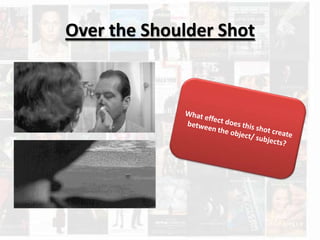
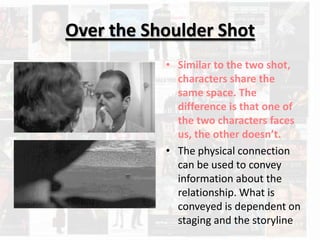
Over the Shoulder Shot
           • Similar to the two shot,
             characters share the
             same space. The
             difference is that one of
             the two characters faces
             us, the other doesn’t.
           • The physical connection
             can be used to convey
             information about the
             relationship. What is
             conveyed is dependent on
             staging and the storyline
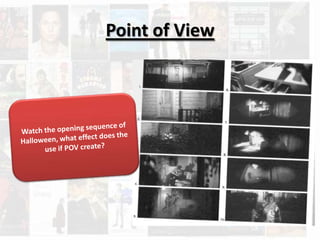
Point of View
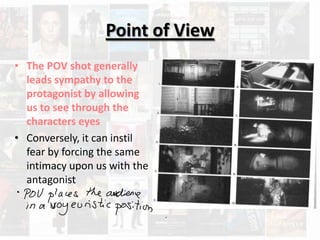
Point of View
• The POV shot generally
  leads sympathy to the
  protagonist by allowing
  us to see through the
  characters eyes
• Conversely, it can instil
  fear by forcing the same
  intimacy upon us with the
  antagonist
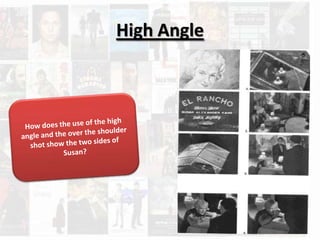
High Angle
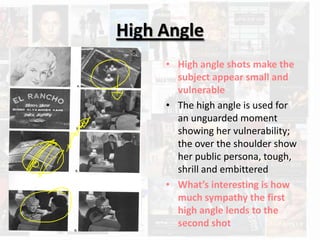
High Angle
     • High angle shots make the
       subject appear small and
       vulnerable
     • The high angle is used for
       an unguarded moment
       showing her vulnerability;
       the over the shoulder show
       her public persona, tough,
       shrill and embittered
     • What’s interesting is how
       much sympathy the first
       high angle lends to the
       second shot
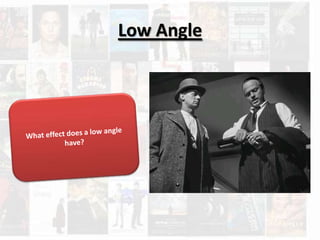
Low Angle
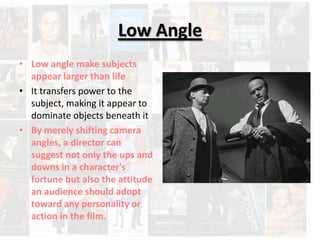
Low Angle
• Low angle make subjects
  appear larger than life
• It transfers power to the
  subject, making it appear to
  dominate objects beneath it
• By merely shifting camera
  angles, a director can
  suggest not only the ups and
  downs in a character's
  fortune but also the attitude
  an audience should adopt
  toward any personality or
  action in the film.
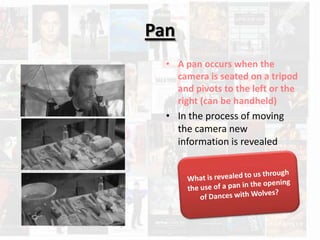
Pan
  • A pan occurs when the
    camera is seated on a tripod
    and pivots to the left or the
    right (can be handheld)
  • In the process of moving
    the camera new
    information is revealed
Task #1
• Set up a Film Studies blog
• When requested to homework can be posted
  here
• The following tasks can be done on the blog
  once set up
• Please email your blog addresses to me
• rajib@welling.bexley.sch.uk
Task #2
• Find out what the descriptions are for the
  following shot types and why they would be
  used. Try to find examples of them and
  include screen shots
• Medium Shot
• Long Shot
• Extreme long shot/ Establishing Shot
• Medium long shot
• Canted/ Dutch Tilt
Task #3
• Find out what the          •   Tilt up
  descriptions are for the   •   Tilt down
  following angles and       •   Tracking
  movements and why
  they would be used. Try    •   Dolly
  to find examples of        •   Crane
  them and include           •   Handheld
  screen shots/ video        •   Aerial/ Birdseye
                             •   Zoom

Week 3 cinematography

  • 1.
    AS Film Studies Unit FM1 Introduction to Micro Features: Cinematography
  • 2.
    Lesson Aims By theend of the lesson you will be able to: • Understand what cinematography is • Deconstruct how cinematography is used in film extract to communicate meaning
  • 3.
    Definition: Cinematography • Theway in which the camera is used to communicate meaning • Composition of visual elements • Communicates essential information to the audience • Made up of shots (framing), angles and movements, lighting can also be included
  • 4.
    Framing the shot • The “framing” of a shot simply indicates where the cinematographer has placed the borders of an image. • Framing, the overall composition of the shot, is the placement of people and objects within the border of the film frame. • Composition greatly influences the audience’s experience of a movie and allows the filmmaker to emphasize people or objects that hold more importance than others.
  • 5.
  • 6.
    Close Up (CU) •The closer we get to a character, the more sympathy we are likely to feel. The longer we are held in close proximity, the more sympathy we feel • The close up can also be used to evoke fear or evulsion when the audience is forced to be close proximity to a characters already established as a hated antagonist.
  • 7.
  • 8.
    Extreme Close Up(ECU) • An extreme close up shows us objects and people differently than we see them. • It calls attention to the subjects, making them more memorable visually • If also separates the scene form other scenes, underscoring the importance of the scene dramatically
  • 9.
  • 10.
    Two Shot • A two shot is when two characters are filmed in a single shot – usually from the mid-chest up. • The two shot can show harmony or disharmony depending on the scene • Whenever mother and daughter are in the same scene they most often appear in a balanced two shot to connote their symbolic harmony
  • 11.
    Two Shot • The use of the imbalanced two shot shows the disharmony between husband and wife • Ada looks away and her husband looks at the ground, it contrasts with the harmonious shots of Ada with her daughter
  • 12.
  • 13.
    Over the ShoulderShot • Similar to the two shot, characters share the same space. The difference is that one of the two characters faces us, the other doesn’t. • The physical connection can be used to convey information about the relationship. What is conveyed is dependent on staging and the storyline
  • 14.
  • 15.
    Point of View •The POV shot generally leads sympathy to the protagonist by allowing us to see through the characters eyes • Conversely, it can instil fear by forcing the same intimacy upon us with the antagonist
  • 16.
  • 17.
    High Angle • High angle shots make the subject appear small and vulnerable • The high angle is used for an unguarded moment showing her vulnerability; the over the shoulder show her public persona, tough, shrill and embittered • What’s interesting is how much sympathy the first high angle lends to the second shot
  • 18.
  • 19.
    Low Angle • Lowangle make subjects appear larger than life • It transfers power to the subject, making it appear to dominate objects beneath it • By merely shifting camera angles, a director can suggest not only the ups and downs in a character's fortune but also the attitude an audience should adopt toward any personality or action in the film.
  • 20.
    Pan •A pan occurs when the camera is seated on a tripod and pivots to the left or the right (can be handheld) • In the process of moving the camera new information is revealed
  • 21.
    Task #1 • Setup a Film Studies blog • When requested to homework can be posted here • The following tasks can be done on the blog once set up • Please email your blog addresses to me • rajib@welling.bexley.sch.uk
  • 22.
    Task #2 • Findout what the descriptions are for the following shot types and why they would be used. Try to find examples of them and include screen shots • Medium Shot • Long Shot • Extreme long shot/ Establishing Shot • Medium long shot • Canted/ Dutch Tilt
  • 23.
    Task #3 • Findout what the • Tilt up descriptions are for the • Tilt down following angles and • Tracking movements and why they would be used. Try • Dolly to find examples of • Crane them and include • Handheld screen shots/ video • Aerial/ Birdseye • Zoom