Mechanical Engineering
Technology.
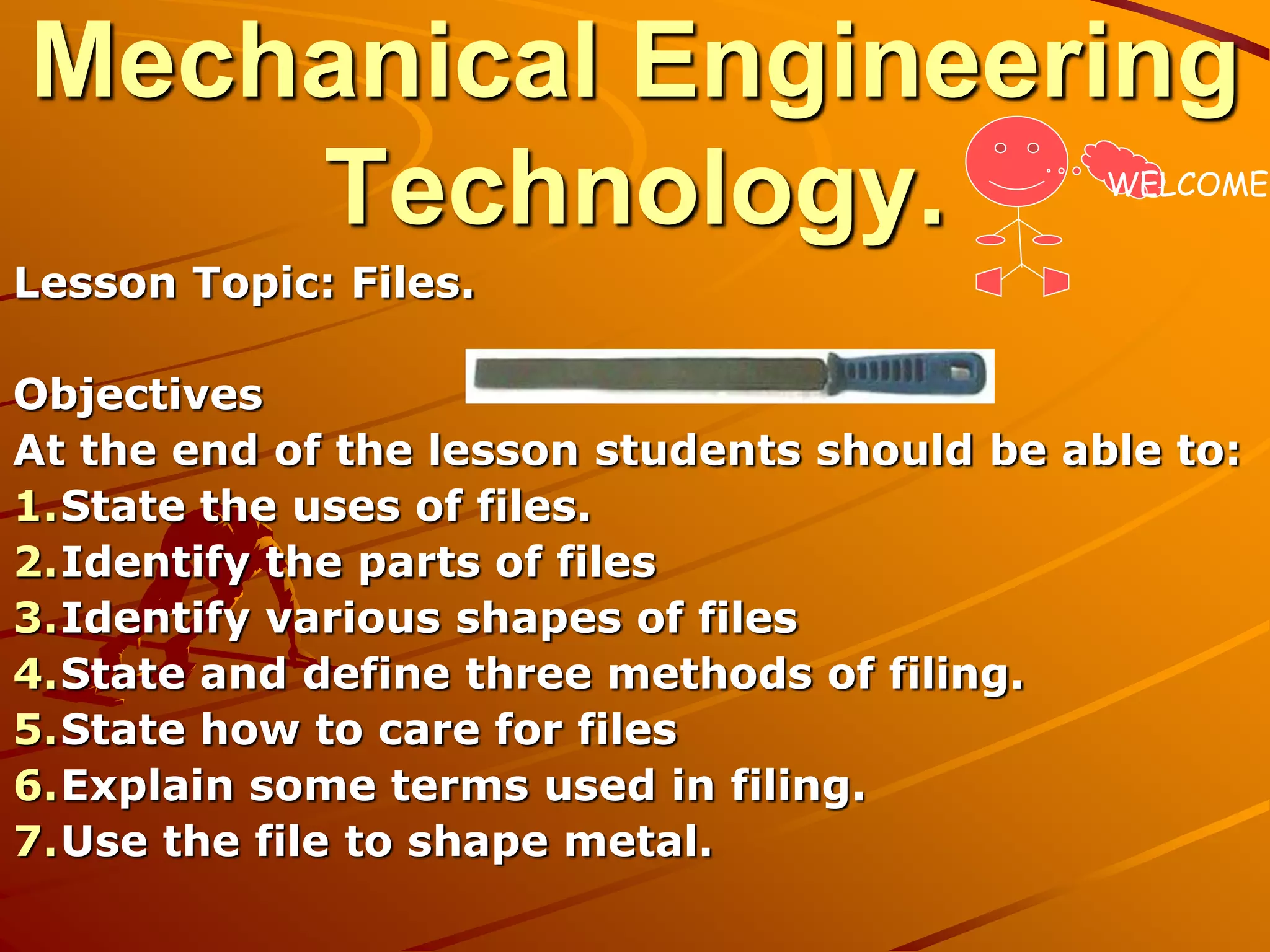
Lesson Topic: Files.
Objectives
At the end of the lesson students should be able to:
1.State the uses of files.
2.Identify the parts of files
3.Identify various shapes of files
4.State and define three methods of filing.
5.State how to care for files
6.Explain some terms used in filing.
7.Use the file to shape metal.
WELCOME
FILES
FILES ARE COMMONLY USED
IN MECHANICAL
ENGINEERING TECHNOLOGY
FOR SHAPING WORK.
THEY ARE MADE OF HIGH
CARBON STEEL WHICH IS
HARDENED AND TEMPERED.
FILES ARE MADE IN VARIOUS
SIZES AND SHAPES.
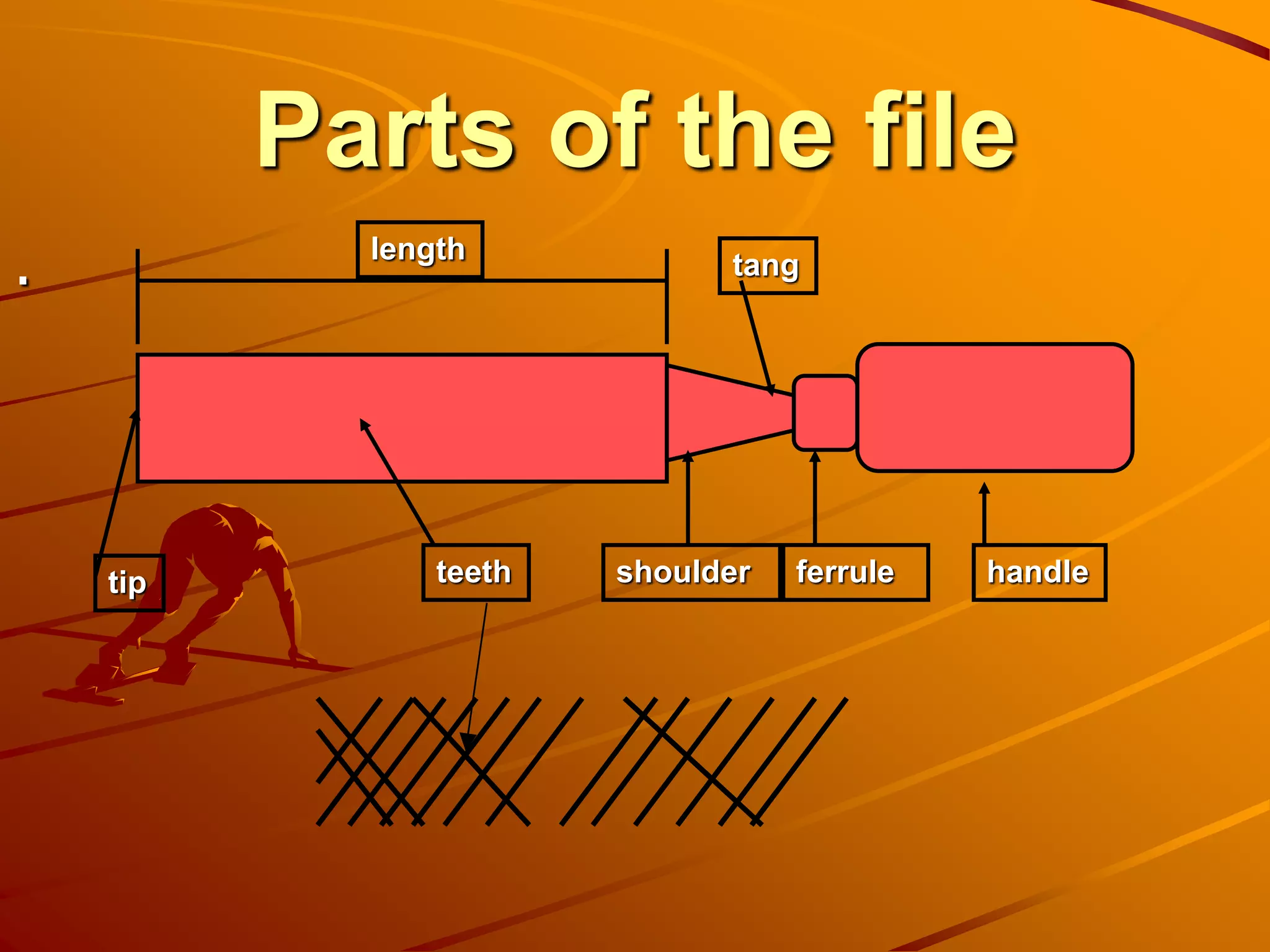
Parts of the file
. length
tip shoulder
tang
ferrule handleteeth
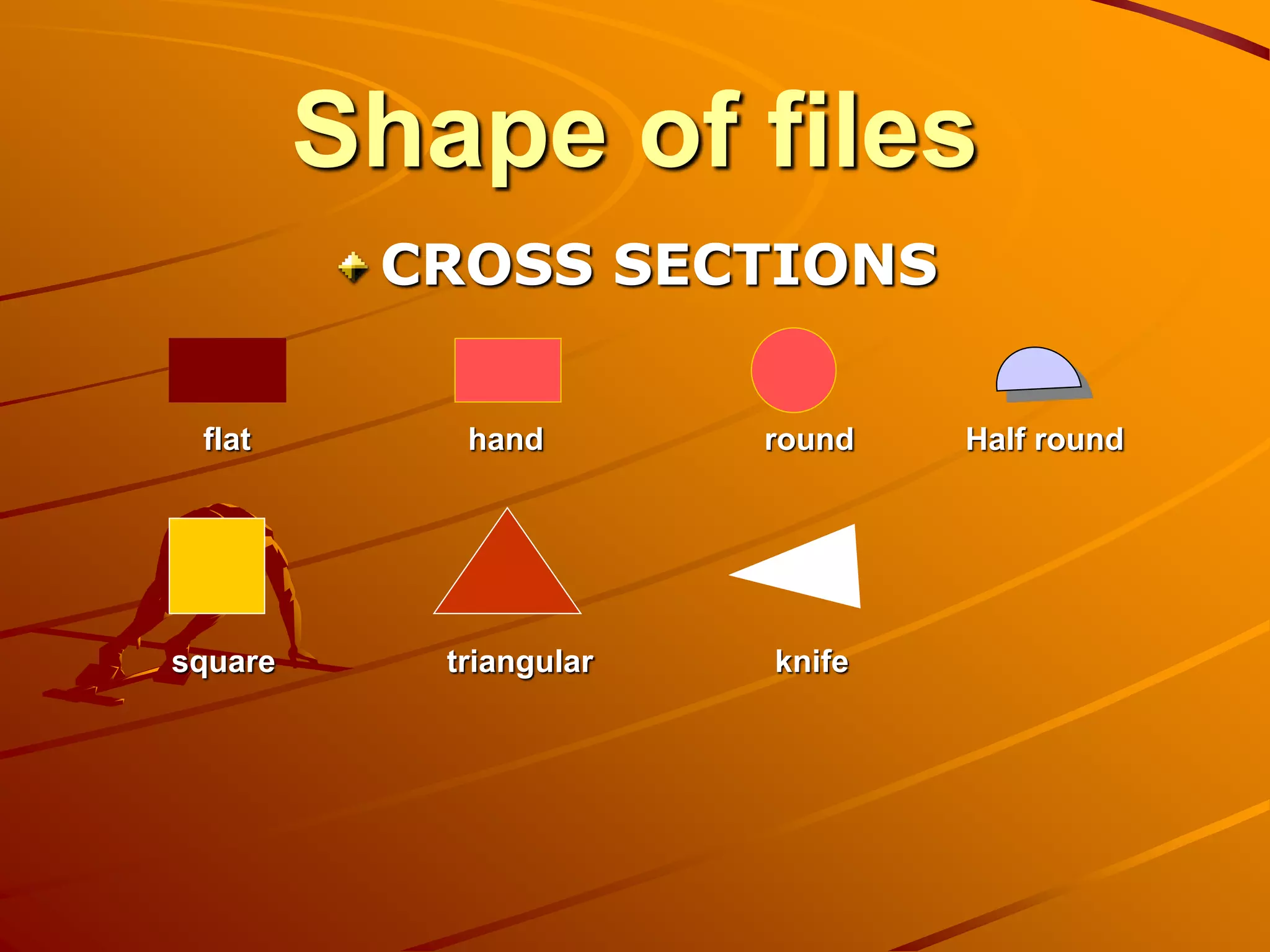
Shape of files
CROSS SECTIONS
flat Half roundround
knifetriangularsquare
hand
TYPES OF FILES
THE HAND FILE IS ALSO CALLED THE
SAFE EDGE FILE.IT IS PARALLEL
THROUGHOUT ITS LENGTH, HAS ONE
EDGE (SAFE) WITHOUT TEETH AND
IS USED FOR GENERAL PURPOSES.
THE FLAT FILE IS PARALLEL FOR
TWO THIRD OF ITS LENGTH AND HAS
TEETH ON ALL FOUR SIDES. IT IS
USED FOR GENERAL PURPOSES.
Care of files.
Never use a file without a handle
Clean the teeth as soon as they
become pinned.
Keep files in a dry place.
Never use the file as a hammer.
Never allow the file to slip over the
work when filing.
Never use a small file when a large
one can do the work better.
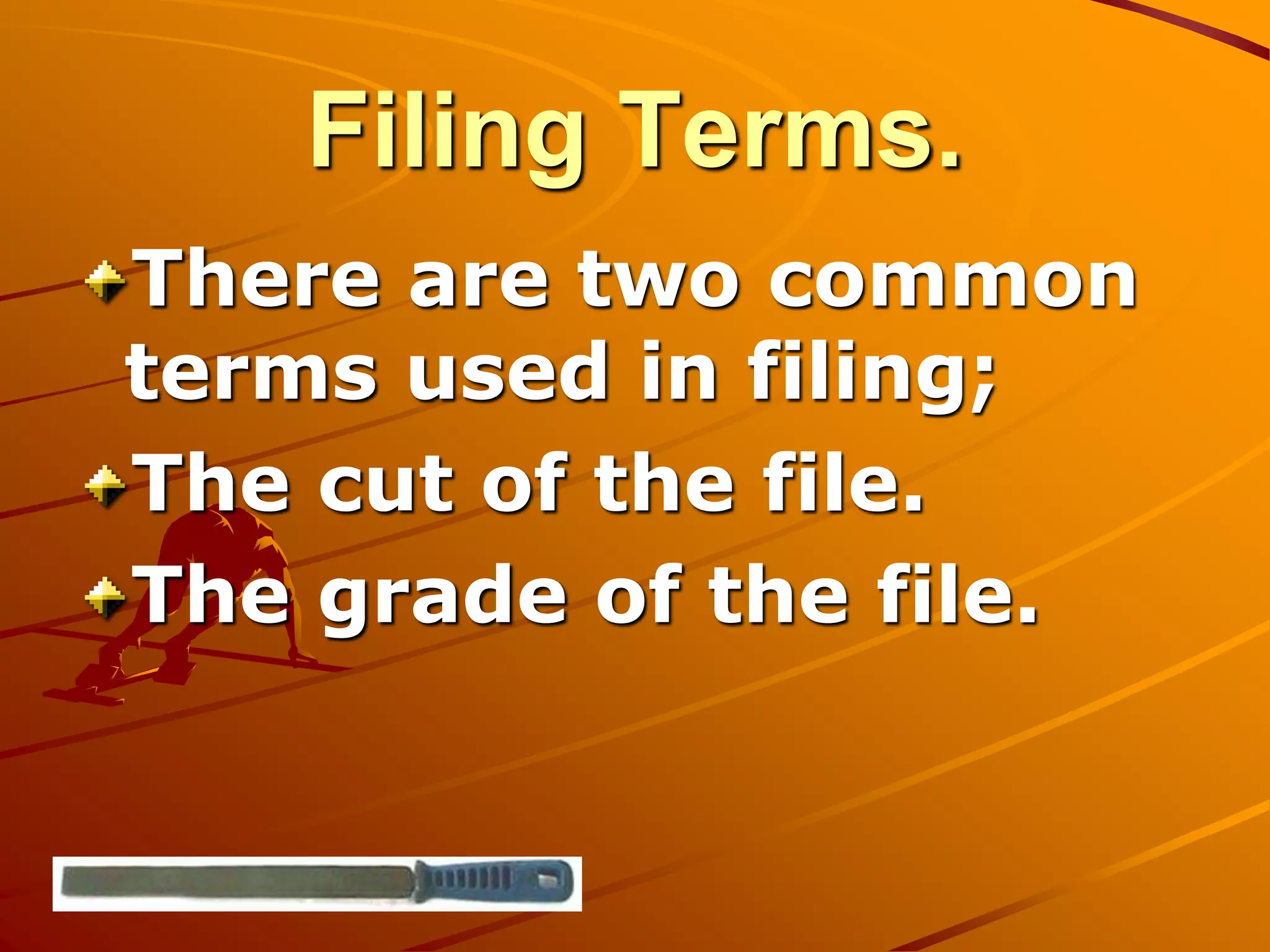
Filing Terms.
There are two common
terms used in filing;
The cut of the file.
The grade of the file.
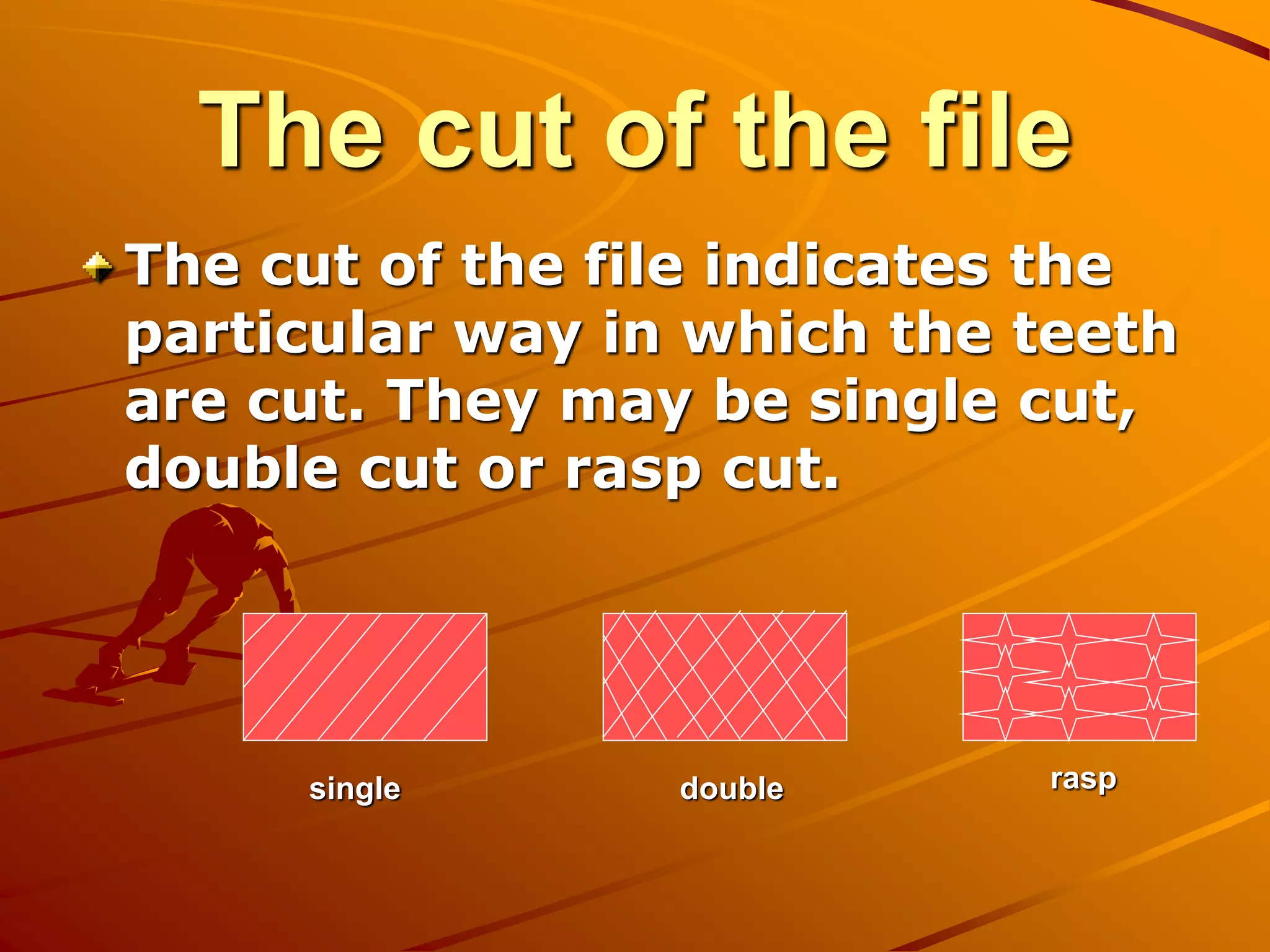
The cut of the file
The cut of the file indicates the
particular way in which the teeth
are cut. They may be single cut,
double cut or rasp cut.
single double rasp
THE GRADE OF THE
FILE.
THIS INDICATES THE DEGREE
OF COARSENESS OF THE
TEETH.
THE GRADES BEING; ROUGH,
BASTARD, SMOOTH OR DEAD
SMOOTH.
METHODS OF FILING
CROSS FILING
DRAW FILING
PROFILING
CROSS FILING
THIS METHOD IS USED
FOR ROUGHING DOWN.
THIS IS DONE BY
HOLDING THE FILE AT THE
TIP AND AT THE HANDLE,
PUSHING IT ACROSS THE
SURFACE OF THE WORK.
DRAW FILING
THIS METHOD IS USED WHEN
FINISHING A SURFACE AND
IS USUALLY DONE AFTER
CROSS FILING.
THE FILE IS HELD AT RIGHT
ANGLE TO THE WORK AND AS
CLOSE TOGETHER AS
POSSIBLE THEN PUSHED
BACK AND FORTH.
PRO FILING
THIS METHOD IS
USED TO PRODUCE
CURVES ON WORK.
THE CURVES MAY BE
CONVEX OR
CONCAVE.
CONCAVE FILING
IN CONCAVE FILING THE
FILE IS TWISTED AND
PUSHED FORWARD. A
ROUND OR HALF ROUND
FILE MAY BE USED.
CONVEX FILING
IN CONVEX FILING THE TIP
OF THE FILE MOVES
FORWARD AND UP WHILE
THE HANDLE MOVES
FORWARD AND DOWN.
A FLAT, HAND OR HALF
ROUND FILE MAY BE USED.
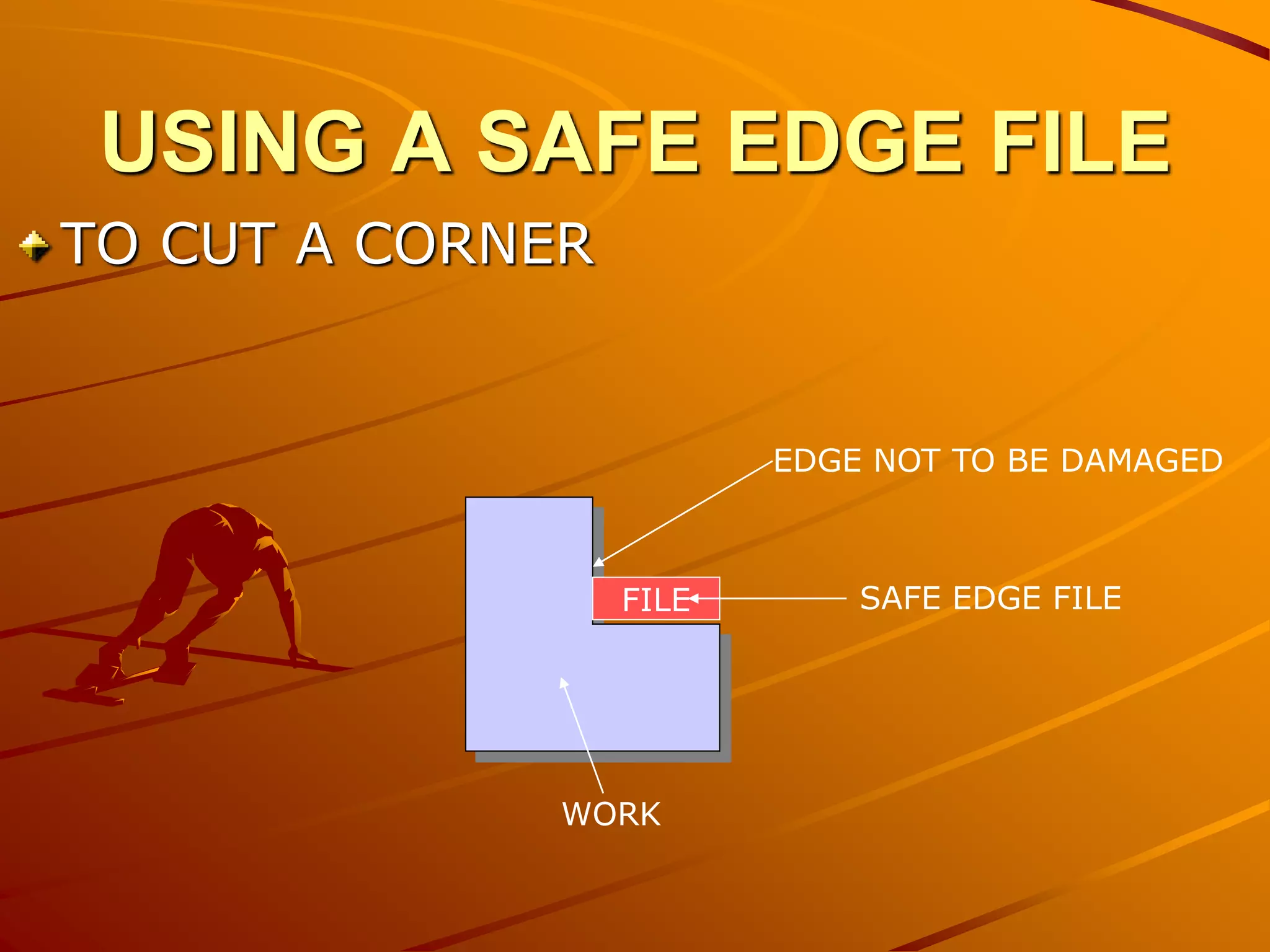
USING A SAFE EDGE FILE
TO CUT A CORNER
SAFE EDGE FILE
WORK
FILE
EDGE NOT TO BE DAMAGED
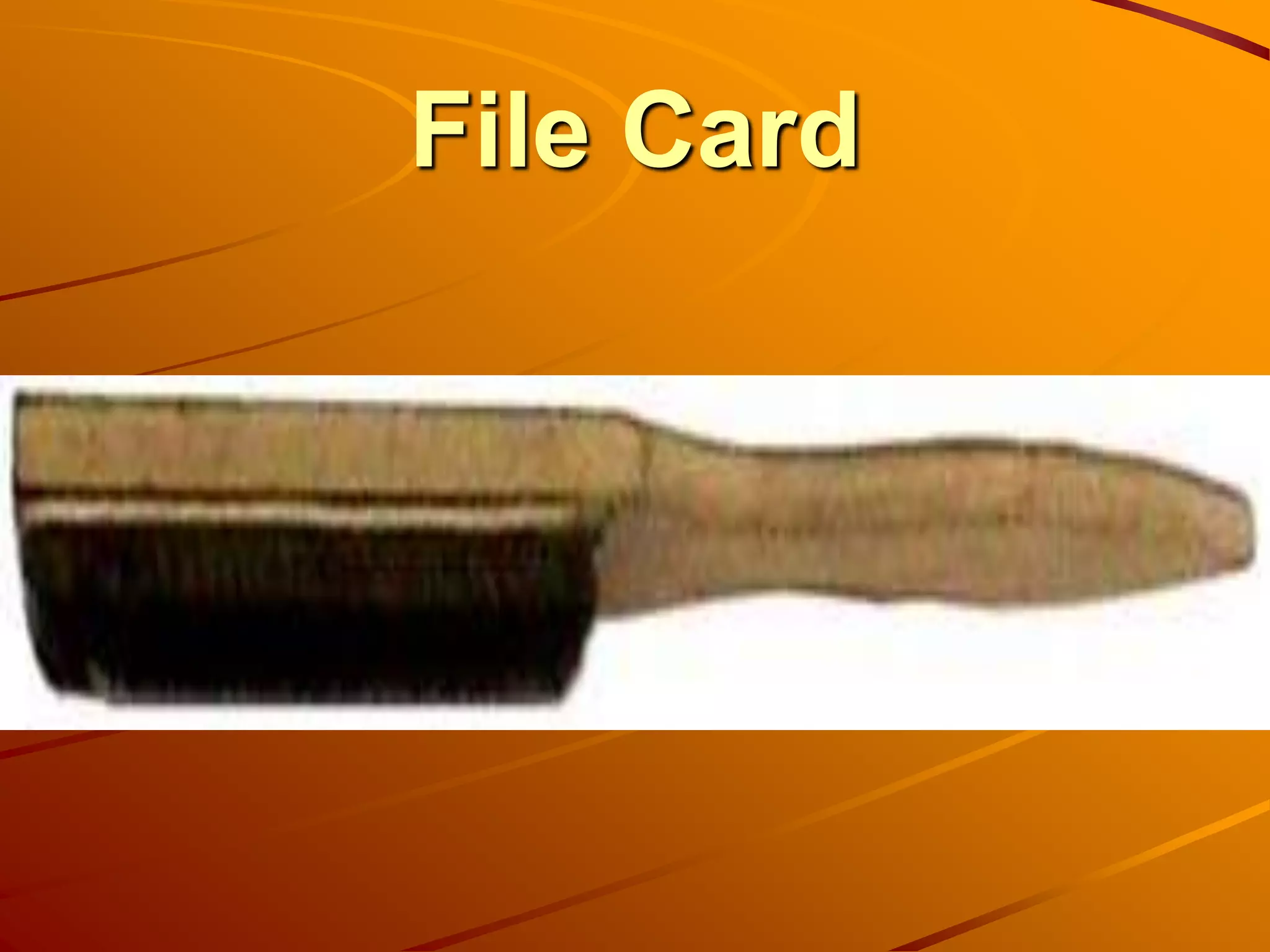
File Card
When filing the soft metals,
the small pieces of metal will
tend to clog the teeth. If the
file is not cleaned, this small
piece of metal will scratch on
the surface of the work. We
call it pinning.
This case is frequently
appeared when applying
a new smooth file on the
soft metals. The pinning
can be removed with a
File Card.
File Card
File Card
QUIZ
IF THE STATEMENT IS TRUE SELECT “T”, IF FALSE SELECT “F”.
1 FILE BLADES ARE MADE FROM HIGH CARBON STEEL.
2 THE LENGTH OF THE FILE IS MEASURED FROM THE TIP TO THE
TANG.
3 THE HAND FILE IS THE SAME AS THE SAFE EDGED FILE.
4 AS A RULE THE FILE TEETH SHOULD BE CLEANED AS SOON AS
THEY BECOME PINNED.
5 IN DRAW FILING THE FILE IS HELD AT 90 DEGREES TO THE
WORK.
6 THE CUT OF THE FILE IS THE SIDE OF THE FILE.
7 THE GRADE OF THE FILE IS THE COARSENESS OF THE TEETH.
8 IN CONVEX FILING THE TIP OF THE FILE MOVES FORWARD AND
DOWN.
9 A DOUBLE CUT FILE IS MORE SUITABLE FOR ROUGHING A PIECE
OF WORK.
10 THE FILE SHOULD NOT BE STORED IN WATER TO KEEPIT COOL.

Files lesson

  • 1.
    Mechanical Engineering Technology. Lesson Topic:Files. Objectives At the end of the lesson students should be able to: 1.State the uses of files. 2.Identify the parts of files 3.Identify various shapes of files 4.State and define three methods of filing. 5.State how to care for files 6.Explain some terms used in filing. 7.Use the file to shape metal. WELCOME
  • 2.
    FILES FILES ARE COMMONLYUSED IN MECHANICAL ENGINEERING TECHNOLOGY FOR SHAPING WORK. THEY ARE MADE OF HIGH CARBON STEEL WHICH IS HARDENED AND TEMPERED. FILES ARE MADE IN VARIOUS SIZES AND SHAPES.
  • 3.
    Parts of thefile . length tip shoulder tang ferrule handleteeth
  • 4.
    Shape of files CROSSSECTIONS flat Half roundround knifetriangularsquare hand
  • 5.
    TYPES OF FILES THEHAND FILE IS ALSO CALLED THE SAFE EDGE FILE.IT IS PARALLEL THROUGHOUT ITS LENGTH, HAS ONE EDGE (SAFE) WITHOUT TEETH AND IS USED FOR GENERAL PURPOSES. THE FLAT FILE IS PARALLEL FOR TWO THIRD OF ITS LENGTH AND HAS TEETH ON ALL FOUR SIDES. IT IS USED FOR GENERAL PURPOSES.
  • 6.
    Care of files. Neveruse a file without a handle Clean the teeth as soon as they become pinned. Keep files in a dry place. Never use the file as a hammer. Never allow the file to slip over the work when filing. Never use a small file when a large one can do the work better.
  • 7.
    Filing Terms. There aretwo common terms used in filing; The cut of the file. The grade of the file.
  • 8.
    The cut ofthe file The cut of the file indicates the particular way in which the teeth are cut. They may be single cut, double cut or rasp cut. single double rasp
  • 9.
    THE GRADE OFTHE FILE. THIS INDICATES THE DEGREE OF COARSENESS OF THE TEETH. THE GRADES BEING; ROUGH, BASTARD, SMOOTH OR DEAD SMOOTH.
  • 10.
    METHODS OF FILING CROSSFILING DRAW FILING PROFILING
  • 11.
    CROSS FILING THIS METHODIS USED FOR ROUGHING DOWN. THIS IS DONE BY HOLDING THE FILE AT THE TIP AND AT THE HANDLE, PUSHING IT ACROSS THE SURFACE OF THE WORK.
  • 12.
    DRAW FILING THIS METHODIS USED WHEN FINISHING A SURFACE AND IS USUALLY DONE AFTER CROSS FILING. THE FILE IS HELD AT RIGHT ANGLE TO THE WORK AND AS CLOSE TOGETHER AS POSSIBLE THEN PUSHED BACK AND FORTH.
  • 13.
    PRO FILING THIS METHODIS USED TO PRODUCE CURVES ON WORK. THE CURVES MAY BE CONVEX OR CONCAVE.
  • 14.
    CONCAVE FILING IN CONCAVEFILING THE FILE IS TWISTED AND PUSHED FORWARD. A ROUND OR HALF ROUND FILE MAY BE USED.
  • 15.
    CONVEX FILING IN CONVEXFILING THE TIP OF THE FILE MOVES FORWARD AND UP WHILE THE HANDLE MOVES FORWARD AND DOWN. A FLAT, HAND OR HALF ROUND FILE MAY BE USED.
  • 16.
    USING A SAFEEDGE FILE TO CUT A CORNER SAFE EDGE FILE WORK FILE EDGE NOT TO BE DAMAGED
  • 17.
    File Card When filingthe soft metals, the small pieces of metal will tend to clog the teeth. If the file is not cleaned, this small piece of metal will scratch on the surface of the work. We call it pinning.
  • 18.
    This case isfrequently appeared when applying a new smooth file on the soft metals. The pinning can be removed with a File Card. File Card
  • 19.
  • 20.
    QUIZ IF THE STATEMENTIS TRUE SELECT “T”, IF FALSE SELECT “F”. 1 FILE BLADES ARE MADE FROM HIGH CARBON STEEL. 2 THE LENGTH OF THE FILE IS MEASURED FROM THE TIP TO THE TANG. 3 THE HAND FILE IS THE SAME AS THE SAFE EDGED FILE. 4 AS A RULE THE FILE TEETH SHOULD BE CLEANED AS SOON AS THEY BECOME PINNED. 5 IN DRAW FILING THE FILE IS HELD AT 90 DEGREES TO THE WORK. 6 THE CUT OF THE FILE IS THE SIDE OF THE FILE. 7 THE GRADE OF THE FILE IS THE COARSENESS OF THE TEETH. 8 IN CONVEX FILING THE TIP OF THE FILE MOVES FORWARD AND DOWN. 9 A DOUBLE CUT FILE IS MORE SUITABLE FOR ROUGHING A PIECE OF WORK. 10 THE FILE SHOULD NOT BE STORED IN WATER TO KEEPIT COOL.