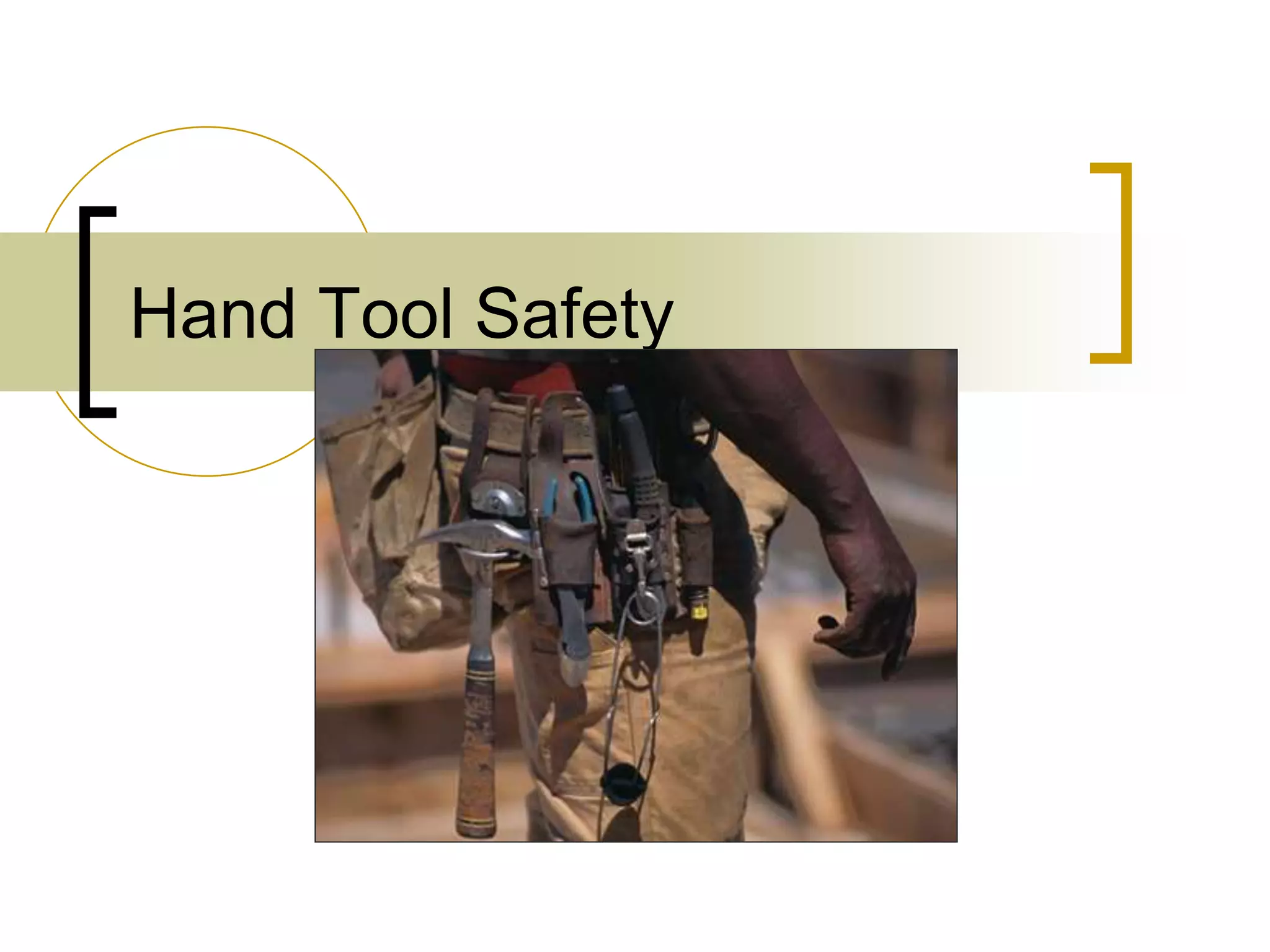
Hand Tool Safety
Learning Goals
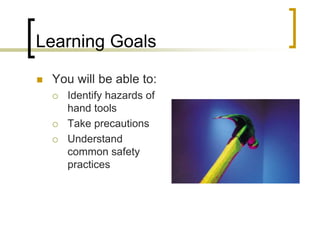
 You will be able to:
 Identify hazards of
hand tools
 Take precautions
 Understand
common safety
practices
Types of Hand Tools
 Hand tools include anything from A to Z
or axes to wrenches
 Examples include: screwdrivers,
hammers, punches, handsaws, chisels,
files, snips, axes, knives, box cutters,
wrenches, pry bars, hooks, and pliers.
Hand Tool Hazards
 The greatest hazards result from
improper maintenance and misuse of
hand tools.
 Some common examples include:
 A handle is damaged and the tool breaks or pieces
of the tool fly off
 A screwdriver is used as to pry or chisel and the tip
breaks
 A wrench having sprung jaws slips and your hand
hits another object
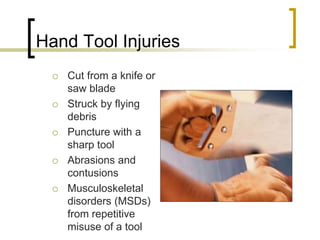
Hand Tool Injuries
 Cut from a knife or
saw blade
 Struck by flying
debris
 Puncture with a
sharp tool
 Abrasions and
contusions
 Musculoskeletal
disorders (MSDs)
from repetitive
misuse of a tool
Selecting the Right Tool
 Consider the purpose, shape, size, and
grip of the tool
 Consider the quality of the tool
 Use spark-resistant tools when working
near flammable materials
 Use insulated tools when working near
electricity
 Consider surroundings and complete
process
Consider Tool Ergonomics
 Handles with no sharp edges or finger
grooves
 Handles coated with soft material
 Handles with non-slip surfaces
 Tools with angle for working with straight
wrist
 Tools designed to work in either hand
 Spring-loaded to return to open position
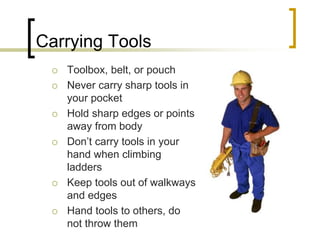
Carrying Tools
 Toolbox, belt, or pouch
 Never carry sharp tools in
your pocket
 Hold sharp edges or points
away from body
 Don’t carry tools in your
hand when climbing
ladders
 Keep tools out of walkways
and edges
 Hand tools to others, do
not throw them
Maintaining and Repairing
Your Tools
 Purchase quality tools
 Inspect for damaged edges and
handles
 Keep edges and tips sharp
 Replace damaged handles
 Report broken or damaged tools
 Tag damaged tools “Do Not Use”
General Hand Tool Safety
Practices
 Make sure observers are at a
safe distance
 Clear the immediate work area
 Keep floors clean and dry
 Secure work with a vise, clamp,
or other support
 Examine tools before each use
General Hand Tool Safety
Practices (cont.)
 Wear PPE appropriate for the work
 Keep cutting tools sharp and in good
condition
 Do not wear loose clothes or jewelry
 Mark damaged tools clearly and notify
your Teacher
 Do not work with oily or greasy hands
General Hand Tool Safety
Practices (cont.)
 Use the right size and type of tool for the
job
 Do not use tools that are loose or
cracked
 Do not put tools on the edge of tables
 After using a tool, clean it and put it back
in its proper place
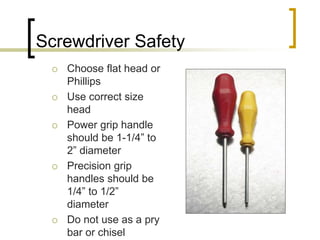
Screwdriver Safety
 Choose flat head or
Phillips
 Use correct size
head
 Power grip handle
should be 1-1/4” to
2” diameter
 Precision grip
handles should be
1/4” to 1/2”
diameter
 Do not use as a pry
bar or chisel
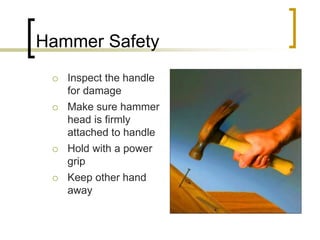
Hammer Safety
 Inspect the handle
for damage
 Make sure hammer
head is firmly
attached to handle
 Hold with a power
grip
 Keep other hand
away
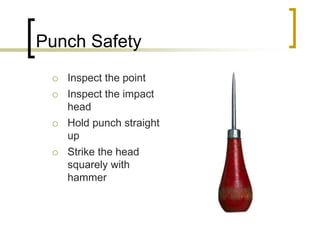
Punch Safety
 Inspect the point
 Inspect the impact
head
 Hold punch straight
up
 Strike the head
squarely with
hammer
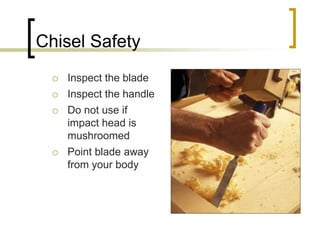
Chisel Safety
 Inspect the blade
 Inspect the handle
 Do not use if
impact head is
mushroomed
 Point blade away
from your body
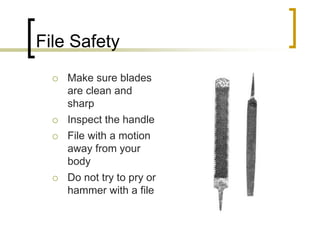
File Safety
 Make sure blades
are clean and
sharp
 Inspect the handle
 File with a motion
away from your
body
 Do not try to pry or
hammer with a file
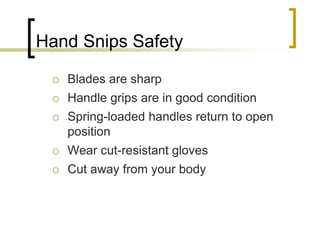
Hand Snips Safety
 Blades are sharp
 Handle grips are in good condition
 Spring-loaded handles return to open
position
 Wear cut-resistant gloves
 Cut away from your body
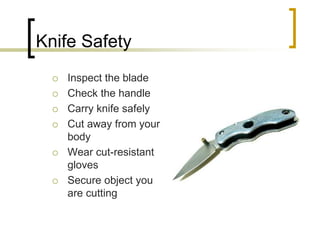
Knife Safety
 Inspect the blade
 Check the handle
 Carry knife safely
 Cut away from your
body
 Wear cut-resistant
gloves
 Secure object you
are cutting
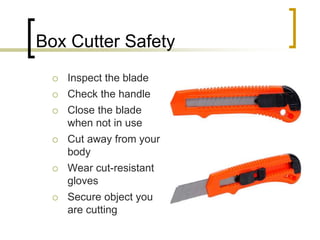
Box Cutter Safety
 Inspect the blade
 Check the handle
 Close the blade
when not in use
 Cut away from your
body
 Wear cut-resistant
gloves
 Secure object you
are cutting
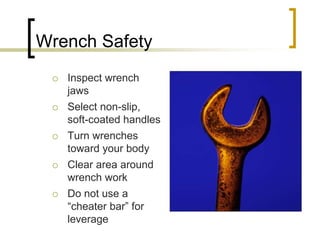
Wrench Safety
 Inspect wrench
jaws
 Select non-slip,
soft-coated handles
 Turn wrenches
toward your body
 Clear area around
wrench work
 Do not use a
“cheater bar” for
leverage
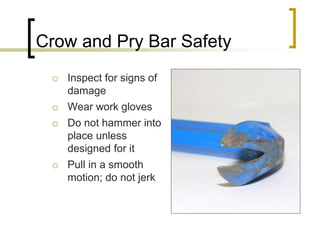
Crow and Pry Bar Safety
 Inspect for signs of
damage
 Wear work gloves
 Do not hammer into
place unless
designed for it
 Pull in a smooth
motion; do not jerk
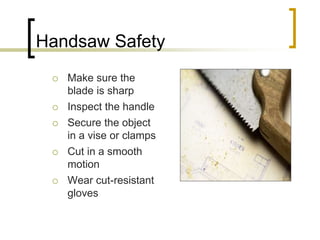
Handsaw Safety
 Make sure the
blade is sharp
 Inspect the handle
 Secure the object
in a vise or clamps
 Cut in a smooth
motion
 Wear cut-resistant
gloves
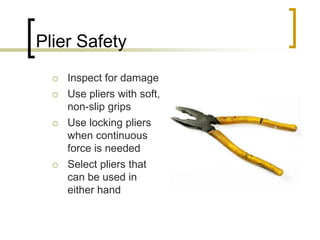
Plier Safety
 Inspect for damage
 Use pliers with soft,
non-slip grips
 Use locking pliers
when continuous
force is needed
 Select pliers that
can be used in
either hand
Key Points to Remember
 Maintain tools
 Use the right tool for the job
 Examine each tool for damage before
use
 Operate tools in accordance with
manufacturer’s instructions
 Use the proper PPE

Hand Tool Safety.ppt

  • 1.
  • 2.
    Learning Goals  Youwill be able to:  Identify hazards of hand tools  Take precautions  Understand common safety practices
  • 3.
    Types of HandTools  Hand tools include anything from A to Z or axes to wrenches  Examples include: screwdrivers, hammers, punches, handsaws, chisels, files, snips, axes, knives, box cutters, wrenches, pry bars, hooks, and pliers.
  • 4.
    Hand Tool Hazards The greatest hazards result from improper maintenance and misuse of hand tools.  Some common examples include:  A handle is damaged and the tool breaks or pieces of the tool fly off  A screwdriver is used as to pry or chisel and the tip breaks  A wrench having sprung jaws slips and your hand hits another object
  • 5.
    Hand Tool Injuries Cut from a knife or saw blade  Struck by flying debris  Puncture with a sharp tool  Abrasions and contusions  Musculoskeletal disorders (MSDs) from repetitive misuse of a tool
  • 6.
    Selecting the RightTool  Consider the purpose, shape, size, and grip of the tool  Consider the quality of the tool  Use spark-resistant tools when working near flammable materials  Use insulated tools when working near electricity  Consider surroundings and complete process
  • 7.
    Consider Tool Ergonomics Handles with no sharp edges or finger grooves  Handles coated with soft material  Handles with non-slip surfaces  Tools with angle for working with straight wrist  Tools designed to work in either hand  Spring-loaded to return to open position
  • 8.
    Carrying Tools  Toolbox,belt, or pouch  Never carry sharp tools in your pocket  Hold sharp edges or points away from body  Don’t carry tools in your hand when climbing ladders  Keep tools out of walkways and edges  Hand tools to others, do not throw them
  • 9.
    Maintaining and Repairing YourTools  Purchase quality tools  Inspect for damaged edges and handles  Keep edges and tips sharp  Replace damaged handles  Report broken or damaged tools  Tag damaged tools “Do Not Use”
  • 10.
    General Hand ToolSafety Practices  Make sure observers are at a safe distance  Clear the immediate work area  Keep floors clean and dry  Secure work with a vise, clamp, or other support  Examine tools before each use
  • 11.
    General Hand ToolSafety Practices (cont.)  Wear PPE appropriate for the work  Keep cutting tools sharp and in good condition  Do not wear loose clothes or jewelry  Mark damaged tools clearly and notify your Teacher  Do not work with oily or greasy hands
  • 12.
    General Hand ToolSafety Practices (cont.)  Use the right size and type of tool for the job  Do not use tools that are loose or cracked  Do not put tools on the edge of tables  After using a tool, clean it and put it back in its proper place
  • 13.
    Screwdriver Safety  Chooseflat head or Phillips  Use correct size head  Power grip handle should be 1-1/4” to 2” diameter  Precision grip handles should be 1/4” to 1/2” diameter  Do not use as a pry bar or chisel
  • 14.
    Hammer Safety  Inspectthe handle for damage  Make sure hammer head is firmly attached to handle  Hold with a power grip  Keep other hand away
  • 15.
    Punch Safety  Inspectthe point  Inspect the impact head  Hold punch straight up  Strike the head squarely with hammer
  • 16.
    Chisel Safety  Inspectthe blade  Inspect the handle  Do not use if impact head is mushroomed  Point blade away from your body
  • 17.
    File Safety  Makesure blades are clean and sharp  Inspect the handle  File with a motion away from your body  Do not try to pry or hammer with a file
  • 18.
    Hand Snips Safety Blades are sharp  Handle grips are in good condition  Spring-loaded handles return to open position  Wear cut-resistant gloves  Cut away from your body
  • 19.
    Knife Safety  Inspectthe blade  Check the handle  Carry knife safely  Cut away from your body  Wear cut-resistant gloves  Secure object you are cutting
  • 20.
    Box Cutter Safety Inspect the blade  Check the handle  Close the blade when not in use  Cut away from your body  Wear cut-resistant gloves  Secure object you are cutting
  • 21.
    Wrench Safety  Inspectwrench jaws  Select non-slip, soft-coated handles  Turn wrenches toward your body  Clear area around wrench work  Do not use a “cheater bar” for leverage
  • 22.
    Crow and PryBar Safety  Inspect for signs of damage  Wear work gloves  Do not hammer into place unless designed for it  Pull in a smooth motion; do not jerk
  • 23.
    Handsaw Safety  Makesure the blade is sharp  Inspect the handle  Secure the object in a vise or clamps  Cut in a smooth motion  Wear cut-resistant gloves
  • 24.
    Plier Safety  Inspectfor damage  Use pliers with soft, non-slip grips  Use locking pliers when continuous force is needed  Select pliers that can be used in either hand
  • 25.
    Key Points toRemember  Maintain tools  Use the right tool for the job  Examine each tool for damage before use  Operate tools in accordance with manufacturer’s instructions  Use the proper PPE