Done by: G. Tulloch
 Marking out is the process of
transferring a design, layout or dimensions
from the drawing to a work-piece, and it is
considered as the first step in the
manufacturing process. The tools used to
do such activities are called marking out
tools.
• Some of the marking tools used in metal work include but not
limited to are:
• Scriber
• Marking blue
• Punches
• Engineer’s square
• Surface plate
• Surface gauge
• Angle plate
• Vee block
• Steel rule
• Dividers
• Ball peen Hammer
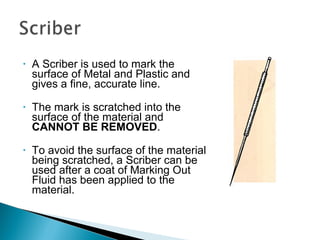
• A Scriber is used to mark the
surface of Metal and Plastic and
gives a fine, accurate line.
• The mark is scratched into the
surface of the material and
CANNOT BE REMOVED.
• To avoid the surface of the material
being scratched, a Scriber can be
used after a coat of Marking Out
Fluid has been applied to the
material.
 Marking blue is a dye used in metalworking
to aid in marking out.
 It is used to paint a metal object with a
very thin layer of dye that can be scratched
off using a scribers to show the bright metal
underneath.
 The punch is a hard metal rod with a
shaped tip at one end and a rounded butt at
the other end, which is usually struck by a
hammer.
 They different type of punches:
 Centre punch
 Dot punch
 Pin punch
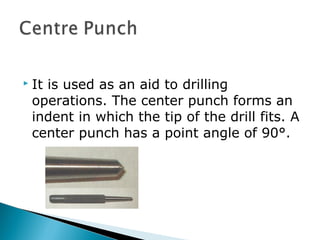
 It is used as an aid to drilling
operations. The center punch forms an
indent in which the tip of the drill fits. A
center punch has a point angle of 90°.
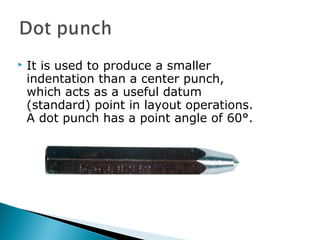
 It is used to produce a smaller
indentation than a center punch,
which acts as a useful datum
(standard) point in layout operations.
A dot punch has a point angle of 60°.
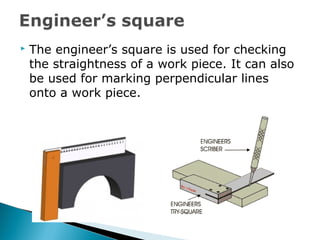
 The engineer’s square is used for checking
the straightness of a work piece. It can also
be used for marking perpendicular lines
onto a work piece.
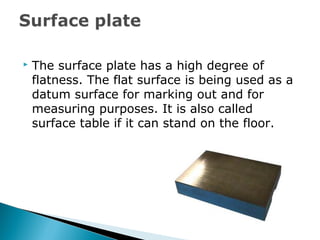
 The surface plate has a high degree of
flatness. The flat surface is being used as a
datum surface for marking out and for
measuring purposes. It is also called
surface table if it can stand on the floor.
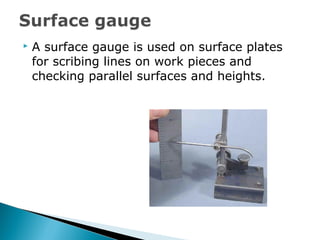
 A surface gauge is used on surface plates
for scribing lines on work pieces and
checking parallel surfaces and heights.
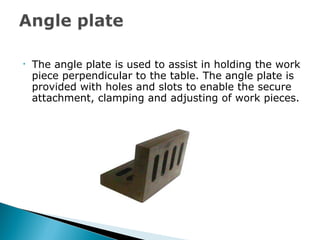
• The angle plate is used to assist in holding the work
piece perpendicular to the table. The angle plate is
provided with holes and slots to enable the secure
attachment, clamping and adjusting of work pieces.
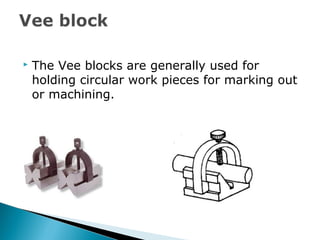
 The Vee blocks are generally used for
holding circular work pieces for marking out
or machining.
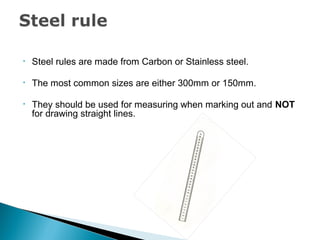
• Steel rules are made from Carbon or Stainless steel.
• The most common sizes are either 300mm or 150mm.
• They should be used for measuring when marking out and NOT
for drawing straight lines.
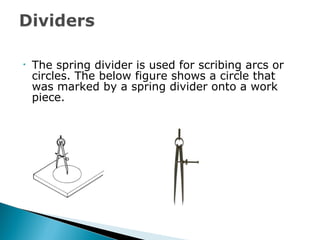
• The spring divider is used for scribing arcs or
circles. The below figure shows a circle that
was marked by a spring divider onto a work
piece.
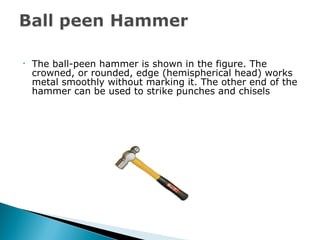
• The ball-peen hammer is shown in the figure. The
crowned, or rounded, edge (hemispherical head) works
metal smoothly without marking it. The other end of the
hammer can be used to strike punches and chisels

Marking out tools ppt

  • 1.
    Done by: G.Tulloch
  • 2.
     Marking outis the process of transferring a design, layout or dimensions from the drawing to a work-piece, and it is considered as the first step in the manufacturing process. The tools used to do such activities are called marking out tools.
  • 3.
    • Some ofthe marking tools used in metal work include but not limited to are: • Scriber • Marking blue • Punches • Engineer’s square • Surface plate • Surface gauge • Angle plate • Vee block • Steel rule • Dividers • Ball peen Hammer
  • 4.
    • A Scriberis used to mark the surface of Metal and Plastic and gives a fine, accurate line. • The mark is scratched into the surface of the material and CANNOT BE REMOVED. • To avoid the surface of the material being scratched, a Scriber can be used after a coat of Marking Out Fluid has been applied to the material.
  • 5.
     Marking blueis a dye used in metalworking to aid in marking out.  It is used to paint a metal object with a very thin layer of dye that can be scratched off using a scribers to show the bright metal underneath.
  • 6.
     The punchis a hard metal rod with a shaped tip at one end and a rounded butt at the other end, which is usually struck by a hammer.  They different type of punches:  Centre punch  Dot punch  Pin punch
  • 7.
     It isused as an aid to drilling operations. The center punch forms an indent in which the tip of the drill fits. A center punch has a point angle of 90°.
  • 8.
     It isused to produce a smaller indentation than a center punch, which acts as a useful datum (standard) point in layout operations. A dot punch has a point angle of 60°.
  • 9.
     The engineer’ssquare is used for checking the straightness of a work piece. It can also be used for marking perpendicular lines onto a work piece.
  • 10.
     The surfaceplate has a high degree of flatness. The flat surface is being used as a datum surface for marking out and for measuring purposes. It is also called surface table if it can stand on the floor.
  • 11.
     A surfacegauge is used on surface plates for scribing lines on work pieces and checking parallel surfaces and heights.
  • 12.
    • The angleplate is used to assist in holding the work piece perpendicular to the table. The angle plate is provided with holes and slots to enable the secure attachment, clamping and adjusting of work pieces.
  • 13.
     The Veeblocks are generally used for holding circular work pieces for marking out or machining.
  • 14.
    • Steel rulesare made from Carbon or Stainless steel. • The most common sizes are either 300mm or 150mm. • They should be used for measuring when marking out and NOT for drawing straight lines.
  • 15.
    • The springdivider is used for scribing arcs or circles. The below figure shows a circle that was marked by a spring divider onto a work piece.
  • 16.
    • The ball-peenhammer is shown in the figure. The crowned, or rounded, edge (hemispherical head) works metal smoothly without marking it. The other end of the hammer can be used to strike punches and chisels