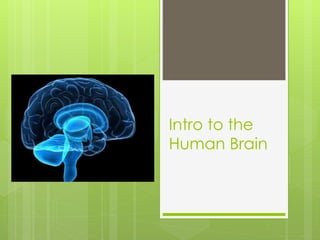
Intro to the 
Human Brain
Today’s Objectives 
Content Objective 
 I can explain how 
the brain works 
and how it is 
studied. 
 I can display 
critical thinking 
about research 
studies. 
Language Objective 
 I can define 
Localization of 
Function and Brain 
Plasticity.
Today’s Key Terms 
 Neurology 
 Localization of Function 
 Frontal Lobe 
 Hippocampus 
 Neuron 
 Brain Plasticity 
 MRI and fMRI
Top Myths about our Brains 
What ideas or theories have you heard 
about our brains? 
 Top Myths about Our Brains Video 
Which of the ideas that we listed can we 
take off?
Neurology 
 The study of the brain and its functioning.
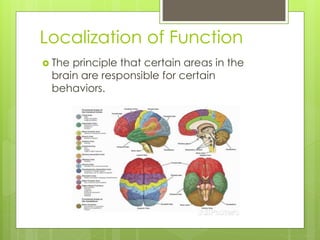
Localization of Function 
 The principle that certain areas in the 
brain are responsible for certain 
behaviors.
Localization of Function: 
The Frontal Lobe 
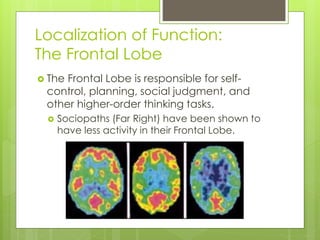
 The Frontal Lobe is responsible for self-control, 
planning, social judgment, and 
other higher-order thinking tasks. 
 Sociopaths (Far Right) have been shown to 
have less activity in their Frontal Lobe.
Localization of Function: 
Hippocampus 
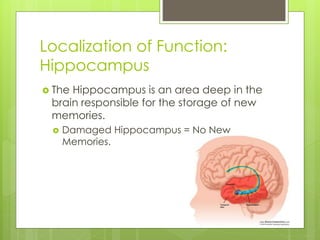
 The Hippocampus is an area deep in the 
brain responsible for the storage of new 
memories. 
 Damaged Hippocampus = No New 
Memories.
Neurons 
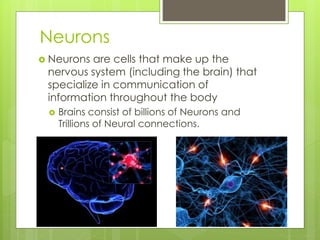
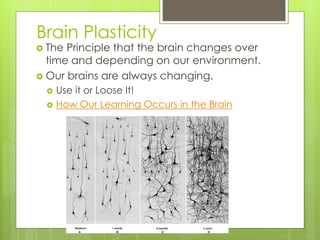
 Neurons are cells that make up the 
nervous system (including the brain) that 
specialize in communication of 
information throughout the body 
 Brains consist of billions of Neurons and 
Trillions of Neural connections.
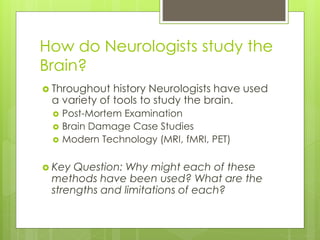
Brain Plasticity 
 The Principle that the brain changes over 
time and depending on our environment. 
 Our brains are always changing. 
 Use it or Loose It! 
 How Our Learning Occurs in the Brain
How do Neurologists study the 
Brain? 
 Throughout history Neurologists have used 
a variety of tools to study the brain. 
 Post-Mortem Examination 
 Brain Damage Case Studies 
 Modern Technology (MRI, fMRI, PET) 
 Key Question: Why might each of these 
methods have been used? What are the 
strengths and limitations of each?
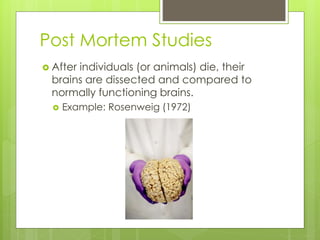
Post Mortem Studies 
 After individuals (or animals) die, their 
brains are dissected and compared to 
normally functioning brains. 
 Example: Rosenweig (1972)
Rosenzweig (1972) 
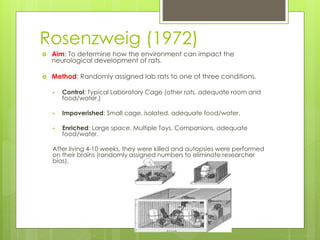
 Aim: To determine how the environment can impact the 
neurological development of rats. 
 Method: Randomly assigned lab rats to one of three conditions. 
 Control: Typical Laboratory Cage (other rats, adequate room and 
food/water.) 
 Impoverished: Small cage, isolated, adequate food/water. 
 Enriched: Large space, Multiple Toys, Companions, adequate 
food/water. 
After living 4-10 weeks, they were killed and autopsies were performed 
on their brains (randomly assigned numbers to eliminate researcher 
bias).
Rosenzweig (1972) Cont. 
 Findings: The enriched rats had… 
1.Thicker and heavier cerebral cortexes 
2. Larger Neurons 
 Conclusion: An enriched environment 
produced more developed and bigger 
brains. 
 Critical Thinking: 
 Artificial environment limited Ecological Validity. 
 Ethical? 
 Applications?
Brain Damage Cases 
 The close examination of individuals with 
traumatic brain damage. 
 By studying how their behavior has 
changed, we can understand what that 
part of the brain is responsible for. 
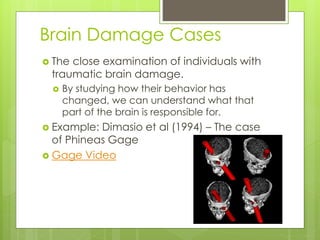
 Example: Dimasio et al (1994) – The case 
of Phineas Gage 
 Gage Video
Dimasio et al (1994) 
 Aim: To determine what areas of Phineas 
Gage’s brain was damaged in the 
accident. 
 Method: Used MRI technology to create a 
model of the accident and determine 
what areas were damaged.
Dimasio et al (1994) cont. 
 Finding: The frontal lobe, and only the 
frontal lobe were damaged in the 
accident. 
 Conclusion: The frontal lobe is responsible 
for self-control and social processing. 
 Critical Thinking: 
 Reliable?
Brain Imaging Technology 
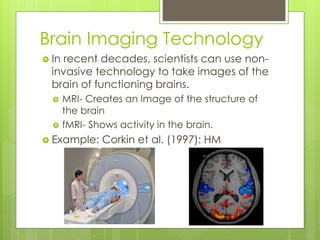
 In recent decades, scientists can use non-invasive 
technology to take images of the 
brain of functioning brains. 
 MRI- Creates an Image of the structure of 
the brain 
 fMRI- Shows activity in the brain. 
 Example: Corkin et al. (1997): HM
Corkin et al (1997) 
 Aim: To determine the extent of damage 
done to HM’s brain. 
 Method: Performed an MRI on HM. 
 Finding: All of HM’s Hippocampus and 
Amygdala were removed. 
 Conclusions: The hippocampus is responsible 
for the storage of new memories. 
 Critical Thinking: 
 Ethical? 
 Reliable?
Homework for Tonight 
1. Select One of the Articles Online and 
read it in full. 
2. Complete a 3-2-1 note guide for the 
Article. 
3: New/Important ideas that were not 
discussed in class. 
2: Pieces of Critical Thinking/Methodological 
Limitations 
1. Question you still have about the Study.
Wrap-Up: Pepper 
 Be Prepared to answer a question based 
on the vocabulary and ideas which we 
have discussed today.

Intro to the brain pp

  • 1.
    Intro to the Human Brain
  • 2.
    Today’s Objectives ContentObjective  I can explain how the brain works and how it is studied.  I can display critical thinking about research studies. Language Objective  I can define Localization of Function and Brain Plasticity.
  • 3.
    Today’s Key Terms  Neurology  Localization of Function  Frontal Lobe  Hippocampus  Neuron  Brain Plasticity  MRI and fMRI
  • 4.
    Top Myths aboutour Brains What ideas or theories have you heard about our brains?  Top Myths about Our Brains Video Which of the ideas that we listed can we take off?
  • 5.
    Neurology  Thestudy of the brain and its functioning.
  • 6.
    Localization of Function  The principle that certain areas in the brain are responsible for certain behaviors.
  • 7.
    Localization of Function: The Frontal Lobe  The Frontal Lobe is responsible for self-control, planning, social judgment, and other higher-order thinking tasks.  Sociopaths (Far Right) have been shown to have less activity in their Frontal Lobe.
  • 8.
    Localization of Function: Hippocampus  The Hippocampus is an area deep in the brain responsible for the storage of new memories.  Damaged Hippocampus = No New Memories.
  • 9.
    Neurons  Neuronsare cells that make up the nervous system (including the brain) that specialize in communication of information throughout the body  Brains consist of billions of Neurons and Trillions of Neural connections.
  • 10.
    Brain Plasticity The Principle that the brain changes over time and depending on our environment.  Our brains are always changing.  Use it or Loose It!  How Our Learning Occurs in the Brain
  • 11.
    How do Neurologistsstudy the Brain?  Throughout history Neurologists have used a variety of tools to study the brain.  Post-Mortem Examination  Brain Damage Case Studies  Modern Technology (MRI, fMRI, PET)  Key Question: Why might each of these methods have been used? What are the strengths and limitations of each?
  • 12.
    Post Mortem Studies  After individuals (or animals) die, their brains are dissected and compared to normally functioning brains.  Example: Rosenweig (1972)
  • 13.
    Rosenzweig (1972) Aim: To determine how the environment can impact the neurological development of rats.  Method: Randomly assigned lab rats to one of three conditions.  Control: Typical Laboratory Cage (other rats, adequate room and food/water.)  Impoverished: Small cage, isolated, adequate food/water.  Enriched: Large space, Multiple Toys, Companions, adequate food/water. After living 4-10 weeks, they were killed and autopsies were performed on their brains (randomly assigned numbers to eliminate researcher bias).
  • 14.
    Rosenzweig (1972) Cont.  Findings: The enriched rats had… 1.Thicker and heavier cerebral cortexes 2. Larger Neurons  Conclusion: An enriched environment produced more developed and bigger brains.  Critical Thinking:  Artificial environment limited Ecological Validity.  Ethical?  Applications?
  • 15.
    Brain Damage Cases  The close examination of individuals with traumatic brain damage.  By studying how their behavior has changed, we can understand what that part of the brain is responsible for.  Example: Dimasio et al (1994) – The case of Phineas Gage  Gage Video
  • 16.
    Dimasio et al(1994)  Aim: To determine what areas of Phineas Gage’s brain was damaged in the accident.  Method: Used MRI technology to create a model of the accident and determine what areas were damaged.
  • 17.
    Dimasio et al(1994) cont.  Finding: The frontal lobe, and only the frontal lobe were damaged in the accident.  Conclusion: The frontal lobe is responsible for self-control and social processing.  Critical Thinking:  Reliable?
  • 18.
    Brain Imaging Technology  In recent decades, scientists can use non-invasive technology to take images of the brain of functioning brains.  MRI- Creates an Image of the structure of the brain  fMRI- Shows activity in the brain.  Example: Corkin et al. (1997): HM
  • 19.
    Corkin et al(1997)  Aim: To determine the extent of damage done to HM’s brain.  Method: Performed an MRI on HM.  Finding: All of HM’s Hippocampus and Amygdala were removed.  Conclusions: The hippocampus is responsible for the storage of new memories.  Critical Thinking:  Ethical?  Reliable?
  • 20.
    Homework for Tonight 1. Select One of the Articles Online and read it in full. 2. Complete a 3-2-1 note guide for the Article. 3: New/Important ideas that were not discussed in class. 2: Pieces of Critical Thinking/Methodological Limitations 1. Question you still have about the Study.
  • 21.
    Wrap-Up: Pepper Be Prepared to answer a question based on the vocabulary and ideas which we have discussed today.