Cognitive Psychology
Principles
Learning Outcome
C1- Outline principles that define
the cognitive level of analysis.
Key Term:
Schema Theory
Mr. Bonica’s Story
How did Mr. Bonica arrive at his original
interpretation of the banker?
What factors led Mr. Bonica to make the
mistake that he did?
What is Cognitive Psychology?
Cognitive Psychology is the study of how
humans acquire, process and store
information from their environment.
Study mental processes such as perception,
memory, attention, decision making, and
language.
Relatively young branch of psychology (1960’s).
If you are a Cognitive Psychologist
you believe…
1. Human Beings are information
processors and mental processes guide
behavior.
2. The mind can be studied scientifically.
3. Cognitive processes are influenced by
social and cultural factors.
1. Human Beings are information
processors and mental processes
guide behavior.
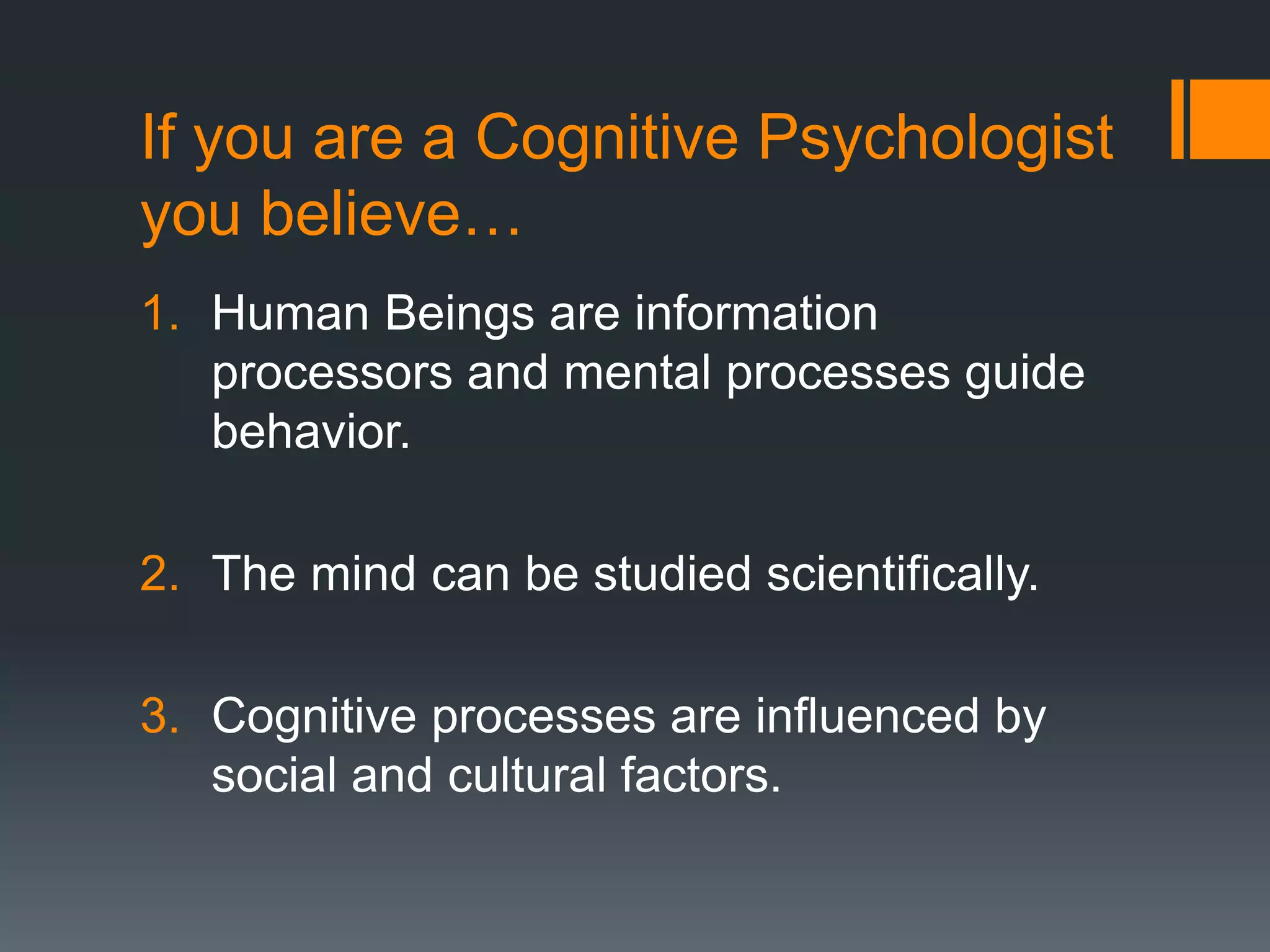
 Humans gather information from our environments and
shape them into meaning. The way we perceive the world
impacts the way we behave in it.
 Connection between the brain and the mind.
2. The mind can be studied
scientifically.
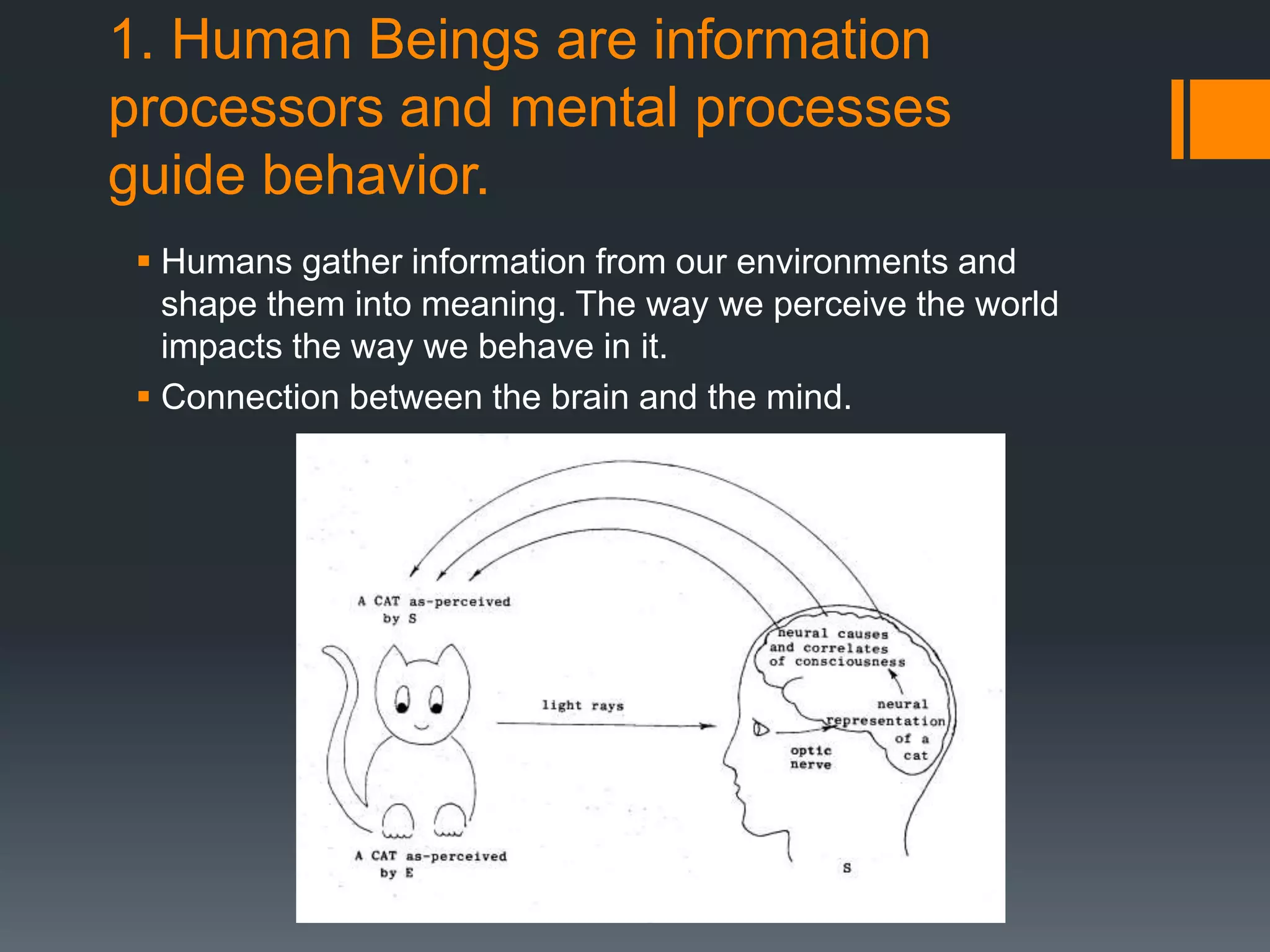
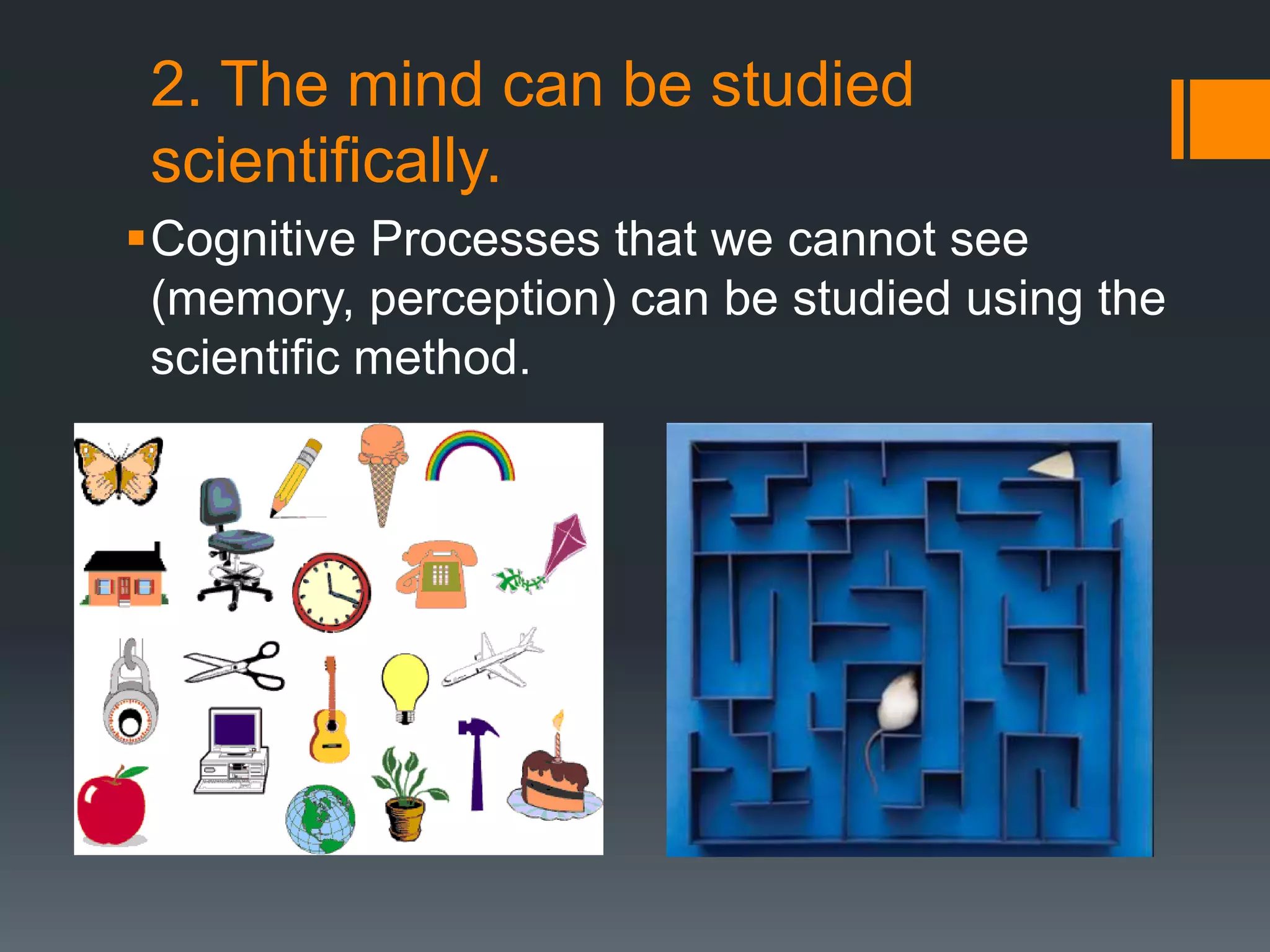
Cognitive Processes that we cannot see
(memory, perception) can be studied using the
scientific method.
3. Cognitive processes are
influenced by social and cultural
factors.
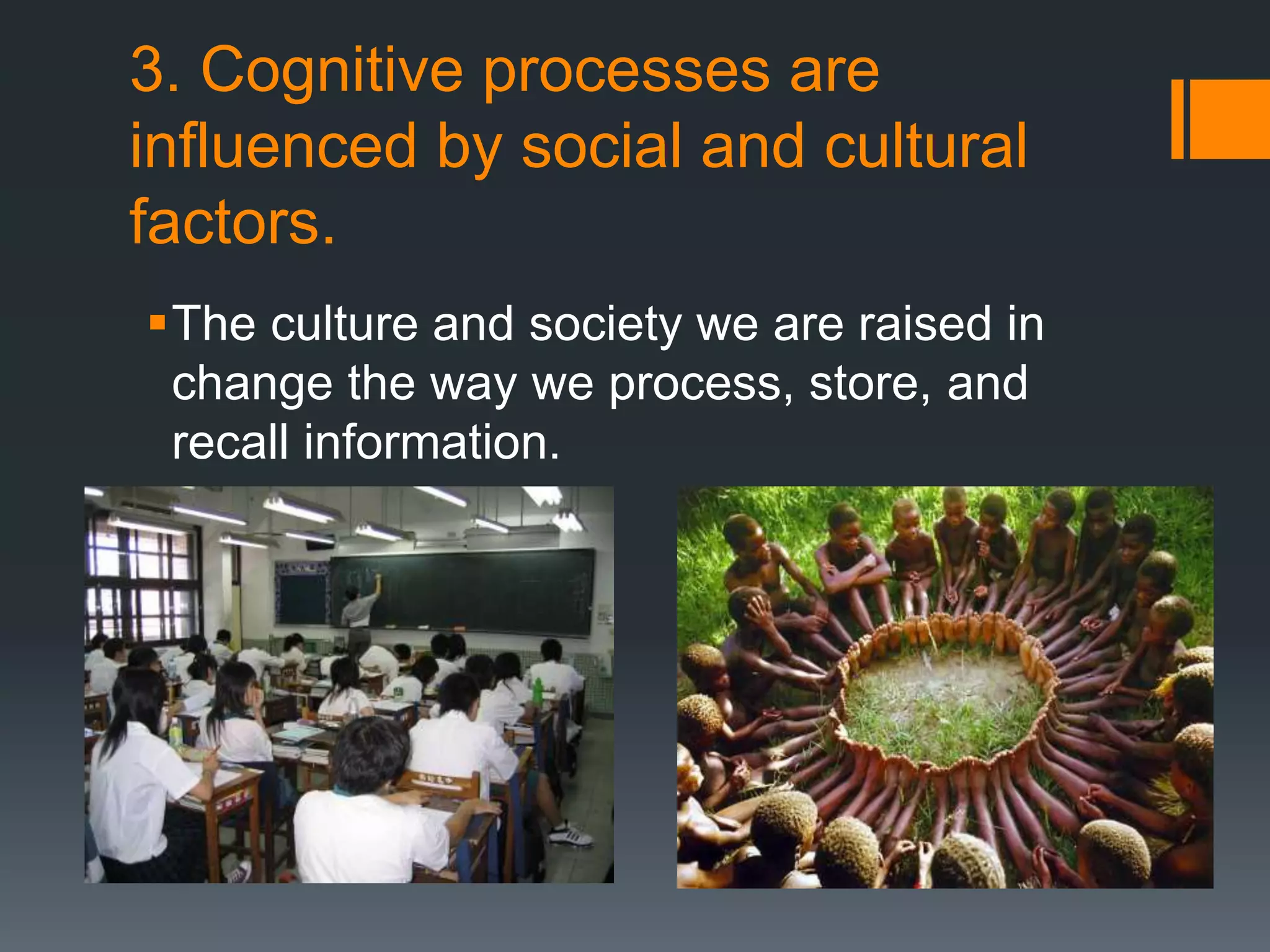
The culture and society we are raised in
change the way we process, store, and
recall information.
Difference Between Cognitive and
Biological Psychology
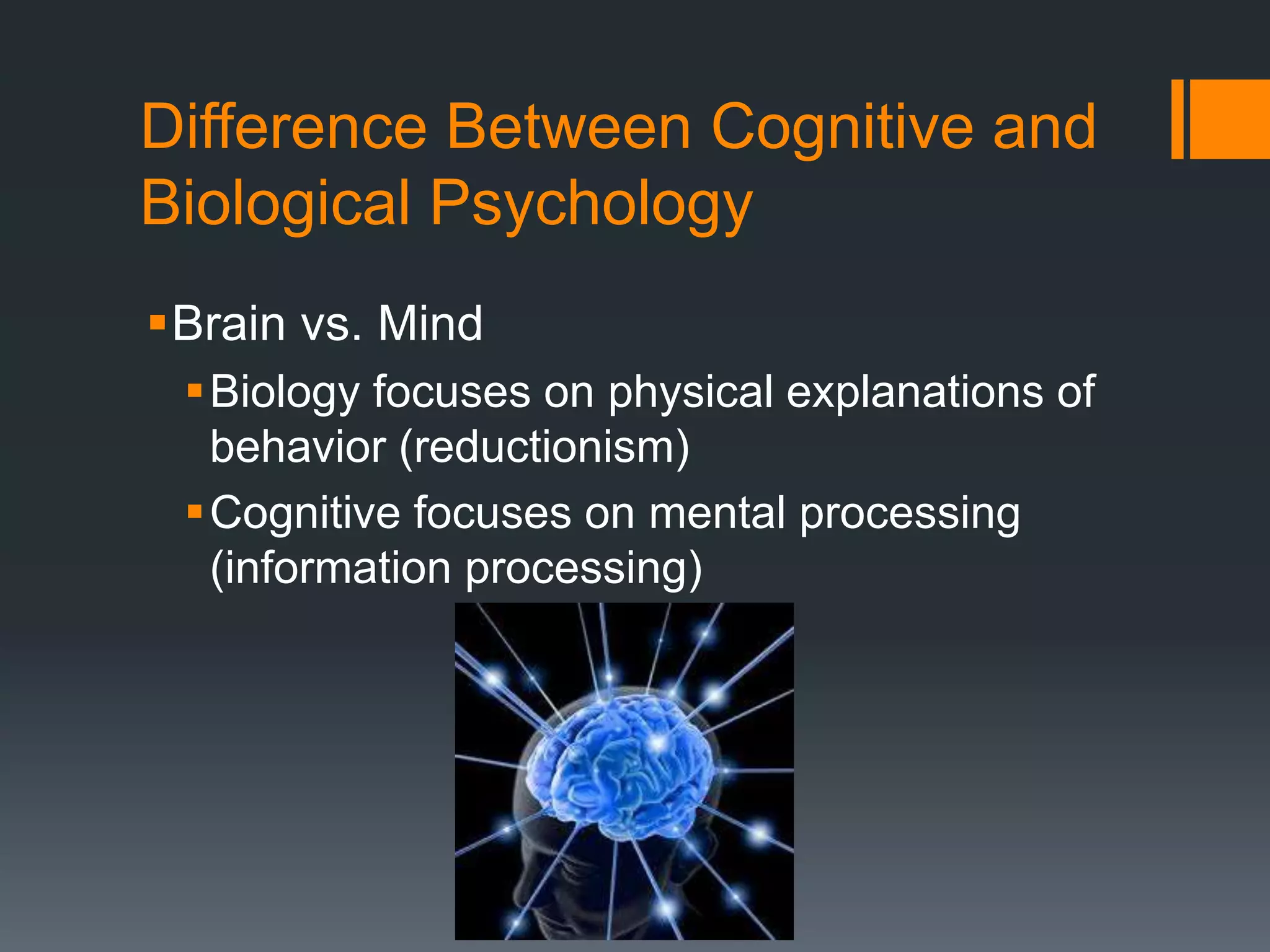
Brain vs. Mind
Biology focuses on physical explanations of
behavior (reductionism)
Cognitive focuses on mental processing
(information processing)
Schema Theory
A mental representation of knowledge
stored in the brain. A Schema can be
seen as a network of knowledge,
beliefs, and expectations about
particular aspects of the world.
We see the world how we expect to
see it…
Magic & Cognition
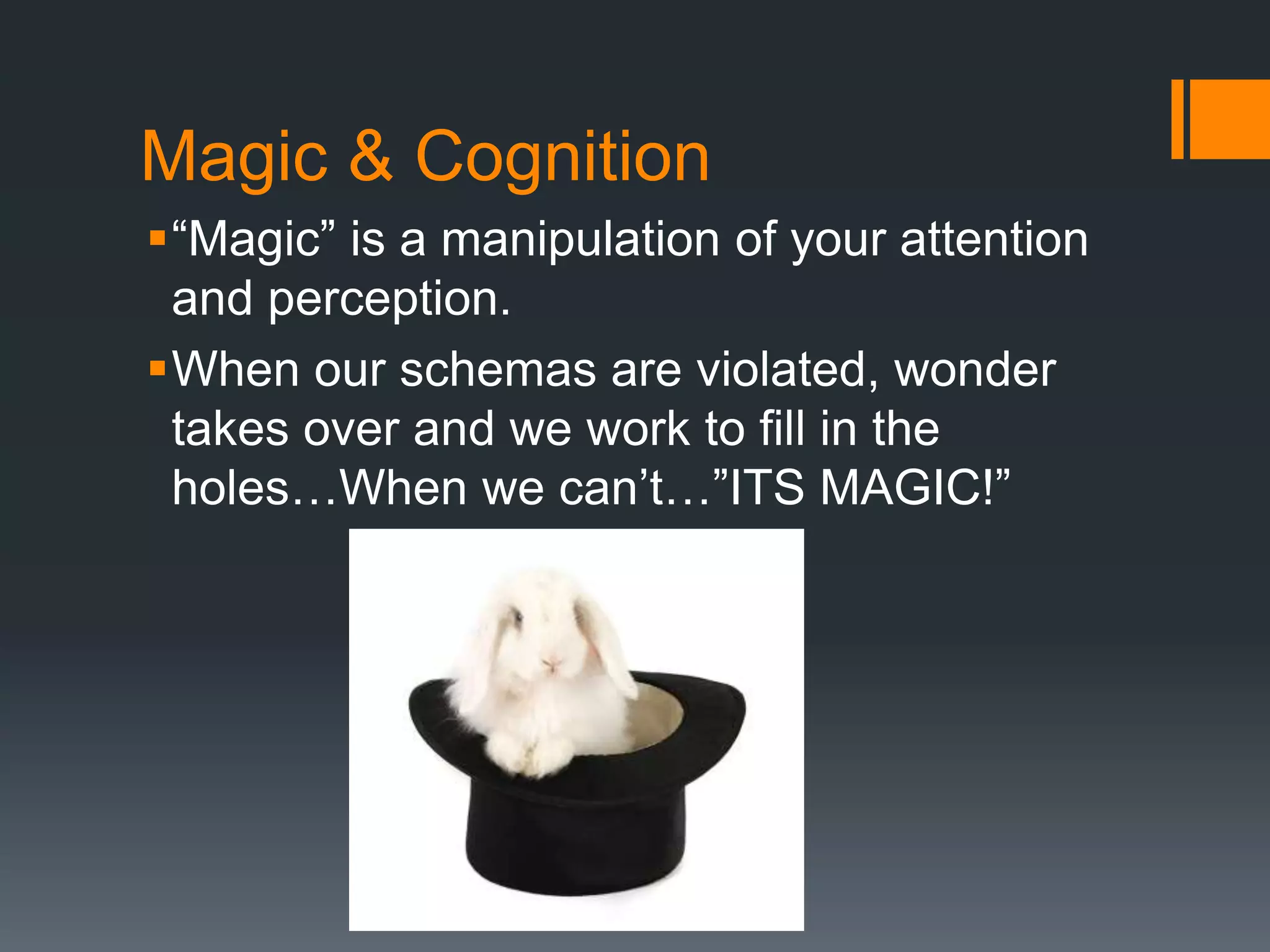
“Magic” is a manipulation of your attention
and perception.
When our schemas are violated, wonder
takes over and we work to fill in the
holes…When we can’t…”ITS MAGIC!”

Principles of Cognitive Psychology

  • 1.
  • 2.
    Learning Outcome C1- Outlineprinciples that define the cognitive level of analysis. Key Term: Schema Theory
  • 3.
    Mr. Bonica’s Story Howdid Mr. Bonica arrive at his original interpretation of the banker? What factors led Mr. Bonica to make the mistake that he did?
  • 4.
    What is CognitivePsychology? Cognitive Psychology is the study of how humans acquire, process and store information from their environment. Study mental processes such as perception, memory, attention, decision making, and language. Relatively young branch of psychology (1960’s).
  • 5.
    If you area Cognitive Psychologist you believe… 1. Human Beings are information processors and mental processes guide behavior. 2. The mind can be studied scientifically. 3. Cognitive processes are influenced by social and cultural factors.
  • 6.
    1. Human Beingsare information processors and mental processes guide behavior.  Humans gather information from our environments and shape them into meaning. The way we perceive the world impacts the way we behave in it.  Connection between the brain and the mind.
  • 7.
    2. The mindcan be studied scientifically. Cognitive Processes that we cannot see (memory, perception) can be studied using the scientific method.
  • 8.
    3. Cognitive processesare influenced by social and cultural factors. The culture and society we are raised in change the way we process, store, and recall information.
  • 9.
    Difference Between Cognitiveand Biological Psychology Brain vs. Mind Biology focuses on physical explanations of behavior (reductionism) Cognitive focuses on mental processing (information processing)
  • 10.
    Schema Theory A mentalrepresentation of knowledge stored in the brain. A Schema can be seen as a network of knowledge, beliefs, and expectations about particular aspects of the world. We see the world how we expect to see it…
  • 11.
    Magic & Cognition “Magic”is a manipulation of your attention and perception. When our schemas are violated, wonder takes over and we work to fill in the holes…When we can’t…”ITS MAGIC!”