Reliability of Memory
Learning Outcome 
 C9- With reference to relevant research studies, to what 
extent is one cognitive process (memory) reliable?
Your Task 
 Watch the following Video and answer the questions on your 
questionnaire. 
 Pay attention to details. 
 Loftus and Palmer (1974)
Your Instructions 
 Record your estimated speed under the correct category and 
calculate the speed for each category.
Loftus & Palmer (1974) 
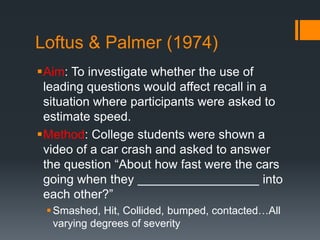
Aim: To investigate whether the use of 
leading questions would affect recall in a 
situation where participants were asked to 
estimate speed. 
Method: College students were shown a 
video of a car crash and asked to answer 
the question “About how fast were the cars 
going when they into 
each other?” 
 Smashed, Hit, Collided, bumped, contacted…All 
varying degrees of severity
Loftus & Palmer (1974) Continued 
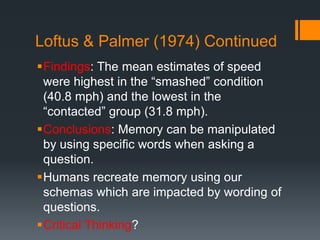
Findings: The mean estimates of speed 
were highest in the “smashed” condition 
(40.8 mph) and the lowest in the 
“contacted” group (31.8 mph). 
Conclusions: Memory can be manipulated 
by using specific words when asking a 
question. 
Humans recreate memory using our 
schemas which are impacted by wording of 
questions. 
Critical Thinking?
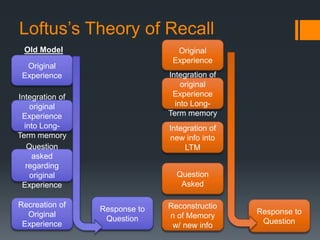
Loftus’s Theory of Recall 
Original 
Experience 
Integration of 
original 
Experience 
into Long- 
Term memory 
Question 
asked 
regarding 
original 
Experience 
Recreation of 
Original 
Experience 
Response to 
Question 
Original 
Experience 
Integration of 
original 
Experience 
into Long- 
Term memory 
Integration of 
new info into 
LTM 
Question 
Asked 
Reconstructio 
n of Memory 
w/ new info 
Response to 
Question 
Old Model
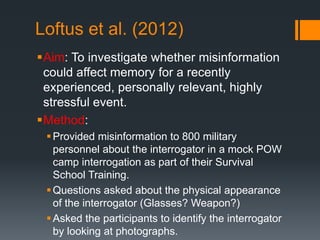
Loftus et al. (2012) 
Aim: To investigate whether misinformation 
could affect memory for a recently 
experienced, personally relevant, highly 
stressful event. 
Method: 
 Provided misinformation to 800 military 
personnel about the interrogator in a mock POW 
camp interrogation as part of their Survival 
School Training. 
 Questions asked about the physical appearance 
of the interrogator (Glasses? Weapon?) 
 Asked the participants to identify the interrogator 
by looking at photographs.
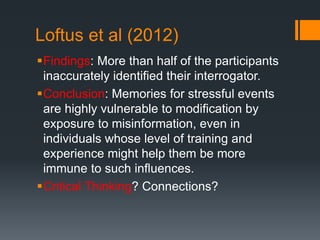
Loftus et al (2012) 
Findings: More than half of the participants 
inaccurately identified their interrogator. 
Conclusion: Memories for stressful events 
are highly vulnerable to modification by 
exposure to misinformation, even in 
individuals whose level of training and 
experience might help them be more 
immune to such influences. 
Critical Thinking? Connections?
Discussion Questions 
 In Ferguson, to what extent can we trust the 
eye witness accounts? 
Should eye witness accounts be used in 
determining whether the Officer should be put 
on put on trial for murder? 
How accurate do you think your memory is? 
Are there times when it is better or worse? 
How can we apply these ideas to areas 
outside of the courtroom?

Loftus and memory pp

  • 1.
  • 2.
    Learning Outcome C9- With reference to relevant research studies, to what extent is one cognitive process (memory) reliable?
  • 3.
    Your Task Watch the following Video and answer the questions on your questionnaire.  Pay attention to details.  Loftus and Palmer (1974)
  • 4.
    Your Instructions Record your estimated speed under the correct category and calculate the speed for each category.
  • 5.
    Loftus & Palmer(1974) Aim: To investigate whether the use of leading questions would affect recall in a situation where participants were asked to estimate speed. Method: College students were shown a video of a car crash and asked to answer the question “About how fast were the cars going when they into each other?”  Smashed, Hit, Collided, bumped, contacted…All varying degrees of severity
  • 6.
    Loftus & Palmer(1974) Continued Findings: The mean estimates of speed were highest in the “smashed” condition (40.8 mph) and the lowest in the “contacted” group (31.8 mph). Conclusions: Memory can be manipulated by using specific words when asking a question. Humans recreate memory using our schemas which are impacted by wording of questions. Critical Thinking?
  • 7.
    Loftus’s Theory ofRecall Original Experience Integration of original Experience into Long- Term memory Question asked regarding original Experience Recreation of Original Experience Response to Question Original Experience Integration of original Experience into Long- Term memory Integration of new info into LTM Question Asked Reconstructio n of Memory w/ new info Response to Question Old Model
  • 8.
    Loftus et al.(2012) Aim: To investigate whether misinformation could affect memory for a recently experienced, personally relevant, highly stressful event. Method:  Provided misinformation to 800 military personnel about the interrogator in a mock POW camp interrogation as part of their Survival School Training.  Questions asked about the physical appearance of the interrogator (Glasses? Weapon?)  Asked the participants to identify the interrogator by looking at photographs.
  • 9.
    Loftus et al(2012) Findings: More than half of the participants inaccurately identified their interrogator. Conclusion: Memories for stressful events are highly vulnerable to modification by exposure to misinformation, even in individuals whose level of training and experience might help them be more immune to such influences. Critical Thinking? Connections?
  • 10.
    Discussion Questions In Ferguson, to what extent can we trust the eye witness accounts? Should eye witness accounts be used in determining whether the Officer should be put on put on trial for murder? How accurate do you think your memory is? Are there times when it is better or worse? How can we apply these ideas to areas outside of the courtroom?