Amino acid catabolism- Part-1

Biochemistry For Medics- Lecture notes
By- Professor(Dr.) Namrata Chhabra
www.namrata.co
Introduction
• Amino acid catabolism is part of the whole
body catabolism
• Nitrogen enters the body in a variety of
compounds present in the food, the most
important being amino acids present in the
dietary protein.
• Nitrogen leaves the body as urea, ammonia,
and other products derived from amino acid
metabolism
Protein turn over
• The continuous degradation and synthesis of cellular proteins
occur in all forms of life.
• Each day, humans turn over 1–2% of their total body protein,
principally muscle protein.
• The rate of protein turn over varies widely for individual
proteins
• Digestive enzymes and plasma proteins are rapidly degraded
• High rates of protein degradation also occur in tissues
undergoing structural rearrangement—eg uterine tissue
during pregnancy or skeletal muscle in starvation.
• Structural proteins, such as collagen, are metabolically stable
and have half lives measured in months or years
Fate of amino acids
• Of the liberated amino acids, approximately
75% are reutilized.
• The remainder serve as precursors for
important biological compounds
• Since excess amino acids are not stored, those
not immediately incorporated into new
protein or utilized else where are rapidly
degraded to amphibolic intermediates.
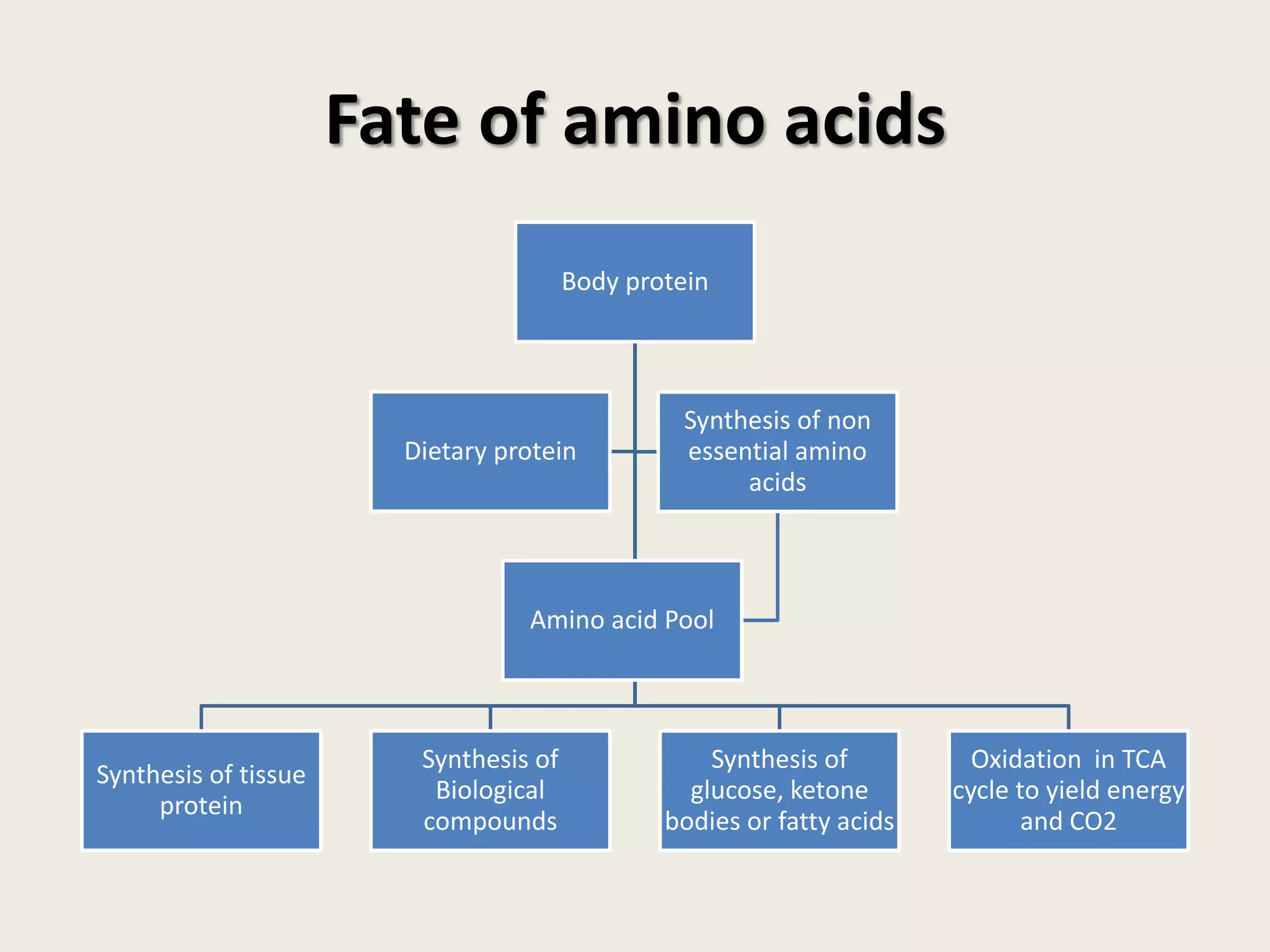
Fate of amino acids
Body protein

Dietary protein

Synthesis of non
essential amino
acids

Amino acid Pool

Synthesis of tissue
protein

Synthesis of
Biological
compounds

Synthesis of
glucose, ketone
bodies or fatty acids

Oxidation in TCA
cycle to yield energy
and CO2
Amino acid degradation
• The major site of amino acid degradation in
mammals is the liver.
• The amino group must be removed, as there are
no nitrogenous compounds in energytransduction pathways.
• The α-ketoacids that result from the deamination
of amino acids are metabolized so that the
carbon skeletons can enter the metabolic
mainstream as precursors to glucose or citric acid
cycle intermediates.
Fate of alpha amino group of amino
acids
o The presence of the α- amino group keeps amino acids
safely locked away from oxidative breakdown.
o Removal of α- amino group is an obligatory step in the
catabolism of all amino acids
o Once removed this nitrogen can be incorporated in to
other compounds or excreted, with the carbon skeleton
being metabolized
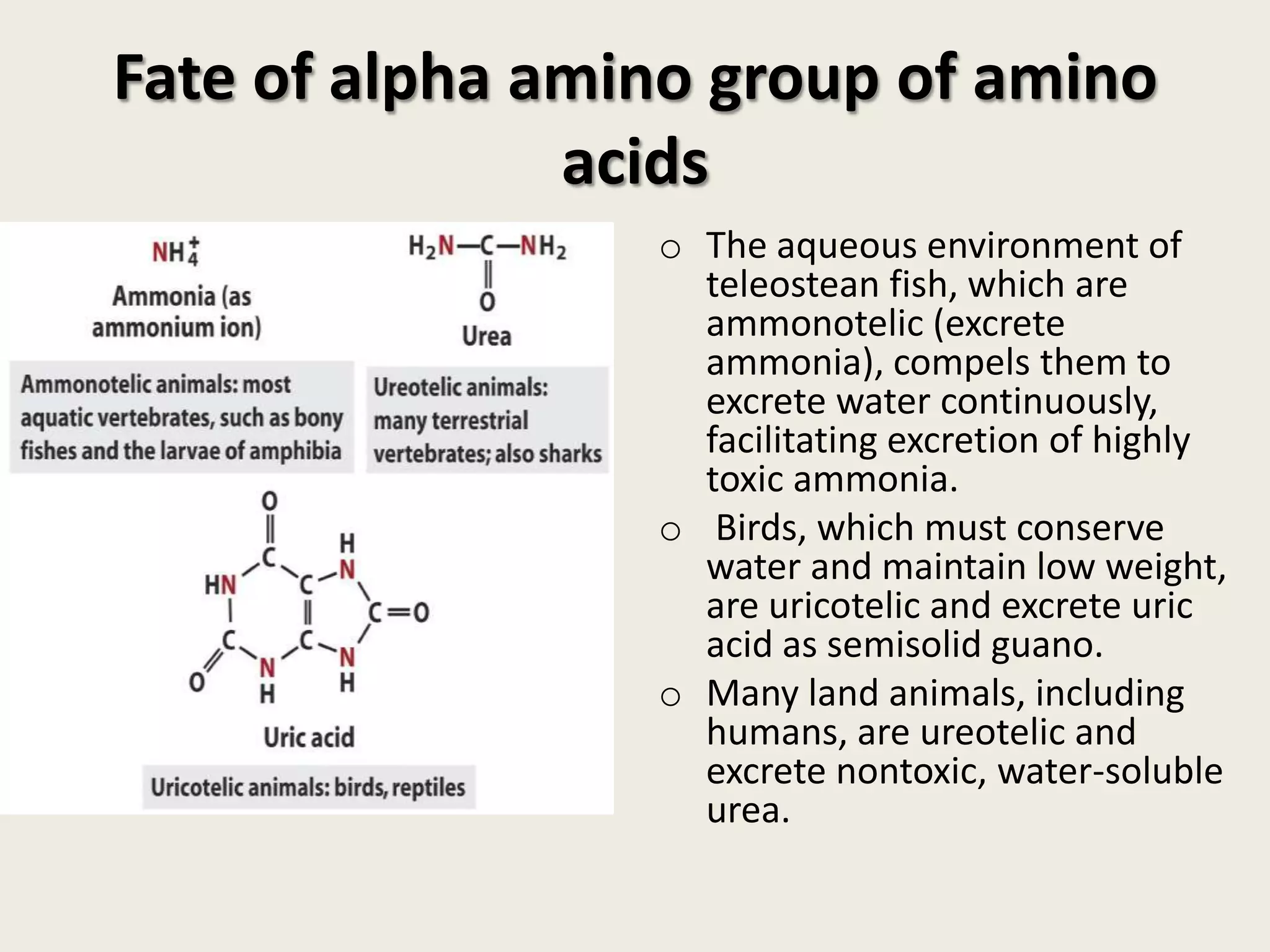
o Different animals excrete excess nitrogen as ammonia,
uric acid, or urea.
Fate of alpha amino group of amino
acids
o The aqueous environment of
teleostean fish, which are
ammonotelic (excrete
ammonia), compels them to
excrete water continuously,
facilitating excretion of highly
toxic ammonia.
o Birds, which must conserve
water and maintain low weight,
are uricotelic and excrete uric
acid as semisolid guano.
o Many land animals, including
humans, are ureotelic and
excrete nontoxic, water-soluble
urea.
Biosynthesis of urea
Urea biosynthesis occurs in stages:
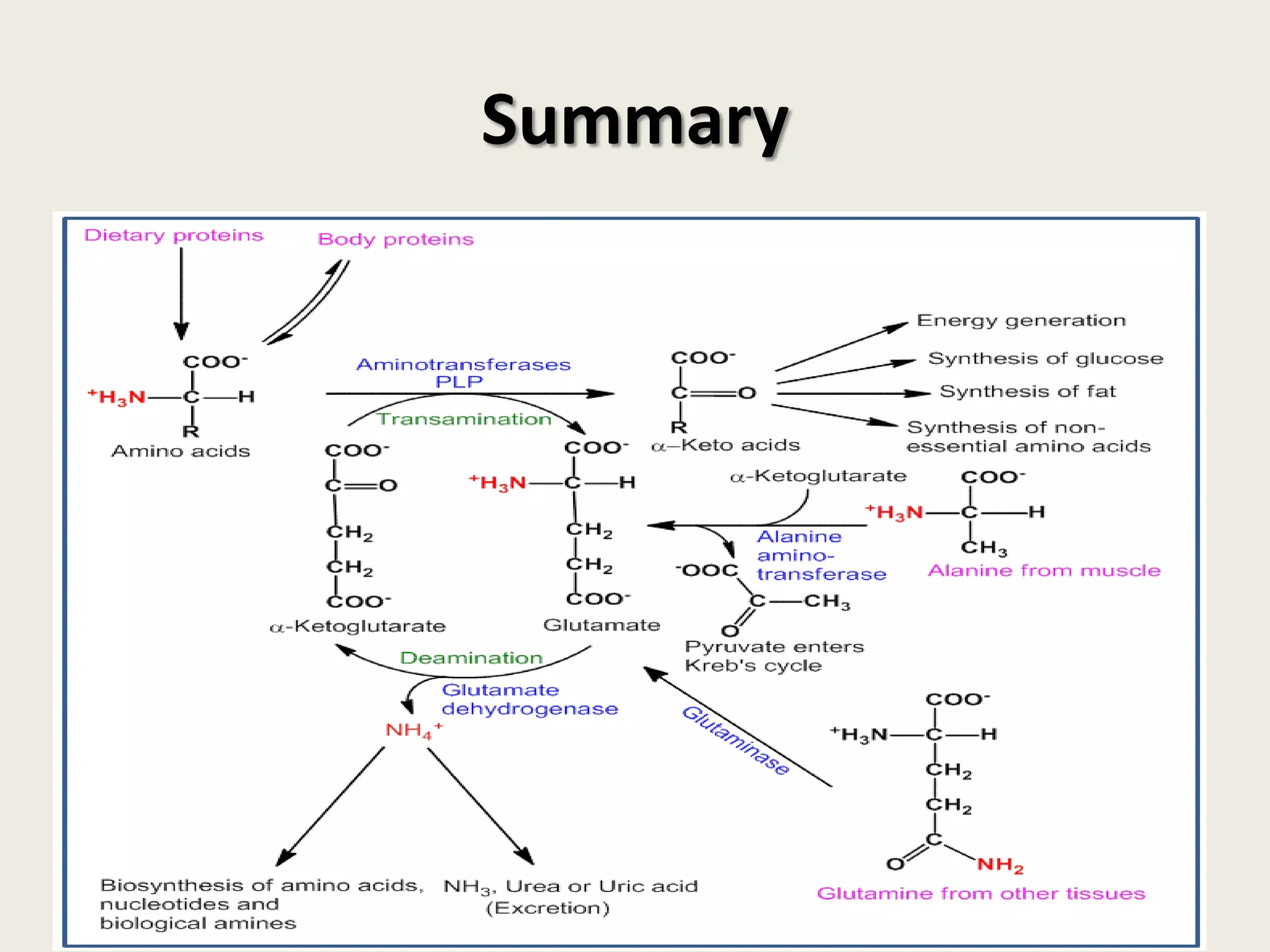
(1) Transdeamination (Removal of α-amino group) by –a
coupled process of transamination and deamination
o Transamination forms Glutamate in peripheral cells
o Deamination of glutamate forms ammonia in liver
(2) Minor pathway of oxidative and non oxidative deamination
produce ammonia in peripheral cells
(3) Ammonia transport-Ammonia is transported to liver as
glutamate, glutamine or alanine
(4) Detoxification of released ammonia – Ammonia is
detoxified by specific reactions (Urea cycle) forming urea in
liver.
Transamination
• Transamination interconverts pairs of α-amino acids
and α -keto acids.
• During Transamination, the amino group of an amino
acid (amino acid R 1) is transferred to a keto acid (keto
acid R 2), this produces a new keto acid while from the
original keto acid, a new amino acid is formed
Characteristics of Transamination
• The general process of transamination is reversible
and is catalyzed by Transaminases, also called amino
transferases that require B6-Phosphate as coenzyme.
• Most of the amino acids act as substrate for the
transaminases but the amino acids like lysine,
threonine, proline, and hydroxy proline do not
participate in transamination reactions.
• Transamination is not restricted to α -amino groups.
• The δ -amino group of ornithine and the Ʃ -amino
group of lysine—readily undergoes transamination.
Role of B6 Phosphate in
transamination
• The coenzyme pyridoxal phosphate (PLP) is
present at the catalytic site of aminotransferases
and of many other enzymes that act on amino
acids. PLP, a derivative of vitamin B6
• During transamination, bound PLP serves as a
carrier of amino groups.
• Rearrangement forms an α-keto acid and
enzyme-bound Pyridoxamine phosphate, which
forms a Schiff base with a second keto acid
Role of B6 Phosphate in
transamination
Role of B6 Phosphate in
transamination

• The transfer of α-amino group from donor amino acid to
Pyridoxal phosphate forms Pyridoxamine phosphate, and a
keto acid.
• The α-amino group is finally passed on to acceptor α-keto
acid to form a new amino acid.
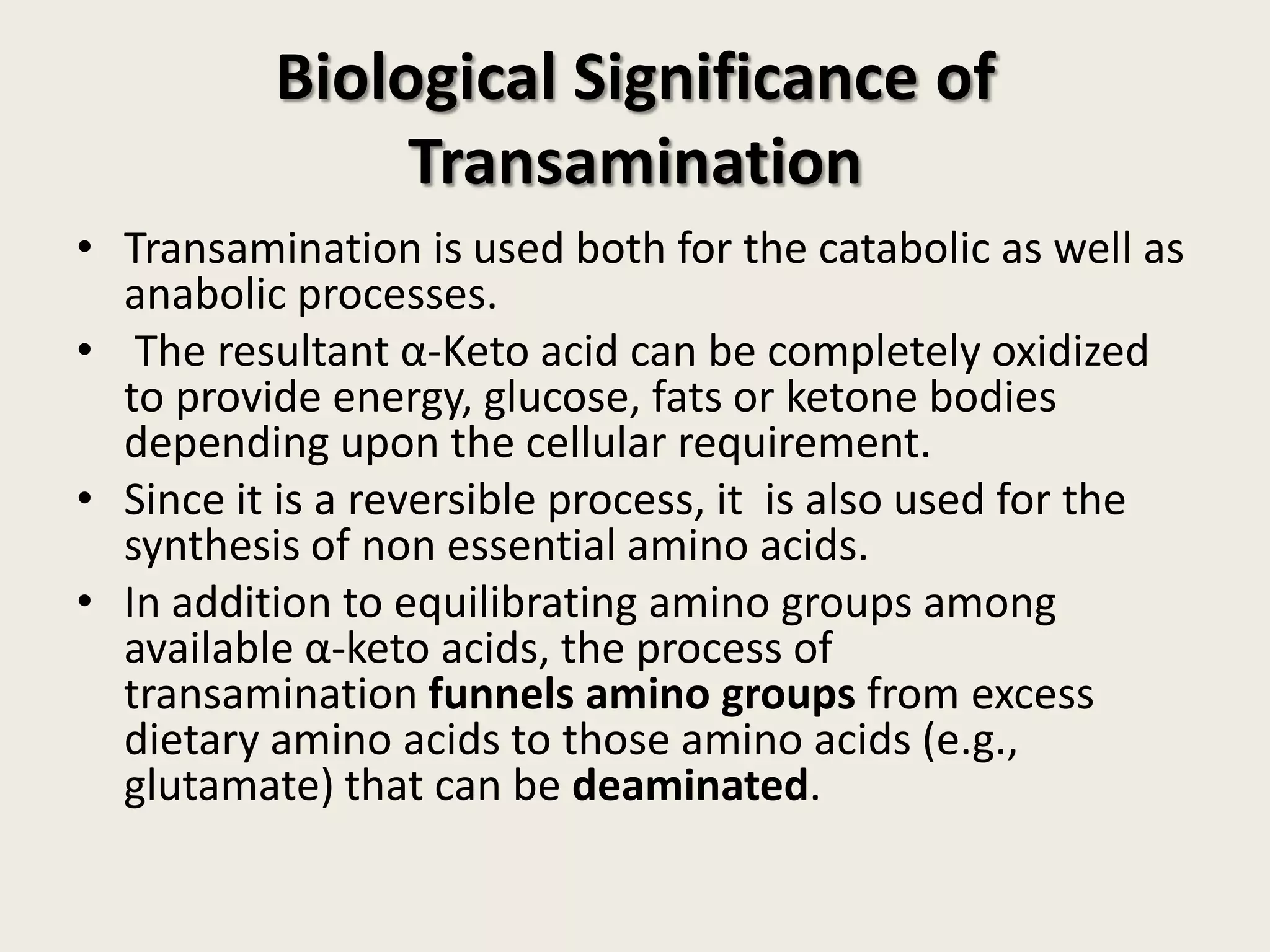
Biological Significance of
Transamination
• Transamination is used both for the catabolic as well as
anabolic processes.
• The resultant α-Keto acid can be completely oxidized
to provide energy, glucose, fats or ketone bodies
depending upon the cellular requirement.
• Since it is a reversible process, it is also used for the
synthesis of non essential amino acids.
• In addition to equilibrating amino groups among
available α-keto acids, the process of
transamination funnels amino groups from excess
dietary amino acids to those amino acids (e.g.,
glutamate) that can be deaminated.
Clinical significance of Transaminases
Serum aminotransferases such as serum
glutamate-oxaloacetate-aminotransferase
(SGOT) (also called Aspartate
aminotransferase, AST) and serum
glutamate-pyruvate aminotransferase
(SGPT) (also called alanine transaminase, ALT)
have been used as clinical markers of tissue
damage, with increasing serum levels
indicating an increased extent of damage.
AST-Serum glutamate-oxaloacetateaminotransferase (SGOT)
• AST is found in the liver, cardiac muscle,
skeletal muscle, kidneys, brain, pancreas,
lungs, leukocytes, and erythrocytes
• Normal serum activity is 0-41 IU/L. The
concentration of the enzyme is very high in
myocardium.
• The enzyme is both cytoplasmic as well as
mitochondrial in nature
AST-Serum glutamate-oxaloacetateaminotransferase (SGOT)
Reaction catalyzed can be represented as
follows-
ALT- Serum glutamate Alanine
transferase
• ALT is found primarily in the liver.
• The normal serum activity ranges between 0-45
IU/L
• Reaction catalyzed can be represented as follows-
Diagnostic significance of amino
transferases
o
o
o

o

I) Liver Diseases
The aminotransferases are normally present in the
serum in low concentrations.
These enzymes are released into the blood in greater
amounts when there is damage to the liver cell
membrane resulting in increased permeability.
These are sensitive indicators of liver cell injury and are
most helpful in recognizing acute hepatocellular
diseases such as hepatitis.
Any type of liver cell injury can cause modest
elevations in the serum aminotransferases
Diagnostic significance of amino
transferases
2) Acute myocardial infarction- In acute MI the serum
activity rises sharply within the first 12 hours, with a
peak level of 24 hours or over and returns to normal
within 3 to 5 days.
3) Extra cardiac and extra hepatic conditions
• Elevation of AST can also be seen in Muscle disorders
like muscular dystrophies- myositis etc.
• Increase activity of AST is also observed in acute
pancreatitis, leukemias and acute hemolytic anemias
• In normal health slight rise of AST level can be
observed after prolonged exercise
Oxidative deamination of Glutamate
• The nitrogen atom that is transferred to αketoglutarate in the transamination reaction
(forming Glutamate)is converted into free
ammonium ion by oxidative deamination.
• This reaction is catalyzed by glutamate
dehydrogenase.
• This enzyme is unusual in being able to utilize
either NAD+ or NADP+
• Glutamate dehydrogenase is located in
mitochondria, as are some of the other enzymes
required for the production of urea.
Regulation of Glutamate
dehydrogenase
o The activity of glutamate dehydrogenase is
allosterically regulated.
o The enzyme consists of six identical subunits.
o Guanosine triphosphate (GTP) and adenosine
triphosphate (ATP) are allosteric inhibitors, whereas
Guanosine diphosphate (GDP) and adenosine
diphosphate (ADP) are allosteric activators.
o Hence, a lowering of the energy charge (more of ADP
and GDP) accelerates the oxidation of amino acids
favoring formation of alpha keto glutarate that can be
channeled towards TCA cycle for complete oxidation to
provide energy.
Role of Glutamate
• Glutamate occupies a central place in the amino acid
metabolism.
• Basically it acts as a collector of amino group of the
amino acids.
• All the amino nitrogen from amino acids that undergo
transamination can be concentrated in glutamate.
• L-glutamate is the only amino acid that undergoes
oxidative deamination at an appreciable rate in
mammalian tissues.
• The formation of ammonia from α -amino groups thus
occurs mainly via the α -amino nitrogen of L-glutamate.
Role of Glutamate and Glutamate
dehydrogenase
• Since in majority of the transamination reactions alpha
keto glutarate is the acceptor keto acid forming
Glutamate, that is oxidatively deaminated in the liver
by Glutamate dehydrogenase to form alpha keto
glutarate and ammonia.
• Conversion of α-amino nitrogen to ammonia by the
concerted action of glutamate aminotransferase and
GDH is often termed "transdeamination."
• Thus Transamination and deamination are coupled
processes though they occur at distant places
Transdeamination
Minor pathways of deamination
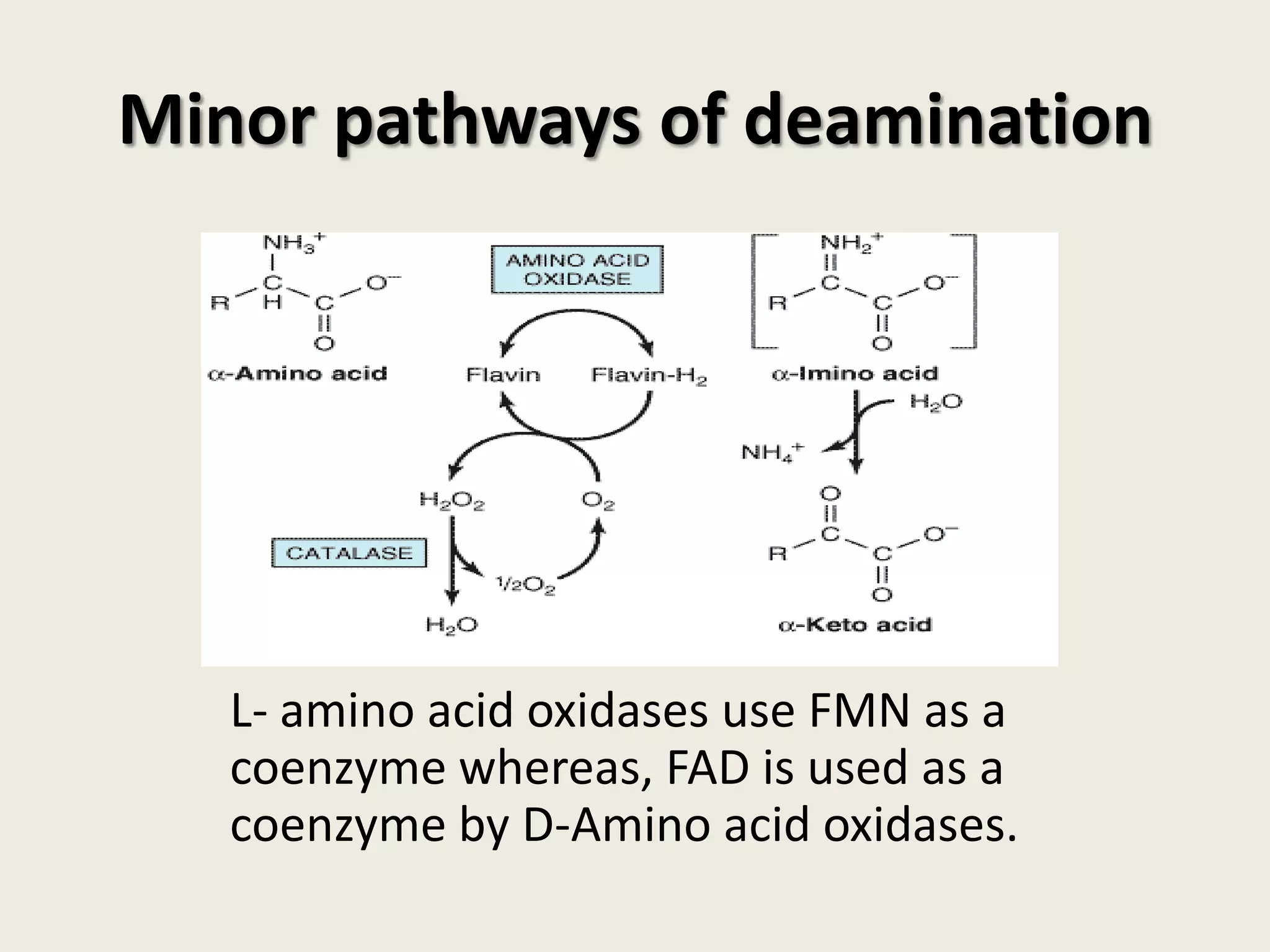
A) Oxidative deamination
• L-amino acid oxidases of liver and kidney
convert amino acids to an α -imino acid that
decomposes to an α -keto acid with release of
ammonium ion.
• The reduced flavin is reoxidized by molecular
oxygen, forming hydrogen peroxide (H2O2),
which then is split to O2 and H2O by Catalase.
Minor pathways of deamination

L- amino acid oxidases use FMN as a
coenzyme whereas, FAD is used as a
coenzyme by D-Amino acid oxidases.
Minor pathways of deamination
Non oxidative deamination
o Serine, threonine, cysteine/cystine and
Histidine undergo non oxidative deamination
to form corresponding Alpha keto acids
o Deamination of Serine and Threonine is
carried out by Dehydratase, whereas
deamination of cysteine/cystine is carried out
by desulfurase.
o Both the enzymes are B6 dependent.
Minor pathways of deamination
oDeamination of
cysteine and
cystine is carried
out in a similar
way
oDeamination of
histidine
produces
urocanic acid
• Deamination takes place in two steps- First an imino
acid is formed by the action of dehydratase/desulfurase.
• The imino acid undergoes hydration and deamination to
produce alpha keto acid.
Transport of Ammonia to the liver
• Two mechanism are available for the transport
of ammonia from peripheral cells to liver for
detoxification
• The first uses glutamine synthetase to
combine glutamate with ammonia
• The second , used primarily by muscle,
involves transamination of pyruvate to Alanine
Glutamate and Glutamine
relationship
• Ammonia Nitrogen can be transported as
glutamine.
• This is the first line of defense in brain cells.
• Glutamine synthetase catalyzes the synthesis of
glutamine from glutamate and NH4 + in an ATPdependent reaction
• The nitrogen of glutamine can be converted to
urea in liver by the action of glutaminase in liver
• Hydrolytic release of the amide nitrogen of
glutamine as ammonia, catalyzed by glutaminase
favors glutamate formation.
Glutamate and Glutamine
relationship

The concerted action of glutamine synthase and glutaminase thus
catalyzes the interconversion of free ammonium ion and glutamine
Glucose Alanine Cycle and role of
Glutamate
• The transport of amino group of amino acids also takes place in the
form of Alanine.
• Nitrogen is transported from muscle to the liver in two principal
transport forms.
• Glutamate is formed by transamination reactions, but the nitrogen
is then transferred to pyruvate to form alanine, which is released
into the blood.
• The liver takes up the alanine and converts it back into pyruvate by
transamination.
• The pyruvate can be used for gluconeogenesis and the amino group
eventually appears as urea.
• This transport is referred to as the alanine cycle. It is reminiscent of
the Cori cycle and again illustrates the ability of the muscle to shift
some of its metabolic burden to the liver
Glucose Alanine cycle

Glutamate in muscle is transaminated to alanine, which is released
into the blood stream. In the liver, alanine is taken up and
converted into pyruvate for subsequent metabolism.
Ammonia intoxication
• The ammonia produced by enteric bacteria and absorbed
into portal venous blood and the ammonia produced by
tissues are rapidly removed from circulation by the liver
and converted to urea.
• Thus, only traces (10–20 g/dL) normally are present in
peripheral blood.
• This is essential, since ammonia is toxic to the central
nervous system.
• Should portal blood bypass the liver, systemic blood
ammonia levels may rise to toxic levels.
• This occurs in severely impaired hepatic function or the
development of collateral links between the portal and
systemic veins in cirrhosis.
Ammonia intoxication
• Excess of ammonia depletes glutamate and hence
GABA level in brain
• To compensate for glutamate, alpha keto glutarate is
used , the decrease concentration of which
subsequently depresses TCA and thus deprives brain
cells of energy.
• Excess Glutamine is exchanged with Tryptophan , a
precursor of Serotonin , resulting in hyper excitation.
• Symptoms of ammonia intoxication include tremor,
slurred speech, blurred vision, coma, and ultimately
death.
Ammonia intoxication

Ammonia is highly toxic. Normally blood ammonium concentration
is < 50 µmol /L, and an increase to only 100 µmol /L can lead to
disturbance of consciousness. A blood ammonium concentration of
200 µmol /L is associated with coma and convulsions.
Renal glutaminase activity
• Excretion into urine of ammonia produced by
renal tubular cells facilitates cation
conservation and regulation of acid-base
balance.
• Ammonia production from intracellular renal
amino acids, especially glutamine, increases in
metabolic acidosis and decreases in
metabolic alkalosis.
Sources of Ammonia
• Transamination of amino acids with alpha
ketoglutarate to form Glutamate and subsequent
deamination of Glutamate by glutamate
dehydrogenase (Transdeamination)
• Deamination of amino acids (oxidative and non
oxidative)
• From Glutamine by the action of Glutaminase
• By the action of intestinal bacteria on the unabsorbed
dietary amino acids
• From mono amines by the action of mono amine
oxidase
• From the catabolism of purines and pyrimidines
Fate of ammonia
• Biosynthesis of Glutamate from ammonia and
alpha keto glutarate
• Biosynthesis of non essential amino acids
through transdeamination
• Biosynthesis of Glutamine by the action of
Glutamine synthetase
• Small amounts are excreted in urine
• Major fate is formation of urea
Summary
Urea cycle
• To be continued …
• For further reading follow
• Biochemistry for medics- Lecture notes
• http://www.namrata.co/transamination-andtransaminases/
http://www.namrata.co/glutamate-central-rolein-amino-acid-metabolism/
• Biochemistry for medics- clinical cases
• http://usmle.biochemistryformedics.com/

Amino acid catabolism- Part-1

  • 1.
    Amino acid catabolism-Part-1 Biochemistry For Medics- Lecture notes By- Professor(Dr.) Namrata Chhabra www.namrata.co
  • 2.
    Introduction • Amino acidcatabolism is part of the whole body catabolism • Nitrogen enters the body in a variety of compounds present in the food, the most important being amino acids present in the dietary protein. • Nitrogen leaves the body as urea, ammonia, and other products derived from amino acid metabolism
  • 3.
    Protein turn over •The continuous degradation and synthesis of cellular proteins occur in all forms of life. • Each day, humans turn over 1–2% of their total body protein, principally muscle protein. • The rate of protein turn over varies widely for individual proteins • Digestive enzymes and plasma proteins are rapidly degraded • High rates of protein degradation also occur in tissues undergoing structural rearrangement—eg uterine tissue during pregnancy or skeletal muscle in starvation. • Structural proteins, such as collagen, are metabolically stable and have half lives measured in months or years
  • 4.
    Fate of aminoacids • Of the liberated amino acids, approximately 75% are reutilized. • The remainder serve as precursors for important biological compounds • Since excess amino acids are not stored, those not immediately incorporated into new protein or utilized else where are rapidly degraded to amphibolic intermediates.
  • 5.
    Fate of aminoacids Body protein Dietary protein Synthesis of non essential amino acids Amino acid Pool Synthesis of tissue protein Synthesis of Biological compounds Synthesis of glucose, ketone bodies or fatty acids Oxidation in TCA cycle to yield energy and CO2
  • 6.
    Amino acid degradation •The major site of amino acid degradation in mammals is the liver. • The amino group must be removed, as there are no nitrogenous compounds in energytransduction pathways. • The α-ketoacids that result from the deamination of amino acids are metabolized so that the carbon skeletons can enter the metabolic mainstream as precursors to glucose or citric acid cycle intermediates.
  • 7.
    Fate of alphaamino group of amino acids o The presence of the α- amino group keeps amino acids safely locked away from oxidative breakdown. o Removal of α- amino group is an obligatory step in the catabolism of all amino acids o Once removed this nitrogen can be incorporated in to other compounds or excreted, with the carbon skeleton being metabolized o Different animals excrete excess nitrogen as ammonia, uric acid, or urea.
  • 8.
    Fate of alphaamino group of amino acids o The aqueous environment of teleostean fish, which are ammonotelic (excrete ammonia), compels them to excrete water continuously, facilitating excretion of highly toxic ammonia. o Birds, which must conserve water and maintain low weight, are uricotelic and excrete uric acid as semisolid guano. o Many land animals, including humans, are ureotelic and excrete nontoxic, water-soluble urea.
  • 9.
    Biosynthesis of urea Ureabiosynthesis occurs in stages: (1) Transdeamination (Removal of α-amino group) by –a coupled process of transamination and deamination o Transamination forms Glutamate in peripheral cells o Deamination of glutamate forms ammonia in liver (2) Minor pathway of oxidative and non oxidative deamination produce ammonia in peripheral cells (3) Ammonia transport-Ammonia is transported to liver as glutamate, glutamine or alanine (4) Detoxification of released ammonia – Ammonia is detoxified by specific reactions (Urea cycle) forming urea in liver.
  • 10.
    Transamination • Transamination interconvertspairs of α-amino acids and α -keto acids. • During Transamination, the amino group of an amino acid (amino acid R 1) is transferred to a keto acid (keto acid R 2), this produces a new keto acid while from the original keto acid, a new amino acid is formed
  • 11.
    Characteristics of Transamination •The general process of transamination is reversible and is catalyzed by Transaminases, also called amino transferases that require B6-Phosphate as coenzyme. • Most of the amino acids act as substrate for the transaminases but the amino acids like lysine, threonine, proline, and hydroxy proline do not participate in transamination reactions. • Transamination is not restricted to α -amino groups. • The δ -amino group of ornithine and the Ʃ -amino group of lysine—readily undergoes transamination.
  • 12.
    Role of B6Phosphate in transamination • The coenzyme pyridoxal phosphate (PLP) is present at the catalytic site of aminotransferases and of many other enzymes that act on amino acids. PLP, a derivative of vitamin B6 • During transamination, bound PLP serves as a carrier of amino groups. • Rearrangement forms an α-keto acid and enzyme-bound Pyridoxamine phosphate, which forms a Schiff base with a second keto acid
  • 13.
    Role of B6Phosphate in transamination
  • 14.
    Role of B6Phosphate in transamination • The transfer of α-amino group from donor amino acid to Pyridoxal phosphate forms Pyridoxamine phosphate, and a keto acid. • The α-amino group is finally passed on to acceptor α-keto acid to form a new amino acid.
  • 15.
    Biological Significance of Transamination •Transamination is used both for the catabolic as well as anabolic processes. • The resultant α-Keto acid can be completely oxidized to provide energy, glucose, fats or ketone bodies depending upon the cellular requirement. • Since it is a reversible process, it is also used for the synthesis of non essential amino acids. • In addition to equilibrating amino groups among available α-keto acids, the process of transamination funnels amino groups from excess dietary amino acids to those amino acids (e.g., glutamate) that can be deaminated.
  • 16.
    Clinical significance ofTransaminases Serum aminotransferases such as serum glutamate-oxaloacetate-aminotransferase (SGOT) (also called Aspartate aminotransferase, AST) and serum glutamate-pyruvate aminotransferase (SGPT) (also called alanine transaminase, ALT) have been used as clinical markers of tissue damage, with increasing serum levels indicating an increased extent of damage.
  • 17.
    AST-Serum glutamate-oxaloacetateaminotransferase (SGOT) •AST is found in the liver, cardiac muscle, skeletal muscle, kidneys, brain, pancreas, lungs, leukocytes, and erythrocytes • Normal serum activity is 0-41 IU/L. The concentration of the enzyme is very high in myocardium. • The enzyme is both cytoplasmic as well as mitochondrial in nature
  • 18.
  • 19.
    ALT- Serum glutamateAlanine transferase • ALT is found primarily in the liver. • The normal serum activity ranges between 0-45 IU/L • Reaction catalyzed can be represented as follows-
  • 20.
    Diagnostic significance ofamino transferases o o o o I) Liver Diseases The aminotransferases are normally present in the serum in low concentrations. These enzymes are released into the blood in greater amounts when there is damage to the liver cell membrane resulting in increased permeability. These are sensitive indicators of liver cell injury and are most helpful in recognizing acute hepatocellular diseases such as hepatitis. Any type of liver cell injury can cause modest elevations in the serum aminotransferases
  • 21.
    Diagnostic significance ofamino transferases 2) Acute myocardial infarction- In acute MI the serum activity rises sharply within the first 12 hours, with a peak level of 24 hours or over and returns to normal within 3 to 5 days. 3) Extra cardiac and extra hepatic conditions • Elevation of AST can also be seen in Muscle disorders like muscular dystrophies- myositis etc. • Increase activity of AST is also observed in acute pancreatitis, leukemias and acute hemolytic anemias • In normal health slight rise of AST level can be observed after prolonged exercise
  • 22.
    Oxidative deamination ofGlutamate • The nitrogen atom that is transferred to αketoglutarate in the transamination reaction (forming Glutamate)is converted into free ammonium ion by oxidative deamination. • This reaction is catalyzed by glutamate dehydrogenase. • This enzyme is unusual in being able to utilize either NAD+ or NADP+ • Glutamate dehydrogenase is located in mitochondria, as are some of the other enzymes required for the production of urea.
  • 23.
    Regulation of Glutamate dehydrogenase oThe activity of glutamate dehydrogenase is allosterically regulated. o The enzyme consists of six identical subunits. o Guanosine triphosphate (GTP) and adenosine triphosphate (ATP) are allosteric inhibitors, whereas Guanosine diphosphate (GDP) and adenosine diphosphate (ADP) are allosteric activators. o Hence, a lowering of the energy charge (more of ADP and GDP) accelerates the oxidation of amino acids favoring formation of alpha keto glutarate that can be channeled towards TCA cycle for complete oxidation to provide energy.
  • 24.
    Role of Glutamate •Glutamate occupies a central place in the amino acid metabolism. • Basically it acts as a collector of amino group of the amino acids. • All the amino nitrogen from amino acids that undergo transamination can be concentrated in glutamate. • L-glutamate is the only amino acid that undergoes oxidative deamination at an appreciable rate in mammalian tissues. • The formation of ammonia from α -amino groups thus occurs mainly via the α -amino nitrogen of L-glutamate.
  • 25.
    Role of Glutamateand Glutamate dehydrogenase • Since in majority of the transamination reactions alpha keto glutarate is the acceptor keto acid forming Glutamate, that is oxidatively deaminated in the liver by Glutamate dehydrogenase to form alpha keto glutarate and ammonia. • Conversion of α-amino nitrogen to ammonia by the concerted action of glutamate aminotransferase and GDH is often termed "transdeamination." • Thus Transamination and deamination are coupled processes though they occur at distant places
  • 26.
  • 27.
    Minor pathways ofdeamination A) Oxidative deamination • L-amino acid oxidases of liver and kidney convert amino acids to an α -imino acid that decomposes to an α -keto acid with release of ammonium ion. • The reduced flavin is reoxidized by molecular oxygen, forming hydrogen peroxide (H2O2), which then is split to O2 and H2O by Catalase.
  • 28.
    Minor pathways ofdeamination L- amino acid oxidases use FMN as a coenzyme whereas, FAD is used as a coenzyme by D-Amino acid oxidases.
  • 29.
    Minor pathways ofdeamination Non oxidative deamination o Serine, threonine, cysteine/cystine and Histidine undergo non oxidative deamination to form corresponding Alpha keto acids o Deamination of Serine and Threonine is carried out by Dehydratase, whereas deamination of cysteine/cystine is carried out by desulfurase. o Both the enzymes are B6 dependent.
  • 30.
    Minor pathways ofdeamination oDeamination of cysteine and cystine is carried out in a similar way oDeamination of histidine produces urocanic acid • Deamination takes place in two steps- First an imino acid is formed by the action of dehydratase/desulfurase. • The imino acid undergoes hydration and deamination to produce alpha keto acid.
  • 31.
    Transport of Ammoniato the liver • Two mechanism are available for the transport of ammonia from peripheral cells to liver for detoxification • The first uses glutamine synthetase to combine glutamate with ammonia • The second , used primarily by muscle, involves transamination of pyruvate to Alanine
  • 32.
    Glutamate and Glutamine relationship •Ammonia Nitrogen can be transported as glutamine. • This is the first line of defense in brain cells. • Glutamine synthetase catalyzes the synthesis of glutamine from glutamate and NH4 + in an ATPdependent reaction • The nitrogen of glutamine can be converted to urea in liver by the action of glutaminase in liver • Hydrolytic release of the amide nitrogen of glutamine as ammonia, catalyzed by glutaminase favors glutamate formation.
  • 33.
    Glutamate and Glutamine relationship Theconcerted action of glutamine synthase and glutaminase thus catalyzes the interconversion of free ammonium ion and glutamine
  • 34.
    Glucose Alanine Cycleand role of Glutamate • The transport of amino group of amino acids also takes place in the form of Alanine. • Nitrogen is transported from muscle to the liver in two principal transport forms. • Glutamate is formed by transamination reactions, but the nitrogen is then transferred to pyruvate to form alanine, which is released into the blood. • The liver takes up the alanine and converts it back into pyruvate by transamination. • The pyruvate can be used for gluconeogenesis and the amino group eventually appears as urea. • This transport is referred to as the alanine cycle. It is reminiscent of the Cori cycle and again illustrates the ability of the muscle to shift some of its metabolic burden to the liver
  • 35.
    Glucose Alanine cycle Glutamatein muscle is transaminated to alanine, which is released into the blood stream. In the liver, alanine is taken up and converted into pyruvate for subsequent metabolism.
  • 36.
    Ammonia intoxication • Theammonia produced by enteric bacteria and absorbed into portal venous blood and the ammonia produced by tissues are rapidly removed from circulation by the liver and converted to urea. • Thus, only traces (10–20 g/dL) normally are present in peripheral blood. • This is essential, since ammonia is toxic to the central nervous system. • Should portal blood bypass the liver, systemic blood ammonia levels may rise to toxic levels. • This occurs in severely impaired hepatic function or the development of collateral links between the portal and systemic veins in cirrhosis.
  • 37.
    Ammonia intoxication • Excessof ammonia depletes glutamate and hence GABA level in brain • To compensate for glutamate, alpha keto glutarate is used , the decrease concentration of which subsequently depresses TCA and thus deprives brain cells of energy. • Excess Glutamine is exchanged with Tryptophan , a precursor of Serotonin , resulting in hyper excitation. • Symptoms of ammonia intoxication include tremor, slurred speech, blurred vision, coma, and ultimately death.
  • 38.
    Ammonia intoxication Ammonia ishighly toxic. Normally blood ammonium concentration is < 50 µmol /L, and an increase to only 100 µmol /L can lead to disturbance of consciousness. A blood ammonium concentration of 200 µmol /L is associated with coma and convulsions.
  • 39.
    Renal glutaminase activity •Excretion into urine of ammonia produced by renal tubular cells facilitates cation conservation and regulation of acid-base balance. • Ammonia production from intracellular renal amino acids, especially glutamine, increases in metabolic acidosis and decreases in metabolic alkalosis.
  • 40.
    Sources of Ammonia •Transamination of amino acids with alpha ketoglutarate to form Glutamate and subsequent deamination of Glutamate by glutamate dehydrogenase (Transdeamination) • Deamination of amino acids (oxidative and non oxidative) • From Glutamine by the action of Glutaminase • By the action of intestinal bacteria on the unabsorbed dietary amino acids • From mono amines by the action of mono amine oxidase • From the catabolism of purines and pyrimidines
  • 41.
    Fate of ammonia •Biosynthesis of Glutamate from ammonia and alpha keto glutarate • Biosynthesis of non essential amino acids through transdeamination • Biosynthesis of Glutamine by the action of Glutamine synthetase • Small amounts are excreted in urine • Major fate is formation of urea
  • 42.
  • 43.
    Urea cycle • Tobe continued … • For further reading follow • Biochemistry for medics- Lecture notes • http://www.namrata.co/transamination-andtransaminases/ http://www.namrata.co/glutamate-central-rolein-amino-acid-metabolism/ • Biochemistry for medics- clinical cases • http://usmle.biochemistryformedics.com/