Sources, RDA, Biochemical Functions
& Clinical Significance of
MANGANESE, COPPER AND
ZINC
Dr. Muhammad Afzal Alvi
MBBS, M.Phil (Biochemistry)
PhD Scholar
Assistant Professor
REVIEW OF PREVIOUS LECTURE
Conti….
• Iron
• Types of iron in the body
• Significance of iron
• RDA of iron
• Sources of iron
• Storage forms of iron
• Clinical significance if iron
• Iodine
• Importance of iodide
• RDA and sources of iodine
• Clinical significance of iodine
Conti….
• Copper
• Biological importance of copper
• Sources of copper
• RDA of cooper
• Clinical significance of copper
• Zinc, biological importance
• Clinical significance
• Manganese , its importance, sources and clinical
significance
COPPER (Cu)
• Total body copper is about 100 mg.
• It is present in all tissues.
• The highest concentrations are found in liver, kidney,
• Significant amount in cardiac and skeletal muscle & in
bone.
Copper Roles in the Body
• Serves as a constituent of several enzymes.
• Involve reactions that consume oxygen or oxygen
radicals
• Copper-containing enzymes catalyze the oxidation
of ferrous iron to ferric iron, which allows iron to
bind to transferrin
• Copper- and zinc-containing enzymes participate
in the body’s natural defense against the oxidative
damage of free radicals.
• Copper enzymes help to manufacture collagen,
inactivate histamine, and degrade serotonin.
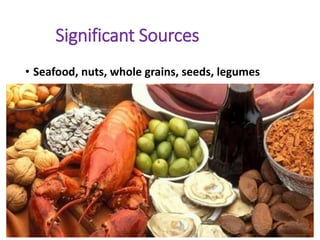
Significant Sources
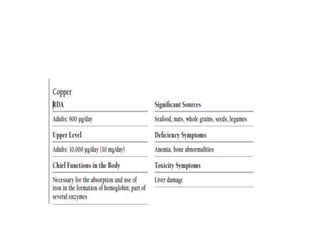
• Seafood, nuts, whole grains, seeds, legumes
Copper RDA
• RDA for adults: 900 g/day
Metabolism
• Absorbed from upper small intestine.
• Absorbed copper is transported to the liver bound
to albumin & exported to peripheral tissues.
• Metallothionein is a family of cysteine-rich
transport protein that facilitates copper absorption.
DEFICIENCY
Copper deficiency is caused by malnutrition,
malabsorption & nephrotic syndrome (increased loss)
Clinical features:
• Neutropaenia (decreased number of neutrophils)
• Hypochromic anemia in the early stages.
• Osteoporosis & various bone & joint abnormalities,
due to impairment in copper-dependent cross-
linking of bone collagen and connective tissue.
• Decreased pigmentation of skin due to depressed
copper dependent tyrosine kinase activity.
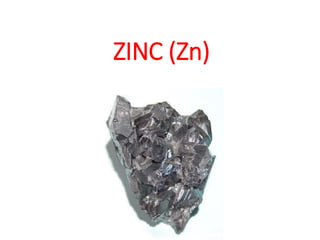
ZINC (Zn)
• Zinc is a versatile trace element
• Required as a cofactor by more than 100 enzymes.
• Virtually all cells contain zinc,
• But the highest concentrations are found in muscle
and bone
Zinc Roles in the Body
• Zinc supports the work of numerous proteins in the
body, such as the metalloenzymes.
• Stabilizes cell membranes, helping to strengthen
their defense against free-radical attacks
• Participates in the synthesis, storage, and release of
the hormone insulin in the pancreas.
• Zinc interacts with platelets in blood clotting.
• Needed to produce the active form of vitamin A
(retinal) in visual pigments and the retinol-binding
protein that transports vitamin A
• It is essential to normal taste perception, wound
healing, sperm production, and fetal development
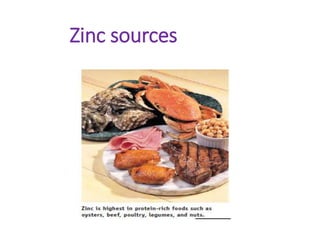
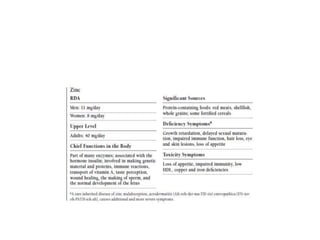
Zinc sources
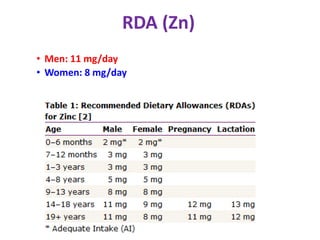
RDA (Zn)
• Men: 11 mg/day
• Women: 8 mg/day
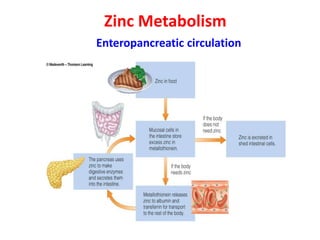
Enteropancreatic Circulation of Zinc
• Some zinc from food is absorbed by the small
intestine and sent to the pancreas to be
incorporated into digestive enzymes that return to
the small intestine.
Zinc Metabolism
Enteropancreatic circulation
ZINC DEFICIENCY
DWARFISM
• Growth retardation,
• Is rightly ascribed to zinc deficiency because it is
partially reversible when zinc is restored to the diet.
The Stunted Growth of
Dwarfism
• Zinc deficiency hinders digestion and absorption,
causing diarrhea
• It also impairs the immune response, making
infections likely—among them, GI tract infections
• Chronic zinc deficiency damages the central
nervous system
• May lead to poor motor development and cognitive
performance.
• Zinc deficiency directly impairs vitamin a
metabolism, vitamin a–deficiency symptoms often
appear.
Toxicity symptoms
• High doses (more than 50 milligrams) of zinc may
cause
• vomiting
• diarrhea
• Headaches
• exhaustion
MANGANESE
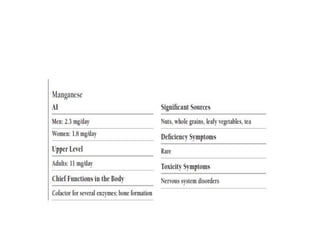
Manganese
• The human body contains a tiny 20 milligrams of
manganese.
• Found in the bones and metabolically active organs
such as the liver, kidneys, and pancreas.
Manganese Roles in the Body
• Cofactor for many enzymes
• Facilitate the metabolism of carbohydrate, lipids, and
amino acids.
• Manganese-containing metalloenzymes assist in bone
formation
• The conversion of pyruvate to a TCA cycle compound
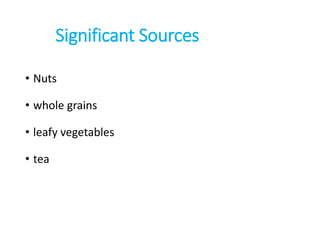
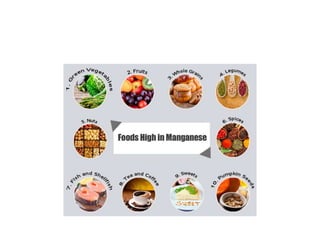
Significant Sources
• Nuts
• whole grains
• leafy vegetables
• tea
RDA of manganses
• Men: 2.3 mg/day
• Women: 1.8 mg/day
Manganese Deficiency
• Manganese requirements are low,
• Many plant foods contain significant amounts of
this trace mineral, so deficiencies are rare.
Manganese Toxicity
• Toxicity is more likely to occur from an environment
contaminated with manganese than from dietary
intake
• Inhalation poisoning produces psychotic symptoms
and Parkinsonism like symptoms
MANGANESE, COPPER AND ZINC

MANGANESE, COPPER AND ZINC

  • 1.
    Sources, RDA, BiochemicalFunctions & Clinical Significance of MANGANESE, COPPER AND ZINC Dr. Muhammad Afzal Alvi MBBS, M.Phil (Biochemistry) PhD Scholar Assistant Professor
  • 2.
  • 3.
    Conti…. • Iron • Typesof iron in the body • Significance of iron • RDA of iron • Sources of iron • Storage forms of iron • Clinical significance if iron • Iodine • Importance of iodide • RDA and sources of iodine • Clinical significance of iodine
  • 5.
    Conti…. • Copper • Biologicalimportance of copper • Sources of copper • RDA of cooper • Clinical significance of copper • Zinc, biological importance • Clinical significance • Manganese , its importance, sources and clinical significance
  • 6.
  • 7.
    • Total bodycopper is about 100 mg. • It is present in all tissues. • The highest concentrations are found in liver, kidney, • Significant amount in cardiac and skeletal muscle & in bone.
  • 8.
    Copper Roles inthe Body • Serves as a constituent of several enzymes. • Involve reactions that consume oxygen or oxygen radicals • Copper-containing enzymes catalyze the oxidation of ferrous iron to ferric iron, which allows iron to bind to transferrin
  • 9.
    • Copper- andzinc-containing enzymes participate in the body’s natural defense against the oxidative damage of free radicals. • Copper enzymes help to manufacture collagen, inactivate histamine, and degrade serotonin.
  • 10.
    Significant Sources • Seafood,nuts, whole grains, seeds, legumes
  • 11.
    Copper RDA • RDAfor adults: 900 g/day
  • 12.
    Metabolism • Absorbed fromupper small intestine. • Absorbed copper is transported to the liver bound to albumin & exported to peripheral tissues.
  • 13.
    • Metallothionein isa family of cysteine-rich transport protein that facilitates copper absorption.
  • 14.
    DEFICIENCY Copper deficiency iscaused by malnutrition, malabsorption & nephrotic syndrome (increased loss) Clinical features: • Neutropaenia (decreased number of neutrophils) • Hypochromic anemia in the early stages.
  • 15.
    • Osteoporosis &various bone & joint abnormalities, due to impairment in copper-dependent cross- linking of bone collagen and connective tissue. • Decreased pigmentation of skin due to depressed copper dependent tyrosine kinase activity.
  • 17.
  • 18.
    • Zinc isa versatile trace element • Required as a cofactor by more than 100 enzymes. • Virtually all cells contain zinc, • But the highest concentrations are found in muscle and bone
  • 19.
    Zinc Roles inthe Body • Zinc supports the work of numerous proteins in the body, such as the metalloenzymes. • Stabilizes cell membranes, helping to strengthen their defense against free-radical attacks
  • 20.
    • Participates inthe synthesis, storage, and release of the hormone insulin in the pancreas. • Zinc interacts with platelets in blood clotting.
  • 21.
    • Needed toproduce the active form of vitamin A (retinal) in visual pigments and the retinol-binding protein that transports vitamin A • It is essential to normal taste perception, wound healing, sperm production, and fetal development
  • 22.
  • 23.
    RDA (Zn) • Men:11 mg/day • Women: 8 mg/day
  • 24.
    Enteropancreatic Circulation ofZinc • Some zinc from food is absorbed by the small intestine and sent to the pancreas to be incorporated into digestive enzymes that return to the small intestine.
  • 25.
  • 26.
  • 27.
    DWARFISM • Growth retardation, •Is rightly ascribed to zinc deficiency because it is partially reversible when zinc is restored to the diet.
  • 28.
    The Stunted Growthof Dwarfism
  • 29.
    • Zinc deficiencyhinders digestion and absorption, causing diarrhea • It also impairs the immune response, making infections likely—among them, GI tract infections
  • 30.
    • Chronic zincdeficiency damages the central nervous system • May lead to poor motor development and cognitive performance. • Zinc deficiency directly impairs vitamin a metabolism, vitamin a–deficiency symptoms often appear.
  • 31.
    Toxicity symptoms • Highdoses (more than 50 milligrams) of zinc may cause • vomiting • diarrhea • Headaches • exhaustion
  • 33.
  • 34.
    Manganese • The humanbody contains a tiny 20 milligrams of manganese. • Found in the bones and metabolically active organs such as the liver, kidneys, and pancreas.
  • 35.
    Manganese Roles inthe Body • Cofactor for many enzymes • Facilitate the metabolism of carbohydrate, lipids, and amino acids. • Manganese-containing metalloenzymes assist in bone formation • The conversion of pyruvate to a TCA cycle compound
  • 36.
    Significant Sources • Nuts •whole grains • leafy vegetables • tea
  • 38.
    RDA of manganses •Men: 2.3 mg/day • Women: 1.8 mg/day
  • 39.
    Manganese Deficiency • Manganeserequirements are low, • Many plant foods contain significant amounts of this trace mineral, so deficiencies are rare.
  • 40.
    Manganese Toxicity • Toxicityis more likely to occur from an environment contaminated with manganese than from dietary intake
  • 41.
    • Inhalation poisoningproduces psychotic symptoms and Parkinsonism like symptoms