BITS Pilani, Pilani Campus
“Pharmacist: your partner in health”
BITS Pilani, Pilani Campus
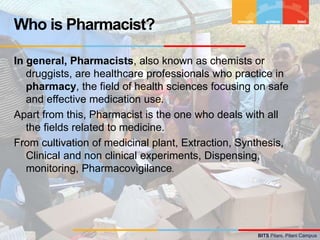
In general, Pharmacists, also known as chemists or
druggists, are healthcare professionals who practice in
pharmacy, the field of health sciences focusing on safe
and effective medication use.
Apart from this, Pharmacist is the one who deals with all
the fields related to medicine.
From cultivation of medicinal plant, Extraction, Synthesis,
Clinical and non clinical experiments, Dispensing,
monitoring, Pharmacovigilance.
Who is Pharmacist?
BITS Pilani, Pilani Campus
 Community Pharmacy
 Clinical Pharmacy
 Hospital Pharmacy
 Industrial pharmacy
 Academic Pharmacy
 Regulatory Pharmacy
 Research and development
 Herbal Pharmacy
 And many more
Role Of Pharmacist
BITS Pilani, Pilani Campus
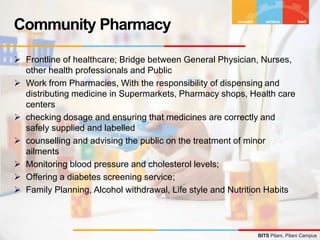
 Frontline of healthcare; Bridge between General Physician, Nurses,
other health professionals and Public
 Work from Pharmacies, With the responsibility of dispensing and
distributing medicine in Supermarkets, Pharmacy shops, Health care
centers
 checking dosage and ensuring that medicines are correctly and
safely supplied and labelled
 counselling and advising the public on the treatment of minor
ailments
 Monitoring blood pressure and cholesterol levels;
 Offering a diabetes screening service;
 Family Planning, Alcohol withdrawal, Life style and Nutrition Habits
Community Pharmacy
BITS Pilani, Pilani Campus
 Work in larger hospital and institutional pharmacies, frequently Interact with
prescribers and Doctors.
 MAINTAINS medical records, influence the SELECTION OF DRUGS and
dosage regimens, MONITOR patient compliance and therapeutic response
to drugs, and to recognize and report ADVERSE DRUG REACTIONS;
 serves as a member of policy-making committees, including those
concerned with drug selection, the use of antibiotics, and hospital infections
(DRUG AND THERAPEUTICS COMMITTEE) and thereby influences
the preparation and composition of an essential-drug list or formulary;
 EDUCATE other health professionals about the rational use of drugs;
 PARTICIPATES in studies to determine the beneficial or adverse effects
of drugs, and is involved in the analysis of drugs in body fluids;
 PROCUREMENT and INVENTORY management of drugs
 Planning and implementation of CLINICAL TRIALS.
Hospital Pharmacy
BITS Pilani, Pilani Campus
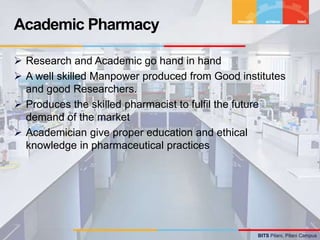
 Research and Academic go hand in hand
 A well skilled Manpower produced from Good institutes
and good Researchers.
 Produces the skilled pharmacist to fulfil the future
demand of the market
 Academician give proper education and ethical
knowledge in pharmaceutical practices
Academic Pharmacy
BITS Pilani, Pilani Campus
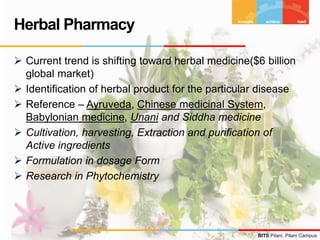
 Current trend is shifting toward herbal medicine($6 billion
global market)
 Identification of herbal product for the particular disease
 Reference – Ayruveda, Chinese medicinal System,
Babylonian medicine, Unani and Siddha medicine
 Cultivation, harvesting, Extraction and purification of
Active ingredients
 Formulation in dosage Form
 Research in Phytochemistry
Herbal Pharmacy
BITS Pilani, Pilani Campus
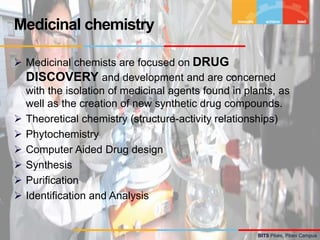
 Medicinal chemists are focused on DRUG
DISCOVERY and development and are concerned
with the isolation of medicinal agents found in plants, as
well as the creation of new synthetic drug compounds.
 Theoretical chemistry (structure-activity relationships)
 Phytochemistry
 Computer Aided Drug design
 Synthesis
 Purification
 Identification and Analysis
Medicinal chemistry
BITS Pilani, Pilani Campus
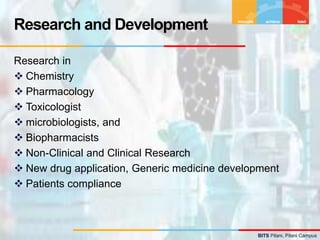
Research in
 Chemistry
 Pharmacology
 Toxicologist
 microbiologists, and
 Biopharmacists
 Non-Clinical and Clinical Research
 New drug application, Generic medicine development
 Patients compliance
Research and Development
BITS Pilani, Pilani Campus
Formulation development
Manufacture, Quality control and quality
assurance
Drug information
Patent applications and drug registration
Regulatory Affairs
Sales and marketing
Management
Industrial Pharmacy
BITS Pilani, Pilani Campus
Health and drug policy
Management
Administration
Educational policy
Regulatory and enforcement agencies
Professional registration authorities
International agencies and professional bodies
Regulatory Pharmacy
BITS Pilani, Pilani Campus
 Pharmacy Marketing
 Drug information pharmacist
 Nuclear pharmacist
 Pharmacist Clinical toxicologist
 Veterinary pharmacist
 Intellectual Property Rights
Others
BITS Pilani, Pilani Campus
www.pharmasastra.blogspot.com

Role of pharmacist

  • 1.
    BITS Pilani, PilaniCampus “Pharmacist: your partner in health”
  • 2.
    BITS Pilani, PilaniCampus In general, Pharmacists, also known as chemists or druggists, are healthcare professionals who practice in pharmacy, the field of health sciences focusing on safe and effective medication use. Apart from this, Pharmacist is the one who deals with all the fields related to medicine. From cultivation of medicinal plant, Extraction, Synthesis, Clinical and non clinical experiments, Dispensing, monitoring, Pharmacovigilance. Who is Pharmacist?
  • 3.
    BITS Pilani, PilaniCampus  Community Pharmacy  Clinical Pharmacy  Hospital Pharmacy  Industrial pharmacy  Academic Pharmacy  Regulatory Pharmacy  Research and development  Herbal Pharmacy  And many more Role Of Pharmacist
  • 4.
    BITS Pilani, PilaniCampus  Frontline of healthcare; Bridge between General Physician, Nurses, other health professionals and Public  Work from Pharmacies, With the responsibility of dispensing and distributing medicine in Supermarkets, Pharmacy shops, Health care centers  checking dosage and ensuring that medicines are correctly and safely supplied and labelled  counselling and advising the public on the treatment of minor ailments  Monitoring blood pressure and cholesterol levels;  Offering a diabetes screening service;  Family Planning, Alcohol withdrawal, Life style and Nutrition Habits Community Pharmacy
  • 5.
    BITS Pilani, PilaniCampus  Work in larger hospital and institutional pharmacies, frequently Interact with prescribers and Doctors.  MAINTAINS medical records, influence the SELECTION OF DRUGS and dosage regimens, MONITOR patient compliance and therapeutic response to drugs, and to recognize and report ADVERSE DRUG REACTIONS;  serves as a member of policy-making committees, including those concerned with drug selection, the use of antibiotics, and hospital infections (DRUG AND THERAPEUTICS COMMITTEE) and thereby influences the preparation and composition of an essential-drug list or formulary;  EDUCATE other health professionals about the rational use of drugs;  PARTICIPATES in studies to determine the beneficial or adverse effects of drugs, and is involved in the analysis of drugs in body fluids;  PROCUREMENT and INVENTORY management of drugs  Planning and implementation of CLINICAL TRIALS. Hospital Pharmacy
  • 6.
    BITS Pilani, PilaniCampus  Research and Academic go hand in hand  A well skilled Manpower produced from Good institutes and good Researchers.  Produces the skilled pharmacist to fulfil the future demand of the market  Academician give proper education and ethical knowledge in pharmaceutical practices Academic Pharmacy
  • 7.
    BITS Pilani, PilaniCampus  Current trend is shifting toward herbal medicine($6 billion global market)  Identification of herbal product for the particular disease  Reference – Ayruveda, Chinese medicinal System, Babylonian medicine, Unani and Siddha medicine  Cultivation, harvesting, Extraction and purification of Active ingredients  Formulation in dosage Form  Research in Phytochemistry Herbal Pharmacy
  • 8.
    BITS Pilani, PilaniCampus  Medicinal chemists are focused on DRUG DISCOVERY and development and are concerned with the isolation of medicinal agents found in plants, as well as the creation of new synthetic drug compounds.  Theoretical chemistry (structure-activity relationships)  Phytochemistry  Computer Aided Drug design  Synthesis  Purification  Identification and Analysis Medicinal chemistry
  • 9.
    BITS Pilani, PilaniCampus Research in  Chemistry  Pharmacology  Toxicologist  microbiologists, and  Biopharmacists  Non-Clinical and Clinical Research  New drug application, Generic medicine development  Patients compliance Research and Development
  • 10.
    BITS Pilani, PilaniCampus Formulation development Manufacture, Quality control and quality assurance Drug information Patent applications and drug registration Regulatory Affairs Sales and marketing Management Industrial Pharmacy
  • 11.
    BITS Pilani, PilaniCampus Health and drug policy Management Administration Educational policy Regulatory and enforcement agencies Professional registration authorities International agencies and professional bodies Regulatory Pharmacy
  • 12.
    BITS Pilani, PilaniCampus  Pharmacy Marketing  Drug information pharmacist  Nuclear pharmacist  Pharmacist Clinical toxicologist  Veterinary pharmacist  Intellectual Property Rights Others
  • 13.
    BITS Pilani, PilaniCampus www.pharmasastra.blogspot.com

Editor's Notes

  • #5 Typical work activities Community pharmacists work in customer-facing roles and provide an increasing range of services. Their tasks involve: dispensing prescription medicines to the public; ensuring that different treatments are compatible; checking dosage and ensuring that medicines are correctly and safely supplied and labelled (pharmacists are legally responsible for any dispensing errors); supervising the preparation of any medicines (not all are supplied ready made-up by the manufacturer); keeping a register of controlled drugs for legal and stock control purposes; liaising with doctors about prescriptions; selling over-the-counter medicines; counselling and advising the public on the treatment of minor ailments; advising patients of any adverse side-effects of medicines or potential interactions with other medicines/treatments; preparing dosette and cassette boxes, usually for the elderly, but also for those with memory/learning difficulties or who have several combinations of tablets to take, where tablets are placed in compartments for specified days of the week; undertaking Medicine Use Reviews (MUR), an advanced service to help patients understand how their medicines work and why they have to take them; managing a needle and syringe exchange; measuring and fitting compression hosiery; monitoring blood pressure and cholesterol levels; offering a diabetes screening service; arranging the delivery of prescription medicines to patients; managing, supervising and training pharmacy support staff; budgeting and financial management; keeping up to date with current pharmacy practice, new drugs and their uses.
  • #8 Herbal medicines are in great demand and are used by approximately 80% of the world's population.[1] Their popularity is due largely to their presumed safety, efficacy, cultural acceptability, and lesser side effects compared with prescription medications; perhaps most important, they are viewed as cost effective and accessible
  • #12 Health and drug policy Each ministry of health has a section dealing with pharmaceutical affairs. In view of the importance of drugs in government health services, and of the related expertise within the pharmaceutical section, it is important that the pharmaceutical affairs section should have equal prominence with other sections of the ministry. Pharmacists in administration participate in formulating health and drug policies, particularly those on the selection, procurement and distribution of drugs. They serve as sources of information for health care professionals and the public, and participate in the preparation of pharmacopoeias and other official documents. They cooperate with educators and the professional body of pharmacists in establishing and modifying the curricula of schools of pharmacy and continuing education programmes. In some countries, pharmacists have roles in environmental health control and in control of the quality of food and of cosmetics and medical devices. Pharmacists do not perform these functions in all countries. A prerequisite to their widespread adoption is the involvement of pharmacists with the appropriate expertise in the determination and implementation of national health policy, which provides the context for policies related to drugs and pharmacy. In view of the special knowledge and expertise of pharmacists, they should be given the responsibility at a senior level for the determination and implementation of policy on drugs and pharmacy manpower and for the drafting and administration of legislation. Pharmacists in such senior positions should preferably have postgraduate training and a qualification in public health. In some countries, potent medicines and related products may be supplied or dispensed by non-pharmacists and without the supervision or control of pharmacists. For the safety of the public, such transactions should be performed or supervised by pharmacists, to ensure the supply of correct medicines of acceptable quality. In some countries the management of drug procurement and supply, and drug control, registration and enforcement, do not meet satisfactory standards. To achieve acceptable standards, pharmacists with suitable postgraduate training should be appointed to senior positions, and standards should be assured by comprehensive pharmaceutical legislation and its effective enforcement. Management Government-employed pharmacists are responsible for drug management, which includes the selection of essential drugs, the determination of drug requirements, the procurement and distribution of drugs and their rational use, as well as the design and use of information systems. Also, they collect and collate data required by their national government agencies and by international bodies, such as the International Narcotics Control Board. Administration In some countries, tenders for the import and supply of drugs are awarded to non-pharmaceutical businesses. The management of such businesses is not capable of applying professional standards and is influenced solely by commercial considerations. Procedures for inviting, accepting and awarding tenders for the supply of pharmaceuticals should be separate from those for non-professional commercial tenders, and should be managed by pharmacists. Educational policy Pharmacists cooperate with educators in establishing and implementing policies with regard to undergraduate and continuing education, in-service training, and other aspects of manpower development. Regulatory and enforcement agencies Pharmacists are employed by regulatory agencies concerned with the approval, registration and quality control of drugs, cosmetics and medical devices, and with enforcement agencies, including customs departments, that control the distribution of drugs through licit and illicit channels, and as inspectors of the manufacture, importation, distribution and sale of drugs. Professional registration authorities Pharmacists are prominently engaged in agencies, such as boards of pharmacy, that establish criteria for the registration of pharmacists or licensing requirements, register pharmacies and pharmacists, and monitor the way pharmacies are operated and the professional conduct of pharmacists. International agencies and professional bodies Pharmacists employed in these bodies perform a variety of technical and administrative functions in professional bodies and in drug- and health-related agencies, e.g., the World Health Organization, the International Narcotics Control Board, the United Nations Division of Narcotic Drugs, the United Nations Commission on Narcotic Drugs, the United Nations Fund for Drug Abuse Control, Interpol, national pharmacopoeial committees, and pharmaceutical societies.