Downloaded 1,110 times

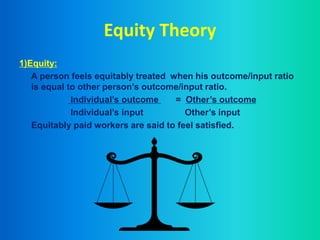
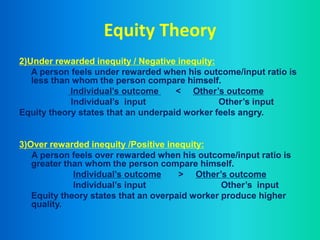
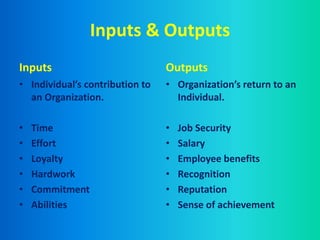
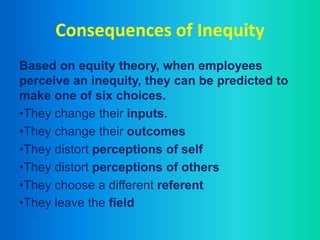


Equity theory, developed by John Stacey Adams in 1963, posits that employees evaluate their job satisfaction based on the ratio of their inputs to outcomes relative to others. Employees feel equitably treated when their input/output ratio matches that of their peers, while under-rewarded or over-rewarded inequity can lead to feelings of anger or a perceived increase in performance, respectively. When inequity is sensed, employees may adjust their inputs, outcomes, or perceptions to restore balance.


