Dr. NITIN SHARMA
ASSISTANT PROFESSOR-HR, TIMSR
MUMBAI
By: Dr NITIN SHARMA
By: Dr NITIN SHARMA
By: Dr NITIN SHARMA
By: Dr NITIN SHARMA
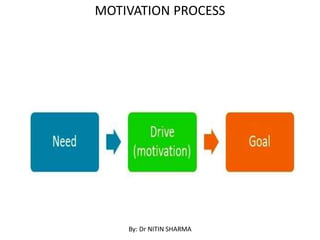
MOTIVATION PROCESS
By: Dr NITIN SHARMA
By: Dr NITIN SHARMA
By: Dr NITIN SHARMA
By: Dr NITIN SHARMA
• You have to tell in the class
about the content theory
and process theory verbally.
To make impact on
students.
By: Dr NITIN SHARMA
By: Dr NITIN SHARMA
By: Dr NITIN SHARMA
By: Dr NITIN SHARMA
By: Dr NITIN SHARMA
By: Dr NITIN SHARMA
By: Dr NITIN SHARMA
By: Dr NITIN SHARMA
By: Dr NITIN SHARMA
By: Dr NITIN SHARMA
By: Dr NITIN SHARMA
By: Dr NITIN SHARMA
By: Dr NITIN SHARMA
By: Dr NITIN SHARMA
By: Dr NITIN SHARMA
• Vroom realized that employee’s performance is
based on individual factors.
(Personality, Skills, Knowledge, Experience)
By: Dr NITIN SHARMA
By: Dr NITIN SHARMA
EQUITY THEORY
By: Dr NITIN SHARMA
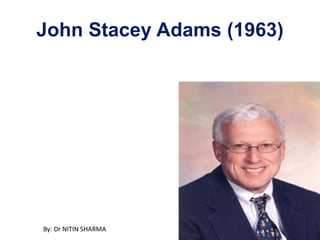
John Stacey Adams (1963)
By: Dr NITIN SHARMA
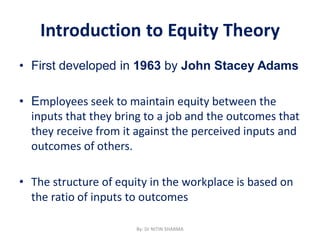
Introduction to Equity Theory
• First developed in 1963 by John Stacey Adams
• Employees seek to maintain equity between the
inputs that they bring to a job and the outcomes that
they receive from it against the perceived inputs and
outcomes of others.
• The structure of equity in the workplace is based on
the ratio of inputs to outcomes
By: Dr NITIN SHARMA
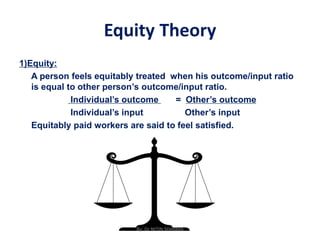
Equity Theory
1)Equity:
A person feels equitably treated when his outcome/input ratio
is equal to other person’s outcome/input ratio.
Individual’s outcome = Other’s outcome
Individual’s input Other’s input
Equitably paid workers are said to feel satisfied.
By: Dr NITIN SHARMA
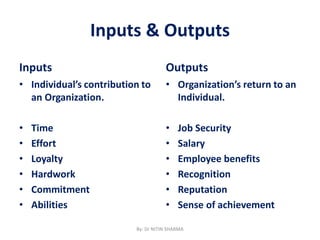
Inputs & Outputs
Inputs
• Individual’s contribution to
an Organization.
• Time
• Effort
• Loyalty
• Hardwork
• Commitment
• Abilities
Outputs
• Organization’s return to an
Individual.
• Job Security
• Salary
• Employee benefits
• Recognition
• Reputation
• Sense of achievement
By: Dr NITIN SHARMA
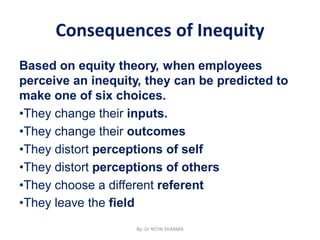
Consequences of Inequity
Based on equity theory, when employees
perceive an inequity, they can be predicted to
make one of six choices.
•They change their inputs.
•They change their outcomes
•They distort perceptions of self
•They distort perceptions of others
•They choose a different referent
•They leave the field
By: Dr NITIN SHARMA

Organizational Behaviour : Motivation