Motivation Needs, Job Design, Intrinsic Motivation, and SatisfactionKaylea McKean, Whitney Backstrom, Joe Frederickson, Nina Kaczrowski,, Chris Smith, Lauren Rembowicz
What motivates you?
A Job Performance Model of MotivationIndividual InputsJob ContextMotivated Behavior  Focus
  Quality
  Duration
  Influence PerformanceMotivational Processes  Arousal
  Attention and Direction
  Intensity and PersistenceNeed Theories of MotivationWhat is need?
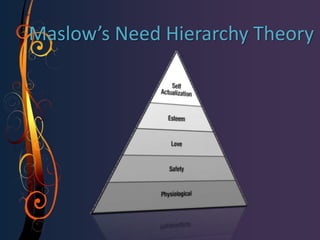
Maslow’s Need Hierarchy Theory
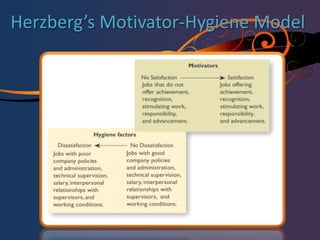
Herzberg’s Motivator-Hygiene Model
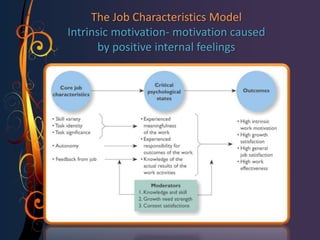
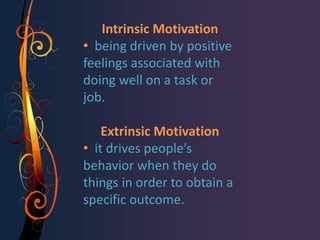
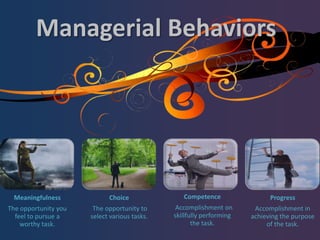
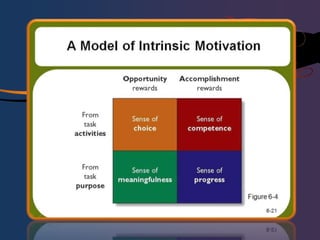
The Job Characteristics ModelIntrinsic motivation- motivation caused by positive internal feelings
Biological and Perceptual-Motor ApproachesBiological Approach- focuses on designing the work environment to reduce employee’s physical strain, fatigue and health constraints.
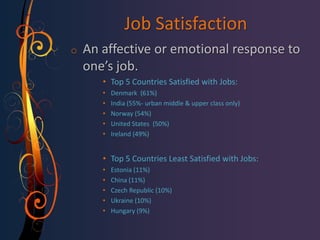
  Perceptual-Motor Approach- emphasizes the reliability of work outcomes by examining error rates accidents, and worker feedback about facilities and equipment.  Job SatisfactionAn affective or emotional response to one’s job. Top 5 Countries Satisfied with Jobs:Denmark  (61%)India (55%- urban middle & upper class only)Norway (54%)United States  (50%)Ireland (49%)Top 5 Countries Least Satisfied with Jobs:Estonia (11%)China (11%)Czech Republic (10%)Ukraine (10%)Hungary (9%)
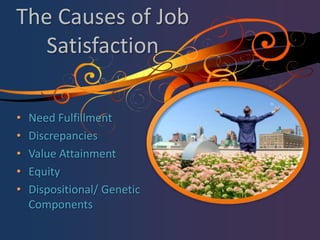
The Causes of Job SatisfactionNeed FulfillmentDiscrepanciesValue AttainmentEquityDispositional/ Genetic Components
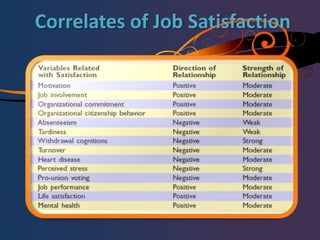
Correlates of Job Satisfaction
Major Correlates and Consequences of Job Satisfaction  Positive Job Correlates
  Motivation
  Job Involvement
  Organizational Commitment
  Organizational Citizenship   Behavior (OCBs)
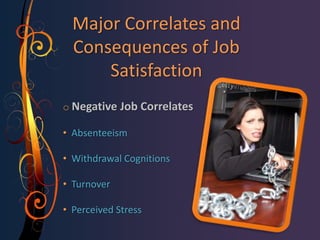
Major Correlates and Consequences of Job SatisfactionNegative Job Correlates

Management Motivation Presentation