Introduction to Tissues:
Epithelium
BIO 351
Dr. Barbara T. Wizer
Introduction
• Tissues are groups of cells that are
similar in structure and function.
• There are four primary tissue types:
epithelial (covering), connective
(support), nervous (control), and
muscular (movement).
Features of Epithelium
• An epithelium is a sheet of cells that
covers a body surface or lines a cavity.
• Epithelium occurs in the body as a
covering or lining epithelium, and as
glandular epithelium.
Epithelial Characteristics
• Composed of closely packed cells with little
extracellular material between.
• Adjacent epithelial cells are bound together by
specialized contacts such as desmosomes and
tight junctions.
• Exhibits polarity by having an apical surface
(free) and a basal surface (attached).
• Supported by the underlying connective tissue.
• Innervated but avascular.
• Has a high regeneration capacity.
Classification of Epithelia
• Each epithelial tissue is given two
names.
–The first name indicates the number
of layers present, either simple (one)
or stratified (more than one).
–The second name describes the
shape of the cells.
Simple Epithelia
• Simple Epithelia are mostly concerned
with absorption, secretion, and filtration.
• Simple squamous epithelium is a single
layer of fish scale-shaped cells.
• Simple squamous epithelium – found in
places where substances have to cross
the epithelium quickly, such as the air
sacs (alveoli) of lungs and lining of
blood vessels
Simple Squamous Epithelium
• Common locations:
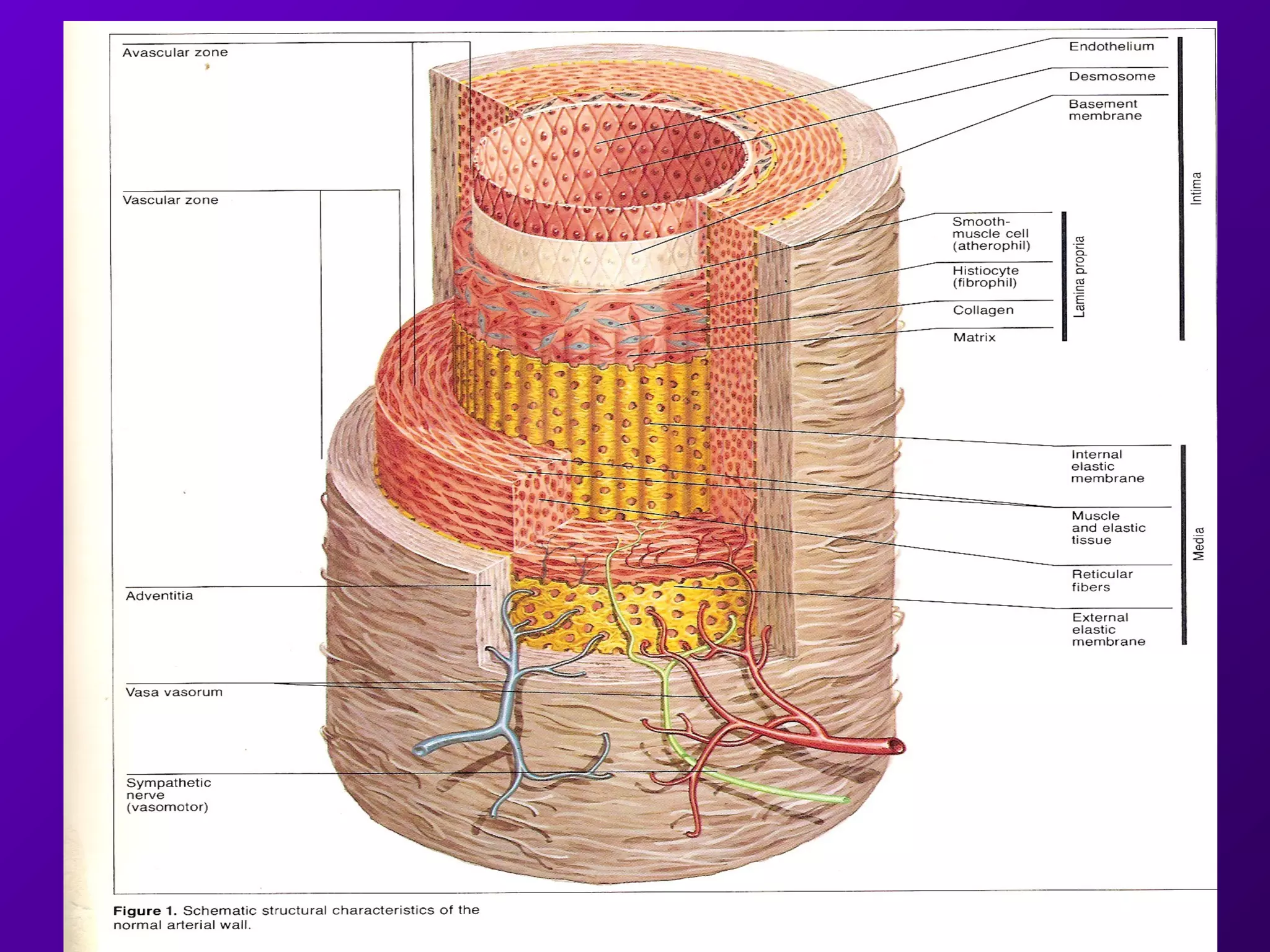
– Lining of blood vessels, termed endothelium
– Lining of the heart, termed endocardium
– Serous membranes (pericardium, pleura, and peritoneum)
that line closed body cavities, termed mesothelium
– Alveoli of lungs
Endothelium of Blood vessel
Note flattened
nuclei and
indistinct
cytoplasm
characteristic of
simple
squamous
epithelium
Alveolar Epithelium (Lung)
Clinical Correlation
• Why is a simple squamous epithelium an
ideal design for both capillaries as well as
alveolar epithelium?
Simple Epithelia cont.
• Simple cuboidal epithelium is a single layer of
cube-shaped cells forming secretory portion
and the ducts of glands, certain respiratory
passages, and many kidney tubules.
• Simple columnar epithelium is a single layer
of column-shaped cells that line most of the
digestive tract, certain respiratory passages,
and the genitourinary tract. Goblet cells may
be present.
• The apical surfaces of simple columnar
epithelial cells often have cilia or microvilli
Simple Cuboidal Epithelium
• Common locations -
– Glandular epithelium (e.g. thyroid) and ducts
– Renal tubules
– Surface of ovary (“germinal epithelium”)
Simple Cuboidal Epithelium
Thyroid Gland
Notice two things:
1) The centrally
located, spherical
cellular nuclei help to
identify the type of
epithelium
2) The glandular
lumen is filled with a
protein (colloid)
which is the
precursor to the
thyroid hormones (T3
and T4)
Simple Cuboidal Epithelium
Renal Tubules
Note the round,
spherical nuclei
characteristic of
simple cuboidal
epithelium
Laboratory Tip
When viewing a
hollow, tubular
structure under
the microscope,
remember that the
shape of the
structure will
depend upon the
plane of section.
Simple Columnar Epithelium
Small Intestine
Notice that
the nuclei
tend to be
oval or
oblong and
located
closer to the
basal
surface of
the cells.
Stratified Epithelia
• Stratified epithelia’s main function is
protection.
• Stratified squamous epithelium is
composed of several layers with the
cells on the free surface being
squamous-shaped and the underlying
cells being cuboidal or columnar in
shape.
Stratified Squamous Epithelium
• Basal layer of cuboidal or columnar cells which
become flatter and more typically squamous as the
move progressively toward the surface
• Found in locations subject to friction or attrition:
– Skin
– Mouth
– Esophagus
– Anal Canal
– Vagina
Stratified Squamous
Epithelium
To differentiate
stratified squamous
epithelium form
transitional
epithelium (it’s
“look-alike”),
examine the cells at
the surface.
Stratified squamous
epithelium will
exhibit flattened
squamous cells
whereas the surface
cells of transitional
epithelium are more
rounded and dome-
shaped.
Stratified Epithelia
• Stratified cuboidal epithelium is rare,
found mostly in the ducts of some of the
larger glands.
• Stratified columnar epithelium is found
in limited distribution with small
amounts in the pharynx, male urethra,
and lining some glandular ducts.
Stratified Cuboidal Epithelium
• Locations:
– Sweat glands, developing ovarian follicles
– Lining of larger ducts of mammary glands, sweat
glands, salivary glands, and pancreas
Pseudostratified Columnar
Epithelia
• Pseudostratified columnar epithelium
contains cells of varying heights giving
the false impression of the presence of
many layers.
Pseudostratified Columnar
Epithelium
• Although the nuclei appear to lie in various
layers, all cells are attached to the basal lamina
(though some do not reach the surface)
• Found along the linings of the respiratory tract
• Epithelium is ciliated and includes goblet cells
• Responsible for the “mucociliary elevator”
which protects the terminal airways and alveoli
Ciliated Pseudostratified
Columnar Epithelium
Ciliated Pseudostratified Columnar
Epithelium
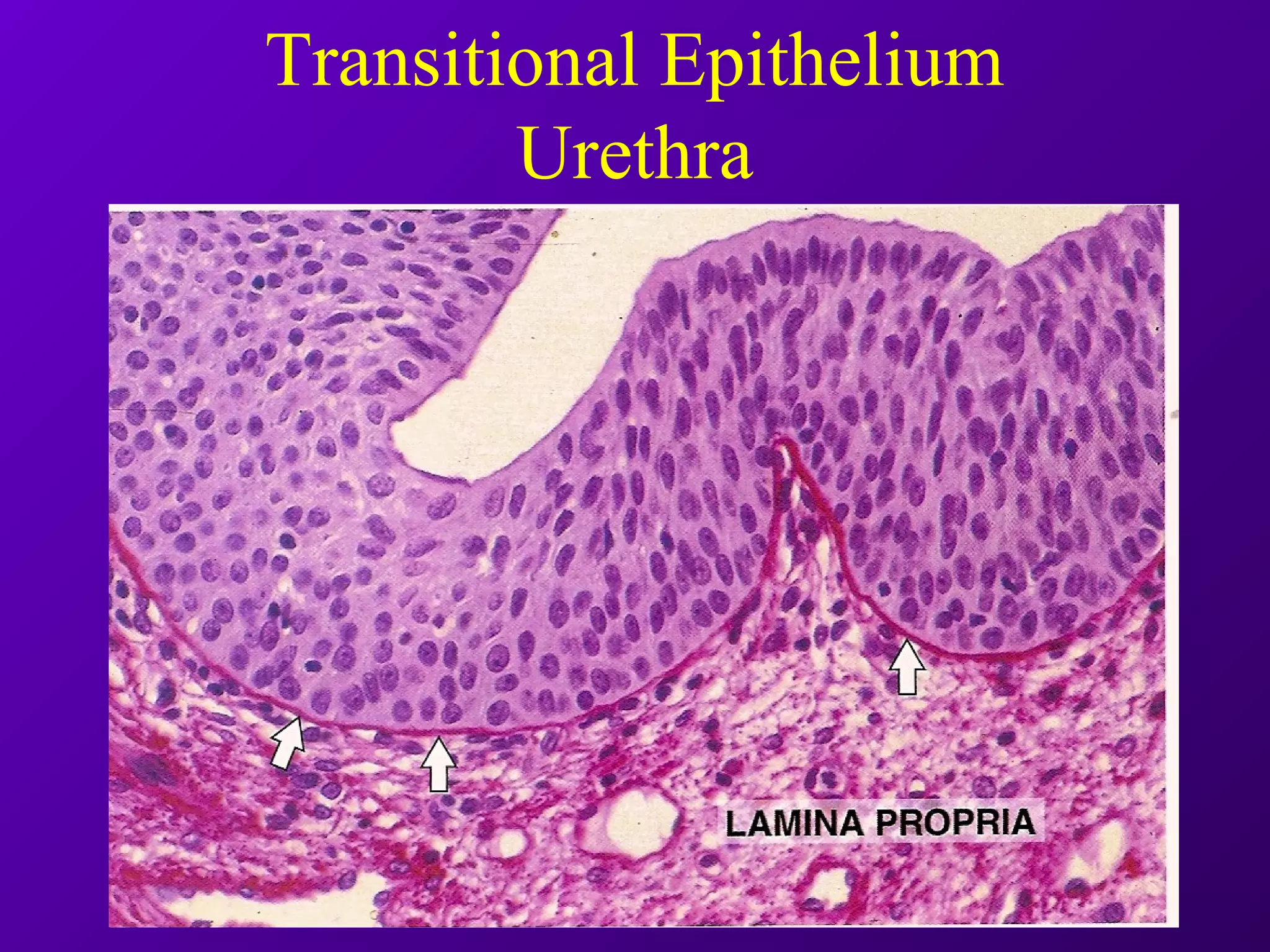
Transitional Epithelium
• Transitional epithelium forms the lining of the
hollow organs of the urinary system that stretch as
they fill (renal pelvis, ureter, bladder, upper urethra)
• Stratified epithelium with dome-shaped surface cells
• When the bladder is empty, the epithelium is at least
5-6 cells thick with rounded superficial cells that
bulge into the lumen. When the epithelium is
stretched as when the bladder is full of urine, the
epithelium is only 3-4 cells thick and the superficial
cells become more squamous in appearance
Transitional Epithelium
Urethra
Transitional
Epithelium
Bladder
Nondistended
(Empty)
Distended
(Full)
Basal Lamina & Basement
Membrane
• The basal surface of epithelial cells rests upon a basal
lamina which anchors the epithelium to the underlying
connective tissue (lamina propria)
• The basal lamina is an organized sheet of organic
molecules (including collagen), most of which are
synthesized by the epithelial cells, visible by EM
• Some texts use the term basal lamina
interchangeably with basement membrane. Others
reserve the term basement membrane for a thicker
structure composed of the basal lamina and reticular
lamina (a layer of anchoring reticular fibers attaching
the basal lamina to the underlying connective tissue)
which is visible using specific staining techniques by
LM
Basement Membrane
Apical Surface Modifications:
Microvilli
• Microvilli – fingerlike projections of plasma
membrane extending from the apical surface of
epithelial cells into a lumen to increase surface
area for absorption.
• Under light microscopy, the microvilli form a
striated apical border referred to as a “brush
border”
• Common locations: simp. cuboidal cells of
some renal tubules and simp. columnar cells of
small intestine
Small Intestine
Simple Columnar Epithelium w/ Brush Border
Apical Surface Modifications:
Cilia
• Cilia – cylindrical structures on the apical
surface of some epithelial cells that exhibit
coordinated wavelike motion to propel a
current of fluid or mucus in one direction over
the epithelial surface
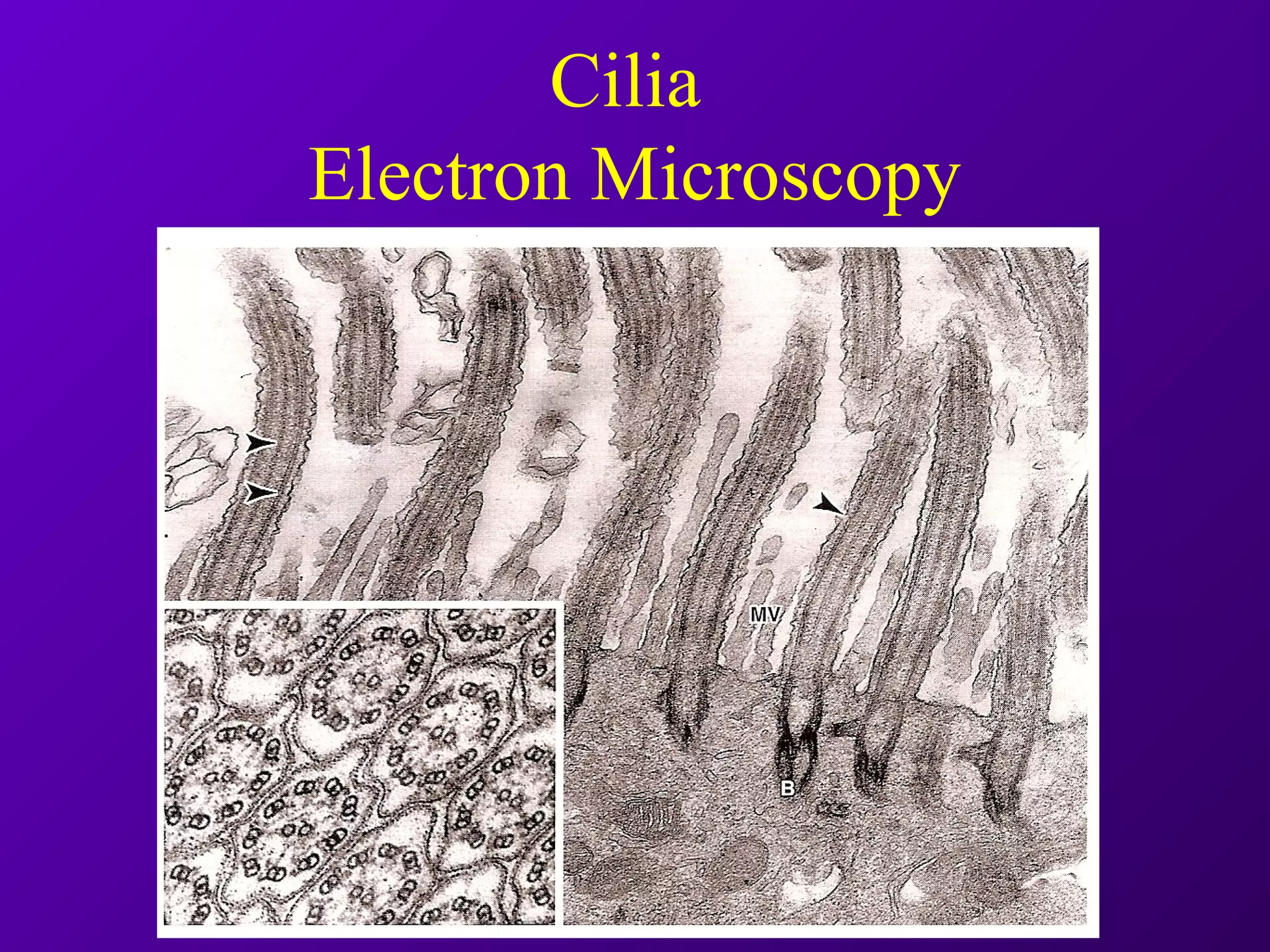
• Under EM, exhibit 9 + 2 arrangement of
microtubules and are attached to basal bodies
just beneath the cell membrane
• Common locations: respiratory epithelium and
fallopian tube
Cilia on the surface of the
pseudostratified columnar
epithelium of the trachea
Cilia
Electron Microscopy
Goblet Cells
• Goblet Cells – epithelial cells that produce
and secrete large amounts of mucus
• Commonly seen in the simple columnar
epithelium that lines the intestines and the
pseudostratified epithelium that lines the
respiratory tract
Epithelial Membranes
• Thin structures composed of epithelium and underlying
connective tissue (C.T.) covering body surfaces and
lining body cavities
• Three major types:
1) Serous membranes – line body cavities that do not
open to the outside and also cover the organs within
these cavities. The epithelium is called a
“mesothelium”.
2) Mucous membranes – line the cavities and organs
that open to the outside of the body. Goblet cells within
mucous membranes secrete mucus.
3) Cutaneous membrane – “skin”; covers the surface of
the body.
Glandular Epithelium
• Cells derived from surface epithelium which are
specialized to produce secretions
• Unicellular vs multicellular glands
• Endocrine glands – ductless glands, connection to
surface epithelium is lost during fetal development
and secretions (“hormones”) are excreted directly
into bloodstream
• Exocrine glands – connection with surface
epithelium is transformed into ducts which carry
secretions onto surface and/or into a cavity (lumen)
Epithelial Slides Studied in Lab
• Simple squamous epithelium
– polar view--mesothelium
– lung alveoli
– Bowman’s capsule of the kidney
• Simple cuboidal epithelium
– thyroid follicles
– kidney tubules
• Simple columnar epithelium
– duodenum
Epithelial Slides Studied in Lab
• Pseudostratified ciliated columnar
epithelium
– trachea
• Stratified squamous epithelium
– esophagus
• Transitional epithelium
– Urinary bladder
trachea
Epithelial tissue (2011)

Epithelial tissue (2011)

  • 1.
  • 2.
    Introduction • Tissues aregroups of cells that are similar in structure and function. • There are four primary tissue types: epithelial (covering), connective (support), nervous (control), and muscular (movement).
  • 3.
    Features of Epithelium •An epithelium is a sheet of cells that covers a body surface or lines a cavity. • Epithelium occurs in the body as a covering or lining epithelium, and as glandular epithelium.
  • 4.
    Epithelial Characteristics • Composedof closely packed cells with little extracellular material between. • Adjacent epithelial cells are bound together by specialized contacts such as desmosomes and tight junctions. • Exhibits polarity by having an apical surface (free) and a basal surface (attached). • Supported by the underlying connective tissue. • Innervated but avascular. • Has a high regeneration capacity.
  • 5.
    Classification of Epithelia •Each epithelial tissue is given two names. –The first name indicates the number of layers present, either simple (one) or stratified (more than one). –The second name describes the shape of the cells.
  • 6.
    Simple Epithelia • SimpleEpithelia are mostly concerned with absorption, secretion, and filtration. • Simple squamous epithelium is a single layer of fish scale-shaped cells. • Simple squamous epithelium – found in places where substances have to cross the epithelium quickly, such as the air sacs (alveoli) of lungs and lining of blood vessels
  • 7.
    Simple Squamous Epithelium •Common locations: – Lining of blood vessels, termed endothelium – Lining of the heart, termed endocardium – Serous membranes (pericardium, pleura, and peritoneum) that line closed body cavities, termed mesothelium – Alveoli of lungs
  • 8.
    Endothelium of Bloodvessel Note flattened nuclei and indistinct cytoplasm characteristic of simple squamous epithelium
  • 10.
  • 11.
    Clinical Correlation • Whyis a simple squamous epithelium an ideal design for both capillaries as well as alveolar epithelium?
  • 12.
    Simple Epithelia cont. •Simple cuboidal epithelium is a single layer of cube-shaped cells forming secretory portion and the ducts of glands, certain respiratory passages, and many kidney tubules. • Simple columnar epithelium is a single layer of column-shaped cells that line most of the digestive tract, certain respiratory passages, and the genitourinary tract. Goblet cells may be present. • The apical surfaces of simple columnar epithelial cells often have cilia or microvilli
  • 13.
    Simple Cuboidal Epithelium •Common locations - – Glandular epithelium (e.g. thyroid) and ducts – Renal tubules – Surface of ovary (“germinal epithelium”)
  • 14.
    Simple Cuboidal Epithelium ThyroidGland Notice two things: 1) The centrally located, spherical cellular nuclei help to identify the type of epithelium 2) The glandular lumen is filled with a protein (colloid) which is the precursor to the thyroid hormones (T3 and T4)
  • 15.
    Simple Cuboidal Epithelium RenalTubules Note the round, spherical nuclei characteristic of simple cuboidal epithelium
  • 16.
    Laboratory Tip When viewinga hollow, tubular structure under the microscope, remember that the shape of the structure will depend upon the plane of section.
  • 17.
  • 18.
    Simple Columnar Epithelium SmallIntestine Notice that the nuclei tend to be oval or oblong and located closer to the basal surface of the cells.
  • 19.
    Stratified Epithelia • Stratifiedepithelia’s main function is protection. • Stratified squamous epithelium is composed of several layers with the cells on the free surface being squamous-shaped and the underlying cells being cuboidal or columnar in shape.
  • 20.
    Stratified Squamous Epithelium •Basal layer of cuboidal or columnar cells which become flatter and more typically squamous as the move progressively toward the surface • Found in locations subject to friction or attrition: – Skin – Mouth – Esophagus – Anal Canal – Vagina
  • 21.
    Stratified Squamous Epithelium To differentiate stratifiedsquamous epithelium form transitional epithelium (it’s “look-alike”), examine the cells at the surface. Stratified squamous epithelium will exhibit flattened squamous cells whereas the surface cells of transitional epithelium are more rounded and dome- shaped.
  • 22.
    Stratified Epithelia • Stratifiedcuboidal epithelium is rare, found mostly in the ducts of some of the larger glands. • Stratified columnar epithelium is found in limited distribution with small amounts in the pharynx, male urethra, and lining some glandular ducts.
  • 23.
    Stratified Cuboidal Epithelium •Locations: – Sweat glands, developing ovarian follicles – Lining of larger ducts of mammary glands, sweat glands, salivary glands, and pancreas
  • 24.
    Pseudostratified Columnar Epithelia • Pseudostratifiedcolumnar epithelium contains cells of varying heights giving the false impression of the presence of many layers.
  • 25.
    Pseudostratified Columnar Epithelium • Althoughthe nuclei appear to lie in various layers, all cells are attached to the basal lamina (though some do not reach the surface) • Found along the linings of the respiratory tract • Epithelium is ciliated and includes goblet cells • Responsible for the “mucociliary elevator” which protects the terminal airways and alveoli
  • 26.
  • 27.
  • 28.
    Transitional Epithelium • Transitionalepithelium forms the lining of the hollow organs of the urinary system that stretch as they fill (renal pelvis, ureter, bladder, upper urethra) • Stratified epithelium with dome-shaped surface cells • When the bladder is empty, the epithelium is at least 5-6 cells thick with rounded superficial cells that bulge into the lumen. When the epithelium is stretched as when the bladder is full of urine, the epithelium is only 3-4 cells thick and the superficial cells become more squamous in appearance
  • 29.
  • 30.
  • 31.
    Basal Lamina &Basement Membrane • The basal surface of epithelial cells rests upon a basal lamina which anchors the epithelium to the underlying connective tissue (lamina propria) • The basal lamina is an organized sheet of organic molecules (including collagen), most of which are synthesized by the epithelial cells, visible by EM • Some texts use the term basal lamina interchangeably with basement membrane. Others reserve the term basement membrane for a thicker structure composed of the basal lamina and reticular lamina (a layer of anchoring reticular fibers attaching the basal lamina to the underlying connective tissue) which is visible using specific staining techniques by LM
  • 32.
  • 33.
    Apical Surface Modifications: Microvilli •Microvilli – fingerlike projections of plasma membrane extending from the apical surface of epithelial cells into a lumen to increase surface area for absorption. • Under light microscopy, the microvilli form a striated apical border referred to as a “brush border” • Common locations: simp. cuboidal cells of some renal tubules and simp. columnar cells of small intestine
  • 34.
    Small Intestine Simple ColumnarEpithelium w/ Brush Border
  • 35.
    Apical Surface Modifications: Cilia •Cilia – cylindrical structures on the apical surface of some epithelial cells that exhibit coordinated wavelike motion to propel a current of fluid or mucus in one direction over the epithelial surface • Under EM, exhibit 9 + 2 arrangement of microtubules and are attached to basal bodies just beneath the cell membrane • Common locations: respiratory epithelium and fallopian tube
  • 36.
    Cilia on thesurface of the pseudostratified columnar epithelium of the trachea
  • 37.
  • 38.
    Goblet Cells • GobletCells – epithelial cells that produce and secrete large amounts of mucus • Commonly seen in the simple columnar epithelium that lines the intestines and the pseudostratified epithelium that lines the respiratory tract
  • 39.
    Epithelial Membranes • Thinstructures composed of epithelium and underlying connective tissue (C.T.) covering body surfaces and lining body cavities • Three major types: 1) Serous membranes – line body cavities that do not open to the outside and also cover the organs within these cavities. The epithelium is called a “mesothelium”. 2) Mucous membranes – line the cavities and organs that open to the outside of the body. Goblet cells within mucous membranes secrete mucus. 3) Cutaneous membrane – “skin”; covers the surface of the body.
  • 40.
    Glandular Epithelium • Cellsderived from surface epithelium which are specialized to produce secretions • Unicellular vs multicellular glands • Endocrine glands – ductless glands, connection to surface epithelium is lost during fetal development and secretions (“hormones”) are excreted directly into bloodstream • Exocrine glands – connection with surface epithelium is transformed into ducts which carry secretions onto surface and/or into a cavity (lumen)
  • 42.
    Epithelial Slides Studiedin Lab • Simple squamous epithelium – polar view--mesothelium – lung alveoli – Bowman’s capsule of the kidney • Simple cuboidal epithelium – thyroid follicles – kidney tubules • Simple columnar epithelium – duodenum
  • 48.
    Epithelial Slides Studiedin Lab • Pseudostratified ciliated columnar epithelium – trachea • Stratified squamous epithelium – esophagus • Transitional epithelium – Urinary bladder
  • 49.

Editor's Notes

  • #44 Simple squamous
  • #45 Thyroid gland
  • #46 Thyroid gland
  • #47 Kidney tubule with basement membrane stained pink, simple cuboidal epithelium
  • #48 Goblet cells, microvilli
  • #50 Pseudostratified ciliated columnar epithelium
  • #51 Transitional cells from the urinary bladder
  • #52 esophagus
  • #53 Stratified squamous epithelium