Connective Tissue
Dr. Shahbaz Ahmad PT
DPT[UIPT][UOL]
MS-MSK-PT [UIPT][UOL]*
Lecturer [LIHS][LCPS]
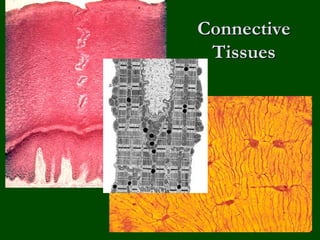
Connective
Tissues
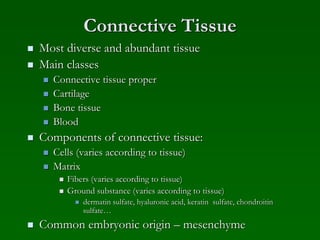
Connective Tissue
๏ฎ Most diverse and abundant tissue
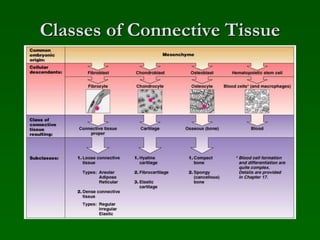
๏ฎ Main classes
๏ฎ Connective tissue proper
๏ฎ Cartilage
๏ฎ Bone tissue
๏ฎ Blood
๏ฎ Components of connective tissue:
๏ฎ Cells (varies according to tissue)
๏ฎ Matrix
๏ฎ Fibers (varies according to tissue)
๏ฎ Ground substance (varies according to tissue)
๏ฎ dermatin sulfate, hyaluronic acid, keratin sulfate, chondroitin
sulfateโ€ฆ
๏ฎ Common embryonic origin โ€“ mesenchyme
Classes of Connective Tissue
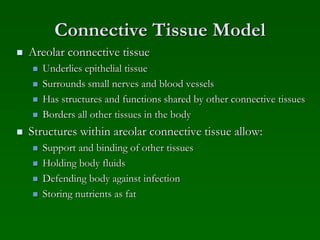
Connective Tissue Model
๏ฎ Areolar connective tissue
๏ฎ Underlies epithelial tissue
๏ฎ Surrounds small nerves and blood vessels
๏ฎ Has structures and functions shared by other connective tissues
๏ฎ Borders all other tissues in the body
๏ฎ Structures within areolar connective tissue allow:
๏ฎ Support and binding of other tissues
๏ฎ Holding body fluids
๏ฎ Defending body against infection
๏ฎ Storing nutrients as fat
Connective Tissue Proper
๏ฎ Loose Connective Tissue
๏ฎ Areolar
๏ฎ Reticular
๏ฎ Adipose
๏ฎ Dense Connective Tissue
๏ฎ Regular
๏ฎ Irregular
๏ฎ Elastic
Areolar Connective Tissue
๏ฎ Description
๏ฎ Gel-like matrix with:
๏ฎ all three fiber types (collagen, reticular, elastic) for support
๏ฎ Ground substance is made up by glycoproteins also made and screted by the
fibroblasts.
๏ฎ Cells โ€“ fibroblasts, macrophages, mast cells, white blood cells
๏ฎ Function
๏ฎ Wraps and cushions organs
๏ฎ Holds and conveys tissue fluid
๏ฎ Important role in inflammation Main battlefield in fight against infection
๏ฎ Defenders gather at infection sites
๏ฎ Macrophages
๏ฎ Plasma cells
๏ฎ Mast cells
๏ฎ Neutrophils, lymphocytes, and eosinophils
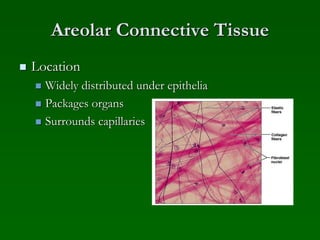
Areolar Connective Tissue
๏ฎ Location
๏ฎ Widely distributed under epithelia
๏ฎ Packages organs
๏ฎ Surrounds capillaries
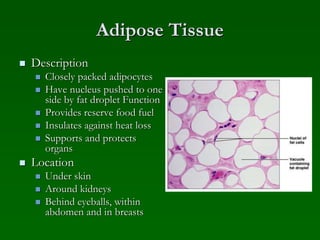
Adipose Tissue
๏ฎ Description
๏ฎ Closely packed adipocytes
๏ฎ Have nucleus pushed to one
side by fat droplet Function
๏ฎ Provides reserve food fuel
๏ฎ Insulates against heat loss
๏ฎ Supports and protects
organs
๏ฎ Location
๏ฎ Under skin
๏ฎ Around kidneys
๏ฎ Behind eyeballs, within
abdomen and in breasts
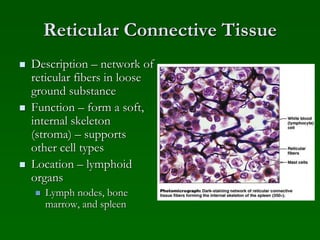
Reticular Connective Tissue
๏ฎ Description โ€“ network of
reticular fibers in loose
ground substance
๏ฎ Function โ€“ form a soft,
internal skeleton
(stroma) โ€“ supports
other cell types
๏ฎ Location โ€“ lymphoid
organs
๏ฎ Lymph nodes, bone
marrow, and spleen
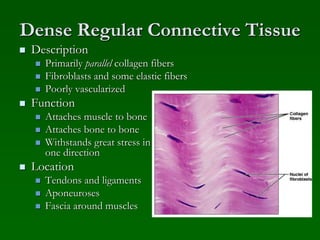
Dense Regular Connective Tissue
๏ฎ Description
๏ฎ Primarily parallel collagen fibers
๏ฎ Fibroblasts and some elastic fibers
๏ฎ Poorly vascularized
๏ฎ Function
๏ฎ Attaches muscle to bone
๏ฎ Attaches bone to bone
๏ฎ Withstands great stress in
one direction
๏ฎ Location
๏ฎ Tendons and ligaments
๏ฎ Aponeuroses
๏ฎ Fascia around muscles
Cartilage
๏ฎ Characteristics:
๏ฎ Firm, flexible tissue
๏ฎ Contains no blood vessels or nerves
๏ฎ Matrix contains up to 80% water
๏ฎ Cell type โ€“ chondrocyte
๏ฎ Types:
๏ฎ Hyaline
๏ฎ Elastic
๏ฎ Fibrocartilage
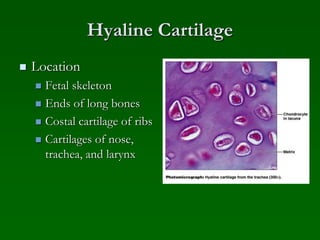
Hyaline Cartilage
๏ฎ Description
๏ฎ Imperceptible collagen fibers (hyaline = glassy)
๏ฎ Chodroblasts produce matrix
๏ฎ Chondrocytes lie in lacunae
๏ฎ Function
๏ฎ Supports and reinforces
๏ฎ Resilient cushion
๏ฎ Resists repetitive stress
Hyaline Cartilage
๏ฎ Location
๏ฎ Fetal skeleton
๏ฎ Ends of long bones
๏ฎ Costal cartilage of ribs
๏ฎ Cartilages of nose,
trachea, and larynx
Elastic Cartilage
๏ฎ Description
๏ฎ Similar to hyaline cartilage
๏ฎ More elastic fibers in matrix
๏ฎ Function
๏ฎ Maintains shape of structure
๏ฎ Allows great flexibility
๏ฎ Location
๏ฎ Supports external ear
๏ฎ Epiglottis
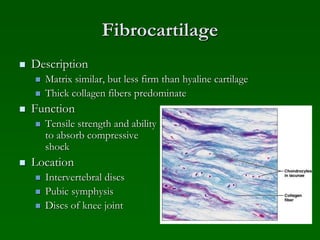
Fibrocartilage
๏ฎ Description
๏ฎ Matrix similar, but less firm than hyaline cartilage
๏ฎ Thick collagen fibers predominate
๏ฎ Function
๏ฎ Tensile strength and ability
to absorb compressive
shock
๏ฎ Location
๏ฎ Intervertebral discs
๏ฎ Pubic symphysis
๏ฎ Discs of knee joint

connective tissue

  • 1.
    Connective Tissue Dr. ShahbazAhmad PT DPT[UIPT][UOL] MS-MSK-PT [UIPT][UOL]* Lecturer [LIHS][LCPS]
  • 2.
  • 3.
    Connective Tissue ๏ฎ Mostdiverse and abundant tissue ๏ฎ Main classes ๏ฎ Connective tissue proper ๏ฎ Cartilage ๏ฎ Bone tissue ๏ฎ Blood ๏ฎ Components of connective tissue: ๏ฎ Cells (varies according to tissue) ๏ฎ Matrix ๏ฎ Fibers (varies according to tissue) ๏ฎ Ground substance (varies according to tissue) ๏ฎ dermatin sulfate, hyaluronic acid, keratin sulfate, chondroitin sulfateโ€ฆ ๏ฎ Common embryonic origin โ€“ mesenchyme
  • 4.
  • 5.
    Connective Tissue Model ๏ฎAreolar connective tissue ๏ฎ Underlies epithelial tissue ๏ฎ Surrounds small nerves and blood vessels ๏ฎ Has structures and functions shared by other connective tissues ๏ฎ Borders all other tissues in the body ๏ฎ Structures within areolar connective tissue allow: ๏ฎ Support and binding of other tissues ๏ฎ Holding body fluids ๏ฎ Defending body against infection ๏ฎ Storing nutrients as fat
  • 6.
    Connective Tissue Proper ๏ฎLoose Connective Tissue ๏ฎ Areolar ๏ฎ Reticular ๏ฎ Adipose ๏ฎ Dense Connective Tissue ๏ฎ Regular ๏ฎ Irregular ๏ฎ Elastic
  • 7.
    Areolar Connective Tissue ๏ฎDescription ๏ฎ Gel-like matrix with: ๏ฎ all three fiber types (collagen, reticular, elastic) for support ๏ฎ Ground substance is made up by glycoproteins also made and screted by the fibroblasts. ๏ฎ Cells โ€“ fibroblasts, macrophages, mast cells, white blood cells ๏ฎ Function ๏ฎ Wraps and cushions organs ๏ฎ Holds and conveys tissue fluid ๏ฎ Important role in inflammation Main battlefield in fight against infection ๏ฎ Defenders gather at infection sites ๏ฎ Macrophages ๏ฎ Plasma cells ๏ฎ Mast cells ๏ฎ Neutrophils, lymphocytes, and eosinophils
  • 8.
    Areolar Connective Tissue ๏ฎLocation ๏ฎ Widely distributed under epithelia ๏ฎ Packages organs ๏ฎ Surrounds capillaries
  • 9.
    Adipose Tissue ๏ฎ Description ๏ฎClosely packed adipocytes ๏ฎ Have nucleus pushed to one side by fat droplet Function ๏ฎ Provides reserve food fuel ๏ฎ Insulates against heat loss ๏ฎ Supports and protects organs ๏ฎ Location ๏ฎ Under skin ๏ฎ Around kidneys ๏ฎ Behind eyeballs, within abdomen and in breasts
  • 10.
    Reticular Connective Tissue ๏ฎDescription โ€“ network of reticular fibers in loose ground substance ๏ฎ Function โ€“ form a soft, internal skeleton (stroma) โ€“ supports other cell types ๏ฎ Location โ€“ lymphoid organs ๏ฎ Lymph nodes, bone marrow, and spleen
  • 11.
    Dense Regular ConnectiveTissue ๏ฎ Description ๏ฎ Primarily parallel collagen fibers ๏ฎ Fibroblasts and some elastic fibers ๏ฎ Poorly vascularized ๏ฎ Function ๏ฎ Attaches muscle to bone ๏ฎ Attaches bone to bone ๏ฎ Withstands great stress in one direction ๏ฎ Location ๏ฎ Tendons and ligaments ๏ฎ Aponeuroses ๏ฎ Fascia around muscles
  • 12.
    Cartilage ๏ฎ Characteristics: ๏ฎ Firm,flexible tissue ๏ฎ Contains no blood vessels or nerves ๏ฎ Matrix contains up to 80% water ๏ฎ Cell type โ€“ chondrocyte ๏ฎ Types: ๏ฎ Hyaline ๏ฎ Elastic ๏ฎ Fibrocartilage
  • 13.
    Hyaline Cartilage ๏ฎ Description ๏ฎImperceptible collagen fibers (hyaline = glassy) ๏ฎ Chodroblasts produce matrix ๏ฎ Chondrocytes lie in lacunae ๏ฎ Function ๏ฎ Supports and reinforces ๏ฎ Resilient cushion ๏ฎ Resists repetitive stress
  • 14.
    Hyaline Cartilage ๏ฎ Location ๏ฎFetal skeleton ๏ฎ Ends of long bones ๏ฎ Costal cartilage of ribs ๏ฎ Cartilages of nose, trachea, and larynx
  • 15.
    Elastic Cartilage ๏ฎ Description ๏ฎSimilar to hyaline cartilage ๏ฎ More elastic fibers in matrix ๏ฎ Function ๏ฎ Maintains shape of structure ๏ฎ Allows great flexibility ๏ฎ Location ๏ฎ Supports external ear ๏ฎ Epiglottis
  • 16.
    Fibrocartilage ๏ฎ Description ๏ฎ Matrixsimilar, but less firm than hyaline cartilage ๏ฎ Thick collagen fibers predominate ๏ฎ Function ๏ฎ Tensile strength and ability to absorb compressive shock ๏ฎ Location ๏ฎ Intervertebral discs ๏ฎ Pubic symphysis ๏ฎ Discs of knee joint

Editor's Notes