Presented By:
Jagan Kumar Ojha
M.Sc. Tutor, SNC
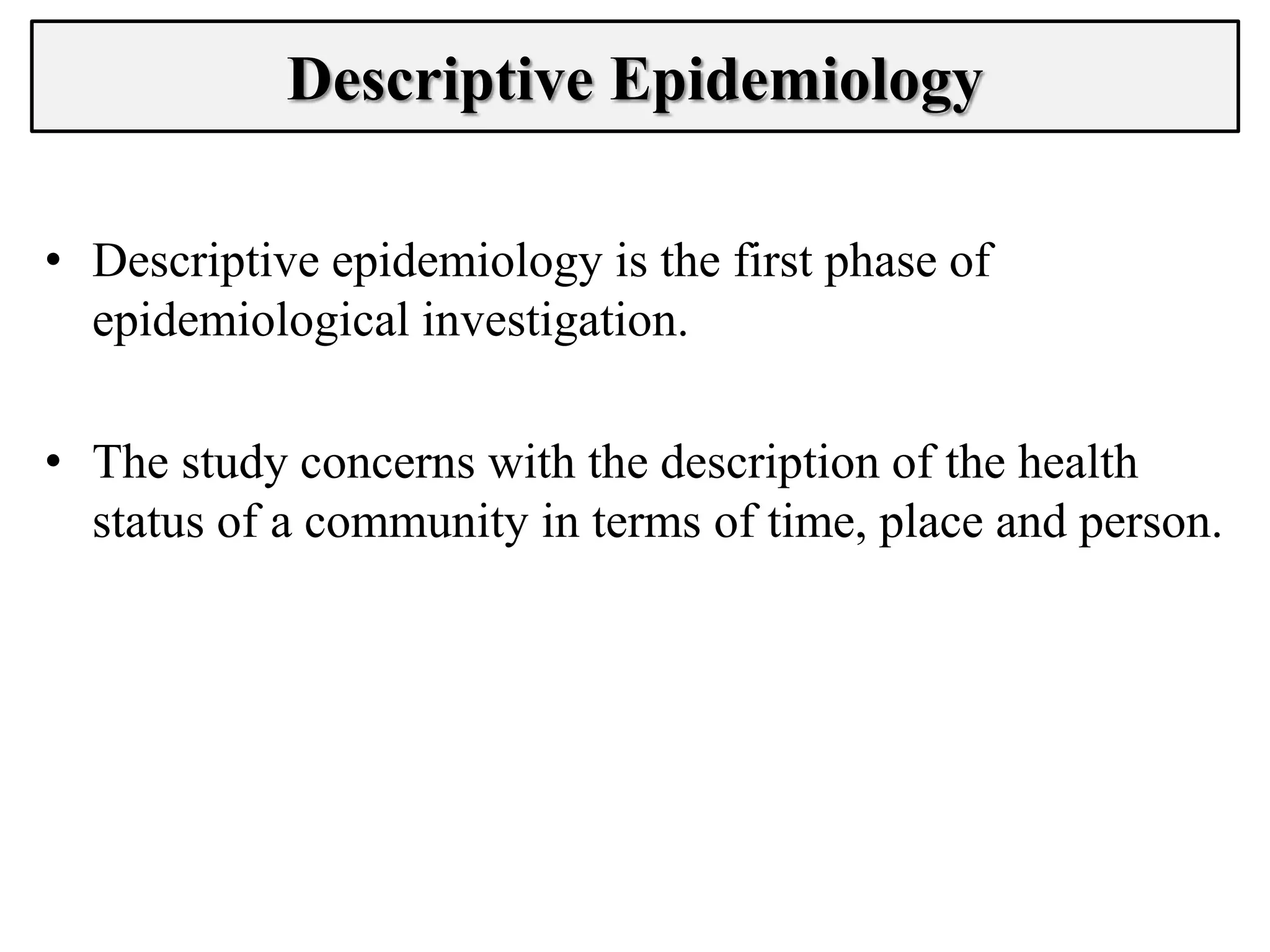
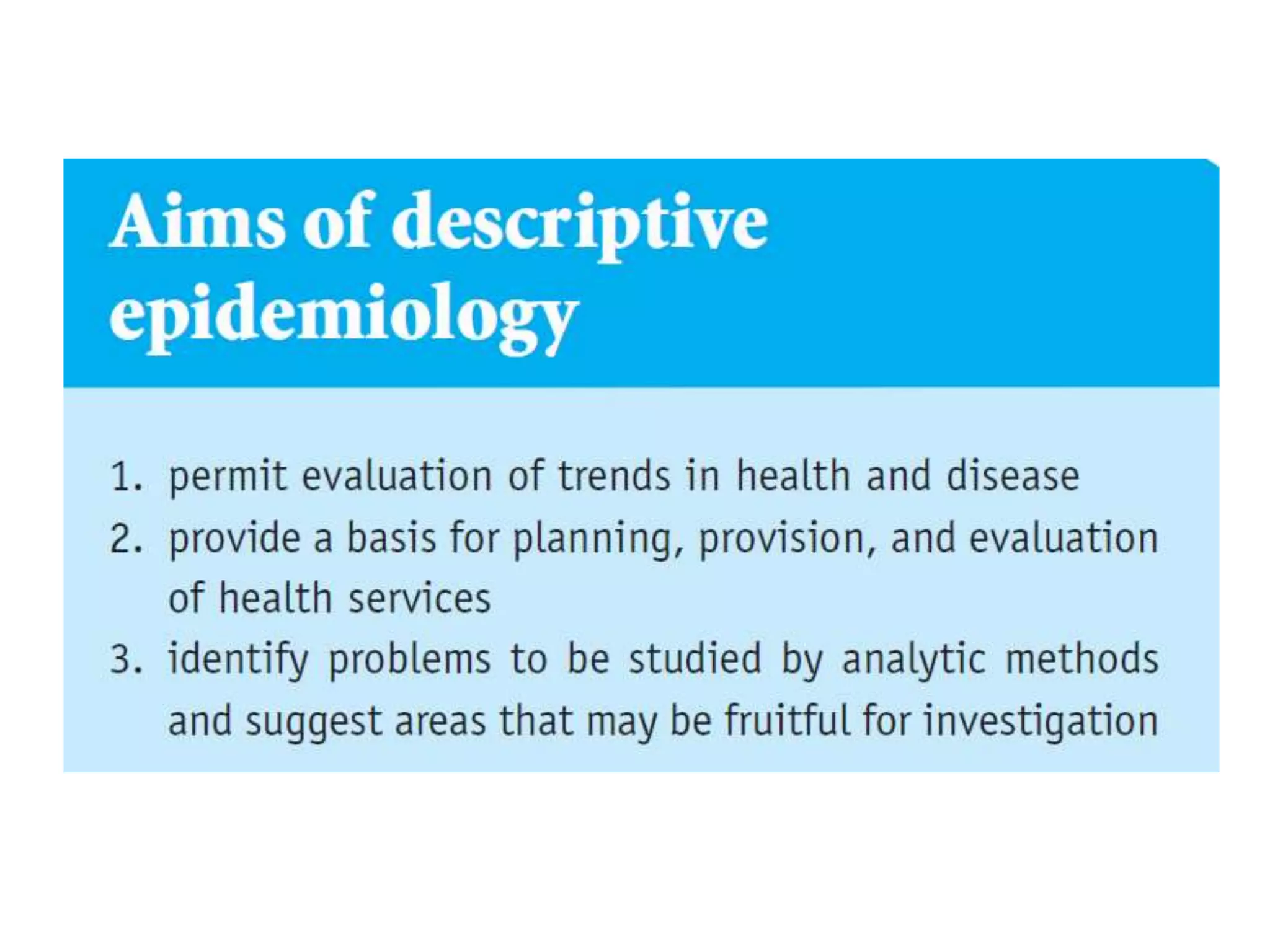
• Descriptive epidemiology is the first phase of
epidemiological investigation.
• The study concerns with the description of the health
status of a community in terms of time, place and person.
Descriptive Epidemiology
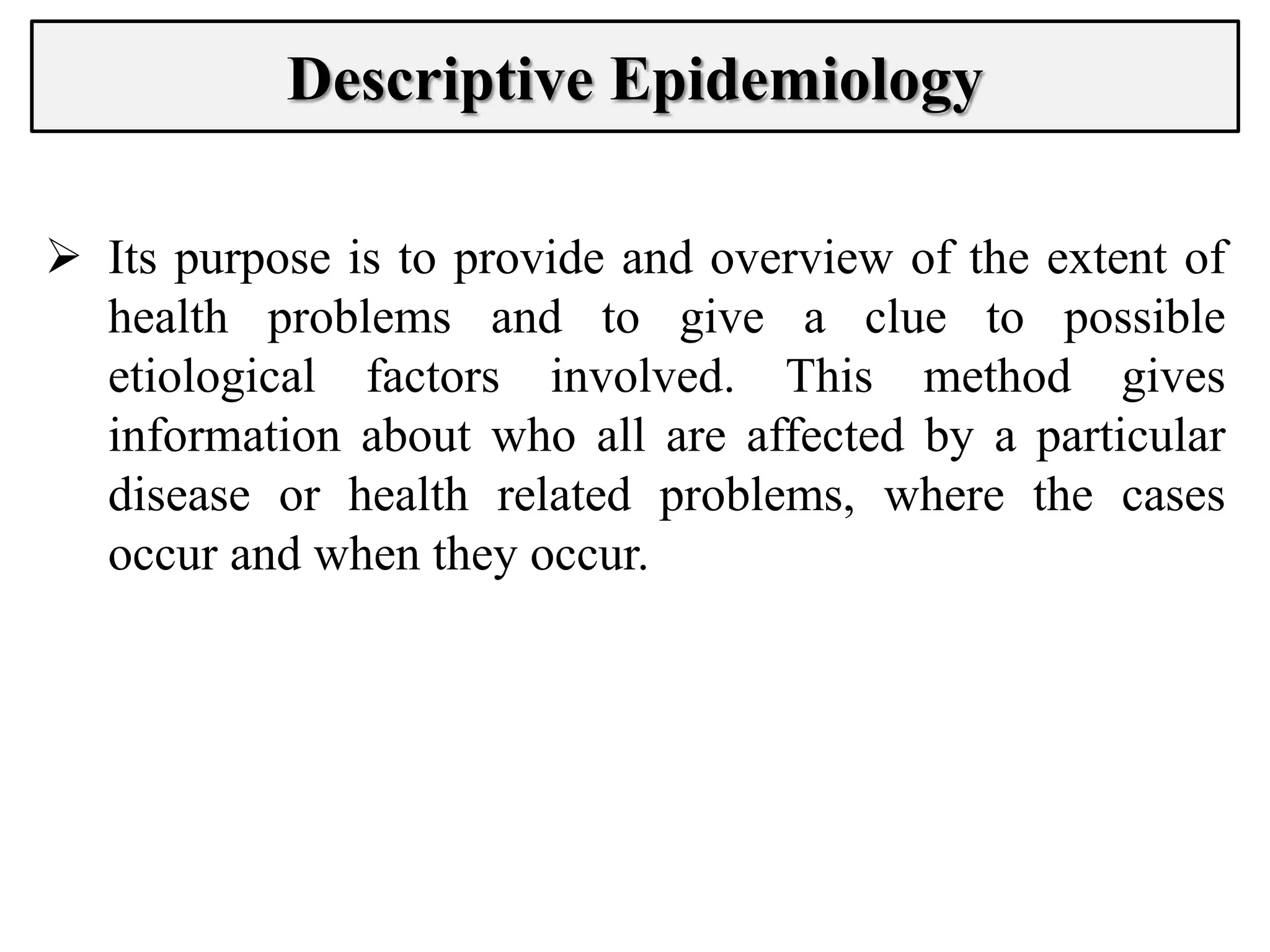
 Its purpose is to provide and overview of the extent of
health problems and to give a clue to possible
etiological factors involved. This method gives
information about who all are affected by a particular
disease or health related problems, where the cases
occur and when they occur.
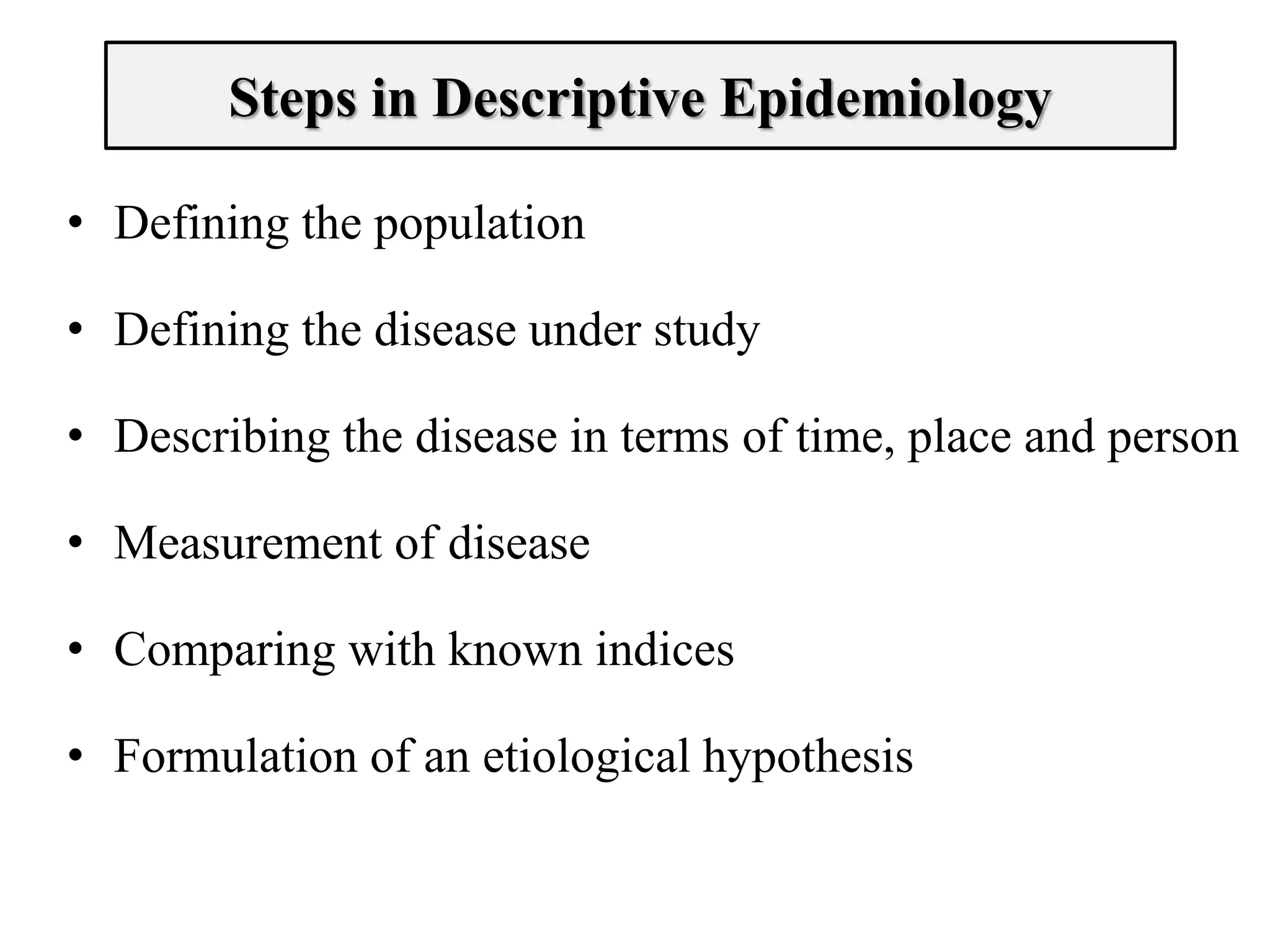
Steps in Descriptive Epidemiology
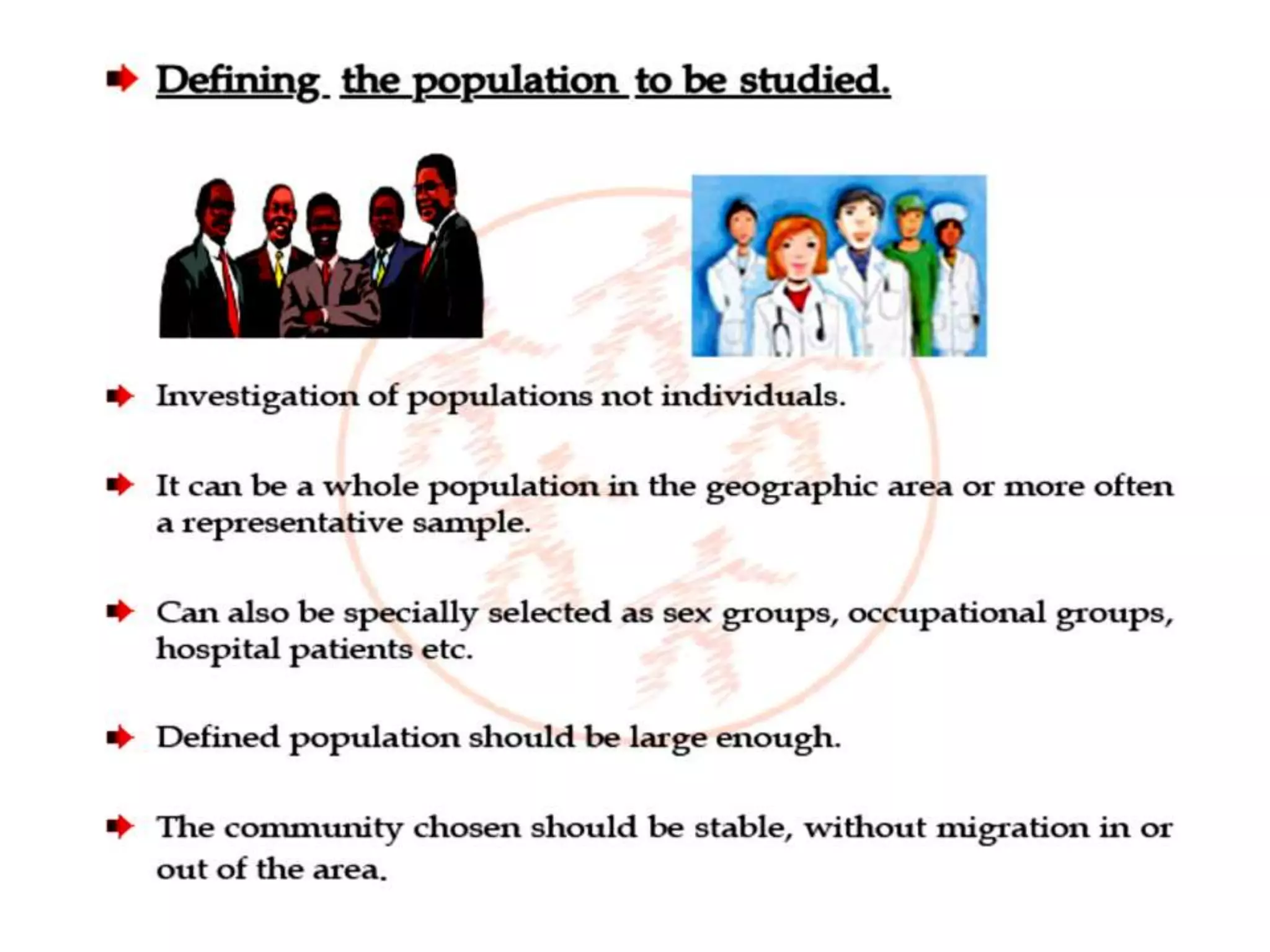
• Defining the population
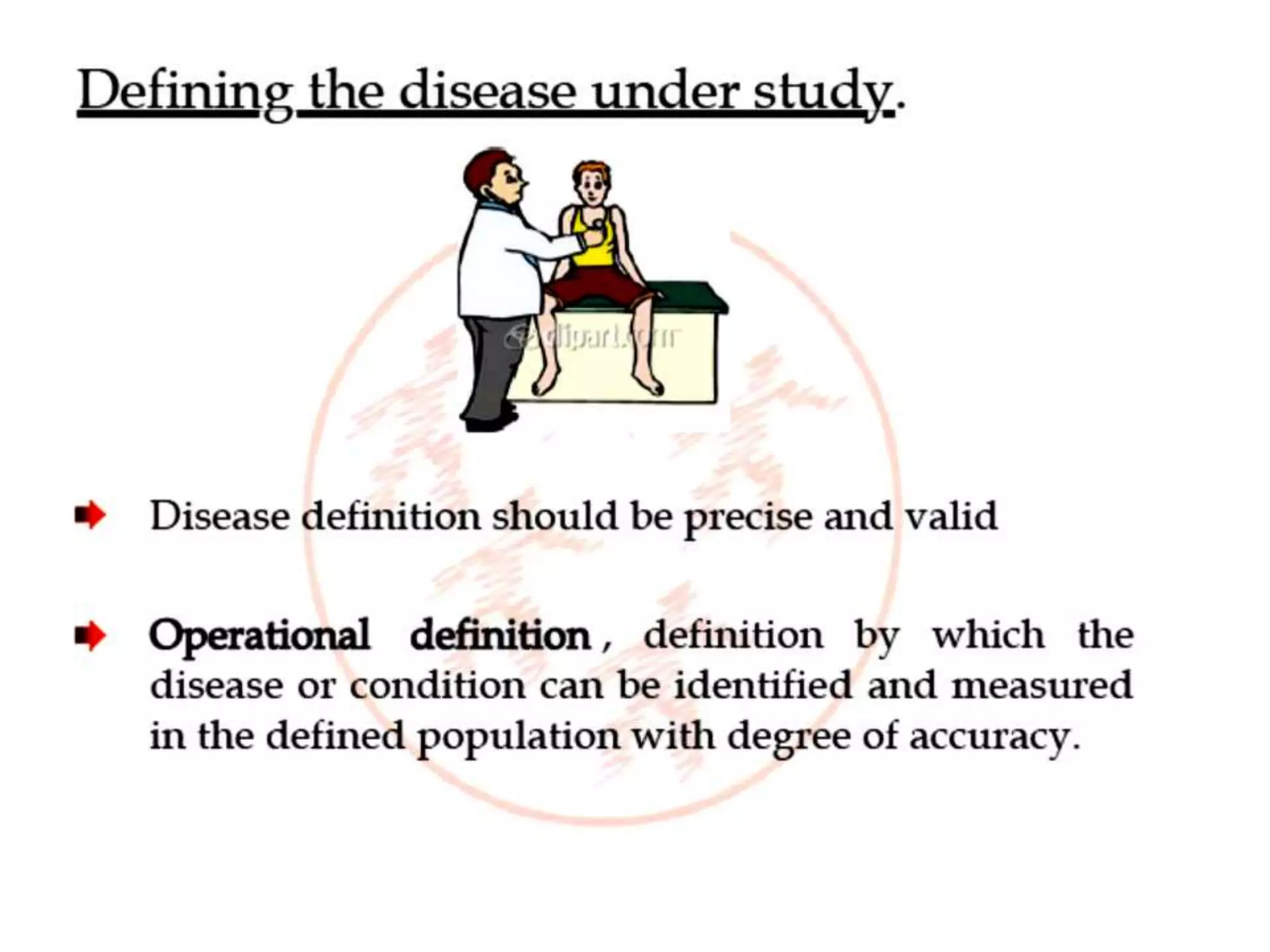
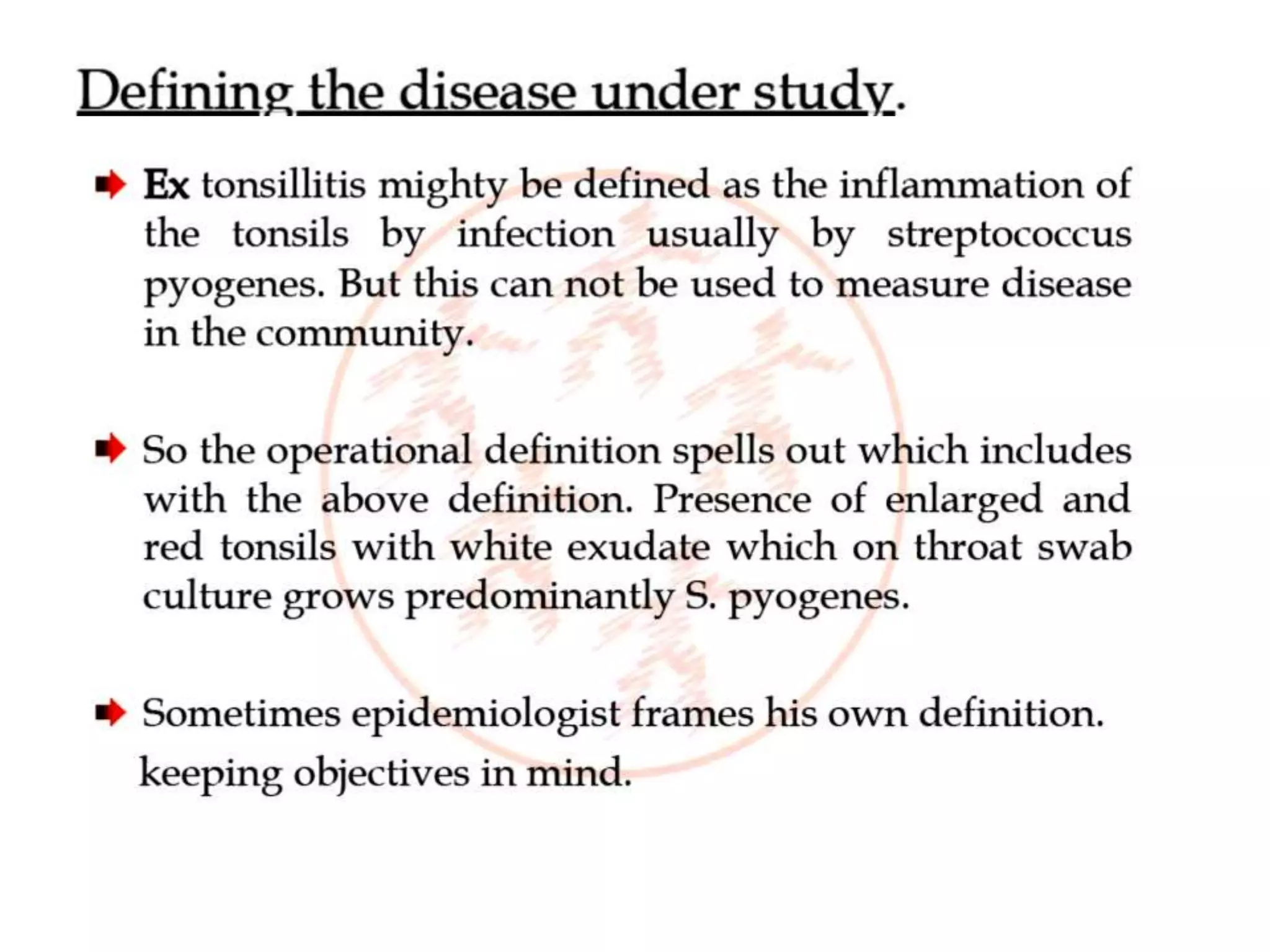
• Defining the disease under study
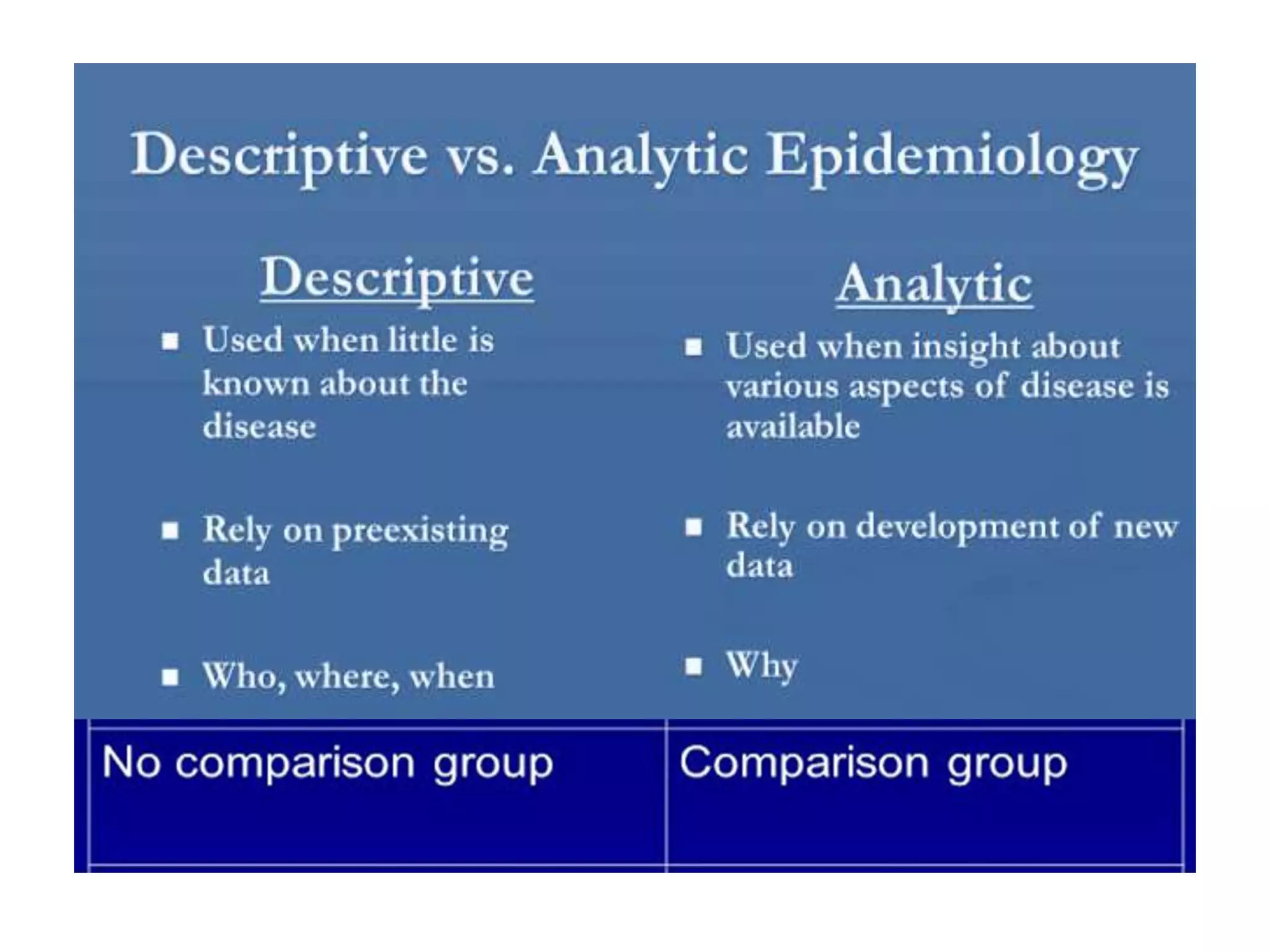
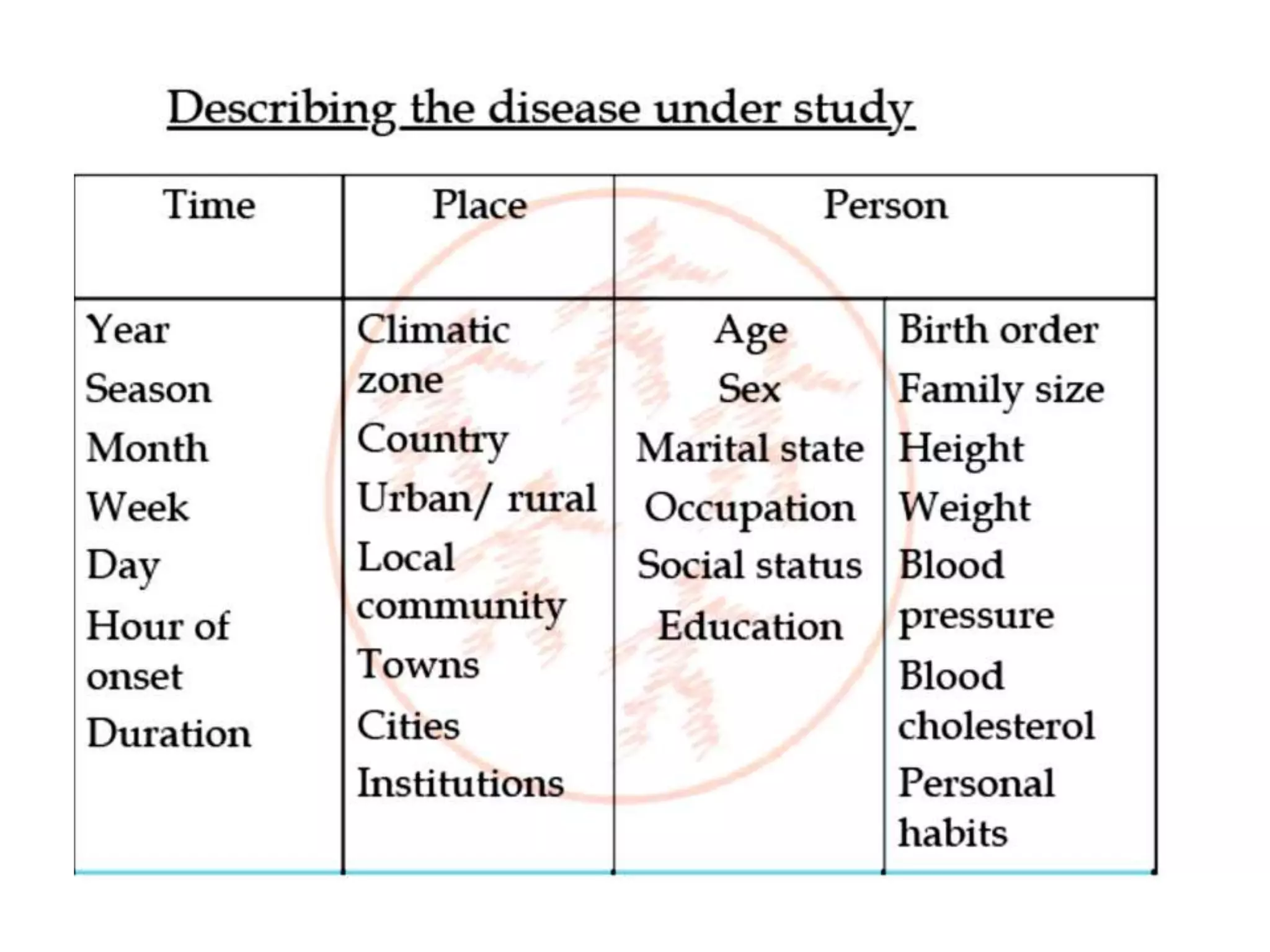
• Describing the disease in terms of time, place and person
• Measurement of disease
• Comparing with known indices
• Formulation of an etiological hypothesis
Describing the Disease
• The disease occurrence and distribution of disease are
described in terms of
– Time
– Place
– Person
• Includes systematic collection and analysis of data.
Time distribution
• The disease rate may vary by the time of its
occurrence i.e. by week, month, year etc.
• There are three kinds of time trends of disease
occurrence:
– Short terms fluctuations
– Periodic fluctuations
– Long term or secular trends
Time distribution….
• Short term fluctuations
– Common source epidemics-well of contaminated water; food
poisoning
– Propagated epidemics- person to person, arthropod vector,
animal reservoir
– Slow modern epidemics- road accidents, blood cancer,
hypertension
• Periodic fluctuations
– Seasonal trend
– Cyclic trend
• Long term or secular trends
– Polio, malaria
Place distribution
The geographic distribution of the disease varies because of
variation in cultures, standard of living and external
environments. The mortality, morbidity varies due to
socioeconomic factors, dietary differences, cultures and
behavior.
• International variations
• National variations
• Rural urban variations
• Local distributions
Person distribution
• The disease should be described by age, sex, ethnicity,
marital status, occupation, social class, behavior, migration
etc.
• Age is probably the single most important personal attribute
because almost every health related events or states vary with
age.
• In general, males have higher rate of illness and death than
females for a wide range of diseases.
Measurement of disease
• After defining the disease, the disease load should
be measured in population.
• The disease should be measured in terms of
mortality, morbidity - prevalence, incidence.
 The disease should be compared with known indices such as
with data from previous similar studies, national data or
national and international standards.
Formulation of hypothesis…
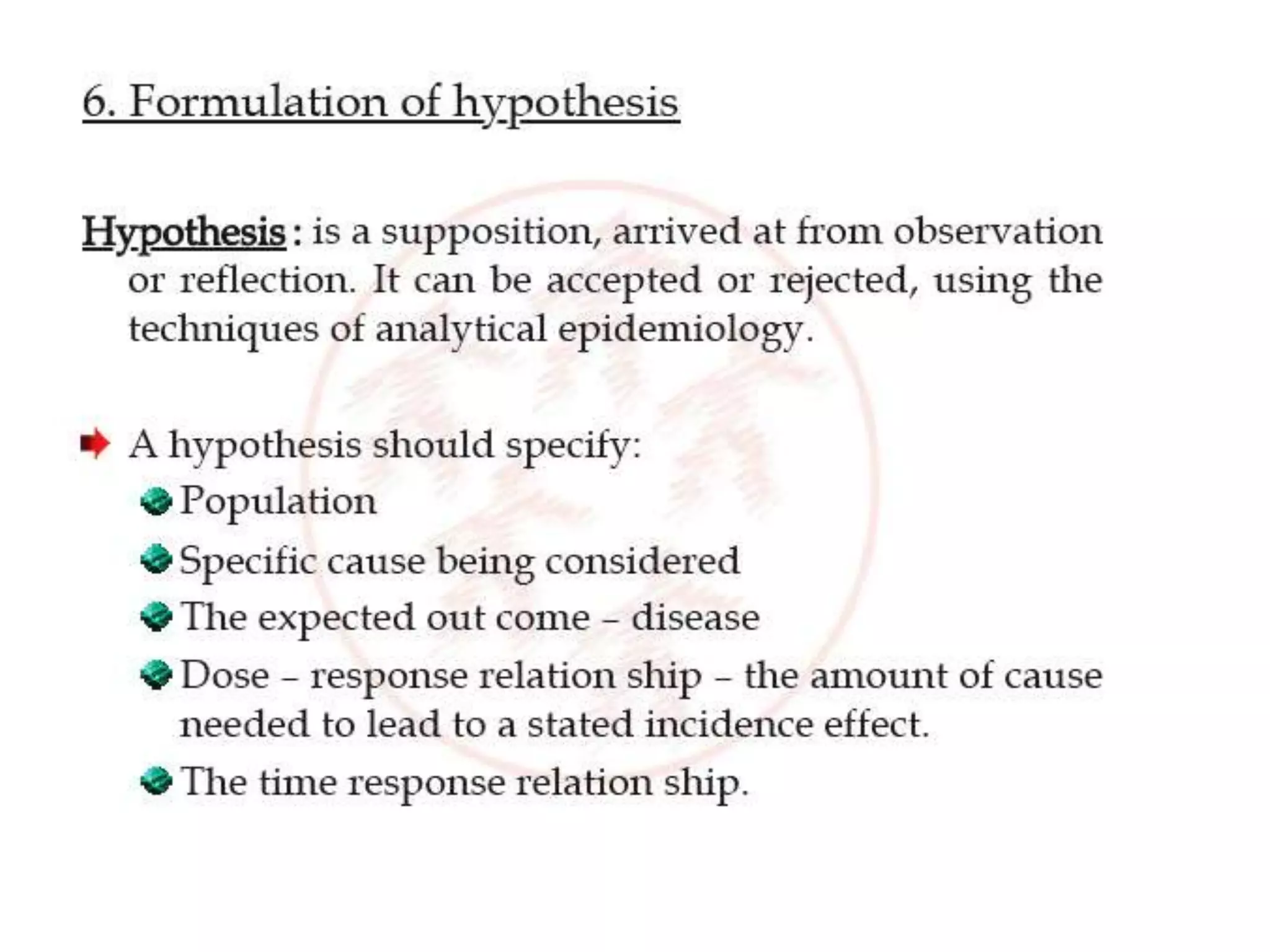
The descriptive epidemiology helps to formulate
hypothesis relating to disease etiology.
Examples of Descriptive studies..
• Knowledge of Breastfeeding: A descriptive study
among under 5 mothers
• The current state of diabetes mellitus in India
• Prevalence and predictors of primary postpartum
hemorrhage among Primigravida mothers.
Thank You

Epidemiology descriptive methods

  • 1.
    Presented By: Jagan KumarOjha M.Sc. Tutor, SNC
  • 7.
    • Descriptive epidemiologyis the first phase of epidemiological investigation. • The study concerns with the description of the health status of a community in terms of time, place and person. Descriptive Epidemiology
  • 8.
    Descriptive Epidemiology  Itspurpose is to provide and overview of the extent of health problems and to give a clue to possible etiological factors involved. This method gives information about who all are affected by a particular disease or health related problems, where the cases occur and when they occur.
  • 10.
    Steps in DescriptiveEpidemiology • Defining the population • Defining the disease under study • Describing the disease in terms of time, place and person • Measurement of disease • Comparing with known indices • Formulation of an etiological hypothesis
  • 14.
    Describing the Disease •The disease occurrence and distribution of disease are described in terms of – Time – Place – Person • Includes systematic collection and analysis of data.
  • 16.
    Time distribution • Thedisease rate may vary by the time of its occurrence i.e. by week, month, year etc. • There are three kinds of time trends of disease occurrence: – Short terms fluctuations – Periodic fluctuations – Long term or secular trends
  • 17.
    Time distribution…. • Shortterm fluctuations – Common source epidemics-well of contaminated water; food poisoning – Propagated epidemics- person to person, arthropod vector, animal reservoir – Slow modern epidemics- road accidents, blood cancer, hypertension • Periodic fluctuations – Seasonal trend – Cyclic trend • Long term or secular trends – Polio, malaria
  • 18.
    Place distribution The geographicdistribution of the disease varies because of variation in cultures, standard of living and external environments. The mortality, morbidity varies due to socioeconomic factors, dietary differences, cultures and behavior. • International variations • National variations • Rural urban variations • Local distributions
  • 19.
    Person distribution • Thedisease should be described by age, sex, ethnicity, marital status, occupation, social class, behavior, migration etc. • Age is probably the single most important personal attribute because almost every health related events or states vary with age. • In general, males have higher rate of illness and death than females for a wide range of diseases.
  • 20.
    Measurement of disease •After defining the disease, the disease load should be measured in population. • The disease should be measured in terms of mortality, morbidity - prevalence, incidence.
  • 21.
     The diseaseshould be compared with known indices such as with data from previous similar studies, national data or national and international standards.
  • 23.
    Formulation of hypothesis… Thedescriptive epidemiology helps to formulate hypothesis relating to disease etiology.
  • 24.
    Examples of Descriptivestudies.. • Knowledge of Breastfeeding: A descriptive study among under 5 mothers • The current state of diabetes mellitus in India • Prevalence and predictors of primary postpartum hemorrhage among Primigravida mothers.
  • 26.