PRESENTED BY
Jagan Kumar Ojha
M.Sc. Tutor
Dept. of Community Health
SNC, Bhubaneswar
¨Bio means “life” and diversity means “variety”.
Hence biodiversity refers wide variety of life on
the earth.
The term biodiversity was coined as a contraction
of biological diversity by E.O. Wilson in 1985
 Biodiversity is the variety of flora and fauna on
this planet earth.
 It includes all life -from the unicellular fungi,
protozoa and bacteria to complex multicellular
organisms such as plants, birds, fishes and
animals.
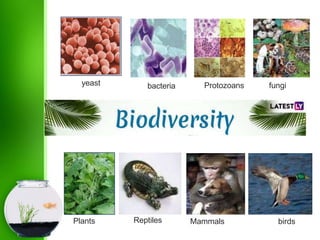
yeast bacteria Protozoans fungi
Plants birdsReptiles Mammals
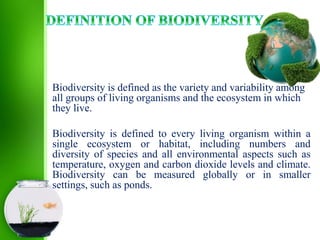
Biodiversity is defined as the variety and variability among
all groups of living organisms and the ecosystem in which
they live.
Biodiversity is defined to every living organism within a
single ecosystem or habitat, including numbers and
diversity of species and all environmental aspects such as
temperature, oxygen and carbon dioxide levels and climate.
Biodiversity can be measured globally or in smaller
settings, such as ponds.
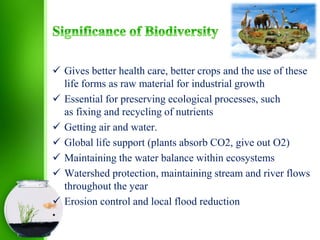
 Gives better health care, better crops and the use of these
life forms as raw material for industrial growth
 Essential for preserving ecological processes, such
as fixing and recycling of nutrients
 Getting air and water.
 Global life support (plants absorb CO2, give out O2)
 Maintaining the water balance within ecosystems
 Watershed protection, maintaining stream and river flows
throughout the year
 Erosion control and local flood reduction
•
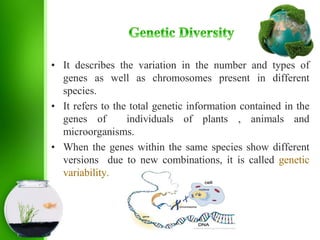
• It describes the variation in the number and types of
genes as well as chromosomes present in different
species.
• It refers to the total genetic information contained in the
genes of individuals of plants , animals and
microorganisms.
• When the genes within the same species show different
versions due to new combinations, it is called genetic
variability.

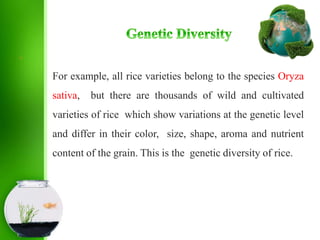
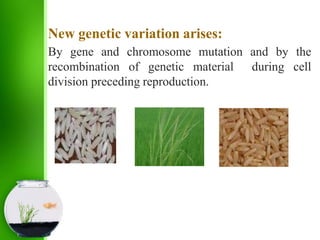
For example, all rice varieties belong to the species Oryza
sativa, but there are thousands of wild and cultivated
varieties of rice which show variations at the genetic level
and differ in their color, size, shape, aroma and nutrient
content of the grain. This is the genetic diversity of rice.
New genetic variation arises:
By gene and chromosome mutation and by the
recombination of genetic material during cell
division preceding reproduction.

Species diversity is defined as the countable number of
species and abundance of these species that are present in
a particular region.
Species diversity refers to species richness and how evenly
species' abundance is distributed. Species richness refers
to the number of species in an area. Species abundance
refers to the number of individuals per species.
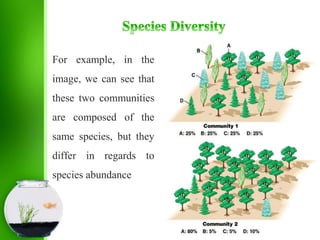
For example, in the
image, we can see that
these two communities
are composed of the
same species, but they
differ in regards to
species abundance
• Ecosystem diversity deals with the variations
in ecosystems within a geographical location and its
overall impact on human existence and the environment.
• Distinctive ecosystems include landscapes such as
forests, grasslands, desserts, mountains, etc., as well as
aquatic ecosystems such as rivers, lakes, and the sea.
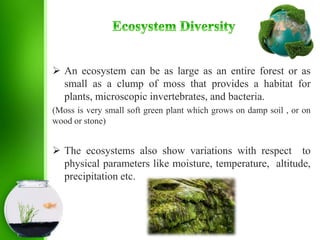
 An ecosystem can be as large as an entire forest or as
small as a clump of moss that provides a habitat for
plants, microscopic invertebrates, and bacteria.
(Moss is very small soft green plant which grows on damp soil , or on
wood or stone)
 The ecosystems also show variations with respect to
physical parameters like moisture, temperature, altitude,
precipitation etc.
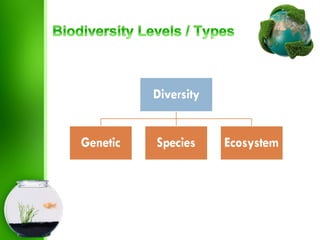
 The concept reflects the inter-relatedness of genes,
species and ecosystems.
 Because genes are the components of species, and
species are the components of ecosystems. Therefore,
variation at any level of this hierarchy can change the
others-species and are central to the concept of
biodiversity.
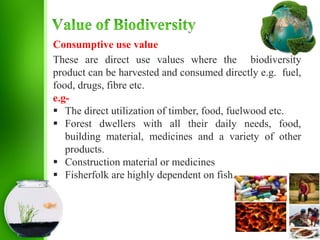
Consumptive use value
These are direct use values where the biodiversity
product can be harvested and consumed directly e.g. fuel,
food, drugs, fibre etc.
e.g-
 The direct utilization of timber, food, fuelwood etc.
 Forest dwellers with all their daily needs, food,
building material, medicines and a variety of other
products.
 Construction material or medicines
 Fisherfolk are highly dependent on fish.
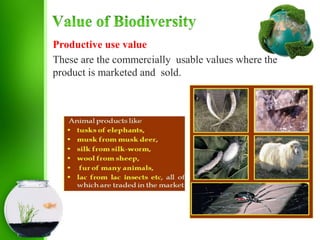
Productive use value
These are the commercially usable values where the
product is marketed and sold.
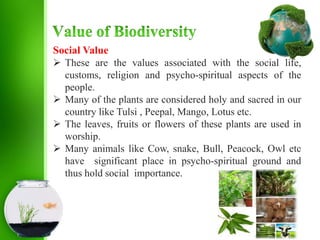
Social Value
 These are the values associated with the social life,
customs, religion and psycho-spiritual aspects of the
people.
 Many of the plants are considered holy and sacred in our
country like Tulsi , Peepal, Mango, Lotus etc.
 The leaves, fruits or flowers of these plants are used in
worship.
 Many animals like Cow, snake, Bull, Peacock, Owl etc
have significant place in psycho-spiritual ground and
thus hold social importance.
Ethical and moral values
• It is also sometimes known as existence value. It
involves ethical issues like “all life must be preserved”. It
is based on the concept of “Live and Let Live”
• If we want our human race to survive, then we must
protect all biodiversity, because biodiversity is valuable.
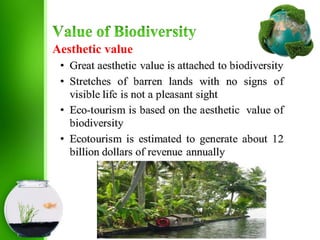
Aesthetic value
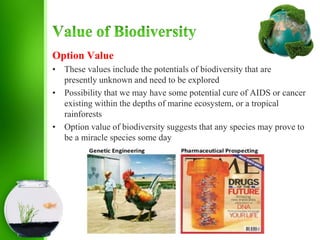
Option Value
• These values include the potentials of biodiversity that are
presently unknown and need to be explored
• Possibility that we may have some potential cure of AIDS or cancer
existing within the depths of marine ecosystem, or a tropical
rainforests
• Option value of biodiversity suggests that any species may prove to
be a miracle species some day
THANK YOU

Biodiversity concept, types & its values

  • 1.
    PRESENTED BY Jagan KumarOjha M.Sc. Tutor Dept. of Community Health SNC, Bhubaneswar
  • 2.
    ¨Bio means “life”and diversity means “variety”. Hence biodiversity refers wide variety of life on the earth. The term biodiversity was coined as a contraction of biological diversity by E.O. Wilson in 1985
  • 3.
     Biodiversity isthe variety of flora and fauna on this planet earth.  It includes all life -from the unicellular fungi, protozoa and bacteria to complex multicellular organisms such as plants, birds, fishes and animals.
  • 4.
    yeast bacteria Protozoansfungi Plants birdsReptiles Mammals
  • 5.
    Biodiversity is definedas the variety and variability among all groups of living organisms and the ecosystem in which they live. Biodiversity is defined to every living organism within a single ecosystem or habitat, including numbers and diversity of species and all environmental aspects such as temperature, oxygen and carbon dioxide levels and climate. Biodiversity can be measured globally or in smaller settings, such as ponds.
  • 6.
     Gives betterhealth care, better crops and the use of these life forms as raw material for industrial growth  Essential for preserving ecological processes, such as fixing and recycling of nutrients  Getting air and water.  Global life support (plants absorb CO2, give out O2)  Maintaining the water balance within ecosystems  Watershed protection, maintaining stream and river flows throughout the year  Erosion control and local flood reduction •
  • 8.
    • It describesthe variation in the number and types of genes as well as chromosomes present in different species. • It refers to the total genetic information contained in the genes of individuals of plants , animals and microorganisms. • When the genes within the same species show different versions due to new combinations, it is called genetic variability.
  • 9.
     For example, allrice varieties belong to the species Oryza sativa, but there are thousands of wild and cultivated varieties of rice which show variations at the genetic level and differ in their color, size, shape, aroma and nutrient content of the grain. This is the genetic diversity of rice.
  • 10.
    New genetic variationarises: By gene and chromosome mutation and by the recombination of genetic material during cell division preceding reproduction.
  • 11.
     Species diversity isdefined as the countable number of species and abundance of these species that are present in a particular region. Species diversity refers to species richness and how evenly species' abundance is distributed. Species richness refers to the number of species in an area. Species abundance refers to the number of individuals per species.
  • 12.
    For example, inthe image, we can see that these two communities are composed of the same species, but they differ in regards to species abundance
  • 13.
    • Ecosystem diversitydeals with the variations in ecosystems within a geographical location and its overall impact on human existence and the environment. • Distinctive ecosystems include landscapes such as forests, grasslands, desserts, mountains, etc., as well as aquatic ecosystems such as rivers, lakes, and the sea.
  • 14.
     An ecosystemcan be as large as an entire forest or as small as a clump of moss that provides a habitat for plants, microscopic invertebrates, and bacteria. (Moss is very small soft green plant which grows on damp soil , or on wood or stone)  The ecosystems also show variations with respect to physical parameters like moisture, temperature, altitude, precipitation etc.
  • 15.
     The conceptreflects the inter-relatedness of genes, species and ecosystems.  Because genes are the components of species, and species are the components of ecosystems. Therefore, variation at any level of this hierarchy can change the others-species and are central to the concept of biodiversity.
  • 18.
    Consumptive use value Theseare direct use values where the biodiversity product can be harvested and consumed directly e.g. fuel, food, drugs, fibre etc. e.g-  The direct utilization of timber, food, fuelwood etc.  Forest dwellers with all their daily needs, food, building material, medicines and a variety of other products.  Construction material or medicines  Fisherfolk are highly dependent on fish.
  • 19.
    Productive use value Theseare the commercially usable values where the product is marketed and sold.
  • 20.
    Social Value  Theseare the values associated with the social life, customs, religion and psycho-spiritual aspects of the people.  Many of the plants are considered holy and sacred in our country like Tulsi , Peepal, Mango, Lotus etc.  The leaves, fruits or flowers of these plants are used in worship.  Many animals like Cow, snake, Bull, Peacock, Owl etc have significant place in psycho-spiritual ground and thus hold social importance.
  • 21.
    Ethical and moralvalues • It is also sometimes known as existence value. It involves ethical issues like “all life must be preserved”. It is based on the concept of “Live and Let Live” • If we want our human race to survive, then we must protect all biodiversity, because biodiversity is valuable.
  • 22.
  • 23.
    Option Value • Thesevalues include the potentials of biodiversity that are presently unknown and need to be explored • Possibility that we may have some potential cure of AIDS or cancer existing within the depths of marine ecosystem, or a tropical rainforests • Option value of biodiversity suggests that any species may prove to be a miracle species some day
  • 24.